


Last Updated on: 12 Apr 2026
Tata Nexon EV
The Tata Nexon EV is Tata's compact eSUV. The Tata Nexon EV price ranges between Rs 12.49 lakh to Rs 17.49 lakh (ex-showroom)
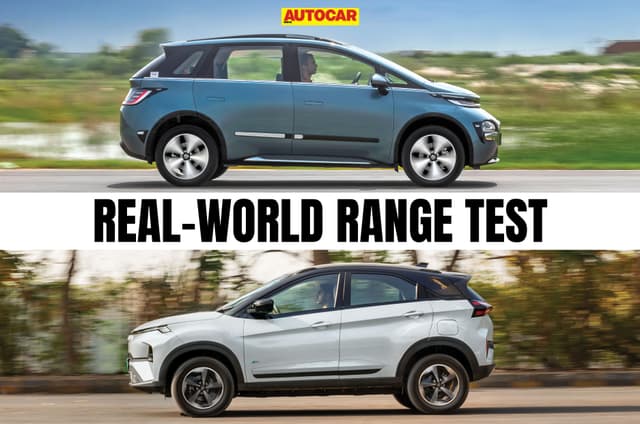
The Nexon EV battery capacity is 30kWh in the entry-level variant and 45kWh in higher variants. Tata Nexon EV range is claimed at up to 489km (MIDC), with a real-world figure of around 375 km for the 45kWh variants. It has a single-motor FWD powertrain that makes up to 142 hp and 215 Nm. The Tata Nexon EV 0-100kph time is 8.9 seconds, as per Tata’s claims.
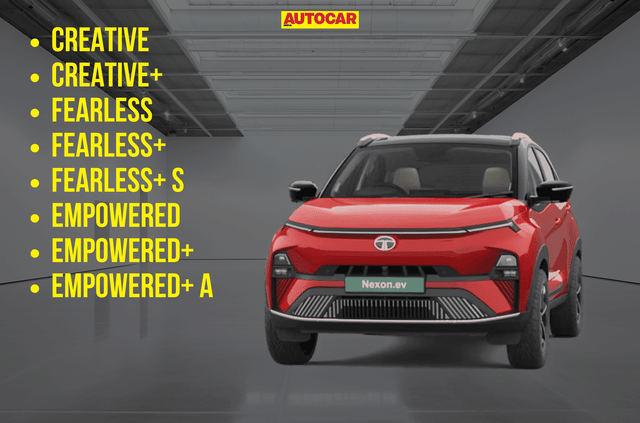
In India, the Nexon EV is offered in 5 trim levels: Creative, Fearless, Empowered, Empowered+, and Empowered+ A. The Nexon EV medium-range 30kWh battery pack comes only in Creative+ and Fearless variants. Meanwhile, the long-range 45kWh battery pack comes in Creative, Fearless, Empowered, Empowered+, and Empowered+ A. The limited edition Red DARK comes in the Empowered+ and Empowered+A variants, and the Dark variant comes solely in the Empowered+ A variant.
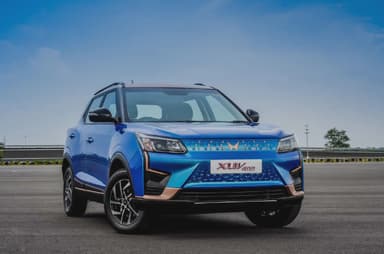
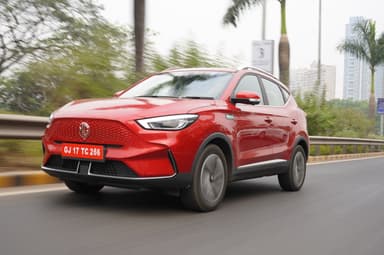
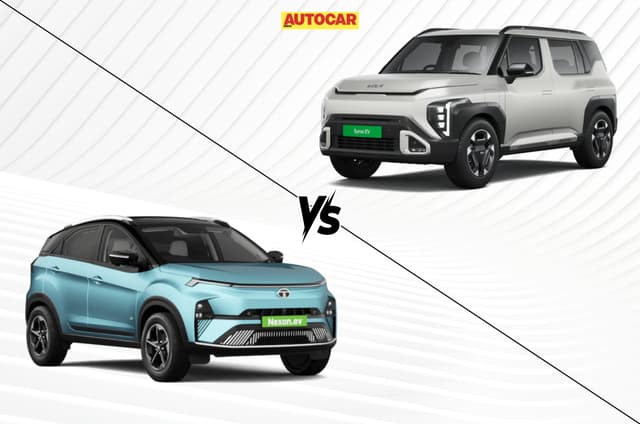
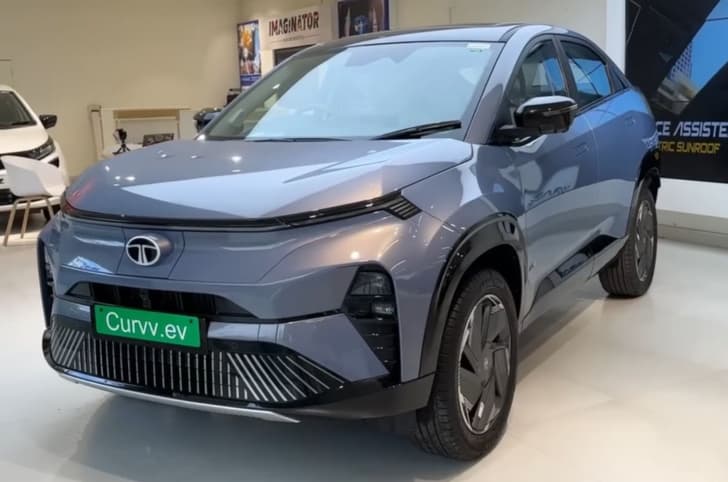
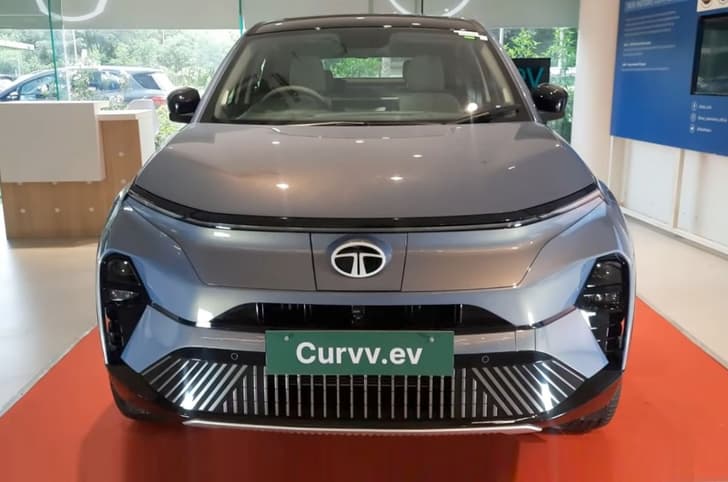
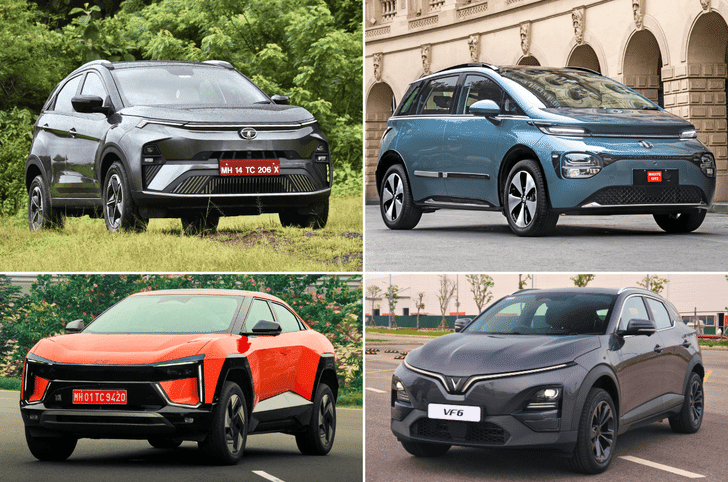
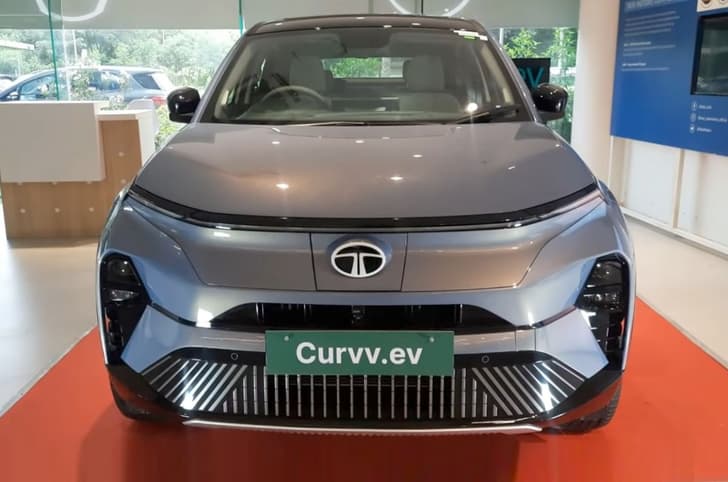
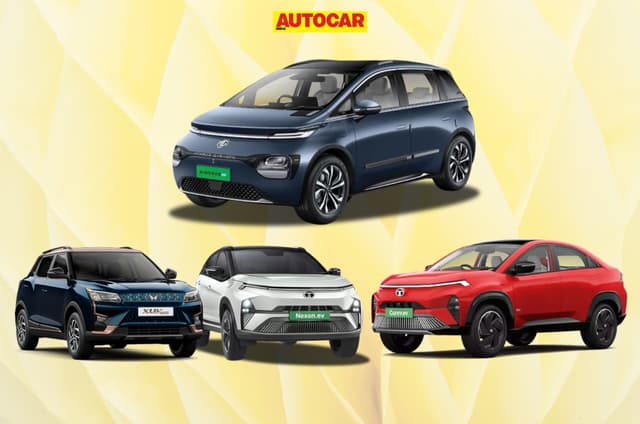
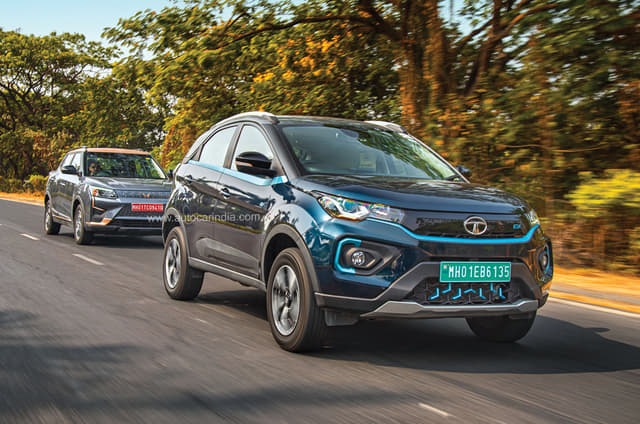
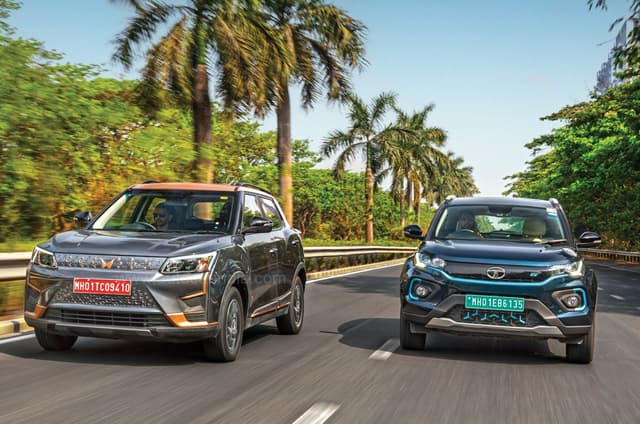
The Nexon EV rivals the Mahindra XUV400 in its segment. But due to coinciding price ranges, the Nexon EV also competes with the MG ZS EV, MG Windsor, Vinfast VF6, and Tata Curvv and Hyundai Creta Electric, depending on the variants.
Tata Nexon EV Highlights
- The Tata Nexon EV safety rating is 5 stars as per Bharat NCAP. Its safety features include Level 2 ADAS, 6 airbags, an electronic parking brake with auto hold function, hill start assist, ESP, traction control, ABS with EBD, a blind spot monitor, and more.
- In terms of charging, the Nexon EV battery state goes from 10-80 percent in 40 minutes using a 60kW DC charger.
- The Tata Nexon EV ground clearance measures at 190-205mm, ample for Indian roads.
- The Tata Nexon EV launch date was September 14, 2023.
- The dimensions of the Nexon EV stand at 3995mm in length, 1802mm in width, and 1625 mm in height, with a wheelbase of 2498mm.
- Inside, the Tata Nexon EV offers features like a panoramic sunroof, a floating 12.3-inch infotainment touchscreen with wireless Android Auto and Apple CarPlay, a 10.25-inch digital driver display, ambient lighting, ventilated front seats, connected car tech, and leatherette upholstery.
- The Nexon EV boot space is rated at 350 litres along with an 11.6-litre frunk.
Tata Nexon EV Latest Updates
5 March 2026: MY24 Tata Nexon EV models get benefits of up to Rs 1.41 lakh in March 2026
6 February 2026: Tata Nexon EV customers can avail discounts of up to Rs 1.2 lakh
5 November 2025: Tata Nexon EV discounts climb to Rs 30,000 in November 2025
10 September 2025: Tata Nexon EV now gets ADAS in new top-spec Empowered+ A trim, price starts at Rs 17.29 lakh
10 July 2025: Tata Nexon EV 45 now gets a 15-year battery warranty
23 April 2025: Tata Nexon EV 5-star BNCAP safety rating extended to 45kWh variants; only 30kWh and 40.5kWh variants were rated 5 stars previously
Tata Nexon EV Features and specifications
Our Rating | 8 |
Mileage | 275 km - 489 km |
Fuel Type | Electric |
Transmission | Auto |
Seats | 5 |
Body Style | SUV |
Doors | 5 |
Claimed Electric Motor Range | 489 km |
Warranty Distance | 125000 km |
Warranty Duration | 3 Years |
| Fuel Type/ Propulsion | Electric |
| Number of Motors | 1 |
| Pure Electric Driving Mode | Yes |
| Motor Type | Permanent Magnet Synchronous AC motor |
| Battery Capacity | 45 kWh |
| Claimed Range | 489 km |
| Terrain Modes | No |
| Charging Time | 17.6hrs 10%-100%(15A), 6.6hrs 10%-100%(7.2 kW AC fast charger), 40min 10%-80%(60 kW DC fast charger) hrs |
| Front Brakes | Disc |
| Rear Brakes | Disc |
| Type of Power Assist | Electric |
| Steering Adjust | Tilt |
| Length | 3994 mm |
| Width | 1811 mm |
| Height | 1625 mm |
| Doors | 5 |
| Power Windows | Front and Rear |
| Power Windows with One Touch-Down | Driver Window Only |
| Interior Lamps | |
| Vehicle to load (V2L) |
| Crash Test Rating | 5 |
| Day Night Interior Mirror | Automatic |
| Lane Departure Avoidance | |
| Front Collision Avoidance |
| Body Coloured Bumpers | |
| Headlight Height Adjuster | |
| Cornering Headlights | |
| Projector Headlamps |
| Speedometer | Digital |
| Tachometer | |
| Trip Meter | |
| Average Fuel Consumption |
| Audio System | |
| Branded Music System | JBL |
| Speakers | 4 |
| CD Player |
| Service Reminder Via App | |
| Navigation On Instrument Cluster | |
| Low Battery Warning | |
| Alexa Compatibility |
Tata Nexon EV price & variants
The Tata EV car price in India starts at ₹12.49 lakh (ex-showroom). The Tata Nexon EV on road price in India will vary by city and charges like RTO, insurance, and other factors, but you can expect it to be in the ₹14.4-20.2 lakh range depending on the chosen variant.
In India, the Nexon EV is offered in 5 trim levels: Creative, Fearless, Empowered, Empowered+, and Empowered+ A. The Nexon EV medium range 30kWh battery pack comes only in Creative+ and Fearless variants. Meanwhile, the long-range 45kWh battery pack comes in Creative, Fearless, Empowered, Empowered+, and Empowered+ A. The limited edition Red DARK comes in the Empowered+ and Empowered+A variants and the Dark variant comes solely in the Empowered+ A variant.
The Tata Nexon EV Empowered+ A 45 Red Dark features include a panoramic sunroof, powered and ventilated front seats, a 12.3-inch floating infotainment touchscreen, a 10.25-inch digital driver's 360-degree camera, a wireless charger, ambient lighting, connected car tech, a 9-speaker JBL sound system, leatherette upholstery, ADAS and more. The Nexon EV top model price offers the most comprehensive feature set in the lineup.
Tata Nexon EV Official Brochure
Download the complete brochure with specs, features, and variants.
Tata Nexon EV expert review
We like
Improved driveability and range
Loaded with tech and features
Step up in interior design and quality
We don't like
DC fast charging is slow
Cabin ergonomics
Fit and finish in certain areas
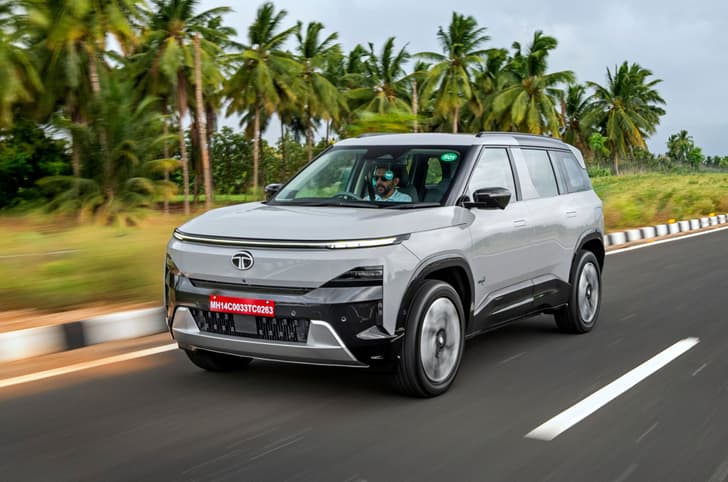
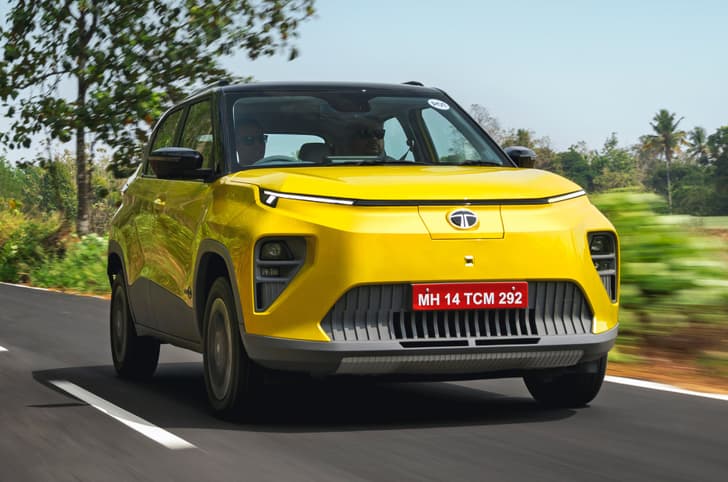
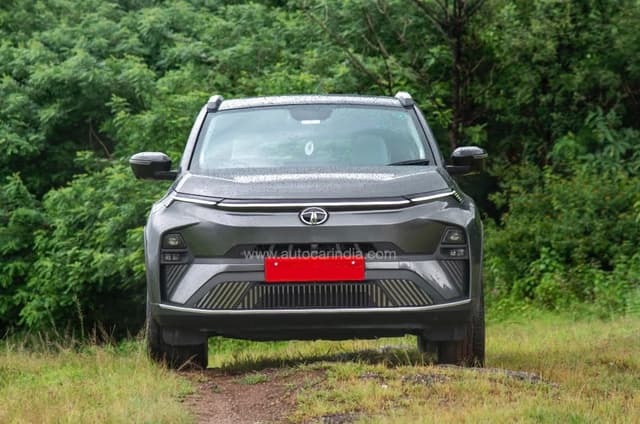
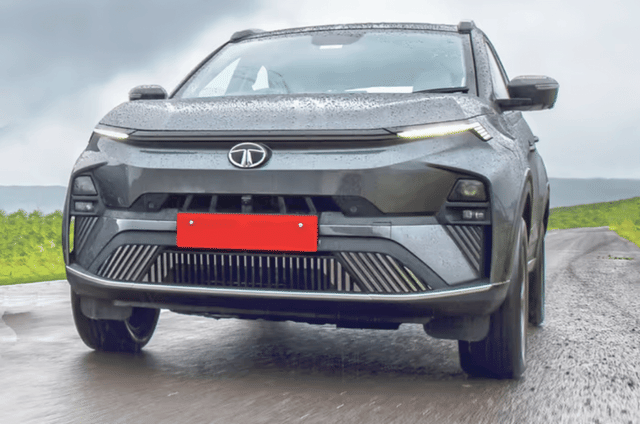
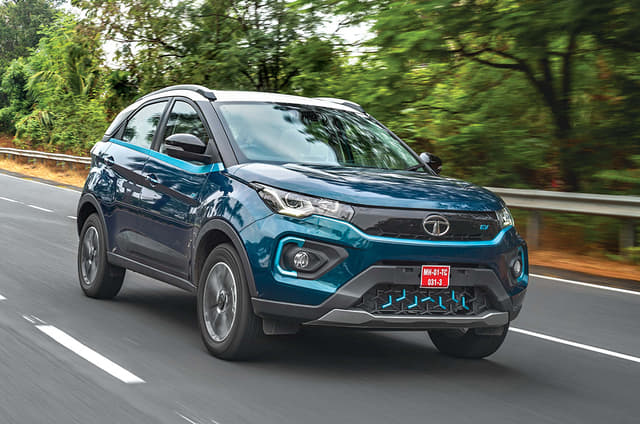
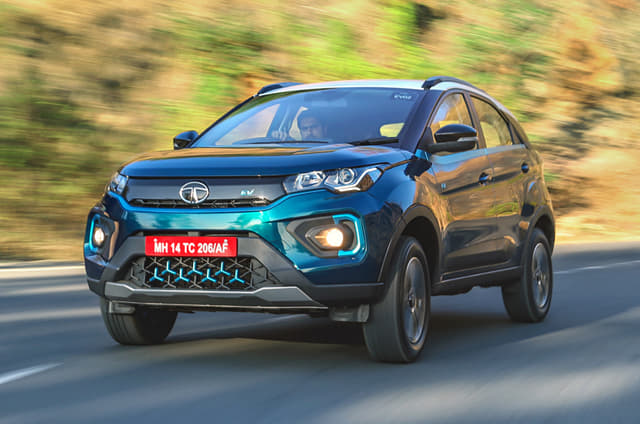
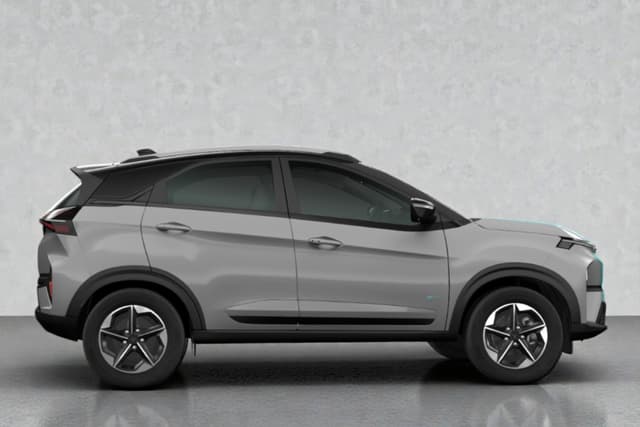
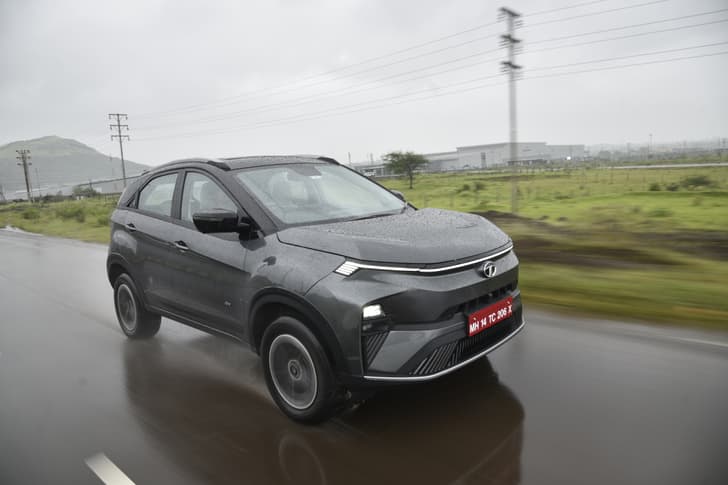
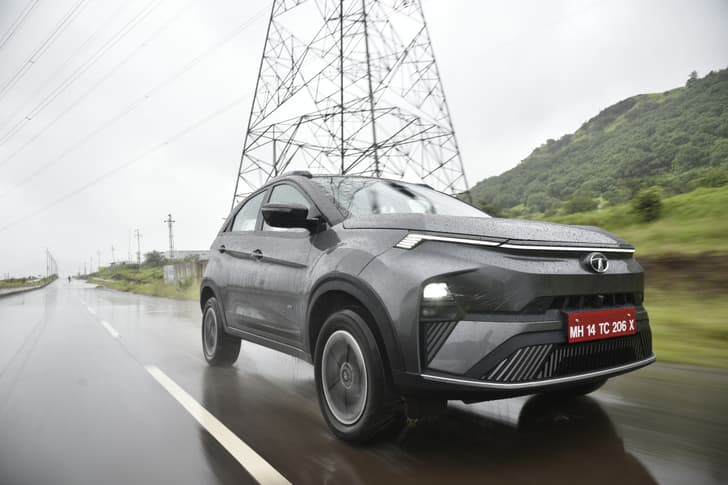
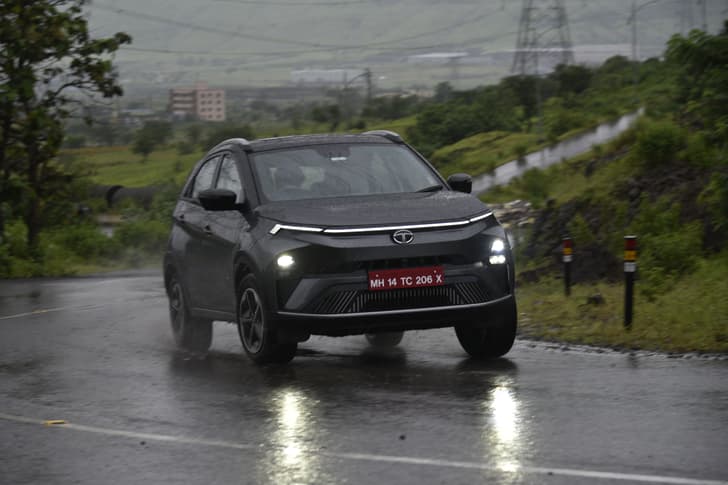
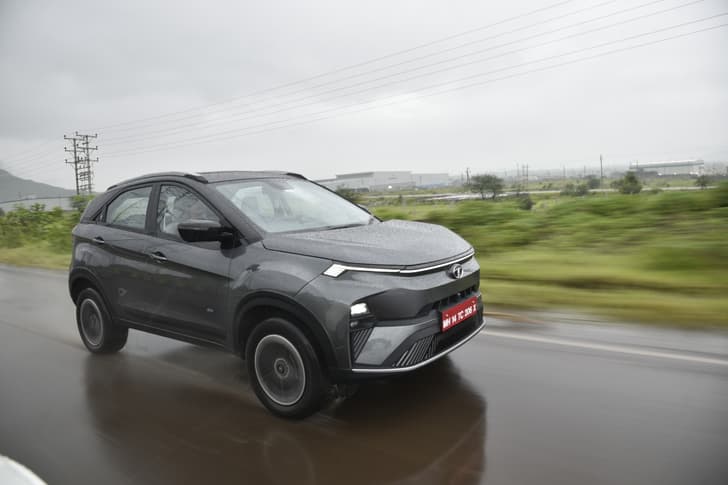
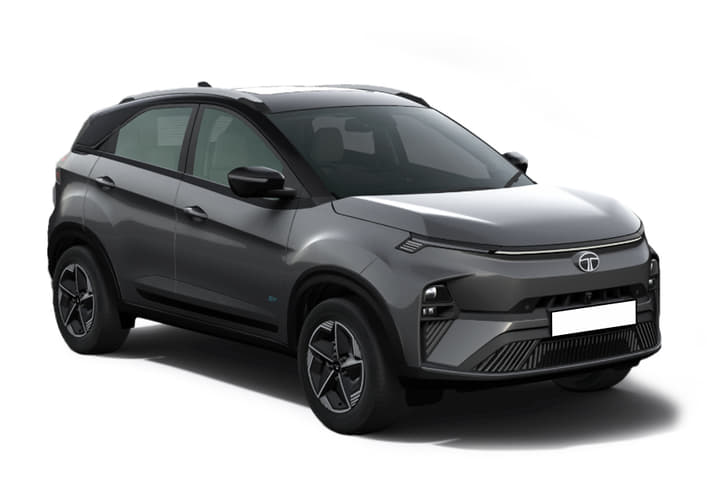
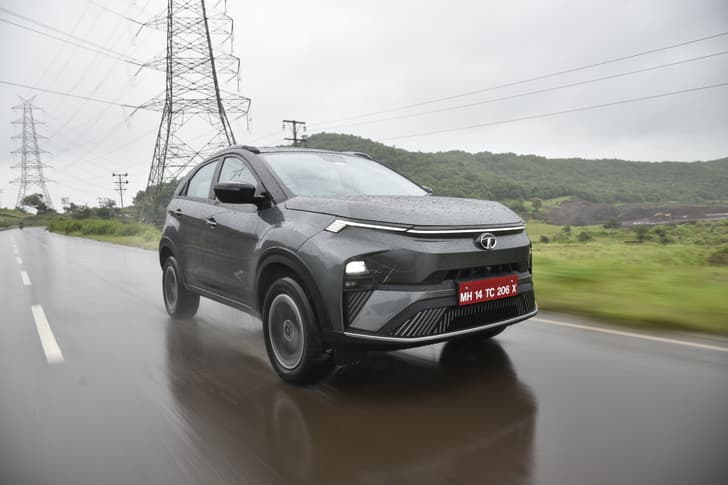
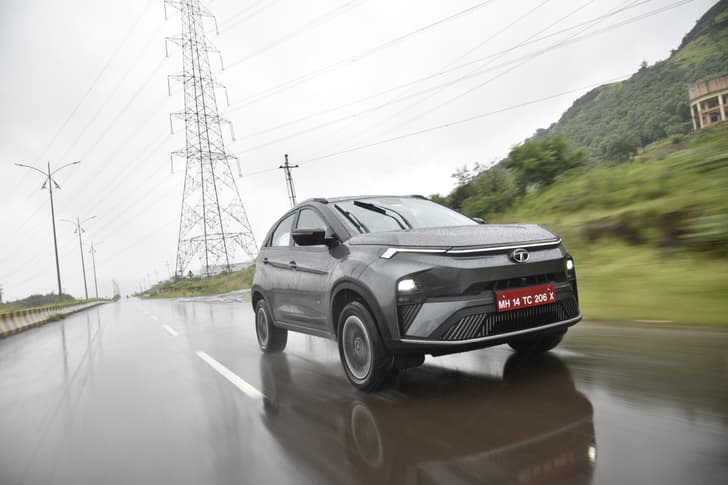
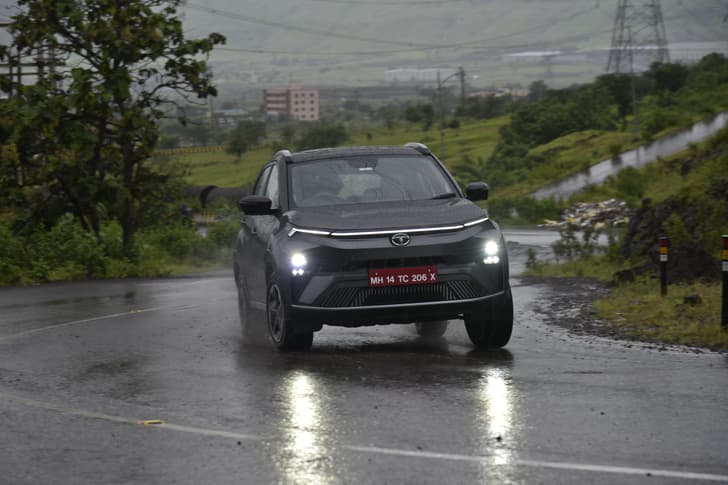
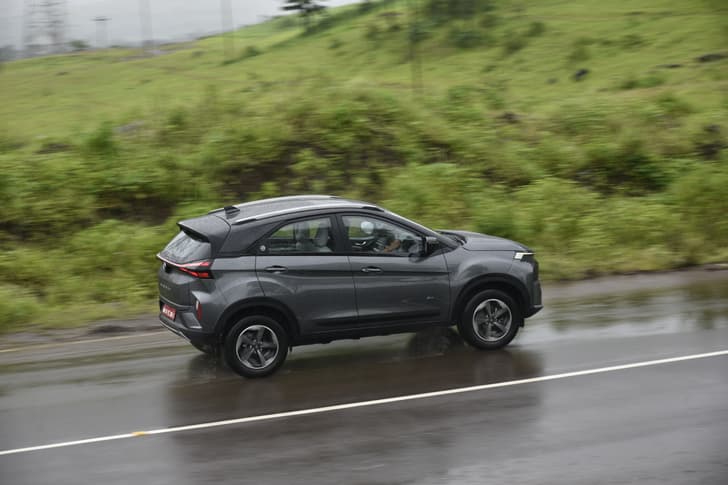
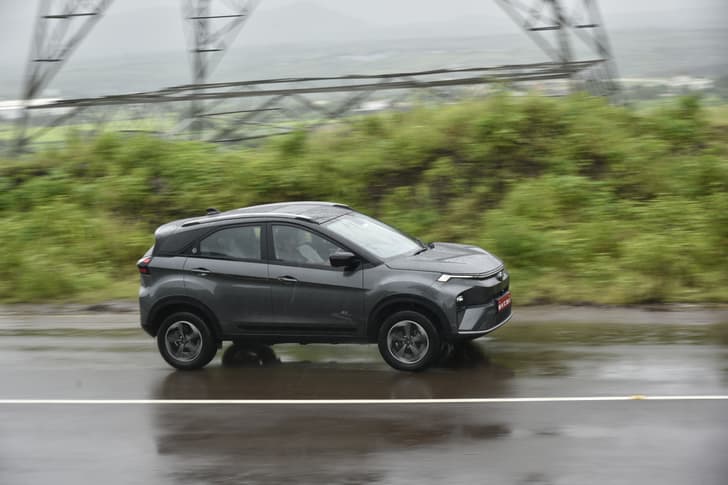
Tata completely redesigned the exterior, making it nearly unrecognizable as a facelift. Like the updated ICE Nexon, the EV draws heavily from the Curvv concept, featuring a bold split-headlamp setup, full-LED lighting, a sleeker bumper, and a wide LED light bar at the rear. New aero-efficient 16-inch alloys, the omission of blue highlights, and a stylish integrated spoiler give it a mature and modern stance. Unique to the EV are elements like a front LED bar that also shows charge status, metallic strakes in the air dam, and exclusive paint options like Empowered Oxide and Intensi-teal. These updates make the Nexon EV facelift a definite head-turner.
8.0
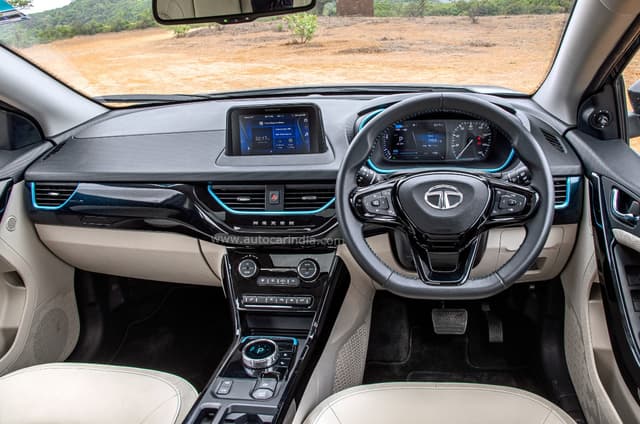
Inside too, the Nexon EV made a serious leap forward. Two large, crisp screens dominate the dashboard, complemented by a premium dual-tone grey interior with blue stitching. The twin-spoke steering with an illuminated logo feels nice, but its gloss black surfaces pick up smudges easily. HVAC controls are now touch-based toggles, and while visually appealing, they’re prone to fingerprints. The gear selector is now conventional, but the new drive mode rotary dial can be slow to respond. While seat bolstering and under-thigh support have improved, the cushioning is firm, and rear headroom is tight for tall passengers. USB Type-C ports, 3-point seat belts for all, and minor tweaks improve convenience, but missing features like rear seatback pockets and proper cupholders remain a downside.
7.0
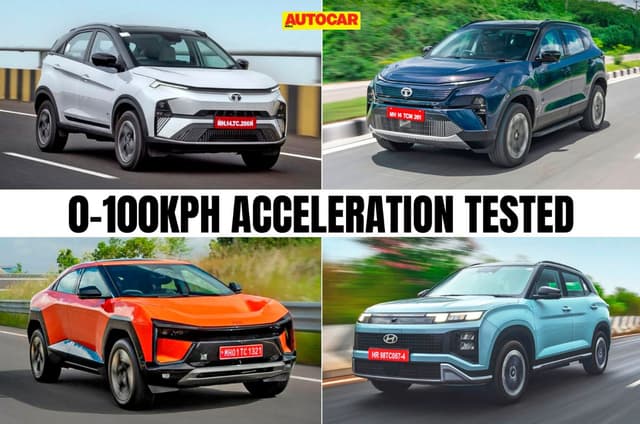
Under the hood, Tata’s Gen 2 electric motor is 20kg lighter, uses fewer rare-earth materials, and revs higher at 16,000rpm. Though torque is down to 215Nm, the flatter curve ensures smoother delivery and better efficiency. It still feels quick, doing 0-100kph in 9.3sec on wet roads—quicker than the outgoing EV Max. The updated 45kWh version, introduced in 2024, bumped up power to 150hp, though it felt near identical to drive. Three drive modes—Eco, City, and Sport—now show clearer differentiation, especially in throttle response and power delivery.
8.0
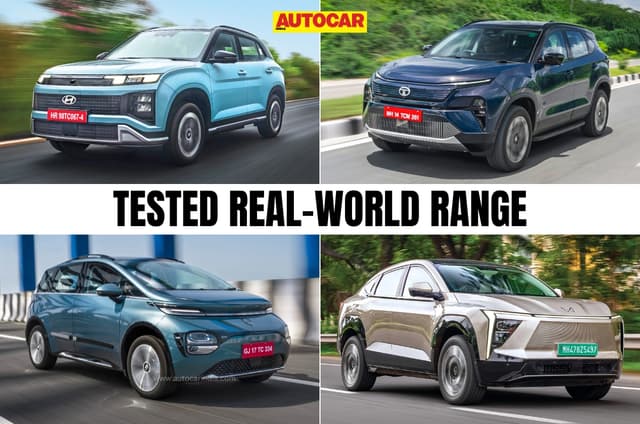
The facelift launched with 30kWh and 45kWh batteries, the latter claiming 465km (ARAI) thanks to better aerodynamics and efficiency. Regen braking remains adjustable via paddles and now recovers more energy. In real-world tests, the 45kWh version delivered a solid 350km combined range. Tata backs the battery and motor with an 8-year/1,60,000km warranty. Charging remains limited to 7.2kW AC and 30kW DC, which is slow by current standards. However, the addition of vehicle-to-load and vehicle-to-vehicle charging is a handy upgrade.
8.0
Ride quality remains firm but composed, improving at higher speeds. The Nexon EV handles well, with solid grip, confident braking, and well-weighted steering, even with efficiency-focused tyres. The rear disc brakes on higher variants further boost braking performance.
8.0
The 10.25-inch digital cluster is customisable and informative, while the 12.3-inch infotainment touchscreen is fluid and bright, though slightly glitchy on the pre-production unit we tested. The system supports OTA updates, wireless smartphone connectivity, and integrates features like a 360-degree camera, blind spot monitor, and the new arcade.ev app store, which offers OTT and games. Top trims include ventilated seats, a wireless charger, air purifier, sunroof, JBL sound system, and connected car tech. Safety is top-tier with six airbags, ESC, parking sensors, electronic parking brake, and hill controls. The updated model has also earned a 5-star Bharat NCAP rating.
8.0
Priced from Rs 12.49 lakh to Rs 17.19 lakh (ex-showroom), the Nexon EV facelift builds on its predecessor’s strengths. With major updates to design, quality, performance, and features, it nearly feels like an all-new model. Minor flaws like inconsistent fit/finish and slow charging remain, but overall, it’s a standout mid-cycle refresh that enhances an already successful formula.
8.0
Reviewed by: Soham Thakur
Tata Nexon EV reviews
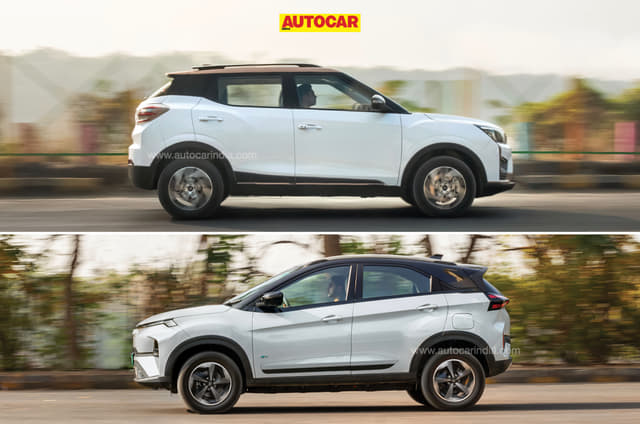
Tata Nexon EV comparison
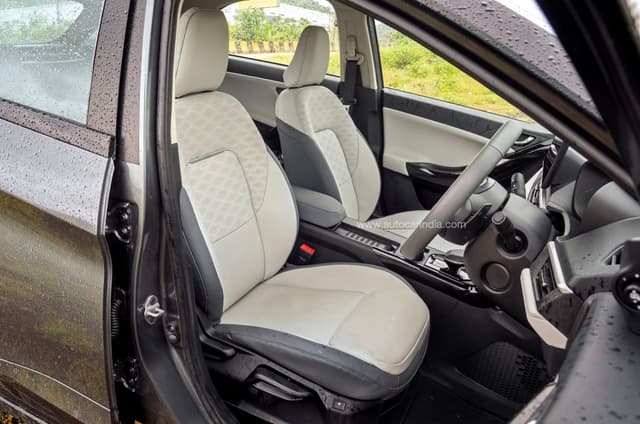
Tata Nexon EV mileage
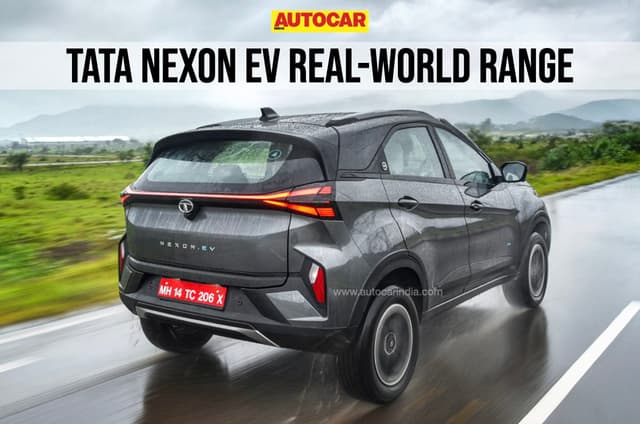
The Tata Nexon EV range is 275 km - 489 km km (MIDC) for the 30kWh battery pack, whereas the 45kWh option delivers a claimed Nexon EV range km of 489km. Tata Nexon EV mileage in real-world conditions should fall somewhere around 365 km (45kWh).
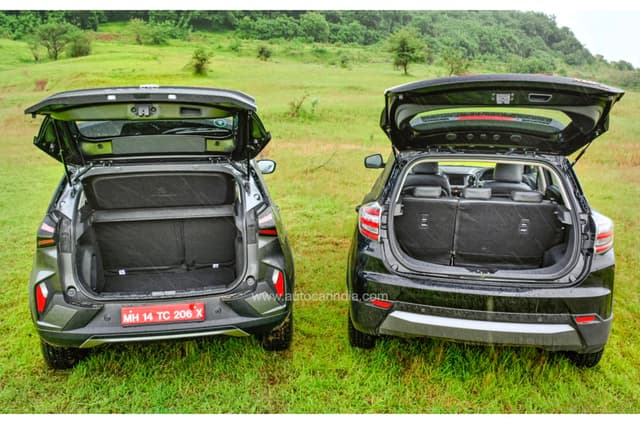
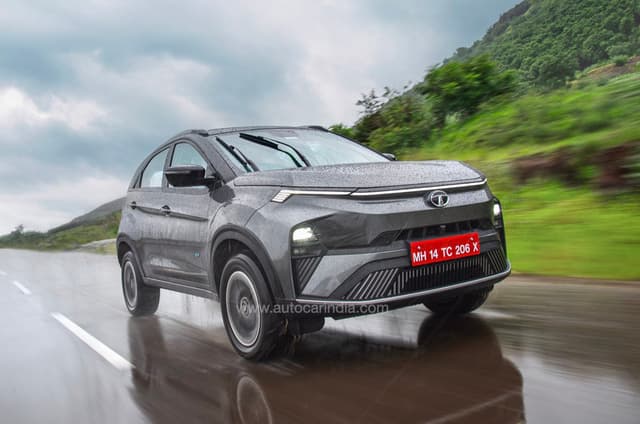
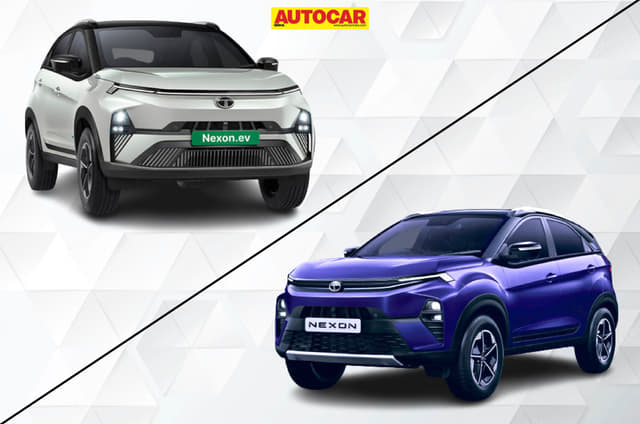
45kWh Nexon EV variants get a 142hp electric motor, while the 30kWh models get a 127hp motor. Torque output remains fixed at 215Nm for both. The Nexon EV battery can do a 10-80 percent charge in 40 minutes using a 60kW DC charger. For those concerned about replacement costs, the Nexon EV battery price and Tata Nexon EV battery price are covered under warranty for up to 15 years on the 45kWh variants.
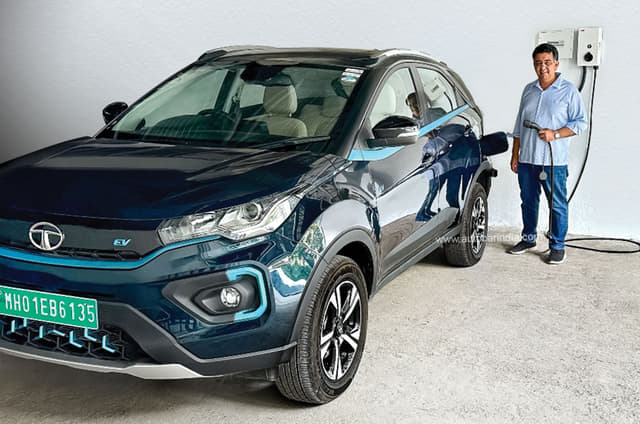
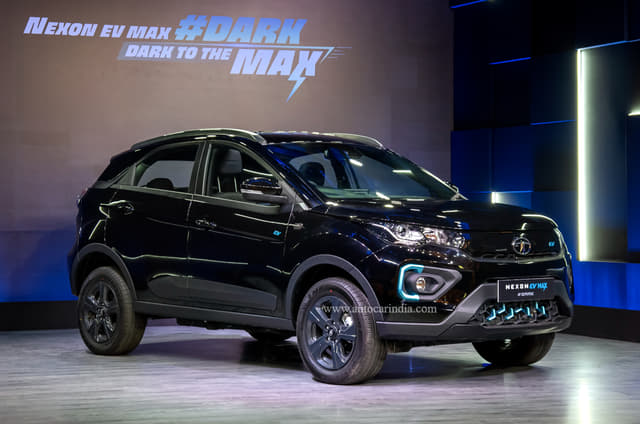
| Fuel type | Displacement | Transmission | Mileage |
|---|---|---|---|
| Electric | 45 kWh | Auto | 489 km |
| Electric | 30 kWh | Auto | 275 km |
Tata Dealers in Delhi
Planning to buy Nexon EV? Here are a few dealers in Delhi
ANR Automobiles Pvt. Ltd. - Kalan Mahal
3535, Netaji Subhash Marg, Kalan Mahal, New Delhi, Delhi 110002
Arya Tata - Connaught Place
Building N, Bombay Life, 37, Connaught Circle, Opposite CEC, Block N, Connaught Place, New Delhi, Delhi 110001
Autovikas Sales & Service Pvt. Ltd - Sector 20
Marble Market, Plot No. 62, Sector 20 Dwarka, New Delhi, Delhi 110075
Autovikas-Moti Nagar
No 26/3/4 Moti Nagar, Industrial Area, New Delhi, Delhi 110015
Autovikas-Nanhey Park
No K1, Rajapuri, Dwarka, Sector 5, New Delhi, Delhi 110075
Tata Nexon EV news
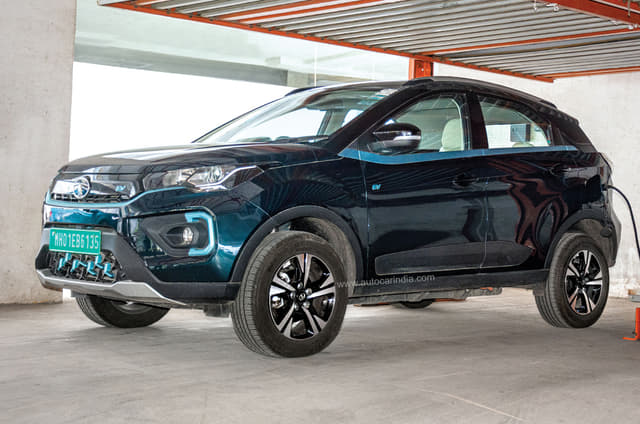
Tata Nexon EV Images
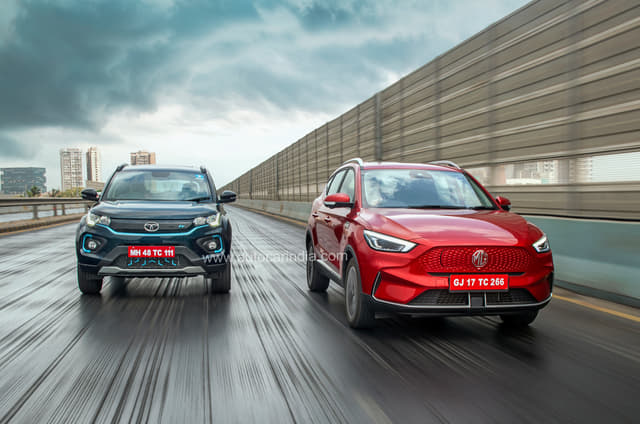
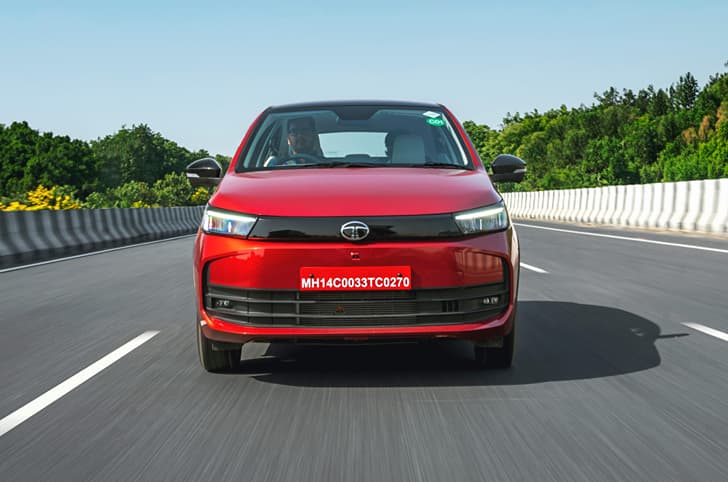
Images of the Tata Nexon EV showcase its compact SUV form factor with EV power, upright stance, sleek front and rear LED light bars, unique design, etc. Nexon EV interior images showcase the SUV's tech-laden cabin, panoramic sunroof, large touchscreen and driver's display, 350-litre boot, and more.
Tata Nexon EV videos
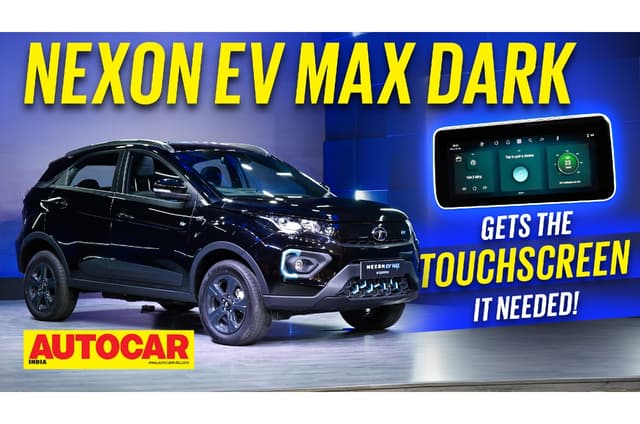
Tata Nexon EV video reviews cover ride comfort, real-world range, handling, charging performance, and interior practicality. Watch the Nexon EV SUV video to see how it provides EV performance in a compact body along with feature rich interiors and impressive range.


Tata Nexon EV Colours
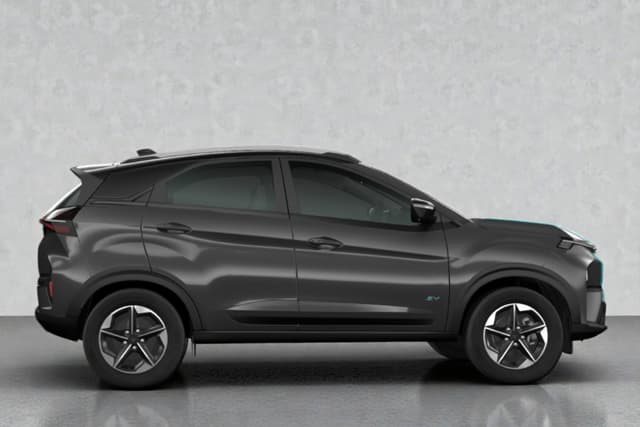
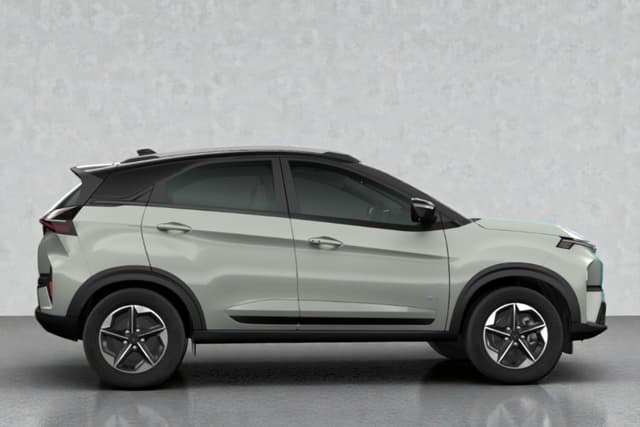
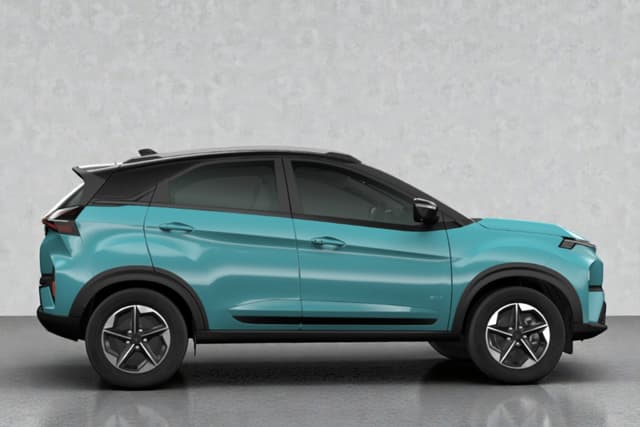
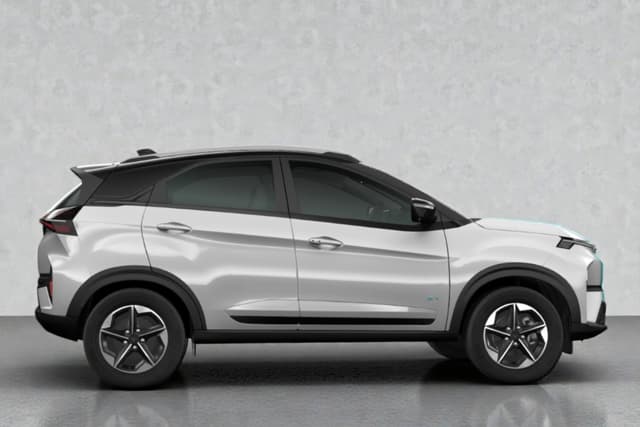
Tata offers 5 colours for the Tata EV, namely . These colours all come with a black roof, so they are dual-tone finishes by default. Depending on the variant, the Nexon EV interior finish is either all black (Dark edition), a mix of black and white or all red seats in the red DARK edition.
Tata Nexon EV FAQs
The Tata Nexon EV price starts at Rs 12.49 lakh. (ex-showroom).
The MIDC claimed Nexon EV range for 30kWh and 45kWh is 275km and 489km, respectively.
The Nexon EV on road price in Delhi starts at Rs. 13.27 lakh and goes up to Rs. 18.52 lakh. It varies based on the city and variant selected.
The Tata Nexon EV colours vary by variant. Here’s a breakdown:
- Pristine White, Daytona Grey, and Flame Red are offered across all models.
- Creative Ocean is exclusive to the Creative trim.
- Oxide and Intensi Teal are exclusive to the Empowered variant.
- A black roof is available with Empowered and Fearless variants.
- The Creative variant gets a white roof option.
The Nexon EV interior includes a digital dashboard, full-view navigation, electronic parking brake, 360° surround view camera, and 6 airbags for enhanced safety.
Questions you may find useful
Pankaj Makhija
•1wHello Autocar, My daily running is around 50-75 km, mostly in the city, with occasional intercity trips. I am confused between: Mahindra XUV 3XO Diesel Automatic, and An electric vehicle (EV) If I choose an EV, I am considering: Mahindra XUV 3XO EV Tata Nexon EV My top priority is the driving range,

Autocar India
Go for the Tata Nexon EV with the 45kWh battery. You can easily expect around 350km of real-world range, and with home charging, you can top up its battery overnight and run for a week without worry, keeping your 50-75km usage in mind. In daily traffic, it feels smooth and quiet.But if you can't arrange for home charging, then you could consider the Mahindra XUV 3XO diesel-AT option. Keep in mind, being an AMT, gearshifts aren't very smooth, and on account of its weight, the XUV 3XO won't be as efficient as a Kia Sonet or Hyundai Venue diesel-automatic, which will also be far smoother to drive.
Kks
•1wMy daily commute is around 250 km (round trip) between Greater Noida and Gurgaon, so I am looking for a cost-effective car with minimal running costs. I currently own a Maruti XL6 CNG, which has already completed 1 lakh kilometres. Please suggest the best suitable car, considering I plan to sell my existing vehicle.

Autocar India
If you can install a charger at home, then go for the Tata Nexon EV 45kWh with your 250km daily Greater Noida to Gurgaon run, it is the calmest, lowest-cost way to cover this distance on a single charge. In our real-world testing, the 45kWh Nexon managed 350km (combined city and highway) on one charge, which is enough for your commute with some buffer. It feels smooth and quiet, pulls cleanly for quick lane changes, and the higher seating position and light steering make long hours less tiring.One thing to be aware of: at very high speeds, the range will drop faster, so stick to a steady 80–90kph to comfortably finish the day without a top-up. If you want to stick with CNG and need three rows, then consider the Kia Carens Premium (O), which can be had with a dealer-fitted CNG kit.Do a test drive of the Nexon on part of your actual route to see the range you get at your usual speed.
JV
•2wI am looking to buy a compact car for my family, with an annual running of 30,000–40,000 km. My father strongly prefers diesel vehicles, while I am also considering an electric vehicle within a ₹20 lakh budget. We currently own a 2017 Hyundai i20 (top model), which is nearing 3 lakh km and needs replacement. The new car will be used mostly for city driving, along with occasional long trips of 300-500 km. We also have a 2021 Jeep Compass 4x4 Model S, which has clocked 1.2 lakh km and will be retained, although its fuel efficiency is around 11 km/l. Given our usage and long-term ownership plans (up to 3 lakh km), should we opt for an electric vehicle, a diesel car, or a hybrid? We also have an 8 kW solar setup at home with surplus power generation. I am considering EVs like the Tata Punch EV, Tata Nexon EV, MG Astor EV (if launched), and the upcoming Kia Syros EV. For diesel options, I am looking at the Kia Sonet, Hyundai Creta, and Tata Curvv. However, while I like Tata cars, I have some concerns about after-sales service. Could you suggest the most suitable electric or diesel automatic options for my needs?

Autocar India
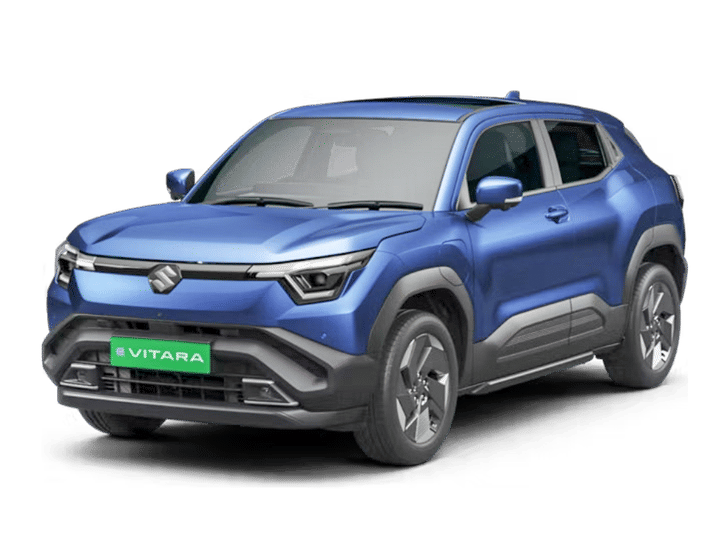
With your kind of usage of 30,000-40,000 km a year, mostly city driving, long-term ownership and an 8 kW solar setup, going electric makes a lot of sense. Running costs will be significantly lower, especially since you can charge at home using surplus solar, and the smooth, silent nature of an EV suits city driving perfectly.The Tata Nexon EV Long Range is still one of the most well-rounded options here. It offers a good balance of range, practicality and ease of use, and can handle your occasional 300-500 km trips with one planned charging stop. It is also a proven product with a wide user base.However, since you have concerns about Tata’s service, it is worth considering alternatives. The MG Windsor EV with the larger battery pack is a strong option. It offers more space, a more premium feel and a bigger battery, which helps with range and reduces charging stops. The Maruti Suzuki e-Vitara is another promising option, especially from a long-term ownership perspective, thanks to Maruti’s strong service network and reliability.Diesel is still a valid fallback. If you prefer complete flexibility and do not want to depend on charging infrastructure at all, options like the Hyundai Creta diesel automatic or Kia Sonet diesel automatic make sense, offering strong mileage and effortless highway performance.So, the decision comes down to priorities. Given your high running and solar setup, an EV is clearly the smarter long-term choice. Among EVs, the Nexon EV is the proven option, the Windsor EV offers more space and range, and the e Vitara is the safest bet for long-term ownership. Diesel should only be considered if you want maximum convenience without planning charging stops.
HARESH KAPADIYA
•2wMy wife drives 120km daily on the highway. Will the Punch EV be the right choice? If yes, why? My priorities are automatic, economical, and safety.

Autocar India
For your daily 120 km highway run requirements, with priorities of automatic transmission, low running costs, and safety, the Tata Punch EV Long Range is a strong and sensible choice. It offers the ease of an automatic, very low running costs with home charging, and a solid safety package, which aligns well with your needs. The Long Range version can comfortably handle your daily commute on a single charge, making it practical for everyday use.On the highway, the Punch EV feels stable and composed at typical cruising speeds, so it won’t feel out of its depth for your kind of usage. However, being a smaller car, it will not feel as effortless or as relaxed as a larger vehicle over long distances, especially when it comes to space and overall comfort.So yes, it is a good fit if your focus is on economy, ease of driving and safety. However, if you prefer a more relaxed and spacious experience for daily long highway runs, you may also consider upgrading to something like the Tata Nexon EV Long Range.
Raghu
•3wHi Autocar team, please suggest an EV for elderly parents. Usage will mostly be in the city, with occasional highway trips of 200 to 250 km. Budget is approximately ₹10 to 17 lakh.

Autocar India
Choose the Tata Punch EV Empowered 40. For elderly parents’ city use and occasional highway trips, it combines easy ingress, a comfortable ride and a decent real-world range.Since most drives are in the city, the 40kWh battery should deliver around 280-300km of range, which means charging once a week is feasible. Highway use will see this drop, but a 200–250km run on a single charge is still achievable. The tall seating position and wide-opening doors make ingress and egress easier for elderly occupants, while the compact footprint and good visibility make it easy to drive and park. Ride quality is also superb, and high-speed stability is reassuring.The one trade-off is rear seat space for three passengers. It is possible to sit three abreast, but the narrow width means it can feel a bit cramped. For slightly more range and a more spacious rear seat, consider the Tata Nexon EV Empowered 45.On the test drive, have your parents check ease of entry, seat height, brake feel and the regen modes. Plus, take note of battery consumption based on their driving style.
Santosh
•3wI am planning to buy a car and need help choosing the right option. My primary usage will be for office commuting and family trips, with an average monthly running of over 1,000 km on a mix of highway, city, and village roads. Considering this, should I opt for an electric vehicle to reduce high fuel costs, or go for a diesel vehicle? I previously used a Ford Figo Aspire diesel for 11 years. Please suggest the best vehicle option based on reliability, economy, and premium interiors for long-distance comfort.

Autocar India
Choose the Hyundai Creta diesel automatic; with your 1,000+km/month across city, highway and village roads, it offers strong low-end torque, good ground clearance, a comfortable cabin, and proven nationwide service.For your usage pattern, a diesel makes more sense than an EV. The Creta diesel offers good fuel efficiency, the automatic is smooth and easy to use, and the compliant suspension handles rough village roads quite well. Cabin quality, space and seat comfort are also well suited to long trips.The one thing you give up is the ultra-low running cost of an EV. If you can install a home charger and typically travel less than 250km between fast chargers, then consider the Tata Nexon EV with the larger 45kWh battery.On the test drive, do a sustained 80-90kph run and a rough-road loop; check cabin noise, automatic creep in traffic, and confirm extended warranty (five to seven years) and service package pricing with the dealer.
Akhil Singh
•5wI am looking for an EV as my daily travel is around 75 km. I have a 3.3kW charging facility free at my office, plus a fast DC charger nearby. My budget is flexible as I am exploring the new Tata Punch EV, Nexon EV and Curvv EV, considering the ₹3.5 lakh discount on the Curvv EV. What should be the logical choice, considering I don’t have much experience in driving, hardly, for 4-5 months as of now?

Autocar India
Among the options you mentioned, the Tata Punch EV Long Range is the most logical choice. It is compact, easy to manoeuvre and park, and its smooth electric power delivery makes city driving very simple for someone with limited driving experience. With your daily running and office charging facility, range should never be a concern. The new car is also very well-priced and a great value for money, thanks to the price cut compared to the older car.The Tata Nexon EV is a good step up if you want more space and a slightly more premium feel. It offers a bigger cabin and boot, which can be useful if you regularly travel with family.The Tata Curvv EV becomes attractive because of the ₹3.5 lakh discount, but it is a larger car and may feel slightly intimidating to drive initially.
Gopi
•5wI am planning to buy an electric car for mixed usage, including city driving, highway trips, and occasional hill drives. I have shortlisted the Tata Punch EV, Tata Nexon EV, and MG Windsor EV, but I am confused about which one would be the best choice. My key considerations are real-world driving range, highway performance, hill driving capability, and overall value for money. Could you please suggest which EV among these would suit my needs best and which variant I should choose?

Autocar India
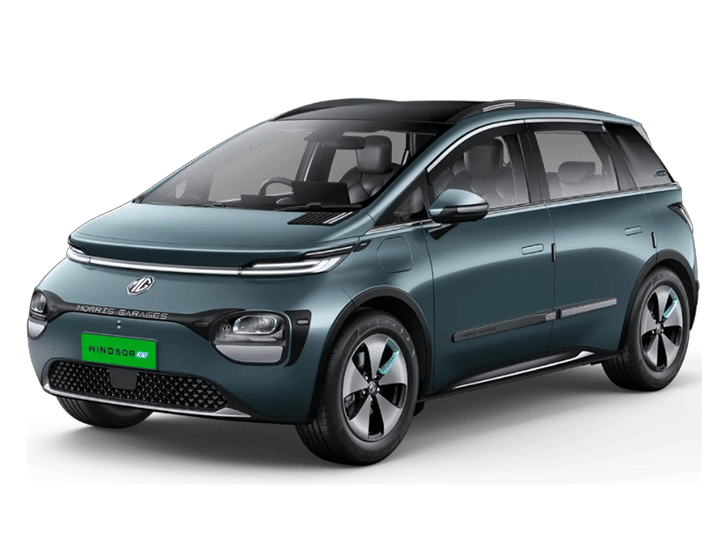
Since your usage is a mix of city and highway driving, with occasional trips to the hills, it would be advisable to opt for the largest battery pack available. Among your chosen options, the standard MG Windsor has the smallest battery at 38kWh, the updated Tata Punch EV can be had with a 40kWh battery, and the Tata Nexon EV gets a 45kWh unit. MG has also introduced the Windsor Pro with a 52.9kWh battery pack, but it comes at a premium of almost Rs 2 lakh over the standard Windsor.If you are willing to stretch your budget, the Windsor Pro will offer the longest real-world range of the three. In our testing, the standard 38kWh Windsor managed a combined real-world range of 308km, with an efficiency of 8.1km/kWh. With a significantly larger battery, the Windsor Pro should be able to deliver around 400km in real-world conditions. Naturally, the range will drop when climbing hills, but you will be able to recoup some energy on the way down using the regen modes. If you are on a tighter budget, then the Nexon EV with the 45kWh battery is a good choice too. In our testing, it delivered an efficiency of 7.79km/kWh and a real-world range of around 350km.
Binod Yande
•6wWould you guys recommend the new Punch EV? If so, what are the positives and negatives, and what are the alternatives to this car in a ₹13 to ₹15 lakh budget? It has to be an EV.

Autocar India
The Tata Punch EV is a very impressive product and is an ideal city car in many ways. It's got a very smooth powertrain and good ride comfort, and its small size is a virtue in tight city confines. Tata Motors has updated the powertrain, and the promise is of improved real-world efficiency. Charging speeds have also improved with the update, with support for up to 60kW DC charging.You can get a fully equipped Punch EV Empowered + S 40 within your budget, which packs in plenty of tech features like digital dials, a 10.25-inch touchscreen and a 360-degree camera.On the flip side, the Punch EV is comfy for four passengers but will be a squeeze for five. If you need a larger electric car, you could consider the Tata Nexon EV and MG Windsor EV. Both are fine EVs in their own right, but you will have to settle for a lower spec variant within your budget.
Abhijith Saji
•6wI need an SUV or crossover under Rs 20 lakh on-road that can handle bad roads on a daily basis without major suspension issues and also deliver good mileage. I am open to both diesel and electric vehicle options.

Autocar India
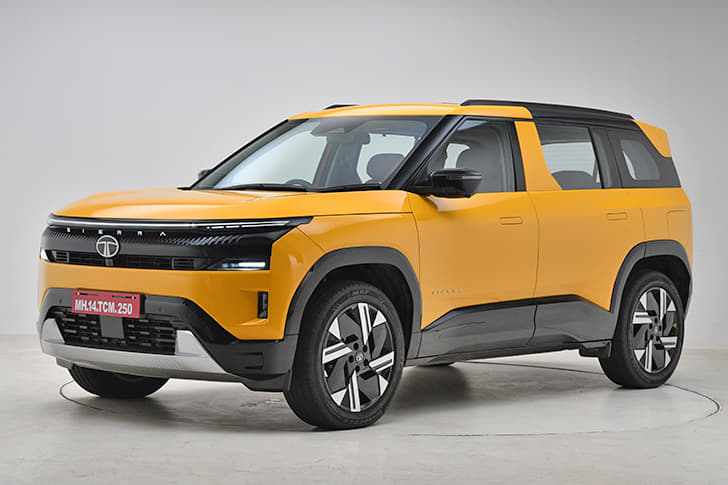
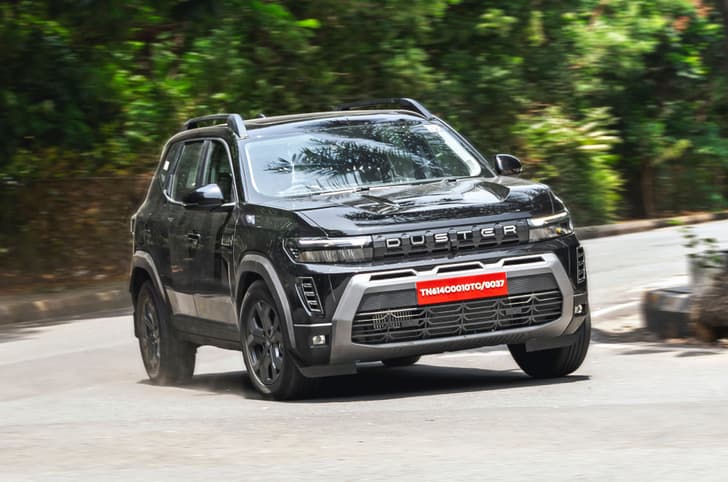
We would recommend waiting for the new Renault Duster, whose launch is just a few weeks away, on March 17. Like the original Duster, it is expected to offer a tough yet comfortable suspension, and it has a whopping 212mm of ground clearance, which should keep it from bottoming out on bad roads. It comes with a choice of turbo-petrol engines - a 100hp 1.0-litre and 160hp 1.3-litre - both of which are understood to be quite fuel efficient. However, if you can wait until Diwali, Renault is launching a strong hybrid version of the Duster that uses a 1.8-litre petrol engine, 1.4kWh battery and 49hp electric motor for a total of 160hp, and promises exceptional mileage. If you want a diesel option, check out the Tata Sierra diesel, and if you want an EV option, check out the Tata Nexon EV, both of which have robust suspension to tackle rough roads.