


Last Updated on: 22 May 2026
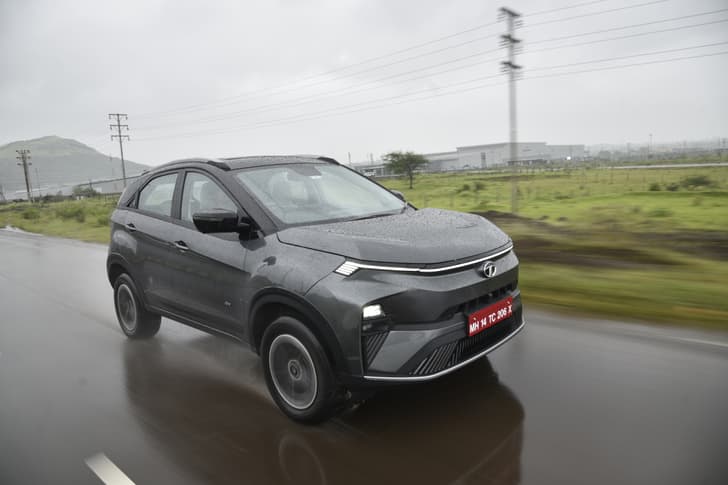
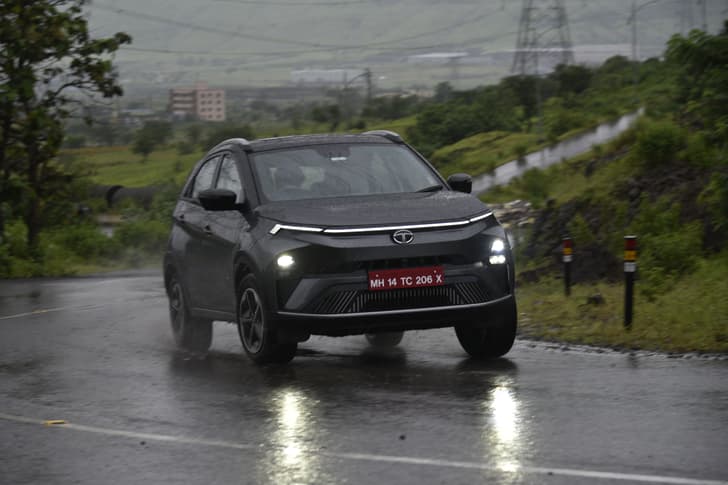
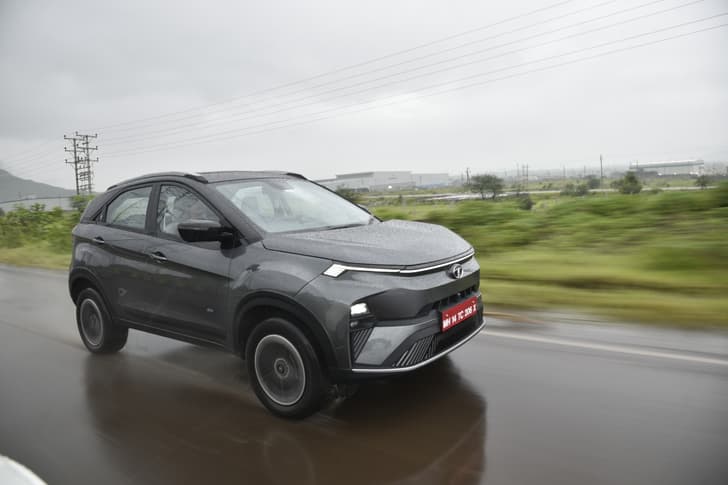
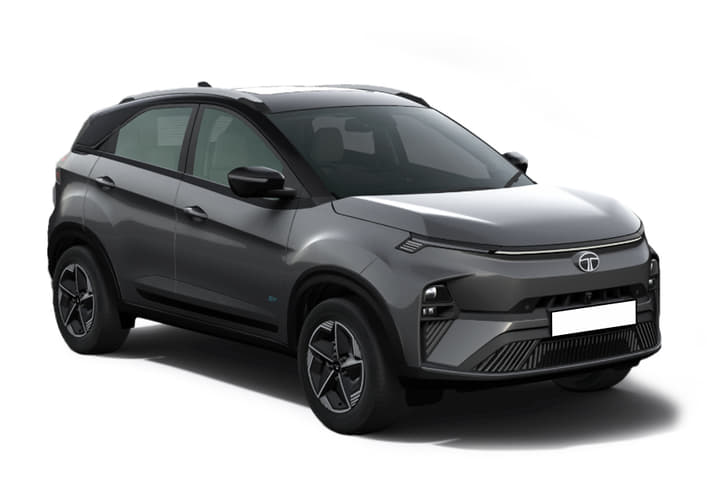
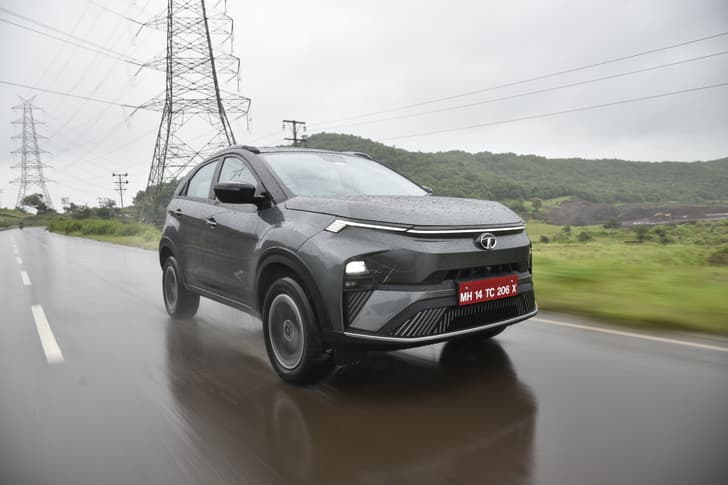
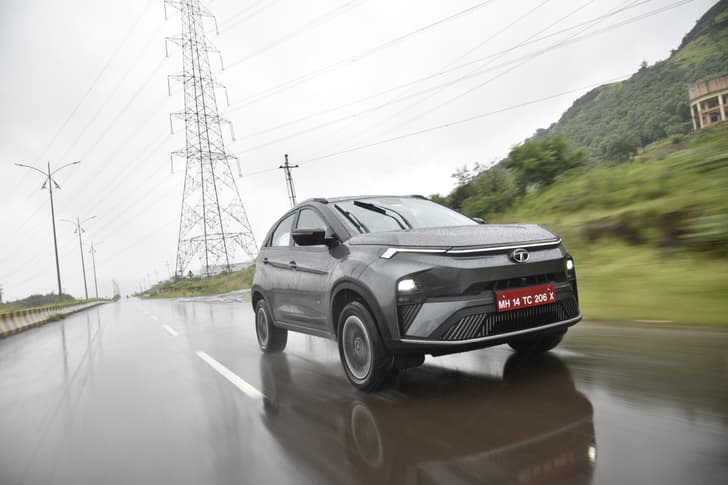
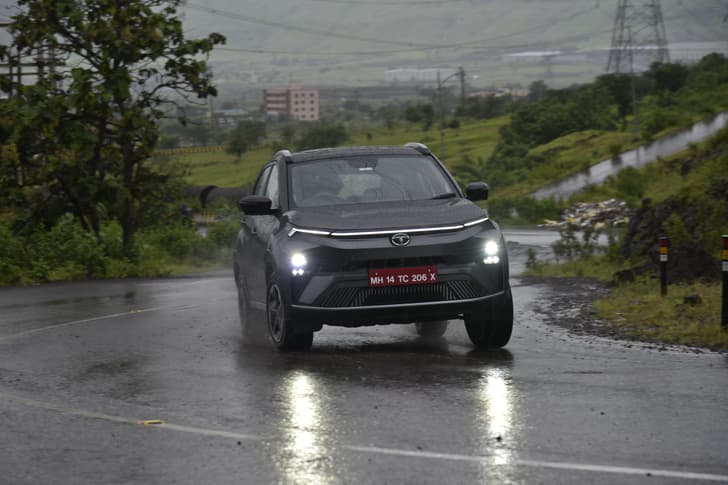
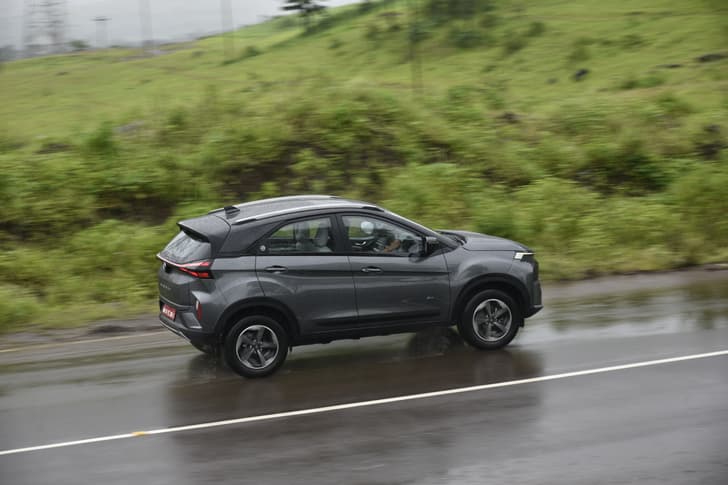
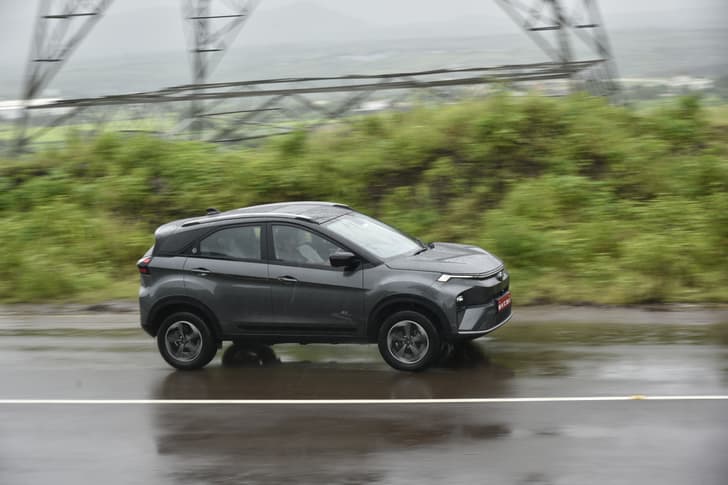
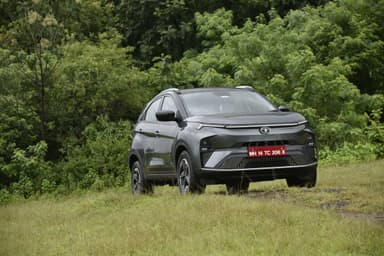
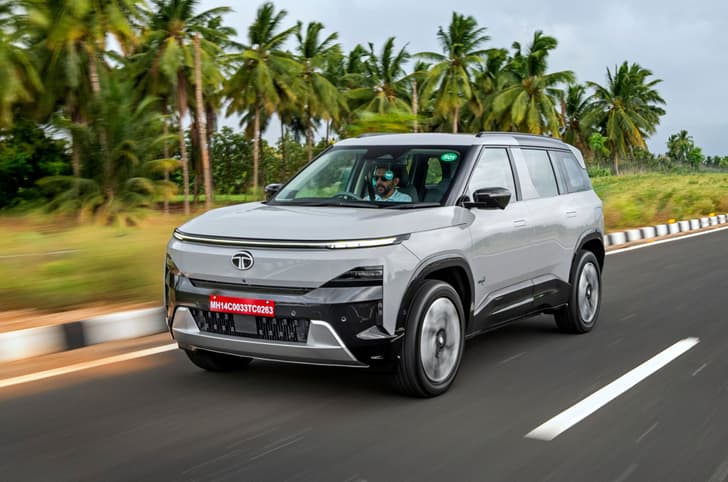
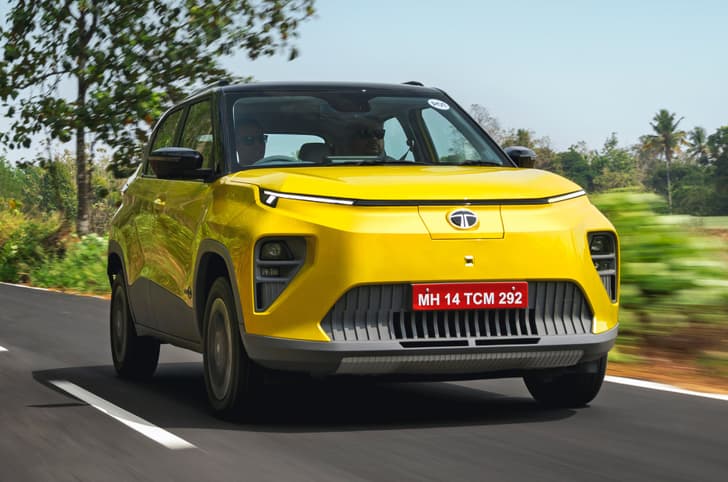
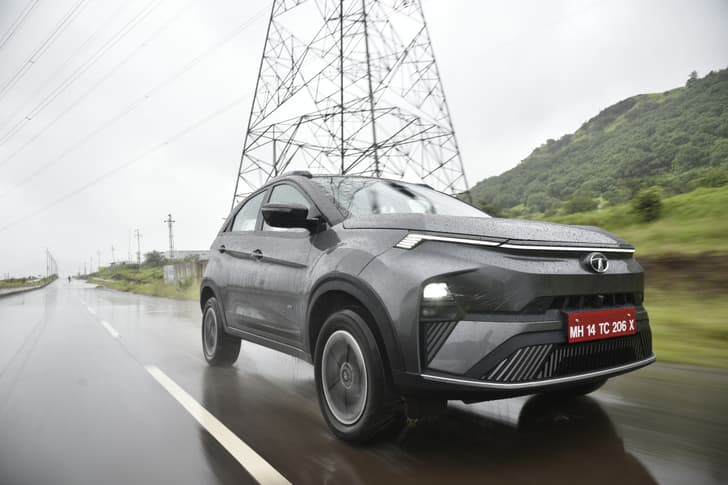
Tata Nexon EV Empowered+ A 45 Dark
The Tata Nexon EV Empowered+ A 45 Dark variant is priced at ₹17.49 lakh. The Empowered+ A 45 Dark variant offers key features like . Explore complete specifications, and features below.
Tata Nexon EV Empowered+ A 45 Dark specifications
Engine & Transmission
Fuel Type/ Propulsion | Electric |
Pure Electric Driving Mode | Yes |
Number of Motors | 1 |
Motor Type | Permanent Magnet Synchronous AC motor |
Max Motor Power | 145hp |
Max Motor Torque | 215Nm |
Drive Layout | Front Wheel Drive |
Gearbox Type | Auto |
Number of Gears | 1 |
Lockable Differential/s | No |
Sport Mode for Automatic Gearbox | Yes |
Manual Shifts via Gear Lever on Automatic Gearbox | No |
Fuel & Performance
Battery Capacity | 45 kWh |
Terrain Modes | No |
Claimed Range | 489 km |
Charging Time | 17.6hrs 10%-100%(15A), 6.6hrs 10%-100%(7.2 kW AC fast charger), 40min 10%-80%(60 kW DC fast charger) hrs |
Auto Start/Stop | No |
0-100kph | 9.77 s |
20-80kph (in third gear/ kickdown) | 5.32 s |
40-100kph (in fourth gear/ kickdown) | 6.68 s |
Suspension & Steering
Front Brakes | Disc |
Rear Brakes | Disc |
Type of Power Assist | Electric |
Steering Adjust | Tilt |
Steering Adjust type | Manual |
Turning Radius | 5.3 m |
Front Suspension Type | Independent, MacPherson Strut |
Front Springs | Coil Springs |
Rear Suspension Type | Non-independent, Torsion Beam |
Rear Springs | Coil Springs |
Damper Control | No |
Ride Height Adjust | No |
Wheels | Alloys |
Wheel Size | 16 inches |
Front Tyre Size | 215/60 R16 |
Rear Tyre Size | 215/60 R16 |
Spare Wheel | Full Size |
Dimensions
Length | 3994 mm |
Width | 1811 mm |
Height | 1625 mm |
Wheelbase | 2498 mm |
Doors | 5 |
Ground Clearance | 190 mm |
Boot Capacity | 350 litres |
Tata Nexon EV Empowered+ A 45 Dark features
Comfort
| Power Windows | Front and Rear |
| Acoustic Windshield | |
| Cabin Boot Access | |
| Digital Instrument Cluster | Fully Digital |
| Door Pockets | |
| Utility Recess On Dashboard |
Safety
| Crash Test Rating | 5 |
| Door Ajar Warning | |
| Driver Airbag | |
| Airbags | 6 |
| Day Night Interior Mirror | Automatic |
| Seat Belt Warning |
Exterior
| Body Coloured Bumpers | |
| Welcome and Goodbye Animation | |
| Rub Strips | |
| Antenna | Shark Fin |
| Scuff Plates | |
| Headlight Height Adjuster |
Interior
| Speedometer | Digital |
| Tachometer | |
| Trip Meter | |
| Average Fuel Consumption | |
| Average Speed | |
| Distance to Empty |
Entertainment
| Audio System | |
| CD Player | |
| Branded Music System | JBL |
| Speakers | 4 |
| USB Input | |
| AUX Input |
Connected Car Features
| Service Reminder Via App | |
| Check Vehicle Status via App | |
| Vehicle Tracking Via App | |
| Emergency Call Button | |
| Find My Car | |
| Geo Fence |
Tata Nexon EV variants
Tata Nexon EV comparison

Questions you may find useful
Sagar Kailash Agarwall
•1dHi, I am planning to buy an EV in the 15-17 lakh range. This will be my daily drive to the office, which is approximately 40-50 kms a day. I have driven the Nexon EV, Windsor EV, and the Curvv EV. I haven't driven the VF6 yet, as it is a little over my budget, but it seems a better car in terms of build quality and driving, as per reviews. Should I settle for one of the obvious or splurge a bit for the VinFast?

Autocar India
For a 40-50 km daily city run and a budget of Rs. 15-17 lakh, go with the Nexon EV 45kWh version in a mid trim. It suits your use and budget better than stretching for the Vinfast VF6. You’ll get more than enough range for the week with a healthy buffer; it is easy to drive and park, rides comfortably over bad patches. Also, Tata’s service reach is fairly wide. The Nexon EV has also proven to be a safe car.Do note, the Nexon EV’s cabin does not feel as premium as the VF6. But for office runs, traffic and the odd weekend trip, it works well.If you want a fresher shape and a bit more road presence from your shortlist, the Tata Curvv EV is worth a look.
Samarth Shukla
•2dI want to buy an EV in the Rs 12-14 lakh budget. My daily commute is around 60-65 km, including short highway stretches and narrow rural roads. I am confused between the Tata Punch EV (Accomplished +S), Nexon EV (Fearless MR / Creative 45) and XUV 3XO EV (AX5). I already own a 2025 Kia Seltos and a 2012 Wagon R LPG. Which EV should I choose?

Autocar India
Daily 60-65 km with a mix of short highway and narrow rural roads, and a Rs. 12-14 lakh cap, in this brief, the Tata Punch EV Accomplished + S fits best. It is smaller and easier to thread through tight lanes than the other two, yet it has good ground clearance and a suspension that takes rough patches well, so your rural stretches won’t feel tiring. It will easily cover your daily run with charge to spare, and since you already have the Seltos for longer trips, you won’t miss the extra punch or size of the bigger cars.The Tata Nexon EV Fearless MR/Creative 45 and the Mahindra XUV 3XO EV AX5 are better suited for long highway days, but they may stretch your budget and are a size up, which can be less convenient in narrow bylanes.
Ajinkya Chaudhari
•3dHi, I am confused between the Kia Sonet and the Tata Nexon EV. This will be my first car, and my usage will be very low (not even sure km per week).

Autocar India
An EV makes the most sense when your usage pattern is clear and regular enough to justify the higher upfront cost and when charging is easy and convenient at home or work. If you are not even sure how much you will drive yet, locking yourself into an EV as your first car may be premature.The Kia Sonet is the easier no-stress option. It is easy to live with, a premium feeling inside, compact enough for a first-time driver to manage comfortably. Also, it works equally well whether your usage stays low or suddenly increases. There is also no charging dependency or range planning to think about.The Tata Nexon EV is a good product, and if your usage eventually becomes mostly city-based with regular charging access, it can make financial sense. But as a first car with uncertain usage, it adds variables you do not yet need.
Viren
•4dWe have a Baleno and now want to buy an EV SUV. Which would be the best option for daily city driving?

Autocar India
For daily city use and moving up from a Baleno, you should consider the Tata Punch EV Long Range. It is small on the outside, so you can park and squeeze through traffic easily, but the seat is higher and the ground clearance is better than your Baleno, so speed breakers and broken roads are less of a worry. The drive is smooth and quiet at low speeds, which makes stop-go traffic far less tiring, and a home overnight charge will comfortably cover multiple city commutes.Do note, the rear seat and boot are not very big, so long trips with lots of luggage will require you to plan.If you want more cabin space and a stronger performance while still staying city friendly, look at the Tata Nexon EV. Overall, for daily city duty, the Punch EV LR lines up best.
Apoorv Joshi
•5dWe currently use a Renault Kiger as our city commuter car and are now planning to replace it with a sub-4 metre EV. Our usage is quite limited and mostly restricted to city driving, as we already have another car for highway travel. Our budget is within ₹15 lakh.

Autocar India
For city-only use, on a Rs 15 lakh budget, the Tata Punch EV fits best. It is small enough to park anywhere, yet sits high off the ground like your Kiger, so speed breakers and bad patches are easily dealt with. The motor is smooth in traffic, and the real city range is enough for many days of short trips, so you won’t charge often. And the best part is you'll get the fully-loaded top spec Empowered +S 40kWh variant in your budget.Know the trade-offs: fast charging isn’t the quickest, and the rear seat is fine for two adults but tight for three. The boot is smaller than your Kiger's, too. If you want a more spacious back seat and boot, and a bit more real-world range, you can check out the Tata Nexon EV. However, while it can be had in your budget, you'll only get a low to mid variant, so for outright value for money, we'd still recommend the Punch EV.
Deepak Upadhyay
•6dMy daily commute is 100-125 km, with 50% city traffic and the remaining 50% on state highways where speeds do not exceed 80-90 km/h. I am currently using a 2018 Swift AGS with no issues. With a budget of Rs. 15 lakhs, please suggest an EV or any CNG car with automatic transmission. My main purpose is to reduce fuel expenses.

Autocar India
With 100-125 km a day and Rs. 15 lakh budget, the Tata Nexon EV Creative 45kWh fits your brief best. It will cut your running cost sharply, stays in budget, and the single-gear drive feels far smoother than your Swift’s automatic in stop-go traffic. For your mix of city and 80-90 kph state roads, it moves easily at low speeds and stays steady at cruise. The higher seat and comfortable ride also help on broken patches and speed breakers.Do check two things: you should be able to park at home and plug in overnight, and at 80-90kph with AC the range will drop a bit, so keep some spare range in hand. In our real world tests, we managed 355km on a single charge so you will need to charge it once every two days. If you must go CNG, consider the Tata Altroz iCNG automatic. It lowers fuel spend and keeps the easy drive, but it feels slower on CNG, the boot is smaller, and CNG pump queues can eat time. For your daily run and savings goal, go with a Nexon EV.
Pankaj
•6dHello Team Autocar, Thank you for always guiding and helping car buyers with your detailed advice. My driving mainly consists of trips ranging from 50-150 km one way, although occasionally the distance may extend further. Considering this usage pattern, would it make more sense to buy an EV or a diesel automatic car? My budget is around ₹15-18 lakh.

Autocar India
If you can set up a charger at home, an EV would be cheaper to run, but on your longer trips (150km one way, 300km return), you might need to make a quick stop to top up the battery. If you are alright with the extra planning, then the EV is the obvious choice. If you cant charge at home and dont want trips to be limited by range, then the diesel automatic is the safer choice.If you decide to go with an EV, then the Tata Nexon EV is a good choice. The 45kWh battery can deliver around 350km in the real world, as per our testing, which should be enough for most of your trips. For a diesel, the Kia Seltos HTE (O) diesel automatic is a good choice. The base trim is rather well equipped, with features like cruise control to take the stress out of your longer drives.If you have a fixed parking spot where you can set up a charger and your routes have fast chargers, an EV is the better choice.
Bharath
•1wI’m from Chennai. I currently own two manual petrol cars - an S-Cross Zeta (Feb 2022) that has run 40,000 km, and a Grand i10 Nios Asta (Dec 2016) that has run around 30,000 km. I’m considering whether it makes sense to sell/exchange both cars and move to a single automatic car. My usage is around 1,200 km per month, with 90% city driving and 10% highway use. Would this be a sensible move? If yes, which automatic car would you recommend in the ₹15-17 lakh budget range? Or would you recommend an EV?

Autocar India
With 1,200 km a month in Chennai and mostly city traffic, moving to one automatic is sensible if your family’s schedules work with a single car. In that use, the Tata Nexon EV Medium Range is the stronger fit in your Rs. 15-17 lakh window. It is very smooth in stop-and-go traffic, there is no clutch heat or strain, and the instant response makes gaps easy. Your monthly running suits an EV well, and if you can install a home charger, you start each day with a full “tank” and very low running costs. As your only car, the Nexon EV has enough space for a small family, rides comfortably over broken patches, and feels easy to place in tight lanes and parking. If you can stretch your budget, the Hyundai Creta EV would make for a much better EV with a better driving experience and a larger and more comfortable car. Two watch-outs: you need a fixed parking spot with charging, and longer highway trips will need some planning around chargers.If you would rather stay with petrol, pick the Maruti Suzuki Grand Vitara automatic in a mid trim. It keeps life easy in traffic, sits a bit higher for a better view, and you already know Maruti service from your S-Cross, and if you can stretch for the hybrid, it will keep your fuel costs in check. Overall, for city-heavy use, the Nexon EV makes the most sense.
Chirajay Sharma
•1wKindly suggest a good EV for a 100 km daily drive in Delhi. I am considering the e-Vitara, Nexon EV, and BYD Atto 3.

Autocar India
For a daily 100 km run in Delhi traffic and heat, the Tata Nexon EV 45kWh suits your usage best among these three options. It has enough real range to finish the day with plenty left, so jams won’t stress you. It can also be conveniently charged overnight on a home wall box, and Tata’s service and public charger presence is good in NCR.It also feels easy to drive in tight streets, rides bumps well, and is more affordable than the BYD. Two things to note: highway trips still need a bit of planning for fast chargers. If you'd like a bit more range, then consider the Tata Curvv EV, which now only comes in the 55kWh variant.If you want more cabin space, stronger highway performance, and fewer charging stops through the week, then the BYD Atto 3 is the upgrade option, though it comes at a significantly higher price.Overall, for your 100 km daily city use, the Nexon EV 45kWh lines up best.
Tushar
•1wSir, how is the rear suspension and ride quality of the Mahindra XEV 9e Pack One and Two? I tested the Pack Three and found the rear seat very boat-like with too much movement both vertically and sideways, which can get nauseating for rear-seat passengers. Is the suspension setup in Pack One and Two any better? Should I instead go for the Harrier EV 75 RWD if I want better ride quality, or should I wait for the Sierra EV? I want an EV bigger than the Nexon, but I do not like the Curvv EV and was thinking of avoiding Mahindra because of the suspension. I tried the Nexon EV and new Punch EV and found their rear suspension much better than the XEV 9e and even the eVitara. Please guide.

Autocar India
What you felt in the Mahindra XEV 9e Pack Three is a fair observation. The XEV 9e does have a softer suspension tune, and for some rear seat passengers, that can translate into a floaty, slightly boat-like vertical movement over undulations, which can feel uncomfortable or even nauseating if you are sensitive to that kind of motion. As far as we know, there is no major suspension hardware difference between Pack One, Two and Three that fundamentally changes this character, so we would not expect the lower variants to feel significantly different in this regard.If rear seat ride quality and body control are a major priority, the Tata Harrier EV is the better option right now. It feels more tied down, composed and generally better controlled from the rear, without that excessive floatiness. If you still want to stay with Mahindra, the XEV 9e actually feels more balanced in this respect and does not have the same exaggerated bouncy character as the XEV 9S.That said, since you are clearly particular about ride quality and already like how Tata’s EVs are tuned, we would absolutely suggest waiting for the Tata Sierra EV as well, especially since its launch is right around the corner. It should sit in that sweet spot above the Nexon EV in size while potentially offering the kind of more settled suspension setup you seem to prefer.