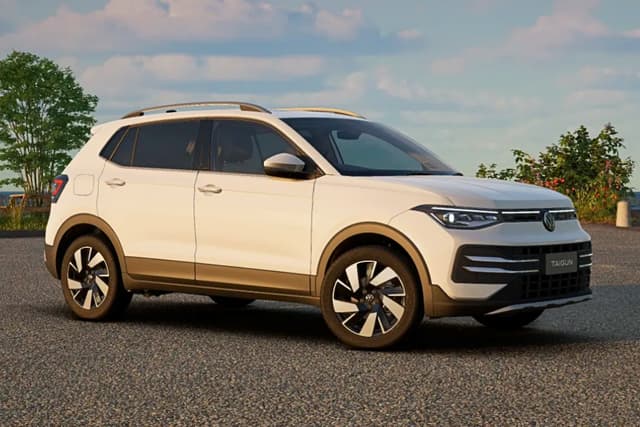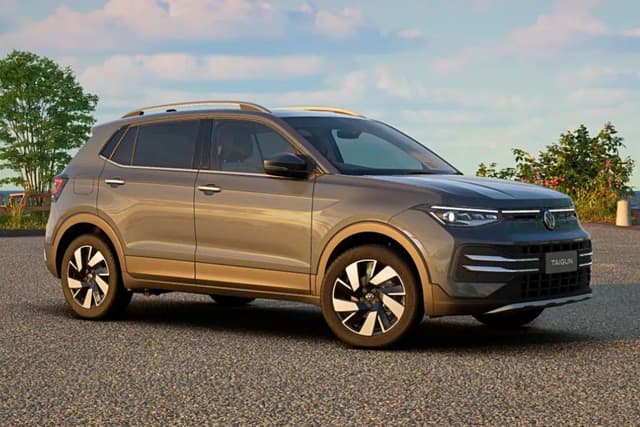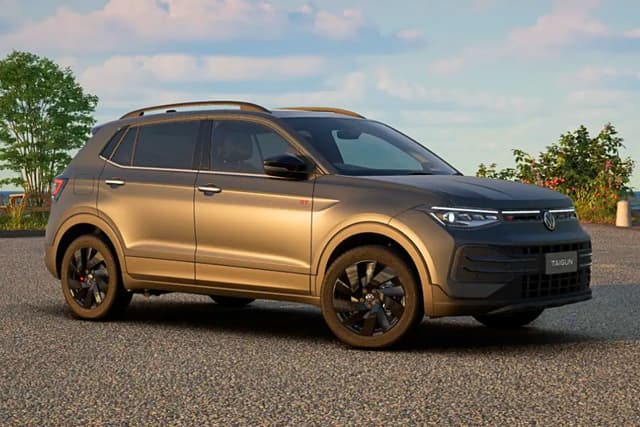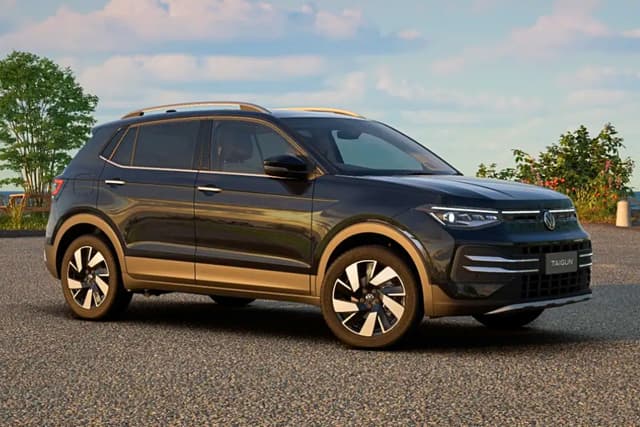
Volkswagen Taigun
The Volkswagen Taigun is a midsize SUV with two turbo-petrol engine options, a 385-litre boot and five seats. The range includes the 1.0 TSI with a six-speed manual or eight-speed automatic, and the more powerful 1.5 TSI with a seven-speed DSG automatic. The 1.0-litre engine produces 115hp and 178Nm, while the 1.5-litre unit makes 150hp and 250Nm. The 2026 facelift brings revised styling, a panoramic sunroof and an updated digital instrument cluster.
Taigun Key Features
Here is what buyers get across the range.
Category | Key features |
Engine and gearbox | • 1.0-litre TSI turbo-petrol, 115hp and 178Nm • 1.5-litre TSI Evo turbo-petrol, 150hp and 250Nm • Six-speed manual and eight-speed torque-converter automatic for the 1.0 TSI • Seven-speed DSG automatic for the 1.5 TSI |
Screens and audio | • 10.1-inch touchscreen • 10.25-inch digital instrument cluster • Wireless Android Auto and Apple CarPlay • Six-speaker sound system |
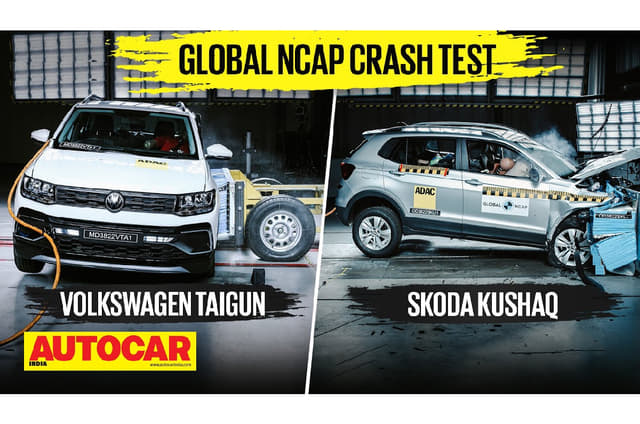
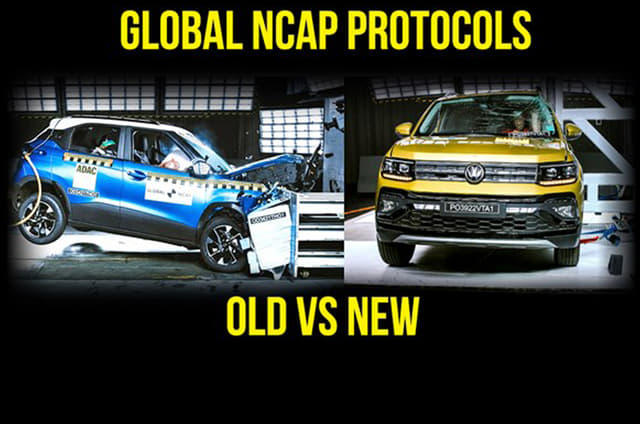
Safety | • Six airbags as standard • Electronic stability control (ESC) • Rear-view camera and parking sensors, depending on variant • Five-star Global NCAP safety rating |
Comfort and convenience | • Panoramic sunroof on selected variants • Ventilated and electrically adjustable front seats on selected variants • Automatic climate control • Wireless phone charging and cruise control, depending on variant |
Practicality | • 385-litre boot, expandable to 1,405 litres • 4,221mm long, 1,760mm wide and 1,612mm tall • 2,651mm wheelbase • Five seats and 188mm ground clearance |
Taigun Road Test Findings
What we liked
- The Taigun remains one of the more engaging SUVs in its segment, with predictable handling and excellent highway stability.
- The new eight-speed automatic pairs well with the 1.0 TSI, delivering smooth gear changes and more natural creeping in traffic than the outgoing six-speed automatic.
- The 1.5 TSI offers stronger performance, with 150hp and 250Nm paired with a quick-shifting seven-speed DSG.
- The facelift adds useful equipment, including a panoramic sunroof and a larger digital instrument cluster.
What we did not like
- The firm suspension can feel jarring over sharp bumps and broken surfaces at low speeds.
- The new eight-speed automatic can downshift frequently, even with light throttle inputs.
- The reverse camera still has poor resolution, and the SUV misses out on a 360-degree camera, ADAS and rear sunblinds.
- Despite the facelift, the Taigun has not caught up with some rivals on overall equipment and value for money.
Who should buy the Taigun?
Based on our review, the Taigun suits five kinds of buyers.
Buyer type | Why it fits |
If driving enjoyment matters | The responsive turbo-petrol engines, predictable handling and strong highway stability make it a good choice for buyers who enjoy driving. |
If most driving is in the city | The 1.0 TSI with the eight-speed automatic offers smooth gear changes and a natural creep function for stop-start traffic. |
If highway travel is frequent | The Taigun feels planted at high speeds, and the suspension and chassis inspire confidence on open roads. |
If performance is a priority | The 1.5 TSI produces 150hp and 250Nm and is paired with a seven-speed DSG automatic. |
If a practical family SUV is needed | The 385-litre boot, split-folding rear seats, rear AC vents and five-seat layout make it suitable for everyday family use. |
The Taigun is less suited to buyers who prioritise a soft ride over rough roads or want the latest convenience and driver-assistance features. Its firm low-speed ride and lack of a 360-degree camera and ADAS are worth considering before choosing it over newer rivals.
Volkswagen Taigun Price Details
- Comfortline 1.0 TSI MT (base model): 11.00 lakh (ex-showroom)
- Highline Plus 1.0 TSI AT (mid variant): 15.57 lakh (ex-showroom)
- GT Plus Sport 1.5 TSI DCT (top model): 19.47 lakh (ex-showroom)
Volkswagen Taigun Latest Updates
- 28 October 2026: Volkswagen Taigun crosses 1 lakh domestic sales milestone
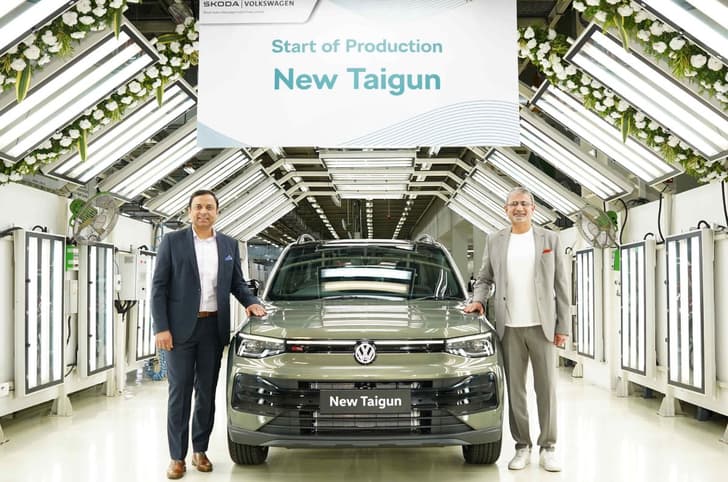
- 14 April 2026: 2026 Volkswagen Taigun facelift launched at Rs 11 lakh
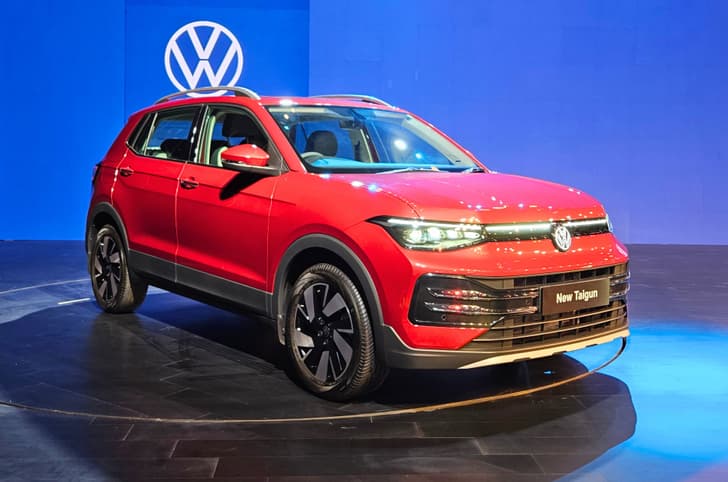
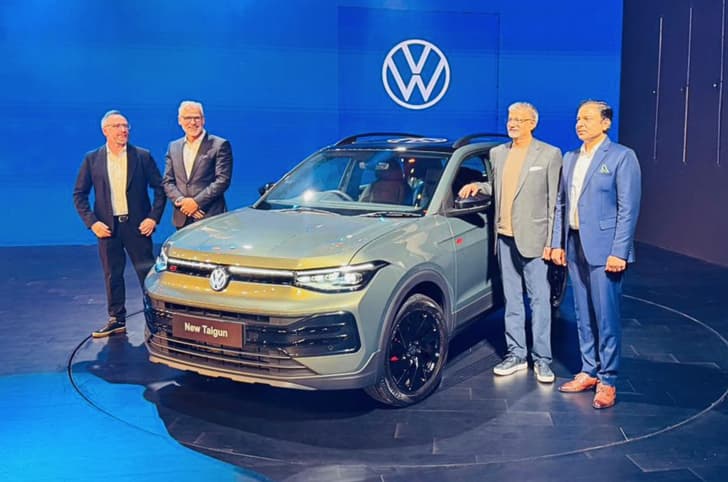
- 9 April 2026: Volkswagen pulls the covers off the Taigun facelift, gets updated styling with more features, like a panoramic sunroof and new 10.25-inch driver's display
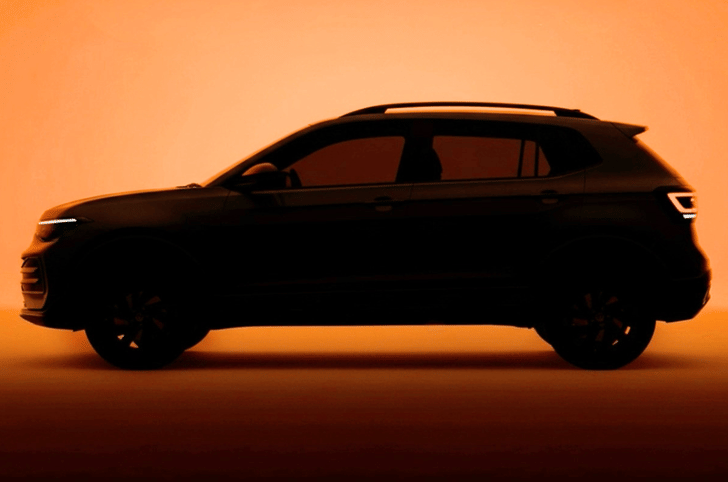
- 6 April 2026: Volkswagen teases Taigun facelift ahead of April 9 launch; first official teaser of the midsize SUV hints at redesigned lights and front bumper
- 26 March 2026: Volkswagen Taigun facelift to debut on April 9
Taigun Specifications
18.85 kmpl - 19.98 kmpl
999 cc - 1498 cc
Petrol
Manual, Torque Converter, DCT
5
150 hp
5
250 Nm
Taigun Highlights
6 Airbags
Fully Digital Instrument Cluster
1.5L Petrol Engine
Wireless AA + Apple CarPlay
Sequential Turn Indicators
Front Only Ventilated Seats
+6
11
Volkswagen Taigun price & variants
The Volkswagen Taigun is offered in seven variants: Comfortline, Highline, Highline Plus, Topline, GT Line, GT Plus Chrome and GT Plus Sport. Prices range from Rs 11.00 lakh to Rs 19.47 lakh (ex-showroom). The 1.0-litre TSI is available with a six-speed manual or an eight-speed torque-converter automatic, while the 1.5-litre TSI is paired with a seven-speed DSG.
Which one to pick:
- For everyday city driving: The 1.0 TSI with the eight-speed automatic is the more convenient choice for stop-start traffic. It produces 115hp and 178Nm.
- For buyers who prefer a manual: The 1.0 TSI with the six-speed manual offers the lower entry point into the range.
- For performance: The 1.5 TSI with the seven-speed DSG makes 150hp and 250Nm and is the stronger option for enthusiastic drivers.
- For claimed fuel efficiency: The 1.0 TSI manual leads with an ARAI-claimed 19.98kpl, followed by the 1.0 TSI automatic at 19.54kpl and the 1.5 TSI DSG at 18.85kpl.
Volkswagen Taigun Expert Review
We like
Rock-solid highway stability
Smooth-shifting 8-speed automatic
We don't like
Low speed ride feels harsh
Misses 360-deg camera, ADAS, rear sunblinds
8.0
Under the hood is the familiar 115hp/178Nm 1.0-litre, three-cylinder direct injection turbo-petrol engine, now paired with a new 8-speed torque converter automatic (AQ300), replacing the earlier 6-speed unit.
This new gearbox shifts ratios seamlessly and very smoothly. And compared to the outgoing 6-speed auto version, its creep function (initial roll-on) is much more natural, though it still feels slightly eager than some of its rivals with CVT and DCT, particularly in reverse.
Just like the mechanically identical Kushaq with the same powertrain, acceleration feels a bit quicker than the outgoing 6-speed automatic version. This new gearbox complements the 1.0-litre TSI well, and the closely stacked ratios keep the engine in its powerband. While gearshifts are seamless, you’ll notice the gearbox going up or down ratios too frequently - even light throttle inputs can trigger multiple downshifts quickly. Paddle shifters are carried over for manual control.
6.0
Volkswagen claims that the 1.0L 8AT version can deliver up to 19.54kpl. However, a real-world highway run from Jaipur to Chandigarh covering 448.8km, with two occupants, luggage, and the AC set to 22-deg C in full-auto mode, yielded a fuel efficiency of 13.94kpl. The car consumed 32.19 litres of fuel, with an average speed of 68kph.
This gearbox’s enthusiastic nature as well as its shorter gearing seems to have impacted its fuel efficiency. To put it into perspective, at 100kph in eighth gear, the engine spins at around 2,000rpm, which is higher than ideal for an eight-speeder.
8.0
The Taigun continues to be among the most engaging SUVs to drive in its segment. Its taut chassis delivers predictable handling, and high-speed stability is excellent—it feels planted and reassuring at triple-digit speeds.
That said, the suspension is on the stiffer side and can feel jarring over sharp bumps at low speeds, especially compared to rivals like the Renault Duster or the Tata Sierra. The steering is light and direct, making city driving easy, though it could do with more weight at higher speeds.
Interestingly, the 1.5-litre version now gets rear-disc brakes, while the 1.0-litre variant continues with rear drum brakes. Despite that braking performance remains strong and confidence-inspiring.
7.0
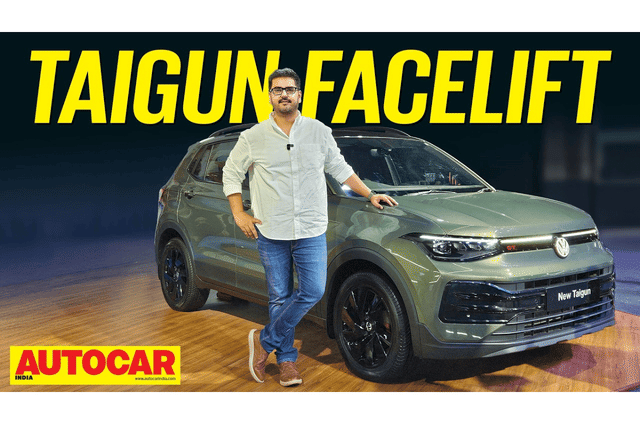
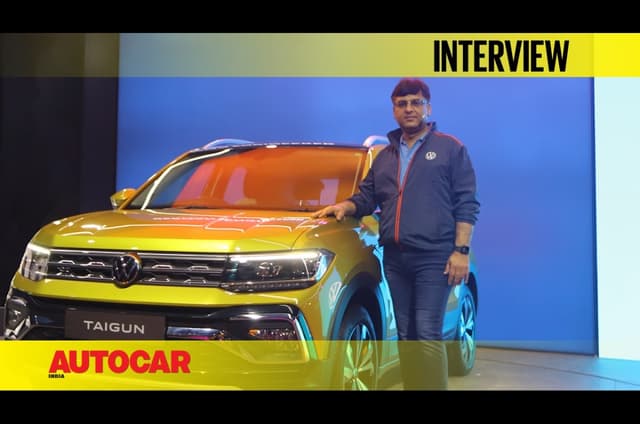
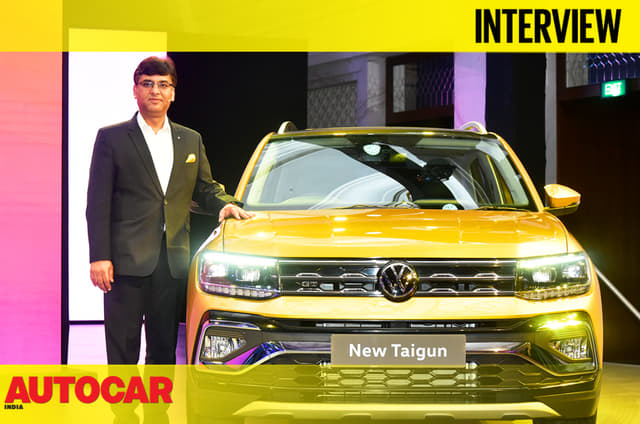
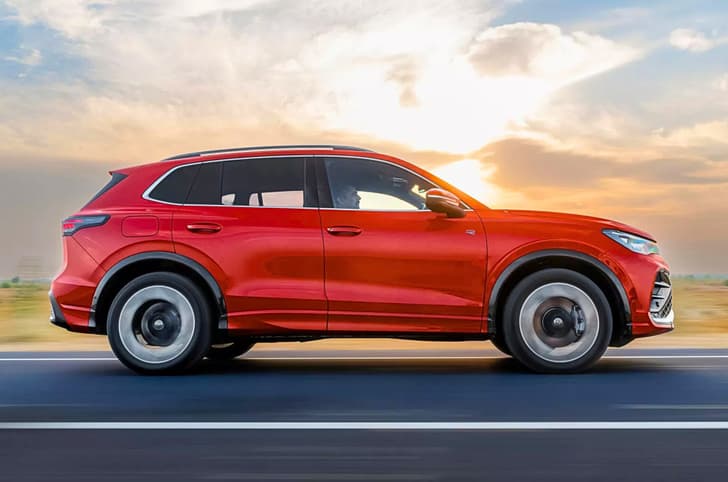
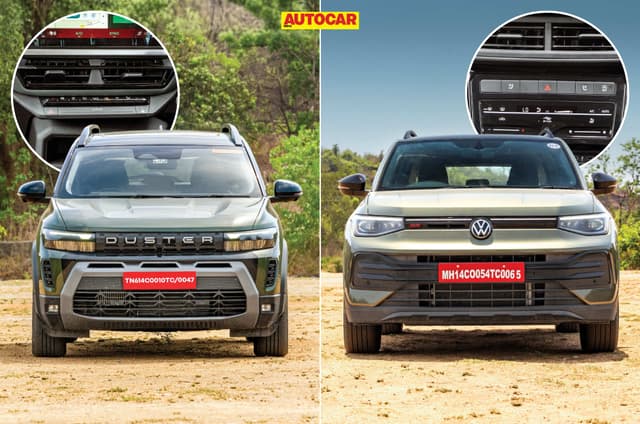
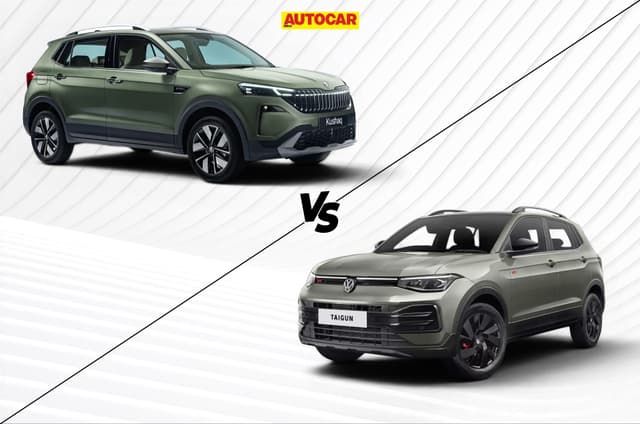
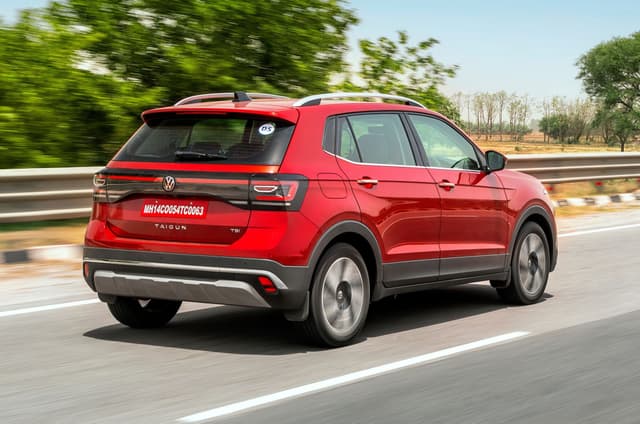
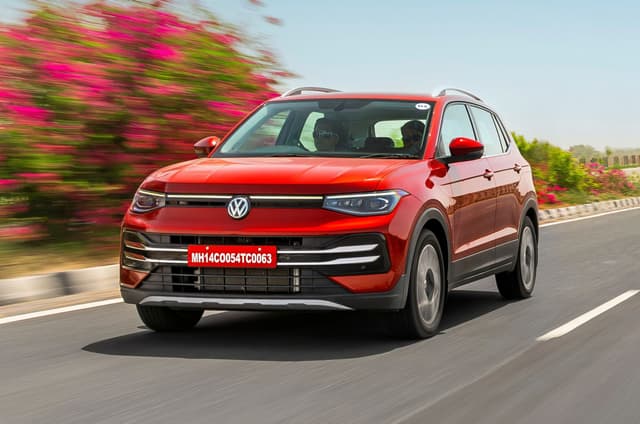
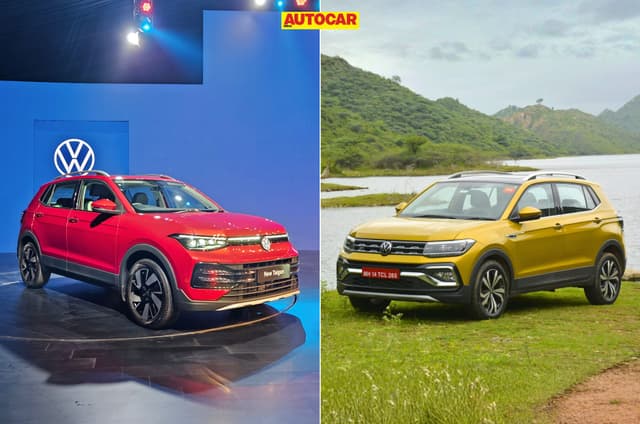
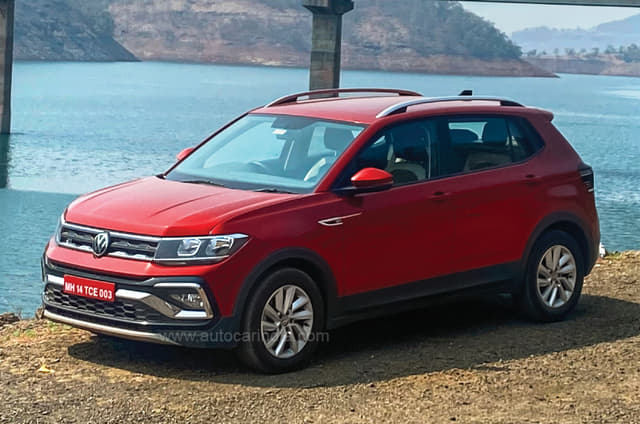
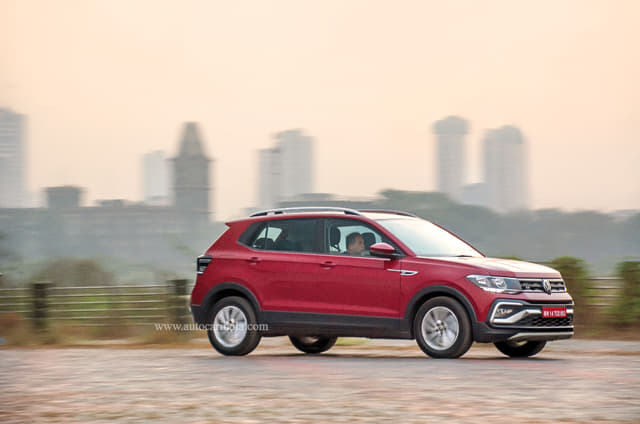
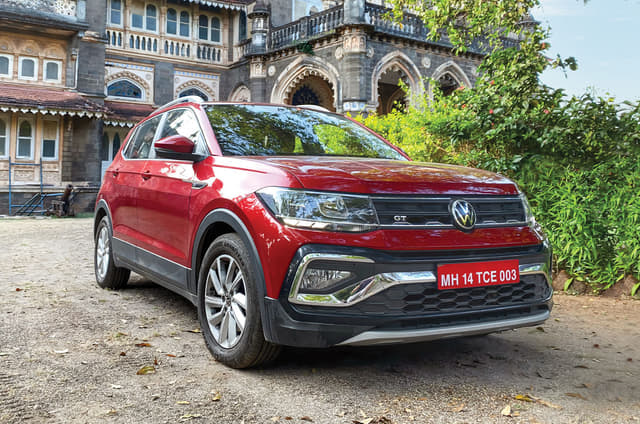
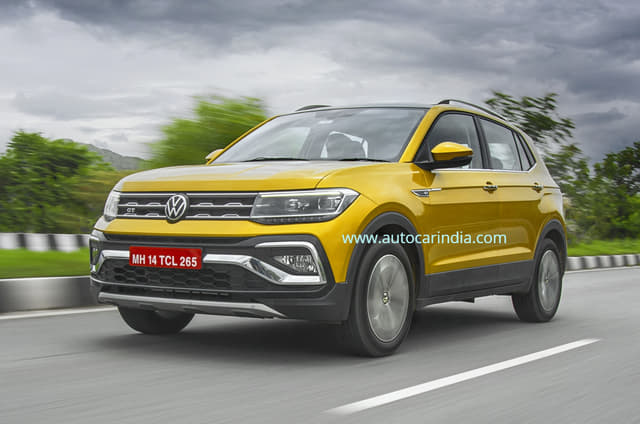
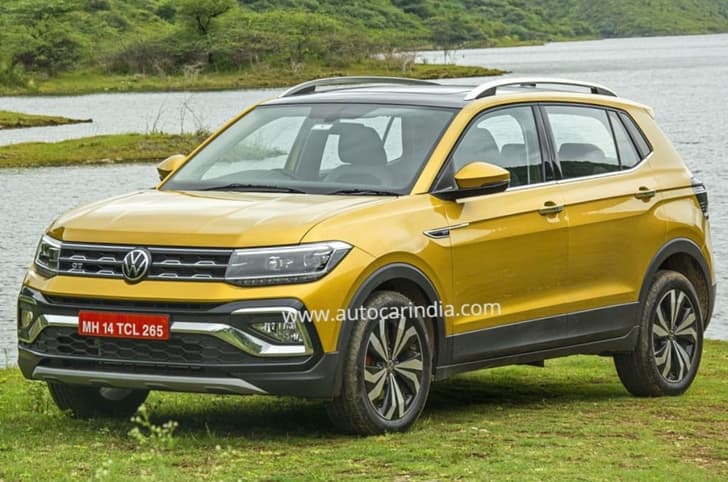
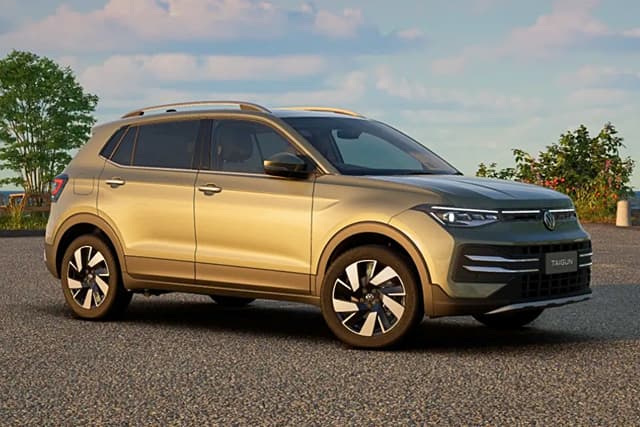
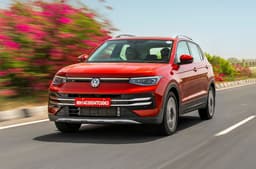
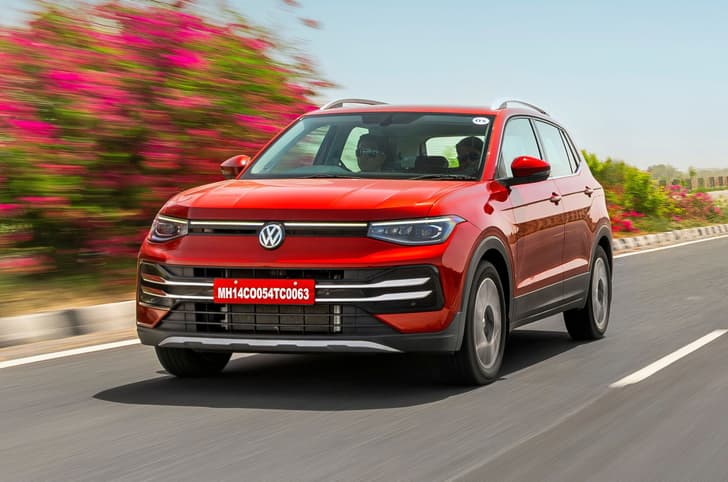
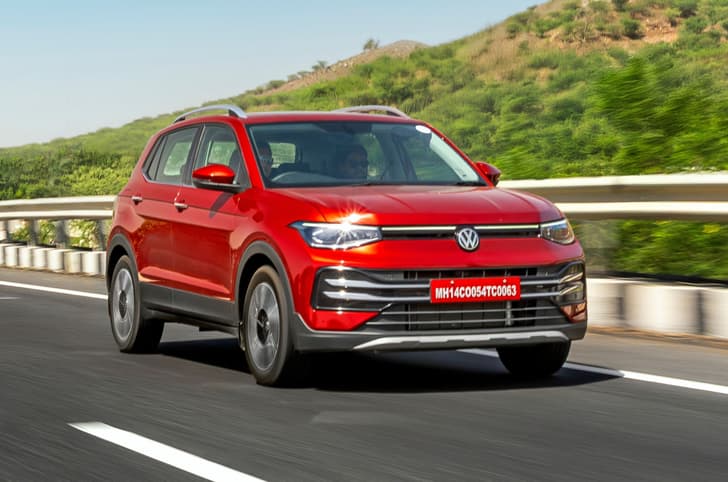
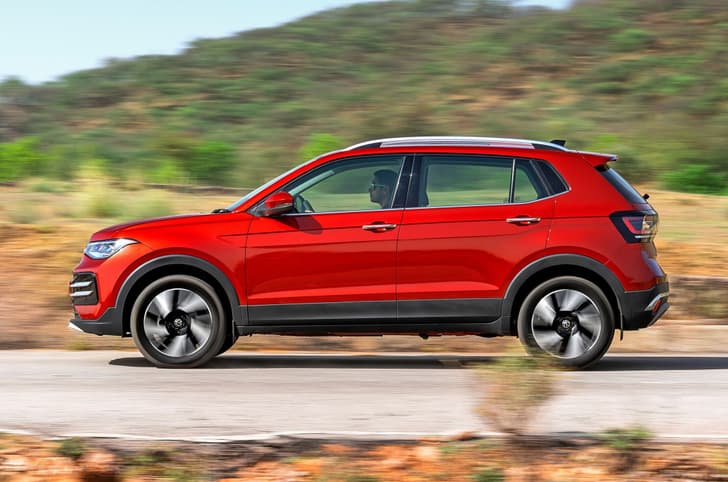
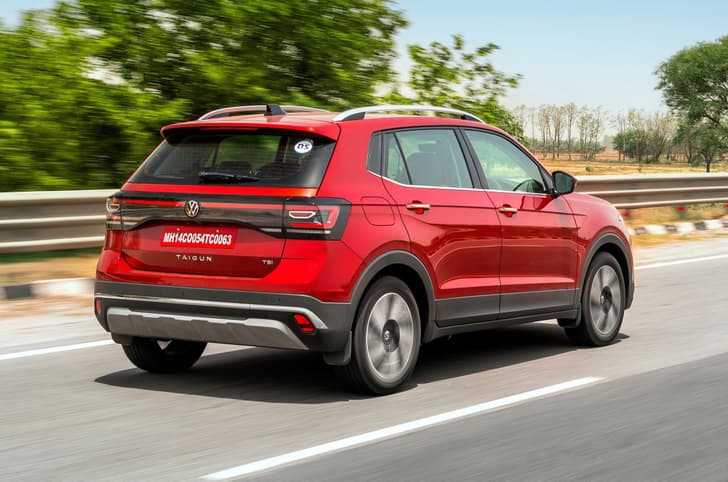
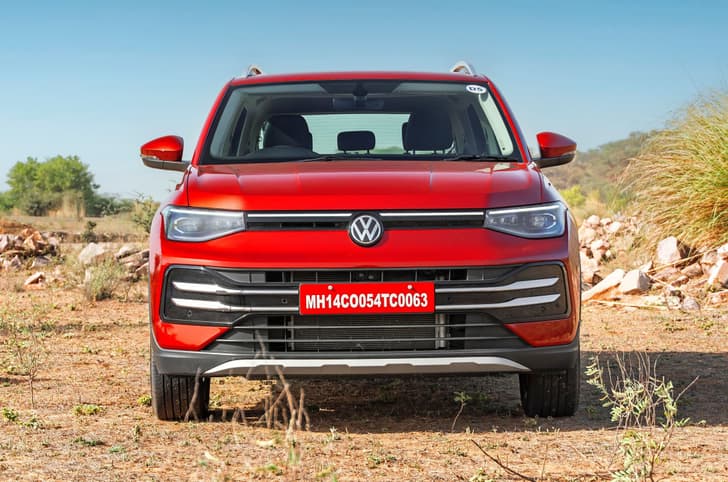
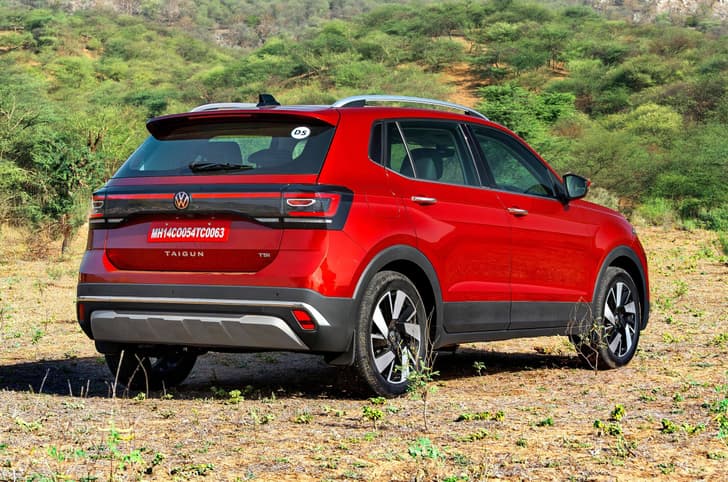
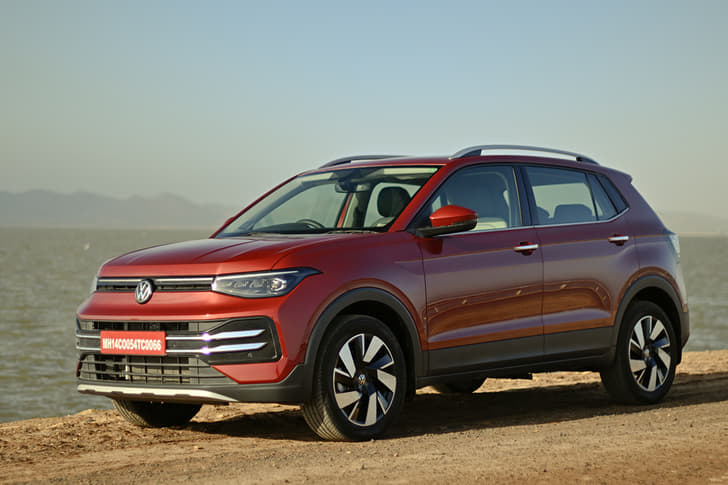
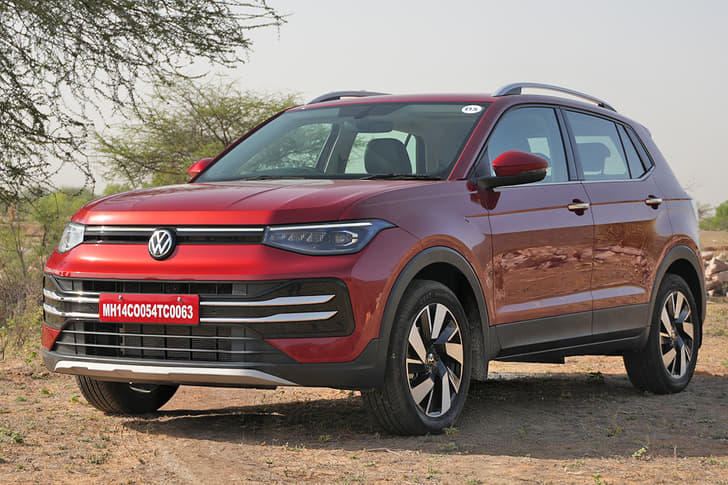
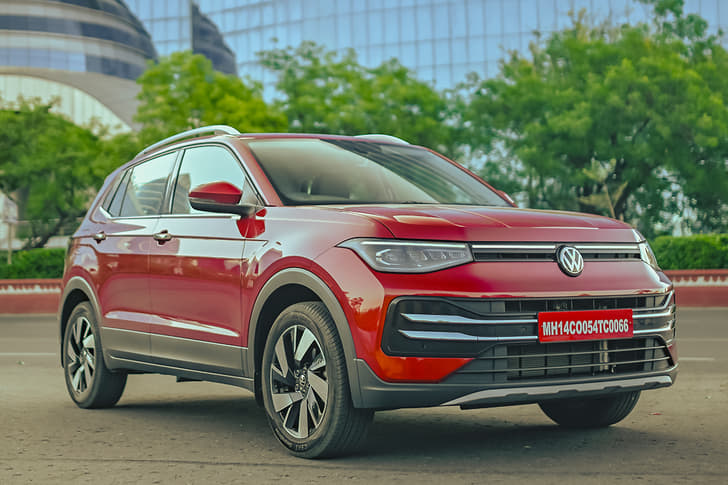
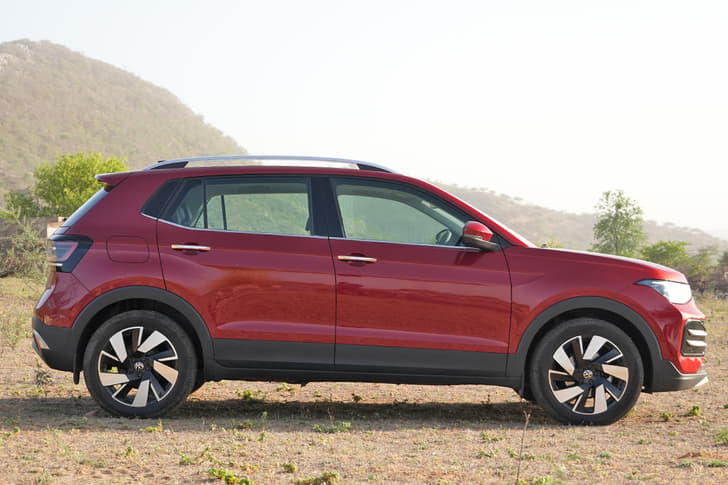
Design changes are largely focused on the front, with a slimmer grille, sleeker LED headlamps and a full-width light bar with an illuminated VW logo, similar to the Volkswagen Tayron. There’s a redesigned bumper with chrome detailing, new 17-inch alloy wheels, and minor updates at the rear including revised tail-lamp elements and sweeping indicators.
The 188mm ground clearance remains unchanged as are its other dimensions, making it one of the smallest SUVs in its class.
7.0
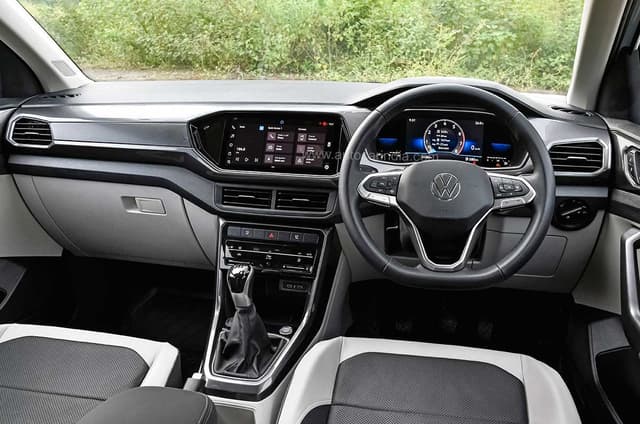
Inside, the dashboard gets a new silver trim, which goes well with the black and light grey interior colour scheme. On a bright and sunny day however, it reflects on the (passenger-side) window which can get a bit distracting. VW has also upgraded the air-conditioning system with a variable displacement compressor that cools the cabin more efficiently and operates at a lower fan speed than before.
Like before, the front seats are well-shaped, supportive, and their ventilation function is effective despite having just two fan speeds. Rear seat space is adequate, with decent headroom thanks to a scooped roof. The seat contouring and the cabin’s width however, makes this space best suited for two adults. The 385-litre boot, while modest on paper, is highly usable and can accommodate up to six cabin-sized suitcases, even more than some rivals with a larger boot capacity rating.
6.0
It gets a new 10.25-inch digital instrument cluster, which besides multiple views, has fonts that are crisp, clear and very easy to read. And while the touchscreen remains the same as the outgoing version, the software has been updated - the interface remains slick and the touch sensitivity is very nice. What isn’t nice however is that certain functions, for example adjusting the volume is a three-step operation, which is not very user-friendly.
Also, VW could have also taken this opportunity to upgrade its reverse camera; the resolution still remains very quite poor. And while the company has introduced front parking sensors with this version, a 360-degree camera is still missing.
A panoramic sunroof is a new addition too. Unlike its Skoda sibling, this version doesn’t get a rear seat massage function - while that isn’t something most buyers are likely to miss, kit like a 360-degree camera, rear sunblinds and ADAS are features that would bring the Taigun at par with the competition.
6.0
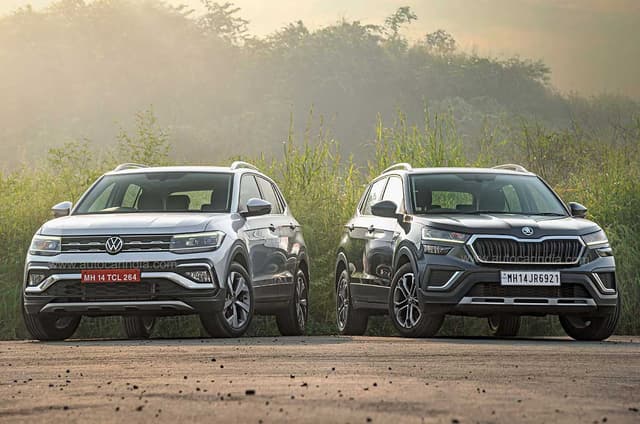
Priced at Rs 11 lakh to 19.30 lakh, the Taigun is positioned higher than the mechanically identical Skoda Kushaq (Rs 10.69 lakh to 18.99 lakh). However, not only is the Skoda more affordable, but it also gets more standard equipment such as a single-pane sunroof and alloys, making it better value for money.
To conclude then, despite the updated styling, added features and a new gearbox, the 2026 Taigun has only inched forward. Unfortunately though, this update isn’t substantial enough to keep pace with the rapidly advancing competition - rivals are far more rounded in comparison.
In summary, the Taigun is still the driver’s choice in this segment, and if driving pleasure is your top priority, then and only then, the Taigun makes a strong case.
Reviewed by: Saumil Shah
Volkswagen Taigun Official Brochure
Download the complete brochure with specs, features, and variants.
Volkswagen Taigun User Reviews
Tell us about your experience
Volkswagen Taigun reviews

Volkswagen Taigun comparison


Volkswagen Taigun EMI Calculator
Volkswagen Taigun Mileage
The Volkswagen Taigun's ARAI-claimed mileage varies with the engine and gearbox. The 1.0 TSI manual is rated at 19.98kpl, while the same engine with the eight-speed torque-converter automatic is rated at 19.54kpl. The 1.5 TSI with the seven-speed DSG is rated at 18.85kpl.
The manual 1.0 TSI has the highest certified figure, but the difference between the two 1.0-litre versions is small on paper. The 1.5 TSI is the performance-oriented choice rather than the mileage leader. In Autocar India's highway test, the 1.0 TSI automatic returned 13.94kpl over a 448.8km run, compared with its claimed 19.54kpl. Actual mileage will vary with traffic, driving style, road conditions and load.
Which model fits my driving?
- For a mix of city and highway driving: The 1.0 TSI manual is worth considering if buyers are comfortable changing gears themselves.
- For regular city commutes: The 1.0 TSI automatic offers smoother shifts and easier operation in traffic, although its real-world efficiency can be substantially lower than its certified figure.
- For highway performance: The 1.5 TSI DSG is the stronger choice, particularly for buyers who value acceleration and driving enjoyment over maximising fuel efficiency.
| PowertrainThe combination of engine type, fuel, and transmission that powers your vehicle and determines how it drives and what it runs on. | ARAI MileageMileage certified by the government, tested under controlled lab conditions. Real-world mileage will vary. | Autocar Tested MileageAutocar's experts test each vehicle on fixed city and highway routes under standardised conditions - single occupant, AC running, manufacturer-recommended tyre pressures. Tanks are filled to the brim before and after each run to calculate efficiency. Results reflect realistic real-world usage. | User Reported MileageMileage figures are reported by vehicle owners and represent the approximate real-world efficiency you may experience. Actual mileage will vary based on driving conditions, habits, and vehicle condition. |
|---|---|---|---|
Petrol-Manual 999 cc | 19.98 kmpl | NA | 13 kmpl |
Petrol-Automatic (Torque Converter) 999 cc | 19.54 kmpl | 10.45 kmpl | 13 kmpl |
Petrol-Automatic (DCT) 1498 cc | 18.85 kmpl | NA | 13 kmpl |
Hear from the
Autocar Community
Volkswagen Taigun news
Volkswagen Taigun Images
Volkswagen Taigun images show photos of the SUV. These are the details worth studying closely:
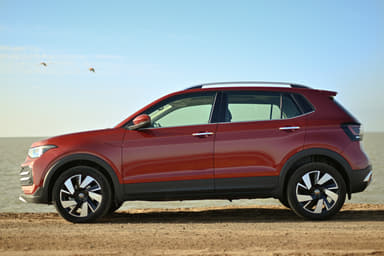
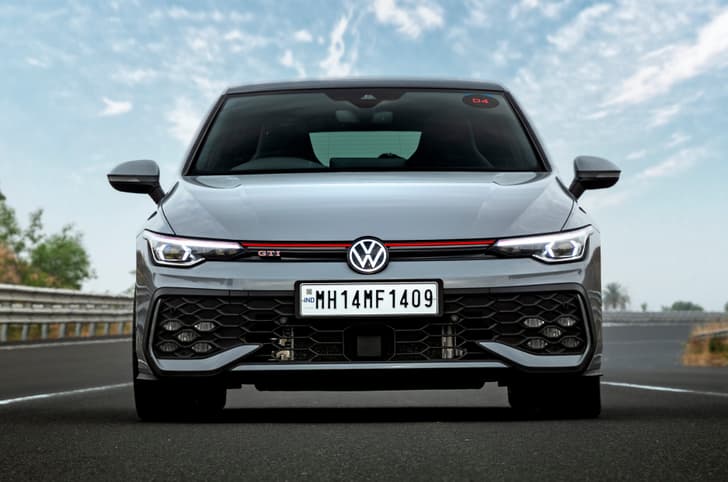
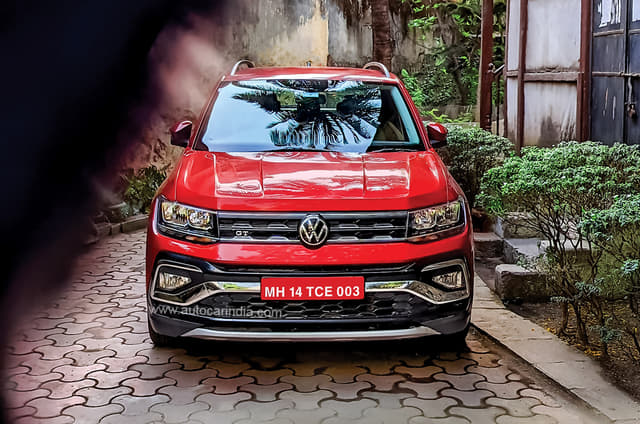
- The redesigned front end, including the connected lighting, illuminated VW logo and revised bumper.
- The rear LED light bar, sequential turn indicators and illuminated rear logo on applicable variants.
- The 10.1-inch touchscreen and 10.25-inch digital instrument cluster.
- The front seats, panoramic sunroof and cabin finish, noting that equipment and upholstery vary by variant.
- The 385-litre boot and the additional luggage space available with the rear seats folded.
- The GT variants' black exterior detailing and sportier cabin treatment.
Volkswagen Taigun videos
Volkswagen Taigun videos cover reviews and walkarounds, helping buyers assess details that a specification list cannot fully convey:
- How smoothly the eight-speed automatic responds in slow-moving traffic.
- How firmly the suspension reacts to sharp bumps and broken city roads.
- How stable the SUV feels at highway speeds and how predictably it handles corners.
- The cabin layout, touchscreen operation and digital instrument cluster.
- The rear-seat space, boot capacity and exterior differences between standard and GT variants.
- The real-world fuel efficiency of the 1.0 TSI automatic on a highway run.


Volkswagen Taigun Colours
Volkswagen Taigun colours include nine exterior shades, with availability depending on the variant. The range includes Avocado Pearl, Candy White, Carbon Steel, Carbon Steel Matte, Deep Black Pearl, Lava Blue, Reflex Silver, Steel Grey and Wild Cherry Red. The GT range also gets darker exterior detailing, while Carbon Steel Matte is listed for the GT Plus variant.
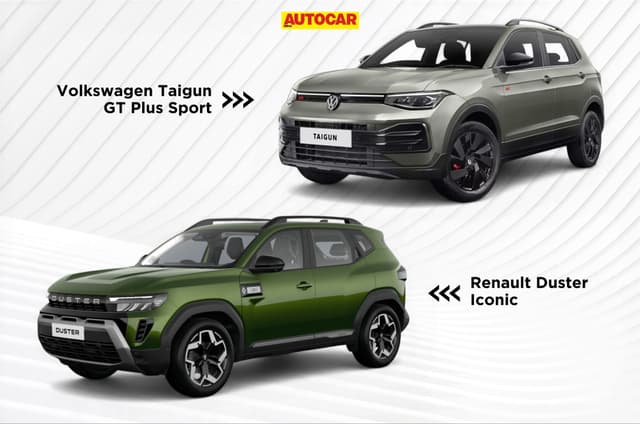
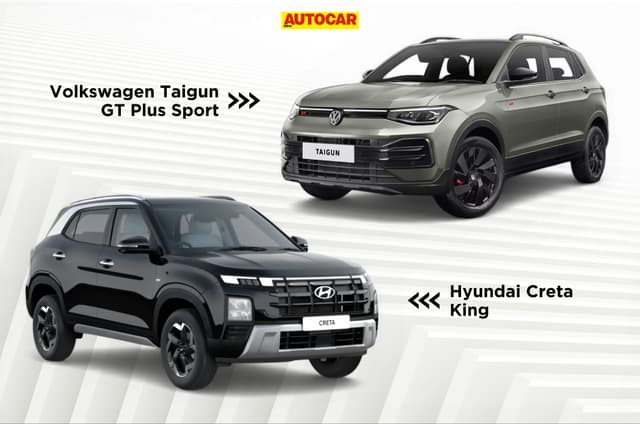
The GT Line and GT Plus Sport also feature black-painted 17-inch alloy wheels, black door mirrors, black diffusers and black Taigun lettering, giving them a distinct appearance.
Volkswagen Taigun Similar Cars to Explore
Volkswagen Taigun FAQs
The 1.5-litre TSI is the enthusiast's choice, thanks to its stronger performance and quick-shifting DSG gearbox. The 1.0-litre TSI is better suited to everyday use, offering good performance and lower running costs, especially with the 8-speed automatic.
The Taigun is comfortable on smooth roads and highways, but its suspension is on the firmer side. At low speeds, sharp potholes and broken roads are felt more than in softer-riding rivals like the Renault Duster or Tata Sierra.
Yes. The Taigun offers supportive seats, a practical 385-litre boot, good cabin quality and strong safety credentials. However, the rear seat is best suited for two adults rather than three.
The Taigun stands out for its engaging handling, solid build quality, refined turbo-petrol engines and confidence-inspiring highway manners. The torque convertor 8-speed automatic on the 1.0-litre variants also delivers smoother shifts.
While enjoyable to drive, the Taigun lacks several features now common in the segment, including a 360-degree camera, ADAS and rear sunblinds. Its low-speed ride can also feel firm on rough roads.
Questions you may find useful
Dear Autocar team, I have just returned to India and am looking to purchase a compact SUV just for the two of us for 60-40% city and highway split. I want a car that feels lovely to drive and is engineered well. I am not into "features" for the sake of it. I almost bought the Sierra/Creta EVs, then realized that I don't want to spend so much, and haven't seriously thought about highway charging. I've tried the Kushaq/Taigun and really loved their built and handling. This is when I realized that I really care about the feel of driving. Only issues are firmer suspension and fuel economy. I've also booked the Duster hybrid which should solve these two problems, but I haven't test driven the petrol Duster long enough to know if I get a similar feeling on the drive. What I did feel was a cramped cabin on the duster as my left knee was on the center console and right knee was on the door. This was not a concern with the Kushaq and Taigun. I'll try the Duster petrol again, and then also the hybrid. But I wonder if I should just get the Skoda/Volkswagen since I love them. I should perhaps think about resale, maintenance etc.
If you loved driving the Skoda Kushaq and Volkswagen Taigun, go with one of them rather than settling for the Duster hybrid purely for its expected fuel efficiency and softer ride. You have already discovered that driving feel matters to you, and that is something you will notice every time you use the car. The Kushaq and Taigun feel solid, handle confidently and have well sorted turbo petrol engines. In our opinion, the ride is on the firmer side, but perfectly acceptable, and fuel economy for the 1.5 turbo petrol is not bad either, with around 9kpl possible in the city.Resale and maintenance costs matter, but they should not outweigh comfort and enjoyment in a car you intend to keep for years. Drive the Duster hybrid and the Kushaq or Taigun back to back, including a rough road stretch and some highway driving. If the Duster still feels cramped and the VW twins put a smile on your face, trust that feeling. You do not need to buy a more expensive EV or the newest hybrid simply because it promises better efficiency.
I’m planning to buy the new VW Taigun Topline MT as my first car. I’m a first-time buyer with no driving experience, but I’m genuinely interested in learning to drive and want a manual transmission rather than an automatic. My annual usage will be around 5,000–7,000km, mostly a mix of city and highway driving, and I intend to keep the car for 10–12 years. Safety is one of my biggest priorities, followed by looks, driving enjoyment and long-term ownership costs. Would you recommend the Taigun Topline MT over alternatives like the Hyundai Creta SX MT, Kia Seltos HTX MT or Duster Adventure? I’m choosing the Taigun because I like its looks, features and driving experience, but I want an honest assessment rather than a recommendation based solely on performance or enthusiast appeal. Would you go ahead with this choice in my situation?
As a first time buyer with no experience of driving, consider getting something smaller and more affordable to learn, practice and then upgrade to a car which you can keep and enjoy for 10-12 years. You could consider a sub-10 lakh hatchback first that'll be relatively easy to maintain/repair while you master the art of driving.If you still want to go ahead with the Volkswagen Taigun Topline MT, it is a solidly built, fun-to-drive car. The updated version gets an upgraded air-con which performs very well. Moreover, it is quite spacious yet relatively more compact than similarly priced midsize SUVs, so maneuvering and parking will be quite easy.The Hyundai Creta SX MT and Kia Seltos HTX MT are both excellent alternatives. They offer an airier cabin experience and are backed by their respective service networks, which are wider than VW's. Their 1.5 naturally aspirated petrol manual versions are more responsive in the city, as there is no dull zone before the boost comes in (turbo lag), as you will experience with the 1.0 Taigun; and their manual gearbox and clutch are smoother and effort-free compared to the Taigun's.That said, if your heart is on the Taigun 1.0 MT, go for it, but we'll also recommend you explore the option of buying a relatively smaller, cheaper car to learn and practice driving before spending on the Taigun.
I’m looking for my first personal car, although I’m in no hurry to buy one. I recently drove a friend’s Kylaq Signature+ AT and genuinely loved it. It felt mature, eager, and somehow familiar, almost like home. Since I intend to keep my cars for a long time, I started exploring larger European cars. The Kushaq’s exterior is jaw-dropping, but something feels missing in its dashboard design. The Taigun’s interior looks premium, even if the materials aren’t particularly soft-touch. Then there’s the European Duster Adventure AT, which costs around Rs 4 lakh less than some of my other options, but I’m not particularly keen on its reflector headlights. Now I’m tempted to test-drive the Scorpio-N Z6 D AT and XUV 7XO AX3 D AT as well, since they fall within a similar price range. However, fuel efficiency, servicing and overall ownership costs seem excessive for someone who drives barely 5,000km a year, mostly for pleasure. I commute on my Jupiter. Here’s my dilemma. The Kylaq Sportline AT would cost around Rs 13 lakh with BH registration. I loved driving it, and its space should be sufficient even if kids enter the picture five years from now. The Duster Adventure AT costs around Rs 16 lakh and sits a segment above the Kylaq, with a more substantial mechanical package. My heart has wanted a VW or Skoda ever since we bought Dad’s Honda City, which is why the Kushaq and Taigun remain tempting options. Then there’s the XUV 7XO AX3 D AT at around Rs 20 lakh. It’s huge and tempting, but I’m unsure about its body roll. My friend’s 2019 XUV500 impressed me, although its body roll was noticeable. I don’t really need a big SUV, but if I’m buying a car to keep for the long term, should I stretch my budget or stick with the Kylaq, which I already love driving?
You already have the answer in your question. The Kylaq Sportline AT is the car you loved driving, and at Rs 13 lakh with BH registration, it is also the most sensible choice for your usage. With just 5,000 km a year, mostly pleasure drives, there is no justification for stretching to a diesel SUV like the XUV 7XO AX3 D AT at Rs 20 lakh. The fuel savings will never add up, and you will be carrying around a lot of unnecessary size and weight for no real benefit.The Duster Adventure DCT at Rs 16 lakh is a tempting upgrade, but it is not a segment above the Kylaq in any meaningful way. The Kylaq is a genuinely well-sorted car with a proven 1.0 TSI engine and a 6-speed torque converter automatic that is reliable and easy to live with. It is also spacious enough for a small family.The Kushaq and Taigun are both excellent cars, but the Kylaq is essentially the same mechanical package at a lower price. The only reason to choose the Kushaq or Taigun would be if you strongly prefer their interiors, but from an ownership perspective, the Kylaq is the smarter buy.The XUV 7XO is a great car, but it is a big, heavy diesel SUV designed for long highway runs and high annual mileage. At 5,000 km a year, it simply does not make sense.Stick with the Kylaq Sportline AT. It is the car you loved driving, it is the right size for your needs, and it will be the easiest and most enjoyable car to own over the long term. Do not overthink this. The best car is the one you already know you love.
Hi, I am thinking of replacing Toyota Corolla (2006 model) with a car under the budget of Rs. 20 - 22 lakh. Which car do you suggest replacing the trustworthy Corolla with as it has served me very well. I am considering the VW Virtus/ Skoda Slavia, VW Taigun /Skoda Kushaq and Honda City Hybrid.
The Honda City Hybrid is the closest modern equivalent to your Corolla. It offers a similar ownership philosophy: reliable, comfortable, easy to live with and efficient. The hybrid system delivers excellent fuel economy in city driving, and Honda's long-term reliability record is strong. The only drawback is that the boot is smaller than the standard City due to the battery pack.The Skoda Slavia and VW Virtus are both excellent sedans with strong turbo petrol engines and good driving dynamics, but they do not offer the same ownership simplicity or efficiency as the City Hybrid. The Skoda Kushaq and VW Taigun are more practical and offer better ground clearance for Indian roads, but they are not as refined or as comfortable as the City Hybrid.However, the City Hybrid is expensive, and will fall outside of your Rs 22 lakh budget. If you're okay with that and sold on the city, you should go ahead. There is another car to consider, however, and that's the Toyota Urban Cruiser Hyryder Hybrid. Not only does it come from the same reliable house of Toyota, but it gets you the practicality of an SUV and also falls within your budget. Do note, however, that its rear seat is not as spacious as what you'll get in the City hybrid.
I want a foreign-made SUV. I currently own an Elevate and now, I want another one. Can you guide me whether I should go with Skoda Kushaq, Hyundai Creta or Volkswagen Taigun?
Since you already own a Honda Elevate and are looking for a foreign-made SUV, the decision really comes down to what you want from your second car. The Skoda Kushaq and Volkswagen Taigun are essentially the same car underneath, so the choice between them is more about brand preference and dealership experience. Both are excellent to drive, with strong turbo petrol engines and a more engaging driving experience than the Creta. The Kushaq tends to offer slightly better value for money, while the Taigun has a marginally more premium interior feel.The Hyundai Creta, on the other hand, is the safer, more rounded choice. It is more comfortable, has a wider service network and is generally easier to live with over the long term. It may not be as engaging to drive as the Skoda or Volkswagen, but it is the more sensible ownership proposition.If you are looking for a car that feels different from your Elevate and enjoy driving, go for the Skoda Kushaq. If you want a hassle-free ownership experience, the Hyundai Creta is the better choice.
Upcoming Cars


Volkswagen Cars


Trending Cars


Latest Cars


Last Updated on: 28 Oct 2026