autocar-logo
Delhi
Volkswagen

Volkswagen cars in India (7)
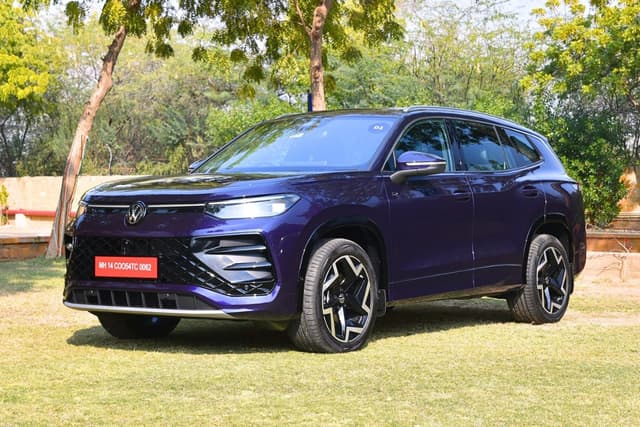
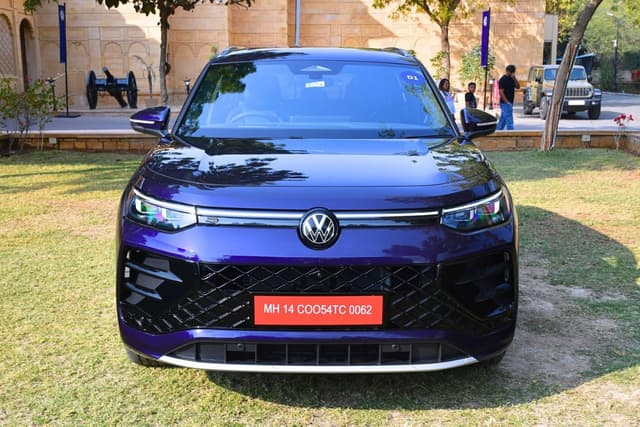
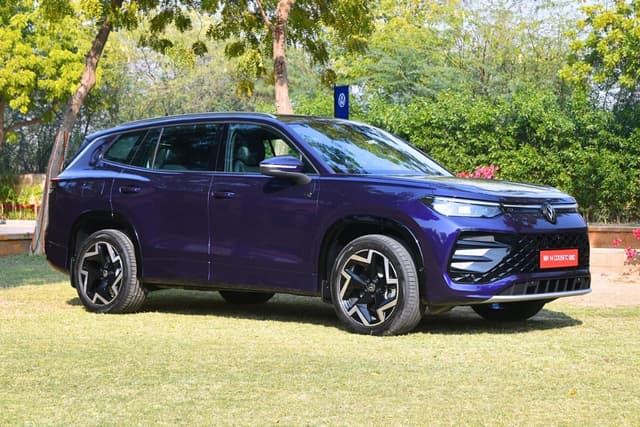
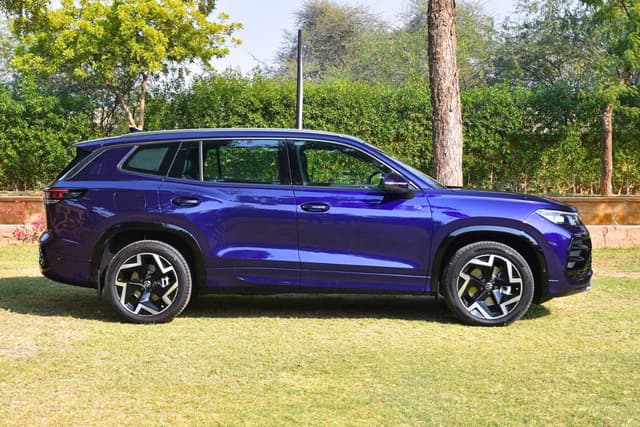
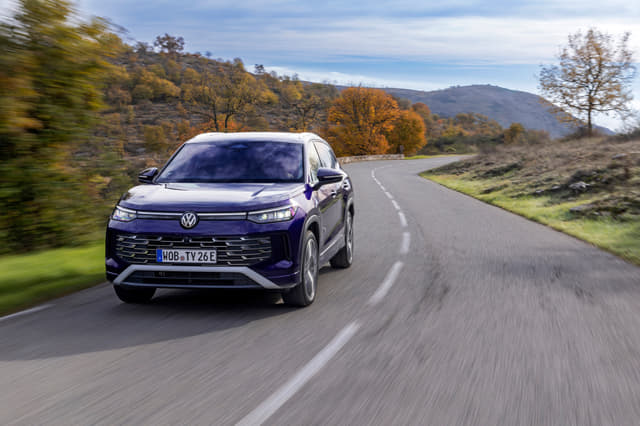
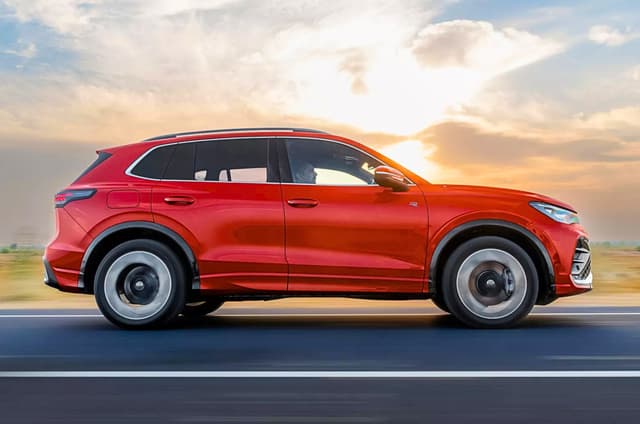
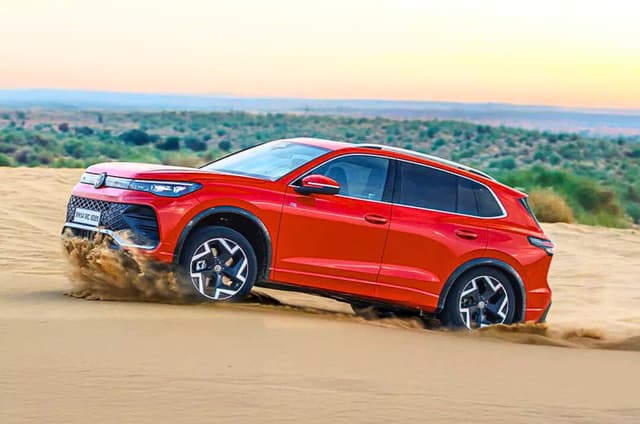
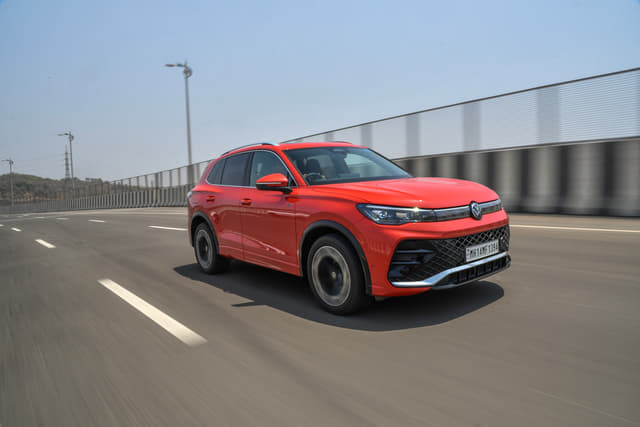
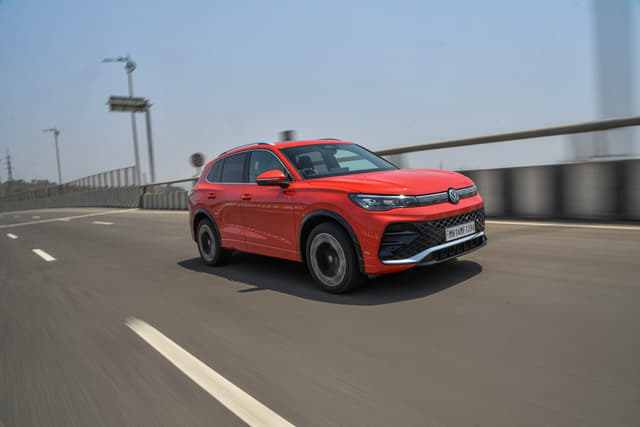
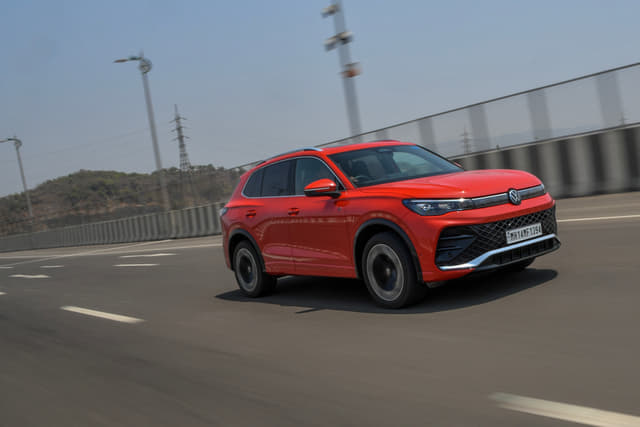
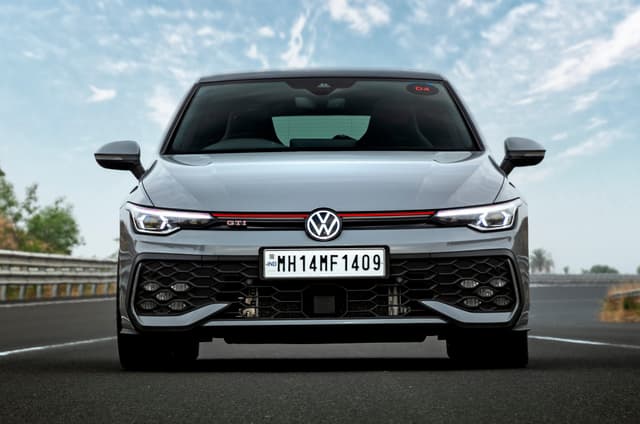
The Volkswagen car price starts at ₹10.50 lakh and goes up to ₹50.91 lakh. As of March 2026, the Volkswagen cheapest car is the Virtus, while the Golf is the costliest car. Currently in 2026, there are 7 Volkswagen cars in India, out of which 5 are on sale, and 2 are upcoming. The Volkswagen cars that are currently available for sale are the Virtus, Taigun, TiguanGolf, and the recently launched Tayron


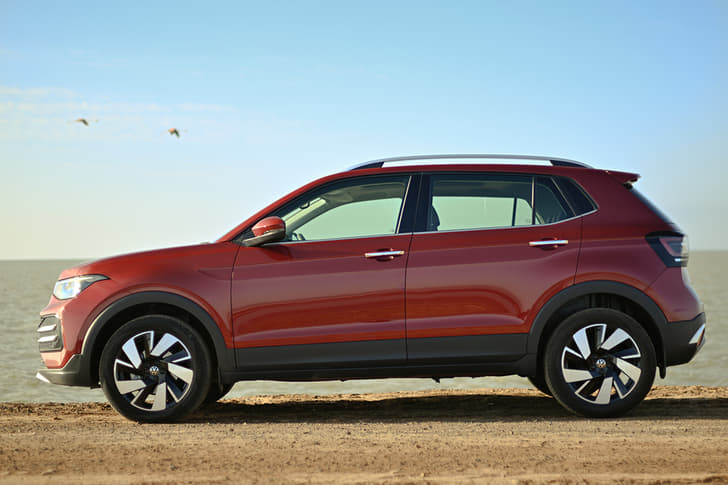
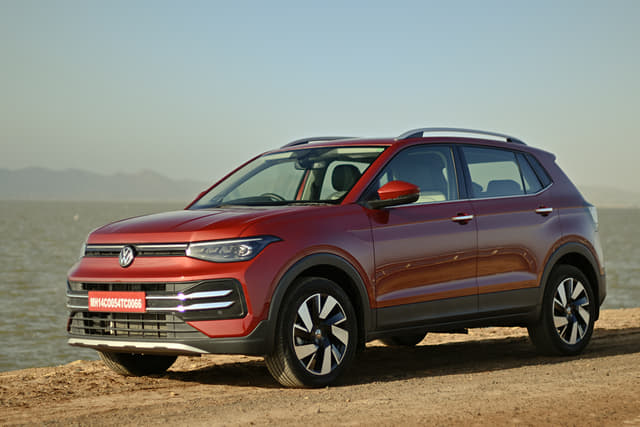
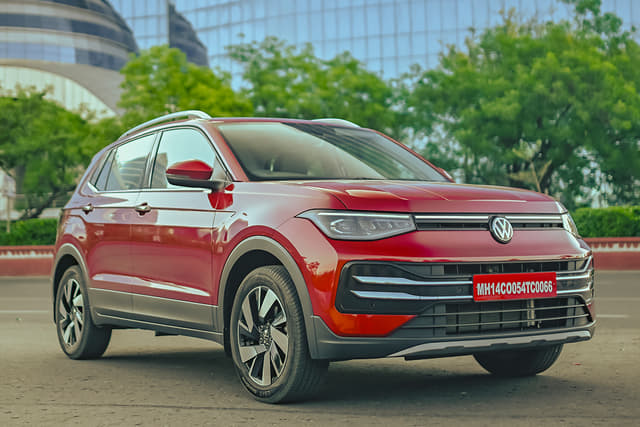
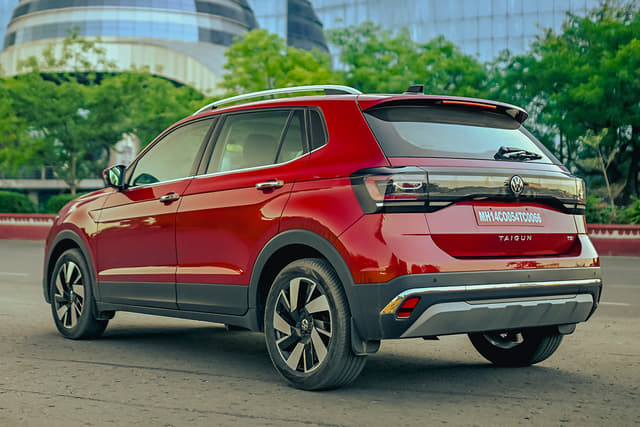
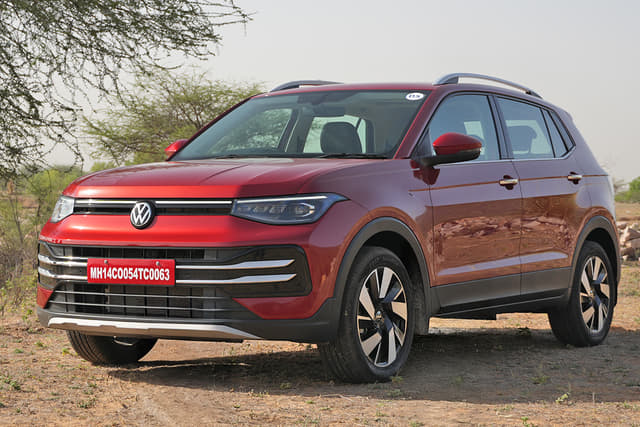
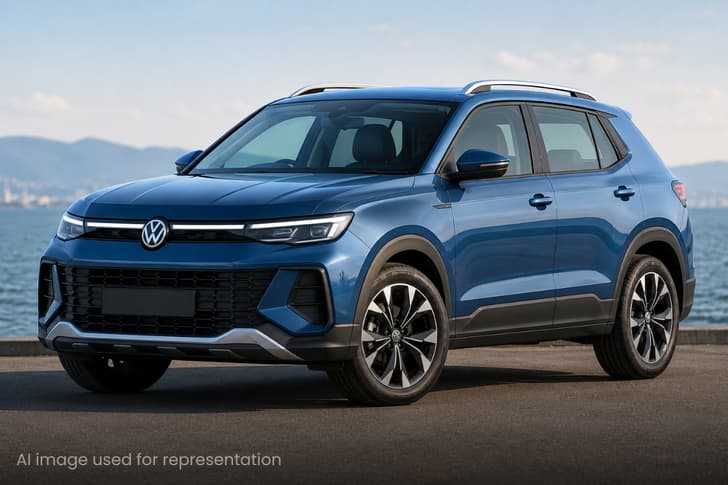
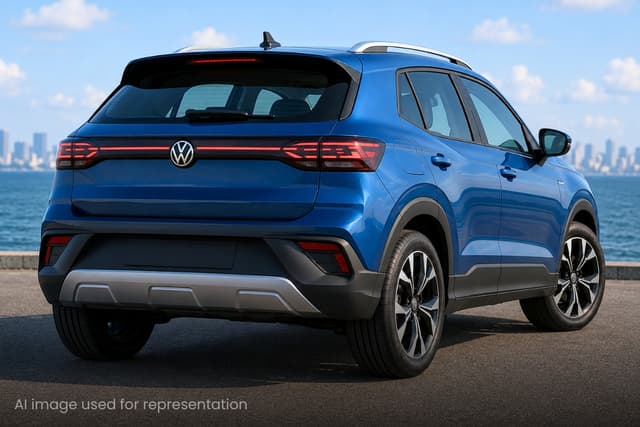
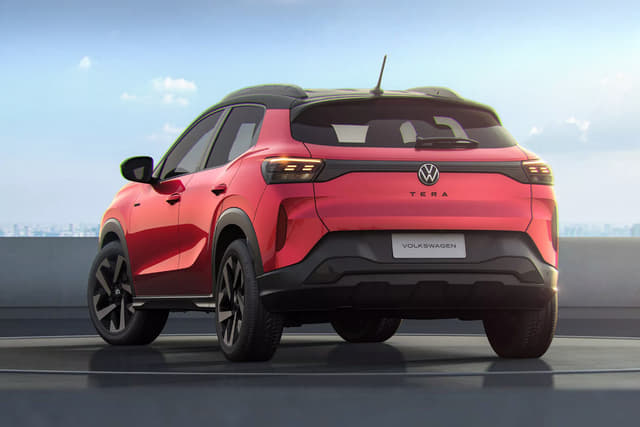
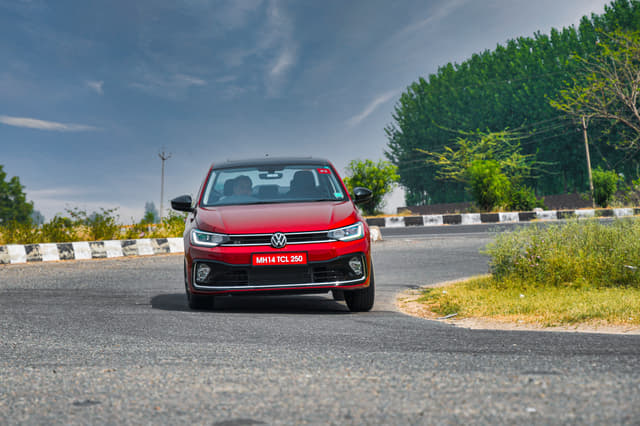
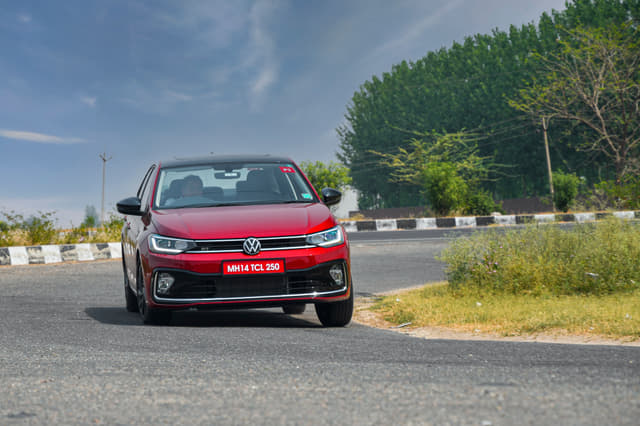
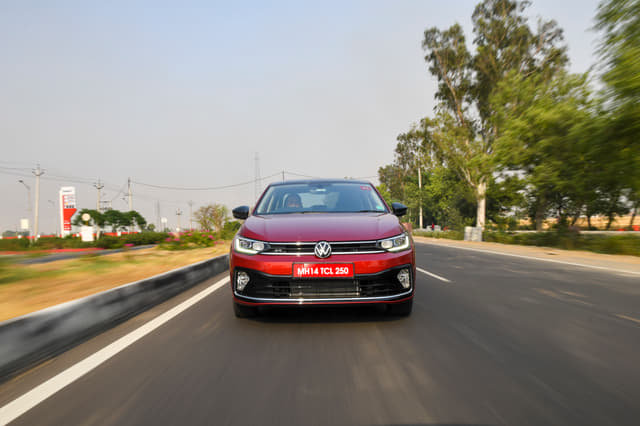
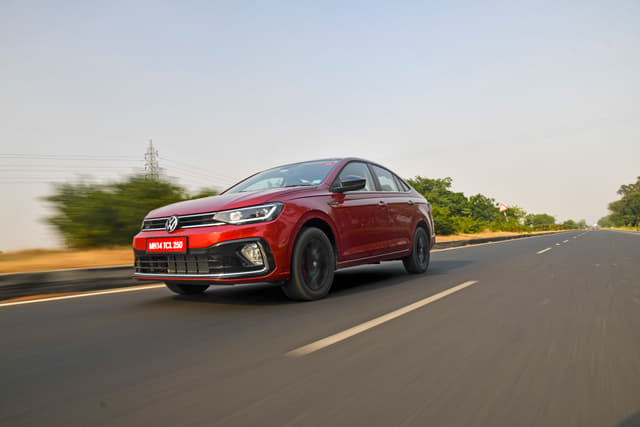
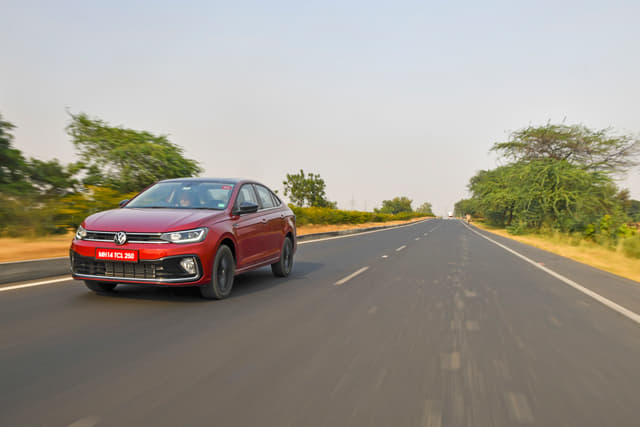
The Virtus is the only Volkswagen sedan car that’s presently offered in the Indian market. The Volkswagen SUV cars list includes Tiguan, Tayron and Taigun, which rival the Kushaq and the Hyundai Creta. The Taigun is a sister product to the Skoda Kushaq, and both models are built alongside each other at Volkswagen’s Chakan plant near Pune. 


After Skoda, the German brand Volkswagen is the second mainstream car from the VW Group to launch its cars and SUVs in India. Over the years, Volkswagen cars sold in the country have included the Polo, Vento, Touareg, Phaeton, Passat, and Jetta.


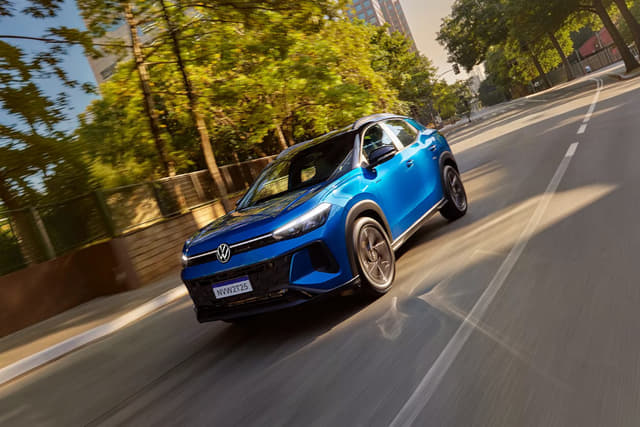
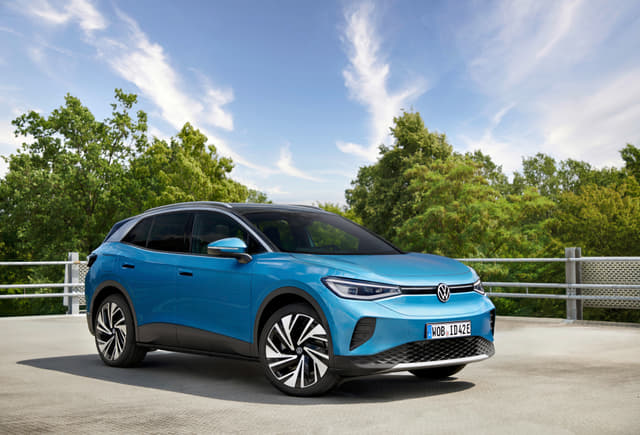
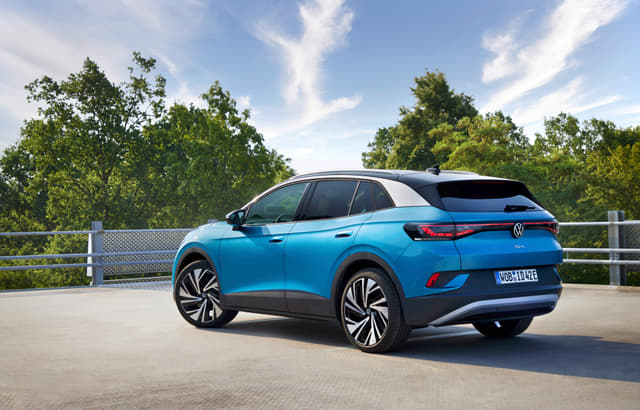
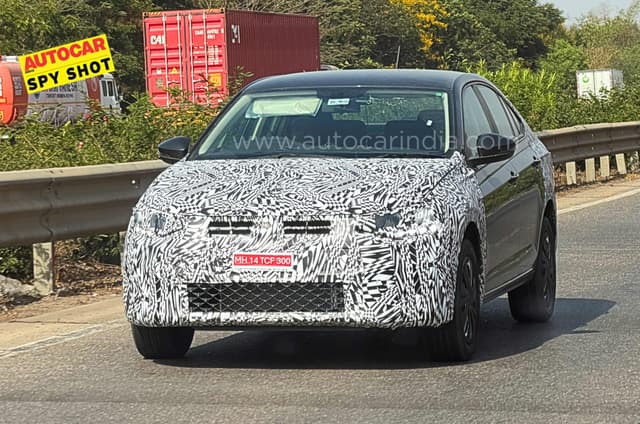
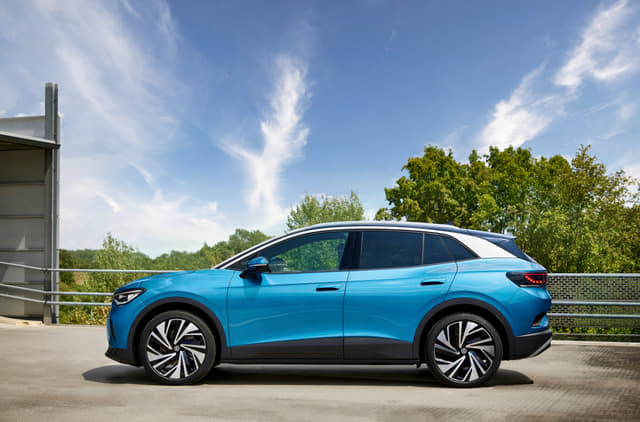
Volkswagen new car launch includes the Taigun facelift and ID 4, which are expected to launch in late 2026. The upcoming Volkswagen electric car, the ID 4, will rival the BYD Sealion 7. At present, there are no Volkswagen 7 seater cars on sale in India.


Volkswagen Car Price List (March 2026)


The price of Volkswagen cars in India starts at ₹10.50 lakh for the Virtus and goes up to ₹50.91 lakh for the Golf. View the latest Volkswagen car prices of all models available for sale in India in the table below:

Model

Price (Ex-showroom)

Volkswagen Virtus

₹10.50 lakh - ₹19.00 lakh

Volkswagen Taigun

₹10.58 lakh - ₹19.19 lakh

Volkswagen Tiguan

₹45.73 lakh

Volkswagen Tayron

₹46.99 lakh

Volkswagen Golf

₹50.91 lakh

Upcoming Volkswagen Cars in India

In 2026, Volkswagen upcoming models in India include two vehicles:

1. Volkswagen Taigun Facelift

  • Estimated price: ₹11.00 lakh - ₹19.50 lakh
  • Expected Launch Date: 2026
  • Fuel Type: Petrol
  • Body Type: SUV

2. Volkswagen ID 4

  • Estimated price: ₹50.00 lakh - ₹60.00 lakh
  • Expected Launch Date: 2026
  • Fuel Type: Electric
  • Body Type: SUV

Volkswagen Cars - Latest Update

  • 19 February 2026: Volkswagen Tayron R-Line launched in India at 46.99 lakh
  • 7 January 2026: Volkswagen has teased the Tayron for India for the first time. 
  • 7 January 2026: Volkswagen offers discounts of up to 1.26 lakh on the Virtus and Taigun in January 2026, limited to MY2025 models.
  • 5 January 2026: Volkswagen brings back physical buttons with the ID Polo, saying customer feedback drove the move across future ID EVs.
  • November 2025: JSW-MG Motor India and Skoda-VW in early talks for platform and technology partnership.
  • May 2025: Golf GTI bookings open exclusively via the official Volkswagen website.
Show more
Can't decide which car to buy?
Ask our experts and get answers to all your cars related queries.

FAQs

The Polo is the most popular Volkswagen car in India, but it is not on sale anymore.

The Volkswagen car price in India starts at ₹10.50 lakh for the Virtus and goes up to ₹50.91 lakh for the Golf.

The cheapest Volkswagen car in India is the Virtus. The price starts at ₹10.50 lakh.

Volkswagen SUV cars available in India include the Taigun, Tayron, and Tiguan. The upcoming ID 4 will also be an SUV.

Currently, Volkswagen does not offer any cars under ₹10 lakh in India. The cheapest Volkswagen car in India is the Virtus, starting at ₹10.50 lakh (ex-showroom).

Volkswagen cars in India currently include the Virtus, Taigun, Tayron, Tiguan, and Golf. The ID 4 is expected to launch in 2026. 

The best Volkswagen cars depend on your preference. The Virtus is popular as a sedan, while the Taigun and Tiguan are preferred SUVs.

Presently, no Volkswagen diesel cars are available for sale in India.

Currently, the Golf is considered the top model of Volkswagen in India.

Yes. Both the Virtus and Taigun have starting prices under ₹15 lakh.

Need an expert opinion on your car related queries?

Trending Questions on Volkswagen Cars - Answered by Autocar Experts

R
Asked by: Rahul Ron Mar 1, 2026

I am a 37-year-old self-employed male with two young kids. I loved the Virtus and decided to make it my first car. However, when I calculated the cost of ownership over 10 years, I felt I would be spending too much. My preference shifted towards the Hyundai i20 N Line after reading reviews that described it as a good driver’s car with ample rear space and decent boot space. Mileage is not a concern. My question is: will it satisfy me, or will I regret not getting the Virtus? If I choose the N Line, should I go for the manual or DCT? My usage will be 30% city and 70% highway.

If you have set your heart on the Volkswagen Virtus GT 1.5 TSI, we would strongly recommend you go for one. It is enjoyable to drive, and the 1.5 TSI engine elevates the drive experience manifold. Yes, the total cost of ownership will be higher than the Hyundai car; however, the smiles the Virtus delivers per kilometer makes it worth the stretch. It is one of those decisions that you buy with your heart, and it'll bring you a certain satisfaction each time you are behind the wheel of your car. You don't want to be in a state where you need to compromise, buy a car you're not too keen on getting, and regret your decision every time you see a VW Virtus GT.
That said, if the Virtus GT is a financial stretch you're not comfortable with, then the Hyundai i20 N Line is an excellent hatchback that's both practical and fun-to-drive. The manual gearbox is more engaging than the DCT, and if you don't have to deal with a lot of bumper-to-bumper city traffic, it is the one that we'd recommend.
M
Asked by: Mayuraon Mar 1, 2026

I own a 2018 Honda City Manual SV Petrol version, and I am planning to buy a new car. I have been driving the Honda City for more than 10-11 years due to the comfort of a luxury sedan. I am confused, as many people are suggesting that I buy an SUV like the Kia Seltos. I did a test drive and liked many of the features, but the comfort of driving a sedan was missing. Personally, my family likes sedans. But I want to know where the Honda City stands in the market. Is it losing market share due to other SUVs and EVs? Should I stick with the Honda City for a pleasurable driving experience and forget about the tech aspect of it? Also, please advise on manual vs automatic, as I feel driving an automatic will take away the pleasure of driving. Nowadays, I have heard that no one is buying manual cars because of the trend and the ease of driving. But I want to know if there is a good driving experience without gears, or if automatics are just for people who can’t manage cars with gears. Also, is the sunroof variant just for aesthetic purposes, or does it really have any usable value, considering most of my driving is in the city? A detailed review would help.

In terms of choosing between manual and automatic, it largely comes down to usage and personal preference. The convenience that an automatic transmission brings in stop-and-go traffic is undeniable, making it the better choice for those with long urban commutes. However, if a manual is what you prefer and the extra effort it requires in the city doesn’t bother you, then that is what you should get.
It’s true the Honda City doesn’t sell as well as it once did in a market dominated by SUVs, but it remains a competent, if somewhat underwhelming, car. If you like the Honda experience and want to upgrade to an SUV, the Elevate is worth considering. It’s a spacious vehicle with good ride and handling and a slick gearbox; however, it is down on features compared to the competition.
If you’d prefer to stick with the sedan formula but want something more engaging to drive, the Skoda Slavia and Volkswagen Virtus should be right up your alley. They are currently among the most enjoyable sedans to drive in the segment and, even in 1.0-litre TSI form, offer more performance than the Honda City. They are also available with a manual, although Volkswagen has recently discontinued the manual on the 1.5 TSI.
Finally, a sunroof is a luxury feature, not an essential. If you don’t find any practical value in it, it’s best avoided.
S
Asked by: Sitaramon Mar 1, 2026

I tried looking for the Mahindra Thar Roxx MX3 Petrol AT, but my parents refused because it hurts their backs, as both are 60+, and the Thar has noticeable body roll. I am now considering the Volkswagen Virtus 1.0L engine as an alternative. My core requirements are strong safety, a reliable vehicle, fun to drive, and good performance on a mix of highways, mountain roads, and bad roads, with very good power. My budget is below ₹18 lakh on road. Please suggest how I should go about this.

For your aged parents, the Mahindra Thar Roxx can indeed be uncomfortable. Getting in and out requires effort because of the high step-in height, and since it’s based on a body-on-frame chassis, the ride tends to be bumpy. There is noticeable body roll as well, which can make senior passengers uneasy, especially on rough roads.

The Volkswagen Virtus 1.0 TSI is a sensible alternative within your ₹18 lakh on-road budget. It offers strong safety credentials, solid build quality and is genuinely fun to drive. The 1.0 turbo-petrol has good low- and mid-range punch, making it enjoyable both on highways and mountain roads. It’s stable at high speeds and feels planted in corners.

On bad roads, you will need to be a bit careful, as it’s still a sedan, but the ground clearance is decent enough for most situations if driven sensibly. If your usage is a mix of highways, hills and occasional rough patches, and you want a safer, more comfortable and still engaging option, the Virtus is a well-balanced way to go.

T
Asked by: Tanviron Feb 28, 2026

Hi, I have a VW Virtus bought in early 2023, and now I am looking for a replacement. My preference is for an SUV. I'll primarily use it for city driving, and my monthly usage would be around 200 km. The car must have a good safety rating, comfort and mileage.

Since you are coming from a Volkswagen Virtus, you will naturally appreciate the Volkswagen Taigun or Skoda Kushaq, as both SUVs carry the same DNA of solid build quality and excellent driving dynamics. Between the two, the Kushaq, which has just been updated with fresher looks, more features and a stronger aircon, would be the better option.
You can opt for the 1.0 TSI variant with a six-speed automatic transmission, which is well-suited for city driving. It’s not the most fuel-efficient SUV in the segment, but considering your monthly running of around 200km, that shouldn’t matter too much.
However, do note that the back seat of the Kushaq (and Taigun) isn’t the most spacious. If you are looking for better rear seat comfort and slightly better efficiency, the Kia Seltos 1.5 petrol with the CVT automatic is another good option to consider.
T
Asked by: Tejas Kumaron Feb 26, 2026

I would like your opinion on whether I should wait for the Virtus facelift or buy the current model in May. I would also like to know your reasons for your view. Apart from potential buyer’s remorse, I would appreciate your input on this.

If you are keen on the 1.5-litre turbo petrol, there is very little reason to wait purely from a mechanical or driving point of view. The engine and gearbox are unlikely to change, so performance, refinement and overall driving experience should remain largely the same. In fact, buying the current Virtus model could work in your favour because you are likely to get better offers and discounts.
If you are considering the 1.0-litre turbo petrol, the facelift could be more relevant. The new model is expected to get an 8-speed automatic instead of the current 6-speed unit. This could improve drivability and possibly efficiency, but the real-world impact will only be clear once the updated car is driven and tested. Until then, it remains more of a potential benefit than a confirmed one.
A
Asked by: Anilon Feb 26, 2026

I own a 2013 Volkswagen Polo GT TSI, driven 80,000km and in excellent condition. I am 56 and will retire in 2029, settling in Nagpur. The car will mostly be used by the two of us for a 500km round-trip once every two months. Should I retain the Polo or buy a new SUV in the ₹15–18 lakh range?

If you enjoy driving your Polo and it is running well, there is no real reason to replace it right now.
Your 2013 Polo GT TSI uses a four-cylinder turbo petrol engine that is still smoother and more refined than many of today’s three-cylinder units, including those in cars like the Hyundai i20 N Line. With around 80,000km on the clock and good maintenance, it has plenty of life left and should easily serve you until your retirement in 2029 without major trouble.
There is also the value angle to consider. The Polo GT TSI still commands good resale today. If you sell it now, you will get a stronger price than you likely will in 2029. That money could go towards newer midsize SUVs such as the upcoming Skoda Kushaq or Volkswagen Taigun facelift, which offer similar performance along with clear gains in space, comfort and features.
J
Asked by: Jitenderon Feb 23, 2026

Hi, I am currently driving a Toyota Fortuner 4x2 AT, and my daily driving is approximately 100km in the city. I want to upgrade to a new car, with a maximum net budget of ₹50 lakh after exchanging my existing car. I am open to both sedan and SUV options. Kindly suggest a suitable option.

A 100km daily city run is quite substantial, and the big, heavy Toyota Fortuner 4x2 AT isn’t really the most convenient or efficient car for that kind of usage. However, since you are used to the toughness and reliability of the Fortuner, a logical upgrade would be to stay within the Toyota family.
The Toyota Innova HyCross in its strong-hybrid guise is a very sensible option. It offers excellent fuel efficiency, which will really help, given your high daily running. At the same time, it retains typical Toyota traits, like a tough build and strong long-term reliability. Compared to the Fortuner, the HyCross has a more practical and spacious cabin, and the top-spec version, which comfortably fits within your Rs 50 lakh net budget, even gets Ottoman recliners in the middle row, adding a real touch of comfort.
If you’d like to explore an SUV outside Toyota, the Skoda Kodiaq is worth considering. It’s a full-size seven-seater with a stronger focus on comfort and luxury, offering a more urbane and premium feel compared to the hardy Toyotas. The Volkswagen Tayron is essentially the same car underneath, with a slightly different interior treatment and character. Both the Kodiaq and Tayron are better suited to urban driving in terms of refinement and comfort, but the Toyota would still edge ahead in terms of efficiency and long-term peace of mind.
You could also consider the Toyota Camry, which would actually be our pick. Sedans inherently offer better ride comfort and handling balance for city use, and the Camry is spacious, extremely comfortable and easy to get in and out of. For your kind of daily driving, it would feel far more relaxed and effortless while still giving you the Toyota reliability you’re accustomed to.
V
Asked by: Venkatesh Nallaon Feb 20, 2026

I’m planning to buy a petrol manual SUV with a budget of around ₹15 lakh (can stretch slightly if it’s really worth it). My usage: * Weekly driving: around 80-100 km * Occasional long highway trips (500 km to my hometown) * Planning more long rides in the future Currently, my budget suits the MG Astor, but I feel the engine may not be very punchy for highway overtakes. However, I’m getting a deal for the Volkswagen Taigun at around ₹16.5 lakh on-road for the Topline 2025 model. I don’t prefer the Tata Nexon (not a fan of the design), and the Kia Sonet felt a bit small for my comfort. My priorities: * Good highway stability and safety * Comfortable long-distance driving * Decent power for overtaking * Reasonable maintenance cost * Good rear seat comfort and boot space Given my usage, should I stretch my budget for the Taigun, or is the Astor sufficient? Are there any other petrol manual options around this budget that I should consider?

The MG Astor is a decent all-rounder amongst the mid-size SUVs, but it doesn't excel in any particular area. You're right to observe that its 1.5-litre petrol engine won't feel punchy enough for highway overtakes, and moreover, it doesn't give you that confident, planted feel at high speeds. Design aside, both the Tata Nexon and the Kia Sonet will feel cramped compared to other SUVs available at this price.
Given your priorities, you should definitely stretch for the Volkswagen Taigun Topline, as it seems to perfectly align with your needs. The 1.0-litre TSI turbo-petrol engine has loads of punch, the SUV feels superbly planted at highway speeds, and on top of that, it is comfortable as well.
It has a 5-star Global NCAP rating, so safety shouldn't be an issue, and since it is the Topline variant, it has plenty of features. There is a facelift of the Taigun coming later this year, but the price you are getting this 2025 example is too good to ignore, so we feel you should go for it.
A
Asked by: Aash Musuon Feb 17, 2026

I am looking for a fun-to-drive car under ₹15 lakhs. I am an enthusiastic driver and would like a car with really good performance. Other priorities are a decent list of features, especially a good speaker system. Automatic or manual, both are fine. I want to avoid Maruti and Nissan/Renault cars. I could stretch my budget to ₹20 lakhs if there’s a compelling option.

You have a few options within your budget, but you should choose between the Volkswagen Virtus or the Skoda Slavia. Both sedans are mechanically identical and only differ in terms of aesthetics. You can opt for the one you like the look of.
It's worth opting for the punchy 150hp, 250Nm 1.5-litre turbo-petrol TSI engine that comes mated to a quick 7-speed dual-clutch automatic gearbox. Both sedans offer an excellent balance between ride comfort and handling, which makes them fun to drive.
The Virtus and Skoda Slavia also come well-equipped, with a 10-inch touchscreen, a digital instrument cluster, a sunroof, ventilated front seats, and a great-sounding 6-speaker sound system. The Slavia, however, does have the advantage of a subwoofer over the Virtus. Both sedans have also received a full, 5-star crash safety rating from Global NCAP.
S
Asked by: Sreejith Raghavanon Feb 13, 2026

Hi, I would like to replace my 2015 Ford Figo diesel with a new car. I quite like the new Škoda Kushaq and want to buy the 1.0-litre automatic. My primary usage will be around the city, with 3-4 highway runs in a month. Should I go for it or wait for the VW Taigun facelift? With these turbo engines, will the fuel efficiency take a hit? Please advise.

The Skoda Kushaq is a good choice for your requirements. The 115hp, 1.0-litre TSI engine is peppy, the cabin is comfortable, and the build quality is good too. Coming from your Ford Figo, you will also enjoy the driving experience. As for fuel efficiency, yes, the turbo-petrol engine will be less efficient than your current diesel. In our efficiency tests, the Kushaq 1.0 TSI with the 6-speed AT delivered just 8.5kpl in the city and 12.4kpl out on the highway. However, the updated Kushaq comes with an 8-speed gearbox, so expect slightly better efficiency.

As for the Volkswagen Taigun facelift, it will essentially be the same car as the Kushaq. So there won't be much difference in terms of performance, efficiency or comfort. The notable differences will be in the exterior styling and certain features. 

So it only makes sense to wait for the facelift if you really like the look of the Taigun better than the Kushaq.


Last Updated on: 19 Feb 2026