Autocar India
SP

Shivathmaja PS

6w

I am looking to buy a car for my parents, who do not drive, so it will mostly be chauffeur-driven. My main priority is rear seat comfort. We are upgrading from a 2011 Maruti Suzuki Swift Dzire. The car will mainly be used for highways and long trips, with minimal city usage. However, I would prefer an automatic transmission in case I need to use it occasionally in the city (Bengaluru). Before starting test drives, I wanted your suggestions on some suitable vehicles. Based on my initial research, I have shortlisted the following options: Honda City ZX CVT Kia Seltos HTX iVT Honda Elevate ZX CVT Škoda Slavia 1.5L Sportline DSG or 1.0 Monte Carlo AT Volkswagen Virtus Topline AT My budget is around ₹20–21 lakh. Which option would you recommend, especially considering rear seat comfort and highway usability?

Autocar India team

Autocar India

Verified
6w

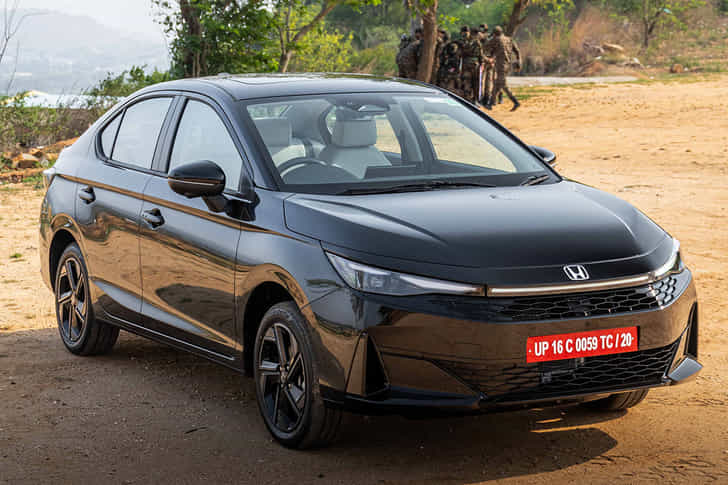
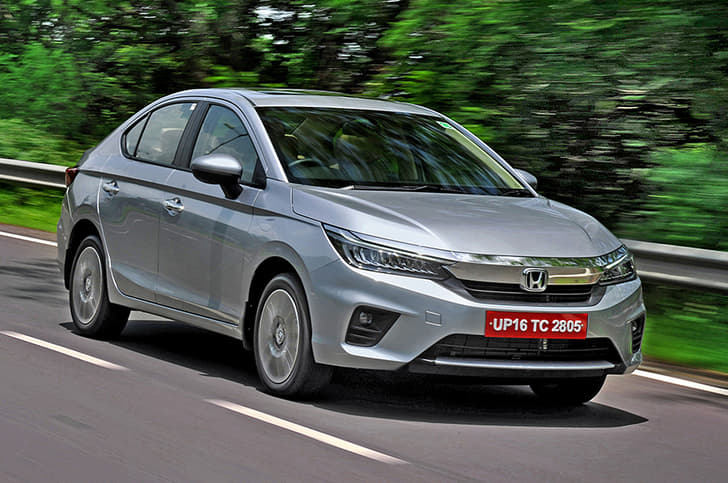
Go for the Honda City ZX CVT. For chauffeur‑driven parents, it offers the comfiest rear bench, ample legroom, and a smooth CVT for Bengaluru traffic within your ₹20-21 lakh budget.

Rear comfort is its strength: the 2,600 mm wheelbase helps knee-room, the rear seat is well-cushioned with good thigh support, and the ride is tuned soft for long trips. The 506‑litre boot easily swallows luggage for highway runs. 

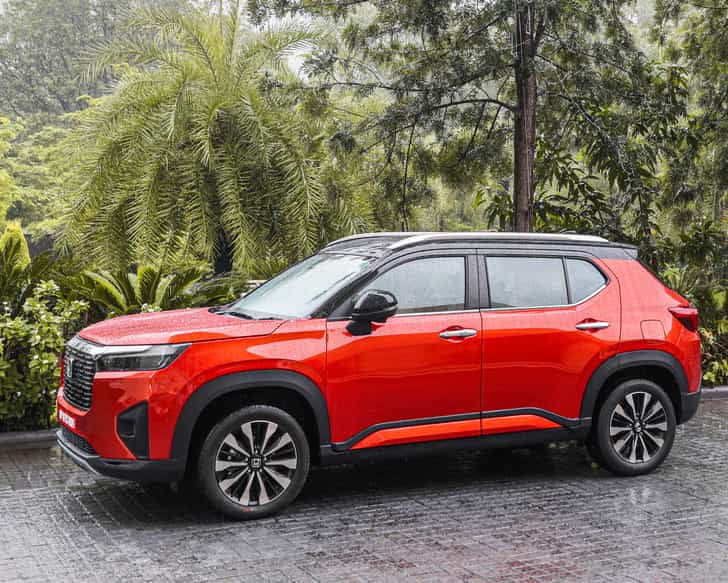
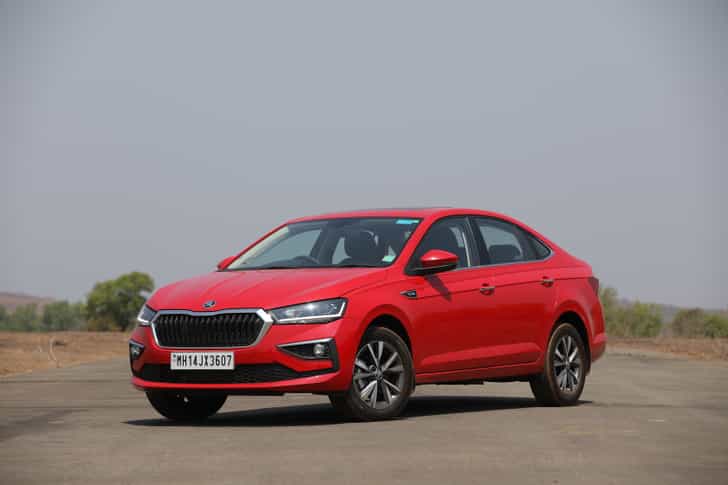
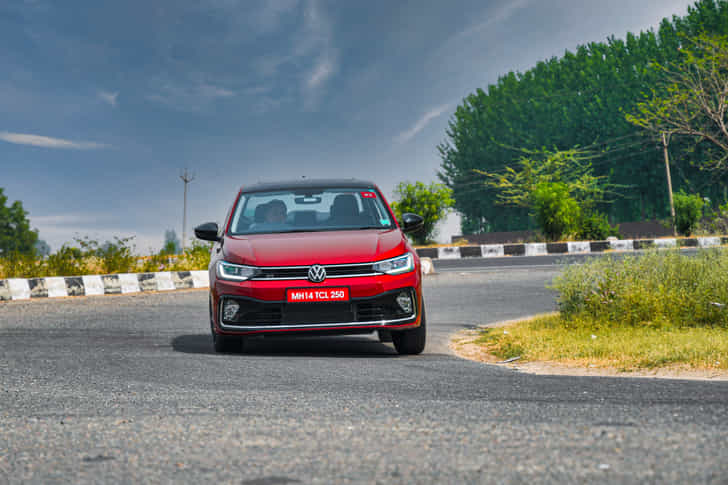
ZX adds 6 airbags and ADAS with adaptive cruise control, useful on long highways. The CVT’s smooth creep and no shift‑shock make occasional city use easy. Versus your shortlist, Elevate’s rear bench feels upright, while Slavia/Virtus ride firmer and are more driver‑centric for back‑seat comfort.

The one thing you give up is ground clearance in comparison to the Elevate. Also, if getting in and out is a concern, the Elevate's high-set seats would make it easier. A test drive should sort that out. 

For now, we recommend the City for its hassle-free ownership experience, reliability and most of all, a refined and comfortable cabin. 
Honda City

Honda City

More questions on similar cars

MK

Manish Kulkarni

3d

Which car should I buy if I plan to do road trips across India, including Ladakh, the Spiti circuit, followed by the 7 sisters & South India, with my family? I am looking for a five-seater, preferably diesel or hybrid. I can wait up to six months, until around Diwali. My yearly running will be around 10,000-12,000 km, which consists of 65% highway, 15% ghat roads, and 30% city driving. I live in the Thane suburbs (Dombivli). Good service, support and reliability are very important to me. The options I am considering are: XUV 7XO, Scorpio, Vision S, Thar Roxx, Duster (Hybrid), and Honda Elevate (Hybrid). Should I consider an AWD or 4x4 model, or are there any other options you would recommend?

Autocar India team

Autocar India

Verified
1d

From your list, the Mahindra Scorpio N 4x4 diesel is the safest fit for this use. As a five-seater with the last row folded, it offers a large boot, a tough body and proper 4x4 with low range for slush, snow or rocky terrain. It also has strong pulling power on steep hill roads when fully loaded. Mahindra’s wide service network on these routes is an added advantage when you are far from cities.Be aware that the Scorpio N is not as quiet or as comfortable on long highways as softer monocoque SUVs, and in the city, the ride can feel a bit bouncy. The Mahindra XUV 7XO is the better road car. It is more comfortable and refined, but for your intended usage, it is not as robust or as versatile as the Scorpio N, especially for tougher terrain in the Himalayas where the Scorpio N’s higher ground clearance and proper 4x4 make a real difference. The same limitation applies to options like the Renault Duster Hybrid and Honda Elevate.As for the Mahindra Thar Roxx, it is less comfortable than the Scorpio N, especially in terms of seating and long-distance usability.

VehicleMahindra Scorpio N
VehicleMahindra XUV 7XO
VehicleMahindra Thar Roxx
VehicleRenault Duster
VehicleHonda Elevate
MZ

Mohammed Zuber

4d

Hello Autocar team, I am planning to buy a new car, and I am very much confused between the VW Virtus GT and the Hyundai Creta Auto petrol. I am a proud owner of the Hyundai Creta 1.5 SX petrol 2023. But I feel I need a more punchy car. So, can you please clear my doubts on both of these cars?

Autocar India team

Autocar India

Verified
11h

If your goal is a stronger, more exciting drive than the 2023 Creta 1.5, you should opt for the Volkswagen Virtus GT Plus. It is a lower, lighter car with a strong turbo-petrol engine and a quick-shifting DSG gearbox. The Creta's turbo-petrol engine option may have a 10hp advantage on paper, but this one feels far stronger in practice. The steering also feels more direct, so on a fast road, the car goes where you point it with less delay. Coming from your current Hyundai Creta, you will immediately feel the extra shove in the mid-range and the sharper response. There are a couple of trade-offs. You will feel bumps a bit more than in your Creta, and though ground clearance is good, it's not as good as that of an SUV.So, for pure driving fun and a real step-up in how it pulls, go Virtus GT Plus DSG. Apart from everything else, it will also feel like a different car, while another Creta will feel too similar to your 2023 model. Do note, there is a facelift for the Vento coming later in the year, so if you can wait a few months, consider doing that.

VehicleVolkswagen Virtus
VehicleHyundai Creta
MB

manjunath BR

1w

I am considering the Skoda Kushaq 1.5 DSG, Renault Duster 1.3 DCT, and Honda Elevate. My usage is mostly city (70:30). I am unsure about DSG and DCT reliability, rear seat comfort, and long-term maintenance. I enjoy driving and prefer a driver-oriented car with a good music system. Please advise.

Autocar India team

Autocar India

Verified
19h

From your shortlist, there isn’t one SUV that perfectly ticks every box. If driving enjoyment is a priority, the Skoda Kushaq 1.5 TSI stands out. Its quick-shifting DSG, strong mid-range performance and sharp, agile handling make it the most engaging and driver-focused of the three. It also offers one of the best audio setups in the segment, with an 8-speaker system, subwoofer and amplifier delivering rich and punchy sound.On the reliability front, the 7-speed DSG has improved over time, but it’s still not as inherently robust or smooth in stop-and-go city use as Honda’s CVT. The Elevate, in contrast, is the easiest-going and fuss-free option here. It offers significantly better rear-seat space and comfort, along with Honda’s strong reputation for long-term reliability. However, it’s not particularly exciting to drive.The Renault Duster 1.3 DCT sits somewhere in between. Its turbo-petrol engine is strong and refined, but the car itself isn’t as sharp or driver-oriented as the Kushaq. Rear-seat space is also not its strong suit, and overall, it doesn’t quite stand out in any one area.So broadly, Kushaq for driving fun and audio, Elevate for space and peace of mind, and Duster as a middle-ground option.

VehicleSkoda Kushaq
VehicleHonda Elevate
VehicleRenault Duster

Popular discussions right now

KY

Krishna Yadav

1w

I am planning to sell my Mahindra XUV700 and switch to the Renault Duster. I would like your expert opinion on whether this would be a good decision.

Autocar India team

Autocar India

Verified
6d

On paper and in real-world ownership, these are very different cars, and the Mahindra XUV 7XO sits in a clear segment above. The XUV 700 is a bigger, more complete SUV. It offers more space, better road presence, stronger performance and a far richer overall experience, including the option of a third row and a more premium cabin. It is designed as a proper family SUV and feels more capable on highways and long drives.The Renault Duster, even in its new form, is a simpler, more driver-focused and lighter SUV. It will likely be easier to drive in the city and feel more rugged and straightforward, but it is still a step down in terms of overall size, features and cabin experience.So the decision really comes down to intent. If you are moving because you want something more compact, easier to use daily and less feature-heavy, then the Duster can make sense. But if you are expecting it to feel like an upgrade or even equal to the XUV700 in terms of space, comfort and overall experience, it will not.

VehicleRenault Duster
RO

Rohin

2w

I am confused about buying the AMT version of the Skoda Kylaq, Tata Nexon, or Maruti Fronx. My budget is between 11 and 13 lakh. My usage is mostly city driving of about 1,000 km per month, with occasional long highway drives.

Autocar India team

Autocar India

Verified
5d

Between the three, the Skoda Kylaq is the best automatic for the money. It doesn’t use an AMT but a proper 6‑speed torque-converter with the 1.0 TSI, which is smooth, robust and easily the nicest for your occasional highway runs.The Maruti Suzuki Fronx 1.0 turbo also gets the same 6‑speed torque-converter auto, and while it is refined and efficient, it doesn’t have the same solid, European feel or driving dynamics as the Kylaq. However, from an overall cost-of-ownership point of view - price, fuel efficiency and service, the Fronx is likely to work out cheaper.The Tata Nexon in your budget doesn’t get a torque-converter. You mainly have a 6‑speed AMT, which is convenient but nowhere near as smooth or quick as a proper automatic. There is also a 7‑speed DCA dual‑clutch option, which is noticeably better than the AMT, but still not as seamless as the autos in the Kylaq and Fronx, and it can push the price higher.For 11-13 lakh, 1,000km a month in the city and the odd long drive, we would pick the Kylaq auto. If budget discipline and running costs are top priority, go for the Fronx 1.0 turbo automatic.

VehicleSkoda Kylaq
VehicleMaruti Suzuki Fronx
VehicleTata Nexon
DE

Devakumar

1w

I have booked the Tata Sierra Adventure Plus petrol manual, but I am now confused between the petrol and diesel manual variants, particularly in terms of mileage and performance. I am not interested in an automatic transmission. My annual running is less than 6,000 km. Could you please advise which engine option would be more suitable for my usage? Additionally, I would appreciate any alternative suggestions for a spacious car with good mileage that fits my needs.

Autocar India team

Autocar India

Verified
6d

The Tata Sierra is a big, heavy car, and the petrol engine, being a naturally aspirated unit, feels just about adequate, especially once you load it up or hit the highway. The diesel, on the other hand, suits the car far better with its stronger low-end pull, making overtakes easier and long-distance driving far more relaxed.That said, with your low annual running of under 6000 km, the petrol still makes sense if your usage is mostly in the city. It will feel smoother, easier to live with and perfectly adequate for everyday driving, even if it lacks that effortless punch on highways.If you are open to alternatives for a better petrol manual experience, the Renault Duster with its turbo petrol engine is a strong option. It feels far more effortless to drive, while naturally aspirated options like the Kia Seltos or Hyundai Creta offer a more refined and effortless experience than the Sierra petrol.

VehicleTata Sierra
VehicleRenault Duster
VehicleKia Seltos
VehicleHyundai Creta

Posted on: 13 Mar 2026