
Skoda cars in India (9)
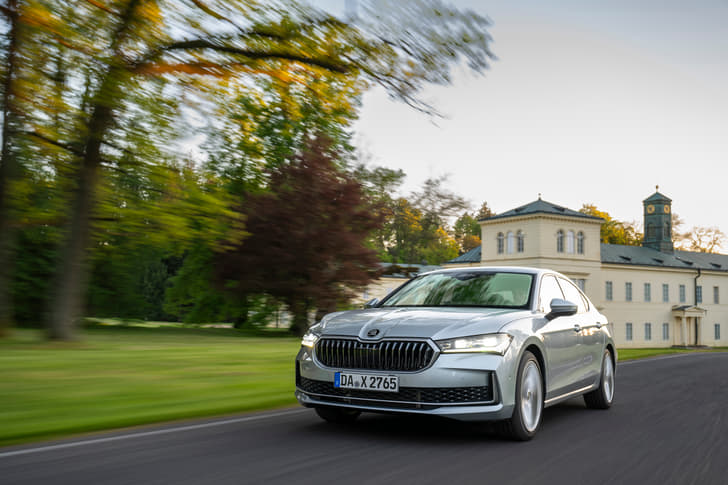
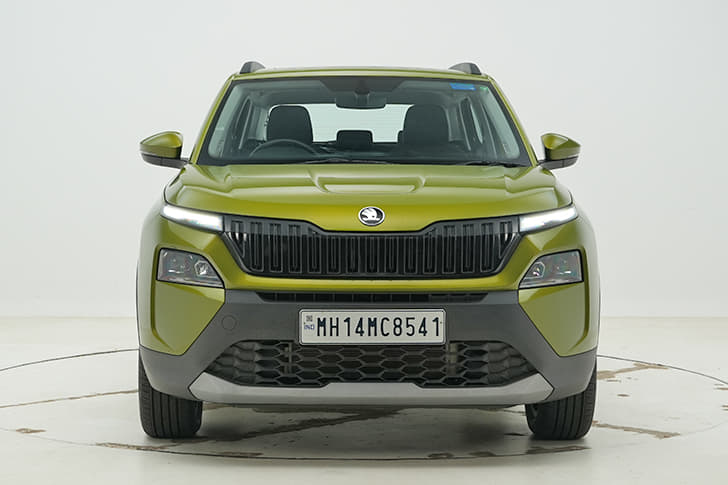
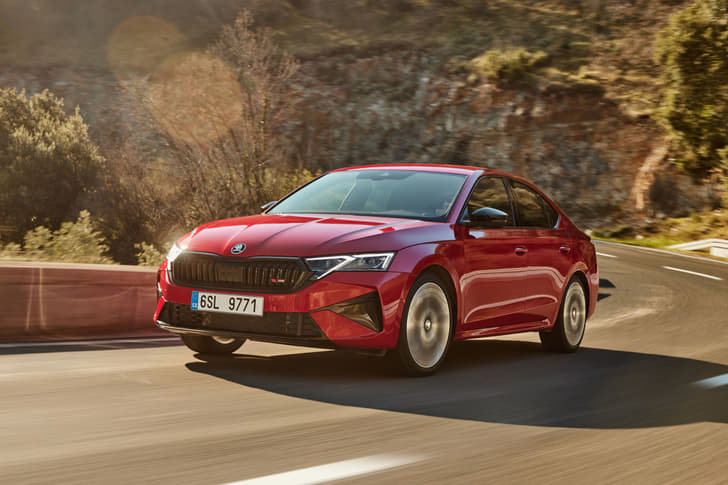
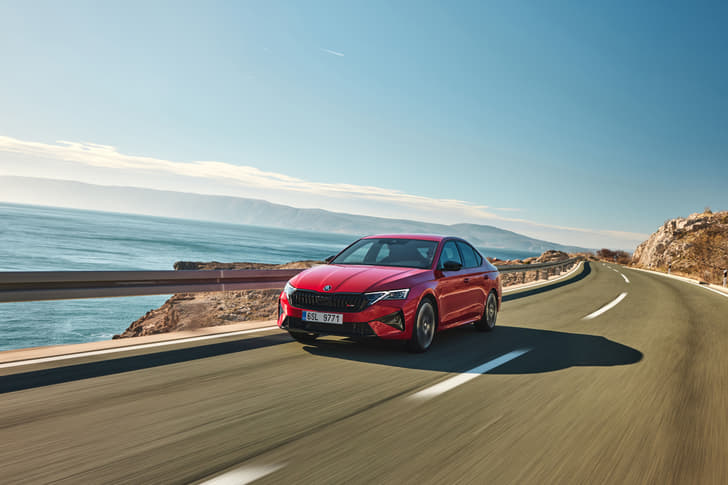
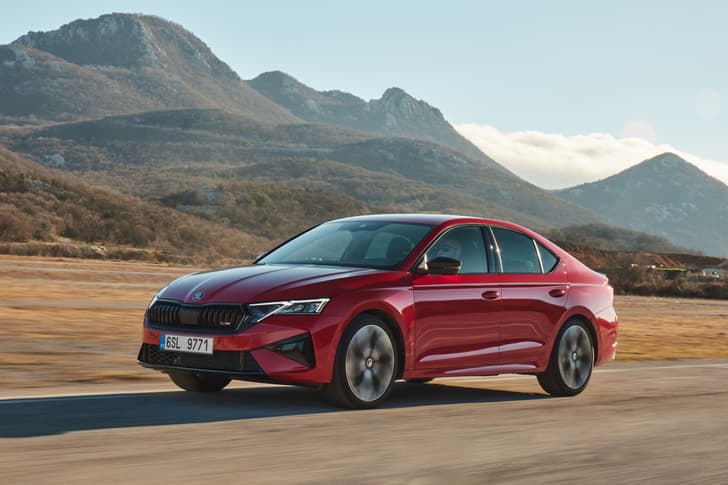
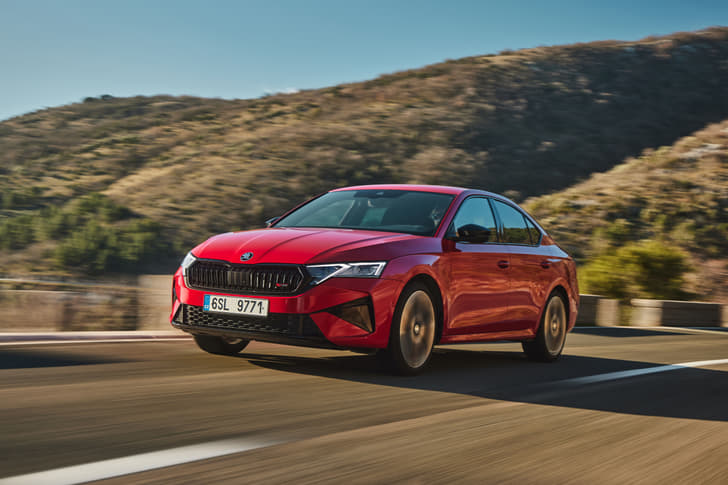
Skoda is a sister brand to Volkswagen in India, operating under the Skoda Auto Volkswagen India Private Limited umbrella. It is one of the affordable brands in India with products aimed at catering to driving enthusiasts, like Kylaq, Kushaq and Slavia. Skoda is liked for its elegant European designs, robust chassis and potent powertrains, enabling sorted driving dynamics.


Filter your search
FAQs
Yes. The only Skoda car under 10 lakh in India is the Kylaq. The Skoda Kylaq price starts at ₹7.59 lakh, ex-showroom.
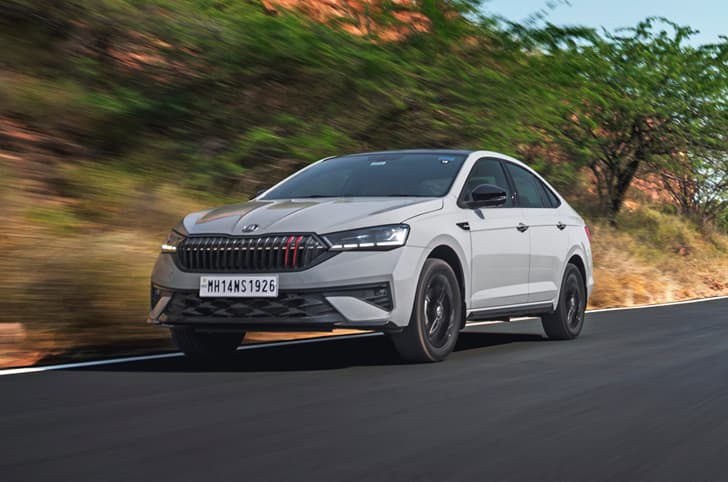
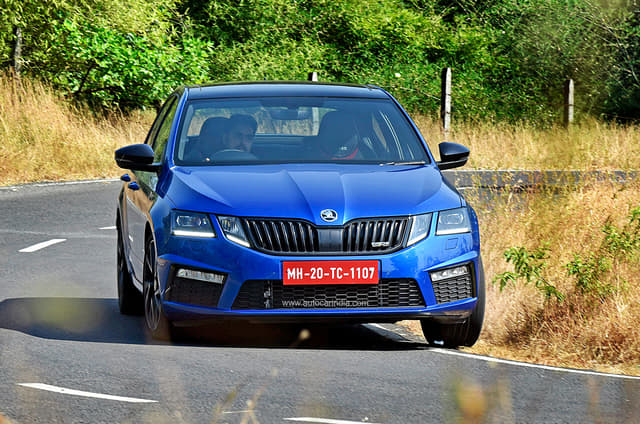
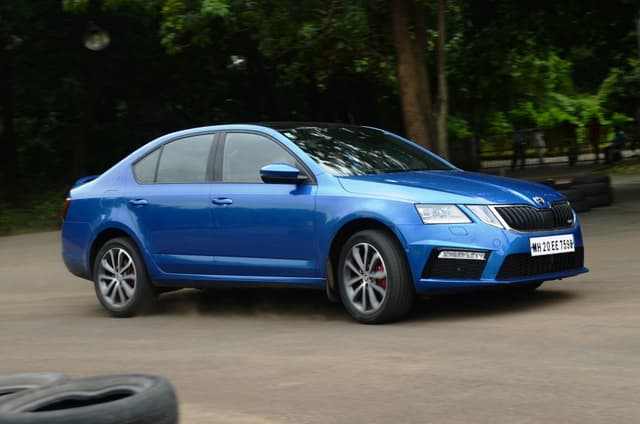
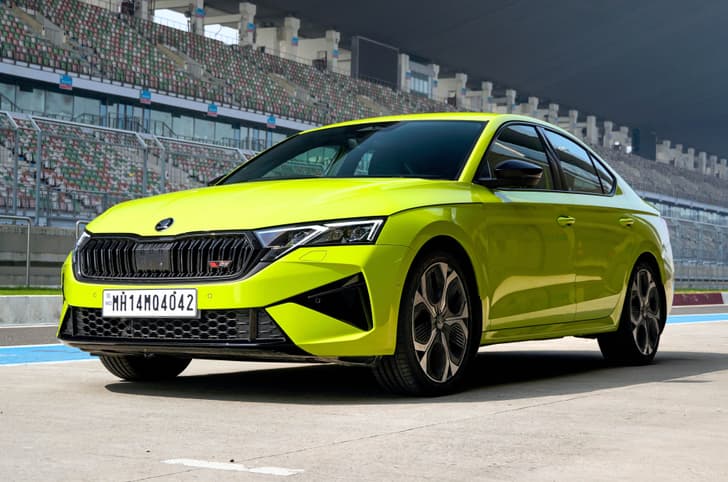
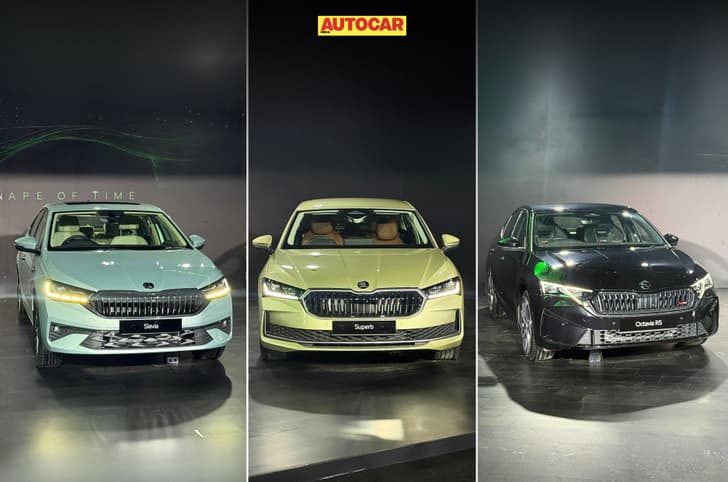
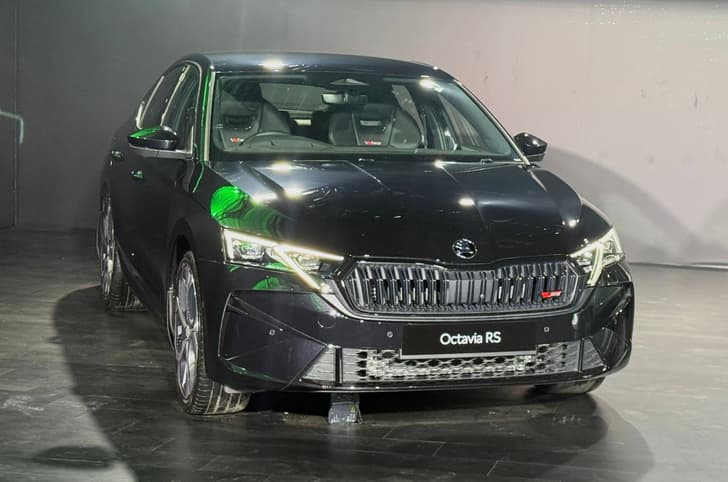
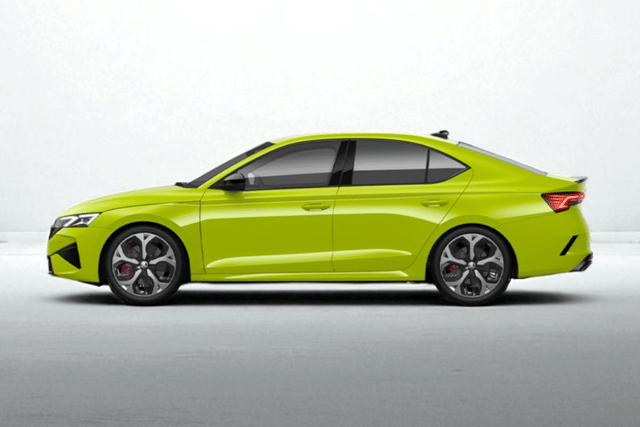
The Skoda Slavia is the only sedan on sale in India. The Octavia RS was also brought in limited numbers to the country. The upcoming Superb is the next sedan that will be offered by Skoda.
No. Presently, there are no Skoda diesel cars on sale in India. The manufacturer's lineup consists of petrol engine options only.
The cheapest Skoda car is the Kylaq, with a price starting at around ₹7.50 lakh (ex-showroom).
Yes. The Kylaq, Slavia, and Kushaq fall under the ₹20 lakh category.
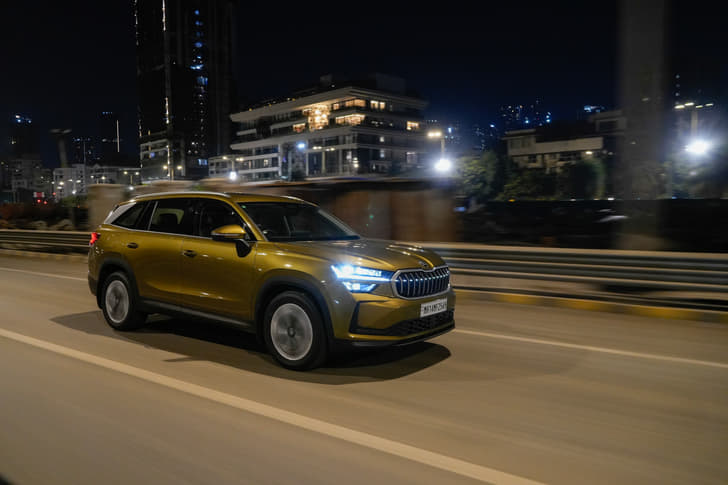
The Kodiaq is the most expensive Skoda car, priced at ₹46.49 lakh (ex-showroom).
Currently, there are 3 SUV cars available for sale in India. The Skoda SUV cars list includes the Kylaq, Kushaq, and Kodiaq.
Trending Questions on Skoda Cars - Answered by Autocar Experts
Hi team, I am considering buying the Maruti Suzuki Jimny because of its compact dimensions, good looks, and SUV feel, mainly for city driving and short road trips. However, I am concerned about its low sales and resale value. The Mahindra Thar Roxx seems too large for city use, while the Mahindra Thar feels cramped in the second row. Please suggest whether I should consider buying the Jimny. Is a facelift expected soon? Should I wait for the 4x2 variant if it is going to be launched?
The Jimny is a genuinely likeable car with its compact dimensions, rugged looks and proper SUV feel, and it is well suited to city use and small road trips. However, your concerns about low sales and resale value are valid. The Jimny has not found a large audience, and that does have an impact on long-term ownership confidence. The Thar Roxx is indeed much larger and less city-friendly, while the standard Thar remains cramped in the second row, so neither is an ideal alternative for your usage.As for a facelift, there is no confirmed timeline for a major update, and waiting for a 4x2 variant is not advisable unless you are specifically looking for a more affordable, less capable version. The Jimny’s appeal lies in its 4x4 capability, and a 4x2 version would dilute much of what makes it special.If you love the Jimny for what it is, you can still go ahead and buy it, but do so with the understanding that resale value may not be its strongest suit. If that is a major concern, you may want to consider more mainstream alternatives like the Brezza or the Kylaq, which offer better ownership confidence without the same level of off-road character.
My budget is around Rs. 14-15 lakh, and I need advice on buying a turbo-petrol car due to the E20 fuel-related concerns in the market.
Do not let E20 concerns drive your decision. Modern turbo petrol engines are engineered to run on E20 fuel, and there is no official roadmap beyond E20 at this stage. The main impact of higher ethanol blends is a slight reduction in fuel economy, not engine damage. Premium petrol is not required, and long-term wear is generally limited to some rubber fuel-system components, which manufacturers account for in their designs.If you want to buy a car under 15 lakhs, the best approach is to focus on the car that best suits your needs rather than worrying about E20. If you want a turbo petrol, the Skoda Kylaq is a strong recommendation. It offers a genuinely enjoyable driving experience, a proven 1.0 TSI engine and a well-balanced package. If you want a more spacious car, the Mahindra XUV 3XO is also worth considering. It is one of the most spacious compact SUVs, has a wide cabin and is a great 5-seater. The only drawback is the boot, which is one of the smallest in the segment.The key point is that E20 should not be the deciding factor. Both Kylaq and 3XO are engineered for E20 and will serve you well for years to come. Choose the one that best fits your usage and ownership priorities.
I'm planning to buy a Skoda Slavia. Is it worth waiting for the facelift that's expected later this year? Also, should the ongoing discussion around ethanol blending influence my purchase decision? I'm quite confused about whether I should wait for more clarity on the fuel policy or go ahead with the purchase.
The Skoda Slavia facelift is expected around mid-August, so it is worth waiting if your purchase isn’t urgent. The update is likely to bring mild styling tweaks, but more importantly, some meaningful feature upgrades. Improvements to the air conditioning are expected, along with additions like ventilated or massage functions for the seats and a revised automatic gearbox option. Even if changes aren’t dramatic, you’ll be getting a more up-to-date package for roughly the same money.On the ethanol blending question, there’s no real reason to hold back your purchase. The current Slavia is already E20 compliant, and modern turbo petrol engines are engineered to run reliably on this fuel. In fact, there is typically some engineering buffer built in, so handling slightly higher blends like E25 in practice is not an issue from a durability standpoint.At present, there is no clear or official roadmap beyond E20 in India. So waiting for further clarity on fuel policy is unlikely to materially affect your decision. The only noticeable downside with higher ethanol blends is a marginal drop in fuel efficiency, which is something manufacturers have already factored in.Overall, the Slavia continues to stand out as one of the best driver-focused sedans in its class. Strong turbo petrol engines, a well-judged ride-and-handling balance, and a solid build make this Skoda car a very appealing choice. Waiting for the facelift makes sense, but there’s no need to delay your decision over ethanol concerns.
I'm planning to buy the Skoda Kylaq Prestige Plus AT. My partner wants a 360-degree camera, and I'd prefer to have it installed through the dealership. I have a few concerns. Will the camera be operated through the touchscreen? Will the left and right cameras automatically activate when the corresponding indicator is used? I've also heard that there are issues with the current 360-degree camera setup and that dealers are waiting for a software update. Could you clarify?
The Skoda Kylaq Prestige Plus AT is a strong choice, but your concerns about the 360-degree camera are valid. The Kylaq does not offer a factory-fitted 360-degree camera, so any installation will be an aftermarket solution, even if arranged through the dealer. This means the camera system will not be as seamlessly integrated as a factory setup. The feed will display on the touchscreen, but the level of integration can vary depending on the kit used. Some systems can trigger the side cameras with the indicators, but this is not always guaranteed and depends on the quality of the installation and the specific hardware chosen.Regarding the software update rumour, there is no official Skoda update pending specifically for 360-degree camera integration on the Kylaq. Dealers may be waiting for better aftermarket kits or improved integration solutions. There is a factory update on the horizon later this year, which could include the update.
I am a retired person, and my daily city driving is around 15-20 km in heavy traffic, with occasional highway trips. My current car is a 2010 Honda Jazz. I am looking for a reliable and safe automatic car with a budget of around Rs. 25 lakh. I am open to a hybrid automatic, electric, or petrol automatic. Which option would you recommend?
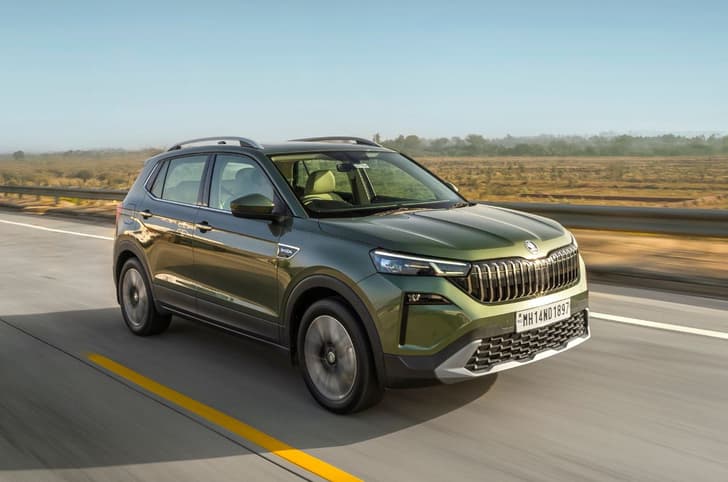
Given your limited usage, the initial premium a hybrid or an electric car command over a petrol-automatic can't be justified, despite the significant difference in running costs. Hence, we'd advise you to consider a petrol-automatic car instead. For the money, you can consider a VW Taigun 1.0 TSI 8AT or a Skoda Kushaq 1.0 TSI 8AT. Both these are smooth and compact in size, and will feel rather easy to drive in urban conditions. Also, both are solid, and you will feel confident driving on your occasional highway drives. In case you want a car that's larger and more modern, the Kia Seltos 1.5 IVT is an excellent option.However, if you're still keen to keep the running costs to a bare minimum, and if you have a provision for home charging, then consider the upcoming Kia Syros EV (expected to launch in the coming weeks). This Kia car is compact in size, yet it is surprisingly spacious, and with adjustable rear seats, the Syros will feel like a natural progression from your outgoing Honda Jazz. The electric powertrain is likely to be shared with the Clavis EV, which means it will be smooth and very efficient too. Sure, the Syros EV's looks might not be universally appealing; however, we'd strongly recommend that you drive it once - it is likely to be an ideal Jazz replacement for you.
Hi, I am planning to buy an SUV but am confused about choosing the best one from the three options. My maximum budget is Rs. 17.5 lakh. I am looking for a 5-seater car where safety and value for money are the top priorities. My monthly running will be around 2,000 km. My family members are suggesting the Kia Seltos with an automatic transmission. However, its overall size and length are bigger than the others. The Skoda is another option, but my friends say that its maintenance and spare parts are more expensive. I have no idea about Tata. Please help and advise.
Go for the Kia Seltos IVT. At Rs 17.5 lakh, you are right at the point where the Seltos becomes the most sensible choice. The IVT automatic is smooth, reliable and well suited to your 2,000 km/month usage, and the Seltos is a genuinely well-rounded SUV with good space, a comfortable ride and a strong safety package. Kia’s service network is strong, and ownership costs are reasonable. The Skoda Kushaq is the better driver’s car, but the Seltos is the more complete family SUV. Tata Sierra is a good option, and very spacious but would feel much larger than the Kia car, thus go with the Seltos it feels premium and is the better long-term ownership proposition. Although, the Seltos is also one of the longer cars in the segment, but this translates into better rear seat space and a more comfortable cabin for family use. Overall, the Seltos IVT is the safest, most value-for-money choice in your budget.
Hi, my daily running is around 50 km, mostly in the city. Which is the best SUV for me within a budget of Rs. 20-25 lakh?
With a daily city running of around 50km, the ideal choice is a petrol automatic SUV with a smooth gearbox and low running costs. In the Rs. 20-25 lakh range, the Kia Seltos petrol IVT is the most balanced option. The IVT gearbox is very smooth in stop-start traffic, it is easy to drive in the city thanks to the light controls, and Kia’s service network is strong. The Seltos also offers a comfortable cabin, good features and a premium feel.If you want something more driver-focused, the Skoda Kushaq 1.0 TSI automatic is a good alternative. This Skoda car is more engaging to drive and feels more solid on the highway, but the Seltos is the better all-rounder for city use. You can also consider the Maruti Suzuki Victoris strong hybrid if you want more fuel efficiency and even lower running costs, but it won't feel as premium as the Kia. The Seltos petrol IVT strikes the right balance between comfort, reliability and ease of ownership for your usage.
Will the torque converter gearbox also be offered with the Skoda Slavia 1.5?
No, the new 8-speed torque converter will be available only with the 1.0-litre turbo-petrol version of the updated Skoda Slavia. The 1.5-litre turbo-petrol is expected to continue with the 7-speed dual-clutch transmission.
Hi Autocar, I'm planning to buy my first automatic car with an on-road budget of around Rs. 12 lakh, and I'm a bit confused between these options: Honda Amaze ZX CVT, Tata Punch Accomplished+ S AMT, Skoda Kylaq Signature AT The car will mostly be used for a mix of city driving and occasional highway trips. A few things about my usage: I'm a first-time driver, so I want something easy to drive, and that helps me build confidence. Right now, the car will be used occasionally, but the usage could increase over the next few years. My parents will also be driving it sometimes, so ease of driving and comfort are important. I'm looking for a reliable car that doesn't give frequent issues and is easy to own. Which of these would you recommend based on my requirements? Also, if I go with the Kylaq, is the Signature+ AT really worth paying around Rs. 2 lakh more than the Signature AT? Are the extra features and overall package worth the premium, or is the Signature AT good enough? Thanks!
Between your picks, the Skoda Kylaq and Honda Amaze are the best bets for your needs. The Amaze CVT is smooth, the car is compact and easy to manoeuvre, and Honda’s reliability and low maintenance costs make it a stress-free ownership experience. It is also a proper automatic gearbox, unlike the AMT in the Punch, which can feel jerky at low speeds.The Kylaq is more fun to drive and has the most premium feeling of the three. The 1.0 TSI engine also offers the most performance, which will be handy on the highway, but will also consume more fuel in the city. Its torque converter automatic is very smooth shifting and makes driving in the city very easy. What also helps is that you sit higher than the Amaze, which will give you a bit more confidence in tight city traffic. The downside is that Skoda’s service network is not as widespread as Honda’s, and upkeep can cost more. As for the variant, the Signature+ AT adds a couple of useful features like a reversing camera and a larger infotainment screen, but it is not worth paying Rs 2 lakh extra over the Signature AT. Between these two, the Amaze ZX CVT is the better fit for your requirements - easy to drive, reliable, comfortable and hassle-free to own.
Which is the best SUV to buy now or is it better to wait for 1-1.5 years since there are going to be a lot of changes in the powertrain landscape? Should I buy a hybrid or a petrol automatic SUV under a budget of Rs. 25 lakh. My daily usage is 50-60 km within the city, including heavy traffic and bad roads, along with highway travel once or twice a month. I am looking for an SUV with a good driving experience, reliability, safety, good features, and a proven track record.
With a budget of Rs. 25 lakh, daily city usage of 50-60 km in heavy traffic and bad roads, and 1-2 highway trips a month, the Maruti Suzuki Victoris Hybrid is the best fit. The hybrid system of this Maruti Suzuki car delivers excellent fuel efficiency in stop-start traffic, the ride is comfortable over broken roads, and Maruti’s service network and reliability are strong. The Toyota Urban Cruiser Hyryder Hybrid is essentially the same car with Toyota’s badge and service network, so choose whichever brand you are more comfortable with.There is no need to wait 1-1.5 years. The powertrain landscape is evolving, but there is no major shift expected in this price bracket that would make waiting worthwhile. Hybrids like the Victoris and Hyryder are already well-proven and deliver real-world benefits today. If you are willing to wait, however, a Kia Seltos hybrid and Renault Duster hybrid are expected to launch later this year.Between hybrid and petrol automatic, hybrid is the clear choice for your usage. Your daily city running is high, and the hybrid system will save you significant fuel costs over time while still being easy to live with. Petrol automatics are cheaper to purchase, but the fuel savings of the hybrid far outweigh that.If you want a more premium feel and stronger performance, the Kia Seltos IVT or Hyundai Creta IVT are good alternatives, but they will not match the hybrid for fuel efficiency in your usage. The Skoda Kushaq and Volkswagen Taigun are the better driver’s cars, but again, they will not be as efficient in city traffic. Overall, the Victoris Hybrid or Hyryder Hybrid are the most sensible and cost-effective choices for your usage.
Last Updated on: 16 Jul 2026