Skoda Cars Under 25 Lakh in India (4)
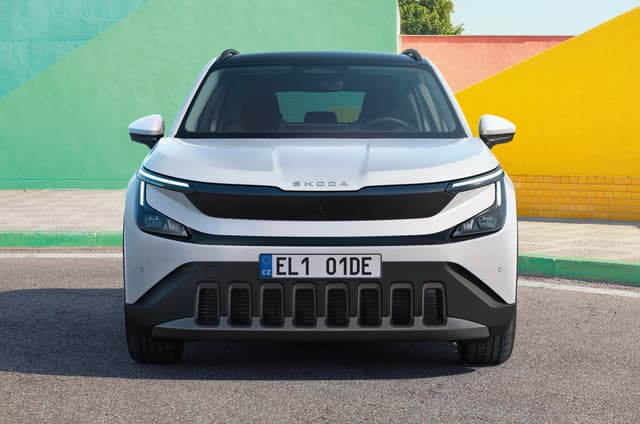
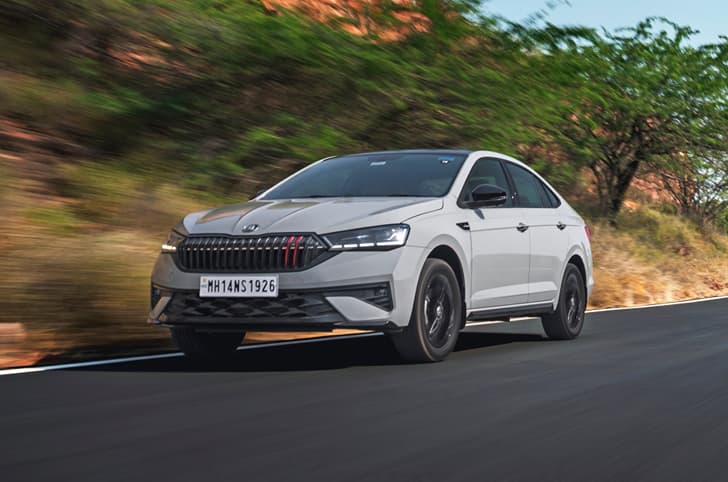
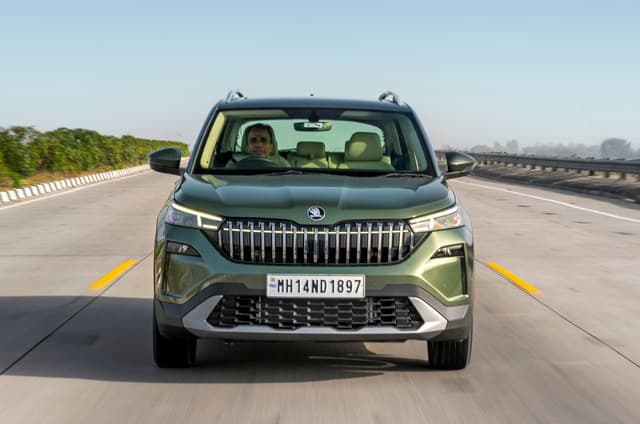
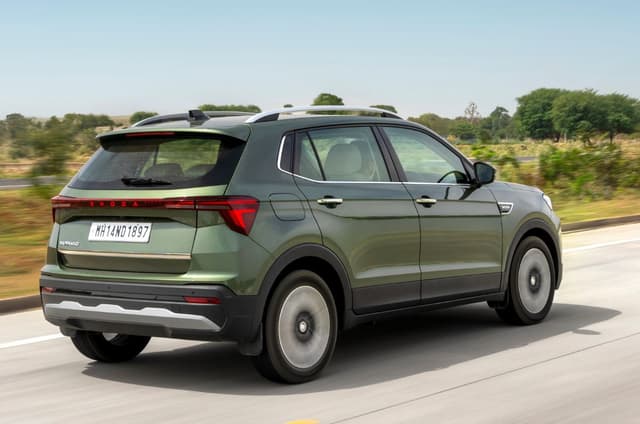
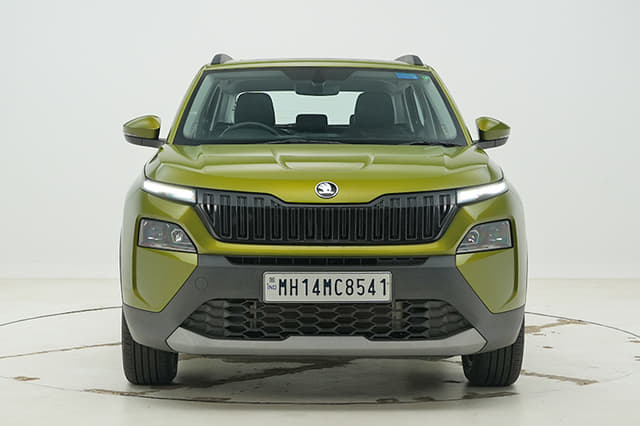
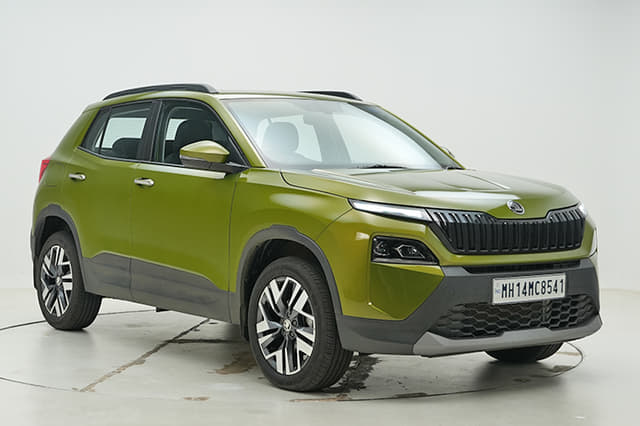
At Rs 25 lakh, the budget is no longer a constraint. Why? Because every variant of the Kylaq, Kushaq and Slavia, right up to the top trims, the Monte Carlo and Prestige 1.5 TSI DSG, fits within this budget, both ex-showroom and on-road. So the choice here isn't about what you can afford, but purely about which model, engine and gearbox combination suits you best.
What does the Rs 25 lakh budget unlock in Skoda?
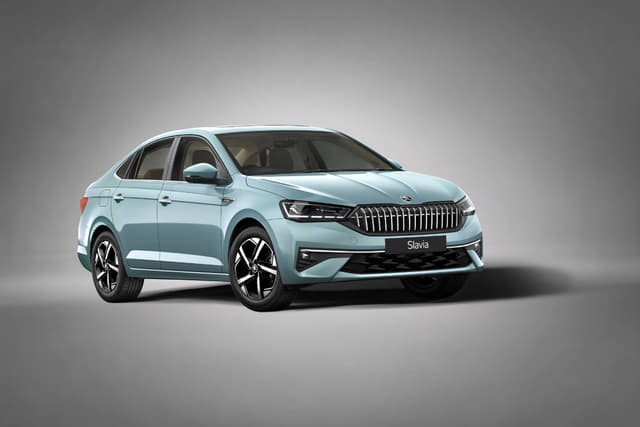
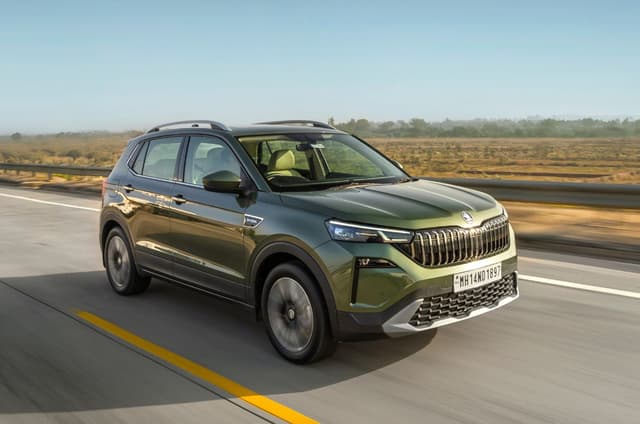
- At Rs 20 lakh, the Kushaq’s and Slavia’s Prestige and Monte Carlo trims that only fit on paper, based on their ex-showroom price, now fits within the budget. This gives you access to the 1.5 TSI engine, which makes 150hp compared to the 1.0 TSI’s 115hp, and it comes paired with a 7-speed dual-clutch automatic gearbox.
- Nothing changes for the Kylaq. Its full range was already available within Rs 15 lakh, so this budget doesn't add anything new for Skoda's smallest SUV.
Which Skoda car under 25 lakh should I buy?
If you want | Best Match | Reason | Consideration |
The most affordable and fuss free car | Kylaq | Even its loaded trim costs less than base variants of Kushaq and Slavia. | The suspension is stiff and can feel unsettled over broken roads. |
The strongest performance and acceleration | Kushaq or Slavia 1.5 TSI DSG | The 1.5 DSG is effortless in city as well as on the highway, unlike the 1.0 TSI automatic, which can feel sluggish below 1800 rpm. | As per some owners the DSG gearbox can be unreliable and you need to pay extra premium over the 1.0 TSI AT. |
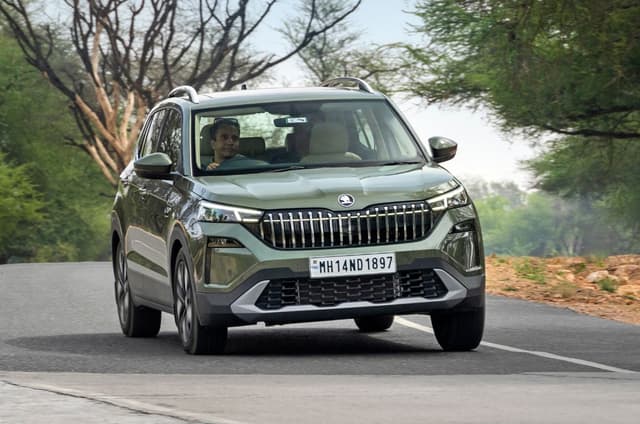
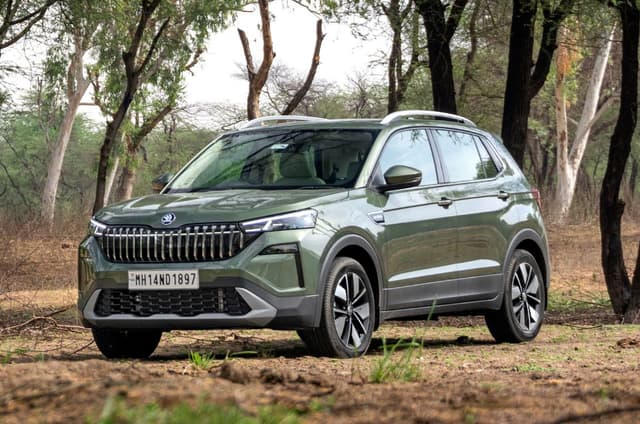
A well-rounder SUV with everything on offer | Kushaq Prestige or Monte Carlo trims | These bring a panoramic sunroof, ventilated seats, 360-degree camera, and much more. | As per a few owners, the vehicle produces a noticeable amount of noise, vibration, and harshness across the range. |
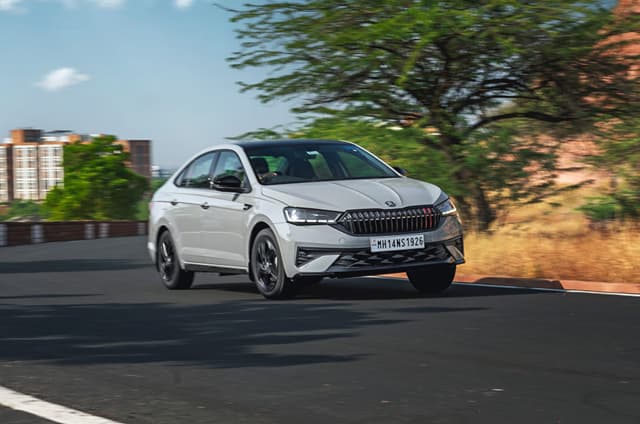
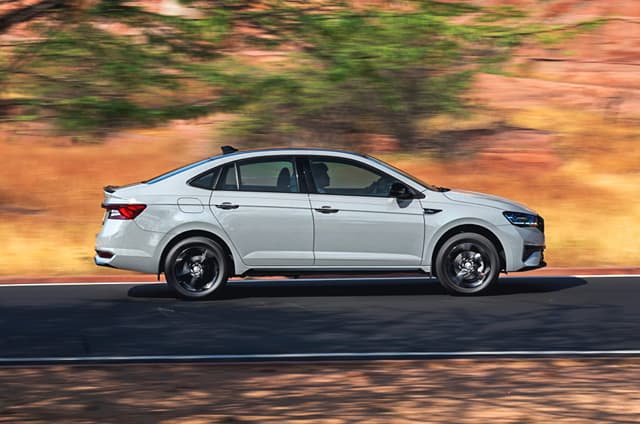
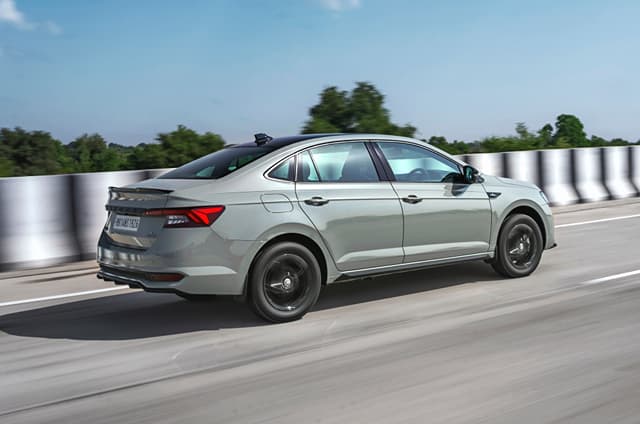
A well-equipped sedan | Slavia Prestige or Monte Carlo trims | It matches the Kushaq’s top-end feature list in a sedan body with a bigger boot and a more settled highway ride. | Some tall passengers find headroom to be tight. |
Good fuel-efficiency | Kushaq or Slavia 1.0 TSI MT | The manual is the most fuel-efficient option in both models. | You miss out on the convenience of an automatic. |
How safe are Skoda cars under Rs 25 lakh?
All three models (Kylaq, Kushaq, and Slavia) come with 6 airbags as standard and carry a 5-star crash-test rating. But none of the three offers ADAS in any variant, even at this budget.


Filter your search
Filter your search
Skoda Cars Under 25 Lakh - FAQs
For most buyers, yes. Plus, in our testing, we found the 1.5 DSG effortless both in the city and on the highway, while the 1.0 TSI automatic can feel sluggish at low revs.
No. The Kylaq comes only with the 1.0 TSI engine, paired with a manual or a torque converter automatic.
As per ARAI, the Slavia manual has the best fuel efficiency at 20.32kpl. But as per our test, the Kylaq comes out on top, returning 14.4kpl in the real world.
The Slavia, at 521 litres. The Kushaq offers 385 litres, and the Kylaq, the smallest of the three, offers 360 litres.
Trending Questions on Skoda Cars - Answered by Autocar Experts
Please suggest an automatic car for 80% city use and 20% highway driving for an average monthly running between 1200 to 1500 km. I am looking for a car that delivers good performance, decent mileage and is safety under an approximate budget of Rs. 12 lakh. Also, are EV safe? Do EVs have any electromagnetic fields that can cause headaches during long drives. Please advise.
The Kylaq AT would be our first recommendation if you prefer a petrol automatic. Its 1.0-litre turbo-petrol engine produces 115hp and 178Nm, offering good performance for both city driving and occasional highway trips. The six-speed torque converter automatic is smooth and well suited to stop-start traffic. It also has a 5-star Bharat NCAP rating. The drawback is that fuel efficiency in heavy traffic is not particularly impressive.If you are open to an EV, consider the Tata Punch EV 40kWh. It is quick, easy to drive in traffic and significantly cheaper to run. It is also worth addressing your concern about electromagnetic fields. EVs do generate electromagnetic fields from their motors, batteries and power electronics, but measurements inside EV cabins have generally been well below international public exposure limits. There is currently no established scientific evidence that these fields cause headaches or other health problems. The World Health Organization also states that evidence linking low-level EMF exposure to headaches is weak. So, there is no specific health reason to avoid the Punch EV on this account. The Punch EV also offers a comfortable city driving experience and low running costs. However, you should ideally have home charging, and occasional highway journeys will require some charging-stop planning.
I want to buy a compact SUV (petrol, automatic) under a budget of Rs. 12-13 lakh. Help me decide between Brezza, Venue, Kylaq, XUV 3XO and Amaze (since it is a compact Sedan) considering that the mileage within city should not be less than 13-14kpl.
Between your picks, the Maruti Suzuki Brezza 1.5-litre automatic is your best bet since city fuel efficiency is your main priority. The Hyundai Venue, Skoda Kylaq and Mahindra XUV 3XO all use turbo-petrol engines, which aren't particularly known for their fuel efficiency in the city. That said, achieving your target of 13-14kpl in city driving with any of these cars will require a very sedate driving style.The Brezza also comes with a smooth-shifting 6-speed torque converter automatic, which makes driving in the city very easy. One drawback is that, its interior won't feel as modern as the Hyundai Venue. The Honda Amaze is another good choice, but being a compact sedan, it won't feel as spacious as the Brezza.
I’m looking for a petrol automatic SUV under Rs 17 lakh that is safe, fun to drive and fuel-efficient. I’ve considered the Kia Seltos, the Hyundai Bayon and the Hyundai Creta (although the Creta hasn’t been crash-tested by Bharat NCAP). I could also step down to three-cylinder options like the Hyundai Venue or the Skoda Kylaq. German and Czech cars are really solid, but I don’t like their rear-view cameras. Most of my driving is in Gurgaon traffic, with occasional highway trips. Which car would you recommend?
Given your requirements, you should consider the Skoda Kylaq 1.0 TSI AT. It has a punchy 115 hp turbo petrol engine, a smooth 6-speed torque converter automatic and a sorted ride and handling balance, which makes it one of the most fun-to-drive SUVs in your budget. It is also safe as it has 6 airbags and has a 5-star crash safety rating from Bharat NCAP. However, it isn't the most economical and as you rightly pointed out, the camera quality isn't the best. Alternatively, you could also consider the Hyundai Bayon. It won't be as punchy or as fun to drive as the Kylaq but it will be more economical and have better camera quality.
I’m planning to buy a car with an on-road budget of around Rs 16 lakh. It will be on a corporate lease, so good fuel efficiency would help financially. We’ll drive 600-800 km a month. Would a diesel automatic Kia Sonet or Hyundai Venue be a good choice, or would a petrol suit my usage better? I’ve noticed that most petrol automatics in this range use a DCT. Is a DCT good for Bengaluru traffic, or is a torque converter better suited to stop-go driving? I’m really confused by the options in this budget, so please help. I currently drive a Ford Figo diesel manual.
With your monthly running of just 600- 800 km, we would recommend a petrol automatic over a diesel. The additional cost of buying a diesel is unlikely to be recovered through fuel savings at this level of usage. Also, with predominantly urban driving, a modern diesel's DPF can become a concern if the car does not regularly get sufficiently long runs to complete regeneration. Coming from your Ford Figo diesel, you may find the petrol's running costs higher, but the lower usage makes it the more sensible choice.For Bengaluru traffic, a torque converter automatic would be preferable to a DCT. DCTs are perfectly usable, but repeated crawling in heavy stop-start traffic can make them feel jerky at low speeds and less smooth than a torque converter.We would shortlist the Mahindra XUV 3XO petrol AT and Skoda Kylaq AT. Both get six-speed torque converter automatics. The 3XO has a stronger 1.2-litre turbo-petrol engine with 200Nm, a spacious cabin and a comfortable ride. The Kylaq is more compact, feels engaging to drive and is easier to manoeuvre and park in tight spaces.
I’m 46, based in Noida, with a family of three. I’m considering a car in the Rs 15-20 lakh range and have shortlisted the Volkswagen Virtus and the Skoda Slavia. Would you suggest buying a 2026 model now, since these are being offered with discounts of Rs 1-1.5 lakh, or waiting for the facelift? I’m especially worried about whether the 2026 Virtus still has the AC issue mentioned in some reviews. Would you also recommend spending an extra Rs 2.5-3.5 lakh for the 1.5-litre engine? My driving is about 80 percent within the NCR and 20 percent outstation.
To answer your question about the AC performance first, the pre-facelift Slavia does not get the variable-geometry AC compressor, so its cooling isn’t as good as the updated car. The same will be the case with the pre-facelift Virtus and its upcoming update. Since the discounts being offered on the existing stock are quite tempting, you will need to decide if you are willing to compromise on AC performance for a sweeter deal.For your usage, the 1.0-litre engine will be the better choice. The added performance of the 1.5-litre engine will only really be felt on the highway, which makes up a small portion of your overall driving. The 1.0-litre engine also comes with a torque converter automatic (a 6-speed on the pre-facelift and an 8-speed on the post-facelift), which is smoother in city traffic than the 7-speed DSG paired with the 1.5-litre engine.Overall, a post-facelift Slavia 1.0 automatic is your best bet. It will give you better AC performance alongside a few new features, while the 1.0 offers a good balance of highway performance and city usability.
Last Updated on: 13 Nov 2026