
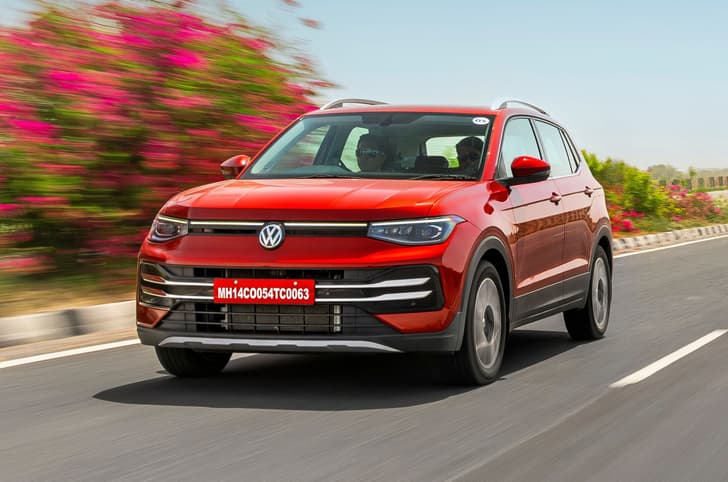
The Volkswagen Taigun has always stood out as a solid, sophisticated and sporty midsize SUV. Five years since its launch, this midlife update brings subtle design tweaks, added features and, crucially, a new gearbox for the 1.0-litre turbo-petrol. To see what difference this makes in the real world, we put the new 1.0 TSI automatic to the test on a Jaipur-to-Chandigarh highway run to evaluate its fuel efficiency.
Volkswagen Taigun Performance and Refinement
Under the hood is the familiar 115hp/178Nm 1.0-litre, three-cylinder direct-injection turbo-petrol engine, now paired with a new 8-speed torque-converter automatic (AQ300), replacing the earlier 6-speed unit.
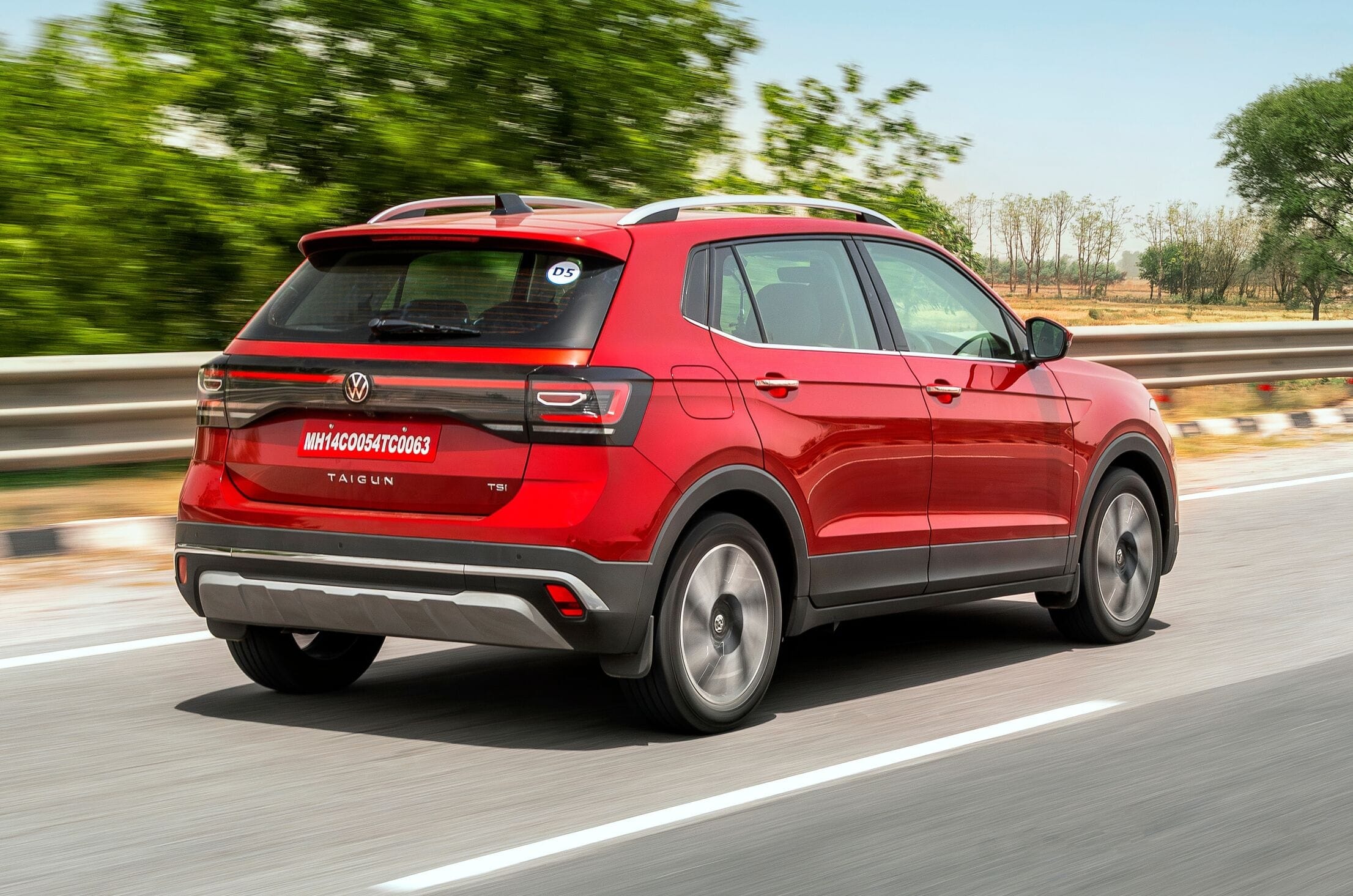
This new gearbox shifts ratios seamlessly and very smoothly. And compared to the outgoing 6-speed auto version, its creep function (initial roll-on) is much more natural, though it still feels slightly eager compared to some rivals with CVT and DCT, particularly in reverse.
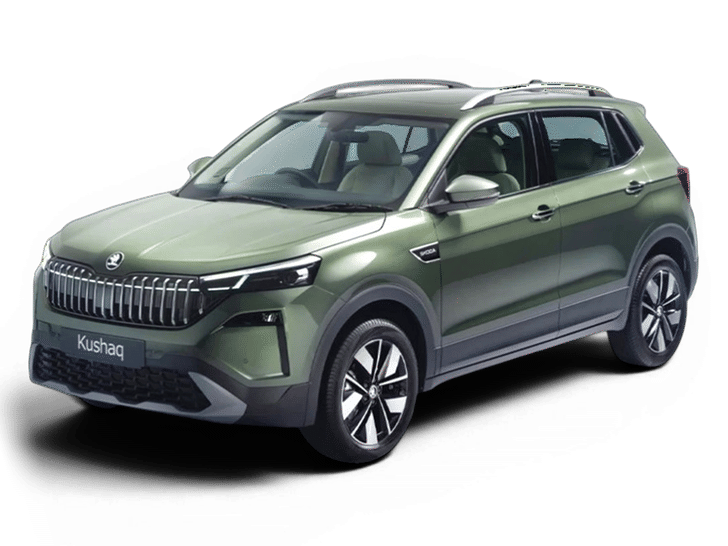
Just like in the mechanically identical Kushaq with the same powertrain, acceleration feels a bit quicker than the outgoing 6-speed automatic version. This new gearbox complements the 1.0-litre TSI well, and the closely stacked ratios keep the engine in its powerband. While gearshifts are seamless, you’ll notice the gearbox going up or down ratios too frequently – even light throttle inputs can trigger multiple downshifts quickly. Paddleshifters are carried over for manual control.
Volkswagen Taigun Mileage and Efficiency
Volkswagen claims that the 1.0L 8AT version can deliver up to 19.54kpl. However, a 448.8km highway run from Jaipur to Chandigarh, with two occupants, luggage and the AC set to 22deg C in full-auto mode, yielded a fuel efficiency of 13.94kpl. The car consumed 32.19 litres of fuel, with an average speed of 68kph.
This gearbox’s enthusiastic nature and shorter gearing seem to have impacted its fuel efficiency. To put it into perspective, at 100kph in eighth gear, the engine spins at around 2,000rpm, which is higher than ideal for an eight-speeder.
Volkswagen Taigun Ride Comfort and Handling
The Taigun continues to be among the most engaging SUVs to drive in its segment. Its taut chassis delivers predictable handling, and high-speed stability is excellent – it feels planted and reassuring at triple-digit speeds.
That said, the suspension is on the stiffer side and can feel jarring over sharp bumps at low speeds, especially compared to rivals like the Renault Duster or the Tata Sierra. The steering is light and direct, making city driving easy, though it could do with more weight at higher speeds.
Interestingly, the 1.5-litre version now gets rear disc brakes, while the 1.0-litre variant continues with rear drum brakes. Despite that, braking performance remains strong and confidence-inspiring.
Volkswagen Taigun Exterior Design and Engineering
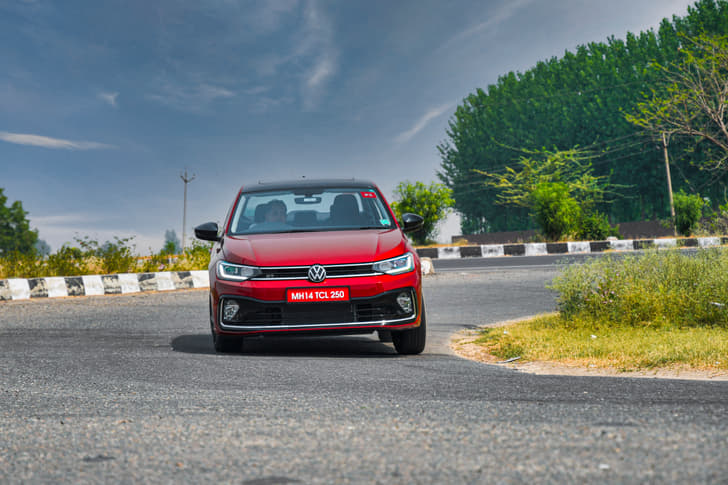
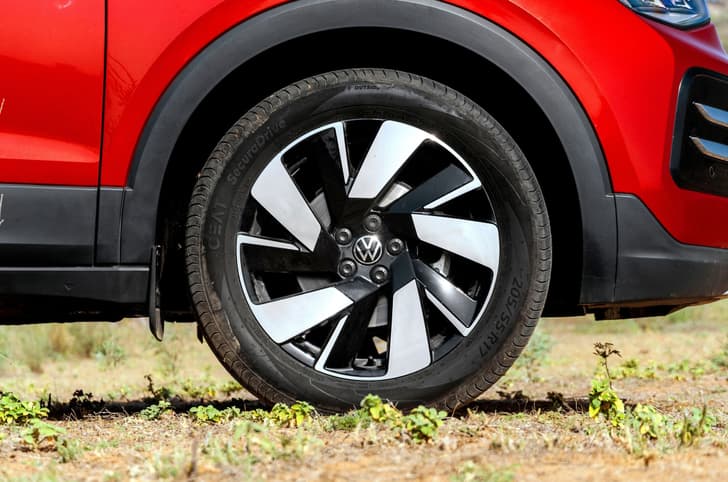
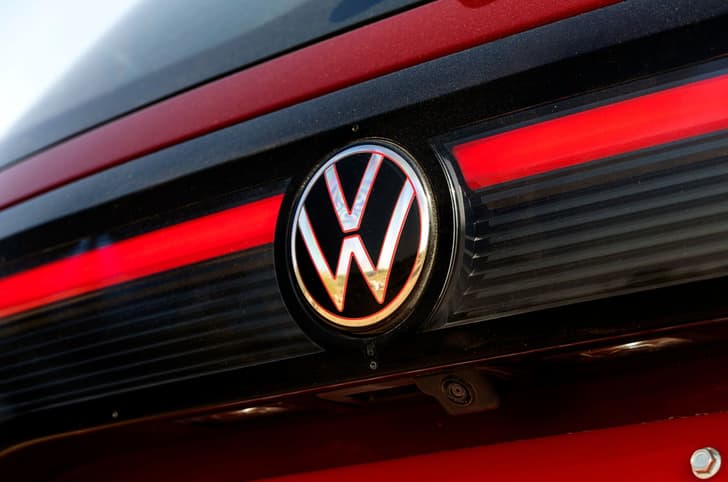
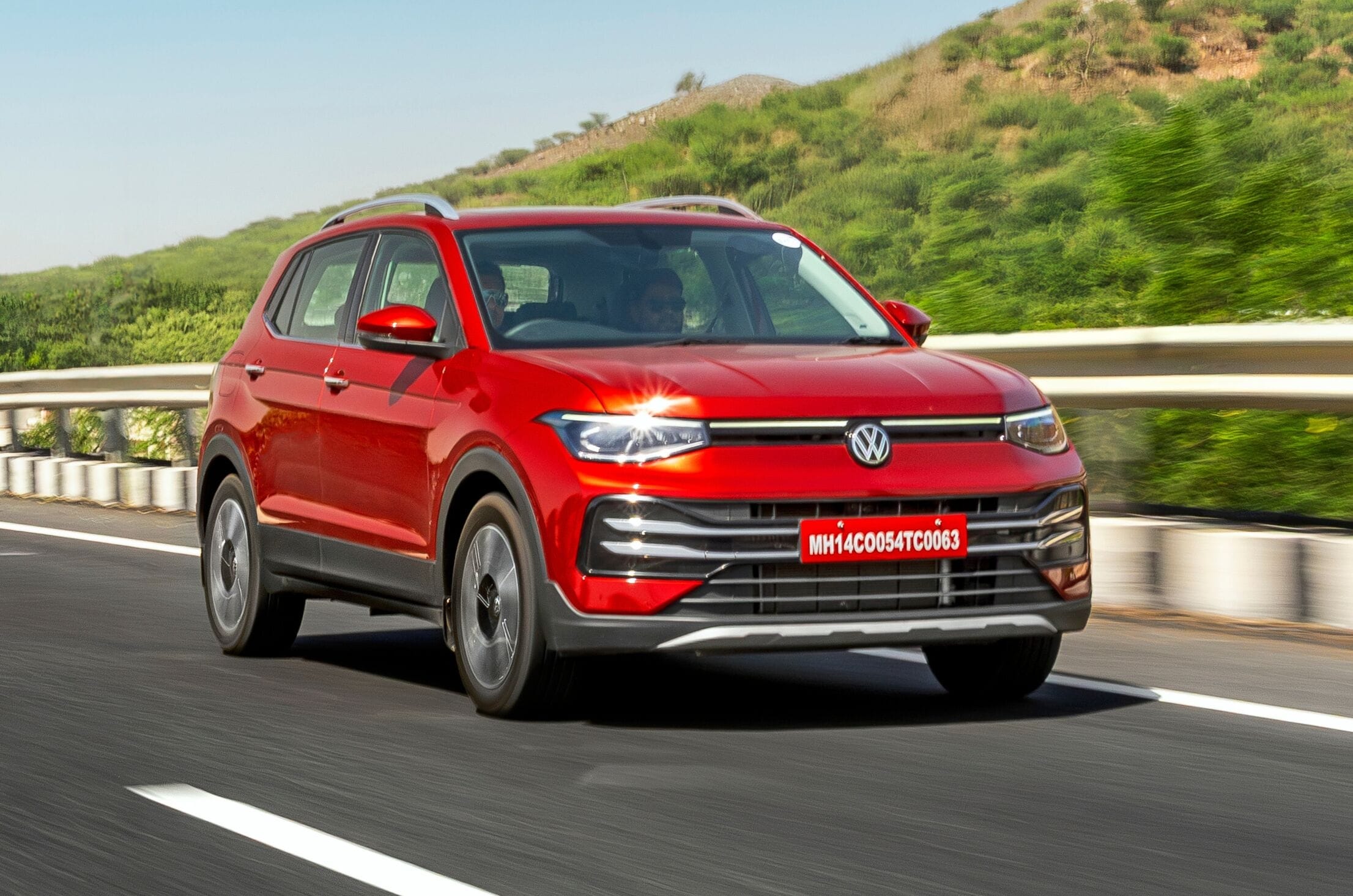
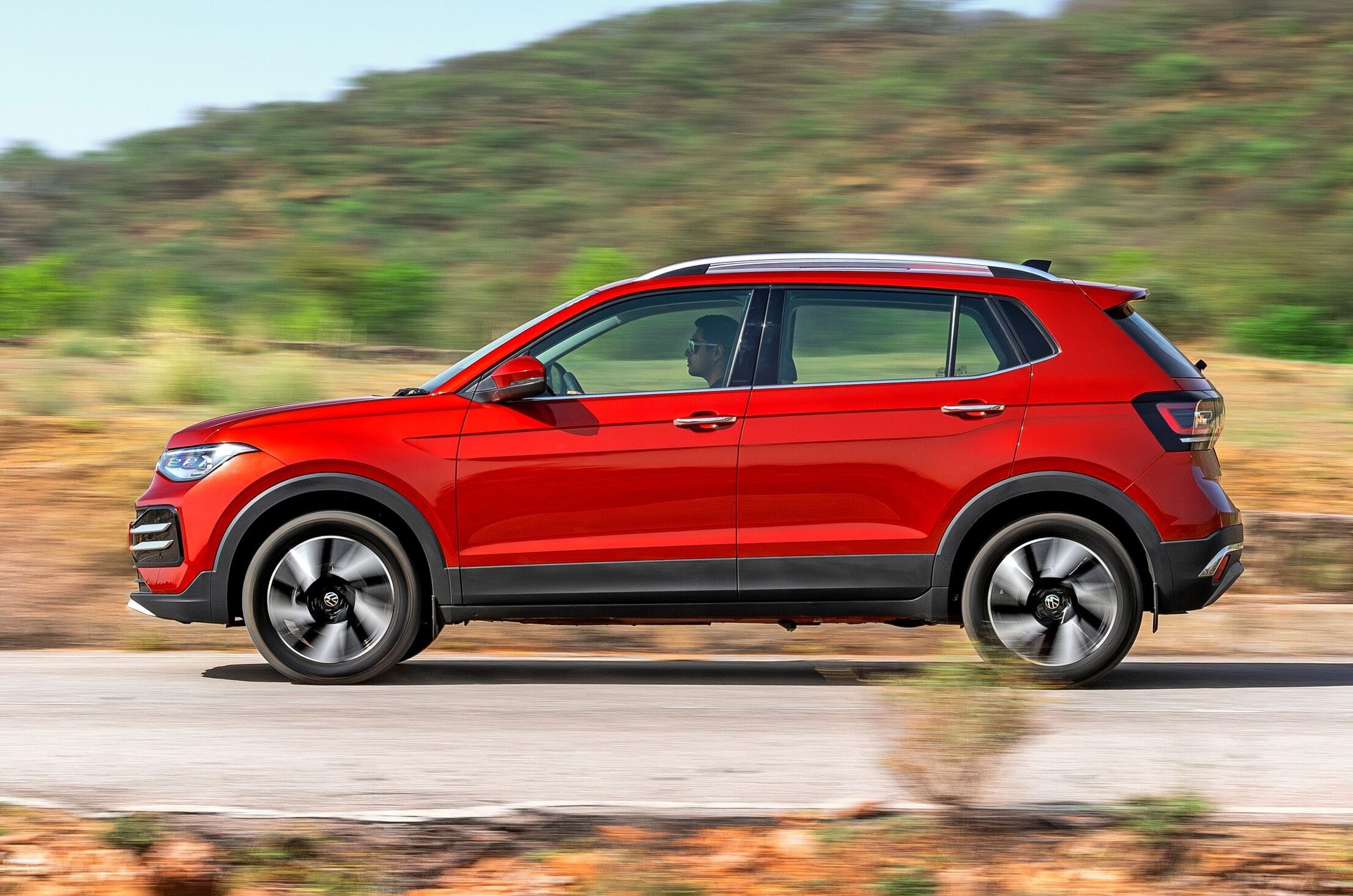
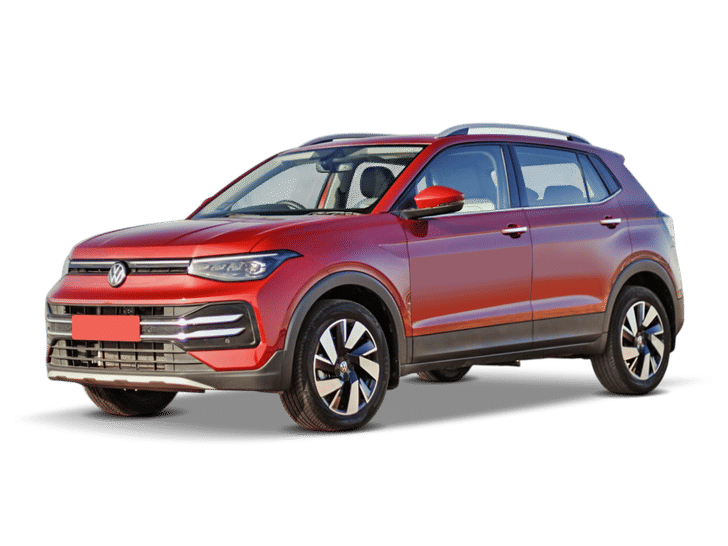
Design changes are largely focused on the front, with a slimmer grille, sleeker LED headlamps and a full-width light bar with an illuminated VW logo, similar to the Volkswagen Tayron. There’s a redesigned bumper with chrome detailing, new 17-inch alloy wheels and minor updates at the rear, including revised tail-lamp elements and sweeping indicators.
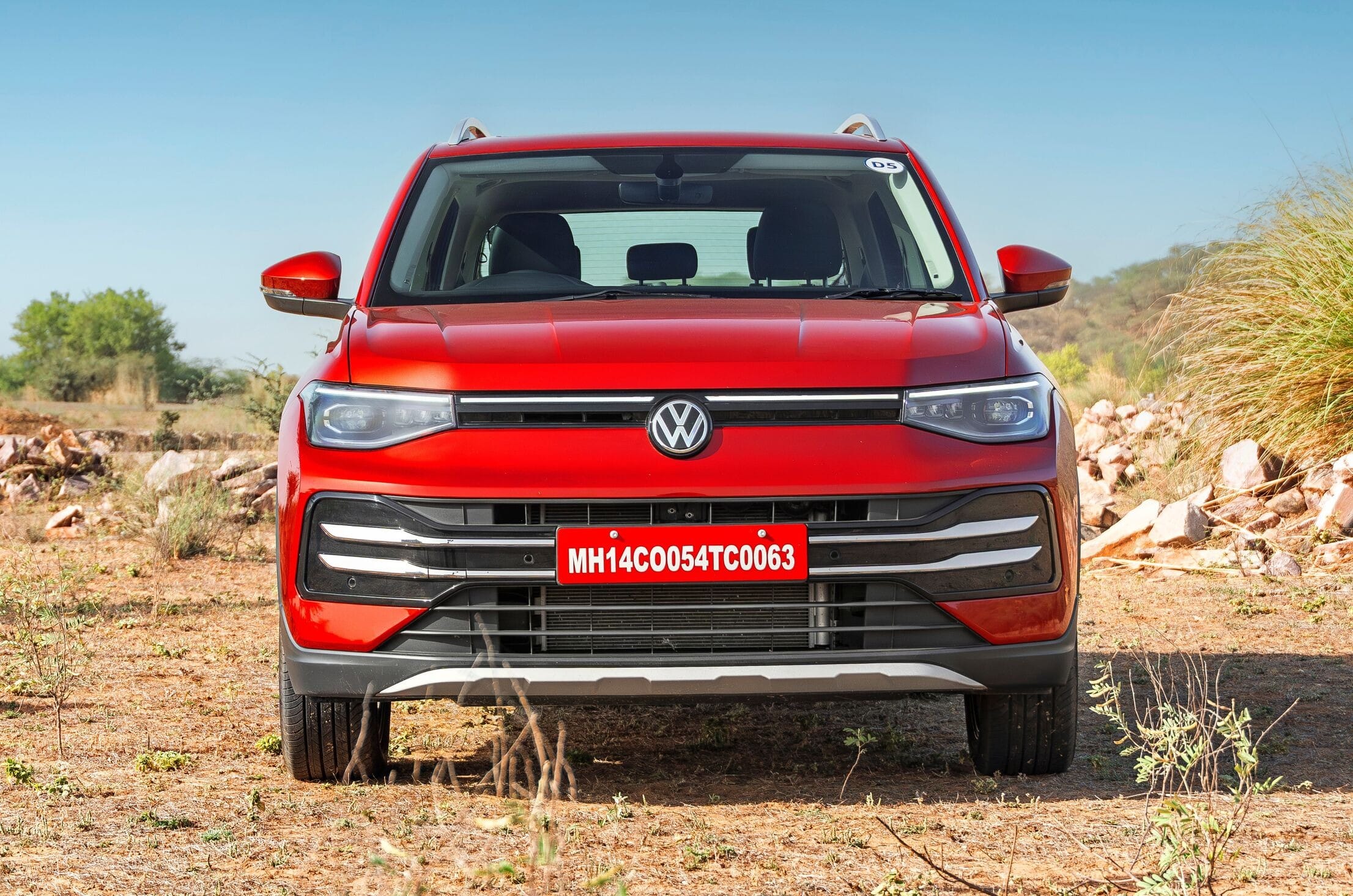
The 188mm ground clearance remains unchanged, as do its other dimensions, making it one of the smallest SUVs in its class.
Volkswagen Taigun Interior Space and Comfort
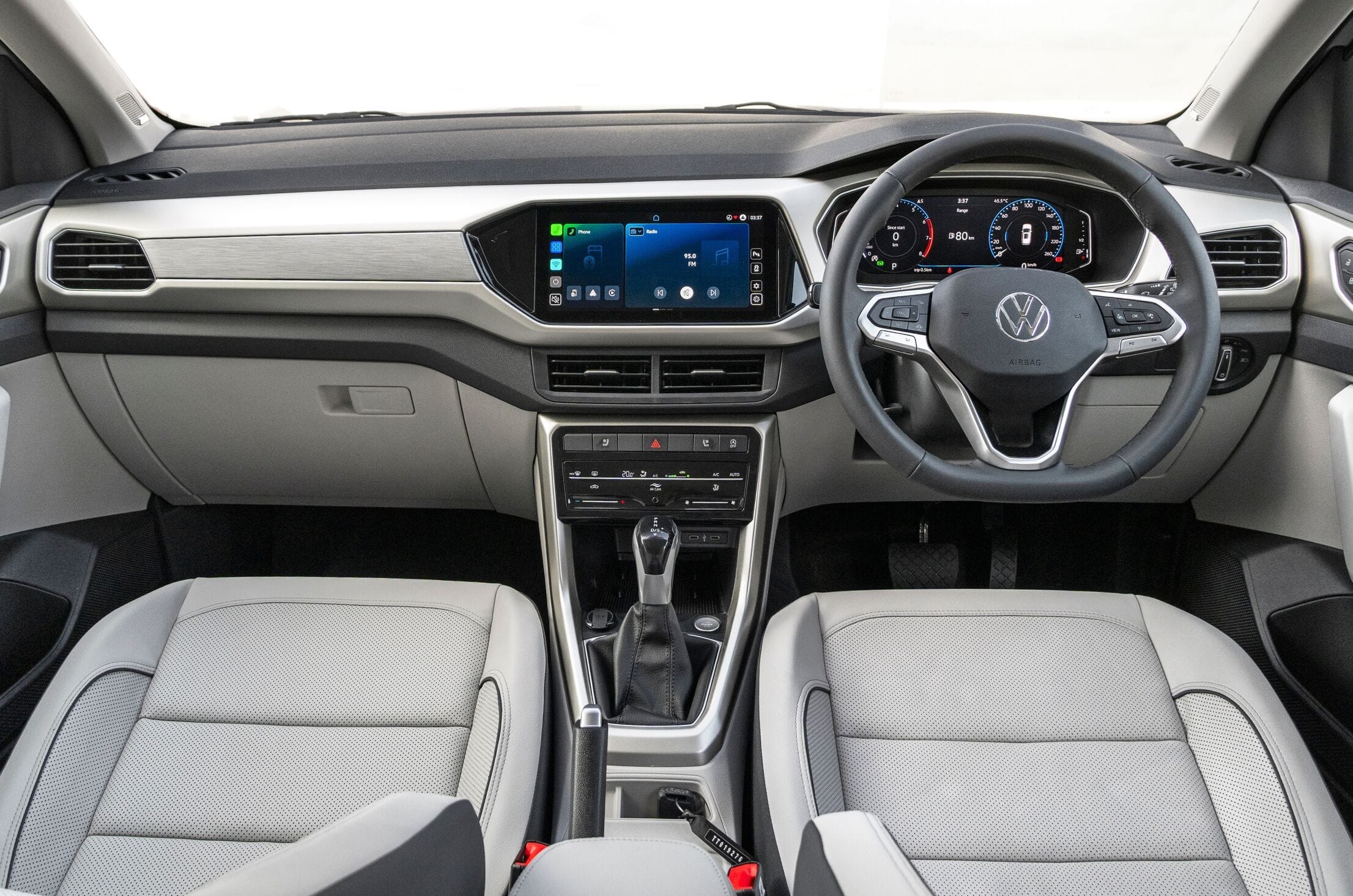
Inside, the dashboard gets a new silver trim, which goes well with the black and light grey interior colour scheme. On a bright and sunny day, however, it reflects on the (passenger-side) window, which can get a bit distracting. VW has also upgraded the air-conditioning system with a variable displacement compressor that cools the cabin more efficiently and operates at a lower fan speed than before.
What community is saying on the Taigun?
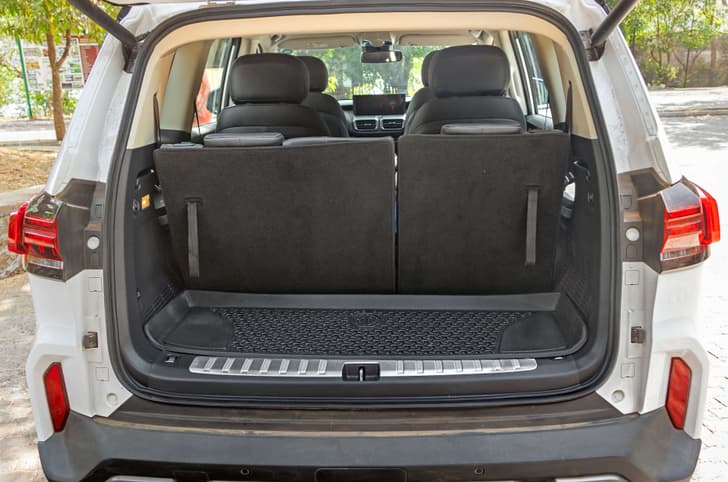
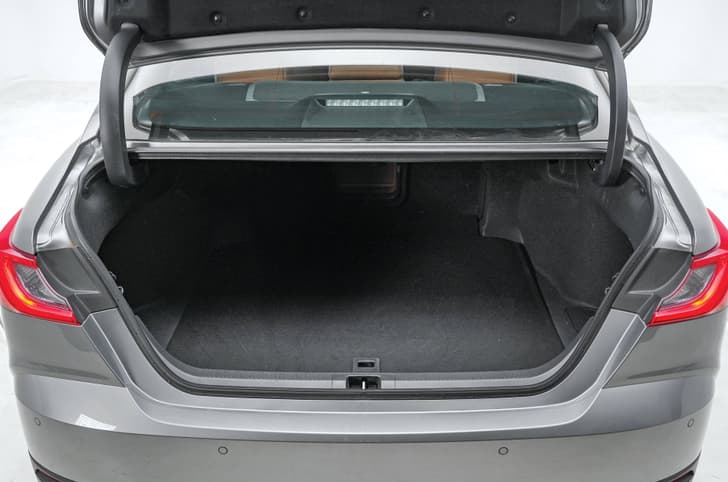
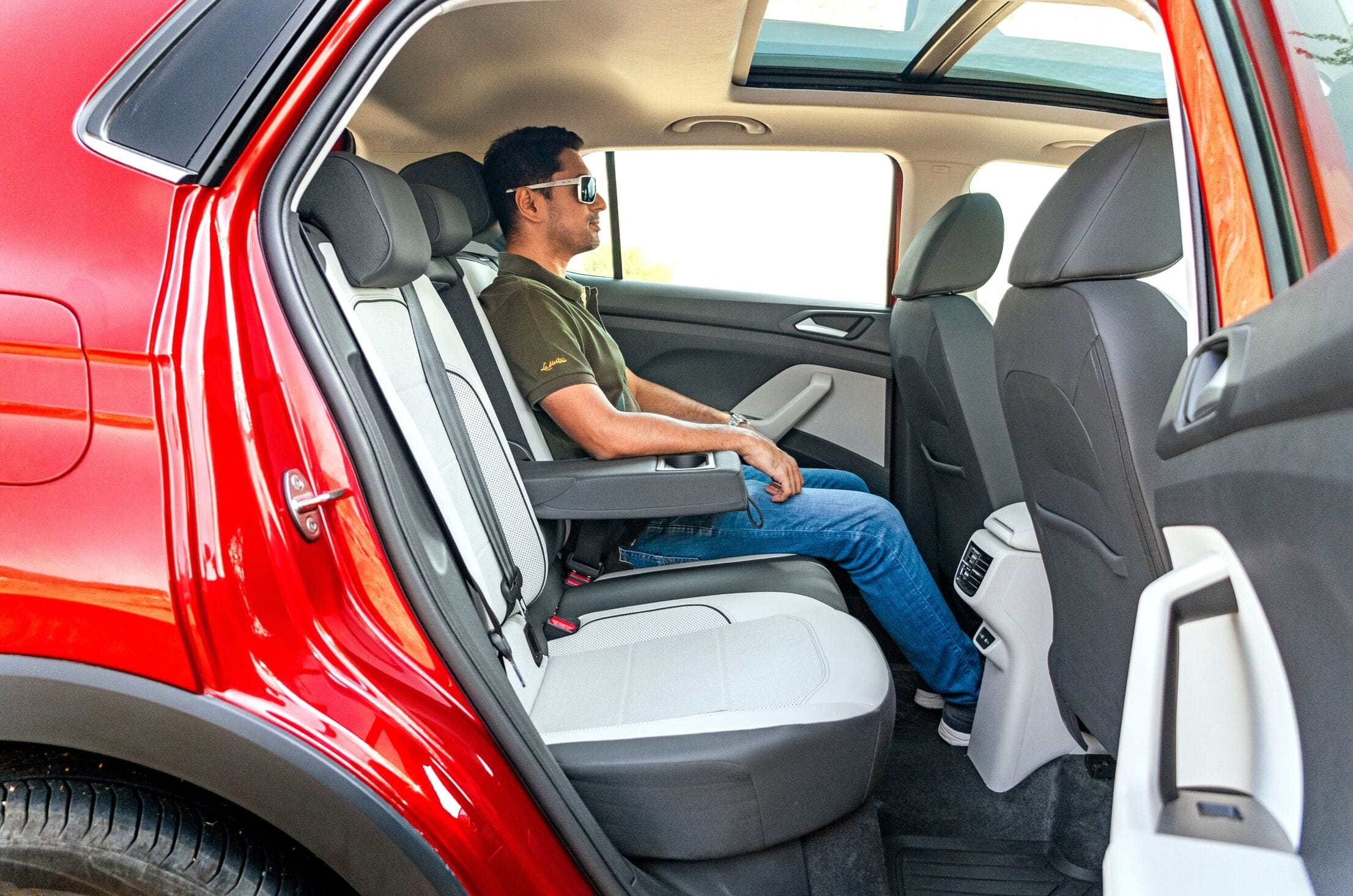
As before, the front seats are well-shaped and supportive, and their ventilation function is effective despite having just two fan speeds. Rear-seat space is adequate, with decent headroom thanks to a scooped roof. The seat contouring and the cabin’s width, however, make this space best-suited for two adults. The 385-litre boot, while modest on paper, is highly usable and can accommodate up to six cabin-sized suitcases, even more than some rivals with larger boot-capacity ratings.
Volkswagen Taigun Features and Safety
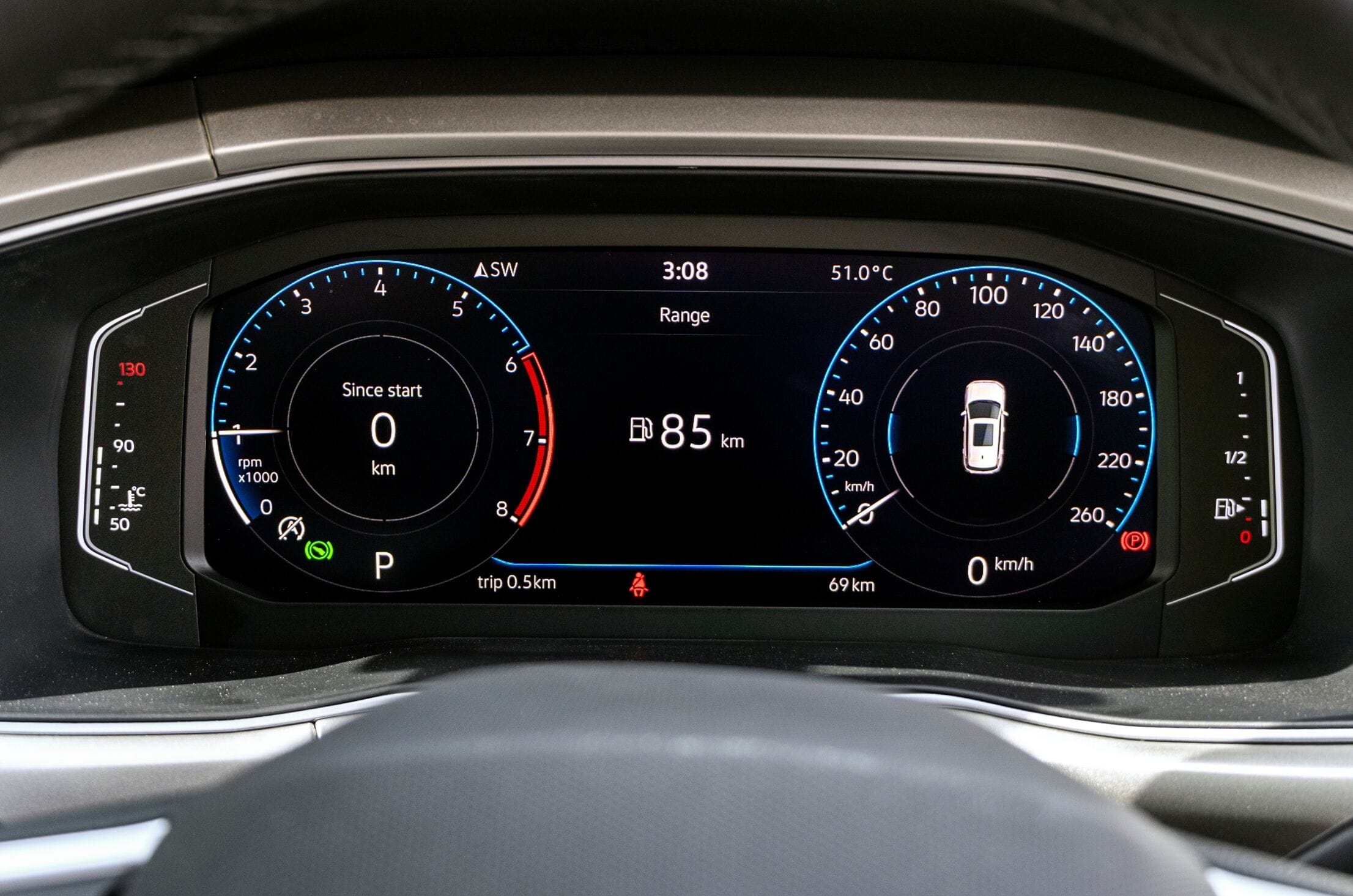
It gets a new 10.25-inch digital instrument cluster, which, besides multiple views, has fonts that are crisp, clear and very easy to read. And while the touchscreen remains the same as the outgoing version, the software has been updated – the interface remains slick, and the touch sensitivity is very nice. What isn’t nice, however, is that certain functions are not very user-friendly; for example, adjusting the volume is a three-step operation.
Also, VW could have taken this opportunity to upgrade its reverse camera; the resolution is still quite poor. And while the company has introduced front parking sensors with this version, a 360-degree camera is still missing.
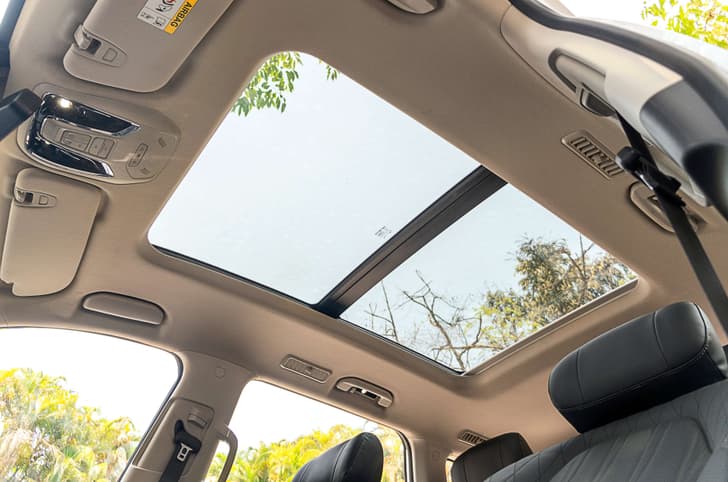
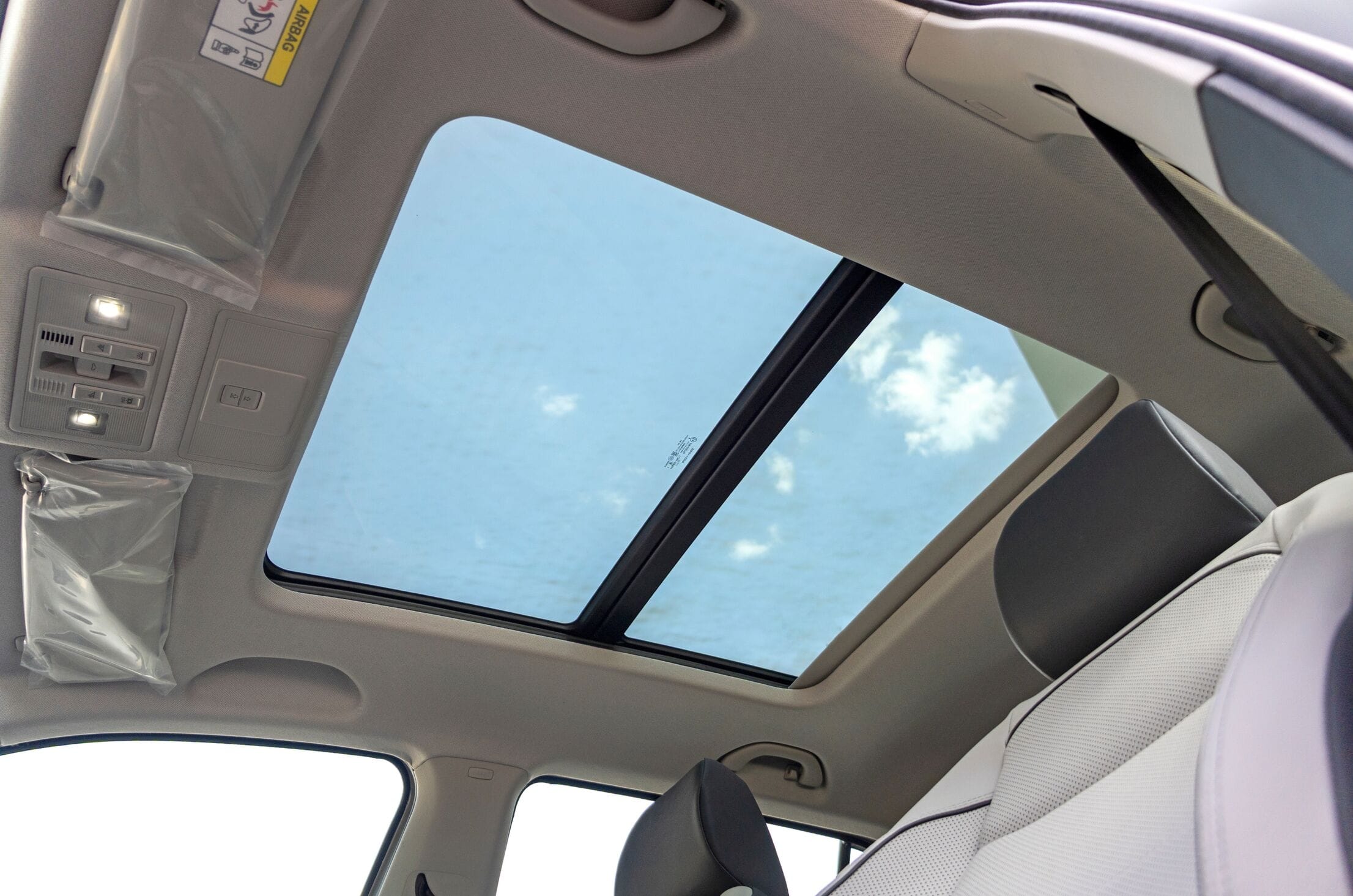
A panoramic sunroof is a new addition. Unlike its Skoda sibling, this version doesn’t get a rear-seat massage function – while that isn’t something most buyers are likely to miss, features such as a 360-degree camera, rear sunblinds and ADAS would bring the Taigun on par with the competition.
Volkswagen Taigun Price and Verdict
Priced from Rs 11 lakh to 19.30 lakh, the Taigun is positioned higher than the mechanically identical Skoda Kushaq (Rs 10.69 lakh to 18.99 lakh). However, not only is the Skoda more affordable, but it also gets more standard equipment, such as a single-pane sunroof and alloys, making it a better value-for-money offering.
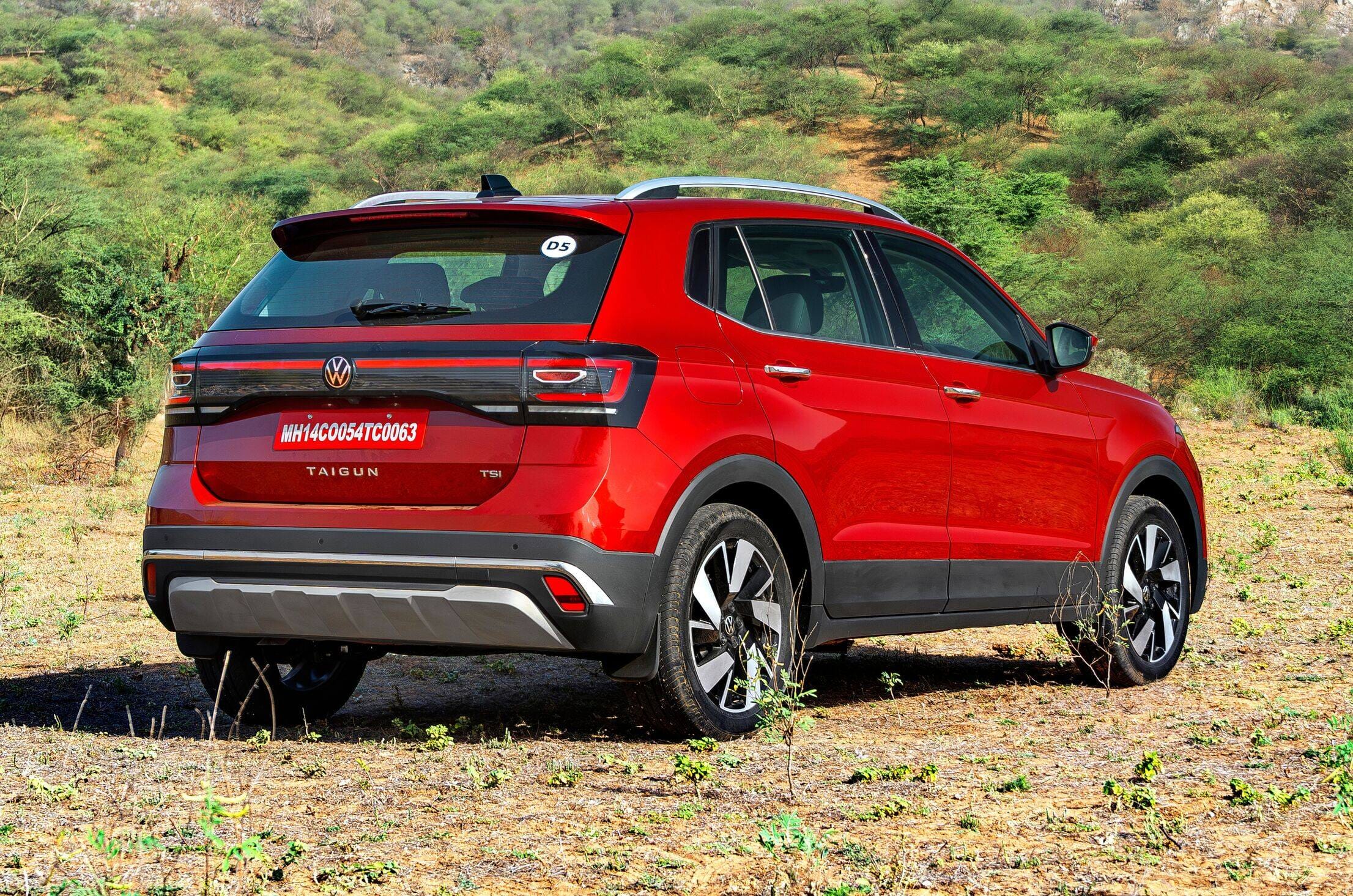
To conclude, then, despite the updated styling, added features and a new gearbox, the 2026 Taigun has only inched forward. Unfortunately, though, this update isn’t substantial enough to keep pace with rapidly advancing competition – rivals are far more rounded in comparison.
In summary, the Taigun is still the driver’s choice in this segment, and if driving pleasure is your top priority, then – and only then – does the Taigun make a strong case.
 Soham Thakur
 Sergius Barretto
 Nikhil Bhatia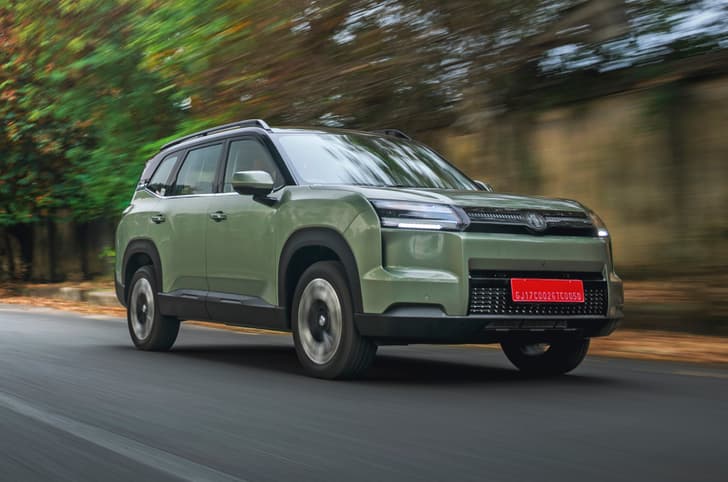
 Lenny D'sa