
Last Updated on: 07 Apr 2026
Tata Harrier EV price in Delhi
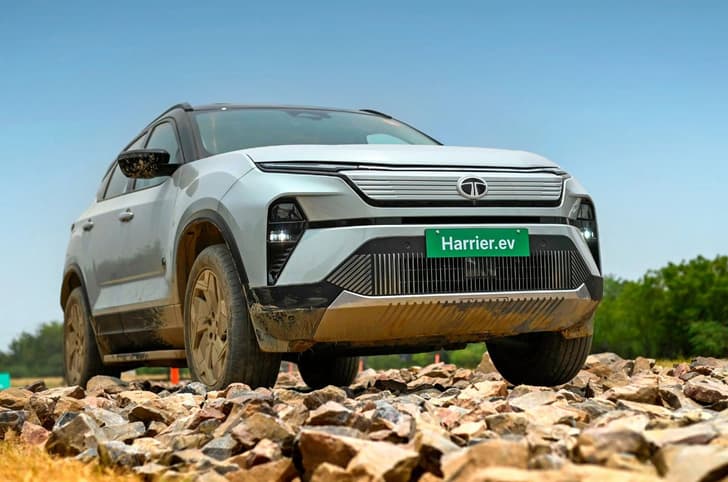
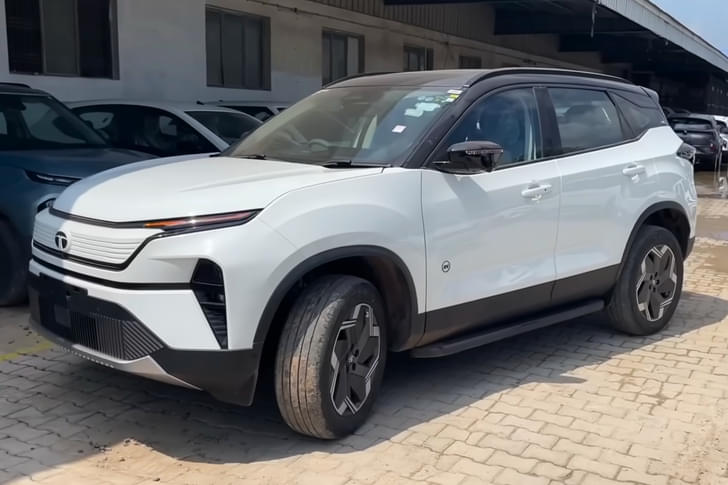
The on road price of the Tata Harrier EV in Delhi ranges from ₹ 22.83 lakh for the base model to about ₹30.74 lakh for the top variant (including all taxes, RTO fees, and insurance). In comparison, the ex-showroom prices in Delhi are between ₹21.49 lakh and ₹28.99 lakh.
Check the Harrier EV on road price of all variants in Delhi in the table below:
Tata Harrier EV price & variants
Price of Tata Harrier EV alternatives
Tata Harrier EV news
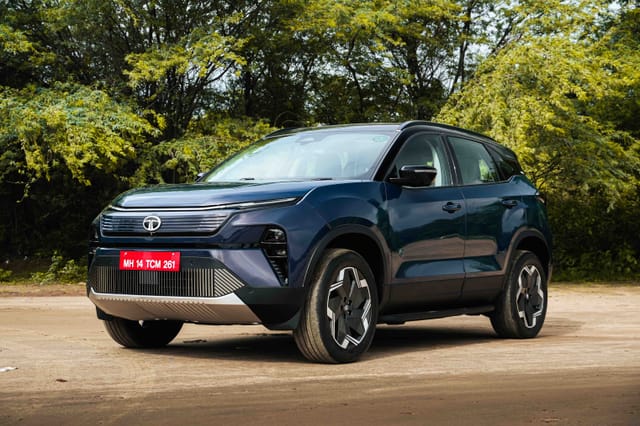
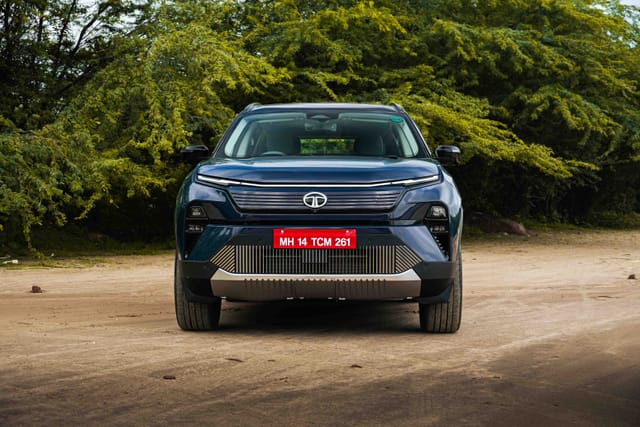
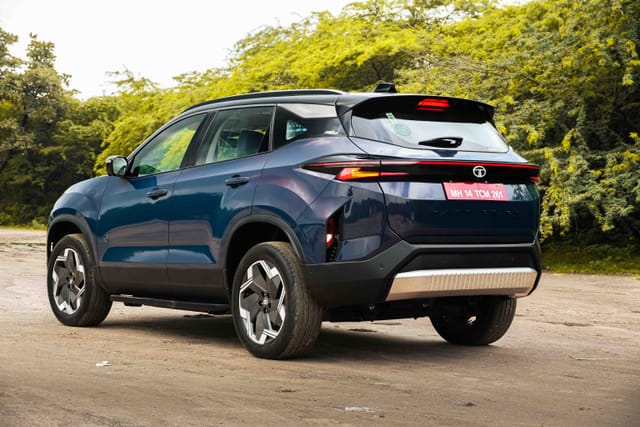
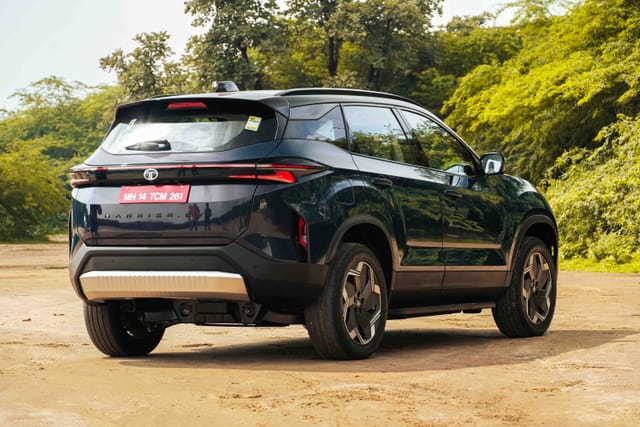
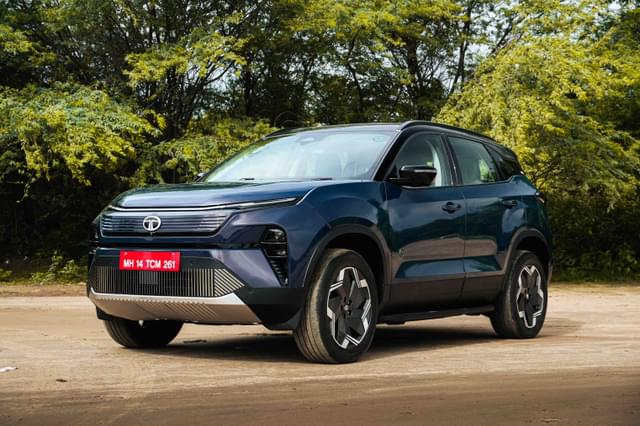
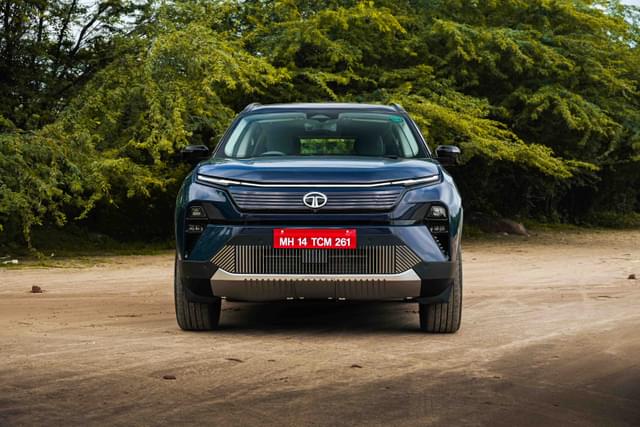
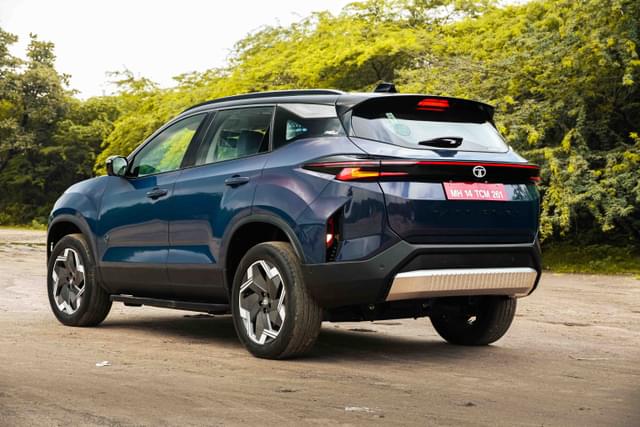
Tata Harrier EV Images
Tata Harrier EV videos


.jpg?w=640&q=75)


Tata Harrier EV Colours
Tata Harrier EV FAQs
Tata Harrier EV price in Delhi starts from ₹21.49 lakh.
In the city of Delhi, the Tata Harrier EV prices range between ₹22.83 lakh and ₹30.74 lakh.
The Harrier EV's top-spec Adventure 65 is priced at ₹28.99 lakh, ex-showroom. On road price of this variant is around ₹30.74 lakh.
In Delhi, prices of the Tata Harrier EV's 75kWh battery pack starts from ₹24.99 lakh.
The Tata Harrier EV Stealth edition, in Delhi, is priced between ₹28.24 lakh and ₹30.23 lakh.
Questions you may find useful
Anushka
•2dI am lokking to buy a spacious EV for myself. My daily running is around 70 km, highway and city driving being 50% each. Space, power, safety and mileage are primary considerations.my budget is up to 28 Lakhs.

Autocar India
Go for the Tata Harrier EV Fearless+ 75 AWD. At your budget, it meets your priorities of space, power, safety and a strong highway-city balance. The Harrier EV offers a large, comfortable cabin with excellent rear-seat space and strong safety credentials, while the dual-motor AWD setup gives it effortless performance and added confidence on highways and in low-grip conditions. With your 70 km daily running, the larger battery also ensures you can comfortably go multiple days between charges, and highway drives feel relaxed and stable.The Mahindra XEV 9S is a close alternative if you specifically want a three-row layout and a more tech-focused cabin. It offers greater seating flexibility and a feature-rich interior, but the third row is best suited for occasional use. At highway speeds, it does not feel as planted or as polished as the Harrier EV.Smaller EVs like the Tata Nexon EV or MG ZS EV make sense if you want to spend less or prefer something easier to drive in tight city conditions, but at your budget they feel like a compromise on space and overall performance.
Gulshan Bhatia
•6dHi AutocarIndia, I have a budget of ₹23-25 lakh. My monthly running is approximately 12,000-14,000 km, with around 70% city driving and 30% highway usage. I am confused between choosing a petrol vehicle and an EV. I am not considering a diesel option since my driving is not very regular at times, and I am concerned about potential DPF clogging issues. Currently, I am evaluating the Mahindra XUV 7XO A7 T petrol, which costs around ₹25 lakh on-road in Pune. However, considering the current global war situation, I feel petrol prices may increase permanently, which is making me seriously consider an EV. I am therefore looking at the Tata Harrier EV Fearless Plus 75 kWh, which is priced around ₹27 lakh. Though I have heard that some discounts are available, and the effective price could come down to around ₹26 lakhs. Given my usage pattern, budget, and long-term cost concerns, please guide me on whether a petrol or EV would be the better choice and help me decide between these options. Thanks in advance.

Autocar India
The Mahindra XUV 7XO petrol does not suit this kind of running. A turbo petrol will be significantly more expensive to run over time, and with your usage, the fuel cost difference will be substantial.The Tata Harrier EV makes far more sense here. It offers very low running costs per km, smooth and effortless driving in the city, and strong performance on highways. With your high usage, the savings on fuel will add up quickly and justify the higher initial cost.The key condition is charging. If you have reliable home or office charging, the EV becomes a very practical and economical solution. Without that, managing frequent charging will become inconvenient.On your concern about diesel, in your case, it is actually not an issue. With such high and consistent running, DPF problems will not arise, as the car will regularly get the kind of driving needed to keep the system healthy.
Aayush gupta
•2wI am planning to buy an EV car for my daily travelling of 100 km on the highway with 3 to 4 passengers and 200 kg of luggage. I am looking for a safe, low-maintenance, and efficient car. Budget is below ₹25 lakh. I am confused between the Tata Harrier EV, Mahindra XEV 9S, and Maruti e Vitara 61 kWh. Please suggest or recommend any other option, considering efficiency and safety.

Autocar India
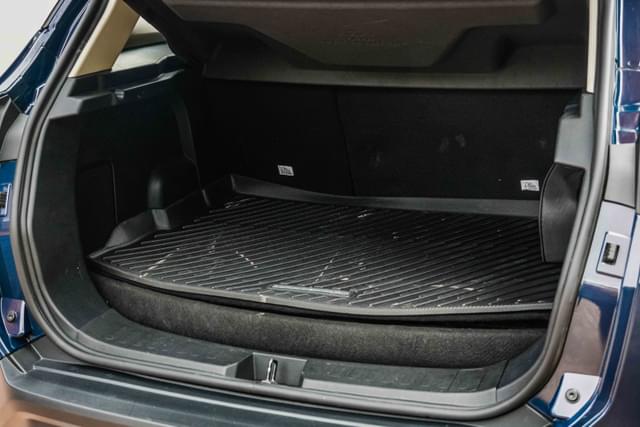
For your needs, the Mahindra XEV 9S makes the most sense. Go for the Pack One trim, but opt for the larger 79kWh battery pack. During our real-world tests, the XEV 9S 79kWh version delivered a combined range of 477km, but since your usage is primarily on the highway with four passengers and 200kg of luggage, expect that figure to drop noticeably. That said, your 100km commute should be no problem at all with the larger battery.Since you will be carrying a heavy load, you will appreciate the large boot and flat loading lip. The Tata Harrier EV, in comparison, has a smaller boot and a slightly raised floor to accommodate the rear motor. Before you make your final decision, do take a detailed test drive.
Aayush gupta
•2wI am planning to buy an electric car, as I travel around 100 km daily on highways. I am confused between the Mahindra XEV 9S, Tata Harrier EV, and Maruti e Vitara (Delta). We are a family of four and often travel with around 200 kg of luggage. My priorities are real-world driving range, safety, suitability for highway usage, and low maintenance. Which of these cars would be the most suitable for my needs, and what real-world range can I expect?

Autocar India
For your use case, the Maruti Suzuki eVitara, despite a range of 400+ km, drops out first. Its boot is only around 300 litres, which is tight even for two large suitcases, let alone 200kg of luggage plus four people. It’s fine as a family crossover, but not for heavy luggage and long‑haul highway use.Both the Mahindra XEV 9S and Tata Harrier EV are large, comfortable SUVs that will easily take four adults, and with their rear seats folded or adjusted, they can swallow serious luggage. The XEV 9S, being a three‑row SUV, gives you a huge, flat boot with the third row down, so it’s the most practical of the three for your 200kg luggage requirement.On range, the XEV 9S with the 79kWh battery delivers around 478km in Autocar’s real‑world test, versus about 401km for the Harrier EV AWD with a 75kWh pack. For your 100km daily highway run, both are adequate, but the Mahindra gives you a much bigger buffer even when loaded.In terms of driving feel, the Harrier EV feels more planted and tied down at high speed; the XEV 9S is softer and moves around a bit more on uneven highways, though it’s still safe and stable. On safety and maintenance, both are modern, 5‑star‑oriented SUVs with robust equipment; long‑term, Tata’s and Mahindra’s EV ecosystems are still maturing, so factor in dealer experience in your city and expect a few niggles too. Given your load, highway usage and need for range buffer, the Mahindra XEV 9S 79kWh is the most suitable overall.
shreekumar
•3wHello Team. We are planning for a bigger car and are currently confused about whether buying a Harrier EV Stealth Edition makes sense, or if we should buy a used Innova Crysta and use it for 3-4 years and wait for EV infrastructure to develop more, as most of our running is on highways.

Autocar India
The Tata Harrier EV with the 74.61kWh battery pack is capable of delivering a highway real-world range of over 400km quite easily. So, if your highway round-trip is usually less than 400km, you can comfortably make it back to your starting point on a single charge. Even if you usually drive for longer distances, you'll need to plan your breaks or rest stops at places where there are fast charging options, along the way. In fact, even a 15-20 minute top-up on a 60kW DC fast charger will add an additional 120-140km of range.Yes, there are some challenges like chargers not working, or lack of electricity, or some ICE vehicle blocking the charging bay, hence you need to ensure you identify a few options (not just one place) on the way. To answer your question, go for the Harrier EV Stealth Edition. It'll feel a lot more special and the driving pleasure will be far greater than a used Toyota Innova Crysta.
Ashish
•4wHi Autocar Expert, I currently own a Tata Nexon XZA diesel and am planning to upgrade. However, I have a major parking constraint at my home. I am interested in the Toyota Innova Hycross, but if it is parked in my parking space, the doors cannot be opened properly due to limited space. Because of this, I am considering buying a car that offers an automatic or self-parking feature. Could you please guide me on which cars offer this feature and would suit my situation?

Autocar India
Auto parking might not solve your problem if your parking space is too narrow to open the doors. The summon feature that the Tata Harrier EV gets could be of some use, but it won’t fit your requirements if you need a three-row vehicle like the Toyota Innova Hycross.Instead, we suggest you take a look at the Kia Carens Clavis. It is narrower than the Hycross by about 45-50mm and is roughly the same width as your Nexon, so it should fit in your parking space. In terms of interior volume, while it is not as spacious as the Hycross, it offers plenty of room in the second row and a genuinely usable third row.
sudip
•5wI am planning to buy an EV, as I see the cost of a near top-end petrol vehicle is similar to a near top-end EV. I am confused between the Tata Harrier EV and XEV 9S (not because it’s a 7-seater, though). The XEV 9S cabin looks much more premium than the Harrier EV. However, hearing about the suspension in the 9S is a bit of a concern. I would mostly use it in the city. Can you suggest?

Autocar India
Since you are considering the Tata Harrier EV, we assume that having seven seats is not a must. In that case, you could also consider the XEV 9e, which is the more direct competitor to the Harrier EV. It has largely the same premium cabin you like in the XEV 9S, but without the third row of seats.In terms of suspension, the Mahindra XEV 9S has a softer setup than the XEV 9e, which results in noticeable vertical movement on undulating tarmac. It isn’t exactly uncomfortable, but it can feel a bit unsettling out on the highway. The XEV 9e, on the other hand, has a firmer setup and actually feels more composed because of it.Since most of your driving is in the city, the XEV 9S’s softer suspension may not bother you, but do drive the XEV 9e back-to-back to see which you prefer.
Dhanoop
•5wHi, I am a 38-year-old surgeon with a daily travel of 100 km, split between city roads (50%) and state highways (50%). I am currently driving a 2018 Amaze and facing high fuel costs (around ₹8,000 weekly). I am looking to switch to an electric automatic SUV in the ₹20-35 lakh budget. I have considered the Harrier EV, XEV 9S, and Creta EV. Kindly suggest the right car (new or used) among these or any other suitable option.

Autocar India
The Hyundai Creta Electric is much smaller than the Tata Harrier EV and Mahindra XEV 9S, making it relatively much lighter than the other cars. It also has the smallest battery pack compared to the others, but on account of its lower kerb weight, it is a lot more efficient, and you can expect around 430km on a single charge with mixed usage.Hyundai has also improved the battery's DC fast-charging capability recently, so charging times are also much lower. Furthermore, it is the most sorted electric SUV you can buy, with logical ergonomics and a clutter-free user interface/experience. Also, with no or minimal glitches, the Hyundai is much more reliable than the other two, and one that's very easy to recommend.Since you have a budget of up to Rs 35 lakh, you could look for a Hyundai Ioniq 5. The Ioniq 5 is an outstanding electric car, and for all its merits, it even won our 2024 Car of the Year. It will be a bit more effort to source one, but because a facelift is expected soon, dealers will try to liquidate existing stock at mouth-watering discounts.
Krish Mehta
•6wWant to buy a 5-seater car between 25-30 lakh. My daily driving is around 40 km. My priorities are having a fun-to-drive and comfortable car. I am open to electric options as well.

Autocar India
If you are considering an electric car, the VinFast VF7 stands out as an excellent choice. In its higher variants, which fall within your budget, it gets a dual motor setup producing around 350 hp and can do 0 to 100 kph in just over 6 seconds.At this price point, you will not find a quicker accelerating five seater. More importantly, it is not just fast in a straight line. The ride is comfortable, the cabin is spacious, and it feels well-suited for daily driving as well as longer journeys.Other EVs you could also look at include the Mahindra BE 6 and the Tata Harrier EV AWD, both of which have strong performance and a fun-to-drive nature. But the VinFast remains the quickest and most exciting option on pure performance.If you prefer an internal combustion engine, the Mahindra XUV 7XO turbo petrol automatic is a very good option. The petrol engine is powerful, smooth and refined, and with the recent facelift, Mahindra has improved the suspension setup as well. As a result, it now offers a more comfortable ride without losing its engaging driving character, making it a good balance between fun and comfort for daily use.
Jayanth Reddy
•6wHi, I want to buy my second car with a budget of ₹30 lakh. I am confused between the Harrier Empowered 75 model and the Mahindra XEV 9e Pack Three. I have test-driven both cars. My usage is mainly on the highway, about 3,000 kilometres monthly. I need a reliable car with more real-world range and good service support. Please advise which of the two is the best option for me.

Autocar India
Both the Tata Harrier EV and the Mahindra XEV 9e make for very good highway cars. However, between the two, we would lean towards the Mahindra XEV 9e as the overall better package.The XEV 9e feels more like a ground-up EV, whereas the Harrier EV is derived from the combustion-engine Harrier. As a result, the Mahindra feels a touch more refined and slightly more stable at highway speeds. Both cars ride well and are smooth to drive, but the XEV 9e feels a bit more rounded and cohesive as a complete product.What really tilts the decision in Mahindra’s favour is the range. In our highway range tests, the XEV 9e delivered an impressive 488km, about 95km more than we achieved with the Harrier EV. For someone like you, doing around 3,000km a month largely on highways, that extra real-world range makes a meaningful difference and reduces charging frequency.The Harrier EV does offer a comfortable ride and a smooth driving experience, and Tata’s service network is fairly widespread. But when you combine better real-world range, slightly stronger highway manners and the more purpose-built EV feel, the XEV 9e Pack Three comes across as the stronger choice for your usage.