autocar-logo
Delhi
Tata Harrier EV variants
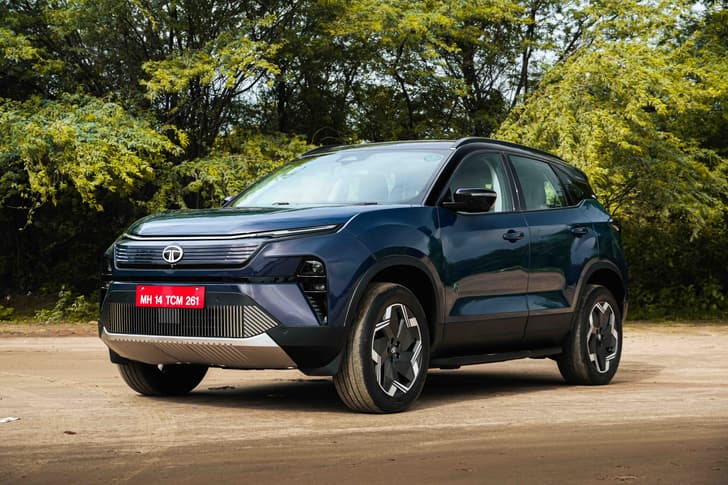
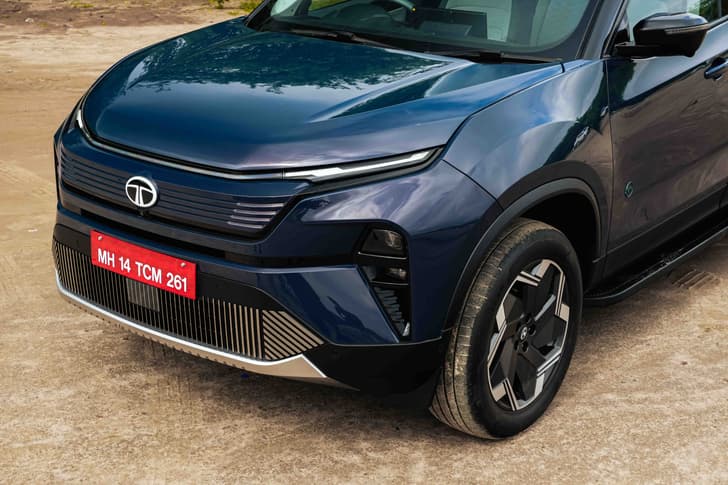
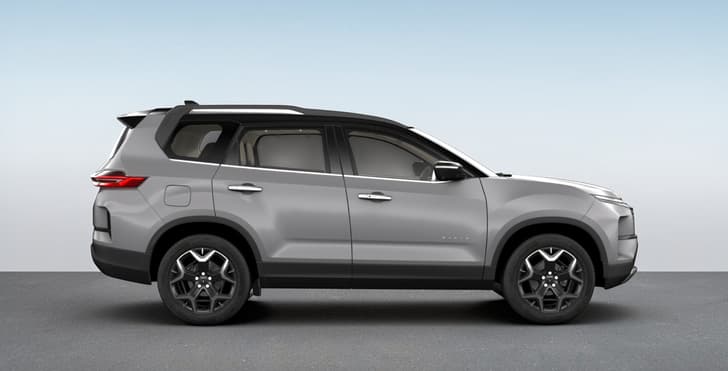
Front Left Three Quarter
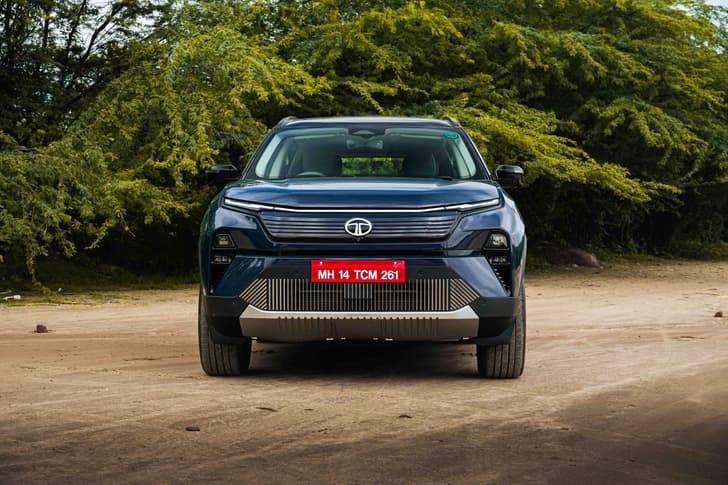
Front View
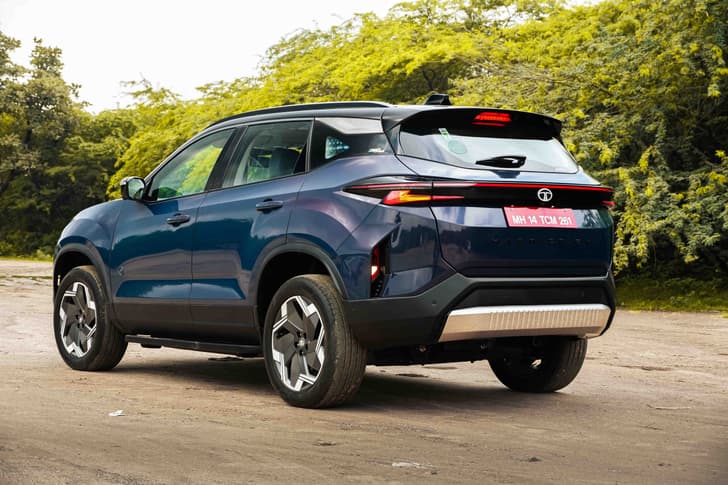
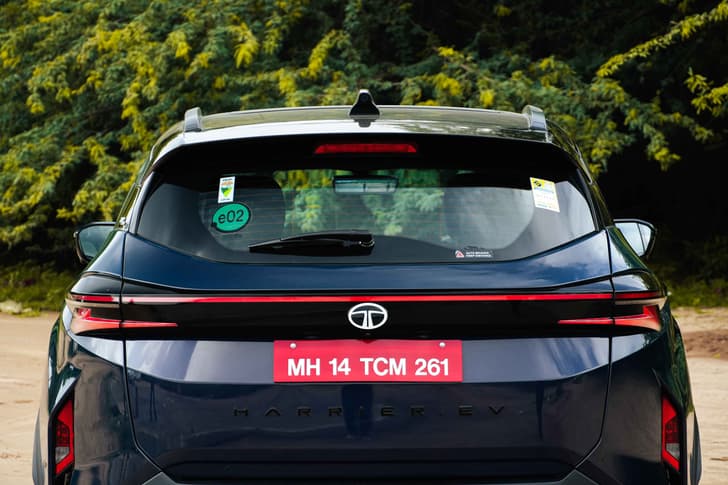
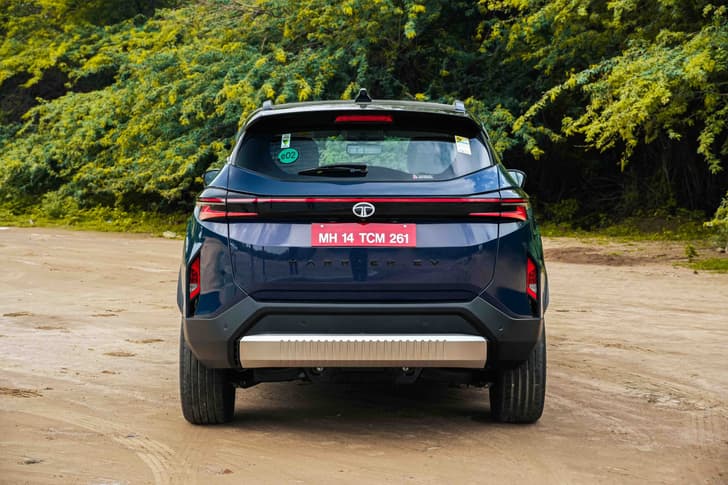
Rear View
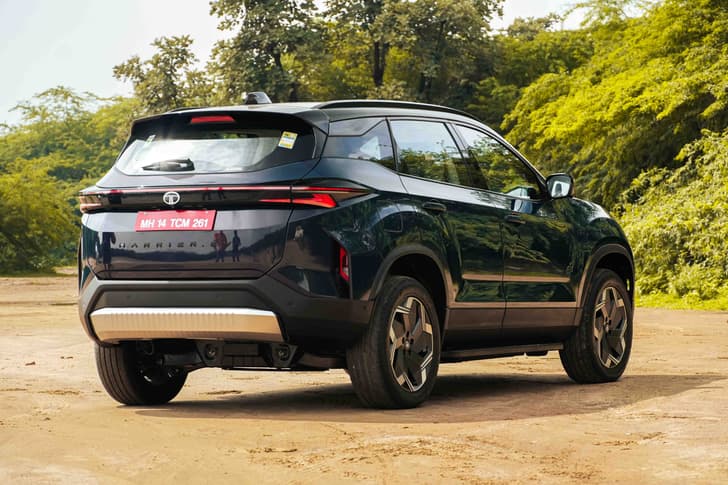
Rear View
Rear View
Rear View
Front Right Three Quarter
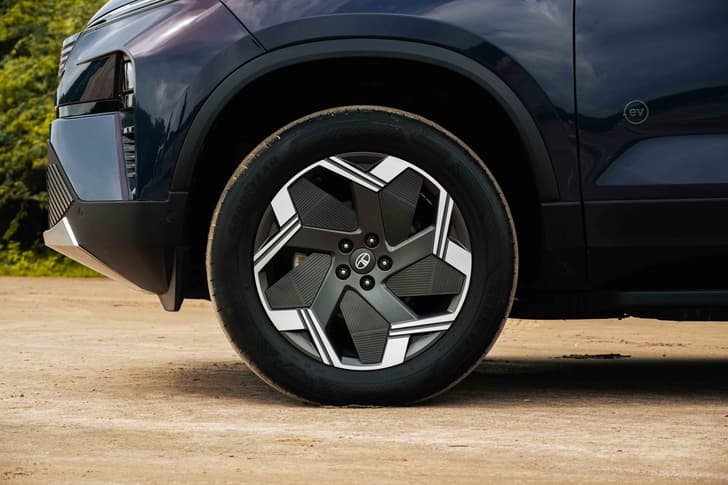
Alloy Wheels True
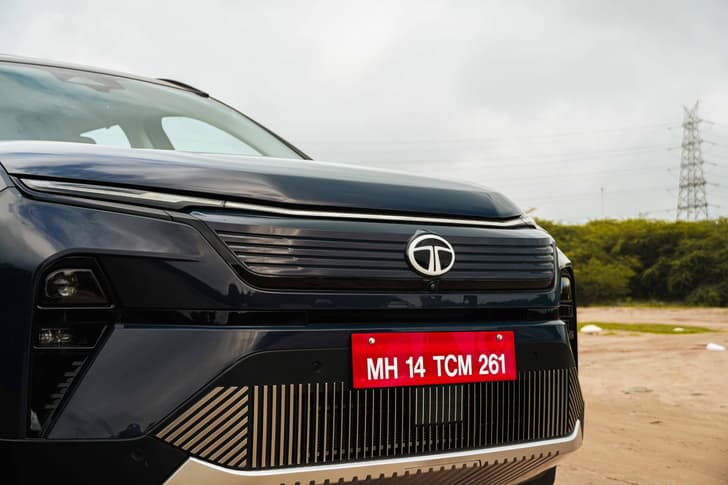
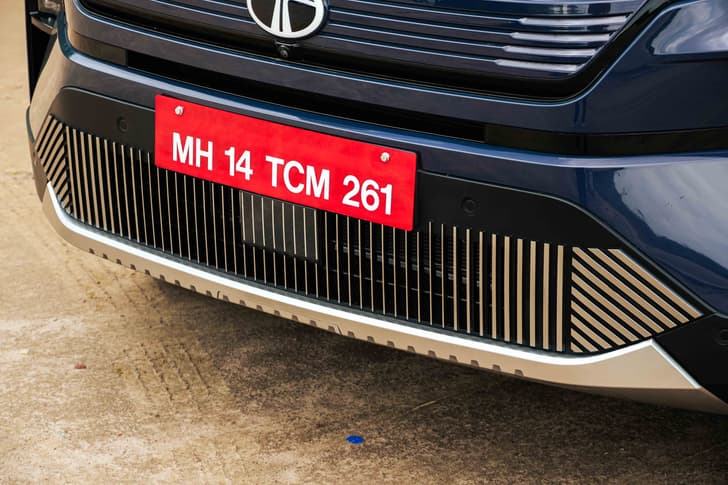
Front View
Front View

Tata Harrier EV Fearless + 65

VariantFearless + 65
CityDelhi
₹25.47 Lakh
On road price, Delhi
View price breakup
Starting₹36,844 /month
EMI calculator

Tata Harrier EV Fearless + 65 specifications

Engine & Transmission

Fuel Type/ Propulsion
Electric
Motor Type
Permanent Magnet Synchronous Motor
Max Motor Power
238hp
Max Motor Torque
315Nm
Drive Layout
Rear-Wheel Drive
Gearbox Type
Auto
Number of Gears
1
Lockable Differential/s
No
Sport Mode for Automatic Gearbox
Yes
Manual Shifts via Gear Lever on Automatic Gearbox
No
Paddle Shifters for Automatic Gearbox
Yes

Fuel & Performance

Battery Capacity
65 kWh
Claimed Range
538 km
Charging Time
9.3hrs 10%-100%(7.2 kW AC fast charger) 25min 20%-80%(100 kW DC fast charger) hrs
Auto Start/Stop
No

Suspension & Steering

Front Brakes
Discs
Rear Brakes
Discs
Type of Power Assist
Electric
Steering Adjust
Tilt and Telescopic
Steering Adjust type
Manual
Turning Radius
5.75 m
Front Suspension Type
Independent, MacPherson Strut
Front Springs
Coil Springs
Rear Suspension Type
Independent, Multi-link
Rear Springs
Coil Springs
Damper Control
No
Ride Height Adjust
No
Wheels
Alloys
Wheel Size
19-inches
Front Tyre Size
245/55 R19
Rear Tyre Size
245/55 R19
Spare Wheel
Space-saver

Dimensions

Length
4607 mm
Width
2132 mm
Height
1740 mm
Wheelbase
2741 mm
Doors
5
Boot Capacity
502 litres

Tata Harrier EV Fearless + 65 features

Comfort

Power Windows
Front and Rear
Power Windows with One Touch-Down
Driver's Window Only
Power Windows with One Touch-Up
Driver's Window Only
Exterior Mirrors Electric Adjust
Exterior Mirrors Electric Fold
Remote Locking

Safety

Crash Test Rating
5
Airbags
7
Anti-Lock Brakes (ABS)
Electronic Brakeforce Distribution (EBD)
Brake Assist (BA)
Electronic Parking Brake

Exterior

Body Coloured Bumpers
Projector Headlamps
Headlight Type
LED
Daytime Running Lights
LED
Front Fog Lamps

Interior

Speedometer
Digital
Tachometer
Trip Meter
Average Fuel Consumption
Average Speed
Distance to Empty

Entertainment

Audio System
CD Player
USB Input
AUX Input
Bluetooth Audio Streaming
Bluetooth Telephone Function

Tata Harrier EV variants

VariantsOn road price
Tata Harrier EV Adventure 65
Electric | Auto
₹22.83 Lakh
Tata Harrier EV Adventure S 65
Electric | Auto
₹23.36 Lakh
Tata Harrier EV Fearless + 65
Electric | Auto
₹25.47 Lakh
Tata Harrier EV Fearless + 75
Electric | Auto
₹26.52 Lakh
Tata Harrier EV Empowered 75
Electric | Auto
₹29.16 Lakh
Tata Harrier EV Empowered 75 AWD
Electric | Auto
₹30.74 Lakh

Tata Harrier EV comparison

Tata Harrier EV
Tata Harrier EV
₹21.49 - ₹28.99 Lakhs
8
Transmission
Auto
Engine
-
Fuel type
Electric
Mileage
538 km - 627 km
Mahindra XEV 9e
Mahindra XEV 9e
₹21.90 - ₹30.50 Lakhs
8
Transmission
Auto
Engine
-
Fuel type
Electric
Mileage
542 km - 656 km

Trending Questions on Tata Harrier EV - Answered by Autocar Experts

D
Asked by: Dabason Feb 16, 2026

I already have a 2019 Seltos petrol manual. Recently, I got a job, and my workplace is 45km away from my home, so it is a 90km daily drive. This long commute is taking a toll on my pocket, as I hardly get decent mileage. Moreover, pressing the clutch and brake in traffic during my return journey is frustrating and tiresome. Should I install CNG in my car, or should I sell it and buy a new one? If so, which one?

In our opinion, you should avoid retrofitting CNG to your around 7-year-old Seltos. Instead, it makes more sense to sell it and move to a newer car that is more efficient and easier on the pocket.
If you can set up home charging, an EV makes a lot of sense. It will significantly cut down your travel expenses, and, being an electric car, there is no hassle of changing gears. EVs are smooth and extremely easy to drive, which can greatly reduce daily driving stress.
Since you already own a Kia Seltos and would prefer something familiar, we would suggest considering the Hyundai Creta Electric. It is a very well-rounded product, and the calibration of the electric motor is spot on, making it extremely smooth and easy to drive. It also offers a single pedal regenerative braking mode that works beautifully, and once you get used to it, you will rarely need to use the brake pedal, reducing fatigue even further. Considering your running, we would recommend the larger 52 kWh battery pack, which should deliver over 350 km on a single charge, making it practical for your usage.
There are other, on-paper, more impressive EVs at this price point, such as the Tata Harrier EV and Mahindra BE 6. However, if you are looking for a car that is easy to drive, hassle-free and easy to live with, the Creta EV is a very strong choice.
If you prefer to stick with an internal combustion engine but want lower running costs, you should consider the Maruti Suzuki Victoris Hybrid. It runs in EV mode a lot of the time at low speeds and in stop-and-go traffic, making it very smooth and easy to drive. Being a strong hybrid, it is also extremely efficient, and even in the worst traffic conditions, you can safely expect over 20 kpl. Since it is still an ICE vehicle, occasional long highway trips don’t require planning, unlike an EV. What you will need to plan, however, is luggage, as the hybrid battery under the boot floor does eat into usable boot space.
If you are willing to wait, the new Renault Duster is expected to get a hybrid powertrain around Diwali, and the next-generation Creta and Seltos are also expected to receive hybrid options early next year.
A
Asked by: Alvin Dsouzaon Feb 4, 2026

I own a Skoda Slavia 2022. I got a new job and that workplace is 48km from my home and so my daily run is around 100kms ( 80 in highway and 20 in city). Planning to buy an EV for this long commute. Budget is upto 25 lak Priorities are good range and driving experience. What are the choices I have?

Given your high daily driving and need for good range, the Mahindra XEV 9S is the best choice. It features a large 79kWh battery pack that offers a range of over 440km and it has strong performance for those who enjoy driving. The Pack One Above variant starts at around Rs 22 lakh and is extremely well-equipped. Moreover, the XEV’s 409V electrical architecture supports DC fast-charging speeds of up to 175kW making quick top ups quick, if you have a fast-charger in the vicinity. 

The other choice would be the Tata Harrier EV that gets a 75kWh battery and is more expensive than the 9S from the entry variant. It also doesn't get the same plush cabin as the Mahindra and overall lacks in terms of value for money.  

S
Asked by: sreeon Jan 23, 2026

I own a 2021 Ertiga that has done 30,000 km. I primarily use it for my office commute, with 2-3 long-distance trips per year (about 200-500 km). My office commute is a solo drive, but outside of the office, I use it as a family car for four people and occasionally up to six (including two kids). I’m considering upgrading to an EV, but I’m confused about which option to choose among the different ranges - Hyundai Creta EV, Tata Harrier EV, and Mahindra XEV 9S. I plan to hold this vehicle for at least 4–5 years and prioritise passenger comfort and driving pleasure. Please suggest which EV I should choose.

Considering that you may occasionally need more than five seats and plan to keep the car for at least four to five years, we would recommend opting for a six or seven-seater. Because of this, the Hyundai Creta EV and the Tata Harrier EV can be ruled out, as both are strictly five-seaters.

The Mahindra XEV 9S is very competitively priced and comes loaded with features. The downside is the ride quality, especially in the second and third rows. It can feel a bit too soft due to the suspension setup. This is not much of an issue in city driving, but at highway speeds on uneven surfaces, the car tends to bounce as the suspension takes time to settle.

Since you had also shortlisted the Hyundai Creta EV, we would suggest taking a look at the Kia Carens Clavis EV, as it uses the same powertrain and battery. It works better as a six or seven-seater, thanks to a more spacious third row compared to the 9S, where even adults can travel in reasonable comfort. While it is not as powerful as the Mahindra XEV 9S. It still offers more than enough performance even with a full load, and the suspension feels more comfortable overall.

One important thing to note is the battery size. The Clavis EV has a smaller battery pack compared to the XEV 9S. In real-world usage, the Mahindra can deliver over 450 km on a full charge. While the Clavis EV is likely to offer closer to 350 km of realistic range.

J
Asked by: Jigaron Jan 7, 2026

Hi, I want to select an EV for around 1,500 km of city driving per month, with a budget of ₹20 L - ₹23 L. I am confused between the Creta EV, BE6, and Harrier EV. Can you suggest the best EV based on performance and visual appeal?

Since you are looking for an EV for city use, the Hyundai Creta Electric is a good choice. While it isn't as powerful as the Mahindra BE 6 or Tata Harrier EV, performance is brisk and more than adequate for city conditions. 

The same holds true for its battery as well, which is the smallest (LR versions get a 51.4kWh battery pack) but delivers a comfortable 400km of real-world range in city driving. 

What makes the Creta Electric likeable and ideal for city use is its size. A Harrier EV is a full-size vehicle, while the BE6 is significantly wider. It means both can feel a bit cumbersome in congested confines. What also goes in favour of the Creta is that the tech onboard works as it's supposed to - free of glitches and errors. 

R
Asked by: Ravion Jan 2, 2026

Hi, I currently drive a Jeep Compass and want to upgrade. My budget is ₹30 lakh. What options do I have?

The Mahindra XUV 7XO will be a good upgrade for you. Both engines, turbo-petrol and diesel, deliver strong performance and are smooth and refined. Both are also available with 6-speed manual or automatic gearbox options. The driving manners are excellent, and with all the latest in terms of tech and features, the XUV 7XO feels thoroughly modern. You also get the flexibility of a third row of seats, should you need to ferry 6 or 7 passengers.
A Tata Safari is also a good alternative to the XUV 7XO. You may also consider EV options like the Mahindra XEV 9e or Tata Harrier EV.
A
Asked by: Abhinav Sharmaon Dec 26, 2025

I have been using a Verna Diesel 1.6-litre for the past 8 years, and it has served me well in terms of fuel efficiency. My average monthly running is around 2,500km. Due to the diesel ban in Delhi NCR and the need for a more comfortable car, I am now looking to switch to an EV (XEV 9S or the Harrier EV). I am not very particular about having too many features. I have been waiting for bookings to open for the XEV 9S, but with the launch of the new Seltos, should I consider that as well?

We would recommend taking a test drive of the Mahindra XEV 9S before making a final decision, as its suspension can feel a bit too soft on undulating roads.
Since you are also considering the Tata Harrier EV, which is a 5-seater, it makes sense to look at the XEV 9E as well. The Harrier EV is comfortable to drive and rides well, and the dual motor AWD option is available at a lower price than the XEV 9E. The Mahindra XEV 9e, however, stands out with more features, more comfortable seats, a larger boot, better range, and faster charging.
The new Seltos is a well-rounded product, but given your requirements, the running costs of the petrol automatic will be significantly higher than the electric cars you are considering. If you are keen on a Kia EV, the Carens Clavis EV is also a strong package. While it does not offer the same range as the XEV 9E or the Harrier EV, it is a polished EV with a comfortable ride, adequate performance, and a third row that is spacious and comfortable enough for adults as well.
R
Asked by: Rohan Kumaron Dec 18, 2025

I am planning to buy a new car and am confused between the XEV 9S, Harrier EV, and Fortuner 4x2 Diesel Automatic. My usage is mostly within the city, with occasional weekend drives of up to 100 km. I live in an area with a lot of incline terrain and bad roads, and my monthly driving is around 500 km. I also have my own parking space where I can install a charger. Considering my driving pattern and road conditions, should I opt for an EV or choose a petrol or diesel vehicle, and which car would be the best choice for my needs?

For city use, the Toyota Fortuner is not ideal. Since you have private parking that accommodates a charger, this is a perfect time to switch to an EV. The Mahindra XEV 9E is more appealing than the Harrier EV, but the Mahindra XEV 9S is the one to focus on because it is more practical and also costs less. 

It offers enough range for your 100 km weekend runs, has sufficient power and torque to tackle steep inclines, and has adequate ground clearance for rough roads. The Fortuner will handle rough roads better, but given that it is much more than the 9S. It is hard to justify the extra spend for occasional rough-road use.
 

P
Asked by: Pulak Pandeyon Dec 16, 2025

Hello Autocar Team, my father is looking for a second vehicle. He currently drives a Safari Storme VX, which has covered close to 5 lakh km on the odometer and is still running well. He frequently visits paddy fields and drives on muddy roads. Since it is a diesel vehicle and considering upcoming regulations, the RC will not be renewed after four years. Along with the Safari, we are now looking for a capable electric vehicle that can handle off-road conditions and long highway drives. We have a good charging infrastructure at home. Please suggest the best-suited car.

The Tata Harrier EV is the closest you will get to your Safari with an electric vehicle. It will give you the same solid feel as the Safari you currently have, and beyond that, it makes for a good highway car with its stable high-speed manners, decent range and good ride and handling.
The Harrier EV’s trump for customers like your father is its all-wheel-drive system, which allows him to tackle muddy tracks and fields with ease. The Harrier EV’s ground clearance is nowhere near as good as the original Safari’s, but it's good enough for light off-roading. In view of this, we feel the Harrier EV will be the right car for your dad.
R
Asked by: Rajadurai Son Dec 14, 2025

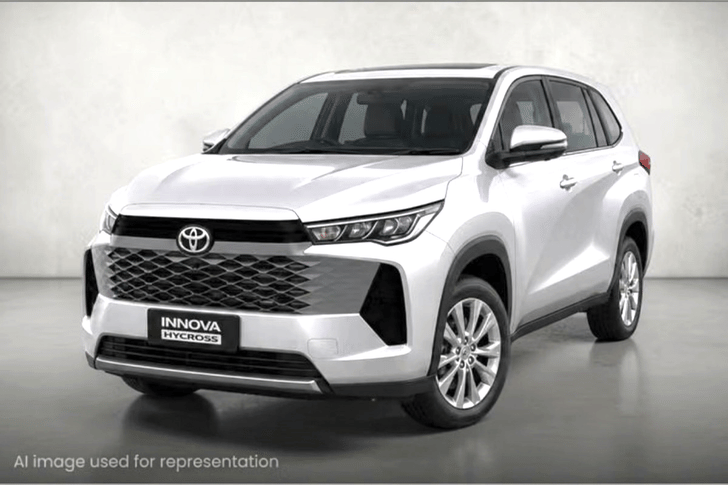
Hi Autocar. I am looking for a comfortable car with good driving dynamics. I am deciding between the Toyota Innova Hycross VX (Optional) and the Tata Harrier EV. I like the Harrier’s driving feel, whereas the Hycross excels in rear-seat comfort. What’s your take on this? My budget is under ₹35 lakh.

As you rightly said, the Toyota Innova HyCross is better from the rear seat, while the Tata Harrier EV is more enjoyable from the front. It's up to you to decide where your priority lies. 

When it comes to performance and dynamics, the Harrier EV ticks more boxes, as it has a much stronger and more responsive powertrain, sharper steering, tighter dynamics and a pretty comfortable ride in isolation too. 

However, its shortcoming is that of all EVs - the limitation of range and dependency on charging. Plus, the Harrier EV has shown signs of electronic glitches, at least on early cars. 

If these are things you can work with, the Harrier EV seems like the better choice for you. The Innova, meanwhile, is the better all-rounder. It's more spacious and comfortable, with rock-solid reliability and a seamless service experience. 

S
Asked by: Siva Kumaron Dec 11, 2025

I am being offered a Tata Curvv EV Empowered Plus A 55 (Electric) variant at a discount of around ₹4 lakh after the consumer discount, Tata EV loyalty benefit and insurance discount. The on-road price comes to ₹19 lakh. The car also includes the November 2025 updates such as rear window shades, passive rear ventilated seats and dual-zone auto climate control. Is the Curvv EV worth it at this price, or should I go for the Harrier EV? I also own a Punch EV, but it is not sufficient for highway trips.

Sure, the discounted price makes the Tata Curvv EV an attractive proposition; however, the Harrier EV is a far superior car overall - it has a larger battery, its motor makes more power, the cabin is far more spacious, and even in terms of road presence, it does a much better job.
Yes, on account of its size and weight, its range might not be significantly more (despite the larger battery) than a Curvv EV, but between the two, it is the Tata Harrier EV that gets our vote.