


Last Updated on: 04 Aug 2026
Tata Harrier EV variants
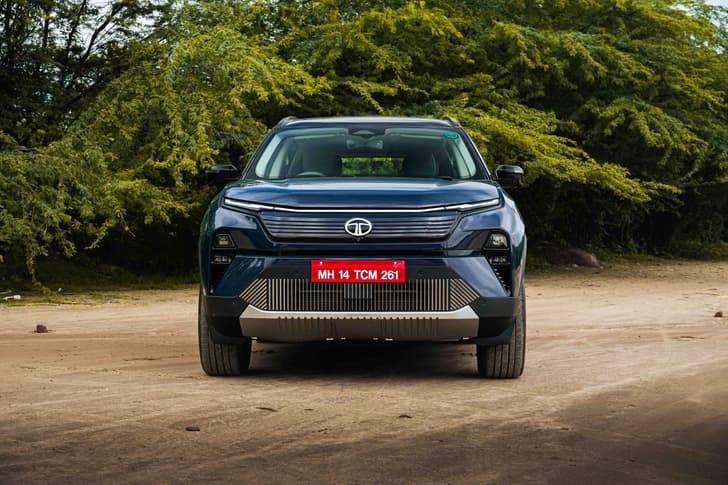
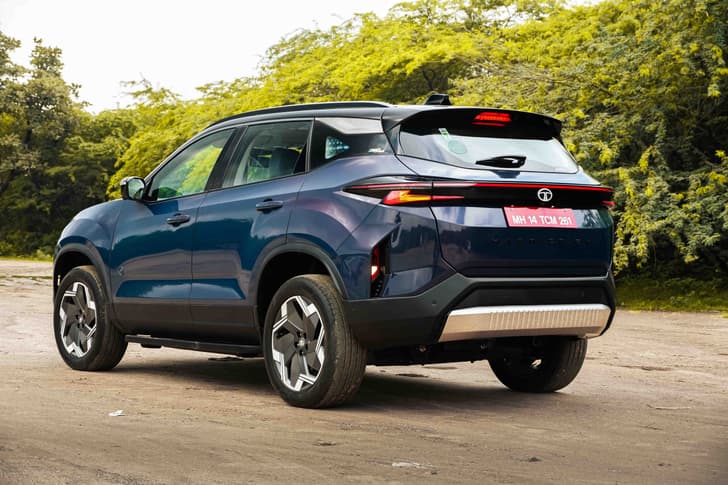
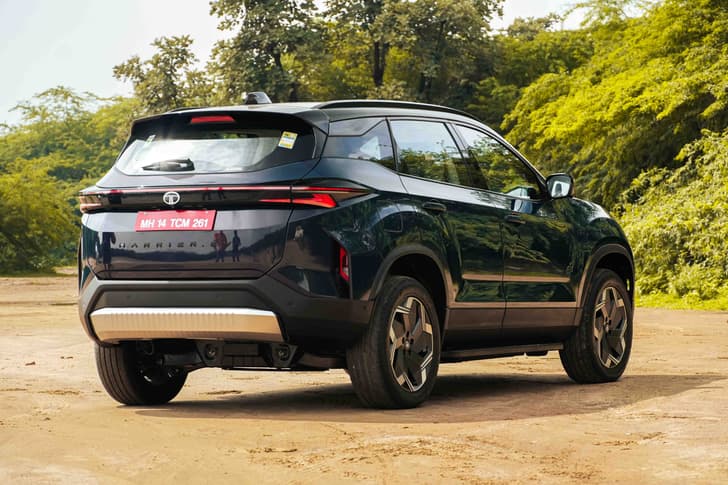
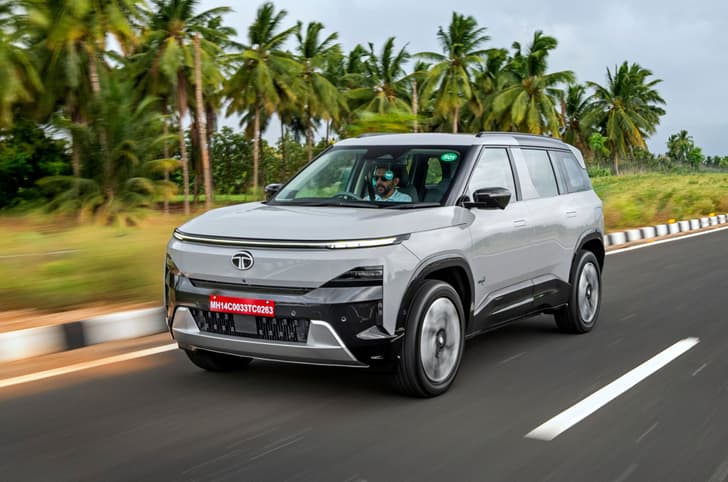
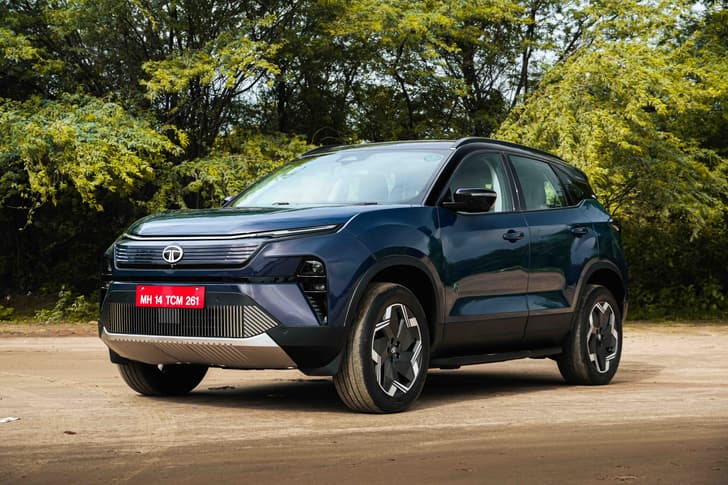
The Harrier EV is available in six variants with rear-wheel and all-wheel drive options, featuring either a 65 kWh or 75 kWh battery and up to 627 km certified range.
The Harrier EV Adventure 65 – Rs 21.49 lakh (ex-showroom) is the entry variant, with 315 Nm single-motor RWD, LED lighting, 18-inch alloys, manual seat adjustments, 10.25-inch touchscreen, digital driver display, wireless connectivity, connected tech, six airbags, ESC, and regenerative braking.
The Tata Harrier EV Adventure S 65 variant priced at Rs 21.99 lakh (ex-showroom) adds a 12.3-inch touchscreen, in-car app suite, rear armrest, panoramic sunroof, Drift Mode, V2V and V2L charging, cruise control, smart key, rear camera with sensors, automatic climate control, terrain modes, regen paddle shifters, air purifier, roof rails, dual-tone exterior, and more.
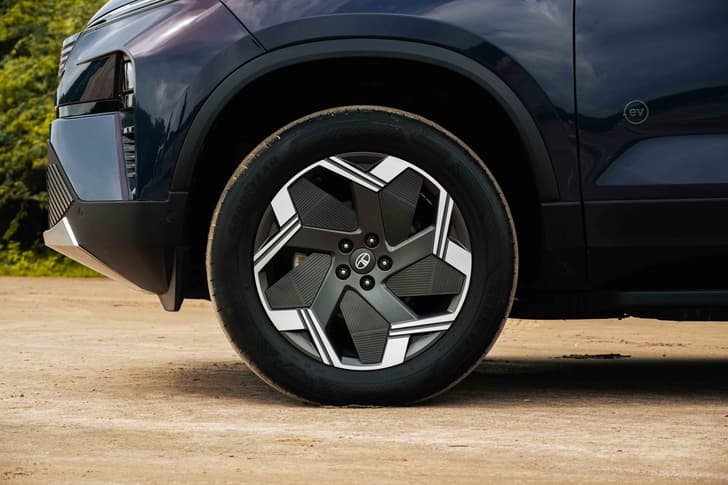
The third variant, Tata Harrier EV Fearless Plus 65 priced from Rs 23.99 lakh (ex-showroom) adds knee airbag, 360-degree camera, front parking sensors, 19-inch alloys, LED fog lamps, sequential indicators, JBL sound system, powered seats with ventilation, sunshades, dual-zone climate control, ambient lighting, cooled armrest, wireless charging, and upgraded interiors.
The Tata Harrier EV Fearless Plus 75 priced from Rs 24.99 lakh (ex-showroom) offers the same features as Fearless Plus 65 but equipped with a larger 75 kWh battery pack for extended range.
The Tata Harrier EV Empowered 75 priced from Rs 27.49 lakh (ex-showroom) is the top RWD model with a 14.53-inch Neo QLED screen, Dolby Atmos, 540-degree surround view, blind spot monitor, auto park assist, HD rear-view mirror, digital key with UWB, powered Boss mode, gesture tailgate, advanced ambient lighting, and bejewelled terrain selector.
The Tata Harrier EV Empowered QWD 75 gets dual-motor AWD with 504 Nm torque, Boost Mode, off-road assist, six terrain modes, and full Level-2 ADAS suite with 22 safety features, with its price not being revealed yet.
Tata Harrier EV variants
Tata Harrier EV Official Brochure
Download the complete brochure with specs, features, and variants.
Tata Harrier EV videos


.jpg?w=640&q=75&fm=auto)


Questions you may find useful
Hello Autocar, I'm planning to buy an EV with a budget of around Rs. 20-22 lakh (ex-showroom). Although I can stretch it a bit if it's worth it. The models that I'm currently considering are Tata Sierra Adventure 75, Tata Harrier EV Adventure 65 and Mahindra XEV 9e 59 kWh (base variant). My usage will be around 70% city driving. I also own a 2025 Hyundai Creta Petrol CVT, so I'm looking for an EV that genuinely feels like an upgrade rather than just a different powertrain. Among these, I liked the XEV 9e the most, but I'm a bit concerned about the long-term practicality and battery life of the 59 kWh pack, since it's the smallest battery among the three. Which one would you recommend, and is there any other EV in this price range that I should consider?
Go for the Mahindra XEV 9e 59 kWh. It is the most complete electric car from the ones you're considering and will genuinely feel like an upgrade over your Creta. The Sierra and Harrier EV are good cars, but the XEV 9e feels more premium, more modern and more sorted as an overall package. Going for the smaller 59 kWh battery should not be a concern since it is still a large pack, and Mahindra’s battery management system is well engineered. The car is also more efficient than the Tata EVs, so real-world range is not as far behind as the numbers would suggest. The only reason to stretch to the larger battery is if you regularly do very long highway runs. For your 70% city usage, the 59 kWh pack is more than sufficient. The Sierra EV is the better Tata EV, but the XEV 9e is the better car overall.
Which is the better EV overall between the Tata Curvv EV 55kWh Accomplished X and the Tata Harrier EV 65 Adventure S? The price difference is around Rs. 6 lakh. I currently own a Tata Tiago, drive around 1,000km a month in the city, and now want to upgrade. Please suggest which is the better overall product with better fit and finish.
Since you already have a Tata Tiago and your monthly running is only around 1,000km, there isn't an urgent need to upgrade immediately. The Tata Sierra EV is expected to launch within the next month and is likely to share its battery pack and powertrain with the Harrier EV. That means you could get very similar performance and range in a different package, giving you one more strong option to evaluate before making your purchase.Between the two cars you've shortlisted, the Harrier EV is undoubtedly the more premium product. It offers a more spacious cabin, better ride comfort and a more upmarket feel. However, whether it is worth spending an additional Rs 6 lakh over the Curvv EV 55 Accomplished X depends on how much you value the extra space and premium experience. From a pure value-for-money perspective, the Curvv EV makes a strong case.
I am confused between buying the Tata Harrier Pure X Dark Edition Diesel AT and the Tata Harrier EV Fearless+ 75 kWh. I have charging facilities available both at my apartment and at my office, and I live in Hyderabad. Since I plan to keep the car for the next 10 to 12 years, would it be better to buy the Tata Harrier Pure X Dark Edition Diesel AT, which is based on an older platform, or should I go with the Tata Harrier EV Fearless+ 75 kWh, which is built on a new platform and features an all-new architecture? Alternatively, would it be wiser to wait for Tata to launch the next-generation Harrier ICE? By then, there may also be more clarity on the future of iso-butanol as an automotive fuel.
Go for the Tata Harrier EV Fearless+ 75 kWh. With charging available at both home and the office, the ownership experience is well suited to an EV. The Harrier EV also offers a long driving range, a spacious cabin, and a premium feel.The Tata Harrier Pure X Dark Edition Diesel AT remains a capable SUV, and its Land Rover-derived platform is not an issue. However, considering the relatively low running requirements and the long-term savings on fuel and maintenance, the electric car makes more sense in this case.That said, since the plan is to keep the vehicle for 10 to 12 years, it is worth considering that the battery will gradually lose capacity over time. This can reduce both driving range and performance. In addition, the resale value of diesel SUVs is likely to remain stronger than that of EVs over such a long ownership period.As for iso-butanol, there is currently no official policy or implementation timeline as there was for the E20 petrol. Modern diesel engines are engineered with a degree of tolerance for future fuel changes, and if iso-butanol-blended diesel is introduced, manufacturers are expected to develop engines that are compatible with it. At present, however, there is no reason to delay the purchase solely because of uncertainty around iso-butanol.
I am in the market for an EV. I am confused between the Harrier EV Fearless Plus 2WD 65kWh and the Sierra EV Adventure 2WD 63kWh. The price of both cars is the same due to discounts on the Harrier. My running is within the city, with occasional highway trips, and my annual running is about 15,000-20,000km. Rear seat comfort and overall comfort are important. Which car makes more sense?
Go for the Tata Sierra EV Adventure 2WD 63kWh. Your usage is city-heavy with occasional highway runs, and rear seat comfort is a priority. The Sierra EV is the better fit here. Though it is the smaller SUV overall, it has a rear seat that's as spacious and comfortable if not more than the Harrier's. The Harrier EV Fearless Plus 2WD 65kWh is a good car, but it is a larger, heavier SUV whose added size will give you no great advantage. The Sierra EV is also more efficient in city driving and easier to manoeuvre, while still offering enough range for your occasional highway trips.Since both cars are priced similarly due to discounts, the Sierra EV is the more sensible choice for your usage pattern and comfort requirements. Do note, however, that with over 1,500km of use per month, an electric car will require frequent charging, so make sure you have home charging in place, and also note that frequent charging will take its toll on battery health sooner.
Hi Autocar, I am currently using a 2019 Mahindra XUV300 diesel, and I have driven 2,50,000km so far. We are now planning to buy an EV. My daily usage would be around 100km (if I use city roads), 200km (if highway). We also go on a 3,000km road trip across South India every quarter, and once every year we drive 6,000- 7,000 km to North India. I am from Hyderabad, and I am considering the Tata Harrier EV, Tata Sierra EV and Mahindra XEV 9S. Please suggest whether an EV will really work for me. If yes, which one should I choose? If not, which car would suit my usage better? Thanks.
Given your usage pattern, an electric car is not the right choice for you. Your daily running of 100- 200 km is well within the comfort zone of modern EVs, but your quarterly 3,000km South India road trips and annual 6,000- 7,000 km North India trips are the deciding factor. While the charging infrastructure has improved significantly, long-distance EV touring in India still requires careful planning, and charging stops can add considerable time to your journey. The Harrier EV, Sierra EV and 9S are all capable EVs, but none of them can match the convenience and flexibility of a diesel SUV on long, cross-country trips.Given your experience with the XUV300 diesel and your high annual mileage, the Mahindra XUV 7XO diesel is the most sensible upgrade. It offers strong performance, excellent highway stability and a proven diesel powertrain that is well-suited to long-distance touring. If you want a more premium and comfortable experience, the Tata Harrier diesel is also a strong contender, with a spacious, refined cabin and a comfortable ride. Both cars will give you the range, flexibility and peace of mind you need for your long road trips, without the compromises of charging infrastructure.
Tata Harrier EV On Road Price in India
Upcoming Cars


Tata Cars

Trending Cars


Latest Cars