

Autocar India

Last Updated on: 06 Apr 2026

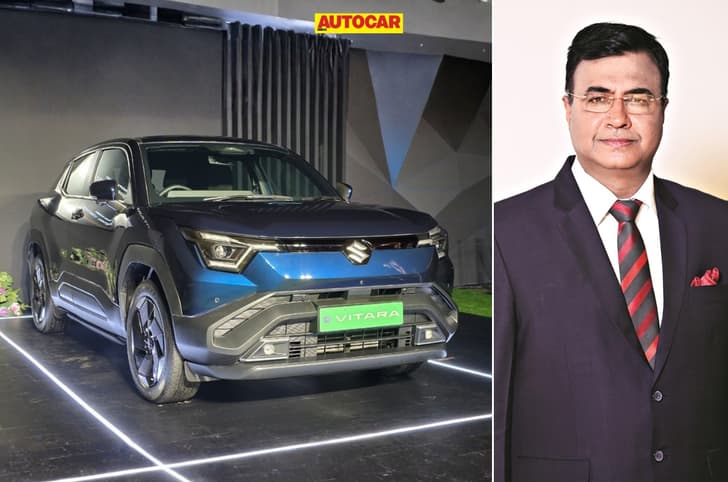
Maruti Suzuki e Vitara
Autocar score
6
₹16.95 - ₹20.94 Lakh
On road price, Mumbai
Mumbai
Starting₹24,616 /month
EMI calculator

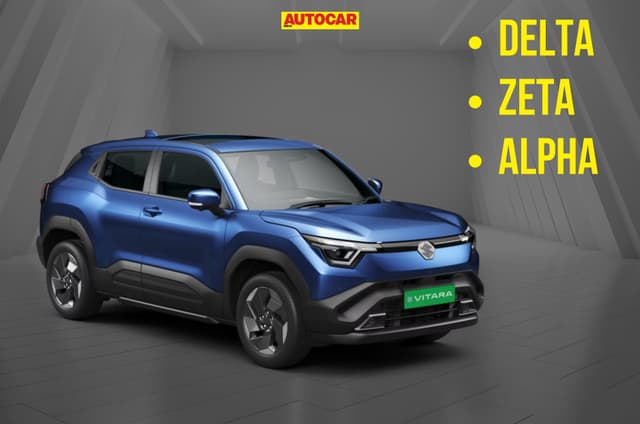
The Maruti Suzuki e Vitara is the manufacturer’s only all-electric offering in India, available in 3 variants, including Delta 49 kWh, Zeta 61 kWh, Alpha 61 kWh. Bookings are open at Rs 21,000 across India.
 

The e Vitara is priced from ₹15.99 lakh to ₹19.79 lakh. Like the mass-market MG EVs, the e Vitara is available with a battery subscription scheme. This plan essentially allows buyers to purchase the whole car except the battery pack, which is offered on a monthly subscription of ₹3.99 and ₹4.39 per km, for the 49kWh and 61kWh battery pack options, respectively. This scheme lowers the Maruti e Vitara prices to ₹10.99 lakh for the base-spec Delta 49 kWh, ₹11.99 lakh for the mid-spec Zeta variant and ₹14.29 lakh for the fully loaded Alpha 61 kWh, excluding the battery subscription fee. 


The Maruti e Vitara battery pack options include a 49kWh and a 61kWh choice with a claimed range of 543km and 440km, respectively. The smaller battery is mated with a 144hp electric motor, while the larger battery pack is paired with a 174hp motor. The e Vitara is offered with only a front-wheel-drive (FWD) setup, although it gets an all-wheel-drive AWD option in the overseas markets.


Maruti is offering a complimentary 7.4kW AC home charger for the e Vitara. Moreover, free charging until 1,000kW or one year (whichever is earlier) is being offered at Maruti Suzuki dealerships for customers who buy the e-SUV by March 31, 2026. An 8-year or 1.6 lakh km warranty on both the battery pack options (whichever is earlier), and a 3-year standard vehicle on the vehicle, which can be extended up to 8 years upon payment of an additional fee.


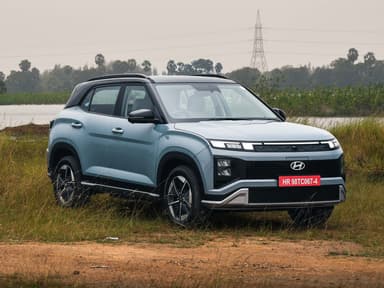
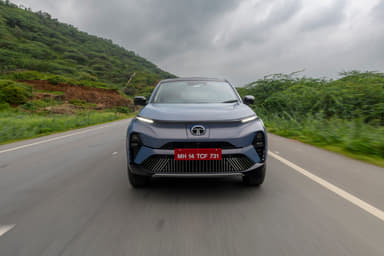
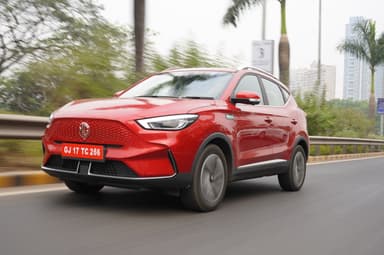
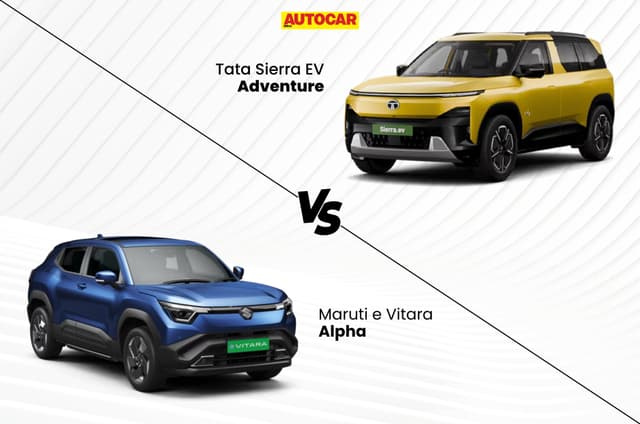
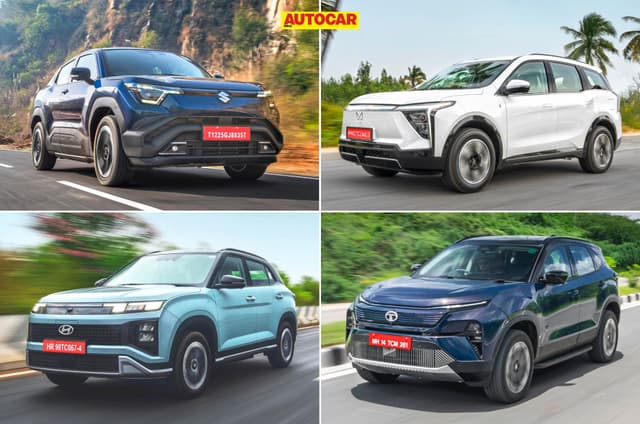
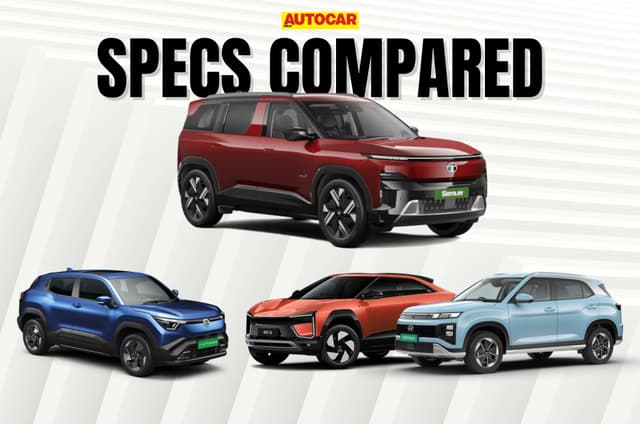
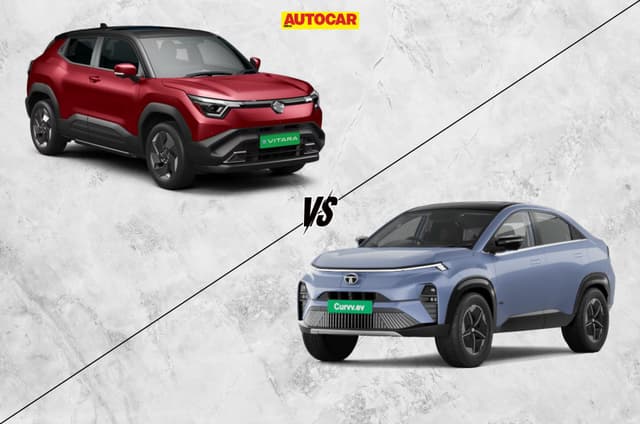
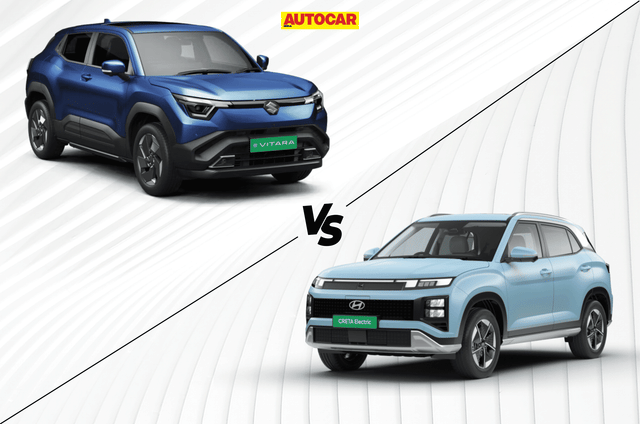
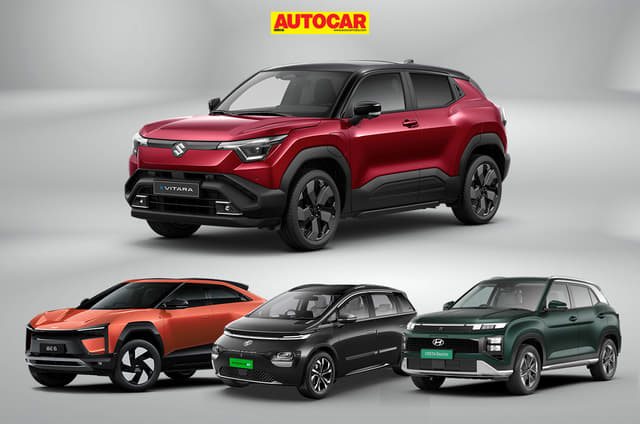
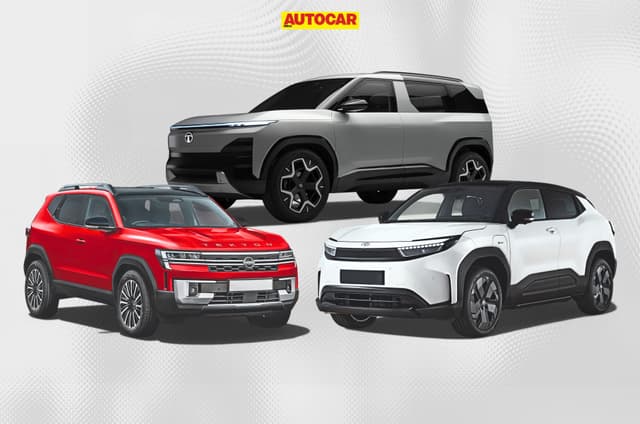
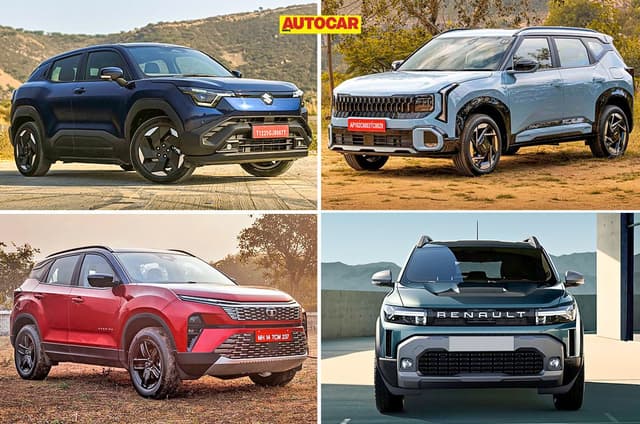
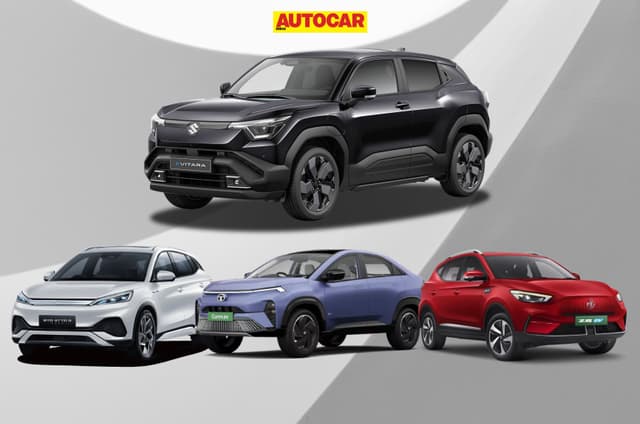
The Maruti Suzuki e Vitara rivals in India include the Hyundai Creta ElectricToyota EbellaMahindra BE 6Tata Curvv EV and also the upcoming Tata Sierra EV
 

The Maruti e Vitara is also available with two buyback schemes: a 3 year/45,000 km plan with a buyback value of 60 percent, or a 4 year/60,000 km plan with a reduced buyback value of 50 percent.

Key Highlights of the Maruti Suzuki e Vitara
  • e Vitara is the only Maruti Suzuki EV on sale in India.
  • It rivals popular mid-size e-SUVs like the Hyundai Creta Electric, Mahindra BE 6 and Tata Curvv EV. 
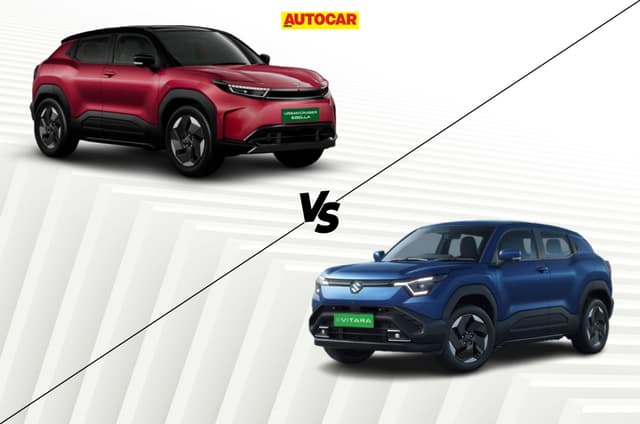
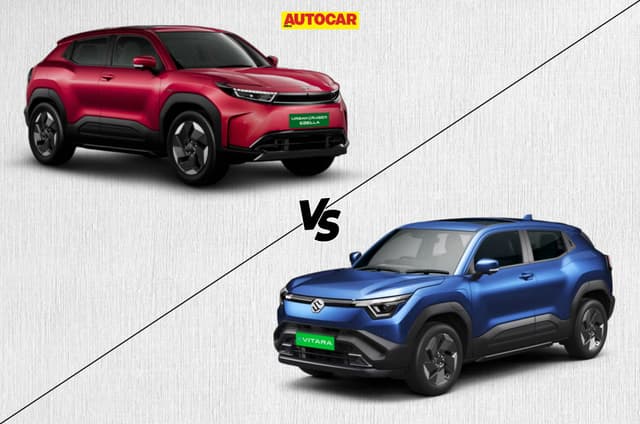
  • It shares its platform, including its electric powertrain with the Toyota Urban Cruiser Ebella.
  • It gets two battery pack options: 49kWh and 61kWh, with an ARAI-rated range of 440km and 543km, respectively.
  • Gets either a 144hp or a 174hp electric motor, dispensing on the chosen battery pack.
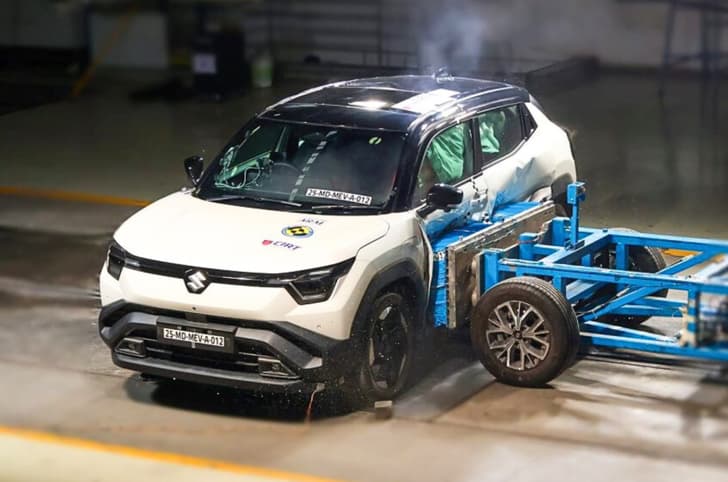
  • Maruti Suzuki e Vitara crash test rating is 5 stars from Bharat NCAP and 4 stars from Euro NCAP.
  • Safety features include 7 airbags, 360-degree camera, ADAS and TPMS.
  • Convenience features includes a 10.25-inch driver's display, a 10.1-inch infotainment, an Infinity sound system, a wireless phone charger, a fixed glass sunroof, ventilated front seats and powered driver seat.
Show more

Maruti Suzuki e Vitara Latest Updates
  • February 2026: Maruti e Vitara waiting period is between 1.5 to 2 months.
  • February 2026: Full prices of Maruti e Vitara revealed.
  • February 2026: Maruti has priced the e Vitara with battery rental scheme from ₹10.99 lakh, with a battery subscription fee of Rs 3.99 per km.
  • December 2025: Maruti e Vitara range is up to 543km for India-spec car
  • December 2025: Maruti e Vitara receives 5-star Bharat NCAP safety rating
  • September 2025: Maruti Suzuki e Vitara exports to Europe begin from Gujarat plant
  • August 2025: Maruti Suzuki e Vitara production commences at Hansalpur, Gujarat
  • July 2025: Maruti e Vitara to get made in India front e-axle
  • June 2025: Maruti e Vitara 6 month production goal slashed by 69 percent due to rare earth shortage
  • April 2025: Maruti e Vitara launch delayed, deliveries by September
  • January 2025: Maruti e Vitara features, colour options revealed
Show more

Maruti Suzuki e Vitara Features and specifications
Our Rating
6
Mileage
440 km - 543 km
Fuel Type
Electric
Seats
5
Body Style
SUV
Doors
5
Claimed Electric Motor Range
543 km
View all specifications

Maruti Suzuki e Vitara price & variants
The Maruti e Vitara variants include 3 choices, including Delta 49 kWh, Zeta 61 kWh, Alpha 61 kWh. The base-spec Delta trim is available with the 49kWh battery pack, while the larger 61kWh battery is offered with the mid-spec Zeta and top-spec Alpha trims. The Maruti Suzuki e Vitara prices range from ₹15.99 lakh to ₹19.79 lakh.
 

Like MG, the Maruti EV is offered with a battery subscription scheme, which lowers the starting price to ₹10.99 lakh, but asks for a monthly subscription fee of ₹3.99 per km for the battery pack. The higher-spec Zeta and Alpha trims are also available with this plan, at ₹11.99 lakh and ₹14.29 lakh, respectively, but with an increased battery subscription fee of ₹4.39 per km.


Here are the variant-wise on-road prices of the Maruti Suzuki e Vitara:

Show more
VariantsOn road price
Maruti Suzuki e Vitara Delta 49 kWh
Electric
₹16.95 Lakh
Electronic parking brake
Ambient interior lighting
Keyless start
Anti pinch power windows
Airbags
Maruti Suzuki e Vitara Zeta 61 kWh
Electric
₹18.52 Lakh
Electronic parking brake
Ambient interior lighting
Keyless start
Anti pinch power windows
Airbags
Maruti Suzuki e Vitara Alpha 61 kWh
Electric
₹20.94 Lakh
Electronic parking brake
Adaptive cruise control
Ambient interior lighting
Cruise control
Ventilated seats

Maruti Suzuki e Vitara Official Brochure
Download the complete brochure with specs, features, and variants.

Maruti Suzuki e Vitara expert review

Autocar score
6

We like

  • Easy to drive

  • Smooth and progressive powertrain

We don't like

  • Limited rear seat headroom and boot space

  • Busy ride

  • Evident road and wind noise

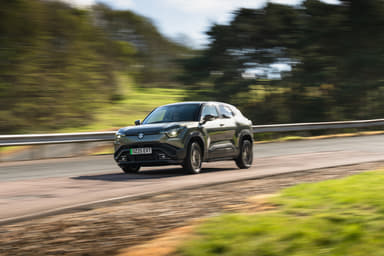
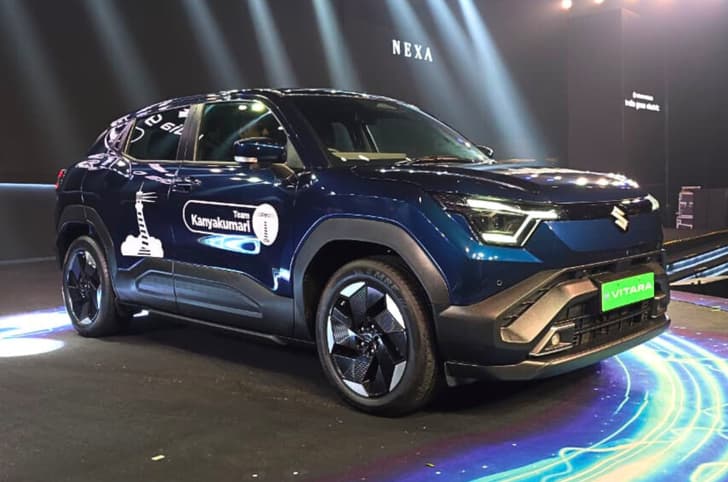
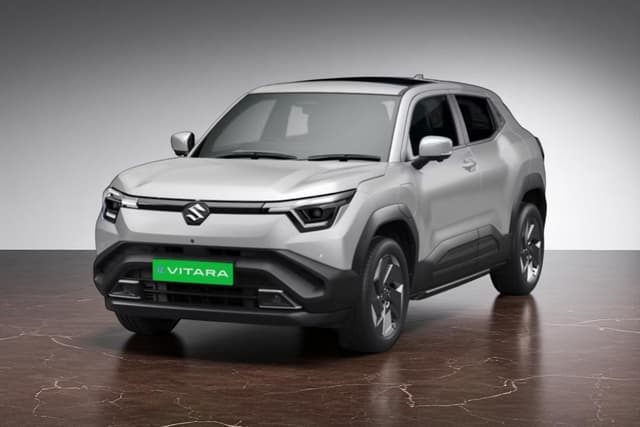
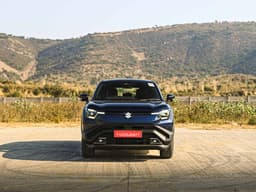
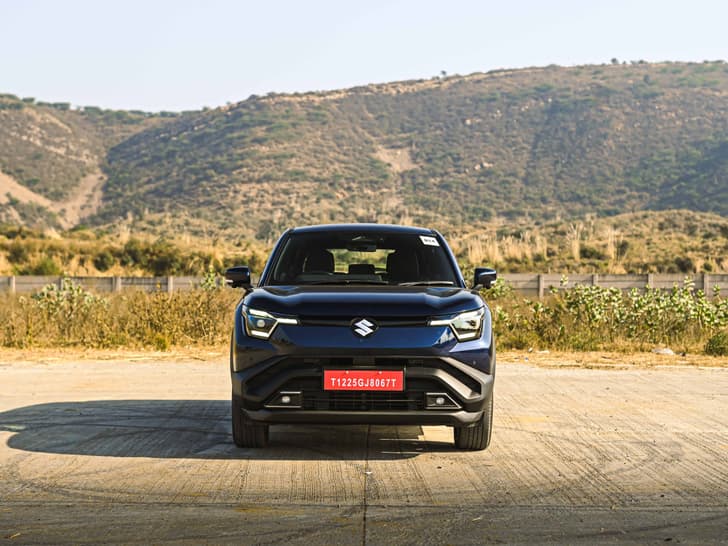
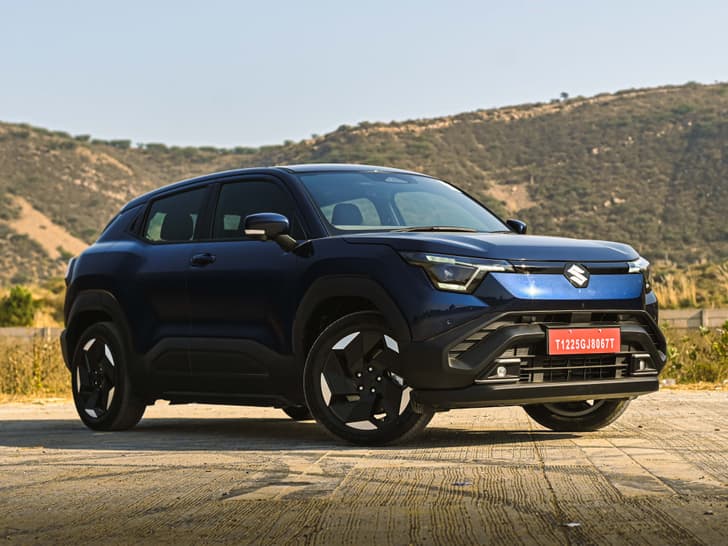
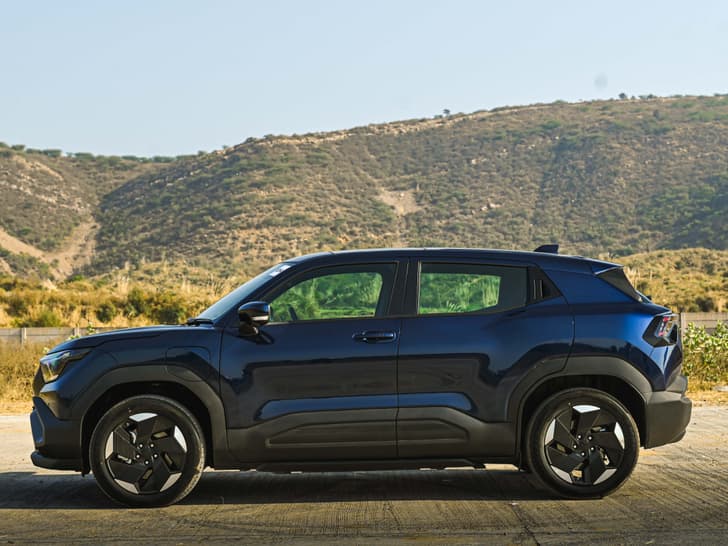
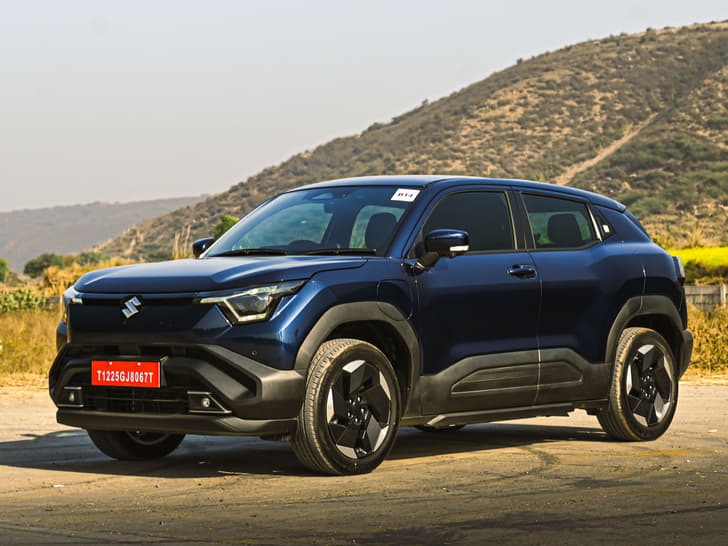
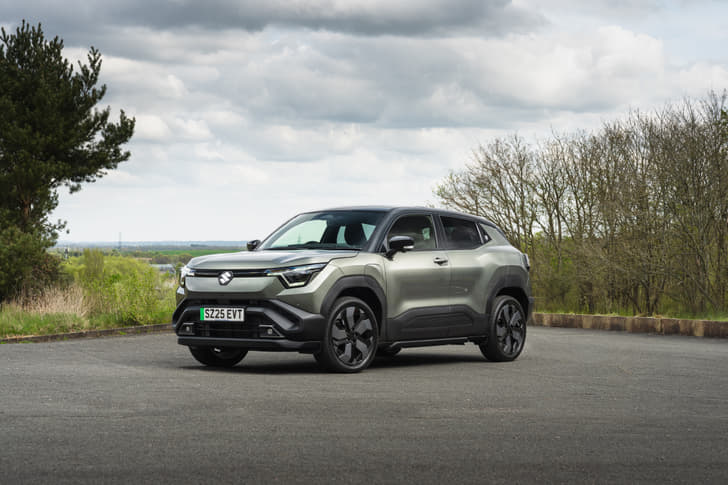
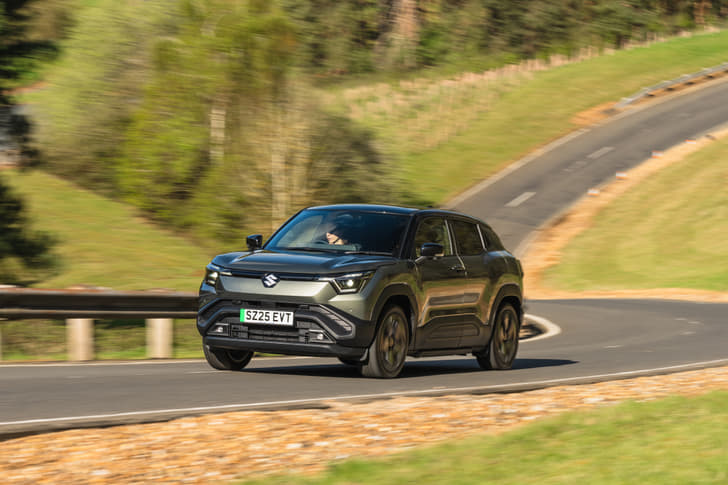
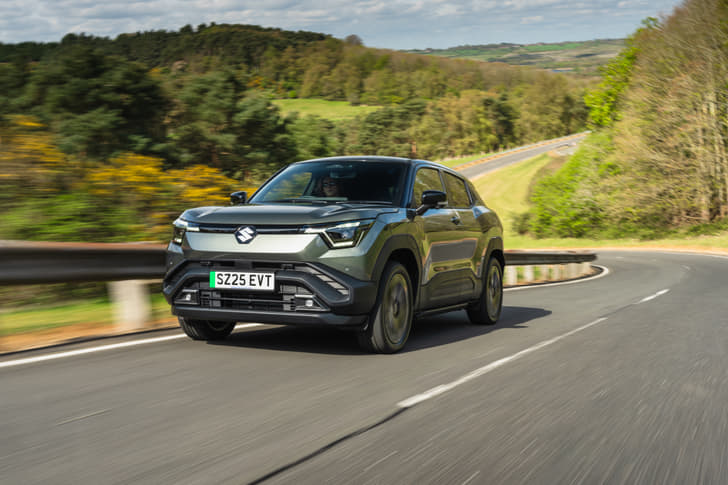
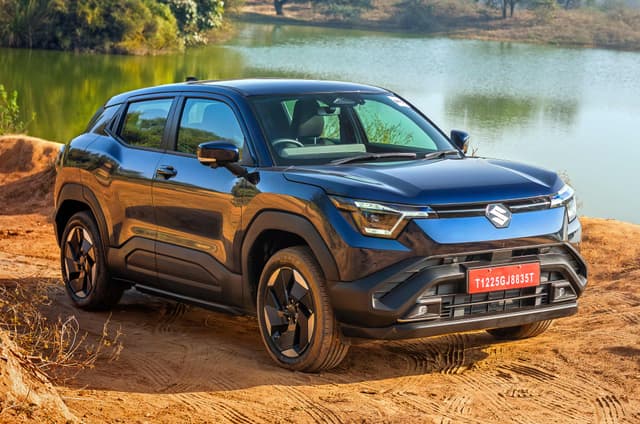
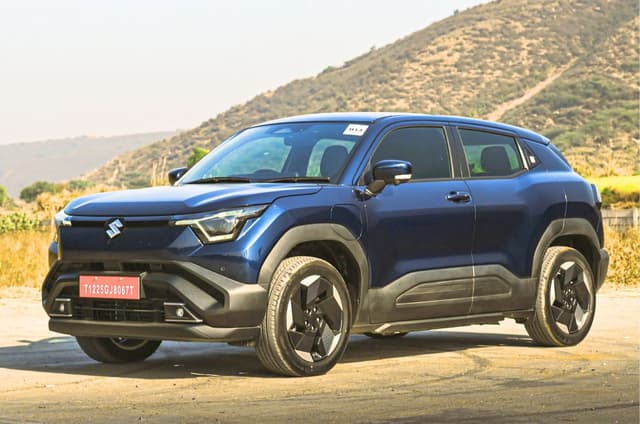
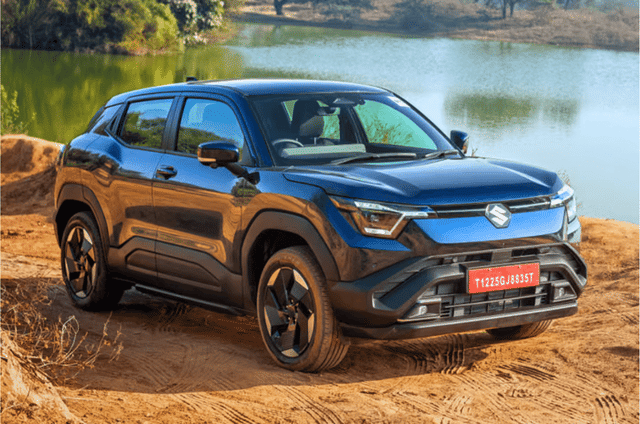
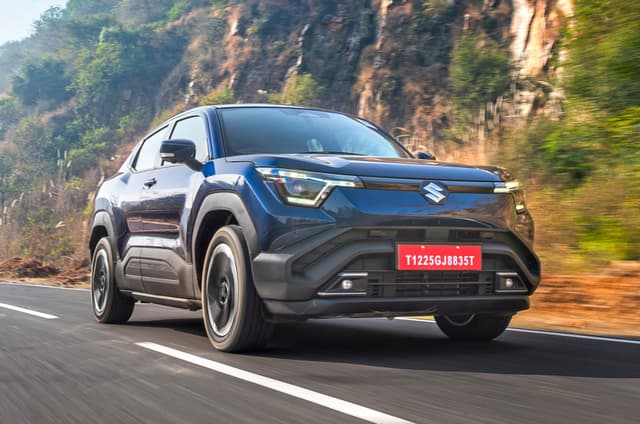
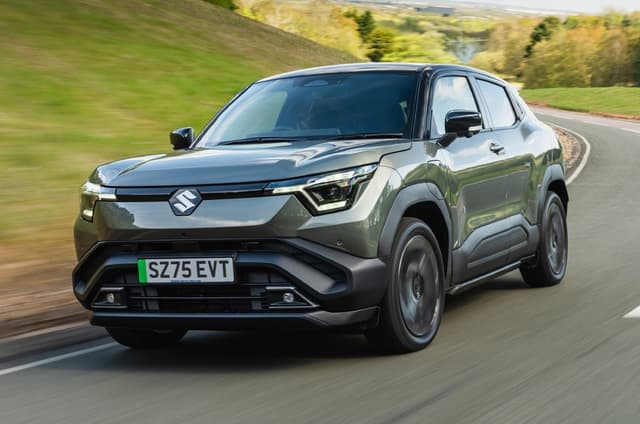
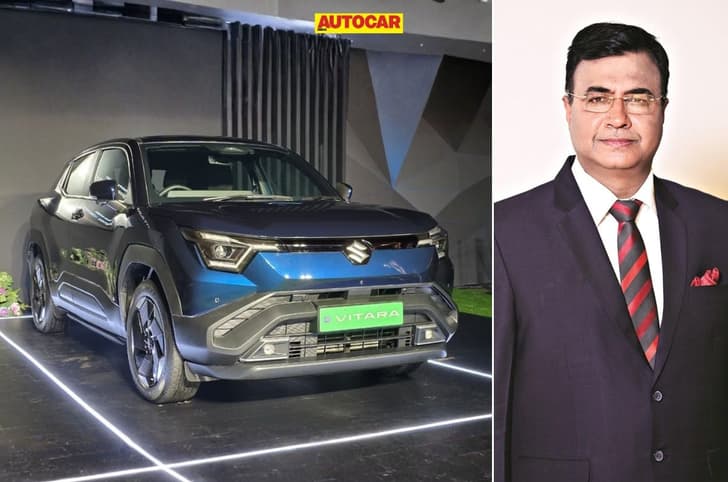
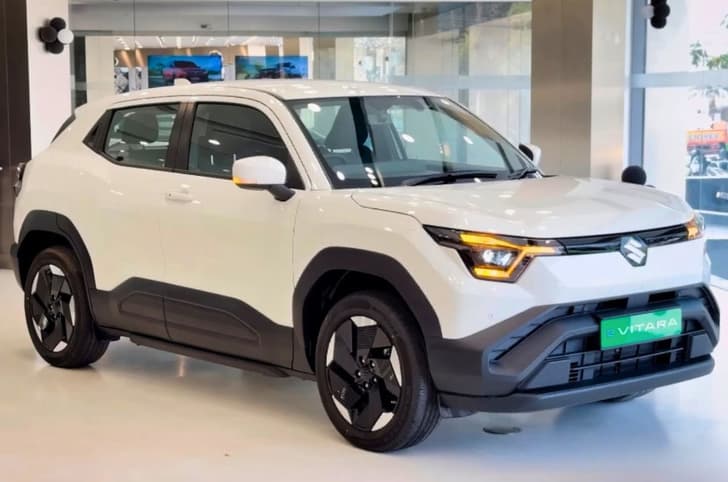
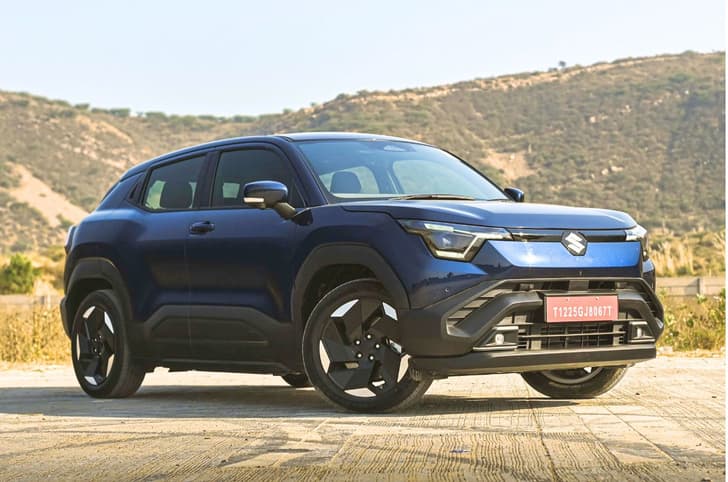
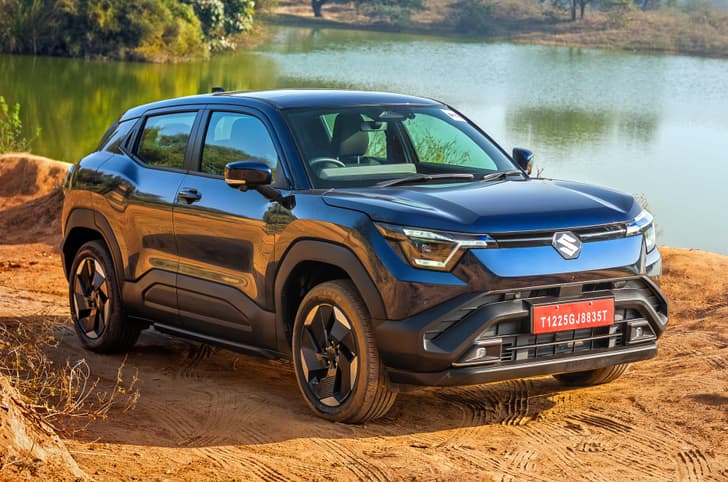
After what feels like a very long wait, India’s largest carmaker has finally entered the EV space with the e Vitara electric SUV. Unlike the familiar petrol/ICE siblings, this is a thoroughly new design that blends sharp lines, chunky cladding and a somewhat rugged stance. From the front, the grille is blanked off for aero efficiency, flanked by LED headlights with a distinctive Y-shaped DRL signature. The sides are dominated by lower-door and wheel-arch cladding and purposeful haunches. It gets 18-inch aero-efficient alloys that fill the arches well, and the roofline tapers neatly towards the rear.
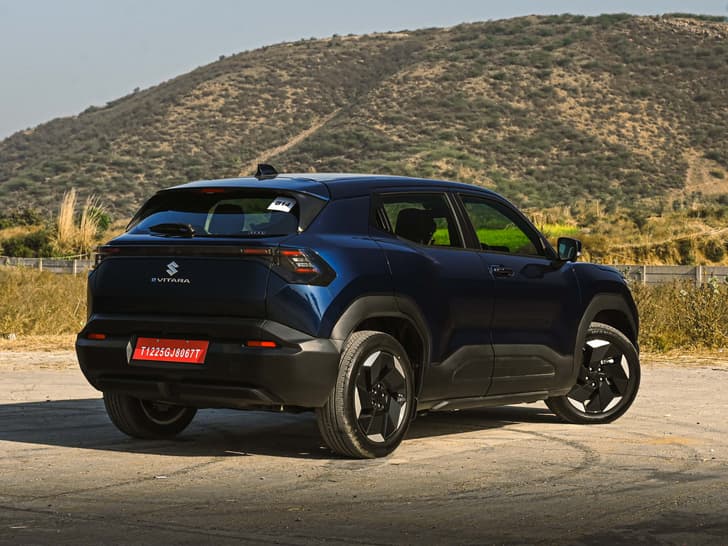
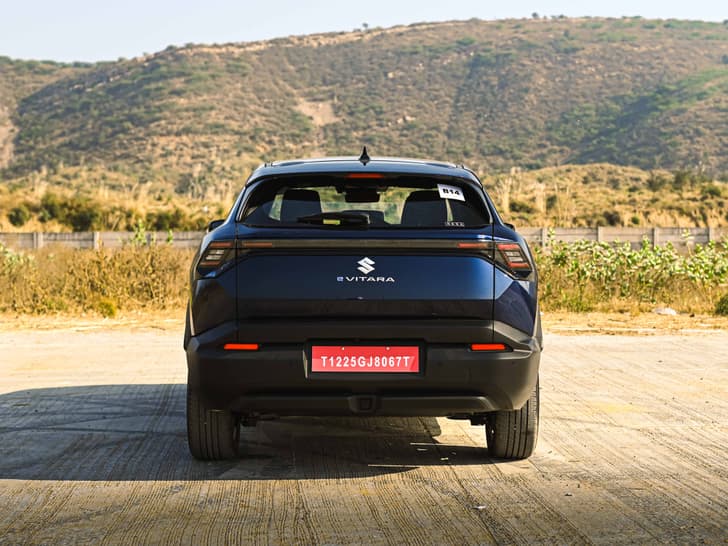
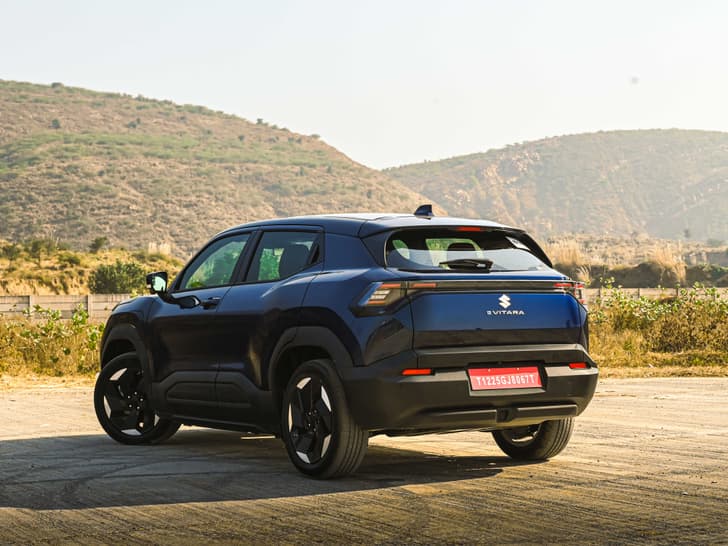
At the back, an upright tailgate with slim LED tail-lights and a faux skid plate add to the SUV’s presence, though some might find the cladding a touch too much. Under the skin, the e Vitara rides on a new Heartect-e EV platform, though packaging cues — like a front-mounted motor and the absence of a frunk — hint at it being closer to an ICE conversion than a dedicated EV. Dimensionally, it’s about 4.3m long with a 2.7m wheelbase, and a claimed ground clearance of around 185mm.
Inside, the e Vitara steps up the game for Maruti. The asymmetric dashboard uses soft-touch materials, a dual-screen layout and a squarish steering wheel that feels better than typical Suzuki fare. The higher-mounted touchscreen and digital cluster create a big bezel, but in practice the layout works. Physical AC and volume controls are nice to see in an EV that could have gone all-touchscreen.
Storage is generous with cubbies, a floating centre console and a wireless charger. Front seats are comfortable and supportive, though the driving position feels knees-up. Rear legroom benefits from the long wheelbase, but headroom is tight for taller occupants. The bench is adjustable and reclines slightly, but the backrest is upright. Boot space is limited — around 238 litres with seats back — though sliding the bench forward adds a bit of room. A full-size spare wheel lives under the boot, alongside a tray for charging cables.

Feature fitment includes a 10-inch touchscreen, full digital cluster, wireless smartphone interface, 360-degree camera, single-zone climate control, ventilated front seats, powered driver’s seat, wireless phone charger and an Infinity sound system with subwoofer — plus leatherette upholstery. A fixed, single-pane glass roof adds more light. Compared to key rivals, it misses a panoramic sunroof, dual-zone climate control and powered tailgate.
On safety, the e Vitara impresses for its class. It has six airbags, ESC, traction control and Level 2 ADAS tech. On our short drive, Maruti’s ADAS calibration seemed well-judged. The SUV has also scored a 5-star Bharat NCAP crash safety rating .
With no official specs given for India, we assumed the test car was the higher-power, larger-battery variant (174hp / 61kWh). The powertrain feels tuned more for everyday drivability than outright performance. Off the line, acceleration isn’t neck-snapping but builds in a smooth, linear fashion — where it feels best is around town or cruising, not while sporty driving.
Three drive modes (Eco, Normal, Sport) are available, but Eco feels too dull for most use, Normal is where you’ll spend most time, and Sport adds only a little more urgency. Refinement is decent, motor whine is minimal but wind and tyre noise intrude loudly, especially at higher speeds or on rough concrete surfaces. Better insulation is needed, as the absence of engine NVH makes these noises more noticeable inside the cabin.
The braking setup — discs all around — is confident, but regenerative braking levels are oddly managed. There are no paddleshifters; instead, you cycle levels through the touchscreen or a centre console button, which only toggles a preset level and must be done while stationary.

While our drive was too brief to properly test range, the e Vitara’s on-board computer showed around 4.8 km/kWh on a highway run — modest — and an impressive 7 km/kWh around town. The larger 61kWh battery is claimed to deliver up to 543 km on a single charge. Charging with an 11 kW AC unit takes roughly 5h 30m from 10-100 per cent, and a 70 kW DC fast charger can take it from 10-80 per cent in about 45 minutes.

The e Vitara’s suspension has the underlying firmness typical of European cars, so at low speeds, sharp bumps and potholes are clearly felt inside the cabin. It isn’t uncomfortable, but at highway speeds the ride feels unsettled and overly busy. There’s noticeable vertical and side-to-side movement, especially over expansion joints, which could leave passengers feeling queasy on longer drives.

In typical Maruti fashion, the handling is safe but unexciting. There’s evident body roll, and the light steering doesn’t inspire much confidence in corners, though grip levels are decent—acceptable for a midsize electric SUV.

Without a full official price or spec sheet yet at the time of our drive, final judgment is hard. What’s clear is that the e Vitara does many things well — its interior quality is a welcome leap for Maruti, it’s easy to drive, efficient and safe. But it also has clear shortcomings: limited rear headroom and boot space, a firm and busy ride, and more wind/tyre noise than rivals. Given the crowded EV landscape today, Maruti needed to address these before launch.
Still, if pricing is aggressive, there’s potential here — the fundamentals are right even if the execution feels a bit cautious compared with more mature rivals.
Maruti is yet to reveal the full price list, though it has announced that the base 49kWh Delta variant is available for an introductory price of Rs 10.99 lakh (ex-showroom), exclusive of the battery. Customers will have to pay an additional Rs 3.99 per kilometre driven, as the battery is provided on a rental basis.

Reviewed by: Soham Thakur

Maruti Suzuki e Vitara User Reviews

Tell us about your experience

Maruti Suzuki e Vitara comparison

Maruti Suzuki e Vitara
₹15.99 - ₹19.79 Lakhs
6
Transmission
-
Engine
-
Fuel type
Electric
Mileage
440 km - 543 km
Hyundai Creta Electric
₹18.02 - ₹23.82 Lakhs
9
Transmission
Auto
Engine
-
Fuel type
Electric
Mileage
420 km - 510 km
Tata Curvv EV
Tata Curvv EV
₹16.99 - ₹19.49 Lakhs
7
Transmission
Auto
Engine
-
Fuel type
Electric
Mileage
502 km
MG ZS EV
MG ZS EV
₹17.99 - ₹20.50 Lakhs
8
Transmission
Auto
Engine
-
Fuel type
Electric
Mileage
461 km

Maruti Suzuki e Vitara mileage

The Maruti Suzuki e Vitara is available with two battery pack options: 49kWh and 61kWh. The mileage range is 440 km - 543 km, dispensing upon the chosen battery pack.

Fuel typeDisplacementTransmissionMileage
Electric61 kWh543 km
Electric49 kWh440 km

Maruti Suzuki Dealers in Mumbai

Planning to buy e Vitara? Here are a few dealers in Mumbai

Aher Autoprime Llp

GALA NO:4, GHOTSAI, GHOTSAI PHATA, TITWALA GOVELI ROAD, Titwala, Maharashtra 421605

4.8
8976774734

sales.maruti@aherautoprime.com

Aher Autoprime Llp-Lakshmi Nagar

GALA NO:4, Globe Business Park, Kalyan Badlapur Road, Wimco Naka, Nr. Ambernath West Police Station, Ambernath, Maharashtra 421501

10:00 AM - 7:00 PM

8976774734

sales.maruti@aherautoprime.com

Automotive Manufacturers Ltd-Dombivali East

Unit no-4,5,6&7, Dombivali East, Plot No-4/1, Dombivli, Maharashtra 421203

5

10:00 AM - 7:00 PM

2512447448

Automotive Manufacturers Ltd-Kurla

Phoenix Paragon Plaza, Shop No 22 & 23, Lbs Marg Kurla, Mumbai, Maharashtra 400070

10:00 AM - 7:00 PM

9769206031

kiran.nm2@automotiveml.com

Automotive Manufacturers Ltd-Shirvane

Midc,Ttc Indl.Area, Plot,No.D-234,Shirvane Village, Bombay Pune Road, Mumbai, Maharashtra 400097

10:00 AM - 7:00 PM

2249177825
View all dealers

Maruti Suzuki e Vitara Images

The e-Vitara images portray a sharp, futuristic SUV design language with polyhedral surfacing, a muscular stance, and Matrix connected LED headlamps and tail lamps. It also gets alloy wheels, a sculpted 3D appearance, and EV-specific design elements. Check out the images in our gallery to see its modern styling details.

Show more
Front View Image - 31169
Front Left Three Quarter Image - 31178
Rear Right Three Quarter Image - 31176
Rear View Image - 31177
Rear Left Three Quarter Image - 31175
Left Side View Image - 31173
Front Right Three Quarter Image - 31170
Front Left Three Quarter Image - 18244
Front Right Three Quarter Image - 18256
Front Left Three Quarter Image - 18258
Front View Image - 18255
Color Gray Image - 18254
Alloy Wheels True Image - 18245
Front Left Three Quarter Image - 18252
Front View Image - 18257
Rear View Image - 18243
Rear View Image - 18253
Body Colored Bumpers Image - 31195
Dashboard Image - 31196
Dashboard Image - 18241
Dashboard Image - 18238
Front Row Seats Image - 31160
Seat Image - 31159
Steering Wheel Image - 31197
Interior Colours Brown Image - 31186
Dashboard Image - 31194
Infotainment System Image - 31191
Instrument Cluster Image - 18251
Digital Instrument Cluster Image - 31180
Steering Mounted Controls Image - 31198
Steering Mounted Controls Image - 31199
Storage Armrest Image - 31168
Cup Holders Image - 31193
Electronic Parking Brake Image - 31185
Mode Select Control Image - 18250
Control Buttons Image - 31192
Wireless Phone Charging Image - 31183
Wireless Phone Charging Image - 31182
2nd Row Ac Vent Image - 31167
Exterior Door Handle Colour Body Coloured Image - 31166
Rear View Image - 18248
Front Logo Image - 31179
Rear Badge Image - 31162
Alloy Wheels Image - 18242
Alloy Wheels True Image - 18246
Front Right Three Quarter Image - 18239
Headlight Image - 18247
Headlight Image - 31156
Tail Light Tail Lamp Image - 31163
Orvm Blinker Image - 31161
Rear View Image - 18249
Sunroof Image - 18240
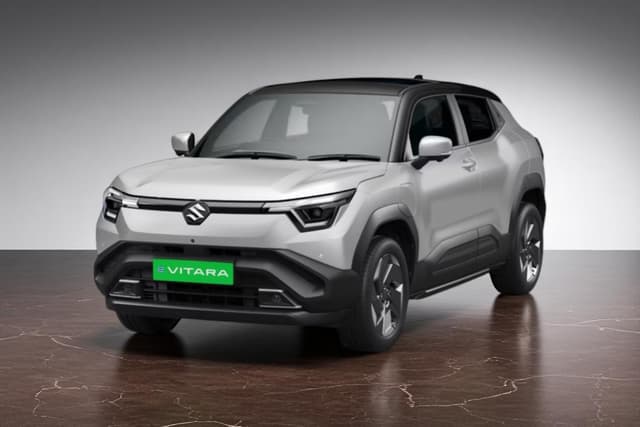
Color Splendid Silver With Bluish Black Roof Image - 18227
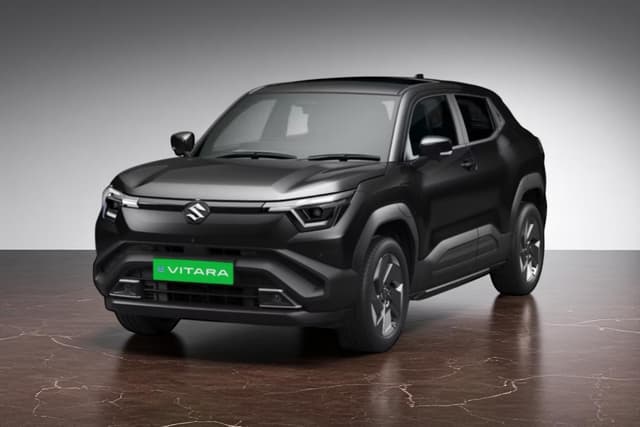
Color Bluish Black Image - 18228
Color Land Breeze Green With Bluish Black Roof Image - 18229
Color Opulent Red With Bluish Black Roof Image - 18230
Color Arctic White With Bluish Black Roof Image - 18231
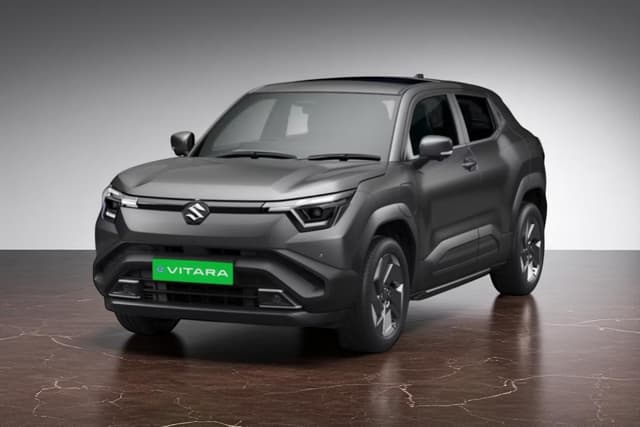
Color Grandeur Grey Image - 18232
Color Splendid Silver Image - 18233
Color Arctic White Image - 18234
Color Opulent Red Image - 18235
Color Bluish Black Image - 18236
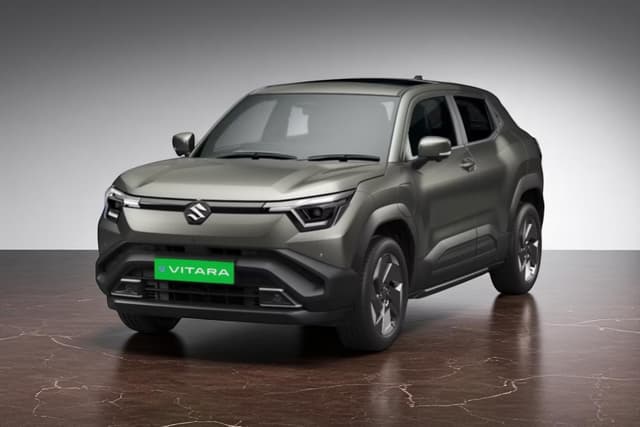
Color Land Breeze Green Image - 18237
Touch Screen Infotainment System Image - 31157
Electric Seat Adjustment Image - 31158
Rear Defogger Image - 31164
Door Handles Image - 31165
Alloy Wheels Image - 31171
Alloy Wheels Image - 31172
Front Wheels Image - 31174
Sunroof Image - 31187
Charging Ports Image - 31188
Boot Open Image - 31189
Open Bonnet Engine Shot Image - 31190
Boot Space Image - 31200
Boot Space Image - 31201
Wheel Image - 31202
Wheel Image - 31203
Speaker Image - 31204
Boot Space Image - 31205
Boot Space Image - 31206
Open Bonnet Engine Shot Image - 31207
Open Bonnet Engine Shot Image - 31208

Maruti Suzuki e Vitara videos

The e-Vitara videos showcase its unique styling, well-built interiors, along with its driving dynamics, features, walkarounds and review on European roads.
 

Show more

Maruti Suzuki e Vitara Colours

The e-Vitara colours in five monotone options, including Splendid Silver, Arctic White, Grandeur Grey, Bluish Black and Opulent Red. Dual tone colour options that come with a Bluish Black roof are available in the Opulent Red, Splendid Silver, Arctic White and Land Breeze Green colours.
 

Show more

Maruti Suzuki e Vitara FAQs

The Maruti e Vitara features a dual-screen setup, wireless charging, Apple CarPlay, ADAS functions, an electronic parking brake, part fabric and leatherette upholstery, a flat-bottom steering wheel and vertical AC vents

The Maruti e Vitara measures 4,275 mm in length, 1,800 mm in width, and 1,635 mm in height, with a wheelbase of 2,700 mm.

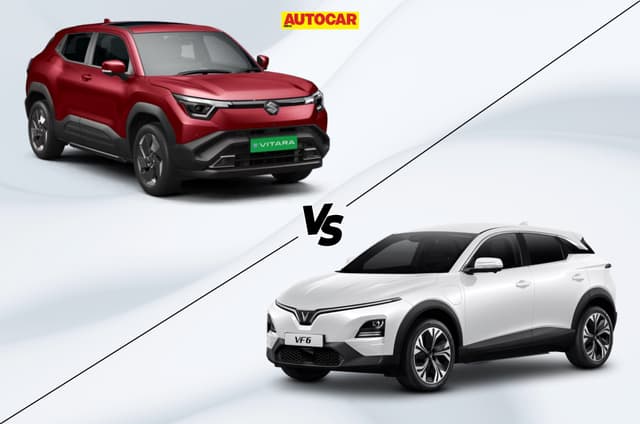
The e Vitara competes with the Tata Curvv EV, MG ZS EV, Vinfast VF 6, Hyundai Creta Electric and Mahindra BE 06 in the segment.

Maruti says the e Vitara stands 180mm above the ground.

Maruti e Vitara will feature 7 airbag, knee airbag, driver knee airbag, electronic parking brake, TPMS, 360° View Camera and AVAS

The Maruti e Vitara will offer a 49 kWh and a 61kWh lithium-ion based cells.

The e Vitara scored a 5-star safety rating from BNCAP. 
 

The ARAI claimed range of the e Vitara is 523km for the 61kWh battery pack and 440km for the smaller 49kWh battery pack.

Maruti Suzuki has not revealed the full price range of the e Vitara, but it has revealed that its BaaS scheme will start from ₹10.99 lakh + ₹3.99 per km for the Delta 49 kWh. 

Need an expert opinion on your car related queries?

Questions you may find useful

JV

JV

4w

I am looking to buy a compact car for my family, with an annual running of 30,000–40,000 km. My father strongly prefers diesel vehicles, while I am also considering an electric vehicle within a ₹20 lakh budget. We currently own a 2017 Hyundai i20 (top model), which is nearing 3 lakh km and needs replacement. The new car will be used mostly for city driving, along with occasional long trips of 300-500 km. We also have a 2021 Jeep Compass 4x4 Model S, which has clocked 1.2 lakh km and will be retained, although its fuel efficiency is around 11 km/l. Given our usage and long-term ownership plans (up to 3 lakh km), should we opt for an electric vehicle, a diesel car, or a hybrid? We also have an 8 kW solar setup at home with surplus power generation. I am considering EVs like the Tata Punch EV, Tata Nexon EV, MG Astor EV (if launched), and the upcoming Kia Syros EV. For diesel options, I am looking at the Kia Sonet, Hyundai Creta, and Tata Curvv. However, while I like Tata cars, I have some concerns about after-sales service. Could you suggest the most suitable electric or diesel automatic options for my needs?

Autocar India team

Autocar India

Verified
4w

With your kind of usage of 30,000-40,000 km a year, mostly city driving, long-term ownership and an 8 kW solar setup, going electric makes a lot of sense. Running costs will be significantly lower, especially since you can charge at home using surplus solar, and the smooth, silent nature of an EV suits city driving perfectly.The Tata Nexon EV Long Range is still one of the most well-rounded options here. It offers a good balance of range, practicality and ease of use, and can handle your occasional 300-500 km trips with one planned charging stop. It is also a proven product with a wide user base.However, since you have concerns about Tata’s service, it is worth considering alternatives. The MG Windsor EV with the larger battery pack is a strong option. It offers more space, a more premium feel and a bigger battery, which helps with range and reduces charging stops. The Maruti Suzuki e-Vitara is another promising option, especially from a long-term ownership perspective, thanks to Maruti’s strong service network and reliability.Diesel is still a valid fallback. If you prefer complete flexibility and do not want to depend on charging infrastructure at all, options like the Hyundai Creta diesel automatic or Kia Sonet diesel automatic make sense, offering strong mileage and effortless highway performance.So, the decision comes down to priorities. Given your high running and solar setup, an EV is clearly the smarter long-term choice. Among EVs, the Nexon EV is the proven option, the Windsor EV offers more space and range, and the e Vitara is the safest bet for long-term ownership. Diesel should only be considered if you want maximum convenience without planning charging stops.

VehicleTata Nexon EV
VehicleMG Windsor
VehicleMaruti Suzuki e Vitara
VehicleHyundai Creta
VehicleKia Sonet
AG

Aayush gupta

6w

I am planning to buy an electric car, as I travel around 100 km daily on highways. I am confused between the Mahindra XEV 9S, Tata Harrier EV, and Maruti e Vitara (Delta). We are a family of four and often travel with around 200 kg of luggage. My priorities are real-world driving range, safety, suitability for highway usage, and low maintenance. Which of these cars would be the most suitable for my needs, and what real-world range can I expect?

Autocar India team

Autocar India

Verified
4w

For your use case, the Maruti Suzuki eVitara, despite a range of 400+ km, drops out first. Its boot is only around 300 litres, which is tight even for two large suitcases, let alone 200kg of luggage plus four people. It’s fine as a family crossover, but not for heavy luggage and long‑haul highway use.Both the Mahindra XEV 9S and Tata Harrier EV are large, comfortable SUVs that will easily take four adults, and with their rear seats folded or adjusted, they can swallow serious luggage. The XEV 9S, being a three‑row SUV, gives you a huge, flat boot with the third row down, so it’s the most practical of the three for your 200kg luggage requirement.On range, the XEV 9S with the 79kWh battery delivers around 478km in Autocar’s real‑world test, versus about 401km for the Harrier EV AWD with a 75kWh pack. For your 100km daily highway run, both are adequate, but the Mahindra gives you a much bigger buffer even when loaded.In terms of driving feel, the Harrier EV feels more planted and tied down at high speed; the XEV 9S is softer and moves around a bit more on uneven highways, though it’s still safe and stable. On safety and maintenance, both are modern, 5‑star‑oriented SUVs with robust equipment; long‑term, Tata’s and Mahindra’s EV ecosystems are still maturing, so factor in dealer experience in your city and expect a few niggles too. Given your load, highway usage and need for range buffer, the Mahindra XEV 9S 79kWh is the most suitable overall.

VehicleMaruti Suzuki e Vitara
VehicleMahindra XEV 9S
VehicleTata Harrier EV
RA

Rajesh

8w

Before I begin, I would like to thank Autocar for always offering sensible and well-informed advice to its readers. I have been an Autocar India subscriber since 2002. As per your earlier advice, I am considering the 49 kWh battery version of the Maruti Suzuki e Vitara for my monthly usage of around 900 km in Bengaluru. For longer journeys, I already own a Toyota Hycross Hybrid, so the EV will primarily be used for city driving. My main confusion is regarding the performance difference between the 49 kWh and 61 kWh battery versions. I recently test-drove the 61 kWh variant and drove it for about 20 km, and I must say it was a joy to drive and handled very well probably the best-handling Maruti I have experienced. However, I am concerned whether the 49 kWh version, which comes with a smaller motor, might feel noticeably less powerful or subdued in performance compared to the 61 kWh version, even though the torque figure is said to be the same for both.

Autocar India team

Autocar India

Verified
7w

Thanks for being a loyal subscriber. As you've rightly mentioned, the Maruti Suzuki e Vitara gets two versions 144hp/189Nm motor with a 49kWh battery, and the other is 174hp/189Nm motor, 61kWh battery. The common factor between the two versions is the 189Nm motor torque, which makes it zippy. Of course, being more powerful, the larger battery version is likely to hit higher (three-digit) speeds more quickly, but within town (up to speeds of 60-70kph), the difference between their acceleration is likely to be negligible. So opt for the 61kWh version only if you need more range, else as a city commuter, the 49kWh version's performance should be more than sufficient.

VehicleMaruti Suzuki e Vitara
Can't decide which car to buy?
Ask our experts and get answers to all your car related queries.