
Last Updated on: 09 Jun 2026
Hyundai Venue
The Hyundai Venue price ranges between ₹8.00 lakh and ₹15.65 lakh (ex-showroom), with 26 variants on offer. The Venue on road price starts from ₹9.39 lakh for its base model HX2 1.2 Petrol MT to ₹18.78 lakh for top model.
The ARAI mileage figure for the 1.2-litre petrol engine is 18.05kpl, while the turbo manual and DCT better that, delivering 18.74kpl and 20kpl, respectively. The 1.5-litre diesel achieves 20.99kpl with the manual; however, this falls to 17.9kpl with the optional automatic.
Key Highlights of Hyundai Venue:
- Compared to the first-generation model, the new Venue is 48mm taller and 30mm wider.
- The wheelbase has also grown by 20mm, now measuring 2520mm.
- New Venue diesel adds a torque converter automatic gearbox option, alongside a manual gearbox.
- There are 2 petrol engines on offer: an 83hp, 1.2-litre naturally aspirated engine and a 120hp, 1.0-litre turbo-petrol engine.
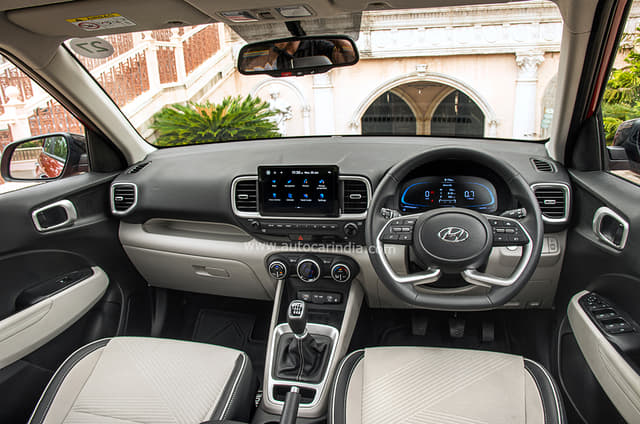
- It gets a curved display comprising two 12.3-inch screens (larger than even the Creta), a new steering wheel, 360-degree camera and ventilated seats. It also gets a Level 2 ADAS suite on the HX10 1.5 Diesel AT trim.
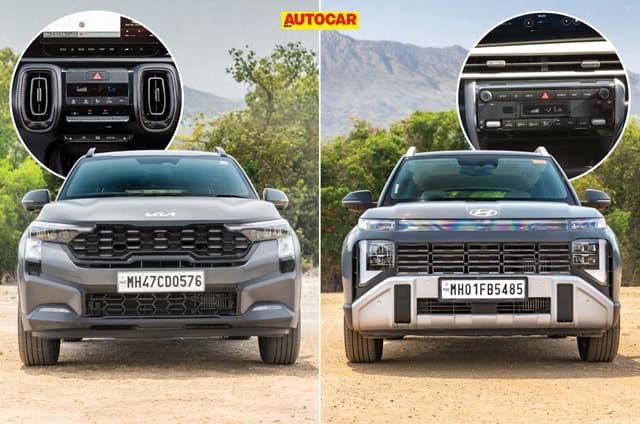
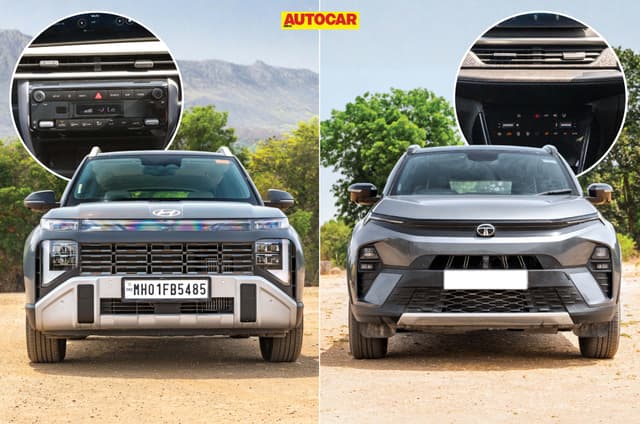
- Hyundai has kept physical controls for HVAC and media in the Venue interior. The rear seats also get a 2-step reclining feature.
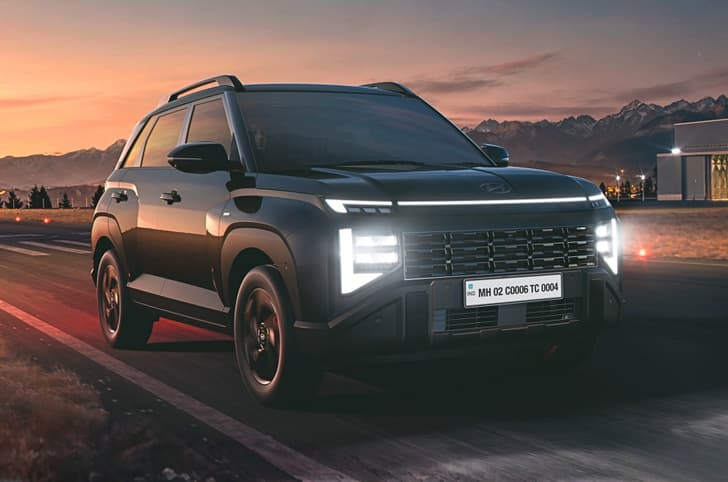
- The sportier N Line version of the Venue is powered by the 120hp, 1.0-litre turbo-petrol engine, and is offered with both manual and DCT gearboxes.
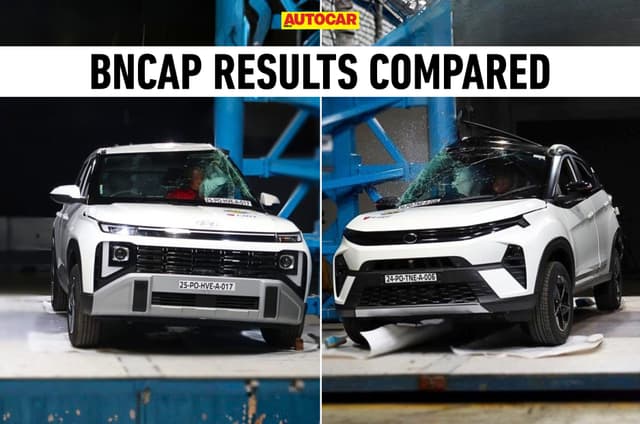
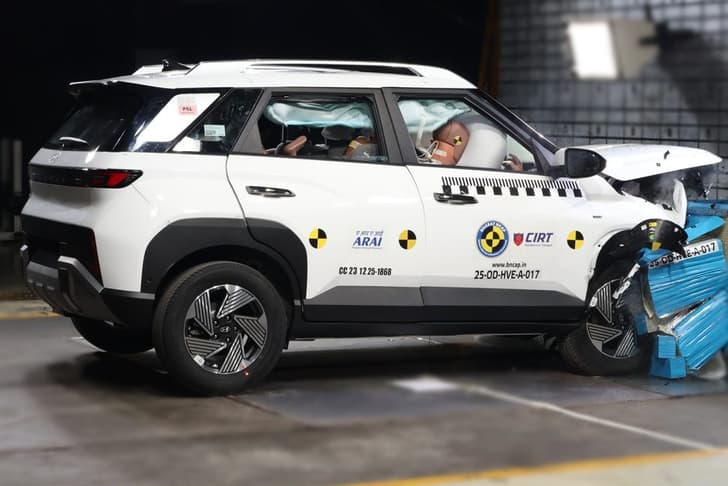
- Bharat NCAP rating of the new Hyundai Venue is 5/5.
- Hyundai has equipped the latest Venue SUV with six airbags (standard), disc brakes for all wheels, a tyre pressure monitoring system (TPMS) and an electronic parking brake with auto hold. The Venue also gets a Level 2 ADAS suite.
Hyundai Venue Latest Updates
- April 20, 2026: Hyundai Venue Knight Edition launched in India at Rs 9.70 lakh; the HX6, HX10 and N-Line's N10 DCT variants now get a dashcam.
- March 30, 2026: Hyundai Venue scores 5 star Bharat NCAP safety rating; the Venue is Hyundai’s second model to undergo Bharat NCAP crash tests.
- March 27, 2026: Hyundai hikes prices of the Venue by up to Rs 20,000; prices of several Venue variants, including the base HX2 petrol MT, the top-spec HX10 diesel AT and the N Line, are unchanged.
- March 10, 2026: Hyundai Venue diesel-AT gets more affordable with HX8 trim at Rs 13.70 lakh; Venue has amassed over 1 lakh bookings since launch.
- January 2, 2026: Hyundai Venue HX5+ variant launched at Rs 9.99 lakh; borrows some exterior and interior features from the pricier HX6 trim.
Hyundai Venue Features and specifications
Our Rating | 8 |
Mileage | 17.9 kmpl - 20.99 kmpl |
Engine | 998 cc - 1493 cc |
Fuel Type | Petrol, Diesel |
Transmission | DCT, Torque Converter, Manual, AT |
Seats | 5 |
Body Style | SUV |
Doors | 5 |
Max Power | 116 hp at 4000 rpm |
Max Torque | 250 Nm at 1500 - 2750 rpm |
| Fuel Type/ Propulsion | Diesel |
| Engine Displacement | 1493 cc |
| Engine Installation | Front |
| Engine Type | Turbocharged |
| Auto Start/Stop | No |
| Emission Standard | Bharat Stage VI |
| Fuel Supply System | Common Rail |
| Fuel Tank Capacity | 45 litres |
| Rear Brakes | Drum |
| Front Brakes | Disc |
| Type of Power Assist | Electric |
| Turning Radius | No |
| Length | 3995 mm |
| Chassis Type | Monocoque |
| Boot Capacity | 375 litres |
| Doors | 5 |
| warranty Duration | 3 |
| warranty Distance | Unlimited |
| Acoustic Windshield | |
| Ambient Lighting | |
| Auto Parking | |
| Driving Modes |
| Tyre Pressure Monitoring System | With Display |
| Blind Spot Monitor | |
| Central Locking | |
| Brake Assist (BA) |
| Headlight Height Adjuster | |
| Headlight Type | LED |
| Illuminated Logo | |
| Welcome and Goodbye Animation |
| Gear Indicator | |
| Speedometer | Digital |
| Distance to Empty | |
| Shift Indicator |
| Wireless Phone Charging | |
| Video Player | |
| Voice Commands | |
| Web Browser |
| Check Vehicle Status via App | |
| Remote Sunroof Open / Close via App | |
| Geo Fence | |
| Over the air (OTA) updates |
Hyundai Venue price & variants
The Hyundai Venue variants are HX2, HX4, HX5, HX5+, HX6, HX6T, HX8, HX7 and HX10. The Venue is sold with 3 engine options: 83hp 1.2-litre naturally aspirated petrol engine paired with a 5MT, a 116hp 1.5-litre diesel engine with 6MT/ 6AT and a 120hp 1-litre turbo-petrol engine with 6MT/ 7DCT.
Hyundai Venue Official Brochure
Download the complete brochure with specs, features, and variants.
Hyundai Venue expert review
We like
Cabin looks and feels premium
Slick infotainment system
Refined diesel and smooth auto combo.
We don't like
Ride still has an underlying firmness
N Line mechanically identical to standard version.
9.0
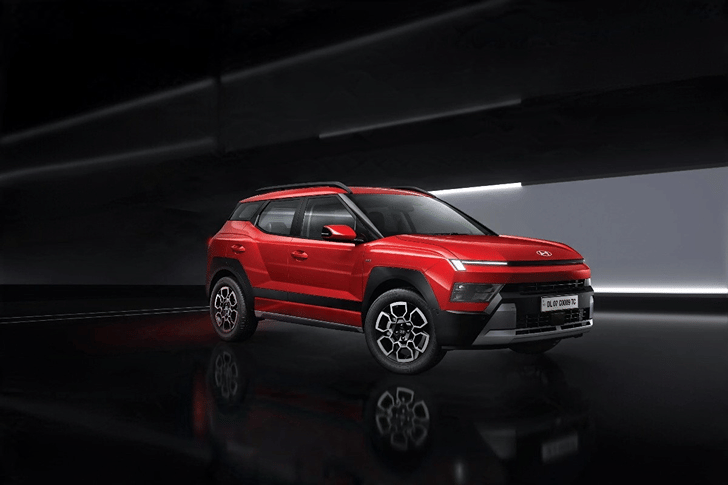
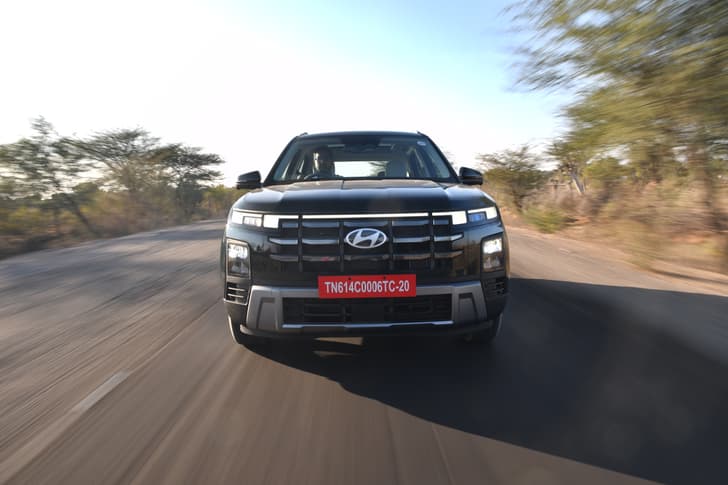
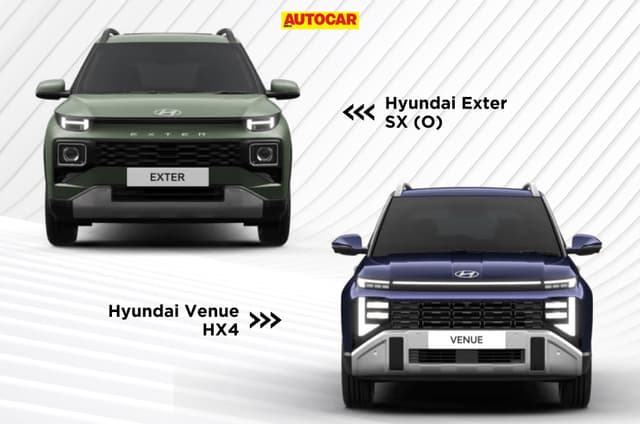
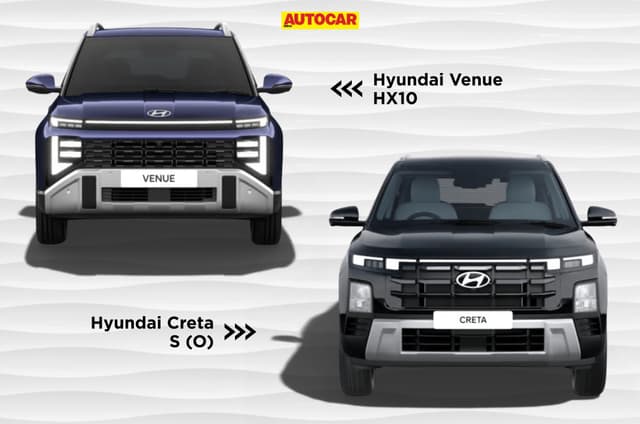
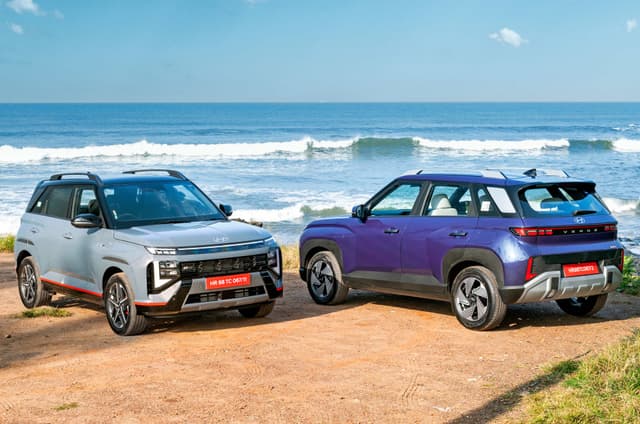
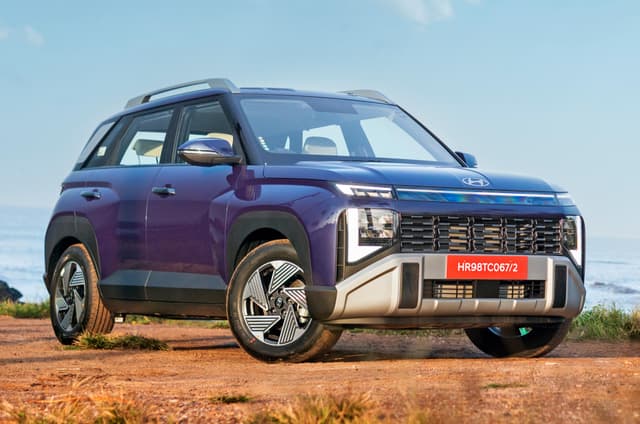
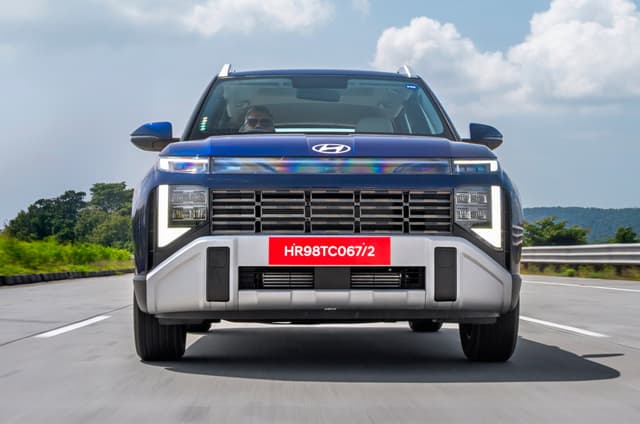
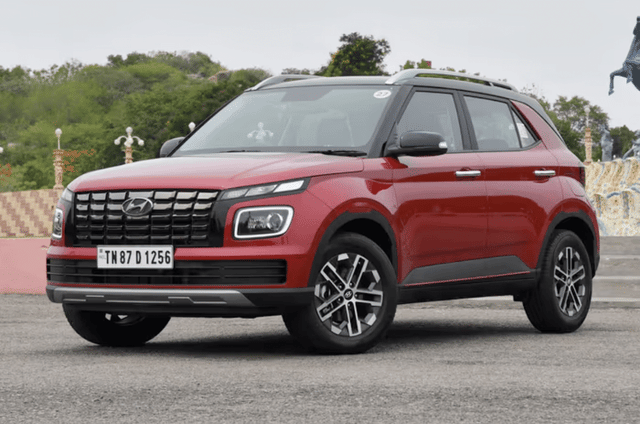
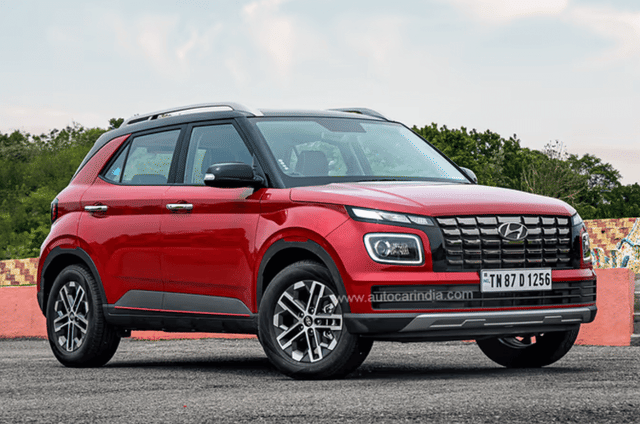
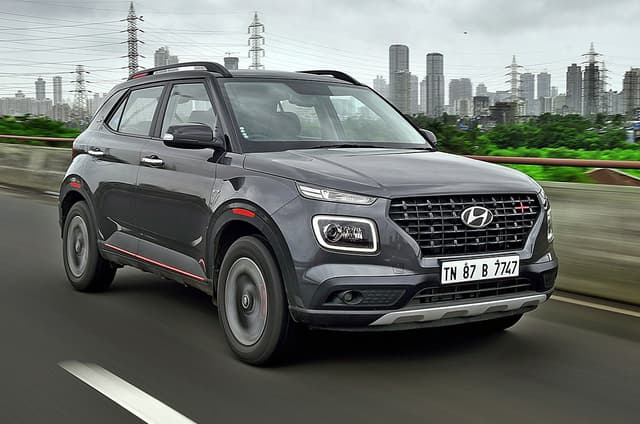
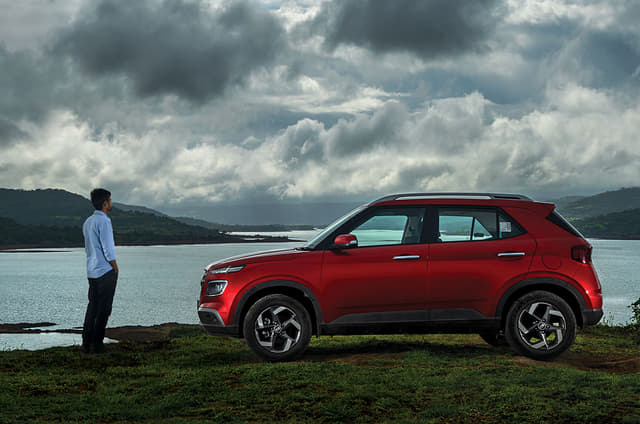
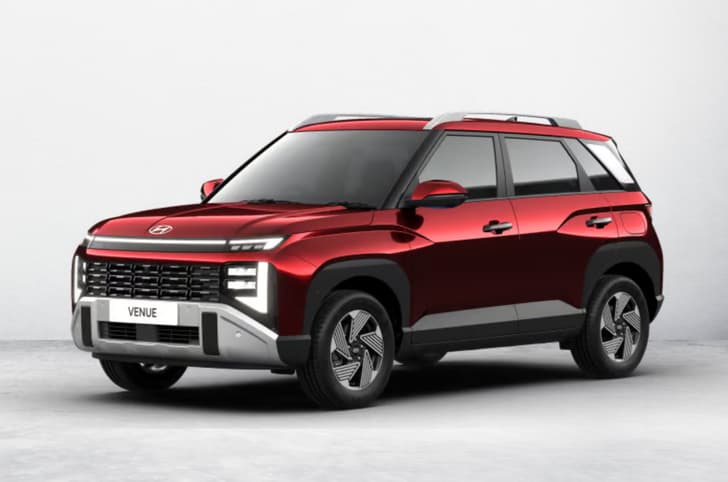
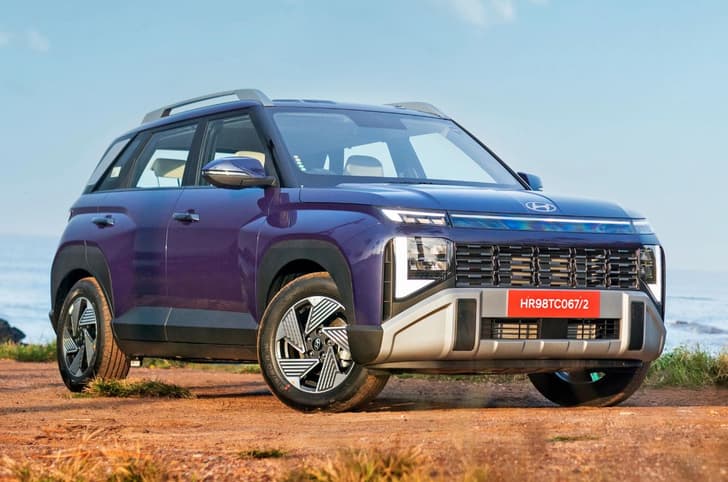
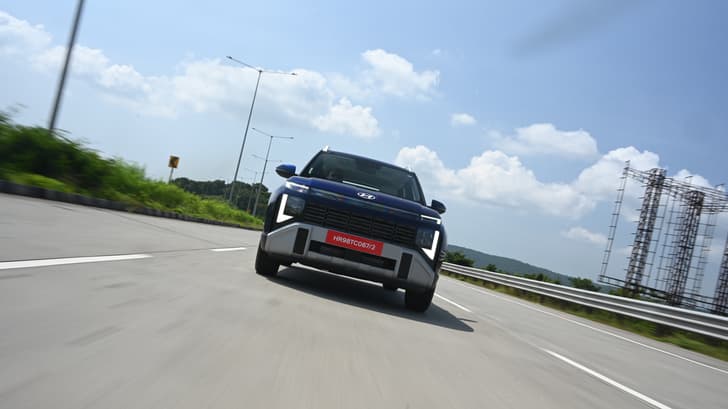
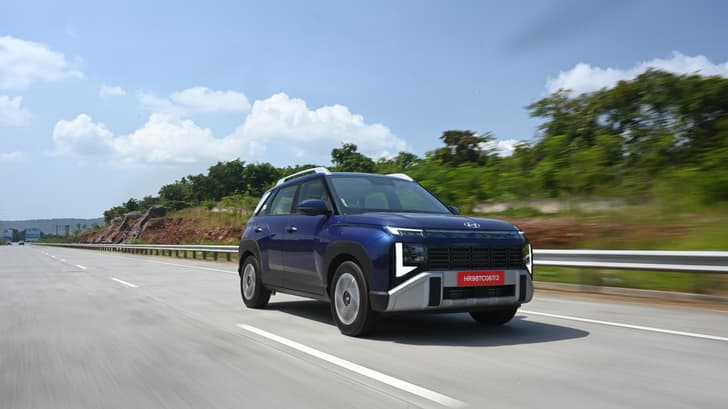
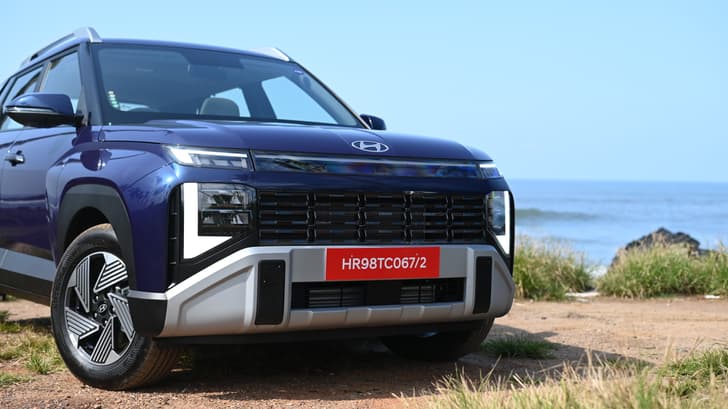
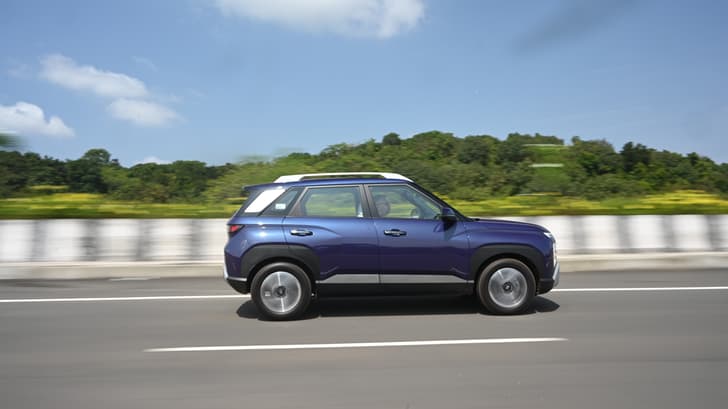
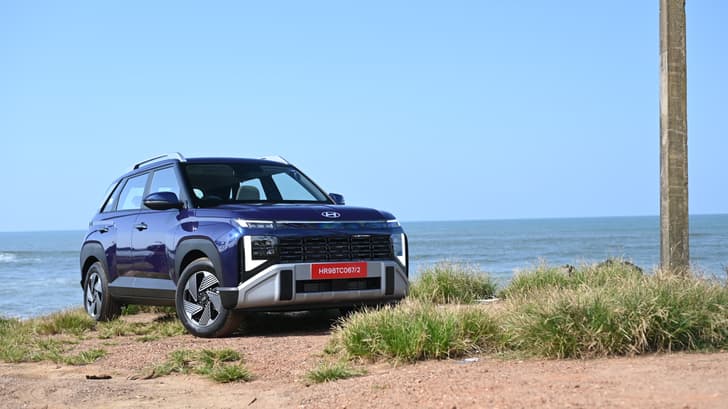
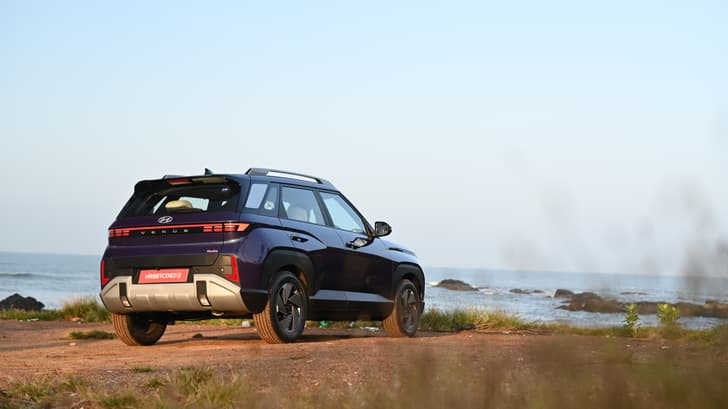
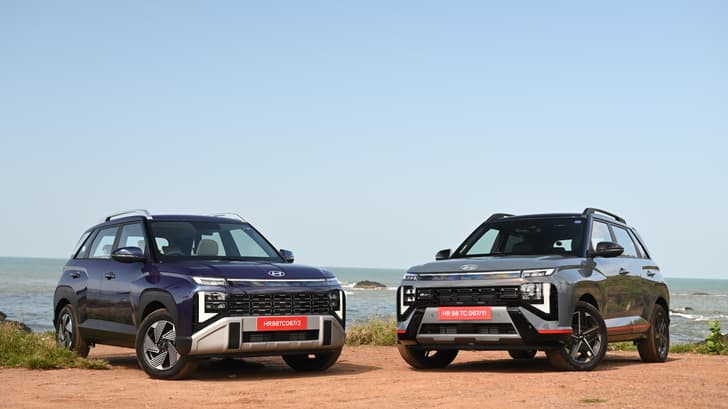
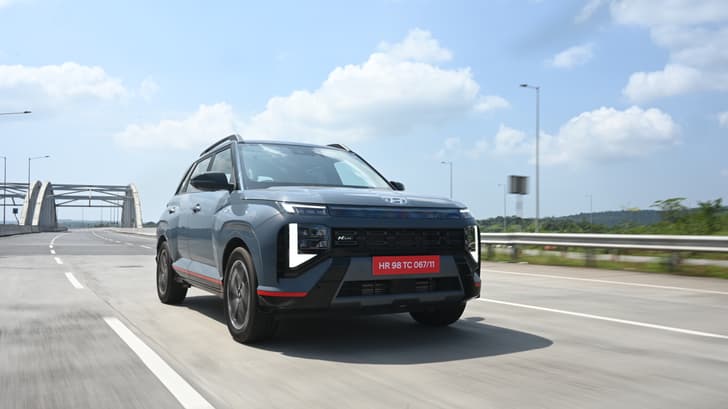
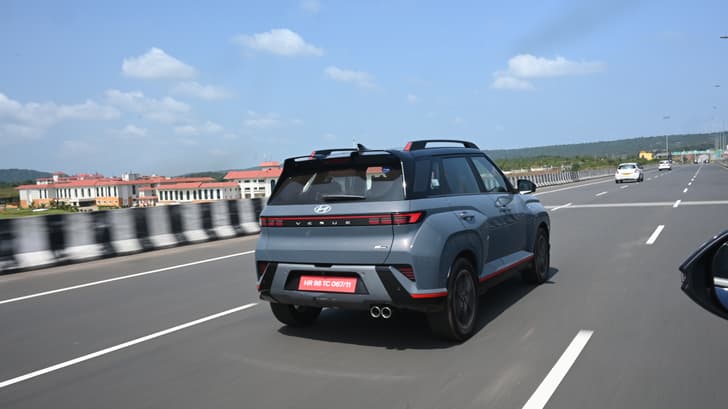
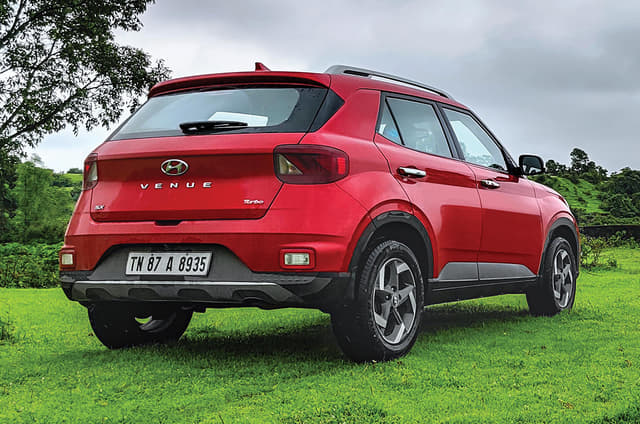
The new Venue sits on the global K1 platform shared with the Kia Syros. It’s more rigid and slightly larger – 30mm wider, 48mm taller, and with a 20mm longer wheelbase. The platform also makes it a software-defined vehicle capable of OTA updates for new features and fixes. Hyundai has nailed the proportions, avoiding the undertyred look some rivals suffer from, while giving the N Line a distinct identity. The front end borrows cues from the Creta, Exter and even the Palisade, while sharp creases, flared fenders and a new C-pillar quarter glass define the side. The standard car runs on 16-inch wheels, while the N Line gets striking 17s with red brake calipers. Overall, it’s an edgy design that stands out, even if it won’t appeal to everyone.
9.0
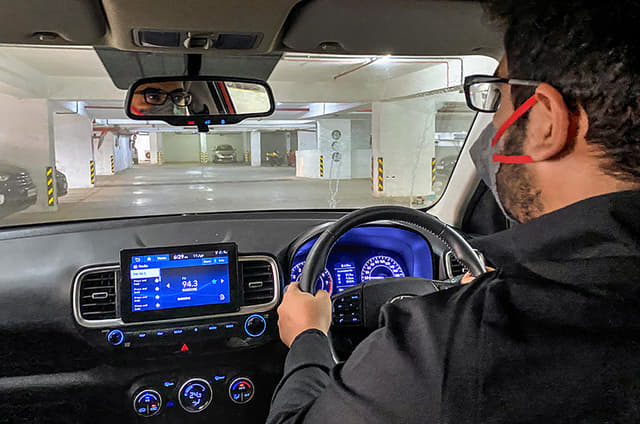
The dual 12.3-inch screens for the infotainment and digital driver’s display are larger than even the Creta’s and on par with the Syros. Powered by NVIDIA tech, the infotainment system is quick, responsive and has superb resolution – best seen in the 360-degree camera view. Features include ventilated front seats, a wireless charger, smart key with push-button start, an 8-speaker Bose system and a single-pane sunroof. The Venue also gains Hyundai’s SmartSense Level 2 ADAS, up from the earlier Level 1 setup. Safety kit is comprehensive, with six airbags, ABS, ESC, VSM and ISOFIX mounts standard from the HX2 trim. It hasn’t yet been crash-tested, but Hyundai expects a 5-star Bharat NCAP rating, given the Kia Syros’ strong performance.
8.0
The rear seat now offers more knee room thanks to the 20mm longer wheelbase and scooped-out front seat backs, though thigh support could be better. Shoulder room is slightly improved, but seating three abreast remains tight. Boot space has grown from 350 to 375 litres. Up front, the cabin feels cleaner and more modern, with a curved display neatly integrating the infotainment and digital instruments. A new steering wheel with four dots (Morse code for H) replaces the Hyundai logo, while automatic versions get a “coffee-table” centre console. Despite the hard plastics, quality and detailing impress. The dual-tone blue-and-white upholstery adds airiness, while the N Line gets an all-black interior with red accents and a sporty Ioniq 5 N–style steering wheel. Rivals like the Syros and Nexon offer more space, but the Venue’s design and finish stand out.
8.0
The ARAI mileage figure for the 1.2-litre petrol engine is 18.05kpl, while the turbo manual and DCT better that, delivering 18.74kpl and 20kpl respectively. The 1.5-litre diesel achieves 20.99kpl with the manual, however this drops significantly to 17.9kpl with the optional automatic.
8.0
The base engine is a 1.2-litre four-cylinder petrol producing 83hp and 115Nm, paired with a 5-speed manual. Above that sits the 1.0-litre turbo-petrol with 120hp and 172Nm, offered with a 6-speed manual or 7-speed DCT. The diesel option is a 1.5-litre unit with 116hp and 250Nm, now available with a 6-speed torque converter auto alongside the manual. The turbo-petrol is the most engaging, with mild lag below 2,000rpm before strong mid-range punch. The N Line’s exhaust adds a sporty burble, while both transmissions suit the engine well. The DCT is mostly smooth, with only mild hesitation at crawling speeds. The diesel impresses with refinement – barely audible below 2,000rpm – but runs out of steam past 3,500rpm. The auto’s smoothness complements it, though initial throttle response feels a bit dull.
7.0
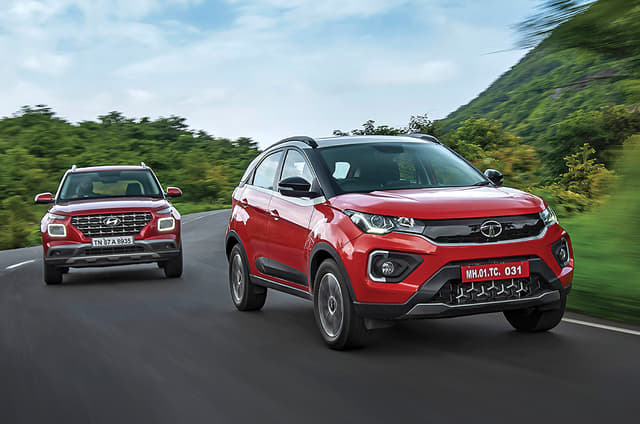
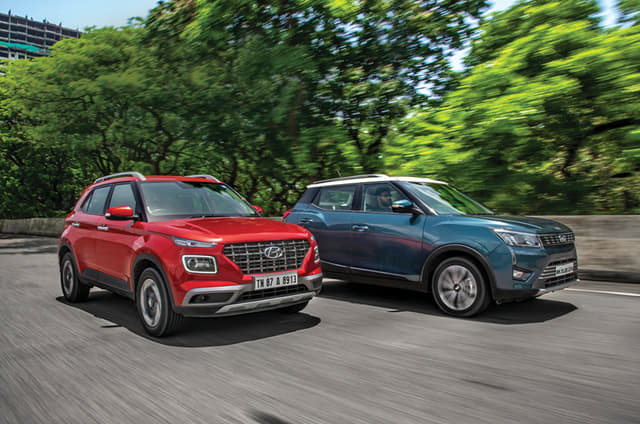
The new Venue is slightly more softly sprung than its predecessor with a noticeable improvement in low-speed bump absorption. However, the damping is still not totally sorted with an underlying firmness coming through. Come across a sudden pothole or even worse a series of them, and the Venue will thud through. The ride also felt a tad too busy on the rippled concrete highways of Goa. While the Venue’s ride is not inherently uncomfortable, rivals like the Tata Nexon and Mahindra XUV 3XO do a better job of ironing out imperfections. The Venue N Line runs exactly the same setup as the regular car with only a slight firmness coming from the larger 17-inch wheels. All versions of the Venue steer almost exactly the same, with a direct but light and somewhat lifeless steering that never really weighs up at speed.
8.0
Despite the generation shift, it’s been priced keenly to start with – from Rs 7.89 lakh (ex-showroom). Move up the range though and prices climb sharply, reaching Rs 14.74 lakh for the turbo DCT, Rs 15.48 lakh for the top-spec N Line and Rs 15.69 lakh for the diesel automatic, putting it among the priciest in the segment, but it still represents solid value for what it offers. The design is edgy and modern with plenty of wow factor in N Line guise, while the tech-laden cabin looks and feels genuinely premium. It’s not perfect, but then nothing in this segment is.
Reviewed by: Lenny D'sa
Hyundai Venue reviews

Hyundai Venue comparison
Hyundai Venue mileage
The Hyundai Venue mileage figures range between 17.9 kmpl - 20.99 kmpl. Hyundai claims the 1.2-litre petrol-MT returns 18.05kpl, while the 1.0-litre turbo-petrol engine has a claimed mileage figure of 18.74kpl and 20kpl for the manual and DCT gearboxes, respectively. Meanwhile, the Venue diesel mileage with the manual gearbox is 20.99kpl, while the automatic variant returns 17.9kpl. That makes it one of the most efficient diesel cars currently on sale in India.
| PowertrainThe combination of engine type, fuel, and transmission that powers your vehicle and determines how it drives and what it runs on. | ARAI MileageMileage certified by the government, tested under controlled lab conditions. Real-world mileage will vary. | Autocar Tested MileageAutocar's experts test each vehicle on fixed city and highway routes under standardised conditions - single occupant, AC running, manufacturer-recommended tyre pressures. Tanks are filled to the brim before and after each run to calculate efficiency. Results reflect realistic real-world usage. | User Reported MileageMileage figures are reported by vehicle owners and represent the approximate real-world efficiency you may experience. Actual mileage will vary based on driving conditions, habits, and vehicle condition. |
|---|---|---|---|
Petrol-Automatic (DCT) 998 cc | 20 kmpl | - | - |
Diesel-Automatic (Torque Converter) 1493 cc | 17.9 kmpl | - | - |
Petrol-Manual 998 cc | 18.74 kmpl | 12.8 kmpl | 17.24 kmpl |
Petrol-Manual 1197 cc | 18.05 kmpl | 12.8 kmpl | 16.73 kmpl |
Diesel-Manual 1493 cc | 20.99 kmpl | - | - |
Diesel-Automatic (AT) 1493 cc | 17.9 kmpl | - | - |
Hyundai Venue news
Hyundai Venue Images
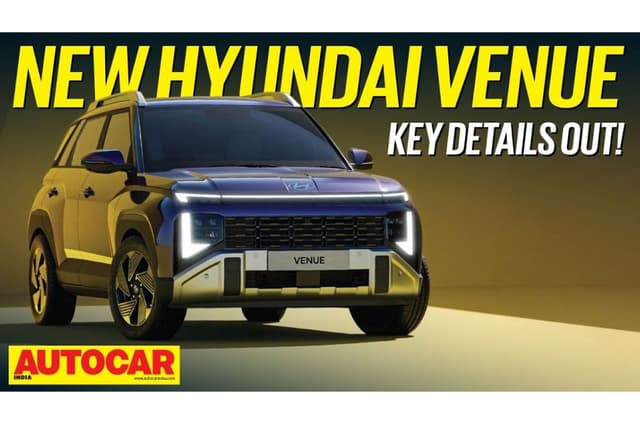
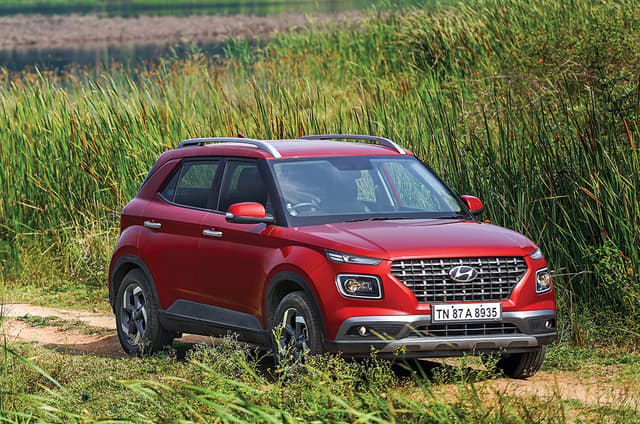
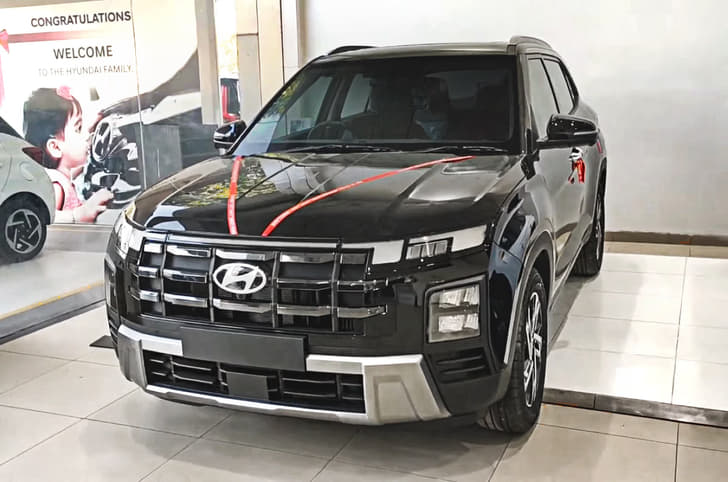
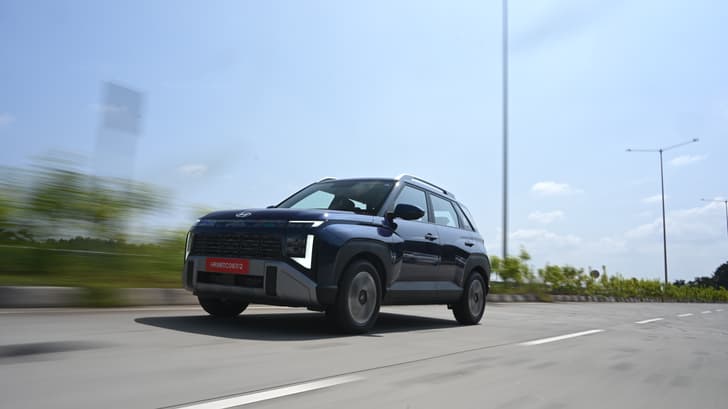
The second-generation Venue comes with quad-LED headlamps, connected DRLs and 16-inch alloy wheels and a lot more. Check out our Hyundai Venue image gallery to see the compact SUV from several angles.
Hyundai Venue videos
Our Hyundai Venue review covers its exterior design, seat and ride comfort and performance in great detail. Explore walkarounds and more in our Hyundai Venue video gallery.


.jpg?w=640&q=75)


Hyundai Venue Colours
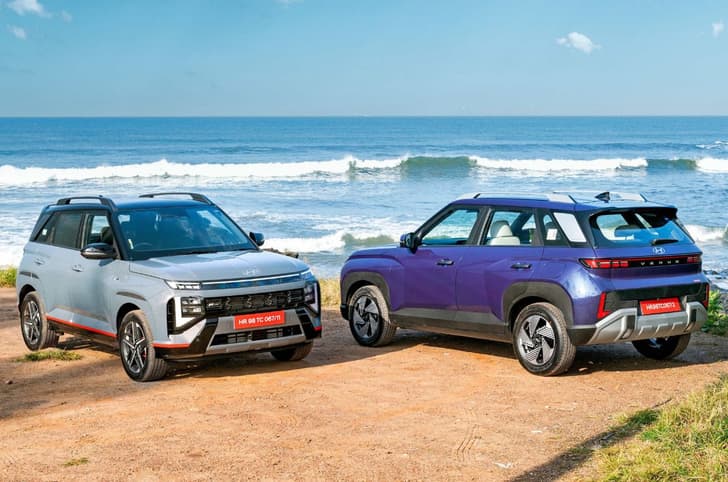
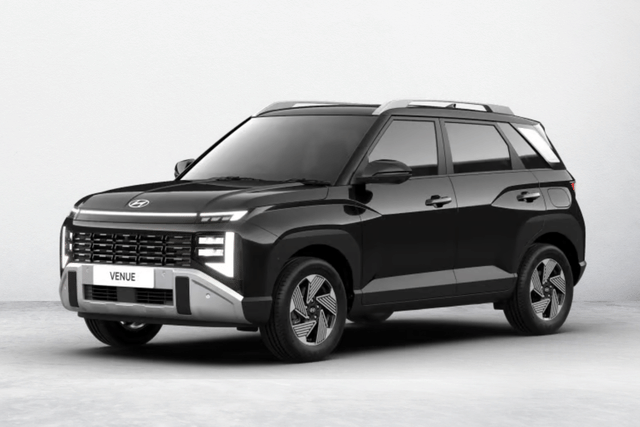
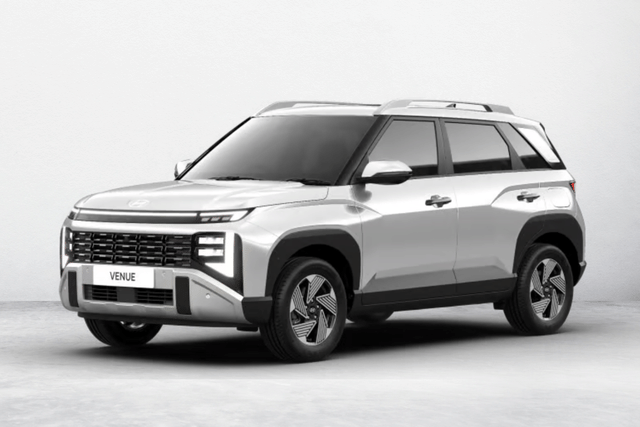
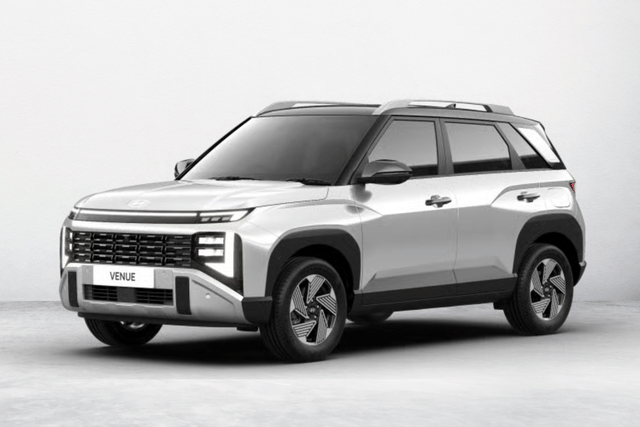
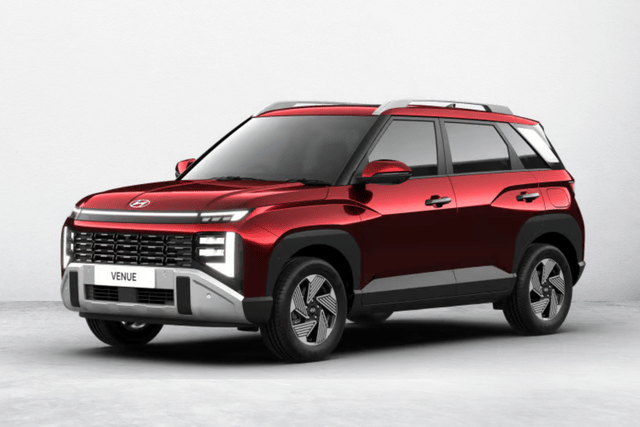
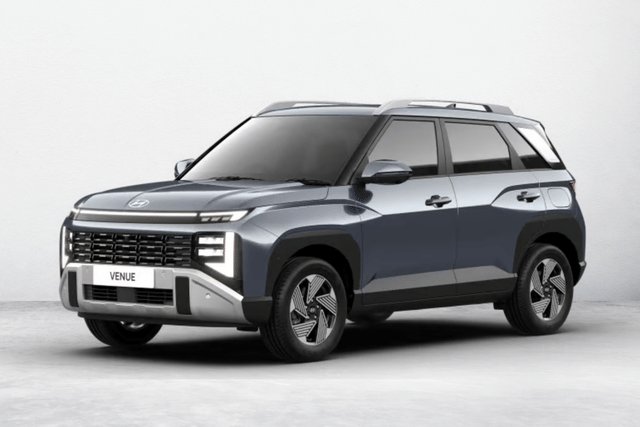
The Hyundai Venue colours include Abyss Black, Atlas White, Atlas White With Abyss Black Roof, Dragon Red, Hazel Blue, Hazel Blue With Abyss Black Roof, Mystic Sapphire, Titan Grey. See the Hyundai Venue in different exterior shades below.
Hyundai Venue FAQs
No, Hyundai Venue is a 5 seater.
New Hyundai Venue has a 5-speed, a 6-speed MT and a 7-speed DCT gearbox options with the petrol engine. Meanwhile, the diesel gets a 6-speed MT or a 6-speed AT gearbox option.
There are 6 airbags available in all the variants of Hyundai Venue.
No, the New Hyundai Venue is not available in CNG, it is available in petrol and diesel engines.
No, the Hyundai Venue offers a sunroof only in the mid to top variants.
Yes, the Hyundai Venue is a good choice for long drives and highway use as the turbo petrol and diesel variants offer good cruising ability, stability at high speeds, and features like cruise control and reclining rear seats, making it comfortable for long drives.
The ADAS features available in the new Hyundai Venue are of Level 2 proficiency in the top-spec HX10 variant.
No, the Venue 2026 comes with a single-pane sunroof in mid to top variants.
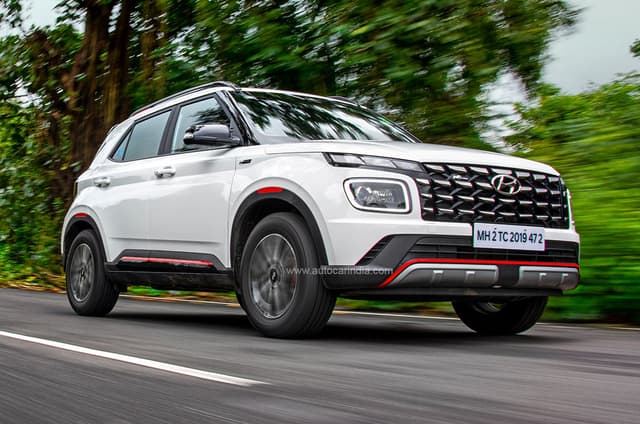
The Hyundai Venue N-Line sits above the standard Venue top model in the line-up.
The Hyundai Venue 2025 gets 1.2-litre NA petrol, a 1.0-litre turbo petrol and a 1.5-litre turbo diesel engine.
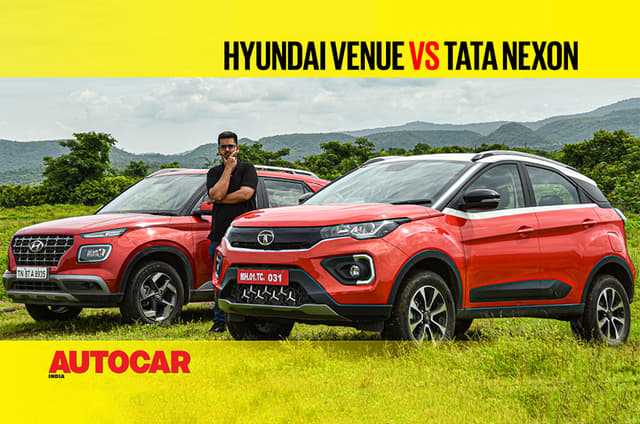
The Venue and the Nexon are similar in length, but differ in other dimensions.
Unlike the Creta EV, the Hyundai Venue 2026 does not get an EV option.
The Hyundai Venue base model mileage for the 1.2-litre NA petrol is 18.05kpl.
Hyundai Venue 1.0 turbo petrol mileage is 18.74kpl for the manual and 20kpl for the DCT.
Hyundai claims 20.99kpl for the diesel manual, while the diesel-automatic returns 17.9kpl.
The Hyundai Venue price in India starts at ₹8.00 lakh and goes up to ₹15.65 lakh, ex-showroom.
The base-spec HX2 1.2 Petrol MT Hyundai Venue price is ₹8.00 lakh, ex-showroom.
The HX5 Knight Edition 1.5 Diesel MT Hyundai Venue price is ₹11.12 lakh, ex-showroom.
The top-spec HX10 1.5 Diesel AT Hyundai Venue price is ₹15.65 lakh, ex-showroom.
Questions you may find useful
AB
•1dI want to buy a car between 13-14 lakhs, and my requirement is an automatic car for 60-70% city drive. I need good reliability as it’s gonna be used by the family too, and need a decent to good fuel economy car. But, I ain’t able to decide which car to go for, I need a suggestion (Except Tata, Mahindra and Maruti). Also tried Amaze 3g too, but the rear seats are not comfortable for the passengers.

Autocar India
Consider the Hyundai Venue DCT; its size makes it easy to drive in the city, Hyundai has a solid reputation for reliability and service, and efficiency is decent for the segment. It sits higher than the Amaze you tried, so getting in and out is easier, and the seats are comfortable for two adults. The narrow width means seating three abreast in the rear is a bit of a squeeze.Hyundai’s service reach and parts availability are big advantages for family use. Ride comfort is well judged for bad roads, and the cabin feels airy and easy to live with.One catch: the DCT can hesitate at times, but for normal city use, it will be fine. The Skoda Kylaq has a smoother torque-converter automatic, but the back seat isn’t as roomy as the Venue’s.If you want a more spacious cabin, the Kia Syros is an excellent alternative. It has the same turbo-petrol DCT combination as the Venue, but the cabin is significantly roomier. Kia also has an excellent reputation for after-sales service, so that shouldn’t be a concern.
Rana
•1dI am confused between the Hyundai Venue HX5 Turbo MT and the Skoda Kylaq Signature Plus MT as my first car. This will primarily be a family car. My monthly running will be around 300-1,000 km in the Delhi NCR region. Please advise which one would be the better choice. Alternatively, should I consider the Kylaq Signature MT with dealership-installed accessories such as a 10-inch infotainment system and rear-view camera?

Autocar India
The Hyundai Venue HX5 Turbo MT will be our pick on account. The steering is lighter, clutch and manual gearbox feel smoother, and its backseat too is a bit more spacious than the Skoda Kylaq. If you're usage is primarily within the city, the Venue will be slightly easier to live with. However, if you drive on highways more often, the Kylaq feels more planted and more confident than the Hyundai. Additionally, the Kylaq's boot is also a bit better shaped, hence you can pack in some more luggage, useful during long drives or airport runs.As far as price goes, the Venue HX5 will be relatively more affordable than the Kylaq Signature Plus, while packing in similar (if not more) equipment. Hence, it comes across as better value.Overall, if you want an easy-to-drive, value-for-money pick, get the Venue. But if you drive on the highways regularly, you will enjoy driving the Kylaq, so be prepared to pay the premium it commands.
Shyam S
•1dI am planning to buy a car primarily for city use. I was considering the Hyundai Venue DCT and the Mahindra XUV 3XO AT, both petrol. However, I have now seen the XUV 3XO EV and am seriously considering it. Please suggest.

Autocar India
Pick the Mahindra XUV 3XO EV for city use, as long as you have a fixed parking spot where you can install a home charger. In traffic, it is smoother and quieter than the petrol alternatives, costs far less per kilometre to run, and the range is easily enough for daily commutes with the AC on. One-pedal driving also makes stop-and-go traffic less tiring.The catch is charging. If you can’t install a home charger, then public charging will cost a lot more, and the savings will take much longer to add up. Also, if you often do long highway trips, an EV requires more planning, with stops revolving around charging stations. For pure city use, though, an electric car is much smoother and less tiring to drive than a petrol automatic.If charging feels like a hassle, then go for the Mahindra XUV 3XO AT over the Hyundai Venue DCT. The Mahindra’s automatic feels calmer at low speeds, and the car rides rough patches better, which matters in our cities. The Venue DCT is still nice to drive and compact to park, but in heavy traffic, the DCT can feel a bit hesitant.So, if home charging is sorted and your usage is mostly in the city, pick the XUV 3XO EV. If not, pick the XUV 3XO AT.
Pragati agrawal
•2dI'm looking to buy my first car, and my primary usage will be in the city. My budget is a maximum of Rs. 16 lakh. I'm confused between the Venue HX 6 DCT, Kylaq Signature Plus AT, and the Mahindra 3XO. Can you suggest which one would be the best in terms of performance, features, and price?
Autocar India
The XUV 3XO offers the best balance of performance, features, cabin space and value. Its torque converter automatic is smoother and better suited to daily city traffic than the Venue's DCT, while the wider cabin and more accommodating rear seat make it a more family friendly option. The only notable drawback is that boot space is not as generous as some rivals.The Skoda Kylaq Signature Plus AT comes next. It is the most enjoyable to drive, with excellent ride and handling balance, and its torque converter automatic is well suited to urban conditions. However, it is not as spacious as the XUV 3XO and does not offer the same level of equipment for the price.The Hyundai Venue HX6 DCT is the easiest car to own thanks to Hyundai's extensive service network and strong feature list. However the DCT gearbox would not be the preferred choice for a buyer spending most of their time in heavy city traffic.
MJ
•2dI am planning to buy a car. My maximum budget is 12 lakhs. I will use the car occasionally for family purposes, with monthly usage between 200 and 1,000 km. It’s my first time buying a car. By researching online, I have selected the Mahindra 3XO AX5 MT and Venue HX 5 +(1.0L Turbo Petrol MT). Are there any more options? Which one should I buy?

Autocar India
The Hyundai Venue HX 5+ 1.0 Turbo Petrol MT would be the first recommendation. It is easy to drive, has a well-sorted turbo-petrol engine, a strong service network and a proven ownership experience. For a first-time buyer, Hyundai's wider and more consistent aftersales support is a significant advantage. It is also easier to live with on a daily basis than some rivals.The Mahindra XUV 3XO AX5 MT would be the second choice. It offers stronger performance, a wider cabin and feels more substantial on the road. However, its boot space is relatively small for family travel, which could become a limitation on occasional holiday trips with luggage. While Mahindra's service network has improved considerably, Hyundai still enjoys an edge in reach and consistency.One other option worth considering is the Maruti Suzuki Brezza Manual. Its naturally aspirated petrol engine may not feel as punchy or exciting as the turbocharged Venue or 3XO, and it is not as feature-rich either. However, for a first-time buyer, it remains one of the easiest SUVs to drive. The clutch is light, the gearbox is slick and progressive, and the ownership experience is among the most stress-free in the segment.
Kumar
•3dI'm planning to purchase a car, but I'm confused between the Kylaq AT, Venue DCT, and i20 N Line DCT. My primary usage will be mostly city driving.

Autocar India
Pick the Hyundai Venue DCT. For mostly city use, it is simply the easiest to live with: compact dimensions for easy parking, a high seating position for better view in traffic, and enough ground clearance to glide over bad patches and tall speed breakers without worrying. Its turbo engine with the automatic feels quick enough to exploit gaps in traffic, and the steering is light, so long commutes will be less tiring. Do note, though, the Venue DCT's can feel a touch hesitant at low speeds, and the city mileage is just okay, as is the case with the others, because it's a small capacity turbo engine.The Hyundai i20 N Line DCT is more fun to drive, but its firmer suspension and lower stance make it less friendly on rough roads and speed bumps, and you're sitting lower, so you won't get as good a view out.The Skoda Kylaq AT has the smoothest gearbox for bumper-to-bumper and feels more at home on the highway, but it isn't as premium or spacious on the inside as the Venue.
Saransh Parnami
•4dI am confused between the Nexon, XUV 3XO, and Venue as my first car. My running is expected to be 1,000-1,200 km per month. My priorities are: 1) Performance, 2) Mileage and ownership cost, 3) Features, and 4) Rear-seat and boot space. Please advise and suggest the best-value variant as well. I am inclined towards a manual.

Autocar India
Our first recommendation would be the new Venue Turbo Petrol Manual. It strikes the best balance for your priorities. The turbo petrol engine is punchy and enjoyable to drive, fuel efficiency is respectable, and Hyundai's ownership experience is generally hassle-free. The latest Hyundai Venue is also more spacious than before, particularly in the rear seat, and feels like a very well-rounded first car. For value, we would look at the SX Turbo Manual, which gets a good mix of features without stretching the budget too much.Our second choice would be the Mahindra XUV 3XO. If outright performance and rear seat space are your priorities, it is arguably the strongest car here. The turbo petrol engine is lively, the rear bench is among the widest in the segment, and it feels more substantial than the Venue. The downside is that fuel efficiency is not as strong, and the boot is one of the smallest in the class. The MX2 Pro or AX5 Manual would be the variants to consider, depending on your budget.The Tata Nexon would be our third choice. It remains a good all-round package with decent space, a strong feature list and good road presence. However, compared to the newer Venue and 3XO, it does not feel quite as polished, and neither the driving experience nor the ownership proposition is as compelling.
Hari
•5dI am planning to purchase an automatic car with a budget of around Rs. 15 lakh, although I can stretch it slightly if needed. My priorities are excellent long-term reliability with minimal maintenance issues, strong safety standards without compromising on build quality, good resale value after 6-8 years, as I may upgrade later. A usage pattern that consists of approximately 50% city driving and 50% four-lane highway driving. Considering the current Indian market, which automatic car would you recommend? I would appreciate your suggestions based on reliability, safety, driving comfort, fuel efficiency, and resale value.

Autocar India
Pick the Honda City automatic. Over 6-8 years, it simply causes the least drama, holds value well, and its smooth automatic makes daily traffic easy while cruising quietly at highway speeds.For your 50-50 city and four-lane use, a sedan actually rides and tracks better than most small SUVs. The City is roomy, has a supportive back seat, and its engine-gearbox combo is relaxed and efficient - expect roughly 12kpl in town and 16kpl on highways. Honda’s reliability record and nationwide service mean low, predictable running costs, and resale after 6-8 years will be good. Safety is solid with a robust structure and a good spread of active and passive kit. It is not the newest 5-star poster child, but it feels secure at speed and the basics are well covered.One thing to be aware of: ground clearance is sedan-typical, so huge speed breakers taken fast will need care, and you may stretch above your Rs. 15 lakh budget. If that’s manageable, the City automatic is the most stress-free, future-proof choice for what you want.If you want to stay within your budget, opt for the Hyundai Venue 1.0 litre turbo AT, the compact SUV will also meet your criteria of reliability, good service, good resale value and safety with the new car scoring a 5-star rating in the Bharat NCAP tests.
Gautam
•5dHello, I am planning to purchase a sub-compact SUV and have shortlisted the Hyundai Venue Turbo DCT. I am concerned about the impact of the future rollout of higher ethanol blends on a turbo-petrol engine. I am wondering if I should consider an SUV with a naturally aspirated (NA) engine instead, and whether it would handle higher ethanol blends any better in the future.

Autocar India
As things stand today, both naturally aspirated and turbo petrol engines sold by major manufacturers are designed to be E20 compatible. There is no evidence to suggest that a modern turbo petrol engine will suddenly become unsuitable while an E20-compliant naturally aspirated engine remains unaffected. If India eventually moves to much higher blends, manufacturers will likely need to make hardware and calibration changes across the board, regardless of whether the engine is turbocharged or naturally aspirated.In fact, if you are choosing between a Venue Turbo DCT and an equivalent naturally aspirated rival, we would make the decision based on the way the car drives rather than on future fuel policy. The 1.0 turbo petrol offers better performance and flexibility than most naturally aspirated engines in the segment, especially on highways and during overtakes.So our advice would be simple: buy the Venue Turbo DCT if it suits your needs today. We do not see the turbocharged engine as carrying any meaningful additional risk from potential future ethanol-blend increases compared to a modern naturally aspirated petrol engine.
Manav Deep Kapoor
•6dHi, my budget is Rs 15-16 lakh maximum. I drive around 3,000-3,500 km per month, of which roughly 2,000 km is on highways, and the remaining 1,000-1,500 km is in the city. I am looking for a low-cost, high-value-for-money car. I have no issues with diesel. I need comfort, good power, strong torque, and decent ground clearance.

Autocar India
Buy the Mahindra XUV 3XO diesel. With your 2,000 km of highway every month, its strong diesel torque keeps overtaking easy and cruising relaxed, and it’s one of the few that still gives you real value under Rs. 16 lakh.It rides comfortably on broken roads and speed breakers, has proper ground clearance, and feels secure at highway speeds. The diesel’s running costs will stay low at your mileage, and Mahindra’s pricing of the mid trims means you don’t have to stretch for the useful bits like cruise control and six airbags. One thing you will have to live with is that the boot is smaller than most rivals, so fitting two large suitcases can be a squeeze.If you absolutely want an automatic for your 1,000 to 1,500 km of monthly city driving, options like the Kia Sonet, Kia Syros and Hyundai Venue offer smooth torque converter automatics in this price range and are very easy to live with in traffic. However, if fuel efficiency is a priority, we would suggest sticking to a manual, as it will be both more efficient and more affordable.If you’re fine with a manual, the XUV 3XO diesel is the sweet spot for torque, comfort, ground clearance and low running costs.