
With over 7,00,000 units sold in India since its launch in 2019, the Hyundai Venue is a success by any measure – except, however, when you compare it to its over-achieving big brother. The Creta routinely manages twice the volumes, demolishing its rivals along the way. The Venue hasn’t been able to replicate that dominance in the sub-4-metre space, with Tata Motors, Maruti Suzuki and even Mahindra now grabbing bigger slices of the pie, but Hyundai has decided that ends now. The fightback starts with the all-new, second-generation Venue – the first model to roll out of the brand-new Talegaon plant, and central to Hyundai’s growth strategy. Does it have what it takes to rule the compact SUV space? We drove three variants – turbo-petrol manual, N Line and diesel automatic – in Goa to find out.
New Hyundai Venue design and engineering: 8/10
Well-proportioned, squared-off design; new platform adds OTA capability too.
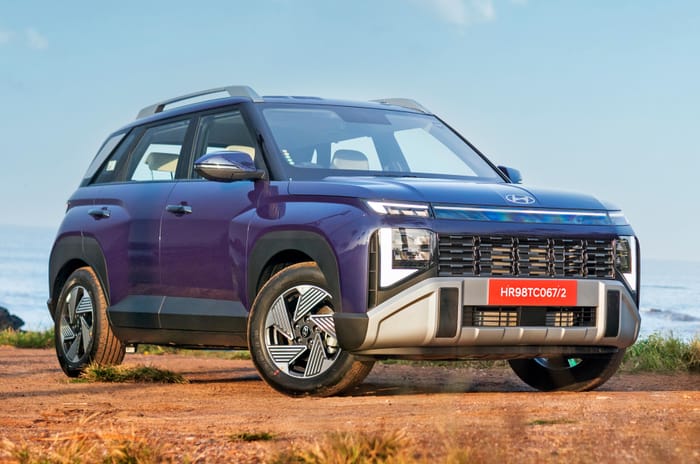
Underpinning the new Venue is the global K1 platform shared with the Kia Syros. It’s more rigid than the previous K2 platform, using ultra high-strength steel in key areas. And while it hasn't yet been crash tested, the Syros’ 5-star Bharat NCAP safety rating bodes well. It’s also slightly larger than before – 30mm wider, 48mm taller and has a 20mm longer wheelbase – but overall length stays within the sub-4 metre bracket for those all-important tax breaks. The new platform also makes the Venue a software-defined vehicle (SDV) that can receive over-the-air updates to roll out new features, diagnose issues and fix bugs well into its lifecycle. This then is no lipstick job – it’s an all-new second generation, with styling that drives home that fact.
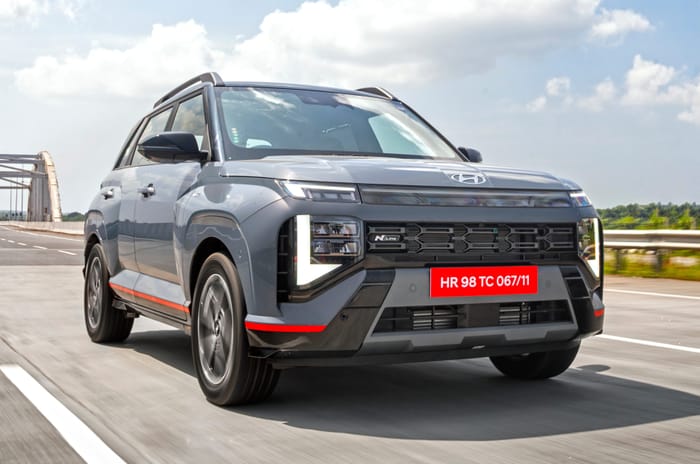
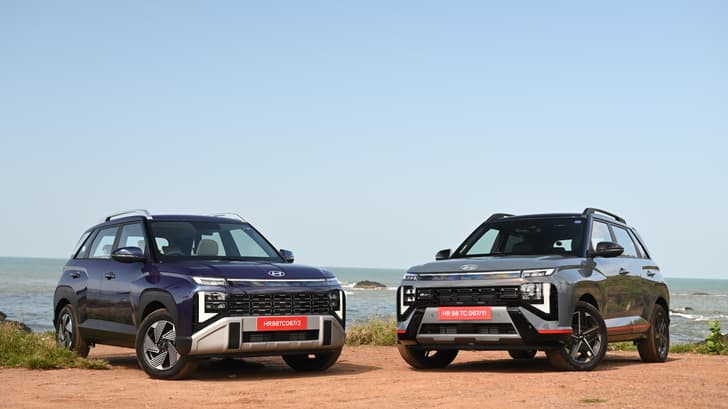
Admittedly, the first set of pictures released did not do the design justice, but it is quite the handsome thing in person. Hyundai has once again nailed the proportions, avoiding the undertyred look some rivals suffer from. There is also a much greater visual differentiation between the standard Venue and the N Line. Save for the red trim and dual tip exhaust, the earlier N Line was pretty close to the standard car, but the new N Line is much more in your face – and all the better for it.
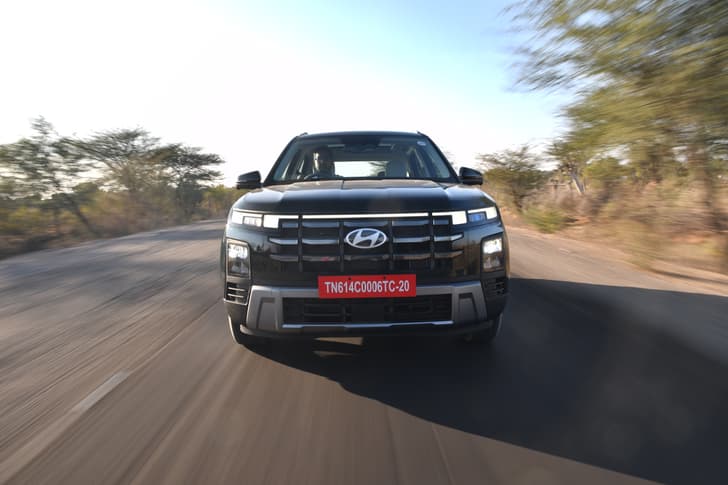
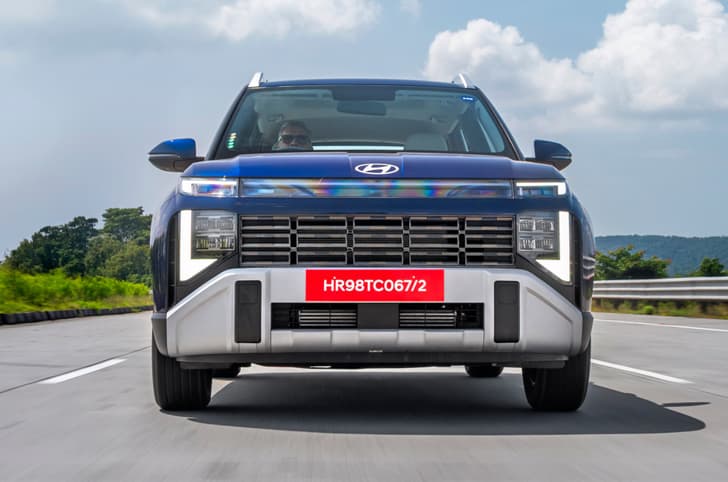
The front end has hints of the Creta, Exter and even the Palisade. A customary LED light bar is present but now augmented by thick L-shaped units flanking quad-beam LED headlights. The bumper is made up of a grille with rectangular elements and a chunky silver skid-plate-like element lower down providing visual heft. The N Line replaces this with a narrower grille and a more angular lower section with red accents.
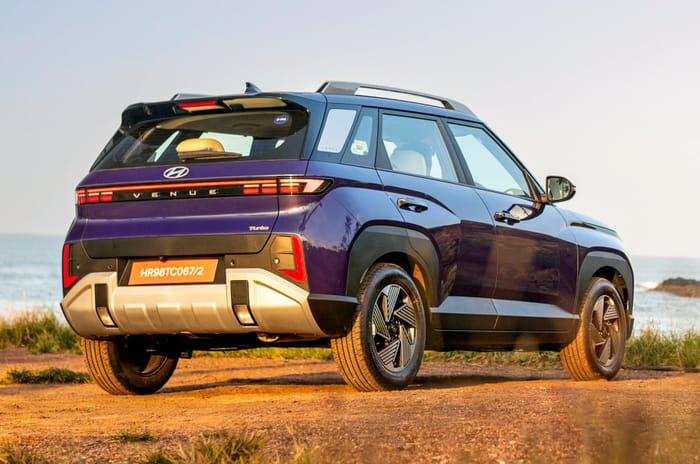
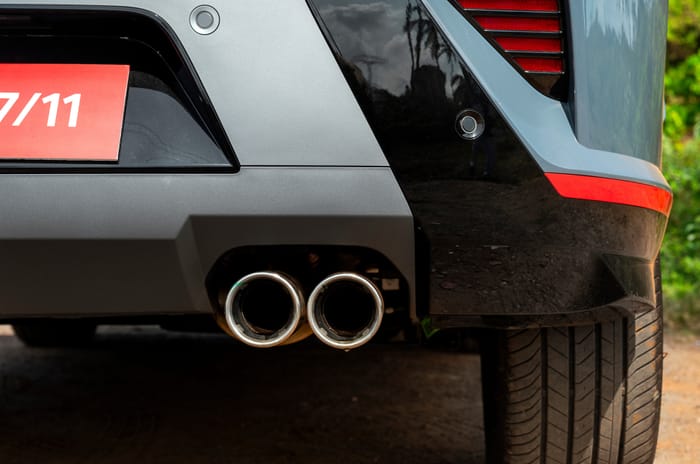
The side profile is defined by sharp creases, flared fenders and a new quarter glass on the C-pillar. Squared-off plastic wheel-arch surrounds house 16-inch wheels, while the N Line gets stunning 17’s and red brake calipers. The matte black plastic cladding around the wheel arches and on the doors are replaced with body-coloured items with an extended gloss black side skirt below; a red stripe separates the two. This theme continues at the back, with the regular car getting a more SUV-like silver bumper, while the N Line has a more angular rear end with dual-tip exhausts and a rather exaggerated dual-ridge spoiler. Build quality and paint finish is also good, however the doors did require a couple of tries to shut properly. Overall, the styling is quite edgy, and while it might not be to everyone’s taste, it does a good job of standing out in a crowded segment.
New Hyundai Venue interior space and comfort: 8/10
It’s a premium-feeling cabin, but competitors still have the advantage on space.
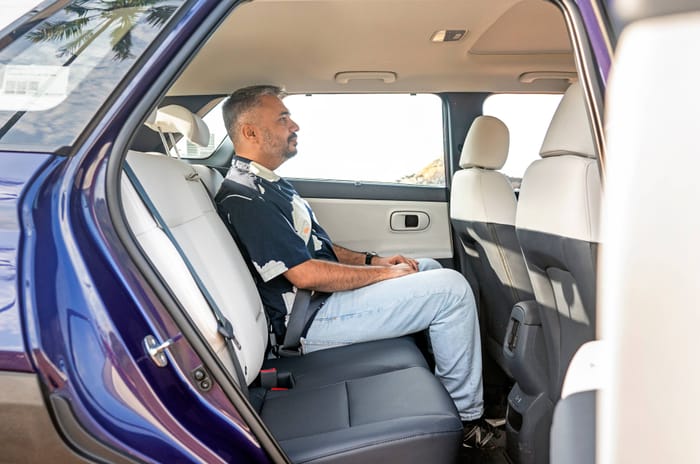
Interior volume has also benefitted from the new platform’s larger dimensions. The rear seat now has more knee room thanks to the 20mm longer wheelbase and scooped-out front seat backs, although thigh support could be better. There is also a tad more shoulder room, but seating three abreast is still a squeeze. On the plus side, rear passengers can still recline the seat and now get sunshades. Cargo capacity has also grown from 350 to 375 litres, but it’s really the front seat experience that’s the most improved.
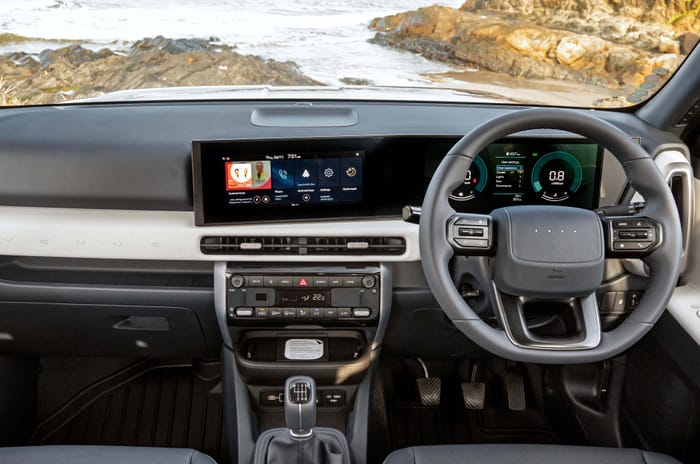
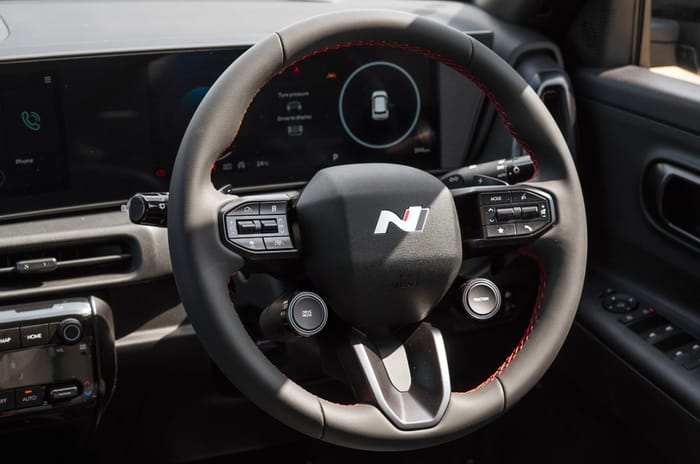
The overall design is cleaner and more modern than before. Vertical AC vents at both ends joined by a slab of white stretching across the dash form a sort of H-shape. The infotainment screen and digital instruments are neatly integrated into a curved display. A new steering wheel also debuts with four dots (Morse code for H) replacing the traditional Hyundai logo, as seen on the Ioniq 5. The centre console on automatic versions has what Hyundai calls a coffee-table design bordered by a strip of ambient lighting. While most of what I mentioned is hard plastic, it is well finished with some nice detailing. The dual-tone treatment is also excellent, with blue leatherette on the seat bases and white on the backs, which enhance the cabin’s airiness.
The N Line, on the other hand, has a more sinister ambience with an all-black cabin and flashes of red. The highlight is the N-specific steering wheel similar to the one in the Ioniq 5 N. It puts the N logo front and centre and even has pods for the drive and traction mode buttons. The rest of the layout is shared between the two versions with plenty of storage space and thoughtful touches around the cabin. While rivals like the Syros and Nexon do offer more interior space, the Venue scores points on look and feel.
New Hyundai Venue features and safety: 9/10
Strong on features and the dual 12.3-inch screens are slick.
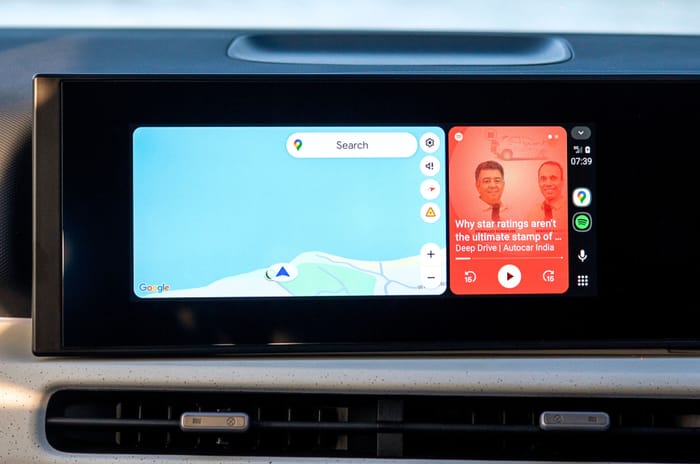
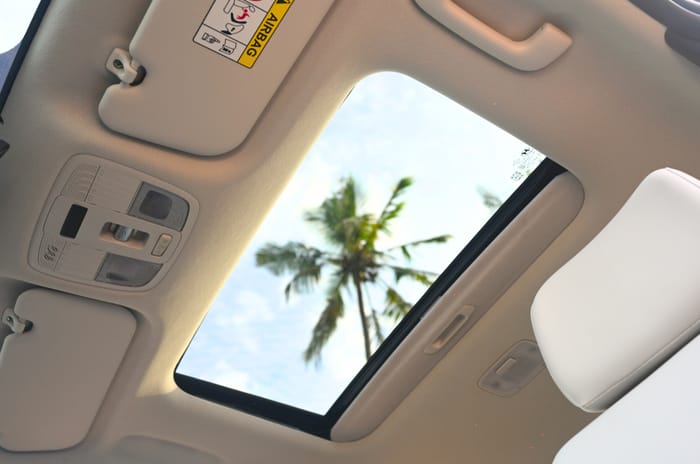
The biggest talking point is the dual 12.3-inch screens for the infotainment and digital driver’s display – larger in size than even the Creta’s and on par with the Syros. It’s not just the size though; the infotainment screen is powered by the latest NVIDIA tech making it as snappy and responsive as a decent smartphone. Its resolution is also really sharp, best showcased by the 360-degree camera setup that takes over the whole screen for a full wide view. Graphics and the UI for both screens have also been overhauled with a minimalist aesthetic, while remaining legible and easy to use with some customisation possible. Other niceties include ventilated front seats, a wireless charger, smart key with push-button start, an 8-speaker Bose audio system and a sunroof – though not panoramic.
Additionally, the Venue now gets Hyundai’s SmartSense Level 2 ADAS instead of the Level 1 system on the last-gen. It has a total of 16 features like Forward Collision Avoidance, Lane Following Assist and Smart Cruise Control with stop-and-go functionality, while the N Line exclusively adds five more, including Rear Cross Traffic Avoidance Assist and Blind Spot Avoidance Assist. Safety kit is also comprehensive with six airbags, ABS, ESC, VSM and ISOFIX mounts available from the base HX2 trim onwards, while HX4 adds tyre pressure monitoring, a rear defogger and a rear camera.
While it hasn’t yet been tested, Hyundai says they expect a 5-star Bharat NCAP safety rating given the K1 platform’s additional rigidity. The Kia Syros based on the same platform scored 30.21 out of 32 for adult occupant protection and 44.42 out of 49 for child occupant protection, earning it 5 stars from BNCAP.
New Hyundai Venue performance and refinement: 8/10
Powertrain line-up remains strong, and the diesel automatic is a welcome addition.
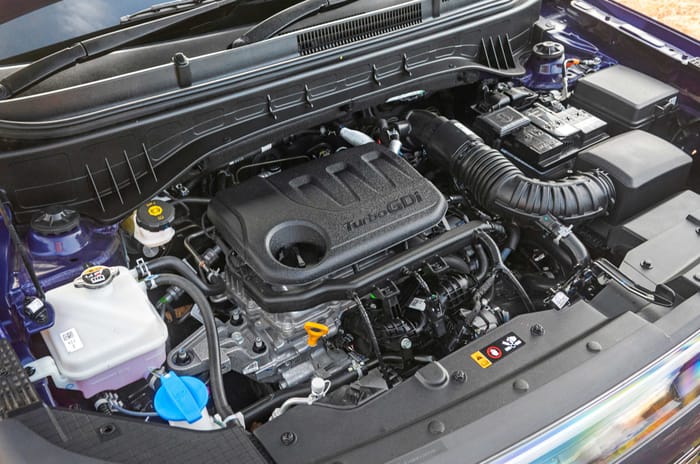
Where the Venue remains unchanged is under the bonnet. The base engine is the naturally aspirated 1.2-litre, 4-cylinder producing 83hp and 115Nm, mated to a 5-speed manual. A step up from that is the 1-litre, 3-cylinder turbo-petrol with 120hp and 172Nm, mated to a 6-speed manual or a 7-speed dual-clutch automatic. The diesel alternative is a turbocharged 1.5-litre, 4-cylinder making 116hp and 250Nm that can now be paired with a 6-speed torque converter automatic in addition to the standard 6-speed manual. For this review, we sampled the turbo-petrol manual, the N Line turbo-petrol DCT and the diesel automatic.
The most enthusiastic of the lot is the turbo-petrol – no wonder it’s the only option on the N Line. There is a hint of turbo lag initially, but post 2,000rpm it delivers strong performance. It’s relatively refined too, with the typical three-cylinder thrum appearing only higher in the rev range. The N Line’s muffler adds a bit more burble to the experience, although the windows need to be down to really hear it. Both the manual and DCT are well matched to this engine, but the DCT has the added advantage of switchable drive modes that can sharpen or dull the throttle response as desired. Clutch and shift action on the manual are reasonably well judged too, although the DCT is the more convenient option. Its shifts aren’t as snappy as the best dual clutches out there – dulled to improve clutch longevity – but it's mostly smooth, with occasional jerkiness at crawling speeds and when downshifting.
While diesels aren’t as popular in this segment when compared to midsize SUVs, offering one paired with a torque converter positions the Venue as a more premium offering compared to the AMTs on the Nexon and XUV 3XO. The 6-speed torque converter is as smooth as you’d expect and pairs well with the rather refined diesel. In fact, you can barely tell it’s an oil burner at all under 2,000rpm. Push harder though and it becomes more and more obvious, running out of steam at about 3,500rpm and straining beyond that. Another let down is the dull initial throttle response, dulled further by the slushy auto – shifting to Sport helps slightly but not enough. These are minor criticisms, though; the diesel aces its role as an effortless mile-muncher, while the turbo-petrol is the obvious choice for those seeking performance.
New Hyundai Venue ride comfort and handling: 7/10
Ride comfort is better than before, but still not class-leading; N Line mechanically unchanged.
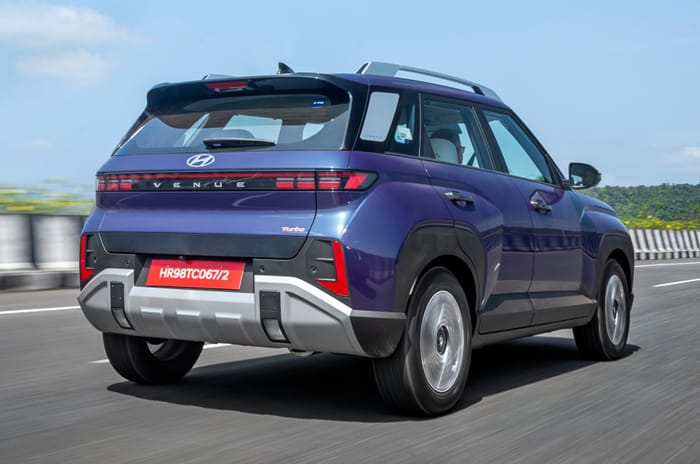
The new Venue is slightly more softly sprung than its predecessor with a noticeable improvement in low-speed bump absorption. However, the damping is still not totally sorted with an underlying firmness coming through. Come across a sudden pothole, or worse, a series of them, and the Venue will thud through. The ride also felt a tad too busy on the rippled concrete highways of Goa. Curiously, the diesel – perhaps due to its heavier weight – felt slightly more composed on the same surface. However, this difference would only be apparent when driven back-to-back with the petrol. While the Venue’s ride is not inherently uncomfortable, rivals like the Tata Nexon and Mahindra XUV 3XO do a better job of ironing out imperfections.
In the past, Hyundai has tweaked the suspension and steering of the N Line versions to make them sportier. This time around though, the Venue N Line runs exactly the same setup as the regular car with only a slight firmness coming from the larger 17-inch wheels. This, in my opinion, is a missed opportunity as firmer damping would have improved body control and provided more engagement through the twisties. As it stands, all versions of the Venue steer almost exactly the same, with a direct but light and somewhat lifeless steering. Sport mode adds some weight – but not enough – and the steering never really loads up at speed. We weren’t able to test its outright handling during our short drive and will reserve judgement on it until a full road test.
New Hyundai Venue mileage and fuel economy: 8/10
Petrol DCT is claimed to deliver 20kpl, while the diesel manual offers 20.99kpl.

The ARAI mileage figure for the 1.2-litre petrol engine is 18.05kpl, while the turbo manual and DCT better that, delivering 18.74kpl and 20kpl, respectively. The 1.5-litre diesel achieves 20.99kpl with the manual; however, this drops significantly to 17.9kpl with the optional automatic.
New Hyundai Venue price and verdict: 8/10
The top variants are expensive, but the Venue still makes a strong case for itself.

Despite the generation shift, it’s been priced keenly to start with – from Rs 7.89 lakh (ex-showroom). Move up the range though and prices climb sharply, reaching Rs 14.74 lakh for the turbo DCT, Rs 15.48 lakh for the top-spec N Line and Rs 15.69 lakh for the diesel automatic, putting it among the priciest in the segment.
This could well stop it from dethroning the Nexon and Brezza in this price-sensitive segment, but it still represents solid value for what it offers. The design is edgy and modern with plenty of wow factor in N Line guise, while the tech-laden cabin looks and feels genuinely premium. It’s not perfect but nothing in this segment is. At last, the new Venue is all grown up and ready to step out of its bigger brother’s shadow.
 Sergius Barretto
 Saumil Shah
 Soham Thakur
 Nikhil Bhatia