
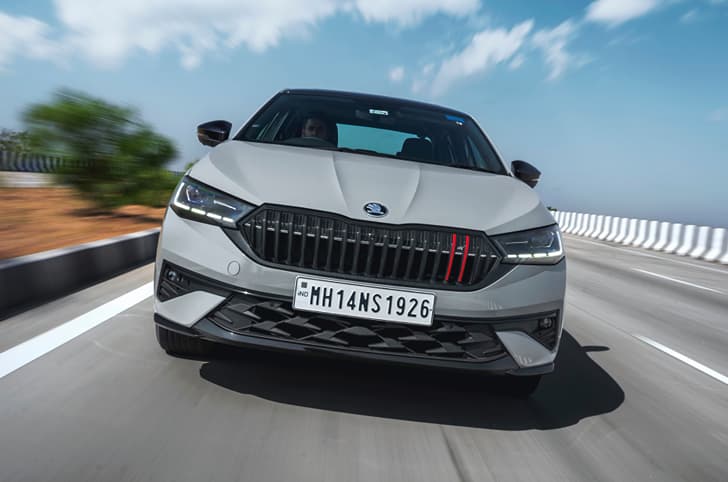
Skoda’s Slavia sedan has received its first major update since its introduction back in 2022. In order to keep it in touch with recently updated rivals like the Hyundai Verna and Honda City, the Slavia gets sharper styling, more equipment and even a significant mechanical change. Here’s what it’s like.
Skoda Slavia facelift exterior design and engineering
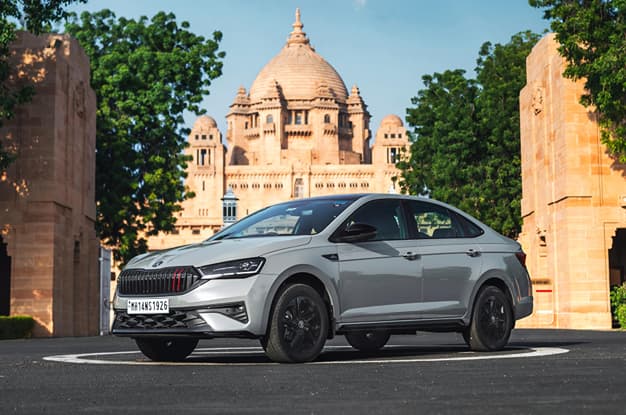
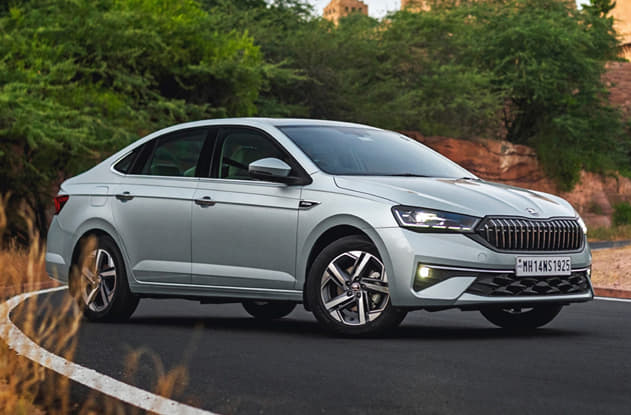
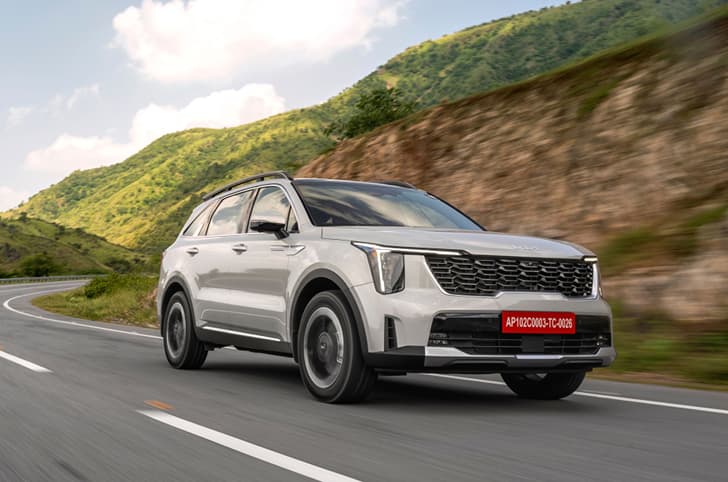
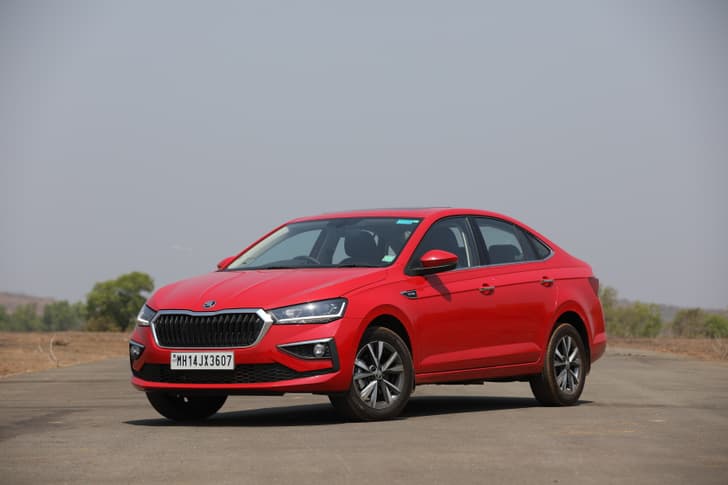
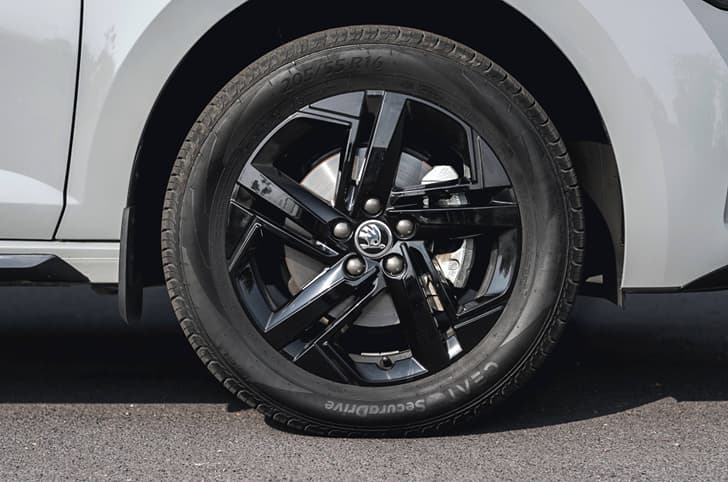
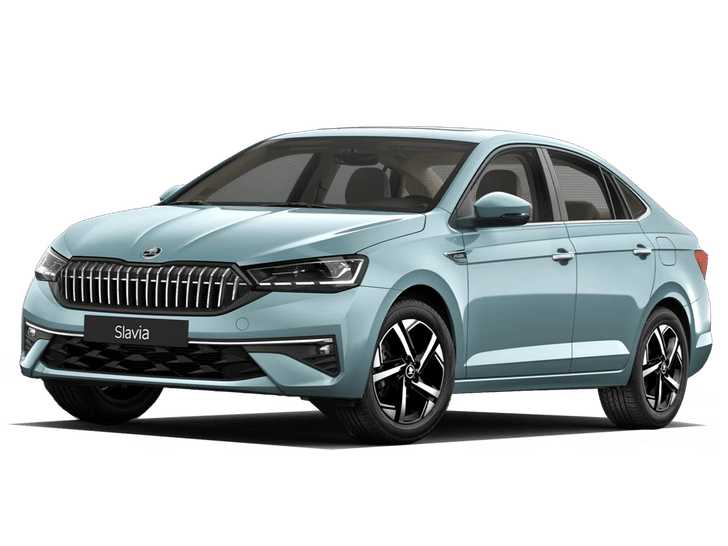
Being a facelift, the Slavia’s overall silhouette and proportions are unchanged, and that’s a good thing. Its design is clean and elegant rather than flashy, with crisp body lines, a long bonnet and a flowing roofline giving it a distinctly European appearance. The signature butterfly grille features new segmented chrome trim and sharp LED headlamps also get a new segmented LED DRL signature. The bumper is all new, featuring new LED fog lamps along with a reworked airdam. Along the sides, there’s a new design for the 16-inch alloys while the 179mm (unladen) ground clearance gives it a degree of SUV-like usability without making the sedan look too ungainly.
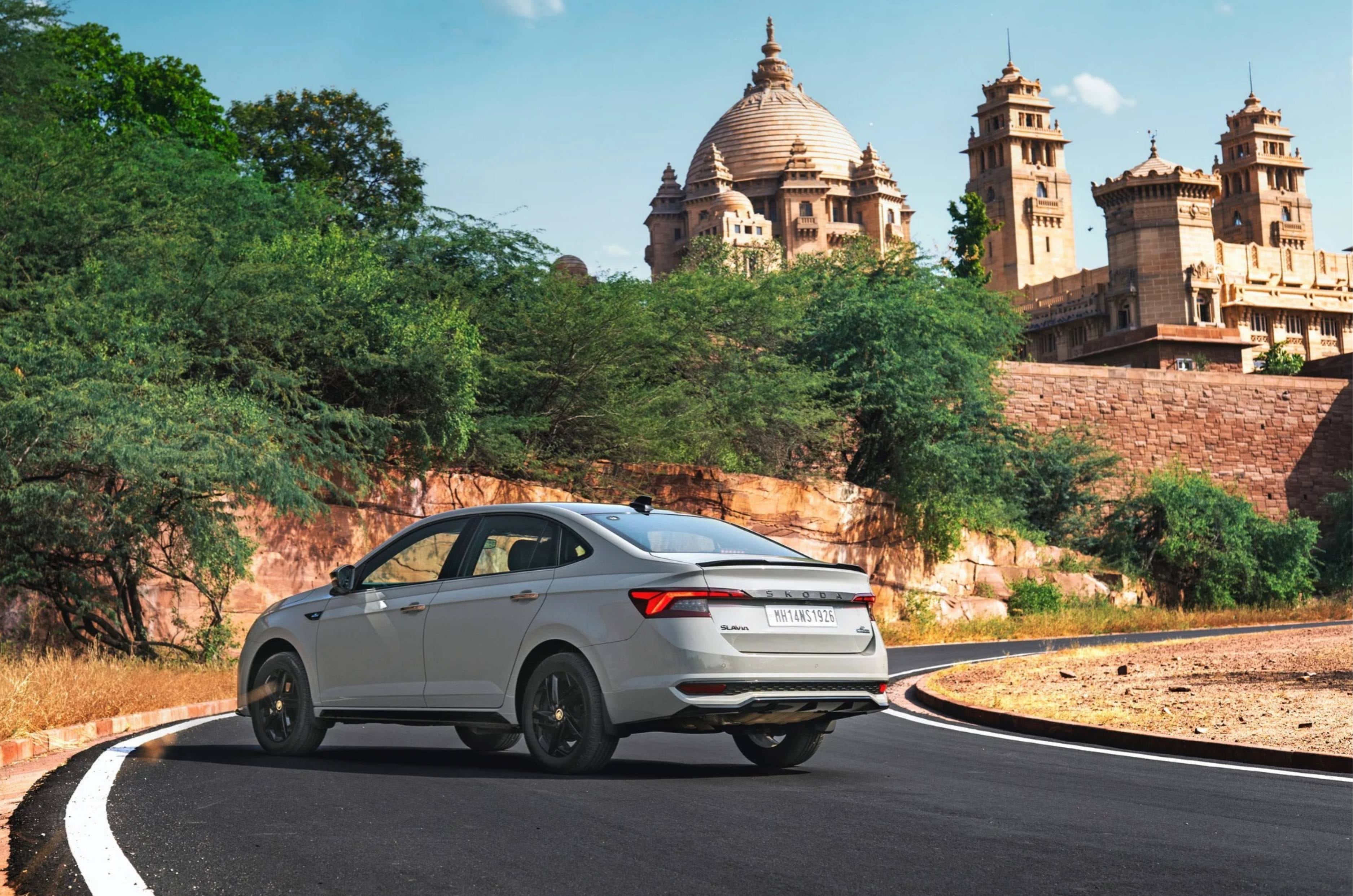
At the rear, it gets new sequential turn indicators and different LED elements in the tail lights. There’s a new trim piece connecting the tail-lights, with prominent ‘SKODA’ lettering, which gives the rear a cleaner, more contemporary look. As before, the Slavia is offered in a more luxurious Prestige trim, which brings chrome elements and a dual-tone finish for the alloys, and a sporty Monte Carlo trim that features blacked-out elements which include the grille, alloys, ORVMs, roof and bootlid spoiler. There’s also two new colours, Arctic Silver and Cappuccino Beige, which the former looking particularly tasteful.
Under the skin, the Slavia continues to use the MQB A0 IN platform, shared with the Kushaq and Volkswagen Virtus. This India-specific architecture allows the Slavia to retain its proper three-box sedan proportions while offering the ground clearance and practicality needed for Indian road conditions. Overall, the updates are evolutionary rather than revolutionary, but they do enough to keep the Slavia’s understated design looking fresh.
Skoda Slavia facelift interior space and comfort
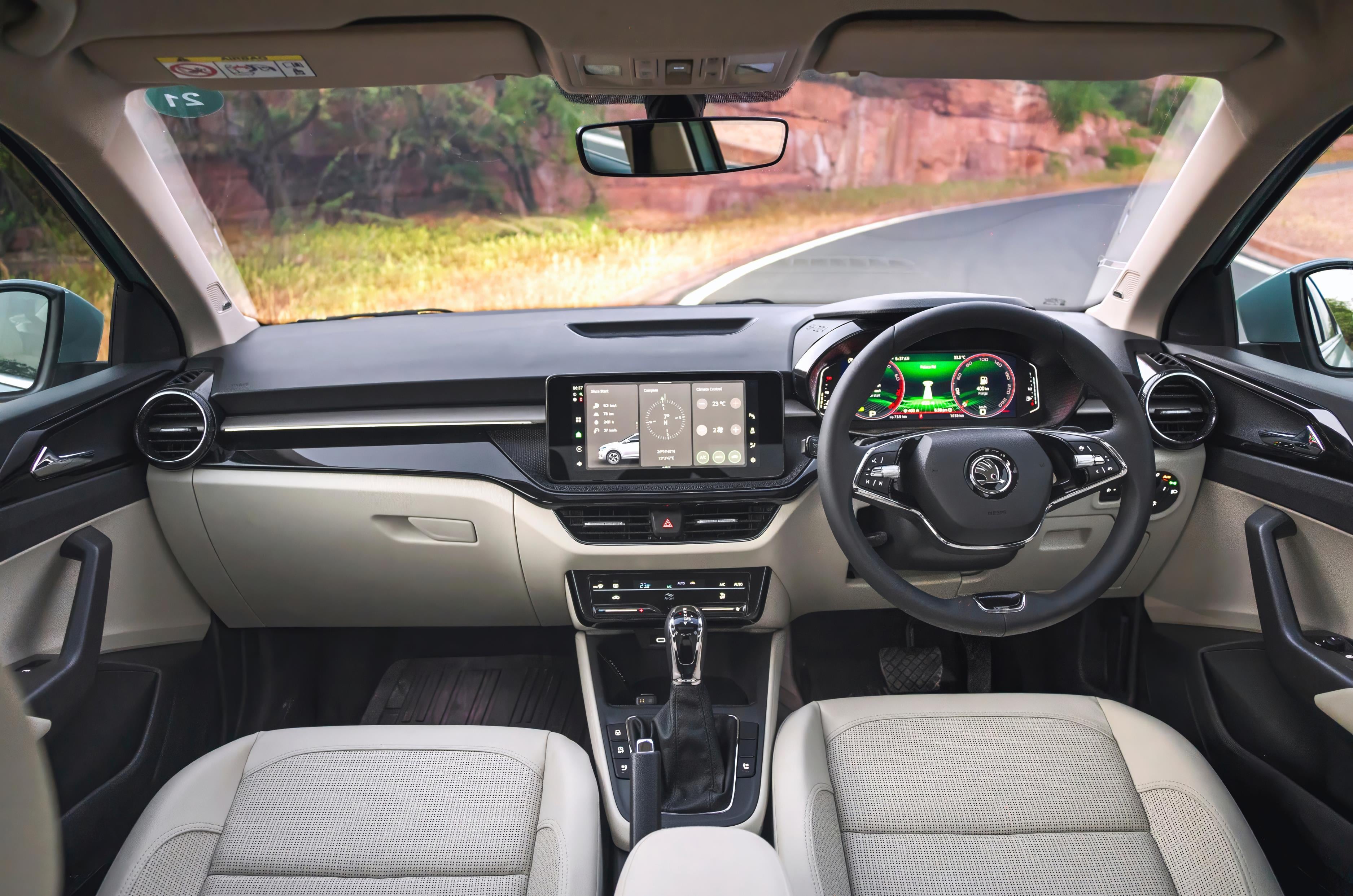
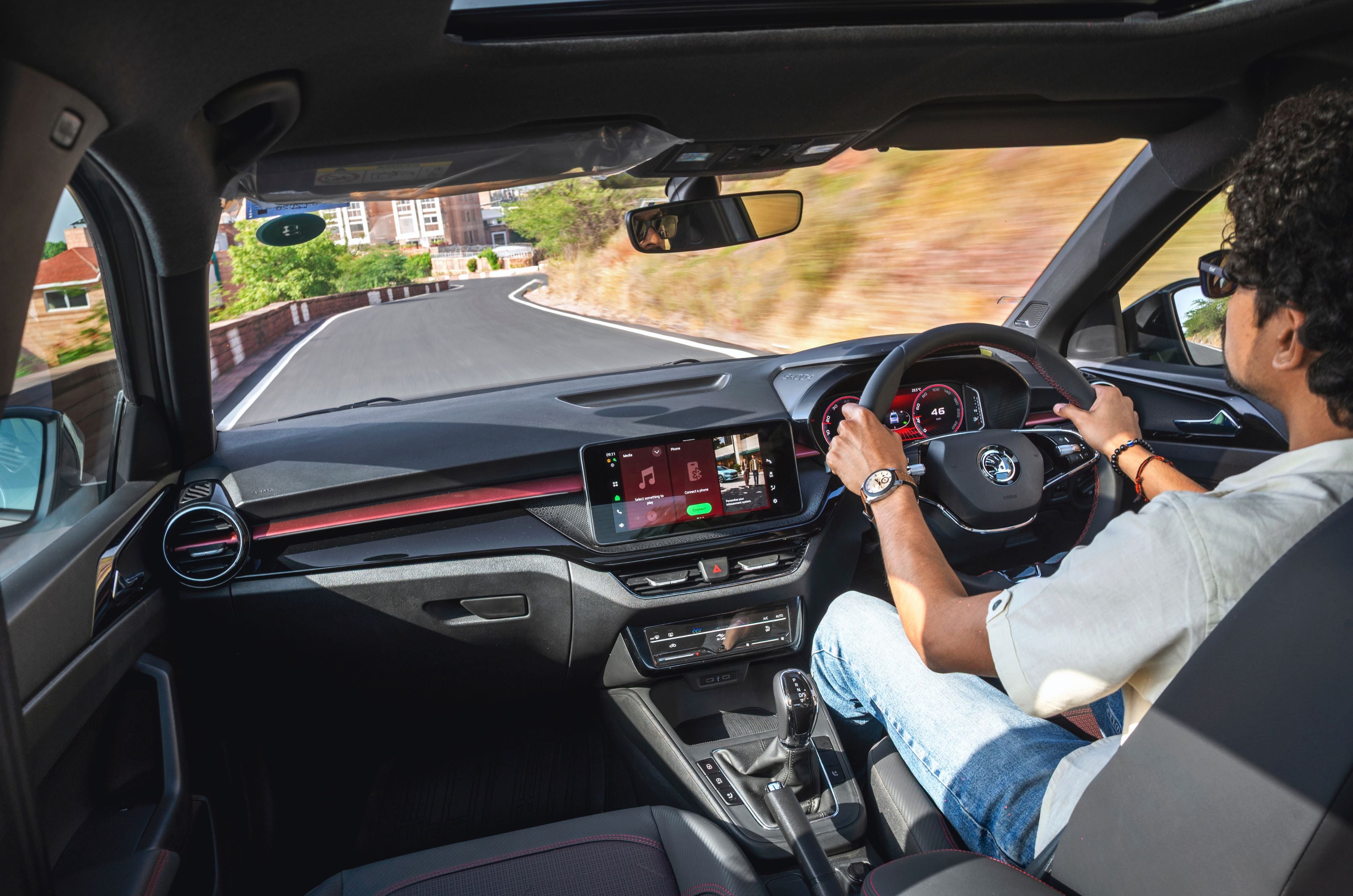
Step inside, and the door shuts with a reassuring thud and you’re greeted by the same layered dashboard. Like the exterior, the interior trim differs too depending on which trim you opt for. The more luxurious Prestige trim gets a beige and black upholstery with copper-coloured inserts on the dash, while the sporty Monte Carlo gets an all-black theme with contrasting red details on the dashboard, the stitching and the seat perforation. Build quality is solid overall, with a well put-together feel to the cabin. It’s also a practical space with plenty of storage spaces and the typical Skoda “Simply Clever” features like a ticket holder, coat hooks, phone pocket in the seatbacks and more.
The front seats are wide and supportive, with generous cushioning that makes the Slavia comfortable over long journeys, and finding your ideal driving position is easy too thanks to the electrically adjustable seats and reach/rake adjustment for the steering.
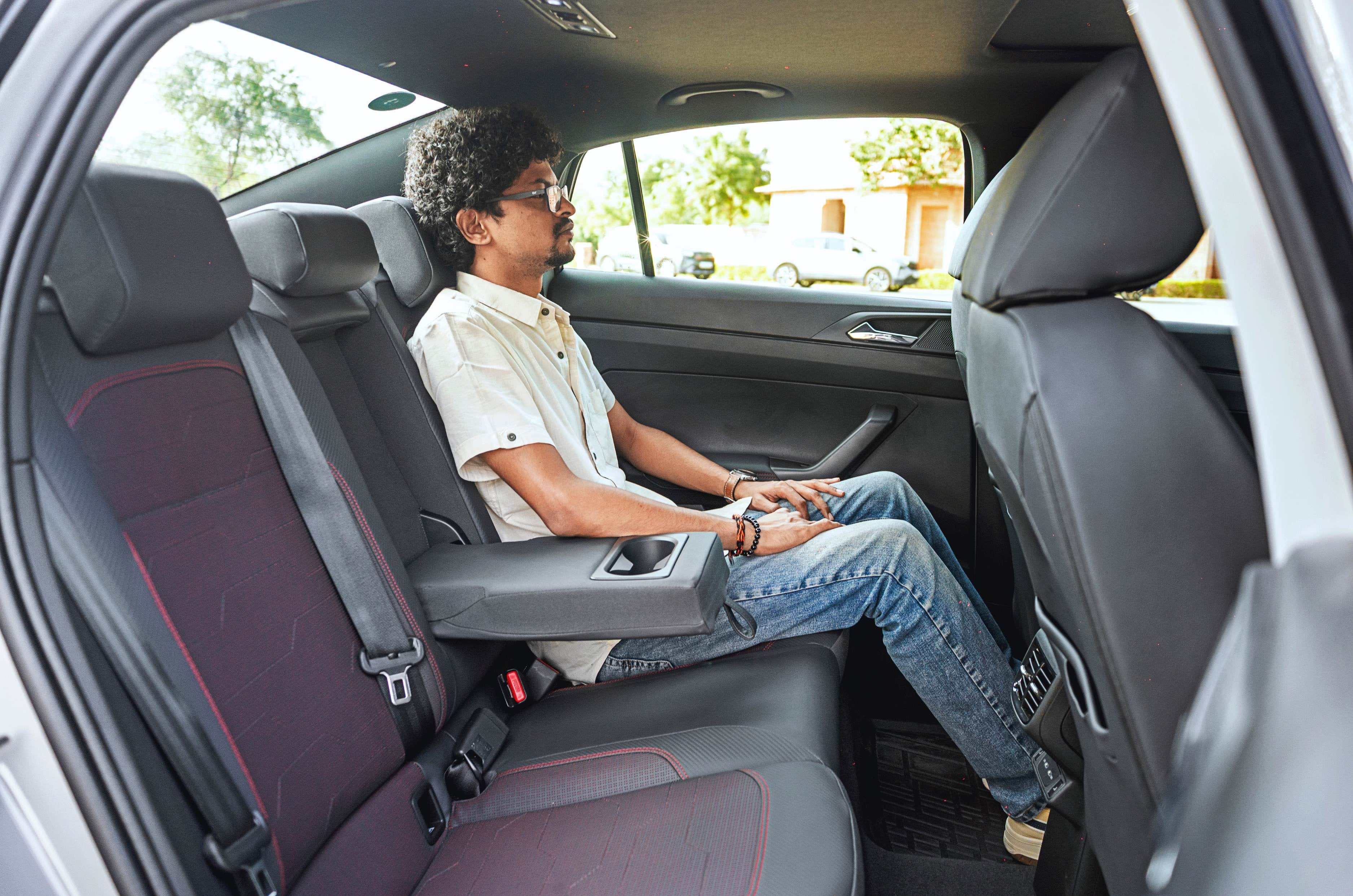
Rear-seat space remains one of Slavia's biggest strengths. The long wheelbase translates into generous legroom and ample footroom, and the windows are also large enough. Headroom though, can be a little tight for taller passengers, and the contoured rear bench along with the transmission hump in the centre mean it's more naturally suited to two adults than three.
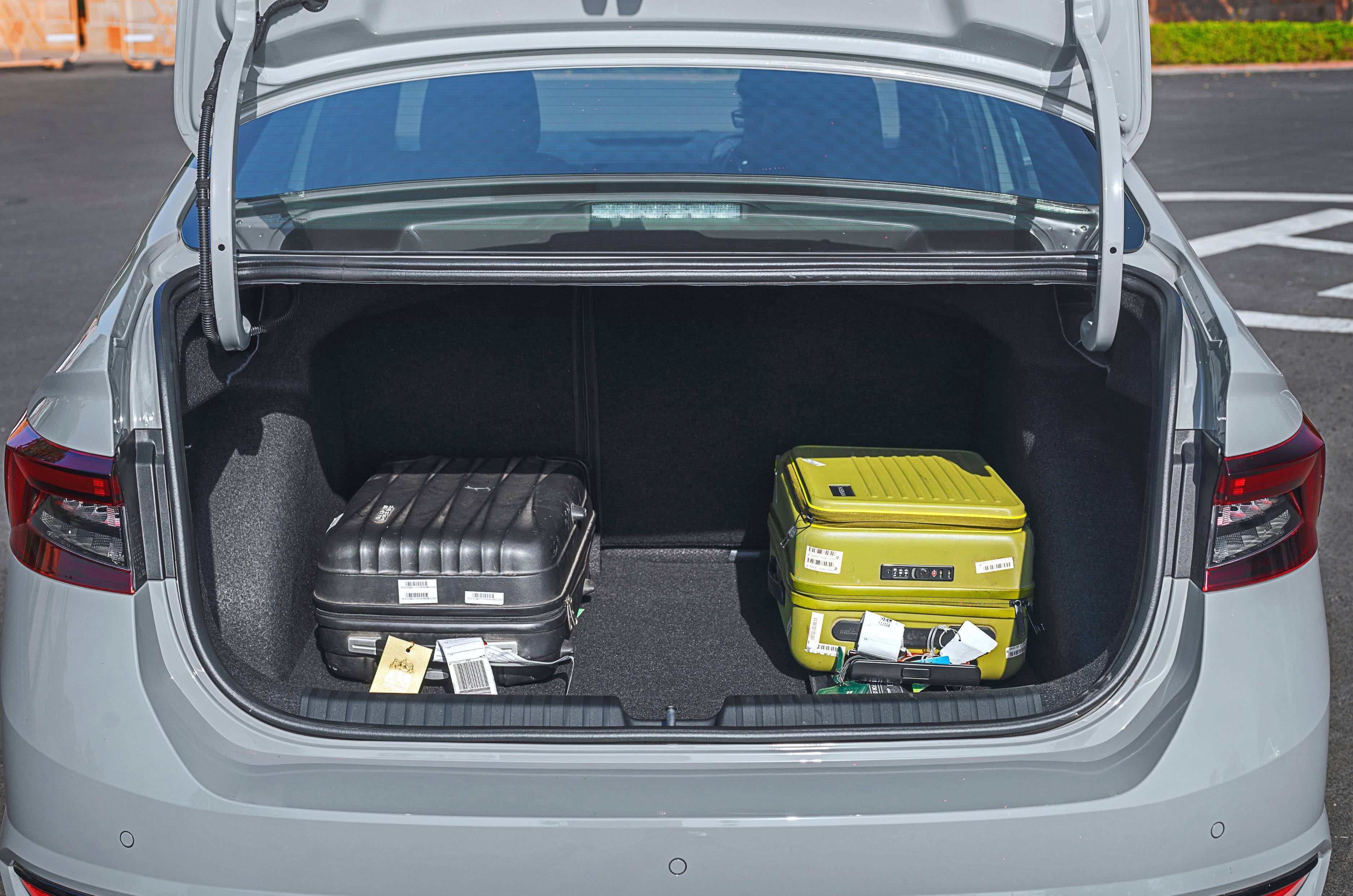
The 521-litre boot is among the largest in the segment, and the squared-off shape makes it easy to load. The 60:40 split-folding rear seats add further versatility. It also continues to get a space tyre and a subwoofer under the boot floor.
Skoda Slavia facelift features and safety
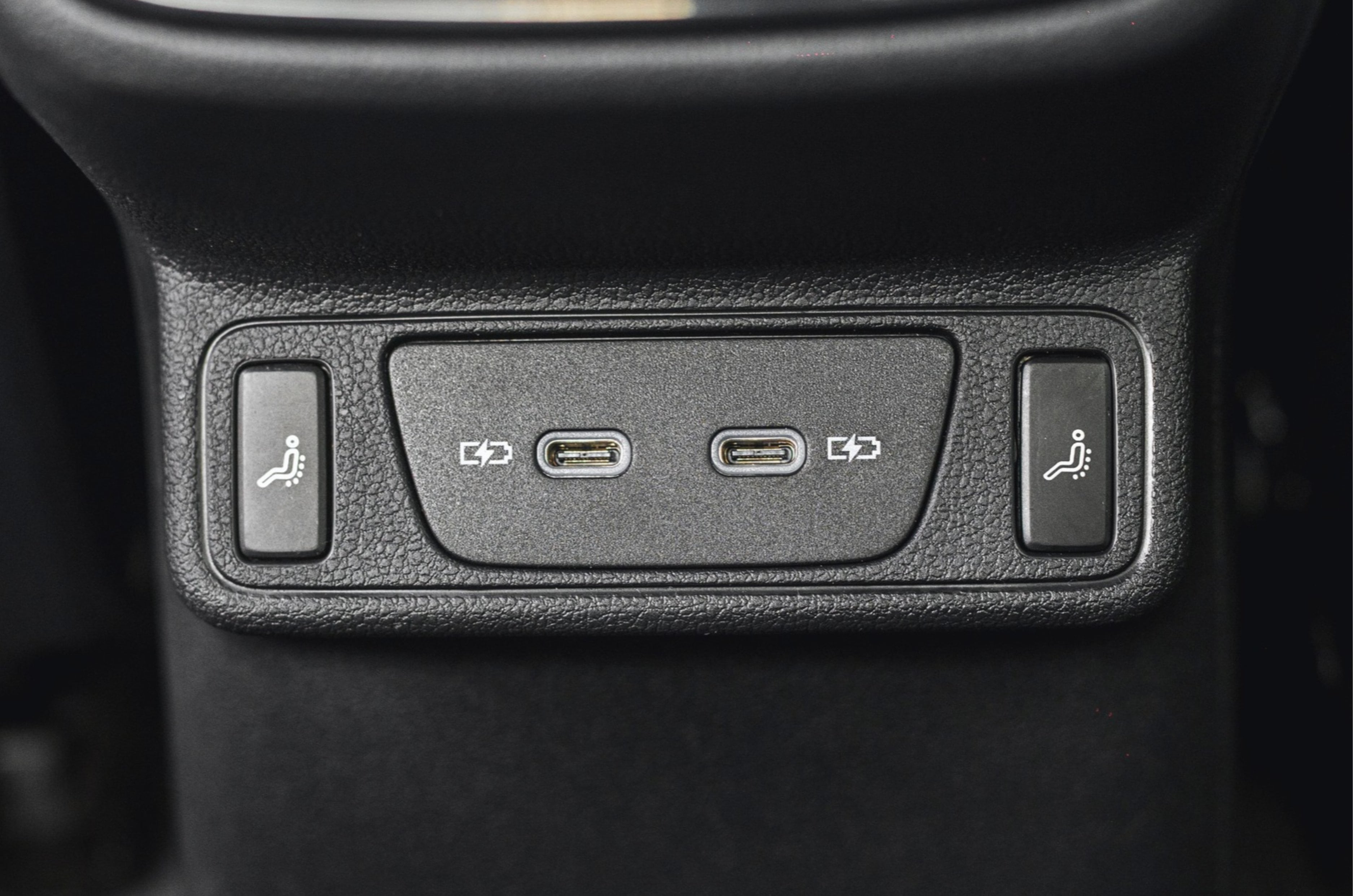
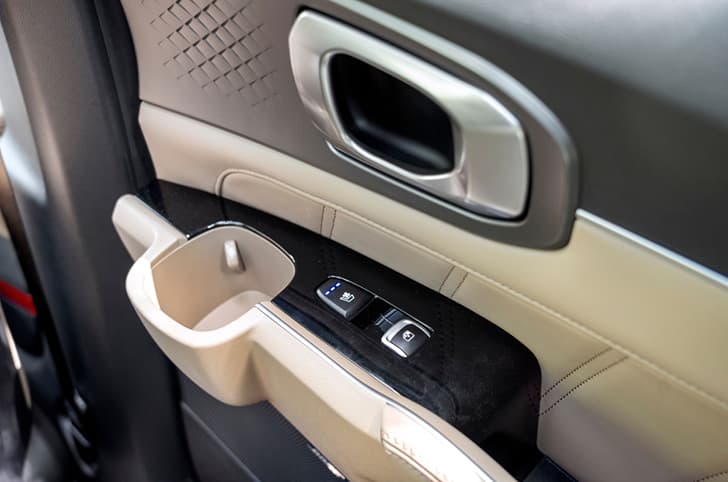
The Slavia facelift brings a useful upgrade in equipment, with the highlight being a segment-first rear seat massaging function. It’s a feature more commonly associated with larger, more expensive cars and adds another layer of comfort to what is already a spacious rear bench. This feature works very well and will be a hit with the chauffeur-driven.
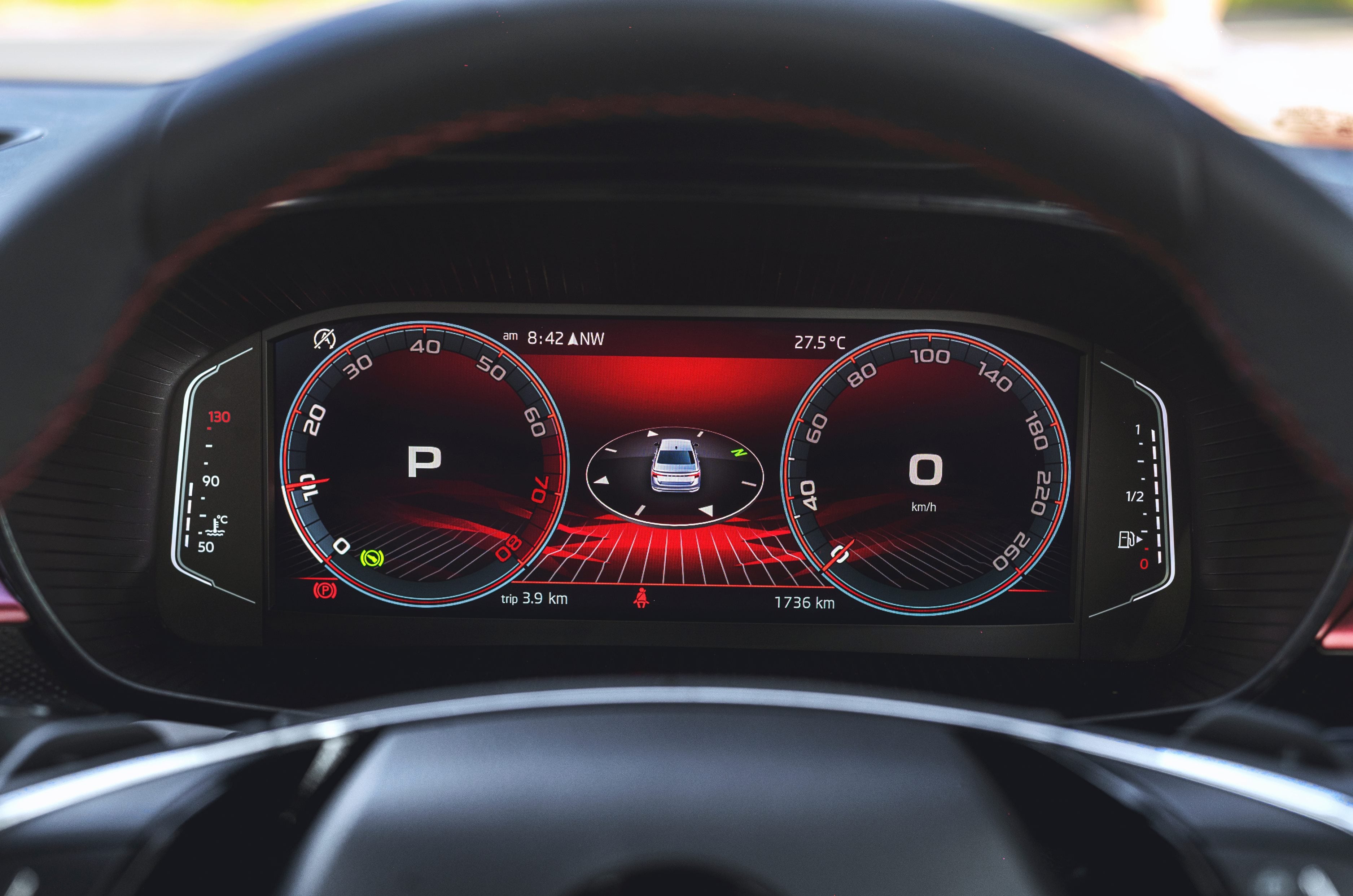
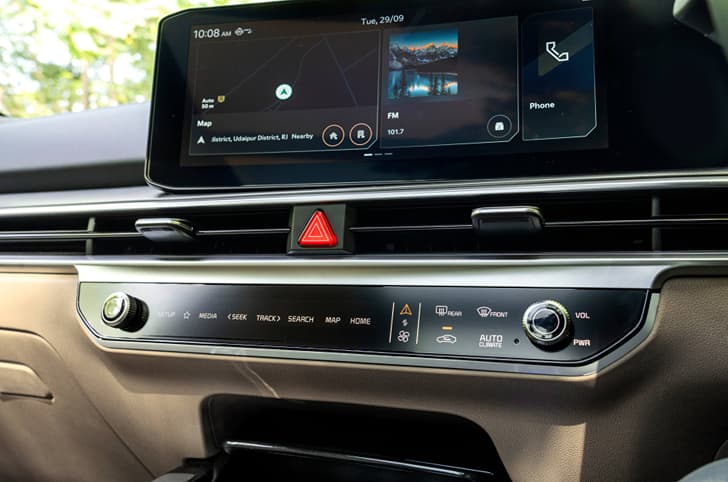
The infotainment and instrumentation have also been upgraded. The previous 10-inch touchscreen has been replaced by a slightly larger 10.1-inch unit, while the driver’s display grows substantially from 8 inches to 10.25 inches. Both screens get new graphics and additional features, giving the cabin a more contemporary feel and bringing the Slavia’s interface up to date. The touchscreen has a slick interface and also benefits from an AI voice assistant and connected car features, while the digital cluster gets multiple layouts along with a turn-by-turn navigation feature. The themes for both these screens also differ depending on whether you’ve gone for the Prestige or the Monte Carlo trim.
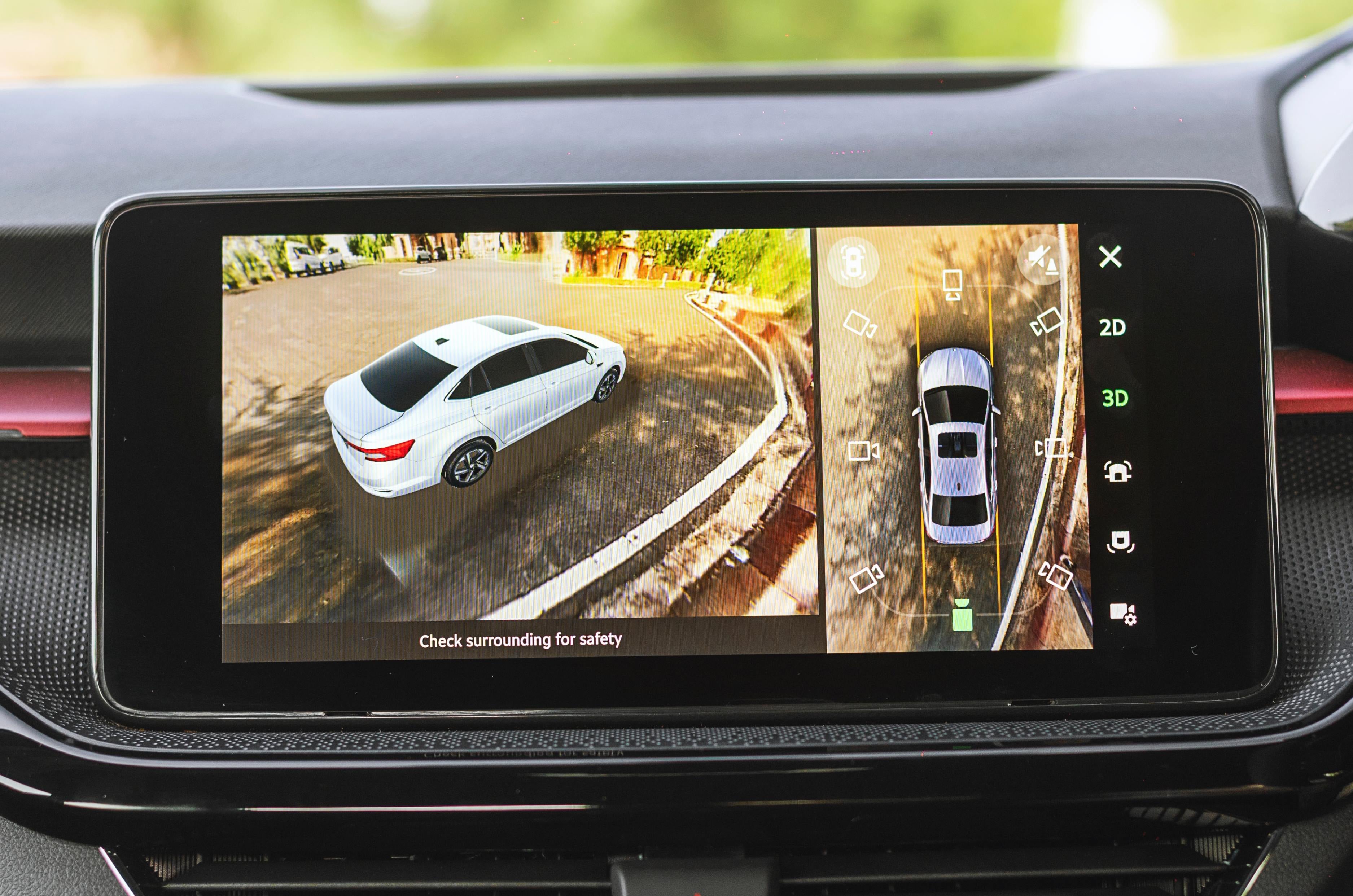
Another significant upgrade is the addition of a 360-degree camera, replacing the previous rear-view-only camera. This marks a huge improvement and the clarity and crispness of this camera is one of the best at this price point. And finally, like the Kushaq, the Slavia facelift also gets a new variable geometry compressor instead of a fixed geometry unit for the AC system, which has improved the cooling performance significantly.
Which features do you want in Slavia facelift?
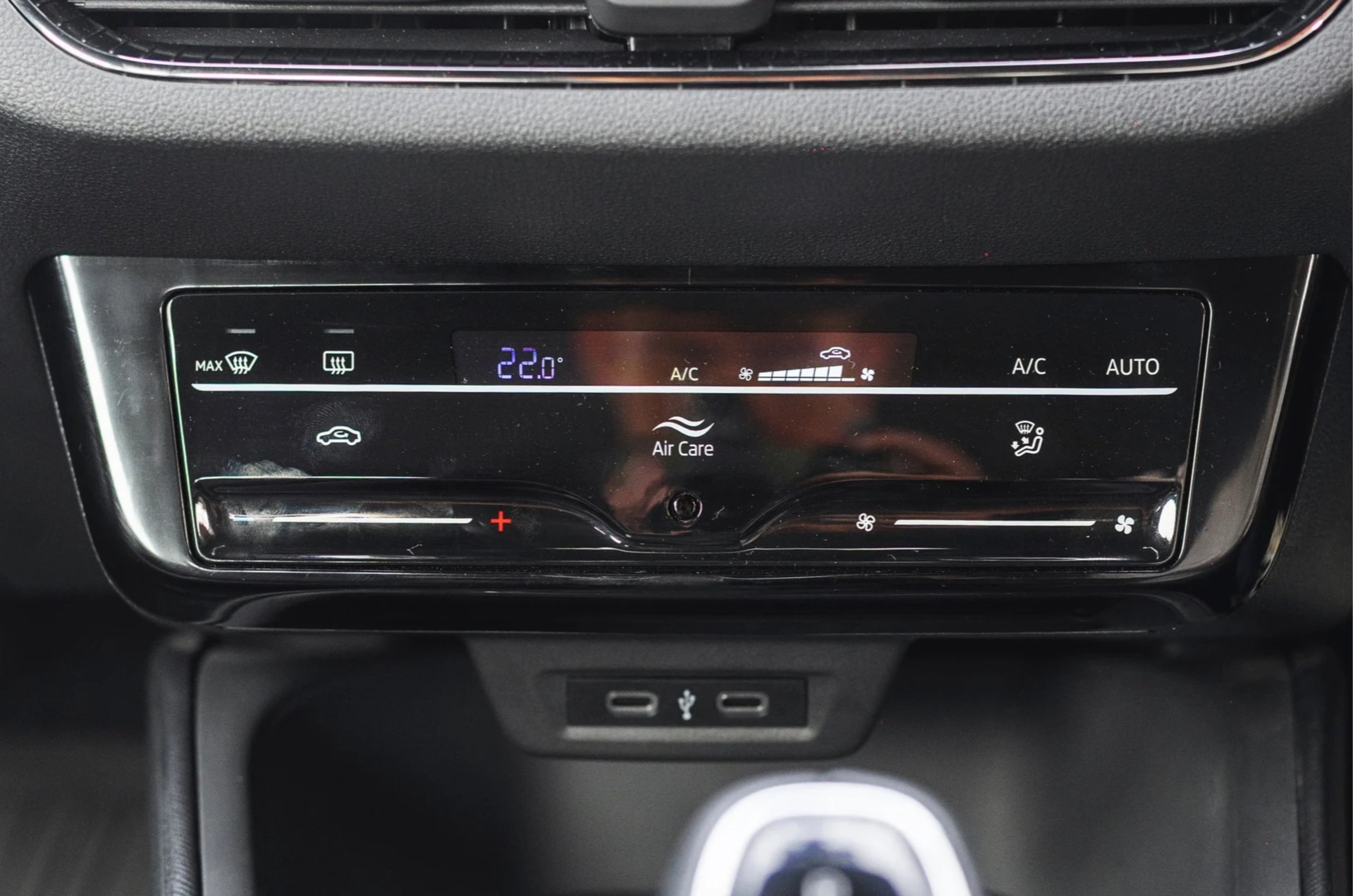
Other than these, it continues to feature ventilated and powered front seats, a sunroof, wireless smartphone integration, a great-sounding audio system, auto climate control, ambient lighting, LED lights, auto headlamps/wipers, cruise control, leatherette upholstery, 6 airbags, ESC, traction control, hill-hold assist and much more. The pre-facelift Slavia has also received a full 5-star crash safety rating from Global NCAP. However, some features that rivals offer and are missing here include an electronic parking brake and ADAS tech.
All together, the feature additions make the facelift feel more complete, with the new screens, 360-degree camera and rear seat massage adding both convenience and a greater sense of sophistication to the cabin.
Skoda Slavia facelift powertrain and performance
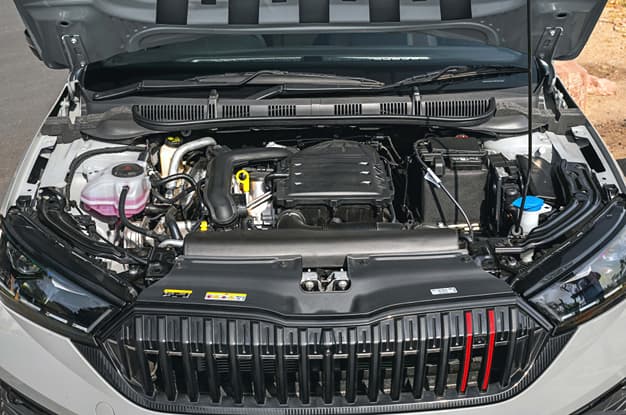
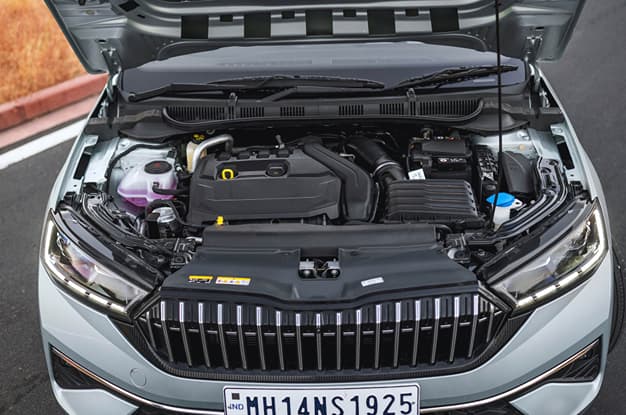
The Slavia retains the same engine options as earlier, so you have a choice between two direct-injection turbo petrols. There’s a 1.0-litre, three-cylinder unit that puts out 115hp and 178Nm and a 1.5-litre, four-cylinder mill that produces 150hp and 250Nm.
The 1.5 TSI can only be had with a 7-speed dual clutch automatic and enthusiasts will miss the option of a 6-speed manual with this engine, which was on offer earlier. The 1.0 TSI does get a 6-speed manual option, but the gearbox of major interest with this engine is the new 8-speed torque converter automatic. It’s the Aisin-sourced AQ300, replacing the earlier AQ250 6-speed unit, and this helps lower emissions and fuel consumption.
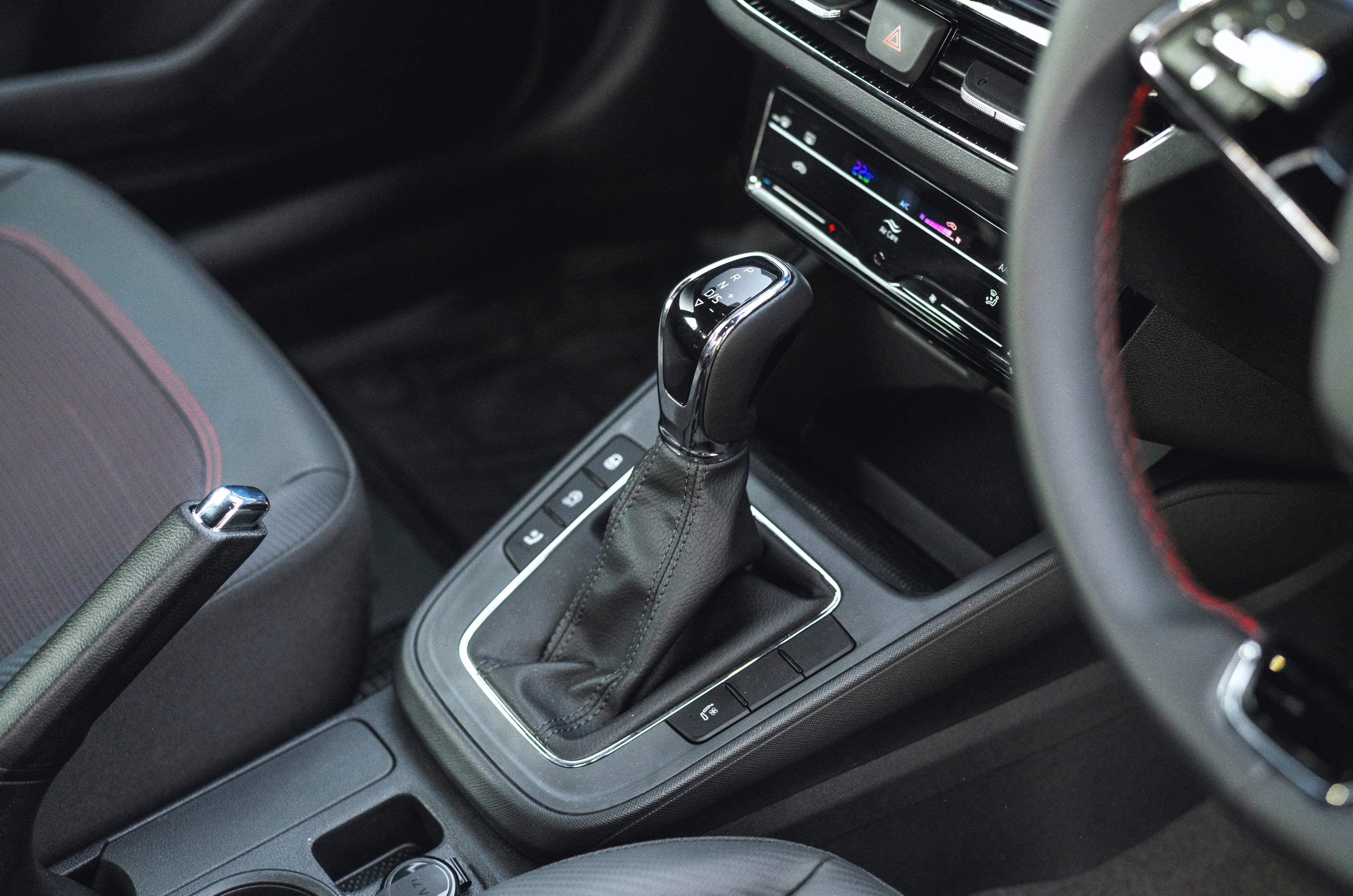
The new gearbox brings a welcome improvement to the Slavia’s low-speed manners. While the previous car had a tendency to leap forward from a standstill, this one now feels much more controlled than before. Once on the move, shifts are smooth and seamless, as you’d expect from a torque-converter automatic. What’s particularly impressive, though, is the speed of the manual shifts, whether you use the paddles or the Tiptronic gear lever. In manual mode, the gearbox also allows the engine to rev close to its limit before shifting up which makes the Slavia 1.0 TSI engaging to drive. The only real gripe with the gearbox is that all the ratios feel rather short. Third tops out at just over 100kph, while at 100kph in 8th, the engine is spinning at a little over 2,000rpm, which is higher than you’d expect given the number of ratios it has to play with.
What community is saying on the Slavia facelift?
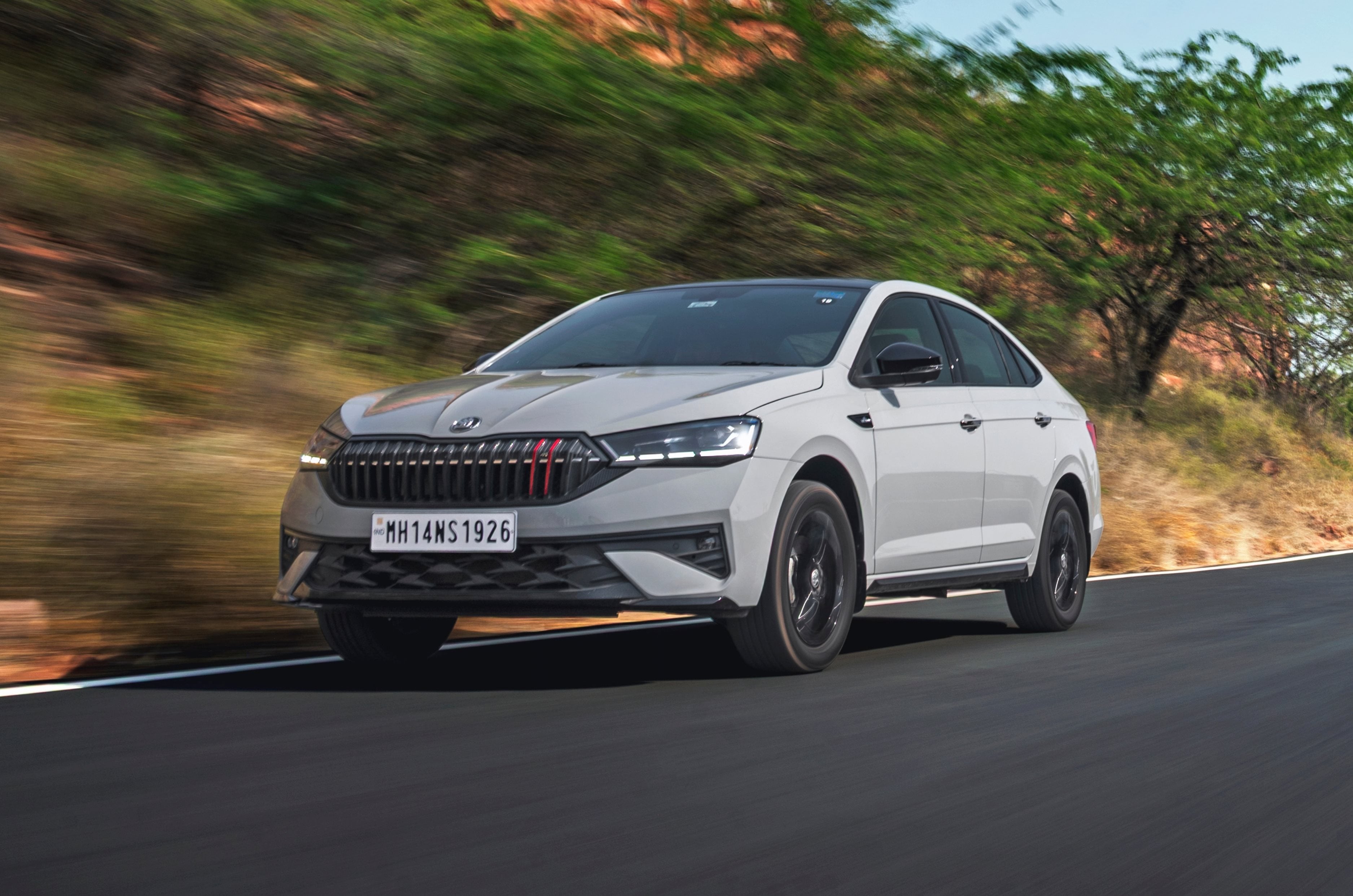
Although we didn’t get a chance to time it, expect it to complete the 0-100kph sprint in around 11sec, similar to the 6-speed AT’s 11.16sec time. At idle, there is some of that familiar vibrations of a three-cylinder engine. It settles when you drive gently, but push beyond 3000rpm and the gravelly note makes itself heard inside. For the smaller and less powerful petrol engine, refinement could have been better, and more insulation would have helped too.
The 1.5-litre four-cylinder TSI continues unchanged and remains the stronger, more effortless performer of the two. Acceleration is brisk and flat-out performance is strong, while shifts via the paddles are, as expected, quick. The pre-facelift Slavia 1.5 TSI DSG managed 0-100kph in 8.96sec in our tests, and performance with the updated car should remain in the same ballpark.
Between the two engines, the 1.5 TSI is the one that feels more complete, not just because of its stronger performance but also because it is smoother and benefits from cylinder-deactivation technology. Under light engine loads, two of its four cylinders shut down to save fuel, and the transition is seamless as well. However like the 1.0, the 1.5-litre also becomes quite audible when worked hard and some road noise from coarse surfaces also make its way into the cabin.
Skoda Slavia facelift fuel efficiency
Skoda Slavia facelift ride comfort and handling
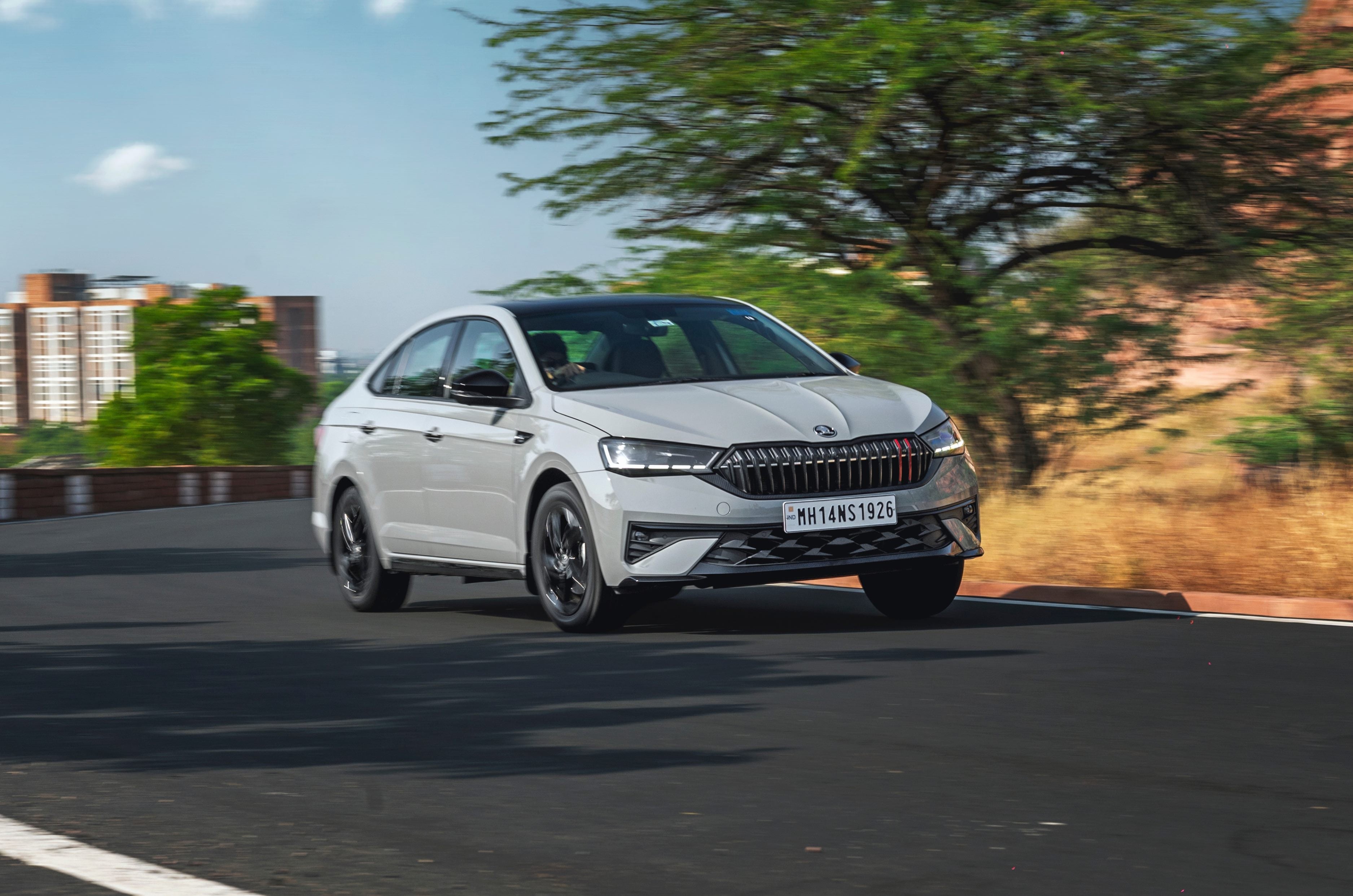
Ride and handling are areas where the Slavia continues to impress. Despite its generous 179mm ground clearance, the handling doesn’t feel compromised. Body roll is well controlled, while the car remains composed and predictable when you go around corners. The steering is on the lighter side but picks up weight progressively as speeds rise.
There is that typical low-speed firmness in the ride quality that you’d normally associate with European cars. But it never feels overly stiff and instead gives it tremendous stability at highway speeds. The suspension also deals with broken surfaces and undulations with maturity, absorbing sharper imperfections without becoming unsettled. It is this combination of an agile chassis, well-controlled body movements and mature ride quality that makes the Slavia enjoyable to drive.
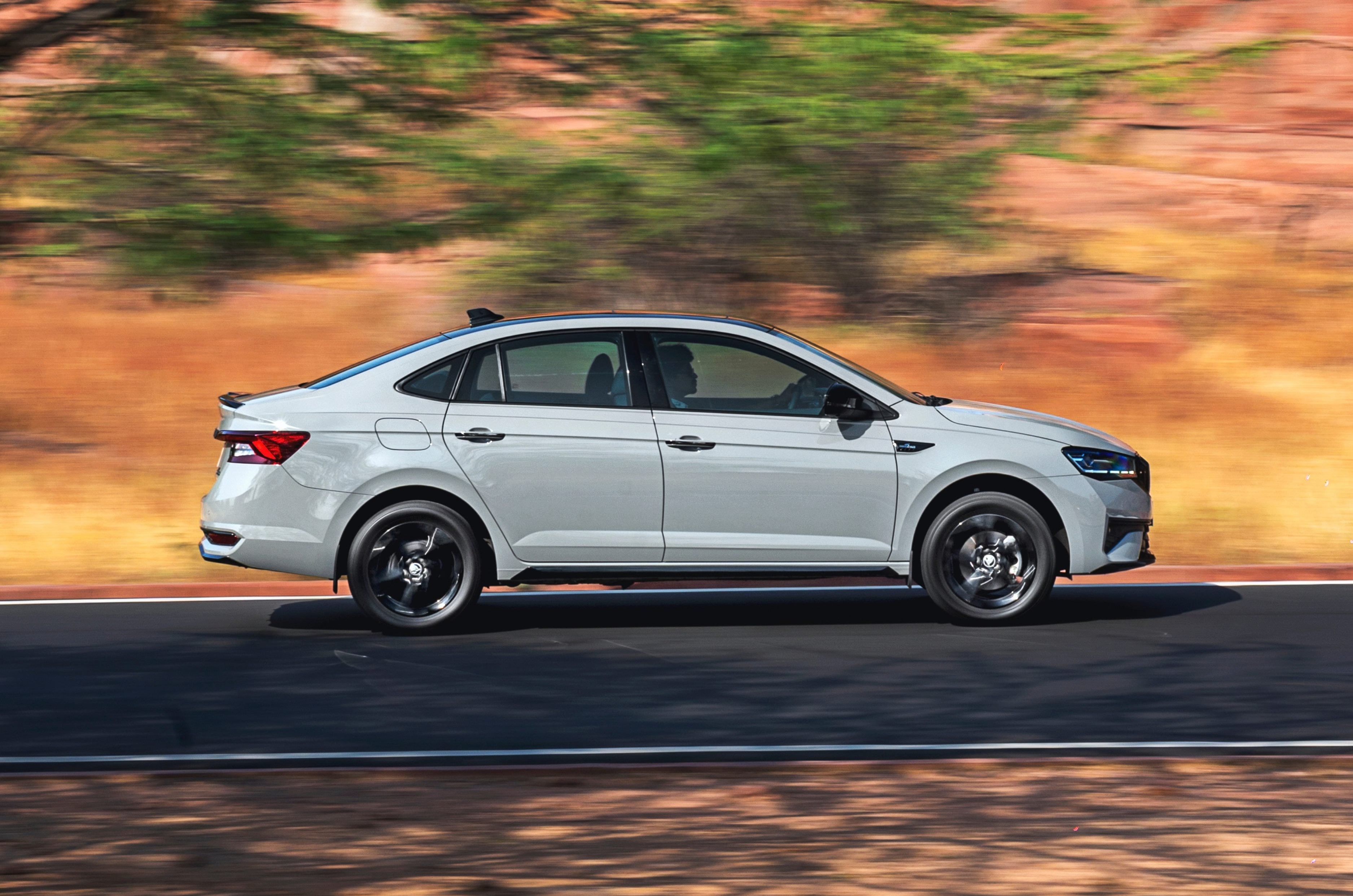
The Slavia’s braking performance remains strong and reassuring but the 1.5 TSI has now gained rear disc brakes. During our test drive, we didn’t find a noticeable difference to the earlier drum brake setup. The 1.0 TSI meanwhile, continues with the same setup as before.
Skoda Slavia facelift value for money and verdict
Prices for the Skoda Slavia facelift are set to be announced in the coming days, but expect it to cost a bit more than the Rs 10 lakh to 18.20 lakh (ex-showroom) the pre-facelift model demanded. What’s nice though is that the new 8-speed AT can be had right from the second-to-base Classic+ trim. As before, it continues to go up against the likes of the Hyundai Verna, Honda City and its Volkswagen sibling, the Virtus.
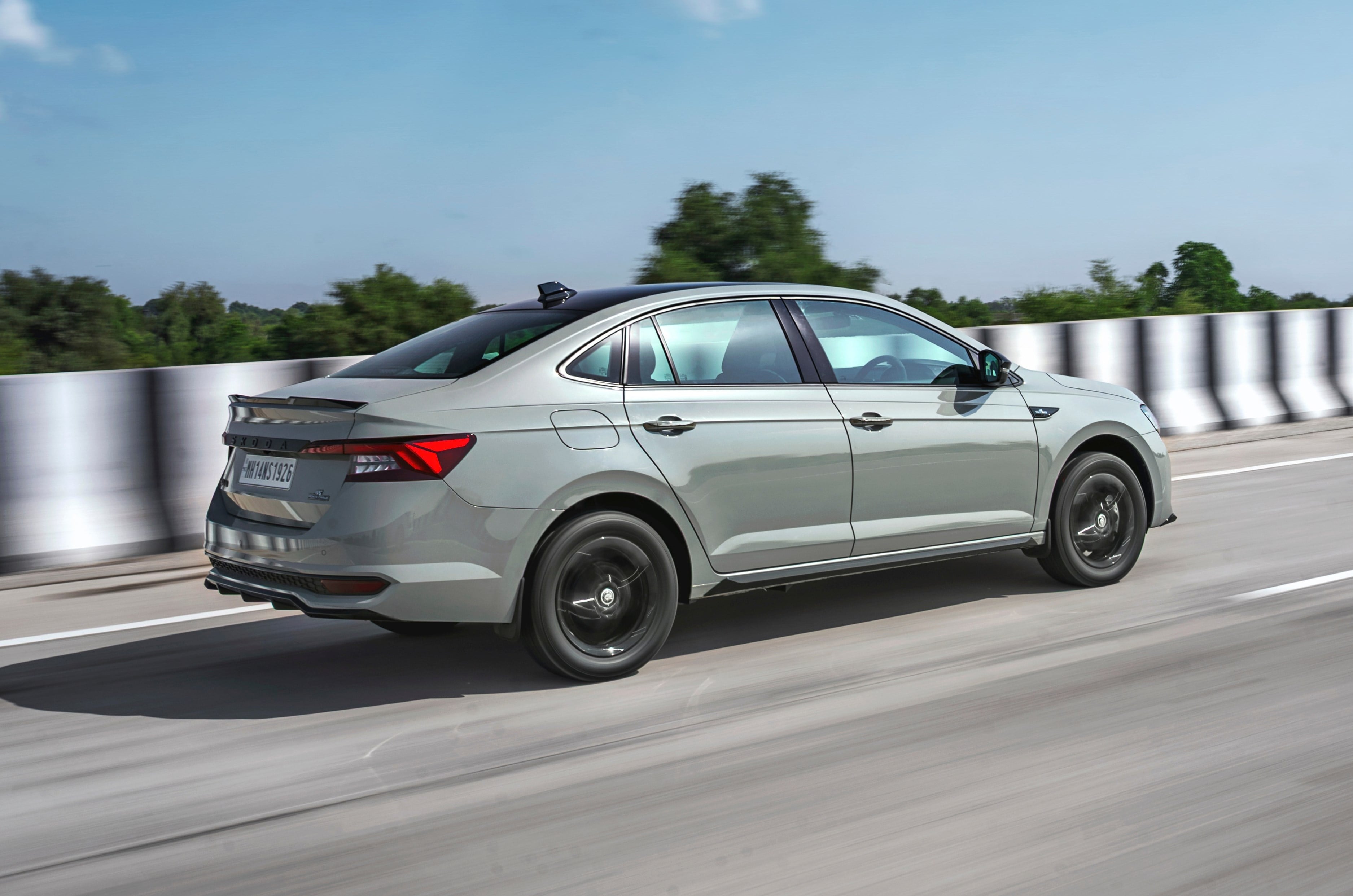
With this facelift, Skoda has enhanced the Slavia further with a sleeker design that looks timeless, important comfort and safety feature additions and relevant technical updates. Some shortcomings remain, like the slightly firm low speed ride, the absence of a manual gearbox with the more potent engine and it does miss a couple of features compared to rivals. But then whatever features have been added have enriched the experience, like the rear seat massage, the new AC compressor and the 360-degree camera. And as before, it remains very enjoyable to drive thanks to the punchy engines, the sorted handling and the mature high speed manners.
The Slavia facelift then, stands out as one of the most complete and well-rounded sedans around, with a great blend of comfort, practicality, features and driving pleasure.
 Saumil Shah
 Sergius Barretto
 Lenny D'sa