Last Updated on: 16 Jul 2026
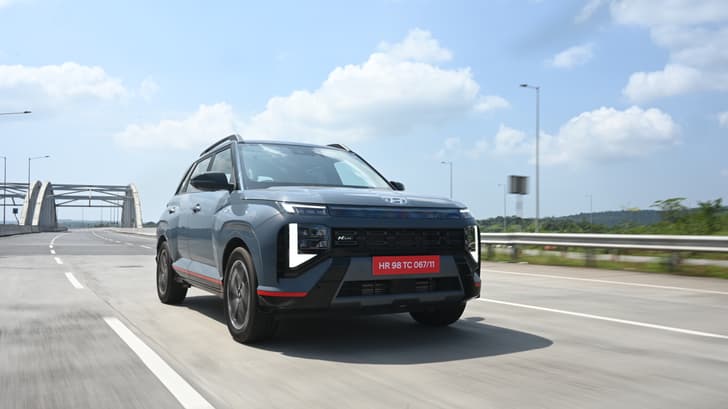
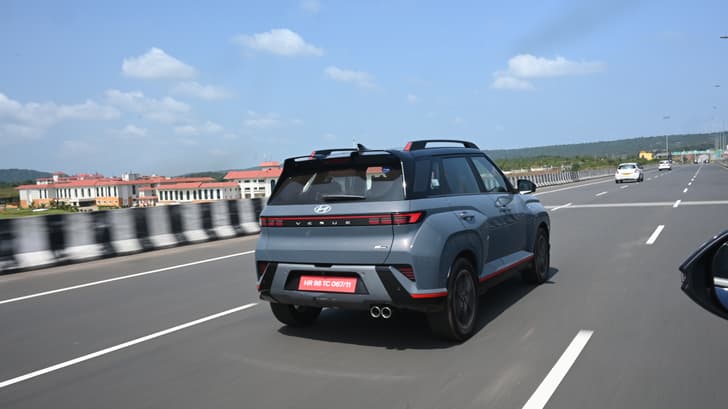
Hyundai Venue highlights
Hyundai Venue key specifications
The Hyundai Venue is available with petrol and diesel fuel options. It gets a 1.2-litre petrol engine, a 1.0-litre turbo-petrol and a 1.5-litre diesel, all in front-wheel-drive configuration. Engine displacement ranges from 998cc to 1493cc. Transmission choices include a manual, iMT, AMT and a 7-speed DCT, depending on the variant. The Venue seats five and continues to be offered as a compact SUV. As per ARAI figures, Hyundai Venue mileage ranges from 17.5kpl to 24.2kpl, with the diesel manual returning the highest efficiency.
Mileage 17.9 kmpl - 20.99 kmpl | Engine 998 cc - 1493 cc |
Fuel Type Petrol, Diesel | Transmission DCT, Torque Converter, Manual, AT |
Body Style SUV | Seats 5 |
Hyundai Venue specifications
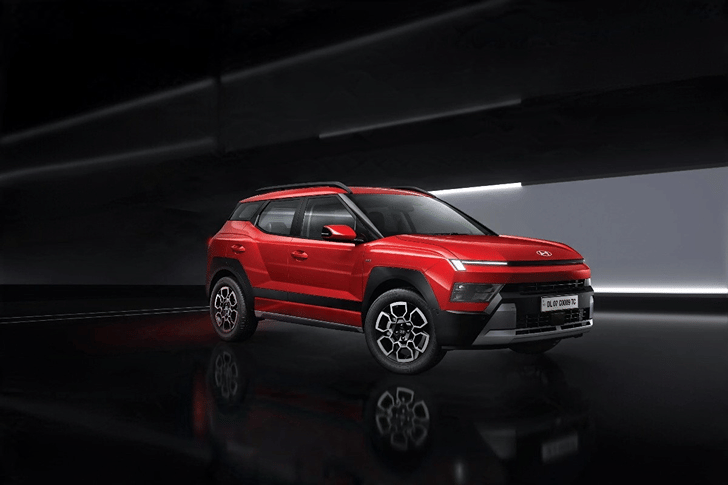
The Hyundai Venue gets front-wheel drive and uses a suspension setup comprising MacPherson struts at the front and a torsion beam at the rear. All variants ride on 16-inch wheels wrapped in 215/60 R16 tyres. Front disc and rear drum brakes handle stopping duties. Electric power steering with tilt adjustment is standard. The Venue stays under four meters in length, with a 2500mm wheelbase and a 45-litre fuel tank.
Engine & Transmission
Engine Displacement | 1493 cc |
Engine Installation | Front |
Engine Type | Turbocharged |
Pure Electric Driving Mode | No |
Number of Cylinders | 4 |
Max Engine Torque | 250 Nm at 1500 - 2750 rpm |
Max Engine Power | 116 hp at 4000 rpm |
Fuel Type/ Propulsion | Diesel |
Lockable Differential/s | No |
Drive Layout | Front Wheel Drive |
Sport Mode for Automatic Gearbox | Yes |
Paddle Shifters for Automatic Gearbox | Yes |
Number Of Gears | 6 |
Manual Shifts via Gear Lever on Automatic Gearbox | Yes |
Gearbox Type | Torque Converter |
Fuel & Performance
Terrain Modes | Yes |
Official Fuel Economy | 17.9 kmpl |
Auto Start/Stop | No |
Fuel Tank Capacity | 45 litres |
Fuel Supply System | Common Rail |
Emission Standard | Bharat Stage VI |
Suspension & Steering
Front Brakes | Disc |
Rear Brakes | Drum |
4 Wheel Steer | No |
Type of Power Assist | Electric |
Turning Radius | No |
Steering Adjust type | Manual |
Steering Adjust | Tilt |
Damper Control | No |
Front Suspension Type | Independent, MacPherson Strut |
Front Springs | Coil Springs |
Rear Springs | Coil Springs |
Rear Suspension Type | Non-independent, Torsion Beam |
Ride Height Adjust | No |
Spare Wheel | |
Rear Tyre Size | 215/60 R16 |
Front Tyre Size | 215/60 R16 |
Wheel Size | 16 inches |
Wheels | Alloys |
Dimensions
Kerb Weight | 1250 kg |
Height | 1665 mm |
Ground Clearance | 190 mm |
Length | 3995 mm |
Doors | 5 |
Wheelbase | 2520 mm |
Chassis Type | Monocoque |
Boot Capacity | 375 litres |
Width | 1800 mm |
Hyundai Venue features
Comfort
| Door Pockets | |
| Rear Parcel Tray | |
| Rear Power Outlet | |
| Driving Modes | |
| Rear Reading Lamp | |
| Rear Window Sun Shades |
Safety
| Day/Night Interior Mirror | Auto |
| Door Ajar Warning | |
| Child Safety Lock | |
| Seat Belt Warning | |
| BNCAP Rating | 5 |
| Curtain Airbag |
Exterior
| Antenna | Shark Fin |
| Puddle Lamps | |
| Front Fog Lamps | |
| ORVM turn indicators | |
| Outside rear view mirror (ORVM) | |
| Headlight Height Adjuster |
Interior
| Tachometer | Digital |
| Instantaneous Consumption | |
| Shift Indicator | |
| Speedometer | Digital |
| Distance to Empty | |
| Average Speed |
Entertainment
| Steering Phone Controls | |
| Steering Audio Controls | |
| Wireless Phone Charging | |
| Voice Commands | |
| Speakers | 8 |
| Rear Entertainment Screens |
Connected Car Features
| Remote Sunroof Open / Close via App | |
| Vehicle Tracking Via App | |
| Low Battery Warning | |
| Remote Car Lock/Unlock via App | |
| Remote AC On / Off via App | |
| Emergency Call Button |
Hyundai Venue variants comparison
Hyundai Venue Specifications - User Reviews
The Venue offers more features.
The Hyundai Venue is slightly more fuel efficient than the other options. Hyundai cars are known for being feature-rich and having good resale value.
I own a Hyundai Venue 2019 SX with 1.6 lakh KM on the odometer. The car is single-handedly driven and in good condition. Basic functions but reliable engine is focus.
I am owner of a new Venue. If you are not concerned about mileage, you can definitely go for the Venue. It is more comfortable with better fit and finish, suspension, and seating comfort. The latest Hyundai steering gives a fresh look and feel for at least 2-3 years ahead. It has smooth steering, better road presence, and strong pickup. My NA 1.2 engine gives me a real-life average of 11-12 in the city and 15-17 on the highway. Hoping after 1-2 services, it will give me 16-18 mileage on the highway and +1 in the city.
Read moreThe Venue is less comfortable and smaller compared to the Syros diesel.
Tell us about your experience
Specifications of Hyundai Venue alternatives
Questions you may find useful
Gopalakrishnan
Planning to upgrade from Alto K10 to an SUV. We are taller(6ft) occupants and need a spacious cabin where 5 people can sit comfortably. Can run 1000km round a month & 80% on highways. My priorities are Safety, Comfort for tall passengers, Basic tech and mainly an automatic vehicle. Confused with the review of 3xo MX2 pro AT, Nexon Diesel, Venue facelift HX5, Kia Syros HTK plus. Budget is around 11-12 lakhs on-road. Kindly suggest.

autocar.india
Go for the Mahindra XUV 3XO, and get the petrol with the 6‑speed automatic. It gives you a roomy back seat, a strong crash rating, and a planted and secure highway ride that suits your 80 percent highway use. The turbo petrol engine is the strongest here, and it's the only one of your shortlist to get a smooth torque-converter automatic gearbox. The only real downside is that the boot is not as big as that of rivals, and fuel economy won't be as good either, but for your largely highway use, the difference won't be so bad.The Hyundai Venue HX5 is fine for four but tight for five on long trips, and while the Kia Syros HTK Plus feels the largest, rear width and thigh support are only average, and its ride quality is quite choppy. Tata Nexon diesel would be lovely on highways and is safe, but the diesel automatic is an AMT, which is nowhere near as smooth as the XUV's torque converter, or even the Hyundai/Kia's DCT.
Sathwik
I'm a first-time car buyer planning to purchase an automatic petrol car in Q3 2026, mainly for city use and occasional long trips. I want modern features such as a 360° camera, wireless Android Auto/Apple CarPlay, etc. My budget is around Rs. 10-12 lakh, but I can extend it to Rs. 14 lakh if the car is feature-rich and offers good safety, ADAS, etc. Initially, I shortlisted the Hyundai i20 Asta variant, but I have heard that it will receive a facelift soon. I have also heard that Hyundai will be launching the Bayon soon. So, I am a little confused about whether it is a good decision to buy a car that is due for a facelift, wait for the Hyundai Bayon launch, or consider other alternatives such as the Hyundai Venue, Kia Sonet, or Mahindra XUV 3XO. I am avoiding Maruti Suzuki because I have read that the features and safety offered in this price range are not as good as those of the competition. Please advise me. Thanks.

autocar.india
The Mahindra XUV 3XO petrol automatic is a strong fit for your usage. Its smooth 6 speed automatic, light steering and compact footprint make it very easy to live with in the city, especially in traffic and tight parking conditions. Importantly, it already ticks your feature requirements, including a 360° camera, wireless Android Auto and CarPlay, and even ADAS, within your stretched budget of around Rs 14 lakh. It also feels reassuringly solid. The XUV range has built a good safety reputation, and the turbo petrol engine offers strong low end performance, making it well suited to both city driving and occasional highway runs.On the i20, while it remains a well rounded premium hatchback, the current version does miss out on features like a 360° camera and ADAS. There is talk of a facelift, but timelines are not confirmed, and it is unclear whether Hyundai will add these features, so waiting specifically for that may not guarantee what you are looking for.As for the upcoming Bayon, Hyundai is expected to bring it around September, but it will likely be a larger, around 4.3 metre crossover as a Maruti Suzuki Victoris rival and positioned below the Creta. That means it may not be as feature rich in the variants that fall within your budget. It could also end up competing more with mid size SUVs rather than sub 4 metre options.The Venue and Sonet are polished and easy to recommend, but the variants that offer both ADAS and a 360 degree camera tend to stretch well beyond Rs.14 lakh on road.
Yatin
Hi, I’m planning to buy an automatic petrol SUV and I’m confused between these two options: Kia Seltos HTK(O) IVT Petrol and Hyundai Venue HX8 DCT Petrol. The on-road price difference is around Rs 3 lakh, so I want to understand whether the Seltos is truly worth the extra cost. My typical usage includes office commuting twice a week, with a one-way travel time of about 1 hour 15 minutes, mostly in city traffic. I also do weekend trips with my wife and occasional trips with family or friends, usually with 4-5 people. The only factor strongly pushing me towards the Seltos is the panoramic sunroof. However, I currently drive a Punch, so I am a little doubtful about handling the Seltos’ size in city traffic.

autocar.india
The reason is simple. Your driving is largely city traffic with occasional family use, and in that scenario, the Seltos’ naturally aspirated petrol with the IVT automatic is the more relaxing and long-term friendly package. The Venue’s 1.0 turbo DCT is peppier and quicker, but in heavy stop-and-go traffic like your 1-hour 15-minute office commute, a DCT is not the ideal transmission if smoothness and peace of mind matter. Hyundai itself positions the Venue turbo with the 7-speed DCT, while the Seltos IVT is Kia’s smoother CVT-style automatic option.The Rs 3 lakh premium is not just buying you a panoramic sunroof. You are also getting a significantly larger and more comfortable cabin, much better rear seat space for family use, a more substantial boot and a car that simply feels a segment above the Hyundai Venue. Since you already own a Tata Punch, the Venue will not feel like a dramatic step up in size or cabin experience, whereas the Seltos will.On the length concern, yes, the Kia Seltos is noticeably bigger than your Punch, and for the first few days in city traffic, you will be conscious of that. But, this is something most drivers adapt to very quickly, especially with a rear camera and parking sensors. It is not large enough to become a burden in everyday urban use.So the real question is whether you value the extra space, comfort, and smoother automatic enough to justify Rs 3 lakh. For your usage, especially with regular traffic and occasional full family trips, we would say yes, the Seltos is worth it. If your use was mostly solo city driving and budget mattered more, the Venue would make more sense.
Maheswar
Hi Team, Posting this again in case my earlier query did not reach you. I am currently considering the Hyundai Venue HX5 Diesel and the Kia Sonet HTK Plus Diesel. I am confused between the Venue’s modern interior design and the Sonet’s higher feature count, despite its slightly dated cabin layout. My priorities, in order, are: Ride quality Comfort Convenience and features I also noticed that you often recommend the Mahindra XUV 3XO. Is that also a strong option worth considering in this segment? My only concern with the XUV 3XO diesel is its real-world mileage. My budget is around ₹12-13 lakh on-road with BH registration. I specifically want the power and torque of a diesel engine, but my usage would actually be quite limited—mostly weekend driving and occasional long trips. My yearly running would average only around 6,000 km. Given such low usage, would owning a diesel car create any long-term issues or reliability concerns? Looking forward to your advice.

autocar.india
Since you are prioritising ride quality and comfort, the Mahindra XUV 3XO AX5 diesel will be a better bet. The 3XO’s suspension is the most forgiving and most absorbent here, and highway stability is a bit better than the Kia Sonet and Hyundai Venue. The cabin is wider, so three can sit at the back more comfortably than in the Kia and Hyundai, and its strong diesel makes it an able highway cruiser.The cabin doesn't feel as well-appointed as the Venue or Sonet, the user interface isn't as slick, and its clutch gearbox doesn't feel as effort-free as the others. Also, being a heavy car, its efficiency isn't likely to be as good as the Sonet or Venue; however, with 6,000 km a year, the fuel spend gap to the others will be small.Your low running is fine for a diesel since you do long drives. Just take it for a 20-30 minute highway spin every few weeks and service yearly.Alternatively, you could consider the turbo-petrol version, which has diesel-like torque. Fuel efficiency will be a bit lower; however, the turbo-petrol will be more affordable to buy in the first place, and maintenance will also be a bit cheaper.
Shubham
I have a budget of ₹10-12 lakh. About 80% of my driving is in the city (Mumbai, Goregaon), with occasional long drives. My priorities are good resale value, a good music system, and quality interiors (hence I am not interested in Maruti). I am considering the i20 Sportz/Asta, Amaze, and Kylaq. Which one should I choose? Are there any other options like the Sonnet or Venue that I should consider?

autocar.india
The Hyundai i20 is the one that fits your brief best. Given your city-heavy use, we recommend an automatic, so look at an i20 with the 1.2 petrol and CVT (Hyundai calls it IVT), which feels very smooth in slow traffic. While it's tempting to go for the more powerful 1.0 turbo-petrol, its DCT gearbox is not as smooth as the CVT at low speeds, hence we don't recommend it. Also, while the i20 1.2 IVT Asta (O) could go out of your budget, we would recommend you to stretch it, as that will get you the Bose sound system, which sounds excellent. Hyundai resale is also strong in Mumbai, which meets your first priority. The Honda Amaze is easy to own and has good resale value too. It's reliable, good on maintenance, fuel efficient, fun to drive and spacious. But the interiors and music system are nothing to write home about. The Sonet, Venue and Kylaq are good options, but won't give you the kind of features and high-spec interior you are seeking in this budget. That said, when it comes to resale value, none are quite as good as Maruti cars, since that is your number one priority.
Uma shankar A
I have visited multiple showrooms and shortlisted two options: the Mahindra XUV 3XO AX7L Diesel Manual and the Hyundai Venue SX(O) Diesel Automatic. I have ruled out the Kia Sonet due to its outdated cabin and features, and the Tata Nexon due to concerns about after-sales service. I commute around 70 km daily for office, with an equal mix of city and highway driving. I am looking for a feature-rich car with good mileage and low maintenance. Please help me choose between the XUV 3XO and the Venue.

autocar.india
With a 70 km daily commute and a mix of city and highway driving, ease of driving becomes very important. The Hyundai Venue’s 6-speed torque converter automatic is smooth, predictable and effortless in traffic, which will make a big difference over long daily runs. It also pairs well with the diesel engine, giving you decent efficiency and relaxed highway cruising, while keeping fatigue low.The Mahindra XUV 3XO diesel manual is the better driver’s car. It has a stronger, more punchy engine and offers a good balance of ride and handling, along with a wider cabin and better rear seat comfort. However, in your case, the manual gearbox will start to feel tiring over time, given your daily commute, especially in city traffic.You have also not shortlisted the 3XO automatic, likely because of the AMT, and that is understandable. Compared to that, the Venue’s torque converter is a clear advantage in terms of smoothness and everyday usability.
Nitesh
I’m planning to buy a new car, and I’m currently confused between the Mahindra XUV 3XO AX5 (Petrol Manual), Hyundai Venue HX5 Turbo Petrol, and Kia Seltos 2026 base petrol variant. My usage: 60% city, 25% highway, 15% mountains (3 trips every year). Other requirements: annual running: ~8,000–10,000 km, primary use: family car, but I do enjoy driving occasionally, good ground clearance is important (roads in my hometown in the mountains are quite bad). I am planning to keep the car for 10+ years. Budget: ₹12 lakh (can stretch to ₹13 lakh if it’s truly worth it). My question is: Which of these would be the best fit for my usage? Is it worth stretching for the Seltos base model over the other two? Are there better alternatives in this budget that I should consider? Would really appreciate your suggestions. Thanks in advance!

autocar.india
With mostly city use, a few highway runs, and some mountain trips on broken roads, the Mahindra XUV 3XO AX5 petrol manual fits your brief best. It rides tough over bad patches, has good ground clearance, and its turbo petrol pulls well at low speeds, which helps on steep hill sections and in slow city traffic. It is also one of the nicer cars to drive in this price range, so when you want to enjoy a winding road, it will put a smile on your face, and the AX5 gives you a good mix of safety and comfort features without blowing the budget.Two trade-offs to note. If you often carry a full load of luggage, the boot is not very large, and at low speeds, the steering is not as light as most other SUVs in the class. Is it worth stretching to the base Seltos? Only if you really need the extra space. The base Kia Seltos skimps on features, and its non-turbo petrol will feel weaker on mountain climbs with a full family. Also check on-road pricing in your city, as it may push past Rs 13 lakh.The Hyundai Venue HX5 Turbo Petrol is also a good option and a great all-rounder, with a bigger boot, but given your needs, the better-riding, more enjoyable to drive XUV will suit you better. If you want another option to check out, look at the Maruti Suzuki Brezza, which is unexciting but offers hassle-free long-term ownership.
Aayus Aggarwal
Hi Team, I am a first-time car buyer looking to purchase a petrol automatic compact SUV within a budget of ₹15 lakh (on-road). My usage will be primarily city driving. My key requirements are: Automatic transmission Good safety Low maintenance and reliable ownership I have shortlisted the Mahindra XUV 3XO RevX A, Tata Nexon Creative Plus S, Hyundai Venue HX8, and Skoda Kylaq Prestige. Could you please suggest which would be the best option for my needs?

autocar.india
Mostly city use, a petrol automatic, and a hard cap of Rs 15 lakh on-road point to the Mahindra XUV 3XO REVX A with the 6-speed automatic as the best fit for you. This gearbox is a regular torque-converter type, which is smooth at low speeds and easy to live with in traffic, so your daily drives will feel calm and hassle-free. The 3XO also has a 5-star crash safety rating, and Mahindra’s service costs are sensible, which matches your “decent safety and low maintenance” brief. Size-wise, it is easy to park, yet the cabin feels roomy enough for family use.A couple of trade-offs to note for your use: the boot is not the biggest in this price range, so very large luggage runs will need some planning.From your list, the Skoda Kylaq 1.0 TSI AT is a great alternative, but the space in the back seat is less than that of the 3XO. The Hyundai Venue with the turbo-petrol dual-clutch automatic is the other clear fit, but that dual-clutch unit can feel a bit jerky when moving very slowly. The Tata Nexon Creative+ S has strong safety and lots of features, but its AMT can feel a touch hesitant at crawl speeds.Overall, for mostly city driving within your budget, the XUV 3XO automatic lines up best with what you want.
Kunal Sen
Hi, I am Kunal from Kolkata and am planning to buy my first car. I have recently started learning to drive. My usage will be around 45% city and 55% highway. I am confused between the Maruti Suzuki Brezza, Hyundai Venue, Skoda Kylaq, and Maruti Suzuki Grand Vitara. My priorities are a solid build quality (as a first-time car owner), good mileage, LED lamps, a quality music system, and low maintenance. Please advise.

autocar.india
From the options you've listed, we'd recommend you shortlist the Hyundai Venue and Skoda Kylaq, both of which are turbo-petrol sub-4-metre SUVs. On account of their turbo-petrol engines, these will feel a bit more effortless to drive on the highway compared to the Maruti Suzuki Brezza and Grand Vitara that are powered by a 1.5 naturally aspirated petrol engine. Additionally, both cars get LED headlamps, have good audio systems (the Venue has an edge with its branded Bose speakers), and both are generously equipped with similar safety kits. The Venue's turbo-petrol will be a touch more efficient, and its maintenance costs will be a bit lower than the Kylaq's as well. Also, its cabin is comparatively more spacious too. The Kylaq, on the other hand, has an excellent ride-handling balance, which gives you tremendous confidence while driving. We'd suggest you drive both of these, and pick the one that appeals to you more.
Kartheek Adivi
Hi, I am planning to buy a compact SUV within a strict budget of ₹20 lakh. I have shortlisted the petrol automatic variants of the Mahindra XUV 3XO AX7L and the Hyundai Venue N Line, as both offer Level 2 camera and radar-based ADAS systems. Although I prefer manual cars, I am choosing an automatic with ADAS to reduce driving fatigue. I will be undertaking a 300–500 km round trip once every month and longer trips every 3 months. I am quite confused between the two options. Which one is better among them, and why?

autocar.india
With both cars now offering Level 2 ADAS, the decision is no longer about features alone, but how they suit your usage.For your requirement of regular 300-500km highway drives, the Mahindra XUV 3XO AX7L petrol automatic still comes across as the better overall choice. It has a more powerful turbo petrol engine, which makes highway overtakes easier and less stressful, and the overall package feels more stable at cruising speeds. It is also a wider car, and despite the new Hyundai Venue improving in terms of space, the 3XO still offers a more spacious cabin, which adds to comfort on longer drives.Another important difference is the gearbox. The 3XO uses a torque converter automatic, which is smoother and more predictable in everyday driving, especially in mixed conditions. The Venue uses a dual-clutch transmission, which feels quicker but is not as smooth at low speeds and in stop-go conditions, something you will notice in real-world use.Where the Venue does well is ease of use and practicality. It feels more compact and easier to drive in the city, and it also offers a slightly more usable boot. If you are considering the N Line specifically, do note that its suspension is tuned to be stiffer, which affects ride comfort. If comfort is a priority, the standard Venue is the better choice.
Have questions about this car?
Ask owners & Autocar experts.
Hyundai Venue FAQs
The ADAS features available in the new Hyundai Venue are of Level 2 proficiency in the top-spec HX10 variant.
The Venue and the Nexon are similar in length, but differ in other dimensions.
Unlike the Creta EV, the Hyundai Venue 2026 does not get an EV option.
Hyundai Venue On Road Price in India
Upcoming Cars


Hyundai Cars


Trending Cars

Latest Cars