Autocar India

Last Updated on: 29 Jun 2026

Hyundai Venue variants
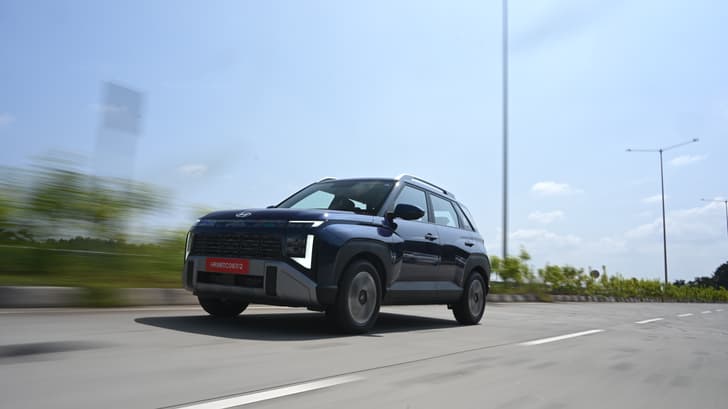
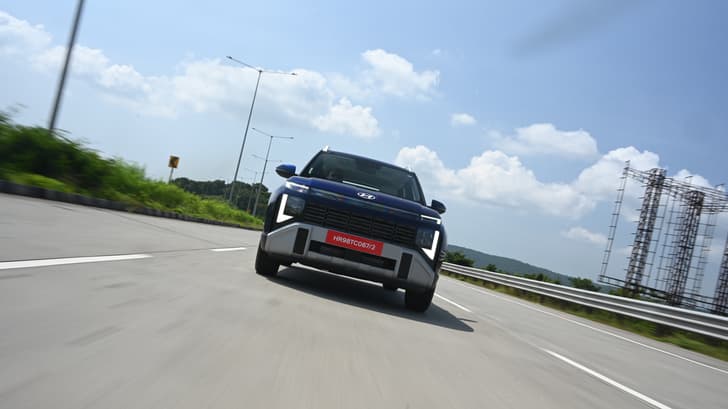
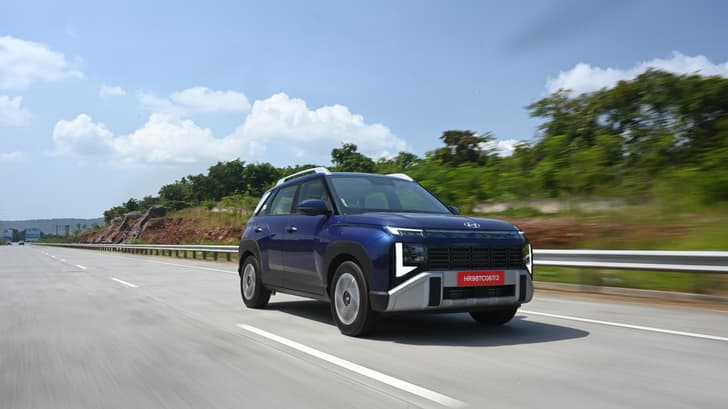
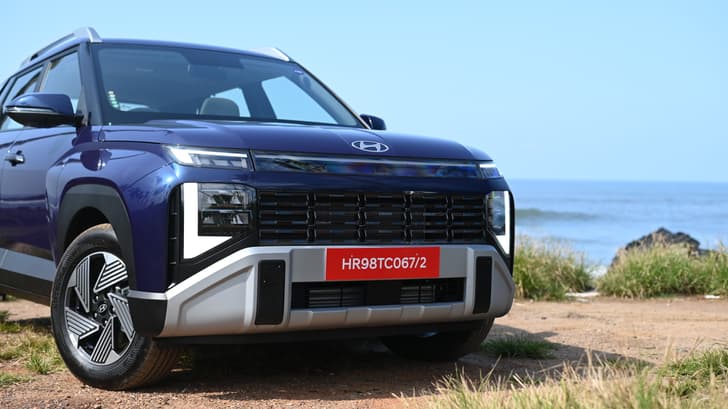
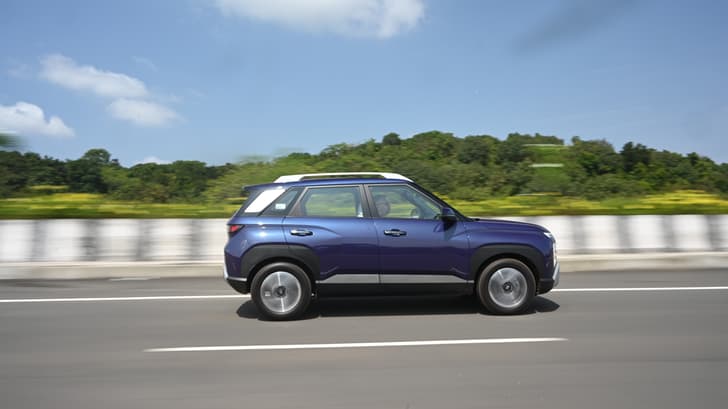
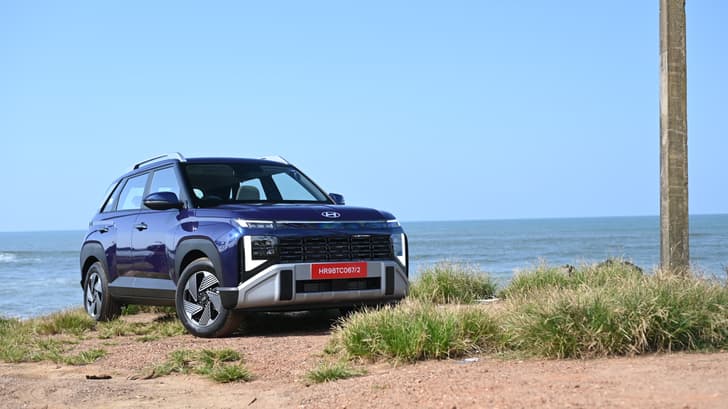
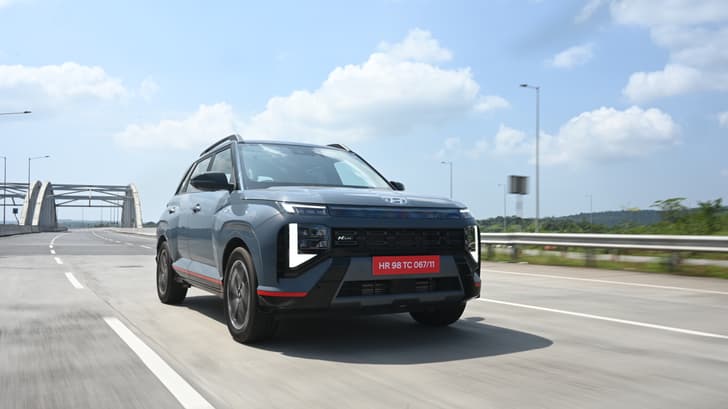
Front Right Three Quarter
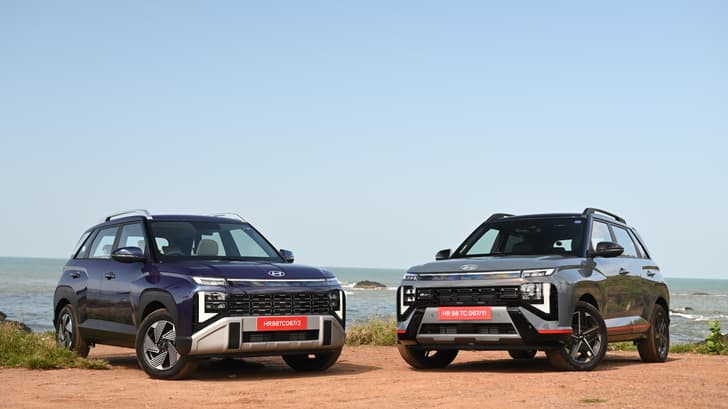
Front Left Three Quarter
Front Right Three Quarter
Alloy Wheels
Front Left Three Quarter
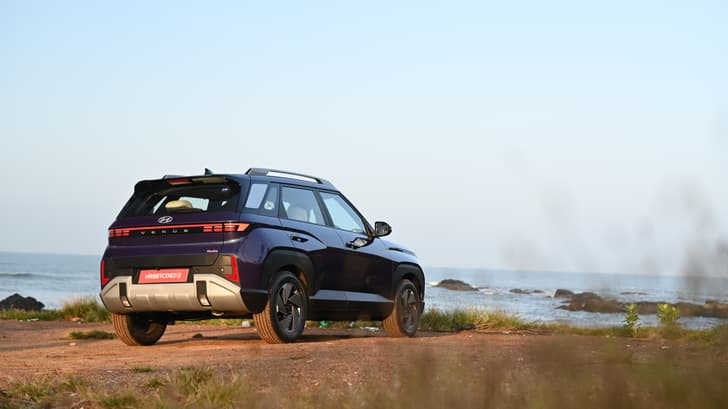
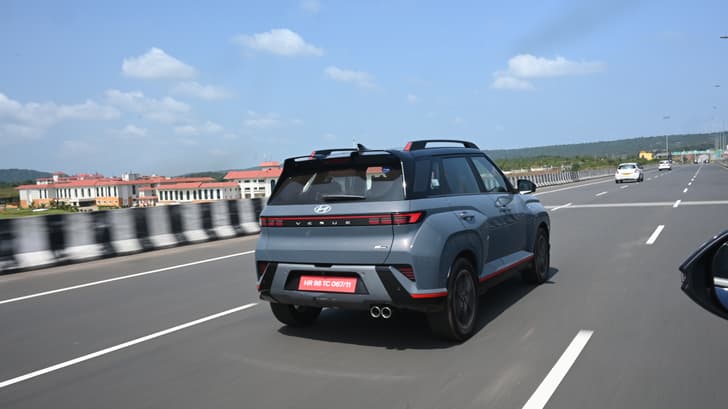
Rear View
Front Left Three Quarter
Rear View

Hyundai Venue HX10 Knight Edition 1.0 Turbo Petrol DCT

VariantHX10 Knight Edition 1.0 Turbo Petrol DCT
CityMumbai
₹17.47 Lakh
On road price, Mumbai
View price breakup
Starting₹25,260 /month
EMI calculator

Hyundai Venue HX10 Knight Edition 1.0 Turbo Petrol DCT Key Features

Safety
  • 360 degree Parking Camera
  • Dashcam
  • Front, Side and Rear Parking Sensors
Comfort
  • Keyless Entry
  • Driver rear view monitor (DRVM)

Hyundai Venue HX10 Knight Edition 1.0 Turbo Petrol DCT specifications

Engine & Transmission

Engine Displacement
998 cc
Engine Installation
Front
Engine Type
Turbocharged
Number of Cylinders
3
Max Engine Torque
172 Nm at 1500 - 4000 rpm
Max Engine Power
120 hp at 6000 rpm
Fuel Type/ Propulsion
Petrol
Gearbox Type
DCT
Paddle Shifters for Automatic Gearbox
Yes
Number of Gears
7
Manual Shifts via Gear Lever on Automatic Gearbox
Yes
Lockable Differential/s
No
Drive Layout
Front Wheel Drive

Fuel & Performance

Emission Standard
Bharat Stage VI
Terrain Modes
Yes
Official Fuel Economy
20 kmpl
Fuel Tank Capacity
45 litres
E20 Compatibility
Yes
Fuel Supply System
Direct Injection
Drive Mode Types
Multiple

Suspension & Steering

Rear Brakes
Disc
Front Brakes
Disc
4 Wheel Steer
No
Type of Power Assist
Electric
Steering Adjust type
Manual
Steering Adjust
Tilt
Rear Springs
Coil Springs
Ride Height Adjust
No
Rear Suspension Type
Coupled Torsion Beam Axle
Damper Control
No
Front Springs
Coil Springs
Front Suspension Type
McPherson Strut
Rear Tyre Size
215/60 R16
Spare Wheel
Space Saver
Front Tyre Size
215/60 R16
Wheel Size
16 inches
Wheels
Alloys

Dimensions

Boot Capacity
375 litres
Width
1800 mm
Wheelbase
2520 mm
Length
3995 mm
Height
1665 mm
Chassis Type
Monocoque
Doors
5

Hyundai Venue HX10 Knight Edition 1.0 Turbo Petrol DCT features

Comfort

Remote Locking
Rear Parcel Tray
Rear Power Outlet
Electric Tailgate Release
Rear Reading Lamp
Rear Window Sun Shades

Safety

Speed Assist System
Central Locking
Door Ajar Warning
Side Airbag
Child Safety Lock
Curtain Airbag

Exterior

Outside rear view mirror (ORVM)
LED fog lamps
Wheel Arch Cladding
Integrated Washer Jets with Wiper
Antenna
Shark Fin
LED headlamps

Interior

Trip Meter
Average Speed
Head-up Display
Average Fuel Consumption
Gear Indicator
Tachometer
Digital

Entertainment

Touchpad
Wireless Phone Charging
Video Player
USB Input
Second Row USB port
2 Type C
Satellite Navigation
On-board

Connected Car Features

Summon Mode
Anti Theft Immobilisation
App Details
Service Reminder Via App
Vehicle Tracking Via App
Geo Fence

Hyundai Venue variants

VariantsOn road price
Hyundai Venue HX2 1.2 Petrol MT
1197 cc | Petrol | Manual
₹9.24 Lakh
Digital cockpit
Airbags
Integrated (in-dash) music system
Touch screen infotainment system
Steering mounted controls
Hyundai Venue HX2 1.0 Turbo Petrol MT
998 cc | Petrol | Manual
₹10.29 Lakh
Digital cockpit
Airbags
Integrated (in-dash) music system
Touch screen infotainment system
Steering mounted controls
Hyundai Venue HX4 1.2 Petrol MT
1197 cc | Petrol | Manual
₹10.40 Lakh
Digital cockpit
Airbags
Integrated (in-dash) music system
Touch screen infotainment system
Rear camera
Hyundai Venue HX5 Knight Edition 1.2 Petrol MT
1197 cc | Petrol | Manual
₹11.22 Lakh
Outside rear view mirrors (ORVMs)
Hyundai Venue HX5 1.0 Turbo Petrol MT
998 cc | Petrol | Manual
₹11.44 Lakh
Cruise control
Sunroof
Digital cockpit
Keyless start
Airbags
Hyundai Venue HX5 1.2 Petrol MT
1197 cc | Petrol | Manual
₹11.55 Lakh
Sunroof
Digital cockpit
Keyless start
Airbags
Integrated (in-dash) music system
Hyundai Venue HX2 1.5 Diesel MT
1493 cc | Diesel | Manual
₹11.69 Lakh
Digital cockpit
Airbags
Integrated (in-dash) music system
Touch screen infotainment system
Steering mounted controls
Hyundai Venue HX5+ 1.2 Petrol MT
1197 cc | Petrol | Manual
₹12.01 Lakh
Sunroof
Digital cockpit
Keyless start
Airbags
Wireless phone charging
Hyundai Venue N Line N6 1.0 Turbo Petrol MT
998 cc | Petrol | Manual
₹12.59 Lakh
Electronic parking brake
Cruise control
Digital cockpit
Airbags
Integrated (in-dash) music system
Hyundai Venue HX6T 1.2 Petrol MT
1197 cc | Petrol | Manual
₹12.86 Lakh
Sunroof
Digital cockpit
Keyless start
Airbags
Wireless phone charging

Hyundai Venue comparison

Hyundai Venue
₹8.00 - ₹15.65 Lakhs
8
Transmission
DCT, Torque Converter, Manual, AT
Engine
998 cc - 1493 cc
Fuel type
Petrol, Diesel
Mileage
17.9 kmpl - 20.99 kmpl
Compare
Kia Sonet
₹7.33 - ₹14.09 Lakhs
8
Transmission
AT, Manual, IMT, DCT
Engine
998 cc - 1493 cc
Fuel type
Diesel, Petrol
Mileage
18.6 kmpl - 24.1 kmpl
Maruti Suzuki Brezza
₹8.26 - ₹12.86 Lakhs
8
Transmission
Manual, Torque Converter
Engine
1462 cc
Fuel type
CNG, Petrol
Mileage
17.80 kmpl - 25.51 km/kg
Tata Nexon
₹7.37 - ₹14.32 Lakhs
8
Transmission
Manual, AMT, DCT
Engine
1199 cc - 1497 cc
Fuel type
CNG, Diesel, Petrol
Mileage
17.01 kmpl - 24 km/kg

Questions you may find useful

4d

Hi, I’m planning to buy an automatic petrol SUV and am confused between the Kia Seltos HTE(O) IVT Petrol and the Hyundai Venue HX5 DCT Petrol. The on-road price difference is around Rs. 3 lakh, so I want to understand whether the Seltos is truly worth the extra cost. My typical usage includes 3,000-4,000km per year on moderate Indian roads, with occasional city driving. I also do weekend trips with family or friends, usually with 4-5 people. My car may sit idle for 15-20 days at a time. I currently drive a Hyundai i20 diesel manual.

Verified
3d

If you have the budget to accommodate the Rs. 3 lakh price difference, go for the Kia Seltos HTE(O) IVT. It is a significantly larger car, so your weekend trips with 4-5 people and luggage will be far easier. It also has a smoother and more refined powertrain overall, and its IVT automatic gearbox works equally well in the city and on the highway. Ride quality is better, the boot is much larger, and rear-seat space is something your passengers will appreciate.As for the Hyundai Venue, while a good SUV on its own, it is simply at a disadvantage for its size, given your intended usage. Its 1.0-litre turbo petrol is more powerful and feels punchier than the Seltos' 1.5 litre NA petrol, but it also suffers from serious turbo lag, and the DCT gearbox can be very clunky at low speeds, both of which are made worse when the car is full up. Thus, overall, the Seltos is just the better choice.Your automatic gearbox should have no real issue with sitting idle for 15-20 days at a time. What needs to be looked out for is the battery, which could discharge, and the fuel in the tank. E20 petrol, which is the norm in India now, can separate into petrol and ethanol if it comes in contact with moisture, which is a possibility when the car is left idle for a long. It is thus advisable in any case to run the car, even briefly, at least once a week.

VehicleKia Seltos
VehicleHyundai Venue
5d

My running is around 2,500 km per month, currently between Faridabad and Dwarka. My route is likely to change next year, but the monthly distance should remain similar, with more highway driving than at present. Budget is max Rs. 21 lakh on-road. Looking for a safe, reliable, long-term car that is comfortable for the driver. I generally prefer sedans. For context, I drove an 8th-gen Civic AT for 2.5 lakh km and am currently driving a Ciaz AT. I've shortlisted a few options, but each seems to have a drawback: Punch EV 40 - Seats felt too hard, cabin didn't feel very premium. Sonet Diesel AT GTX - Safety concerns. Venue Diesel AT SX(O) - City fuel efficiency doesn't seem great. Curvv Diesel AT - Concerned about long-term prospects as it doesn't seem to be selling well. Verna 1.5 Turbo DCT - Worried about city fuel efficiency. City Hybrid - Stretching beyond my budget. Creta Petrol AT - Safety rating not very reassuring. Am I missing any good options? Would appreciate suggestions, especially from people with high annual running and long-term ownership experience.

Verified
18h

Given your 2,500km monthly running, we'd actually recommend looking at a strong hybrid rather than a diesel. Our pick would be the Maruti Suzuki Victoris Hybrid. It fits within your budget, has a 5-star Bharat NCAP safety rating, offers excellent fuel efficiency in both city and highway driving and is backed by Maruti Suzuki's extensive service network. It also provides the kind of smooth, refined driving experience that should feel like a natural progression from your Civic and Ciaz. While it isn't a sedan, it offers generous interior space and excellent long-distance comfort.Another advantage is that, being a petrol hybrid, it is a more future-proof choice for Delhi NCR. With increasing scrutiny on diesel vehicles and evolving regulations in the region, a petrol hybrid offers greater long-term peace of mind while still delivering running costs that are comparable to many diesel SUVs.The City Hybrid would have been another obvious recommendation given your preference for sedans, but as you've mentioned, it stretches your budget.Among your shortlisted cars, we'd still lean towards the Verna Turbo DCT if you want to stay with a sedan. However, with your annual running, fuel costs will be significantly higher than with a strong hybrid.We would also be cautious about choosing the Seltos, Sonet or Venue diesel purely for efficiency. While all three use the same proven 1.5-litre diesel engine paired with a torque-converter automatic, it isn't the most fuel-efficient diesel automatic in real-world conditions.

VehicleMaruti Suzuki Victoris
VehicleHyundai Verna
VehicleHyundai Venue
VehicleKia Seltos
VehicleKia Sonet
6d

I'm a first-time car buyer looking for an automatic petrol car mainly for city use and occasional long trips. I want modern features like a 360 camera, wireless Android Auto/Apple CarPlay, etc. My budget is Rs. 10-12 lakh, but I can stretch it to Rs. 14 lakh if the car is worth it. I had shortlisted the Hyundai i20 Asta variant, but I heard there will be a facelift soon, and Hyundai may launch the Bayon as well. Is it a good time to buy the current i20, or should I wait for the facelift or even the Bayon? Are there any good alternatives like the Venue or Sonet? I am avoiding Maruti Suzuki because I feel the features offered and safety ratings are poor compared to the competition at the same price. Please advise.

Verified
5d

You can go ahead and buy the Hyundai i20 Asta IVT now. There's no further facelift planned, and the Bayon-based crossover will be positioned much higher and closer to the Hyundai Creta in price. For mostly city use, the i20's smooth, automatic and light controls make traffic a breeze, and it fits your budget better than most compact SUVs would. You still get six airbags, a big screen, a sunroof and all the everyday comforts, and it’s fine for the odd highway run. However, the i20 doesn’t get a 360 camera, and Android Auto/CarPlay aren't wireless unless you buy a special adapter accessory.If a 360 camera is a must and you want the SUV look, the Hyundai Venue SX(O) DCT or Kia Sonet GTX+ have it, but they’ll sit well past Rs 14 lakh on-road in most cities, and their dual-clutch automatics aren’t as smooth as the i20’s CVT in bumper-to-bumper traffic.Another alternative you could consider is the Toyota Urban Cruiser Taisor Turbo Petrol V AT, which gets a punchy but efficient engine, a smooth automatic, and the features you want at around your Rs 14 lakh budget.

VehicleHyundai i20
VehicleHyundai Creta
VehicleHyundai Venue
VehicleKia Sonet
VehicleToyota Urban Cruiser Taisor
6d

Should I buy petrol or diesel car? My budget is Rs. 10 lakh through the CSD route for long-term ownership. I currently own a 2022 Hyundai Creta Diesel, but my monthly running is relatively low. I am also concerned about future fuel regulations. If I buy an E20-compatible petrol car today, will it be able to handle higher ethanol blends that may be introduced in the coming years?

Verified
4d

Given your low monthly running, we would recommend a petrol car over a diesel. The fuel-efficiency advantage of a diesel only starts to make strong financial sense when you're covering substantially higher distances. Since you're already driving a 2022 Creta Diesel, moving to a petrol for your next car would also help you avoid concerns around DPFs and future diesel regulations.We also wouldn't let ethanol-blending concerns drive your purchase decision. While India could move towards E27 or even E30 fuel in the future, there is currently no official roadmap confirming this. Most modern E20-compliant petrol cars have been engineered with a margin of tolerance and should be able to handle somewhat higher ethanol blends without any immediate issues. At worst, some rubber components may wear slightly faster over many years, but these are typically inexpensive parts to replace. The bigger impact is likely to be a small reduction in fuel efficiency rather than any major reliability concern.For a Rs.10 lakh CSD budget, we would suggest looking at the Hyundai Venue 1.0 Turbo Petrol or the Skoda Kylaq. The Venue's turbo-petrol engine feels punchy and refined, offers a premium cabin and is very well suited to everyday use. The Kylaq, meanwhile, feels more substantial, offers excellent safety credentials and has one of the most enjoyable turbo-petrol engine and automatic gearbox combinations in the segment.

VehicleHyundai Venue
VehicleSkoda Kylaq
VehicleHyundai Creta
6d

Hi Autocar team, I'm replacing my 2017 Maruti Baleno Alpha petrol and would appreciate your recommendations. Location - Currently based in Pune - BH registration planned because there is a reasonable possibility of moving to another state in the future (likely Madhya Pradesh or Bangalore or Delhi) Usage - Primarily city driving (90%+) - Occasional highway trips, sometimes very long (up to 1,000 km) - Usually 2 adults + 1 child - Must comfortably accommodate 4 adults + 1 child when required - Annual running currently under 8,000 km, but could increase significantly because there will be two drivers and an automatic car is likely to be used more Drivers - One experienced driver comfortable with any size car - Second driver is relatively new and gets intimidated by judging the front-left corner and vehicle dimensions - Features such as a rear camera have helped significantly in building confidence Budget - Initially started looking around the Rs. 10 lakh on-road mark - Comfortable spending around Rs.14-16 lakh if the improvement in safety, confidence and ownership experience is clearly noticeable - Looking for the best overall fit rather than trying to maximise budget Priorities (in order) 1. Reliability and hassle-free ownership 2. Safety 3. Easy manoeuvrability and confidence in city traffic What I dislike about my current Baleno - Feels flimsy and dents very easily - Doesn't inspire confidence on highways anymore - Braking confidence is not great Preferences - Automatic transmission is mandatory - Open to petrol, hybrid or EV - Dedicated parking is available, and home charging is possible - Mostly good roads with occasional monsoon-related road damage - I value predictable ownership, service quality and peace of mind more than outright performance Test-drive observations We have driven a few hatchbacks and compact SUVs with automatic transmissions. One thing that became clear is that a commanding seating position and a clearer view of the road ahead significantly increase confidence, especially for the newer driver. However, we are still unsure whether this benefit alone justifies moving up from a hatchback to an SUV. Long-term thinking Initially, I thought a small hatchback would be ideal because I could pass it on to my parents after 3-5 years. However, if a slightly larger vehicle provides substantially better safety, comfort and confidence, I would rather keep it for 5-10 years and buy my parents a separate car later. Question Based on the above requirements, what would be your top 5 recommendations and in what order? More importantly: - Which body style would you choose: premium hatchback, compact SUV, midsize SUV, hybrid SUV or EV? - Which popular models would you eliminate despite their popularity, and why? - How much weight should I give to reliability versus crash safety when choosing a family car that will mostly be driven in the city but occasionally undertake long highway trips? - Am I likely to regret staying with a hatchback, or is moving up a segment the more sensible long-term decision for my use case?

Verified
6d

Given your requirements, a compact SUV would be a good next car for you. The higher seating will put the new driver at ease and will have a great bearing on confidence behind the wheel. Your priority for space, reliability and stress-free ownership leads us to the Maruti Suzuki Brezza AT and Hyundai Venue DCT. The Brezza is a no-nonsense compact SUV with good space, proven reliability and a practical interior. Your comfort and experience with Maruti's aftersales make it the one we'd recommend for you. You'll get a similar hassle-free experience with Hyundai as well. The new Venue ticks the important boxes for you, but it is pricey at the top end, in case the latest features are a must-have. The Venue's turbo-petrol engine does deliver punchier performance than the Brezza, but fuel economy isn't as good. If you want a larger SUV, there's the Honda Elevate CVT. However, the new driver in the family might not feel as comfortable driving it, given its size. If the hatchback form factor suits you, the Hyundai i20 CVT is a very likeable choice. Among EVs, the Punch EV is an option, but your running doesn't really justify going electric. You'd rather spend similar money on a larger or better-equipped petrol-automatic car.

VehicleMaruti Suzuki Brezza
VehicleHyundai Venue
VehicleHonda Elevate
VehicleHyundai i20
VehicleTata Punch EV
1w

Hi Autocar, I wanted to share our situation and get genuine advice before finalising our next car. Our background: we are a middle-class family from Warangal, Telangana. We had earlier booked the Hyundai Venue HX8 DCT for 16 lakh. However, we decided to cancel the booking due to concerns about fuel uncertainty and ethanol blending. With E20 already rolling out and E30 potentially coming in the next few years, we felt risking 16 lakh on a petrol car was financially unwise for a middle-class household like ours. After reconsidering, we've decided to bring our budget down to 10-11 lakh on-road so that even if fuel policies or technology shift in the coming years, our financial exposure and stress stay minimal. Our usage pattern: 70% city driving, 30% highway usage (occasional outstation trips). The overall usage will be moderate/occasional, not daily heavy commuting. Our key priorities: 5-star safety rating (Global NCAP/Bharat NCAP), non-negotiable, automatic transmission (petrol only), reliability and low maintenance for at least the next 10 years, reasonable service network availability in Tier-2 cities like Warangal, and comfortable for occasional highway trips, not just city crawling. Please suggest a few options and the best one to consider. Thank you.

Verified
6d

It’s a shame you cancelled your Hyundai Venue booking over ethanol concerns, because in our view, those fears are somewhat exaggerated. To clarify, while India could move to E27 or even E30 fuel over the next five years, there is currently no official roadmap confirming this.Even if such a transition happens, the risk to an E20-compliant car is limited. Most manufacturers have engineered a buffer into their E20 vehicles, and we understand Hyundai’s current petrol range is already compatible with higher ethanol blends (around E25-E27 levels). In practical terms, this means the car can handle higher ethanol content without any immediate issues.Over a very long period, certain components like rubber hoses or seals may see slightly accelerated wear. For instance, parts designed to last 6-8 years on E20 fuel may need replacement a bit earlier, say in 4-6 years. These are not high-cost components, and even older pre-E10 cars in India have managed well with periodic replacement of such parts.On the performance side, there won’t be any noticeable drop. However, since higher ethanol blends have lower energy density, fuel efficiency will be affected if the engine isn’t specifically calibrated for it. That said, the real-world impact on running costs is unlikely to be significant.If you still prefer to stay within a Rs 10-11 lakh budget, the Tata Punch is the only car that meets your non-negotiable 5-star safety requirement in this price range. While Tata’s reliability record isn’t quite at Maruti’s level, the latest versions of the Punch are better sorted and should serve you well over time. The AMT gearbox is not the quickest, but it suits city use, which forms the bulk of your driving. Its solid build and stable ride also make it reasonably capable on highways, though overtaking will need some planning. Tata’s wide service network is an advantage in Tier-2 cities like Warangal.If you’re open to a sedan, the Maruti Suzuki Dzire is also worth considering. It offers a 5-star Bharat NCAP rating, is spacious, easy to drive, and has a smoother, more efficient petrol-AMT combination. It may not have the SUV image, but it’s a very practical and user-friendly choice for long-term ownership thanks to Maruti-Suzuki’s unparalleled service network.

VehicleHyundai Venue
VehicleTata Punch
VehicleMaruti Suzuki Dzire