Autocar India
18h

Hi Autocar, I wanted to share our situation and get genuine advice before finalising our next car. Our background: we are a middle-class family from Warangal, Telangana. We had earlier booked the Hyundai Venue HX8 DCT for 16 lakh. However, we decided to cancel the booking due to concerns about fuel uncertainty and ethanol blending. With E20 already rolling out and E30 potentially coming in the next few years, we felt risking 16 lakh on a petrol car was financially unwise for a middle-class household like ours. After reconsidering, we've decided to bring our budget down to 10-11 lakh on-road so that even if fuel policies or technology shift in the coming years, our financial exposure and stress stay minimal. Our usage pattern: 70% city driving, 30% highway usage (occasional outstation trips). The overall usage will be moderate/occasional, not daily heavy commuting. Our key priorities: 5-star safety rating (Global NCAP/Bharat NCAP), non-negotiable, automatic transmission (petrol only), reliability and low maintenance for at least the next 10 years, reasonable service network availability in Tier-2 cities like Warangal, and comfortable for occasional highway trips, not just city crawling. Please suggest a few options and the best one to consider. Thank you.

Verified
18m
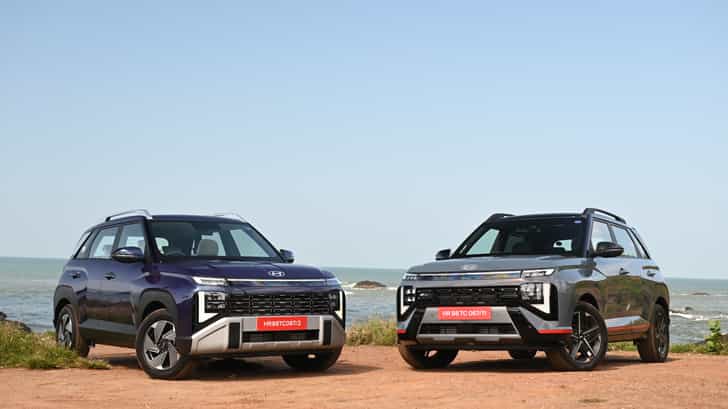
It’s a shame you cancelled your Hyundai Venue booking over ethanol concerns, because in our view, those fears are somewhat exaggerated. To clarify, while India could move to E27 or even E30 fuel over the next five years, there is currently no official roadmap confirming this.
Even if such a transition happens, the risk to an E20-compliant car is limited. Most manufacturers have engineered a buffer into their E20 vehicles, and we understand Hyundai’s current petrol range is already compatible with higher ethanol blends (around E25-E27 levels). In practical terms, this means the car can handle higher ethanol content without any immediate issues.
Over a very long period, certain components like rubber hoses or seals may see slightly accelerated wear. For instance, parts designed to last 6-8 years on E20 fuel may need replacement a bit earlier, say in 4-6 years. These are not high-cost components, and even older pre-E10 cars in India have managed well with periodic replacement of such parts.
On the performance side, there won’t be any noticeable drop. However, since higher ethanol blends have lower energy density, fuel efficiency will be affected if the engine isn’t specifically calibrated for it. That said, the real-world impact on running costs is unlikely to be significant.
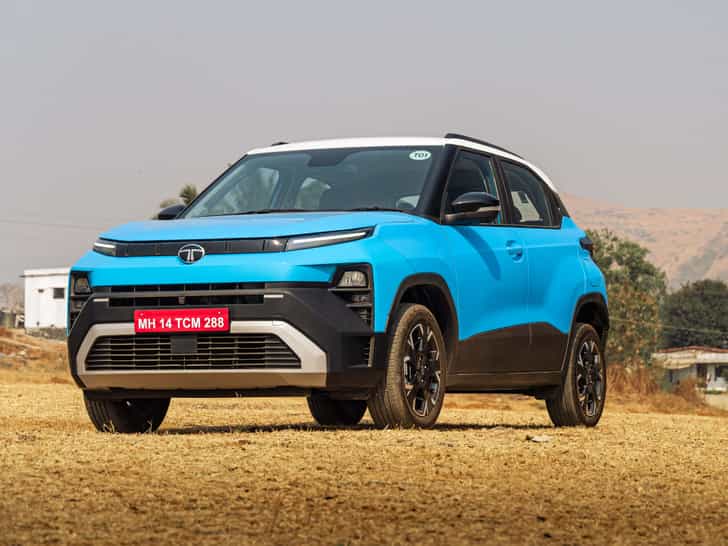
If you still prefer to stay within a Rs 10-11 lakh budget, the Tata Punch is the only car that meets your non-negotiable 5-star safety requirement in this price range. While Tata’s reliability record isn’t quite at Maruti’s level, the latest versions of the Punch are better sorted and should serve you well over time. The AMT gearbox is not the quickest, but it suits city use, which forms the bulk of your driving. Its solid build and stable ride also make it reasonably capable on highways, though overtaking will need some planning. Tata’s wide service network is an advantage in Tier-2 cities like Warangal.
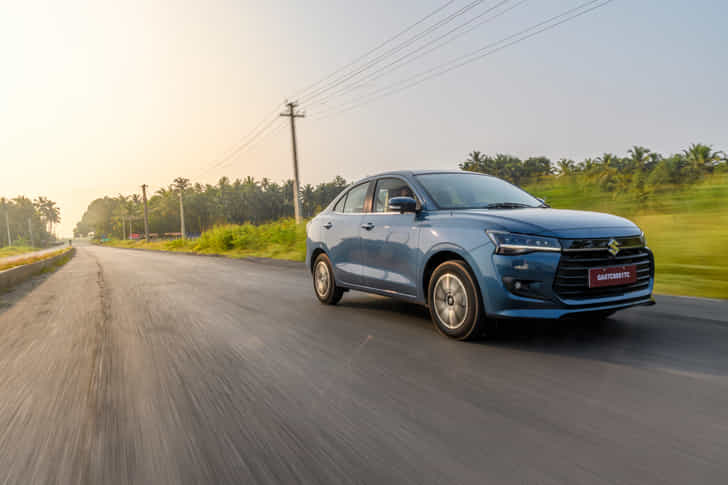
If you’re open to a sedan, the Maruti Suzuki Dzire is also worth considering. It offers a 5-star Bharat NCAP rating, is spacious, easy to drive, and has a smoother, more efficient petrol-AMT combination. It may not have the SUV image, but it’s a very practical and user-friendly choice for long-term ownership thanks to Maruti-Suzuki’s unparalleled service network.
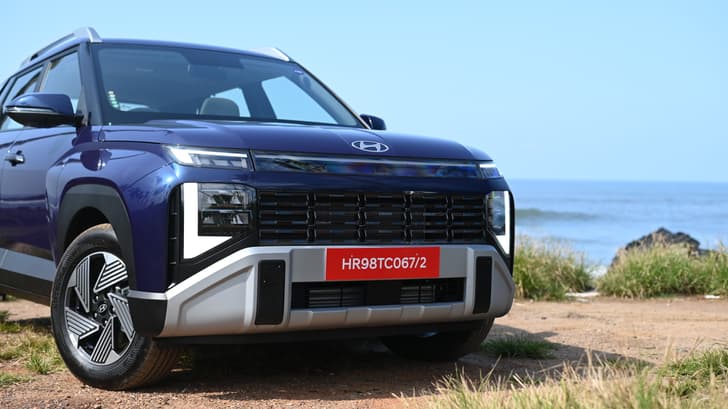
Hyundai Venue

Hyundai Venue

17m

Which automatic transmission is better, amt, dct, tct, cvt etc

12m

@neethuajith There isn't a single "best" automatic gearbox as it depends on the usage. For most buyers, a Torque Converter or CVT is the smoothest and most hassle-free choice for daily driving. DCTs are great if you enjoy sporty driving, while AMTs are more about affordability than refinement. If I had to rank them for most buyers: Torque Converter > CVT > DCT > AMT

Want to sell your car?

Sell your car at the right price, without the stress.

More questions on similar cars

1d

My average monthly running is around 1,200 km. I am looking for a car that offers good fuel efficiency and fits within a budget of Rs.14 lakh. Could you please suggest suitable options in both petrol automatic and diesel manual variants?

Verified
1d

Pick the Maruti Suzuki Fronx 1.0 Turbo AT for petrol and the Kia Sonet 1.5 diesel manual for diesel, because both return excellent real-world mileage and fit your Rs. 14 lakh budget with a good amount of features. You could also consider the Fronx 1.2 petrol AMT, which while more efficient and cheaper to buy, isn't as smooth as the 1.0 Turbo's 6-speed AT. The Fronx suits daily city use. It is easy to drive, easy to park, and the 1.0 turbo petrol is efficient while also having sufficient punch when needed. Maruti's service network is massive, and maintenance costs are low. Do note, however, as this is a turbo petrol with a torque converter auto, good mileage is highly dependent on your driving style, and if you drive with a heavy foot, the number will go down.For your 1200km-a-month usage, the Sonet diesel manual makes strong sense if you do a lot of highway driving. The 1.5 diesel is smooth at low revs and still pulls cleanly, so you will easily see 20-plus-kpl on highways and high teens in town. It also feels more relaxed with a full load or on inclines. Do note, the rear seat is quite cramped for three adults and the ride is a bit firm. If you can stretch your budget a bit, the Hyundai Venue diesel MT with the same engine and gearbox is a far better-rounded product.

VehicleMaruti Suzuki Fronx
VehicleKia Sonet
VehicleHyundai Venue

Popular discussions right now

Posted on: 23 Jun 2026