Hyundai Suv Electric Cars in India (2)
Discover the best Hyundai Suv Electric Cars. Our comprehensive guide covers detailed specifications, expert reviews, pricing information, and buying advice for Hyundai Suv Electric Cars. Find the perfect cars that matches your requirements and budget.


Trending Questions on Hyundai Cars - Answered by Autocar Experts
I’m planning to buy an electric SUV in Delhi with an on-road budget of Rs. 20-21 lakh. My usage will mainly involve a 30-40 km daily office commute, along with occasional weekend highway trips. The VinFast VF6 Wind Infinity has caught my attention because of its design, features, and range, but I’m hesitant about its after-sales support, service network, resale value, and long-term reliability. Given my requirements, would you recommend the VF6, or is there a better EV in this price range that offers a more dependable ownership experience?
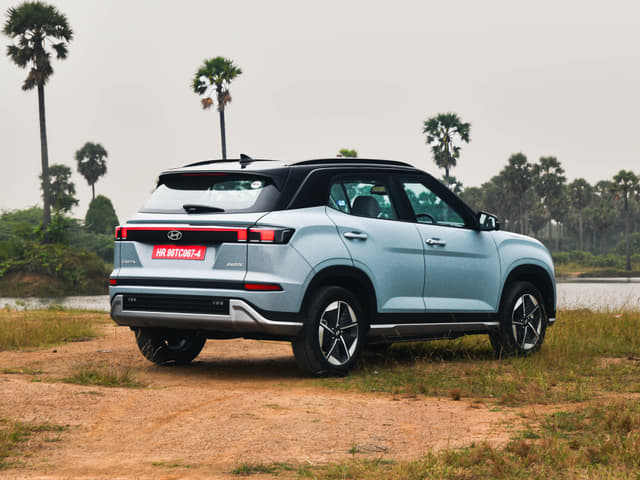
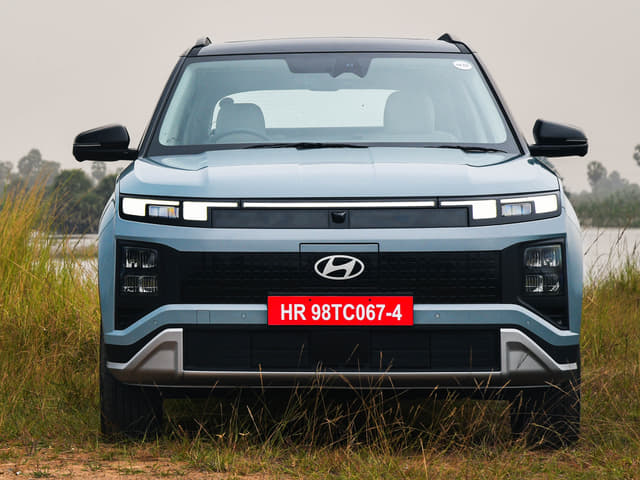
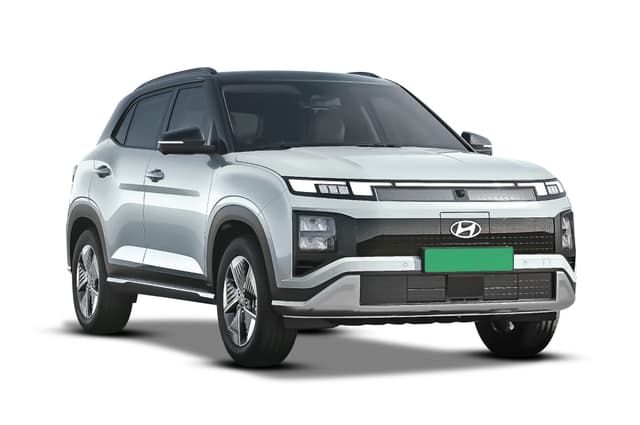
Given your usage pattern of a 30-40 km daily commute with occasional highway trips, the VinFast VF6 Wind Infinity is a tempting option with its strong range and feature set. However, your concerns about after-sales support, service network and long-term reliability are valid. VinFast is still a relatively new player in India, and while the company is making efforts to establish a service network, it does not yet have reach of more established brands. So it really boils down to the support you have in your area. If there is a dealer close to you and in the areas you drive to, you could go ahead with the car. As for the company itself, Vinfast is investing in expanding their network and has also massive plans for India for their auto business as well as other businesses like the GSM app based taxi service. From that point of view you need not worry as they are not a fly-by-night operator. If you would however you would prefer an electric car from an established brand, the Mahindra BE6 would be a good option as it too has a striking coupe like design, as this seems to be what you prefer. As an all rounder the Hyundai Creta EV would be a good option.
Hi everyone, We currently own a Chevrolet Sail Sedan Diesel and are planning to upgrade. I'm having a tough time deciding between buying another diesel SUV or switching to an EV. Our usage pattern is quite different from most buyers. We drive around 50 km per week, almost entirely within the city. Highway trips are very rare, maybe once or twice a year. Because of this, I feel an EV makes more sense, and I absolutely love the smooth and quiet driving experience that electric cars offer. At the moment, I'm considering the Tata Nexon EV, Kia Syros EV (newly launched), and the Hyundai Creta Electric, especially the new BaaS option in the base variant. I'm leaning slightly towards Kia/Hyundai because they seem to have a better reputation for battery management, software, overall reliability, and after-sales service compared to Tata. If I decide to stay with diesel, the base model Kia Seltos Diesel would probably be my choice. However, I'm quite concerned about modern diesel systems, particularly DPF regeneration and DEF/AdBlue-related issues. Since our driving is mostly short city trips with very little highway usage, I'm worried that a diesel may not be the right fit in the long run. Given our usage pattern, what would you recommend: Kia Seltos Diesel, Tata Nexon EV, Kia Syros EV, or Hyundai Creta Electric? I'd especially appreciate feedback from owners who have experience with these cars in predominantly city driving. Thanks in advance!
Between the Nexon EV, Syros EV and Creta Electric, the Nexon EV is the most affordable option. But we'd strongly recommend the Syros EV - it is a very sensible choice. It is priced well, has a good feature set, and cabin space is excellent. Kia's battery management, software and service network inspire more confidence for long-term ownership. Overall, the Syros EV is the more balanced package, and even though the Creta Electric is a good car, the Syros EV comes across as better value for money.
Hi Autocar team, I need your help in choosing an automatic family car that is reliable, safe and builds confidence in a new driver. I am planning to replace my 2017 Maruti Baleno Alpha petrol as it feels flimsy and dents very easily. Further, it no longer inspire confidence on highways and its braking confidence is also not great. I would appreciate your recommendations for another car. I am currently based in Pune and have planned for BH registration because there is a reasonable possibility of moving to another state in the future (most likely among Madhya Pradesh, Bangalore or Delhi). I will be primarily using it for city driving (90%) with occasional highway trips that may be very long (up to 1,000 km) sometimes. I usually travel with 2 adults and 1 child. I am looking for a car that can comfortably accommodate 4 adults and 1 child whenever required. My annual running is currently under 8,000 km, but it could increase significantly because there will be two drivers and an automatic car is likely to be used more. There will be one experienced driver who is comfortable with car of any size. Second driver is relatively new and gets intimidated by judging front-left corner and vehicle dimensions. I am looking for features such as rear camera that can help in significantly building confidence. I want to first look for a car in Rs. 10 lakh on-road mark but am comfortable with spending around Rs. 14 to 16 lakh if the car offers more safety, confidence and better ownership experience. I am looking for the best overall fit rather than trying to maximize budget. My priorities are reliability and hassle-free ownership, safety, easy maneuverability and confidence in city traffic. I value predictable ownership, service quality and peace of mind more than outright performance. I am comfortable with either petrol, hybrid or EV car with automatic transmission. EV seems interesting because I have a dedicated parking and home charging is possible. My area has mostly good roads with occasional monsoon-related road damage. We have taken test-drives of a few hatchbacks and compact SUVs with automatic transmissions. One thing that has became clear to me is that commanding seating position and a clearer view of road ahead significantly increase confidence, especially for the newer driver. However, we are still unsure whether this benefit alone justifies moving up from a hatchback to an SUV. Initially I thought a small hatchback would be ideal because I could pass it on to my parents after 3-5 years. However, if a slightly larger vehicle offers better safety, comfort and confidence, I would rather keep it for 5-10 years and later buy my parents a separate car. Based on the above requirements, what would be your top 5 recommendations and in what order? More importantly, which body style would you choose among premium hatchback, compact SUV, midsize SUV, hybrid SUV or EV? Which popular models you will not choose despite their popularity, and why? How much importance should I give to reliability versus crash safety while choosing a family car that will mostly be driven in the city but I make take it occasionally for long highway trips? Also, will I regret staying with a hatchback, or moving a segment up, the more sensible long-term decision for my use case?
You could consider the Hyundai Venue Turbo-petrol DCT and the Skoda Kylaq Turbo-AT. Both these are sub-4-meter SUVs with high seating positions and light controls, making them compact and easy-to-judge for new drivers. Both of these automatic cars will feel like a proper upgrade over your outgoing car in terms of build, safety, fit-finish, as well as features. Also, while performance isn't something you're concerned much about, you'll be happy to know that their turbo-petrol engines pack in good punch, which will make them perform effortlessly during your highway drives with the family.Even though with a Rs. 16 lakh budget, you could get midsize SUV or sedan options, we'd suggest you stick to these compact SUV, that will make manoeuvring and parking easy.Between the options suggested, the Hyundai car has a slight edge, particularly due to Hyundai's widespread service network.If you're open to EVs, the Nexon EV with the 45kWh battery is worth considering. It is compact, smoother than any similarly priced ICE car, and with the large battery real-world range will be good too. You can easily get a variant well within your budget.
I want to buy an SUV and have a daily commute of around 40 km, along with occasional highway trips of up to 1,000 km. However, I am confused about whether I should choose an EV or a diesel variant. I am currently based in Indore, and given the current oil situation, I am inclined towards an EV. However, I am concerned about the limited availability of charging infrastructure in Tier 3 and Tier 4 cities such as Damoh and Sagar. My main worries are the availability of charging stations during long highway journeys, as well as the time required to recharge the vehicle. Could you please advise whether an EV or a diesel SUV would be the better choice?
Pick a diesel SUV for now, because your 1000 km highway runs will be far less stressful. Owning a diesel car means 5-minute refuels almost anywhere, no hunting for chargers or waiting for the battery to be topped up. With today’s patchy fast-charging in tier 3-4 towns, an EV road trip still needs careful planning, backup options, and usually 2-3 long stops. Your 40 km daily run does suit an EV, but only if you have reliable home charging and if those long trips are rare.For diesel, a Hyundai Creta or Kia Seltos is the easy, efficient, and comfortable choice. If you want lower city running cost without charging worries, pick a strong-hybrid car like the Toyota Urban Cruiser Hyryder or Maruti Suzuki Victoris instead.
Hi, I recently moved back to India and am planning to buy an EV as my primary and only car. My budget is around ₹25 lakh, and I am looking for a proper 5-seater that will mainly be used for city driving of around 15-20 km daily, along with occasional road trips. For the past six years, I have been driving Tesla models - first the Model 3 and later the Model Y - so I would ideally like to continue using an EV in India as well. However, I am still unsure about the practicality of the charging infrastructure here. I will be staying in a rented apartment near Outer Ring Road, Bellandur, Bengaluru. I have been informed that the residential community, which has around 2,000 apartments, currently has about 6-8 charging points, and the connected mall also has a few additional chargers. Could you please advise: Whether owning an EV as the only car in Bengaluru currently makes practical sense How reliable is the charging infrastructure in Bengaluru and across India for road trips Which EVs around ₹25 lakh would best suit my requirements in terms of comfort, technology, driving experience, reliability, range, and overall ownership experience Any guidance would be greatly appreciated.
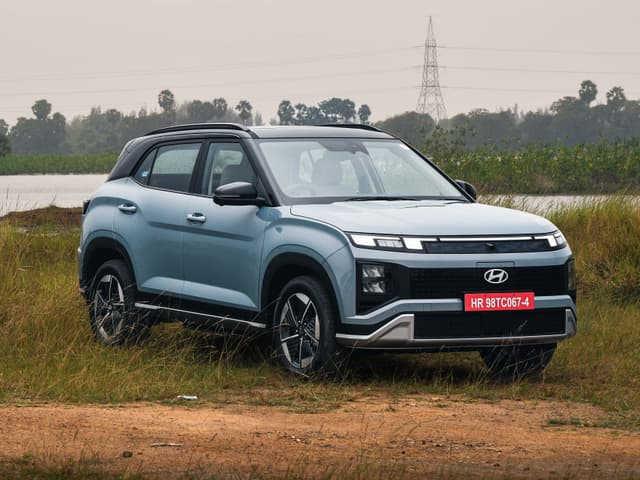
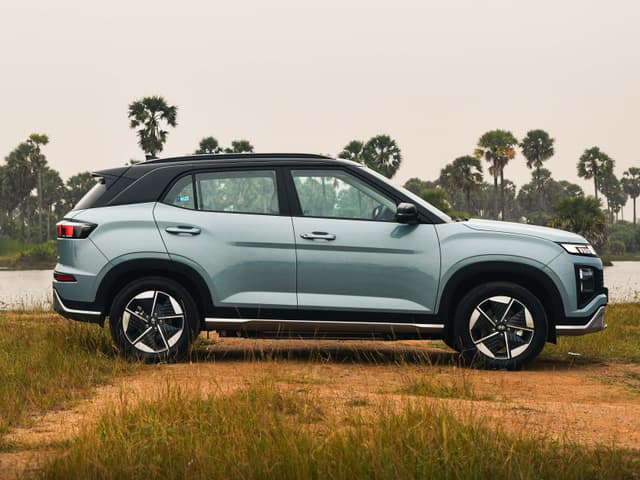
Before committing to an EV, it is advisable to speak to electric car owners in the complex to know about the ease of charging. Public chargers in easy access are a plus, but the ideal and often most reliable solution is a charger in your own parking. Many housing complexes do not allow this, making it all the more important to research public charging options in the vicinity. In general, Bengaluru does have a wide network of chargers, so a weekly plug-in shouldn't be a hassle. Further, major highways south and west of the city have regular fast chargers, so planned road trips are very workable.Of the cars, the Hyundai Creta Electric is a sensible buy for your usage. It's a good size for Bangalore's traffic yet offers comfortable seating for five passengers. It won't match your Tesla's wow factor, but the Creta does pack in all the features that you would need and use over your short commutes. You can buy the 51.4kWh battery pack version, which offers ample range for your city drives. If you'd prefer a larger vehicle with more interior space, options include the Mahindra XEV 9S (the 70kWh battery pack is a good pick but just out of your budget) and the Tata Harrier EV with the 65kWh battery pack.
Last Updated on: 6 Aug 2026