Autocar India

Hyundai Electric Cars in India (3)

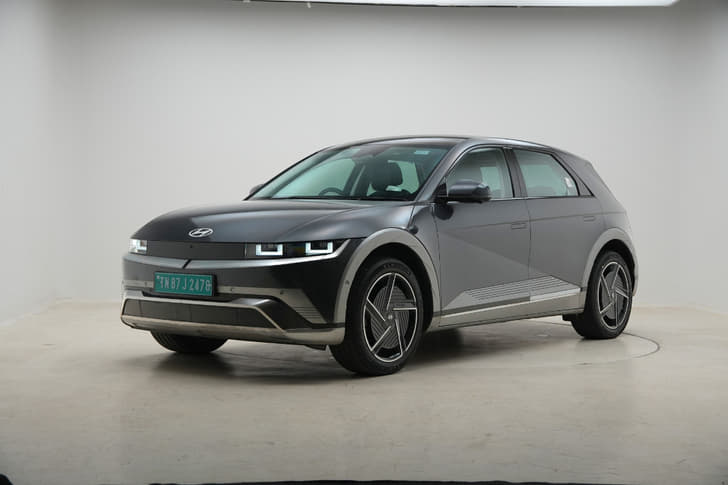
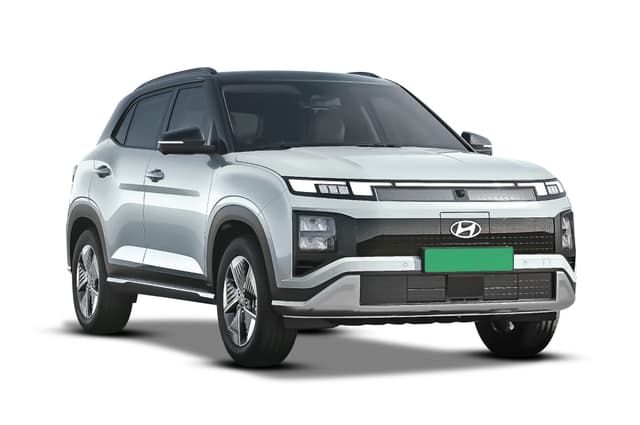
Hyundai electric cars in September 2026 include two premium SUV options in the Indian market. The Hyundai electric car price in India starts at ₹18.02 lakh and goes up to ₹46.30 lakh (ex-showroom), offering choices for both mid-range and premium EV buyers.

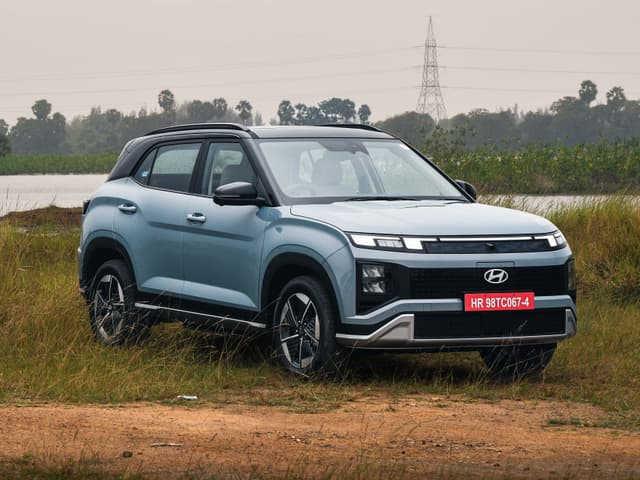
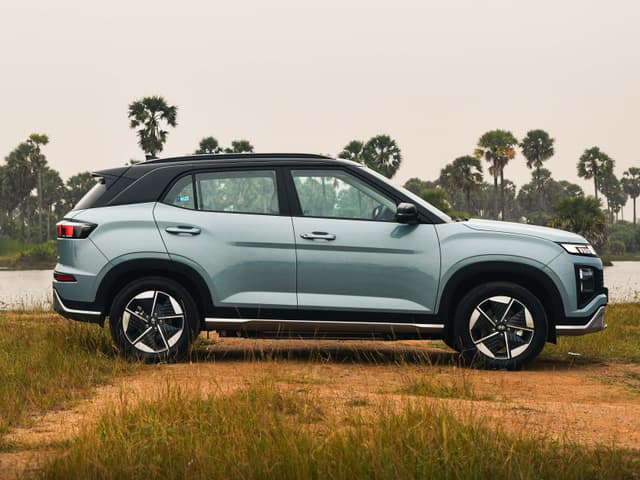
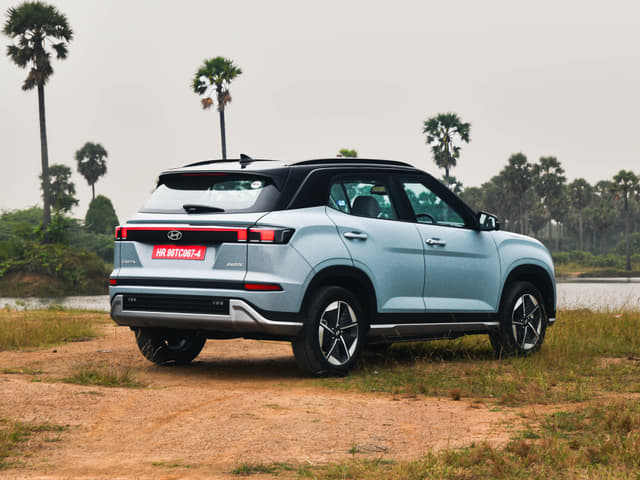
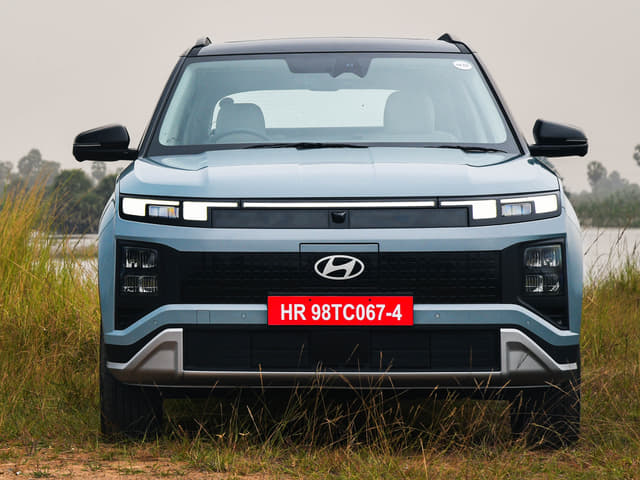
The Hyundai electric cars in India lineup consist of the Hyundai Creta Electric and the Hyundai Ioniq 5. The Hyundai Creta electric car offers a claimed range of 390-510 km and comes with a front-wheel-drive (FWD) setup. On the other hand, the Hyundai electric car Ioniq 5 delivers up to 631 km of range. It features a rear-wheel-drive (RWD) configuration for a more engaging drive.

Both Hyundai new electric car models are 5-seater SUVs and come equipped with 6 airbags for safety. Feature highlights include ambient lighting, alloy wheels, cruise control, ABS, parking sensors and central locking. The Ioniq 5 offers an additional 360-degree camera for enhanced safety.

Show more
Upcoming
Hyundai Compact EV
Late 2026
Exp. Launch
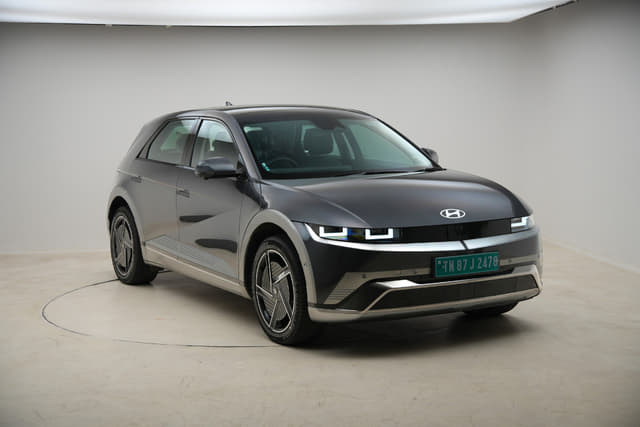
Hyundai Ioniq 5 Front Right Three Quarter
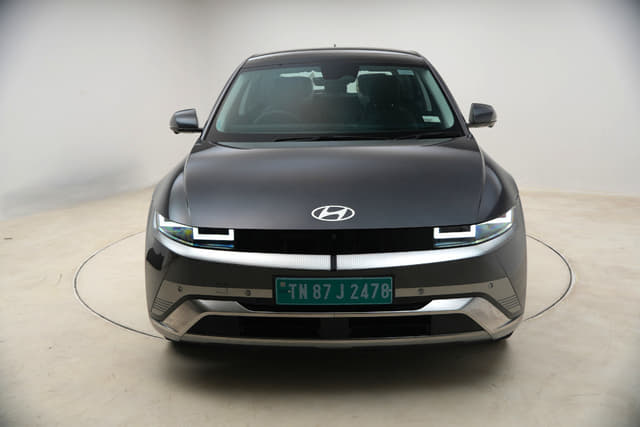
Hyundai Ioniq 5 Front View
Hyundai Ioniq 5 Closed Bonnet
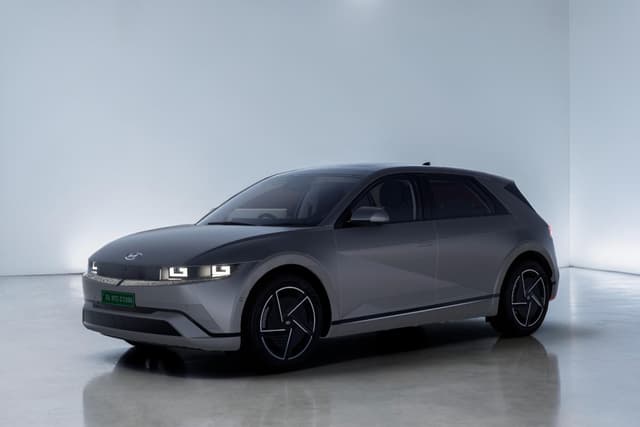
Hyundai Ioniq 5 Color Gravity Gold Matte
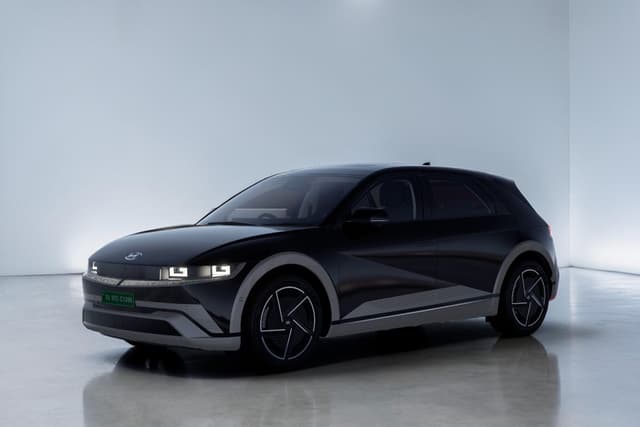
Hyundai Ioniq 5 Color Midnight Black Pearl
9
690 km
5 seater
SUV
Hyundai Creta Electric Front Right Three Quarter
Hyundai Creta Electric Left Side View
Hyundai Creta Electric Rear Right Three Quarter
Hyundai Creta Electric Front Logo
Hyundai Creta Electric Front Left Three Quarter
9
420-510 km
5 seater
SUV

Hyundai Electric Cars - FAQs

Hyundai electric cars currently include two SUV models in the Indian market. 

The Hyundai electric car price in India starts at ₹18.02 lakh and goes up to ₹46.30 lakh (ex-showroom).
 

The Hyundai electric cars in India lineup consist of the Hyundai Creta Electric and the Hyundai Ioniq 5.
 

The Hyundai Creta electric car offers a claimed driving range of 390-510 km and comes with a front-wheel-drive setup.

The Hyundai Ioniq 5 delivers up to 631 km of range and features a rear-wheel-drive configuration along with a 360-degree camera.
 

No, currently there is no Hyundai electric car under 10 lakh available in India.

Both Hyundai new electric car options come with 6 airbags, ambient lighting, alloy wheels, cruise control, ABS, parking sensors and central locking.

The Hyundai electric cars price range for the two SUV models falls between ₹18.02 lakh and ₹46.30 lakh (ex-showroom).
 

Among Hyundai electric car in India options, the Hyundai Ioniq 5 offers the highest claimed range of up to 631 km.
 

Need an expert opinion on your car related queries?

Trending Questions on Hyundai Cars - Answered by Autocar Experts

•1d

I usually travel around 3,000km a month. My Skoda Slavia 1.0 top-end variant has already covered 63,000km in one year and 10 months. I am now planning to shift to an EV. My running includes two outstation trips every month, along with daily travel of around 100km. On weekends, I typically travel 150-200 km. My budget is around Rs 20 lakh. Which EV would suit my needs best? Kindly suggest.

Verified
•1d

With your running of around 3,000km a month, two outstation trips a month, daily 100km commutes and weekend 150-200 km runs, an electric car does make sense, but only if you have reliable home charging or charging at your workplace.The Hyundai Creta Electric would be a very sensible choice and should suit your mix of city and highway usage well. It has an excellent ride, is light and easy to drive in the city, and remains stable at higher speeds on the highway. At your Rs 20 lakh budget, you would get the smaller 42kWh battery, which should suffice for your 200km drives, assuming these do not involve too many steep climbs, as these can reduce the range. If you can stretch your budget by about Rs 1 lakh, you would be able to get the larger battery pack, which would make your long drives easier.As for the variant, it would be the base and lower trims that would suit your budget, but you will still get the essential features like automatic climate control and a touchscreen with Android Auto and Apple CarPlay.

VehicleHyundai Creta Electric
•6d

Hello guys, I’m a 30 year old working professional and am looking to buy an EV mainly for city commute and occasional highway driving (20%). I appreciate build and ride quality, refinement and reliability. The EVs that I’m mainly looking at are the Ioniq 5, Kia EV6, BYD Sealion 7 and BMW iX1. Which do you think will be the right fit for my use case? I’m actually leaning towards the Korean cars and am not willing to spend for the iX1 just for its badge value. Thank you for the answer in advance. You guys are a great source of reliable and measured Automative content in this country. Really appreciate it!

Verified
•5d

The Kia EV6 is the most driver-focused option from the list with a sportier character and sharper handling, but it comes at a premium which might not make it justify the stretch. However, Kia dealers are offering significant discounts which could bring its price at par with the others, and only then is it a compelling buy.After its recent update, the new Hyundai Ioniq 5 no longer feels value for money, but it remains a comfortable, feature-loaded and practical option, now with more range and better DC fast charging capability. Hyundai’s service network and ownership experience are also strong, which matters for long-term peace of mind.The BYD Sealion 7 feels like a flagship offering, with a luxurious interior and a laundry list of features. Surprisingly, the two-wheel drive version is the most value-for-money option here, which makes it very compelling. However, it doesn't drive as well as the BMW, nor is its after-sales support as widespread as the others. The BMW iX1 is a fundamentally sorted car, and is relatively more compact for city usage. Its ride-handling balance are excellent and it also comes with the snob value of the BMW badge. As a 30-year old, the iX1 will speak of your success and achievements like no other. But it lacks several features, hence it might not seem value for money.In summary, get the Kia EV6 for the best drive experience provided you get a substantial discount that brings its price close to others. But if you're looking for the best bang for your buck, opt for the rear-wheel drive BYD Sealion 7.

VehicleKia EV6
VehicleHyundai Ioniq 5
VehicleBYD Sealion 7
VehicleBMW iX1 LWB
•6d

I would like to buy a new car especially SUV in the budget of around 16 lakh. I am travelling around 1200 km monthly. Which is suitable for me between electric or petrol automatic car? My preferences are Maruti Suzuki Brezza ZXi Petrol Automatic, Tata Nexon EV Creative 45 electric and Hyundai Venue HX6 AND HX5. Which will be better for me? I am giving more importance to fuel efficiency, low cost maintenance and safety.

Verified
•5d

With a budget of around Rs 16 lakh and a monthly running of 1,200 km, the decision between petrol automatic and electric comes down to your usage pattern and priorities. Since you are giving more importance to fuel efficiency, low maintenance and safety, the Maruti Suzuki Brezza ZXi petrol automatic is the most sensible choice from your shortlist. The Brezza is a proven, reliable car with a wide service network, low maintenance costs and a comfortable ownership experience. It is also a safe car with a good reputation for long-term durability, which is important given your running.The Hyundai Venue HX6 and HX5 are also strong contenders, offering a more premium cabin and a slightly more refined driving experience, but the Brezza edges them out on reliability and ownership costs. The Tata Nexon 3.0 Creative 45 EV is a good electric option, but at 1,200 km a month, the cost savings over petrol are not significant enough to justify the higher upfront cost and the dependency on charging infrastructure, unless you have a dedicated home charger and a predictable usage pattern.Overall, the Brezza ZXi petrol automatic strikes the best balance between efficiency, low maintenance and long-term peace of mind.

VehicleMaruti Suzuki Brezza
VehicleHyundai Venue
VehicleTata Nexon
•1w

Dear Autocar India experts, I am planning to buy a new car for my daily commute. I live in a hilly area and want my next car to be spacious enough for taking my three kids to school and for family functions. I have been waiting for the Skoda Superb for almost a year. Now that it is finally coming to India, I have heard that it may not be offered with a petrol engine, which is what I was hoping for. I am a fan of diesel cars, but I have had a bad experience with DPF issues in my Velar, so I am now hesitant to go down that route again. As an alternative, I am considering an electric car and have been looking at the Hyundai Ioniq 5 and BYD Sealion 7. I would like to know your expert opinion on these two EVs, particularly when it comes to after-sales service and ownership experience. Which one would you recommend for my requirements, or should I wait and go for the Skoda Superb anyway? I currently use a Brezza diesel for my daily commute and also have a Zen for fun drives. Kindly help me make the right choice. Thank you for your expert advice.

Verified
•1w

Given your requirements, the Hyundai Ioniq 5 is the better fit. You live in a hilly area, have three kids and need a car for school runs and family functions, so space, comfort and practicality are key. The Ioniq 5 is a large, spacious EV with a flat floor, excellent rear seat space and a big boot, making it well suited to family use. Hyundai also has a far stronger service network and EV support infrastructure than BYD, which is important for long-term ownership confidence.The BYD Sealion 7 is a very impressive EV with a larger battery and longer claimed range, but BYD's service network is still relatively limited compared to Hyundai. In a hilly area where you may need support, that matters. The Ioniq 5's range is already very strong and more than adequate for daily use, so the difference is not worth the trade-off in service confidence.As for the Skoda Superb, it is a fantastic car, but it is coming only as a diesel. Given your bad experience with DPF issues on your Velar and your preference for petrol, it is not the right choice. Modern diesels are cleaner, but DPF issues can still occur in hilly, stop-start conditions if the car is not regularly driven on longer runs.You already have a Maruti Suzuki Brezza diesel for daily use and a Zen for fun drives, so the Ioniq 5 adds a spacious, comfortable and reliable family car to your garage without the DPF concerns. It is the most sensible and future-proof choice for your needs.

VehicleHyundai Ioniq 5
VehicleBYD Sealion 7
VehicleSkoda Superb
VehicleMaruti Suzuki Brezza
•1w

Hi Team, I want to buy the Kia Syros EV HTK (base variant). My daily running is around 280 km.

Verified
•1w

With a daily run of 280 km, the Kia Syros EV 42kWh HTK might not be an ideal option. This Kia car is a very good family EV with a comfortable ride, spacious cabin and a premium feel, but with a real-world range of around 300- 350 km depending on driving conditions. At 280 km a day, you are using around 80-90% of the battery every single day, which means you will need to charge it daily, and you will have very little buffer for unexpected detours or highway driving at higher speeds, where range drops. For your usage, at the current price, consider diesel-automatic options of the Venue or Syros diesel-automatic, which start at around Rs 15 lakh.If you must have an electric car, opt for the extended range version of the Syros EV with a 51.4kWh battery that'll have a real-world range of around 400km, which will be a bit more reassuring given your 280km daily usage.

VehicleKia Syros EV
VehicleKia Syros
VehicleHyundai Venue

Last Updated on: 28 Sept 2026