Sonet, Syros, or Venue?


Last Updated on: 12 Oct 2026
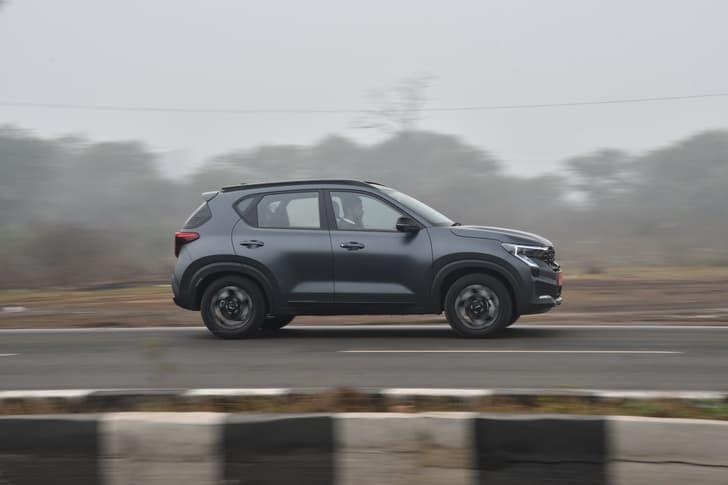
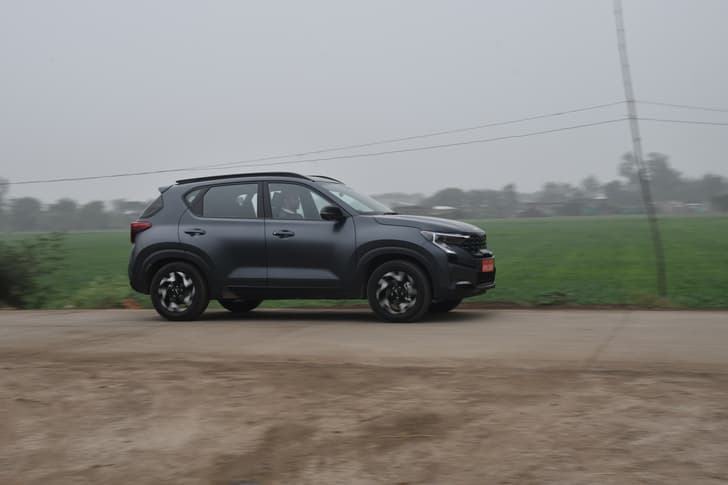
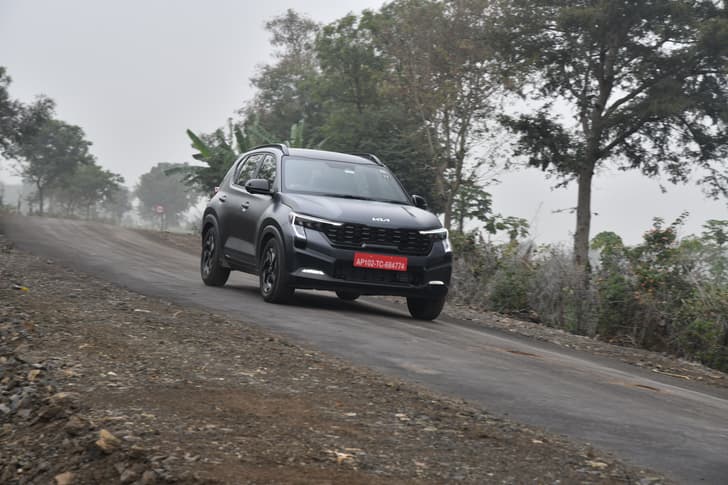
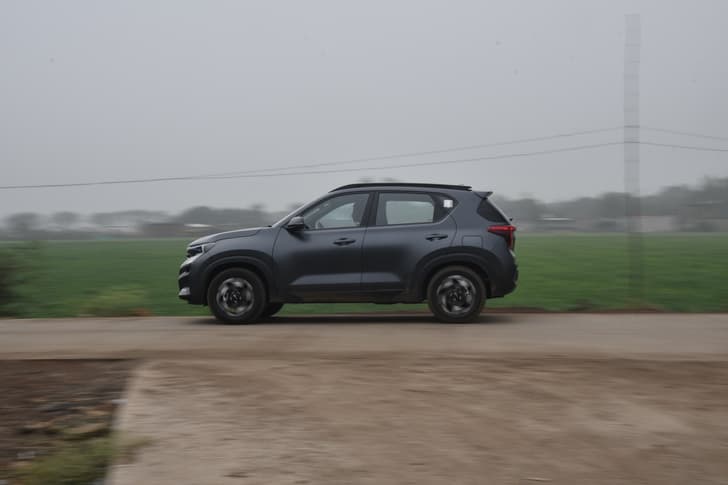
Mileage 18.6 kmpl - 24.1 kmpl | Engine 998 cc - 1493 cc |
Fuel Type Diesel, Petrol | Transmission AT, Manual, IMT, DCT |
Body Style SUV | Seats 5 |
Engine Type | |
Engine Displacement | 1493 cc |
Number of Cylinders | 4 |
Engine Installation | Front |
Fuel Type/ Propulsion | Diesel |
Gearbox Type | AT |
Number of Gears | 6 |
Manual Shifts via Gear Lever on Automatic Gearbox | Yes |
Paddle Shifters for Automatic Gearbox | Yes |
Sport Mode for Automatic Gearbox | Yes |
Drive Layout | Front Wheel Drive |
Lockable Differential/s | No |
Max Engine Power | 115.6 hp at 4000 rpm |
Max Engine Torque | 250 Nm at 1500 - 2750 rpm |
Fuel Supply System | Common Rail |
E20 Compatibility | Yes |
Emission Standard | Bharat Stage VI |
Drive Mode Types | Multiple |
Terrain Modes | Yes |
Auto Start/Stop | Yes |
Official Fuel Economy | 18.6 kmpl |
Autocar Tested City Mileage | 13.8 kmpl |
Autocar Tested Highway Mileage | 18.8 kmpl |
Fuel Tank Capacity | 45 litres |
Autocar Tested Mileage | 16.3 kmpl |
0-100kph | 12.1 s |
20-80kph (in third gear/ kickdown) | 7.42 s |
40-100kph (in fourth gear/ kickdown) | 8.7 s |
Front Suspension Type | McPherson Strut |
Front Springs | Coil Springs |
Rear Suspension Type | Coupled Torsion Beam Axle |
Rear Springs | Coil Springs |
Damper Control | No |
Ride Height Adjust | No |
Type of Power Assist | Electric |
Steering Adjust type | Manual |
Steering Adjust | Tilt |
4 Wheel Steer | No |
Front Brakes | Disc |
Rear Brakes | Disc |
Wheel Size | 16 inches |
Front Tyre Size | 215/60 R16 |
Rear Tyre Size | 215/60 R16 |
Wheels | Alloys |
Spare Wheel | Space Saver |
Length | 3995 mm |
Width | 1790 mm |
Height | 1642 mm |
Wheelbase | 2500 mm |
Ground Clearance | None mm |
Kerb Weight | None kg |
Chassis Type | Monocoque |
Boot Capacity | 385 litres |
Doors | 5 |
| Power Windows | Front and Rear |
| Door Pockets | |
| Steering Mounted Controls | Audio and Phone |
| Bottle Holder in Doors | |
| Cabin Boot Access | |
| Comfort Headrest |
| Airbags | 6 |
| Door Ajar Warning | |
| Blind Spot Collision Avoidance Assist | |
| Speed Assist System | |
| Traffic Sign Recognition | |
| Curtain Airbag |
| Body Coloured Bumpers | |
| Integrated Washer Jets with Wiper | |
| LED DRLs | |
| LED taillights | |
| LED fog lamps | |
| Headlight Height Adjuster |
| Speedometer | Digital |
| Tachometer | Digital |
| Trip Meter | |
| Average Fuel Consumption | |
| Average Speed | |
| Distance to Empty |
| Audio System | |
| Second Row USB port | 2 Type C |
| Front USB port | Type A and Type C |
| Front Passenger Screen | |
| Inbuilt Music App | |
| Branded Music System | Bose |
| Location Based Services | |
| Emergency Call Button | |
| Google/Alexa connectivity | |
| Find My Car | |
| Vehicle Tracking Via App | |
| Driving Analytics |

I currently drive a Hyundai i10 CNG, with daily running of around 6 km in Gurgaon city traffic and a monthly highway drive of around 200 km. I am now planning to upgrade my car, with an on-road budget of Rs. 12 lakh for a petrol sub-4-metre SUV, up to Rs. 14 lakh for a petrol midsize SUV, and Rs. 15 lakh for an EV. I live in a rented apartment on the second floor, so I am apprehensive about getting an EV. I prefer an EV, but installing a charger could be complicated due to the sanctioned load. My running could increase to nearly 800 km per month in the future. My key priorities are: - Good suspension and ride comfort, as I have a back problem - Decent fuel efficiency in heavy city traffic - Low to medium maintenance costs - Auto hold and ventilated seats would be good to have I sometimes consider buying a manual, but I mostly prefer an automatic. I am currently considering the Maruti Brezza, Baleno AMT, Fronx AMT/AT, Sonet iMT, Exter AMT, and even the upcoming Inster, VF3, and Bayon. I am open to other suggestions as well. Note: I had a bad driving experience with the Punch AMT, as it caused back fatigue.

 Maruti Suzuki BrezzaKia SonetMaruti Suzuki BalenoHyundai ExterHyundai Bayon
I have been using a Grand i10 manual for the last eight years and am now planning to get a new vehicle for my wife, who will be a new driver. Her monthly commute will be around 700km, with 500km on the highway and the remaining distance in stop-and-go traffic. The vehicle will also be used for long trips, mostly on the plains. My priorities are comfort and space for a family of five, a peppy engine, reliability for 10-12 years, and pocket-friendly maintenance costs; last is mileage. I don't like Tata or Mahindra cars. My budget is Rs 15-17 lakh. I am considering the Honda Elevate and Sonet diesel. Please feel free to suggest any other cars.
Honda Elevate (2023-2026)Kia SonetI currently drive a Grand i10 Manual petrol and am now planning to buy a new compact SUV that is comfortable, fuel efficient and has low maintenance. My usage is 35km of daily office commute in Delhi-NCR traffic. Please advice which option is best fit amongst Hyundai Venue HX 6T, SONET HTK+O and XUV 3XO.
Hyundai VenueKia SonetMahindra XUV 3XOI'm a first-time car buyer planning to purchase an automatic petrol car in Q3 2026, mainly for city use and occasional long trips. I want modern features such as a 360° camera, wireless Android Auto/Apple CarPlay, etc. My budget is around Rs. 10-12 lakh, but I can extend it to Rs. 14 lakh if the car is feature-rich and offers good safety, ADAS, etc. Initially, I shortlisted the Hyundai i20 Asta variant, but I have heard that it will receive a facelift soon. I have also heard that Hyundai will be launching the Bayon soon. So, I am a little confused about whether it is a good decision to buy a car that is due for a facelift, wait for the Hyundai Bayon launch, or consider other alternatives such as the Hyundai Venue, Kia Sonet, or Mahindra XUV 3XO. I am avoiding Maruti Suzuki because I have read that the features and safety offered in this price range are not as good as those of the competition. Please advise me. Thanks.
Mahindra XUV 3XOMaruti Suzuki VictorisHyundai CretaHyundai i20Hyundai BayonHyundai VenueKia SonetHi Autocar, I am 29 years old, married, and currently working from home. My regular travel mainly includes weekly trips to town of around 50–60 km, along with occasional long drives twice a month of over 100 km. My total monthly driving averages around 500 km. I currently own a 2013 Maruti Suzuki Dzire and am now looking to upgrade to a more suitable family car for both my family and parents. I specifically want a diesel vehicle, as I prefer diesel engines and am also slightly concerned about increasing ethanol blending in petrol. The cars I am currently considering are: Kia Sonet HTX Diesel Automatic Tata Nexon Creative Plus Diesel AMT Hyundai Alcazar Executive Diesel Manual My budget is around ₹15 lakh, with slight flexibility if required. The basic features I am looking for are: Height-adjustable driver’s seat Cruise control Alloy wheels Reverse parking camera Good seating comfort Optional but desirable features include: Ventilated seats Paddle shifters Rear window sunshades Basic sunroof Could you please suggest which option would best suit my requirements and usage pattern?
Kia SonetHyundai AlcazarKia SyrosJoin the Discussions
The Kia Sonet’s 1.2-litre, 83 hp petrol engine is generally not the most compelling choice in the lineup. It is only available with a 5-speed manual and is limited to lower variants, which means buyers also miss out on several key features offered in higher trims. While it is adequate for relaxed, city-focused driving, performance feels modest, especially when the car is fully loaded or driven on highways. For a relatively small price jump, the 1.0-litre turbo-petrol with 120 hp delivers a far more responsive and enjoyable driving experience, making it the more balanced and recommended option for most buyers.
Yes, the Kia Sonet 1.5-litre diesel engine is worth the premium over petrol for buyers with high annual mileage or frequent highway use. It delivers strong low-end torque, smooth long-distance cruising, and excellent fuel efficiency, making it more economical to run over time. The diesel variant also feels more relaxed and effortless at highway speeds compared to petrol engines.