

Last Updated on: 22 Jul 2026
Citroen Basalt
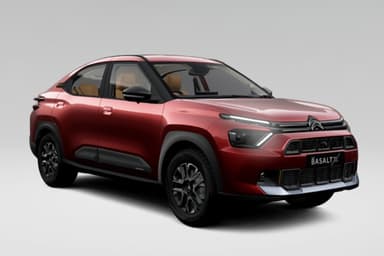
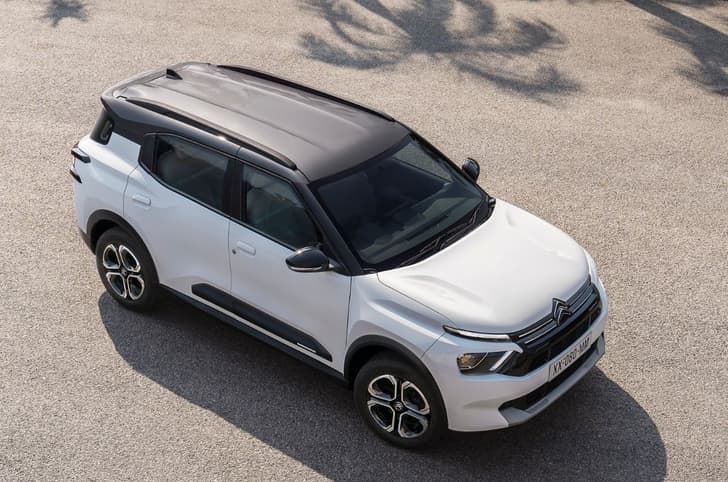
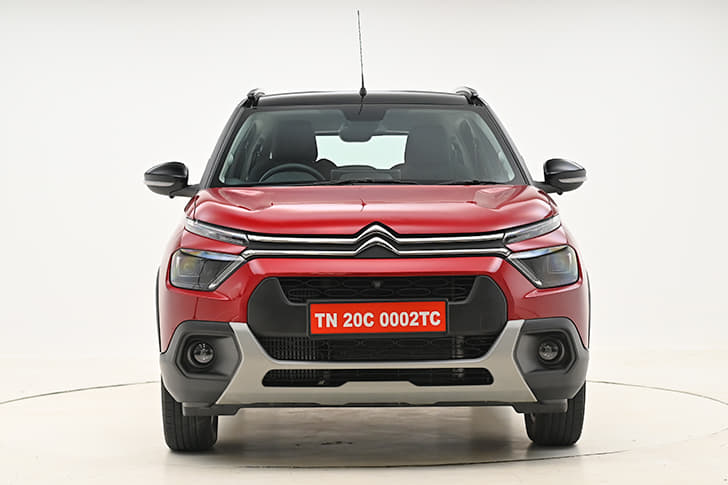
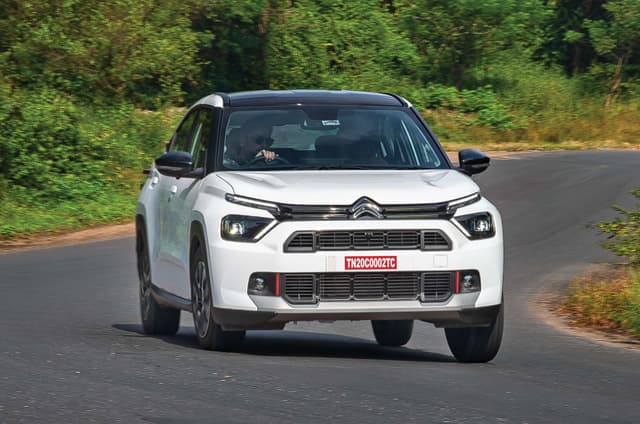
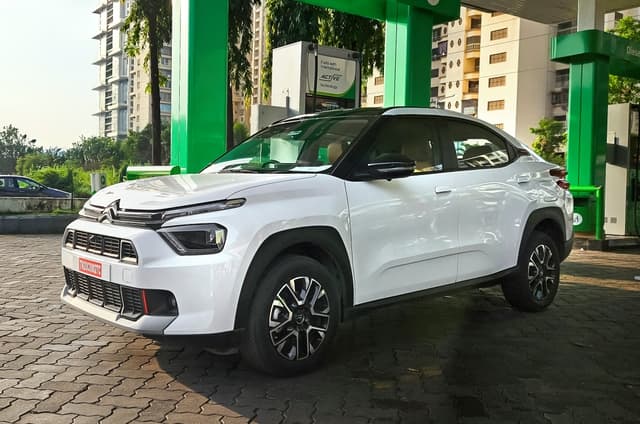
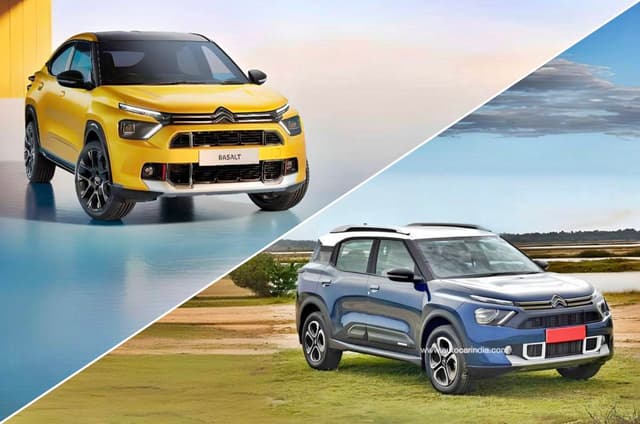
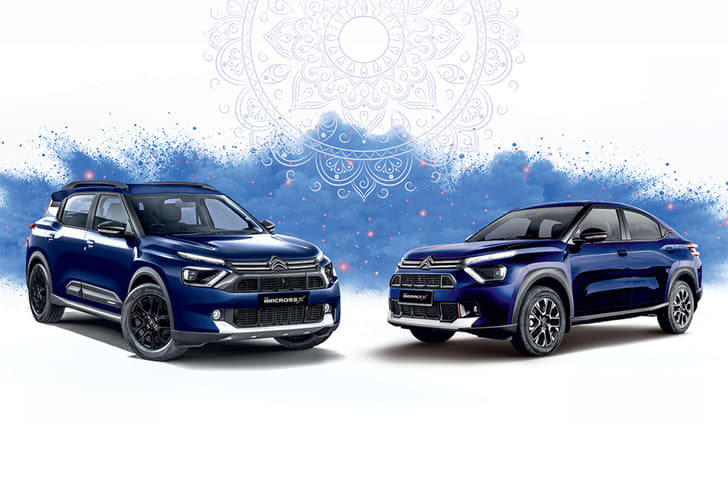
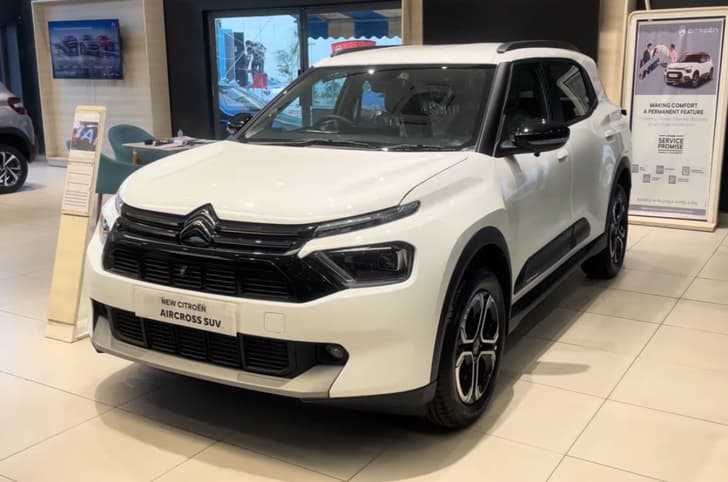
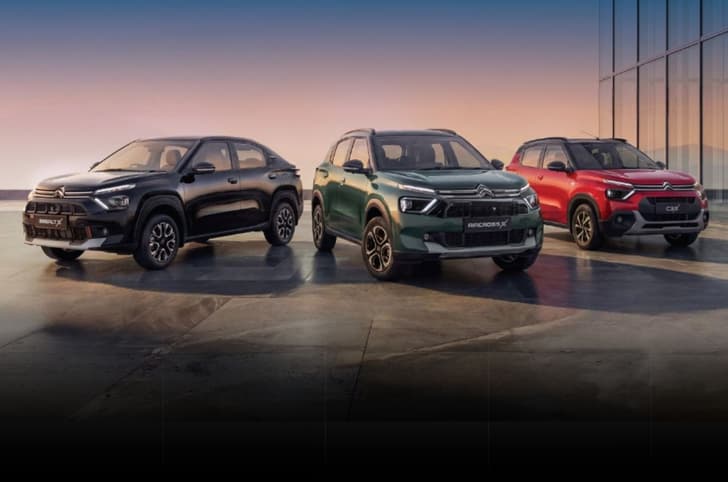
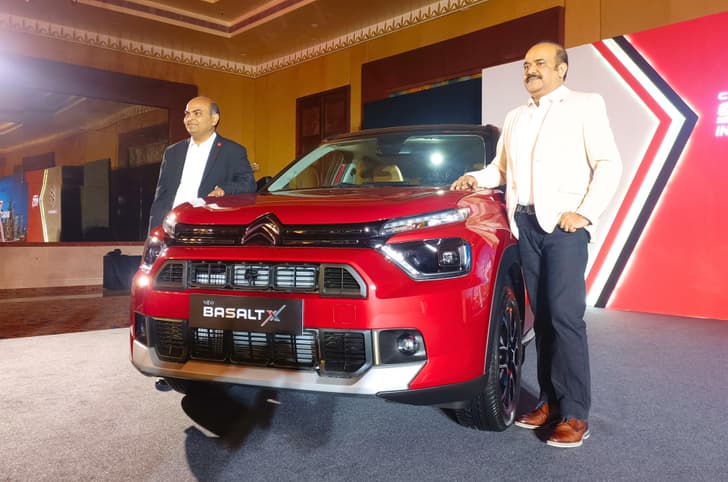
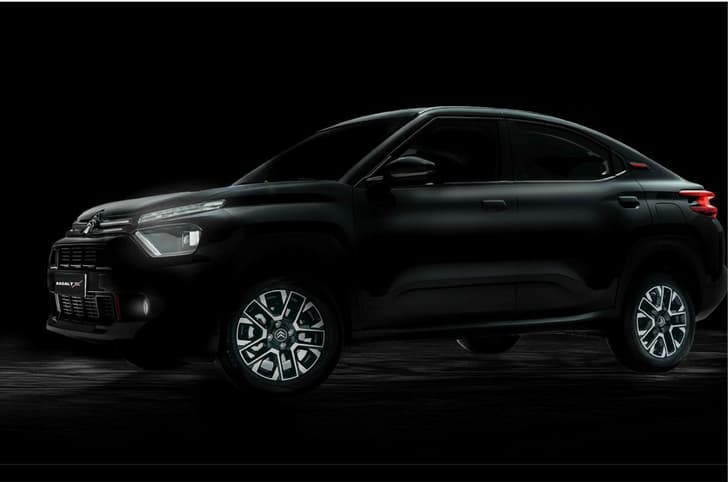
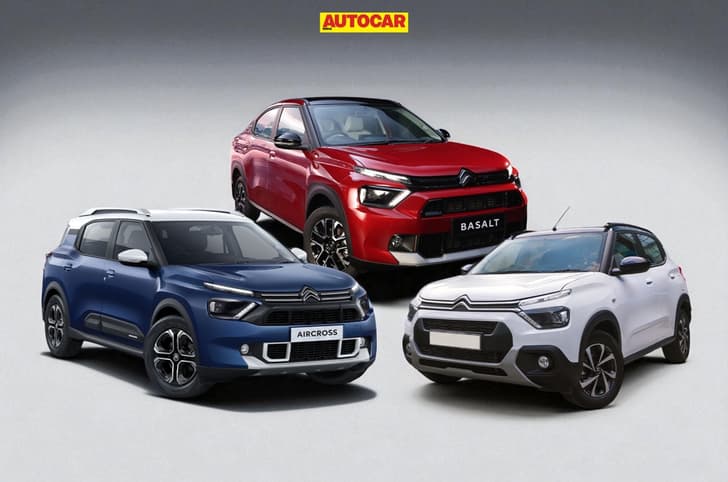
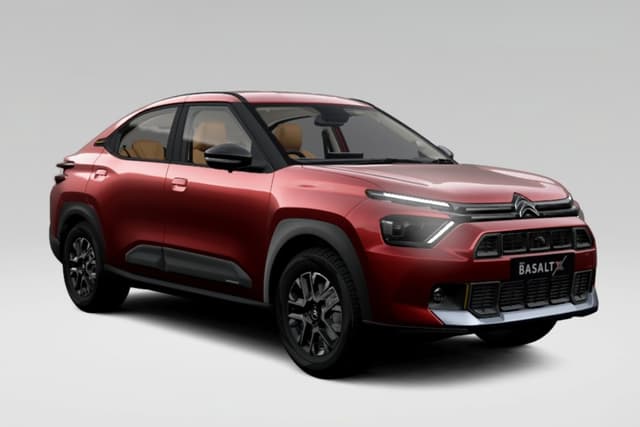
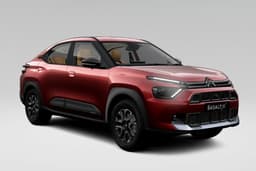
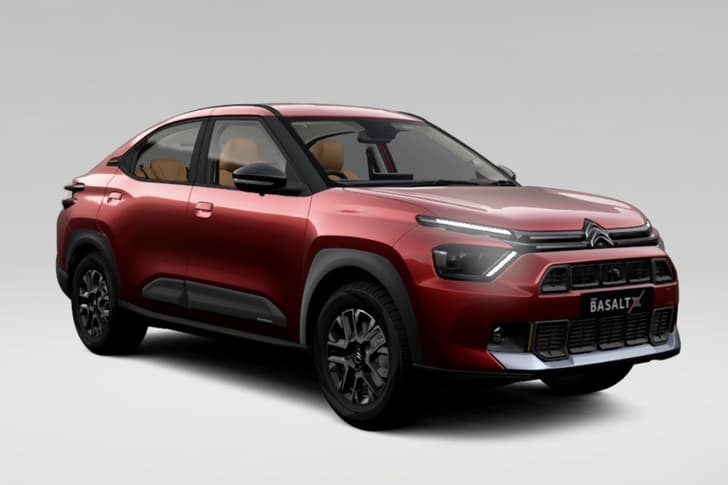
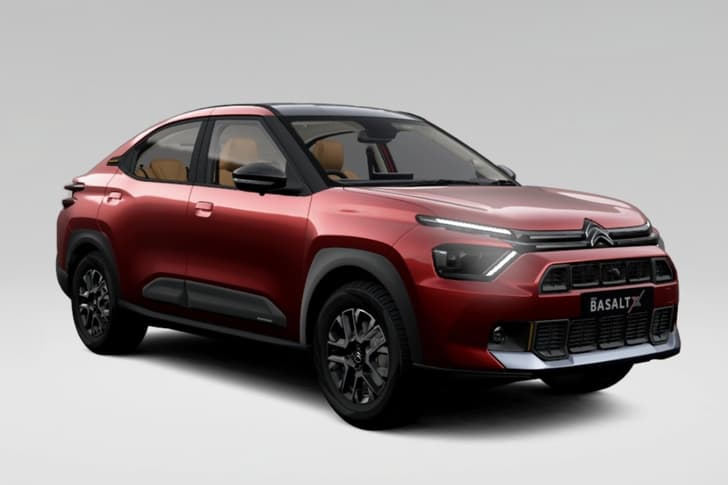
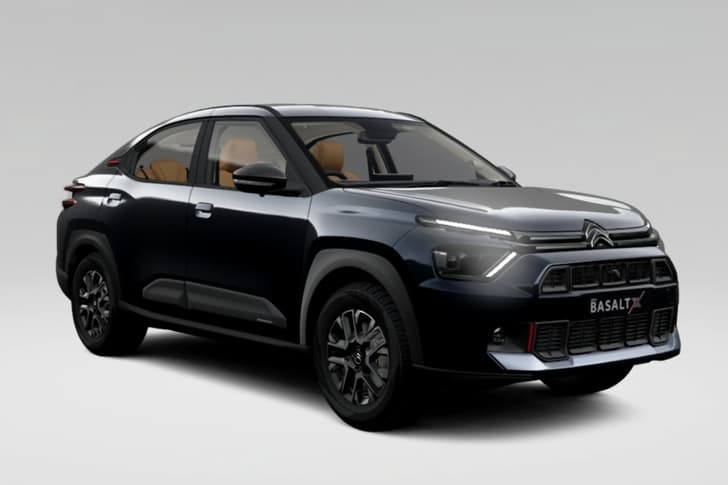
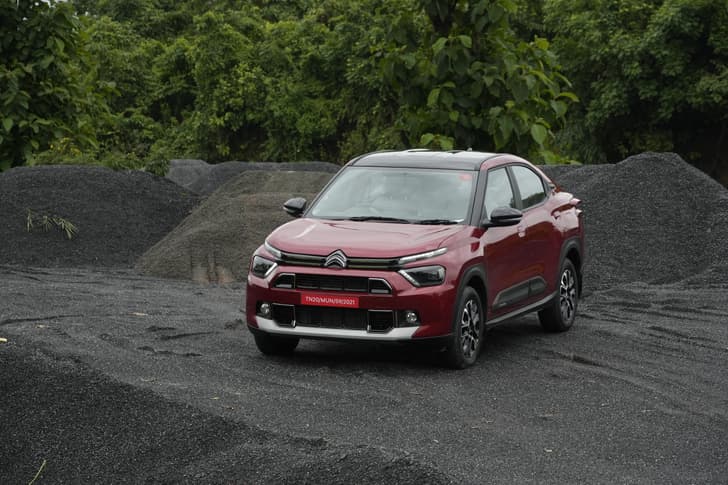
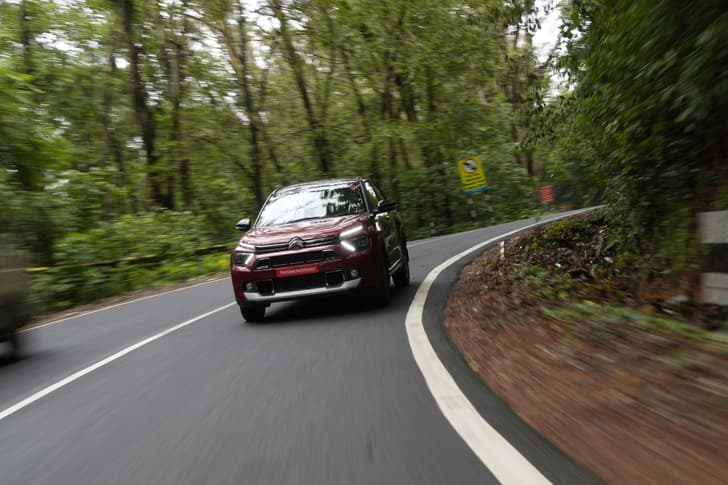
The Citroen Basalt is the most affordable SUV-coupe in India, prices of which range between ₹8.55 lakh and ₹13.89 lakh, ex-showroom. In Citroen’s India lineup, it is positioned alongside the Aircross mid-size SUV.
The Citroen Basalt variants include 6 options, including X 1.2 Petrol MT You, X 1.2 Petrol MT Plus, X 1.2 Turbo Petrol MT Plus, X 1.2 Turbo Petrol MT Max, X 1.2 Turbo Petrol AT Plus, X 1.2 Turbo Petrol AT Max. Basalt engine options include an 82hp 1.2-litre naturally aspirated engine and a 110hp 1.2-litre turbo-petrol engine. While the naturally aspirated petrol is available with a 5-speed manual transmission, the turbo-petrol option is available with both a 6-speed manual and a 6-speed torque converter automatic transmission.
The Citroen Basalt mileage depends on the chosen variant, and it has a range of 18 kmpl - 19.5 kmpl.
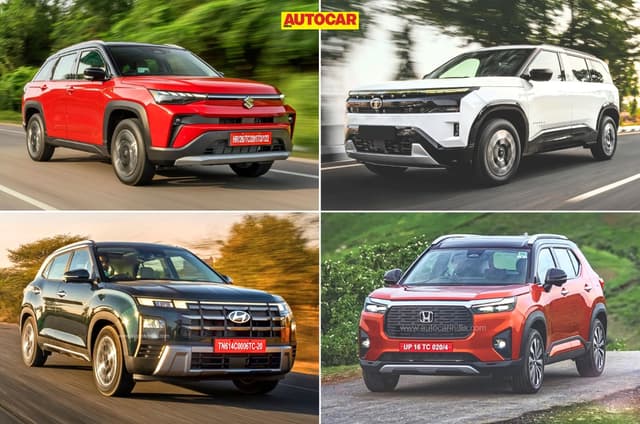
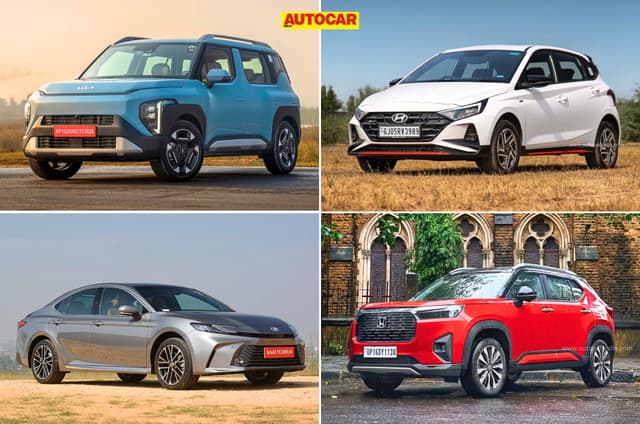
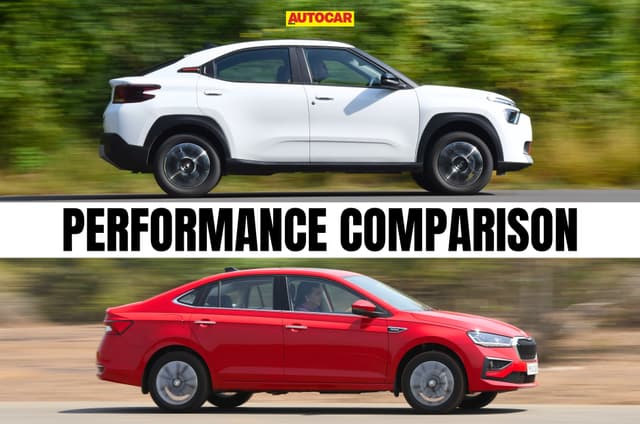
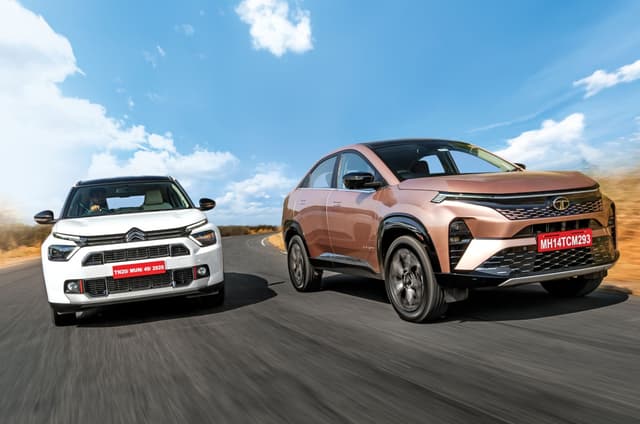
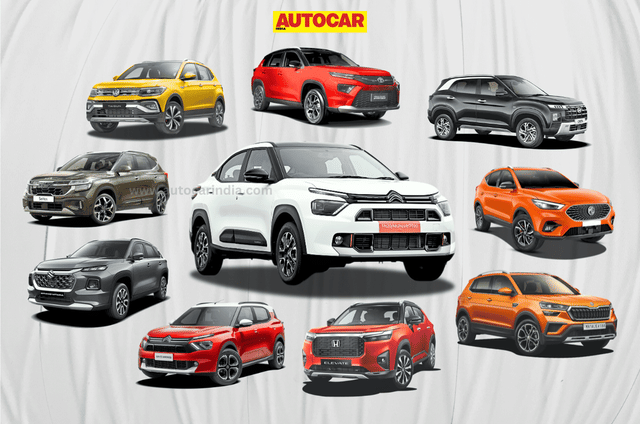
The Citroen Basalt rivals the Tata Curvv, offering a stylish alternative to the Hyundai Creta, Tata Sierra, Kia Seltos, Maruti Suzuki Victoris, Maruti Suzuki Grand Vitara, Toyota Urban Cruiser Hyryder, Citroen Aircross, MG Astor, Skoda Kushaq, and Volkswagen Taigun.
Key Highlights of the Citroen Basalt
- The Basalt is one of the only two mass-market SUV-coupes in India, alongside the Tata Curvv.
- The Basalt was the first Citroen car to be crash tested by Bharat NCAP, where it received a 4-star safety rating for both adult and child occupant protection.
- Safety features include 6 airbags as standard, hill hold assist, a 360-degree camera and a TPMS.
- Comfort and convenience features include a 10.24-inch infotainment system, a 7-inch driver’s display, ventilated front seats, and a wireless phone charger.
- Basalt dimensions are 4352mm in length, 1765mm in width, 1593mm in height, and it has a 2651mm wheelbase.
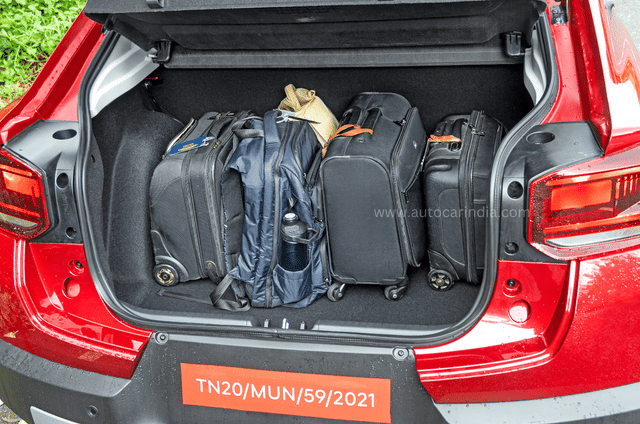
- It has a boot space of 470 litres and a kerb weight of up to 1240kg.
Citroen Basalt Latest Updates
July 21 2026: Citroen Basalt X Comfort Edition launched at Rs 8.75 lakh.
Jan 29, 2026: Citroen Basalt prices hiked by Rs 20,000.
Citroen Basalt Features and specifications
Our Rating | 7 |
Mileage | 18 kmpl - 19.5 kmpl |
Engine | 1199 cc |
Fuel Type | Petrol |
Transmission | Manual, Torque Converter |
Seats | 5 |
Body Style | SUV |
Doors | 5 |
Max Power | 110hp at 5500rpm |
Max Torque | 205Nm at 1750rpm |
Warranty Distance | 100000 km |
Warranty Duration | 3 Years |
| Engine Type | |
| Engine Displacement | 1199 cc |
| Number of Cylinders | 3 |
| Engine Installation | Front |
| E20 Compatibility | Yes |
| Emission Standard | Bharat Stage VI |
| Auto Start/Stop | Yes |
| Official Fuel Economy | 18.7 kmpl |
| Front Suspension Type | Independent, MacPherson Strut |
| Front Springs | Coil Springs |
| Rear Suspension Type | Non-independent, Torsion Beam |
| Rear Springs | Coil Springs |
| Length | 4352 mm |
| Width | 1765 mm |
| Height | 1593 mm |
| Wheelbase | 2651 mm |
| Power Windows | Front and Rear |
| 12 Volt Port | |
| Bluetooth Connectivity | |
| Bottle Holder in Doors |
| Crash Test Rating | 4 |
| Airbags | 6 |
| Anti Theft Alarm | |
| Auto emergency braking (AEB) |
| Body Coloured Bumpers | |
| Antenna | Shark Fin |
| Connected LED | |
| Headlight Height Adjuster |
| Speedometer | Digital |
| Tachometer | Digital |
| Trip Meter | |
| Average Fuel Consumption |
| Audio System | |
| CD Player | |
| Speakers | 6 |
| USB Input |
| Alexa Compatibility | |
| Check Vehicle Status via App | |
| Find My Car | |
| Low Battery Warning |
Citroen Basalt price & variants
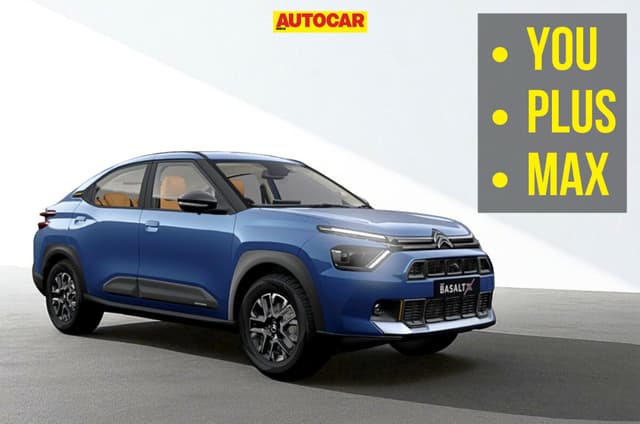
The Citroen Basalt price in India ranges between Rs 8.55 lakh and Rs 13.89 lakh, ex showroom. Basalt variants include 6 choices.
- The You and Plus variants are available with a naturally aspirated engine with a manual gearbox.
- The Plus variant is also available with a turbo-petrol engine with both manual and automatic gearbox choices.
- The top-end Max variant is also available with only a turbo-petrol engine and comes with both manual and automatic options.
Citroen Basalt expert review
We like
Plush ride
Strong engine performance
We don't like
Auto gearbox needs fine-tuning
Misses several features
8.0
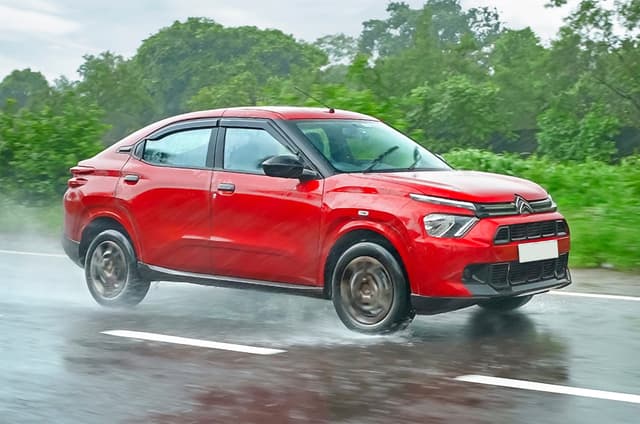
Based on the heavily localised CMP platform, the Basalt shares much of its front end with the C3 family but introduces a new, coupe-like rear profile. Its 180mm ground clearance and thick body cladding lend it SUV credentials, while the sloping roof and sculpted rear make it stand out. However, its 16-inch wheels look a bit undersized and the tyres don’t fill the arches convincingly. At 4,352mm in length and with a 2,651mm wheelbase, it’s sized well for Indian roads.
7.0
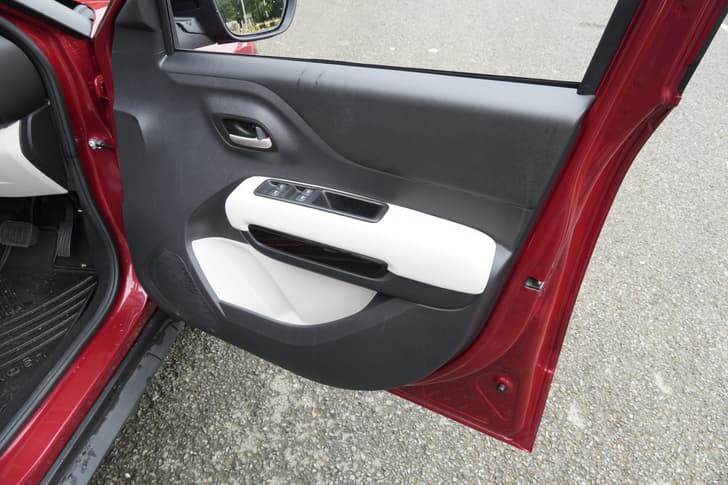
The cabin feels brighter and more upmarket, with champagne trims, soft-touch materials, and better fit-finish. Ergonomics are improved, with power window switches now on the doors. Front seats are comfortable and easy to set up, while the rear gets well-judged cushioning and a segment-unique adjustable thigh support (auto variant only). A large boot (470L) and split-opening tailgate boost practicality.
7.0
The Basalt gets a 1.2L naturally aspirated petrol (82hp) and a 1.2L turbo-petrol (110hp), paired with a 6-speed manual or 6-speed automatic. The turbo is punchy and responsive, though refinement at idle is lacking. Manual shifts are positive but not slick, and the clutch is a bit heavy. The automatic is smooth in manual mode but occasionally hesitant in full auto. Paddle shifters are missed.
7.0
The turbo-manual claims 19.5kpl, the auto 18.7kpl, while the NA engine claims 18kpl. Real-world figures will be lower, especially in city traffic.
9.0
Ride comfort is exceptional. The Basalt absorbs rough roads with ease, and the suspension is tuned for plushness, though it does result in some floatiness and nose dive under braking. Steering is heavy at low speeds but sharpens up well on the move, and body roll is present but well-controlled thanks to solid grip.
7.0
The Basalt covers essentials like LED headlamps, auto climate control, wireless charging, and a 10.2-inch touchscreen with wireless Android Auto and Apple CarPlay. Standard safety kit includes six airbags, ESP, hill-hold, and TPMS. Still, it misses several features like sunroof, cruise control, auto-dimming mirror, and keyless entry—some of which rivals already offer.
8.0
At Rs 7.99 lakh (ex-showroom), the Basalt is priced aggressively and offers a fresh, stylish take on the compact SUV formula. While it lacks a few key features and the auto could use polish, its unique design, spacious interior, and excellent ride comfort make it one of Citroen’s most compelling offerings to date.
Reviewed by: Saumil Shah
Citroen Basalt Official Brochure
Download the complete brochure with specs, features, and variants.
Citroen Basalt reviews

Citroen Basalt comparison

Citroen Basalt Mileage
The Basalt mileage depends on the chosen variant. Its mileage range is 18 kmpl - 19.5 kmpl.
- The naturally aspirated manual combination returns a fuel efficiency of 18kpl.
- The turbo-petrol manual mileage is 19.5kpl.
- The turbo-petrol automatic mileage is 18.7kpl.
| PowertrainThe combination of engine type, fuel, and transmission that powers your vehicle and determines how it drives and what it runs on. | ARAI MileageMileage certified by the government, tested under controlled lab conditions. Real-world mileage will vary. | Autocar Tested MileageAutocar's experts test each vehicle on fixed city and highway routes under standardised conditions - single occupant, AC running, manufacturer-recommended tyre pressures. Tanks are filled to the brim before and after each run to calculate efficiency. Results reflect realistic real-world usage. | User Reported MileageMileage figures are reported by vehicle owners and represent the approximate real-world efficiency you may experience. Actual mileage will vary based on driving conditions, habits, and vehicle condition. |
|---|---|---|---|
Petrol-Manual 1199 cc | 18 kmpl | 13.8 kmpl | 17.34 kmpl |
Petrol-Automatic (Torque Converter) 1199 cc | 18.7 kmpl | - | 17.73 kmpl |
Citroen Basalt news
Citroen Basalt Images
Check out the Citroen Basalt images, where we detail the SUV-coupe’s sleek exterior design, elegant interior and also detail its convenience feature suite.

Citroen Basalt videos
Check out the Citroen Basalt videos, where we give our opinion on the SUV-coupe and also compare it with its rivals to see if it is a worthy opponent.

.jpg?w=640&q=75&fm=auto)
Citroen Basalt Colours
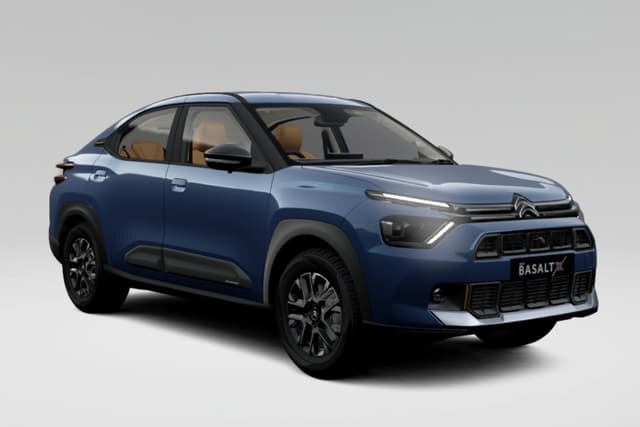
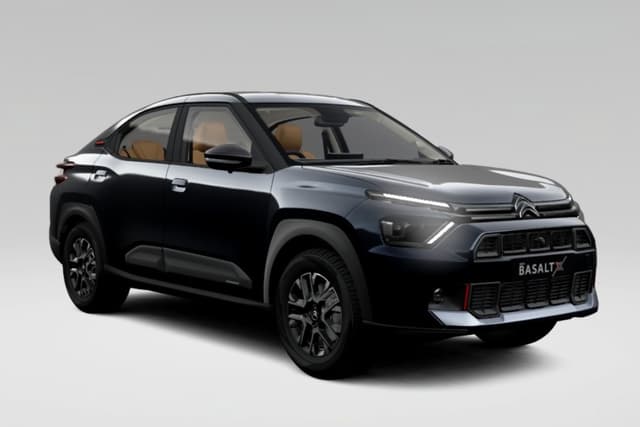
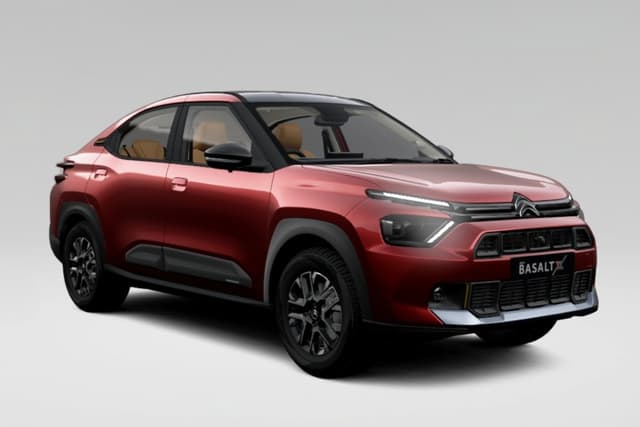
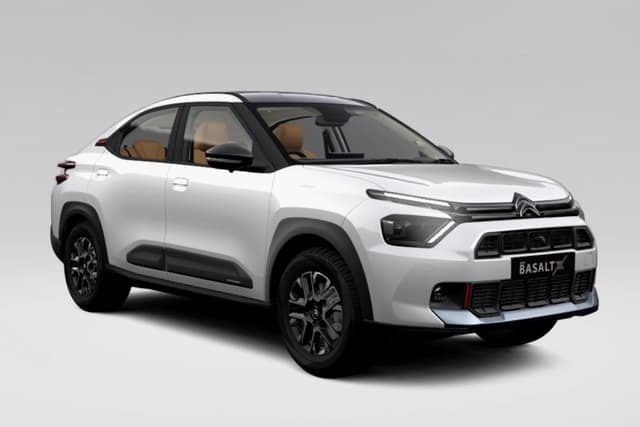
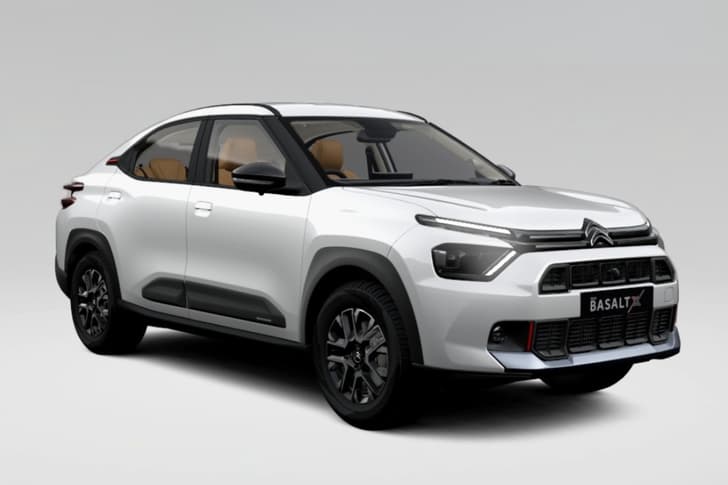
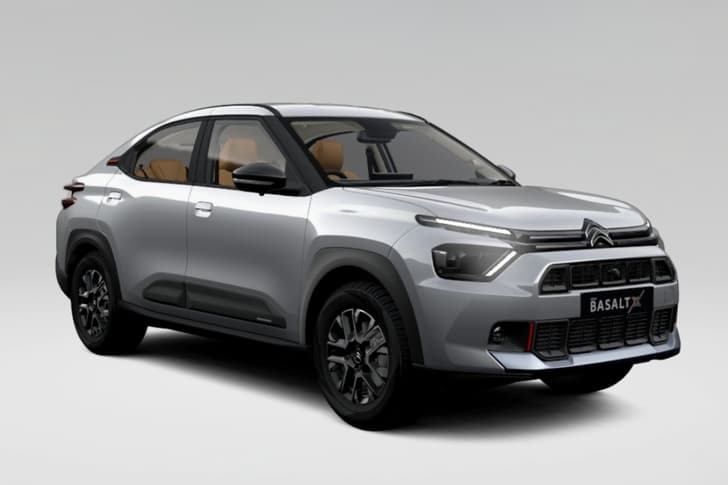
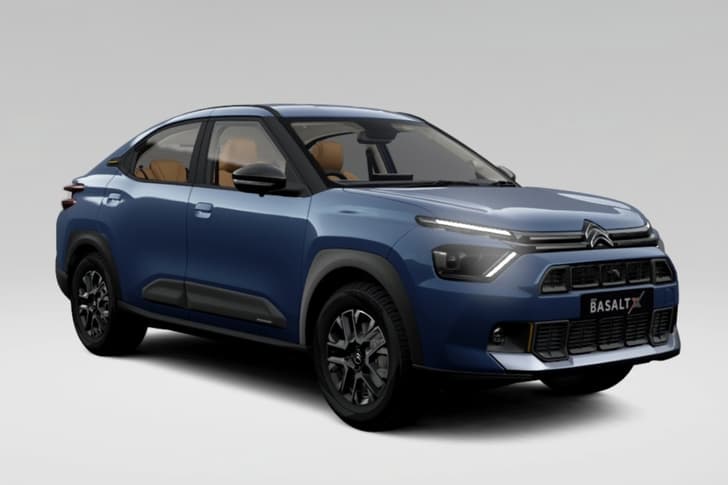
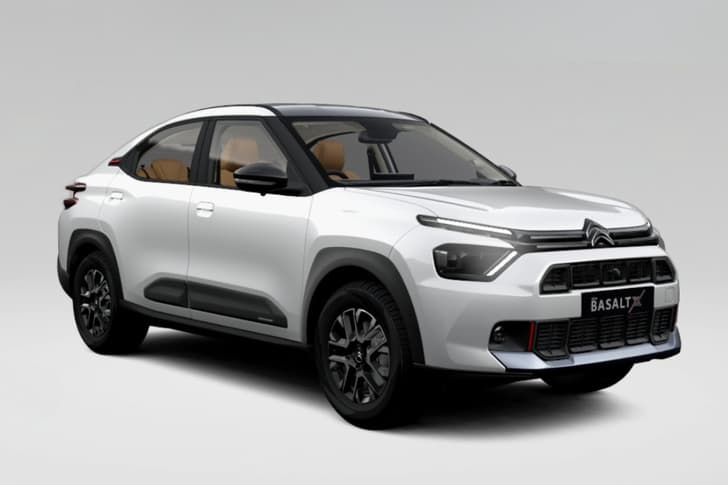
Citroen Basalt colour options include choices. These include Cosmo Blue, Garnet Red, Perla Nera Black, Perla Nera Black / Garnet Red (dual Tone), Perla Nera Black / Polar White (dual Tone), Platinum Grey, Polar White, Steel Grey.
The Citroen Basalt interior colour options include two options: a black and off-white combination and a black and tan mix.
Citroen Basalt FAQs
Unlike conventional SUVs such as the Hyundai Creta, Kia Seltos and Maruti Grand Vitara, the Basalt features a coupe-style roofline. Despite that, Citroen has managed to retain plenty rear-seat space and a large boot, making it a practical family car.
Yes. Ride comfort is one of the Basalt's strongest attributes. Like other Citroen models sold in India, it has been tuned to absorb broken roads and potholes effectively, while the comfortable seats make long journeys less tiring.
The Citroen Basalt is offered with either a 1.2-litre naturally aspirated petrol or a 1.2-litre turbo-petrol engine option. While the naturally aspirated engine is offered with only a manual transmission, the turbo-petrol unit also gets an option of a torque converter automatic gearbox. The turbo-petrol engine is the more powerful option and is better suited for highway driving and overtaking.
The Basalt comes equipped with six airbags, electronic stability control (ESC), hill-hold assist, tyre pressure monitoring system (TPMS), ISOFIX child-seat mounts and rear parking camera, depending on variant. Buyers should check the variant-wise safety equipment before purchasing.
The Basalt and Tata Curvv are among the few mainstream coupe-SUVs in India. The Basalt focuses more on ride comfort and value for money, while the Curvv offers a broader powertrain range, more features and a more premium cabin experience.
The Basalt's main drawbacks include a smaller dealership and service network than major rivals, the absence of some premium features such as a sunroof and 360-degree camera, and lower brand presence compared to more established SUV makers.
Questions you may find useful
I own a Citroën Basalt automatic. When I start the car and shift into reverse gear, I notice a sudden jerk. However, this does not happen once the engine has warmed up. Could you please explain the reason for this behaviour and let me know if it indicates any issue with the car?
This usually happens because the engine and the automatic gearbox are cold. Right after a cold start, the engine idles a bit higher, and the gearbox oil is still thick. When you slot into reverse at that moment, the reverse clutch grabs with more force than it does when warm, so you feel a quick jerk. Once the engine settles and the oil warms up, the shift into reverse feels smooth.If the jerk is small and happens only on the first cold start, it is generally normal and not harmful. Try this: start the car, keep your foot firmly on the brake, wait 5 to 10 seconds for the idle to settle, then shift to R. Do not touch the accelerator while selecting reverse. This should remove the thud.If the jerk is strong, comes with a clunk noise, or keeps happening even after a short warm-up, get it checked under warranty. Ask the workshop to run a true cold-start test after the car sits overnight and to check a few simple things: gearbox oil level and condition, any transmission software updates, engine idle speed when cold, and the engine and gearbox mounts. These can also cause a harsh engagement.Based on what you described, it sounds more like normal cold behaviour than a fault. Try the short pause on start-up. If it still bothers you, have Citroen log it on a cold morning, and they can fine-tune or fix anything if needed.
Hello team, I read your blogs regularly and value your reviews. Please guide me on which car I should buy from my shortlisted options. This will be my first car, and I enjoy driving. My requirements are a minimalist design (not too many gadgets), a manual transmission, good comfort and space, and a roomy boot. I’ve shortlisted the Volkswagen Virtus, Honda Amaze, and Hyundai Basalt. My budget is ₹12–14 lakh. Please advise.
Thank you for your support. We're happy to help! Coming to your question, the Honda Amaze, while practical and comfy, does not have the driving thrill you would want. The Volkswagen Virtus, while impressive, will not fit in your budget apart from the base variant, which isn't too impressive. The Citroen Basalt X will be a good pick out of this lot. It has a punchy turbo-petrol engine that is lovely to drive, the ride comfort is excellent, and it has a large boot as well. Also, while it is feature-packed, it isn't unnecessarily complicated, and the functions are easy to use. The Basalt X would be our recommendation.
Autocar, kindly suggest whether I should go for the Citroen Basalt X Turbo Max 2025 model at a reduced price of around Rs. 12.5 lakh or the Toyota Hyryder S Petrol. My running is around 30km per day in bumper-to-bumper traffic, and I do a 300km highway trip once a month. I currently own a Taigun 1.0 TSI petrol, but its mileage is very low.
Considering your usage, we would recommend the Toyota Uran Cruiser Hyryder S Petrol over the Citroen Basalt X Turbo Max, even with the attractive discount on the Citroen.Your daily running of around 30km in bumper-to-bumper traffic and a 300km highway trip once a month doesn't justify a turbo-petrol purely from an efficiency standpoint. Since you're already finding your Taigun 1.0 TSI thirsty, the Basalt's 1.2-litre turbo-petrol is unlikely to deliver the kind of fuel economy improvement you're looking for, even though it offers a comfortable ride and excellent value at the discounted price.The Hyryder S Petrol with its 1.5-litre naturally aspirated engine and mild-hybrid system is likely to be more fuel efficient in your usage, while also offering Toyota's reputation for reliability and low maintenance. It may not feel as punchy as the Citroen Basalt Turbo, but it is smoother and should prove to be the more economical long-term ownership proposition.
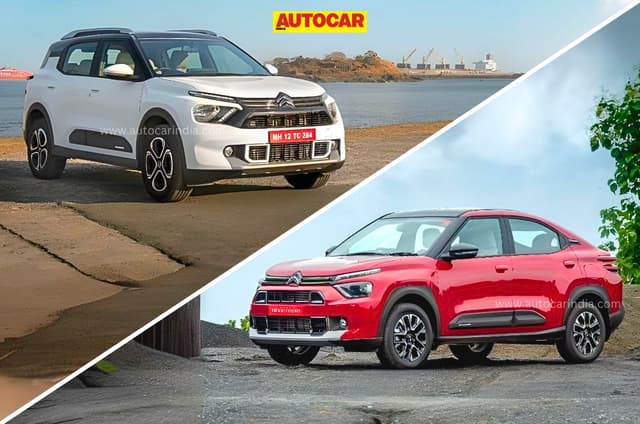
I am currently driving a Polo 1.5 TDI, which has completed 10 years, and diesel vehicles older than 10 years are no longer allowed in Delhi-NCR. I am looking to buy a new car that is fun to drive and safe, and I am not keen on gimmicky features. Kindly suggest. I am also confused about ICE vehicles because of future fuel blending (ethanol/isobutanol). My on-road budget is capped at Rs 13 lakh.
The logical spiritual successor to the Volkswagen Polo for many owners has been the Skoda Kylaq, and we think it meets your needs as well. It retains that solidly built, fun-to-drive nature and also comes with a punchy 1.0-litre TSI turbo-petrol engine and has received a 5-star Bharat NCAP crash test rating. In your Rs 13 lakh budget, you'll get a mid-spec Signature+ variant, which gets you all the essentials and not too many gimmick features.Another often-overlooked option is the Citroen Basalt X, which offers a similarly punchy engine, fun chassis and European solidity as the Skoda and Volkswagen, but is a size up and much more spacious. However, it also costs more, and in your budget, you'll get a lower variant with fewer features than the Kylaq.If you want to skip fuel-blend questions entirely and your driving is mostly city, look at the Tata Punch EV. It’s quiet, quick off the line, and fits the budget. Just remember, highway trips need a bit of charging planning.
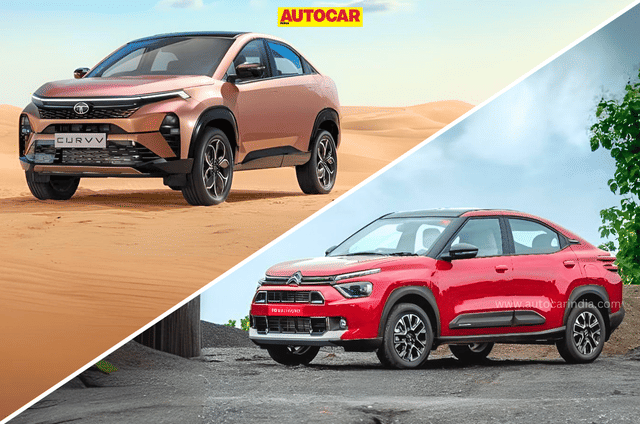
I am concerned about the future increase in ethanol blending percentages. Will E20 continue to be available as the base fuel option alongside higher ethanol blends in the future? I am considering the Citroen BasaltX, Honda Elevate CVT, and Kia Seltos NA CVT. My usage is mostly in the city with occasional highway drives, and my annual running is around 10,000 km. I am looking for a long-term car for at least 10-12 years.
You do not need to worry too much about E20 or future ethanol blends while buying a new petrol car today, especially if you are planning to keep it for 10 to 12 years. All modern petrol cars from major manufacturers, including the Kia Seltos, Citroen Basalt and Honda Elevate, are already designed to run on E20 fuel. More importantly, cars that are only E20 compatible cannot run on E85 or higher ethanol blends, because those require dedicated flex fuel engines with significant changes to the fuel system and engine calibration. This means fuel companies and the government will still have to continue supplying E20 compatible fuel alongside any future higher ethanol blends for flex fuel vehicles.For your usage, the Kia Seltos IVT is the best all round choice. Since most of your driving is in the city, the naturally aspirated petrol with the IVT automatic will feel extremely smooth and effortless in traffic, while the cabin feels genuinely premium and well insulated for long term ownership. It also strikes a very good balance between comfort, features and ease of driving, which is exactly what matters in a car you plan to keep for over a decade.The Citroen Basalt is the alternative if you are more budget conscious and want maximum practicality. It offers massive boot space, excellent rear seat room and a very comfortable ride, making it a superb family car for the money. However, it does not feel as polished, premium or as refined overall as the Seltos, especially inside the cabin and in terms of overall ownership experience. The Honda Elevate CVT sits somewhere in the middle with Honda’s strong reliability reputation and easygoing nature, but it feels less feature rich and not as plush inside as the Kia.
Upcoming Cars


Citroen Cars


Trending Cars

Latest Cars