Autocar India
AA

Aadhil

1d

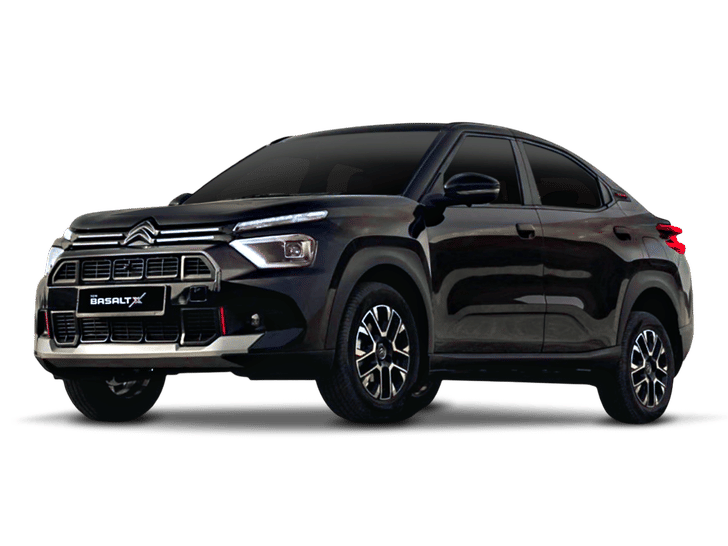
I own a Citroën Basalt automatic. When I start the car and shift into reverse gear, I notice a sudden jerk. However, this does not happen once the engine has warmed up. Could you please explain the reason for this behaviour and let me know if it indicates any issue with the car?

Autocar India team

Autocar India

Verified
4m

This usually happens because the engine and the automatic gearbox are cold. Right after a cold start, the engine idles a bit higher, and the gearbox oil is still thick. When you slot into reverse at that moment, the reverse clutch grabs with more force than it does when warm, so you feel a quick jerk. Once the engine settles and the oil warms up, the shift into reverse feels smooth.

If the jerk is small and happens only on the first cold start, it is generally normal and not harmful. Try this: start the car, keep your foot firmly on the brake, wait 5 to 10 seconds for the idle to settle, then shift to R. Do not touch the accelerator while selecting reverse. This should remove the thud.

If the jerk is strong, comes with a clunk noise, or keeps happening even after a short warm-up, get it checked under warranty. Ask the workshop to run a true cold-start test after the car sits overnight and to check a few simple things: gearbox oil level and condition, any transmission software updates, engine idle speed when cold, and the engine and gearbox mounts. These can also cause a harsh engagement.

Based on what you described, it sounds more like normal cold behaviour than a fault. Try the short pause on start-up. If it still bothers you, have Citroen log it on a cold morning, and they can fine-tune or fix anything if needed.
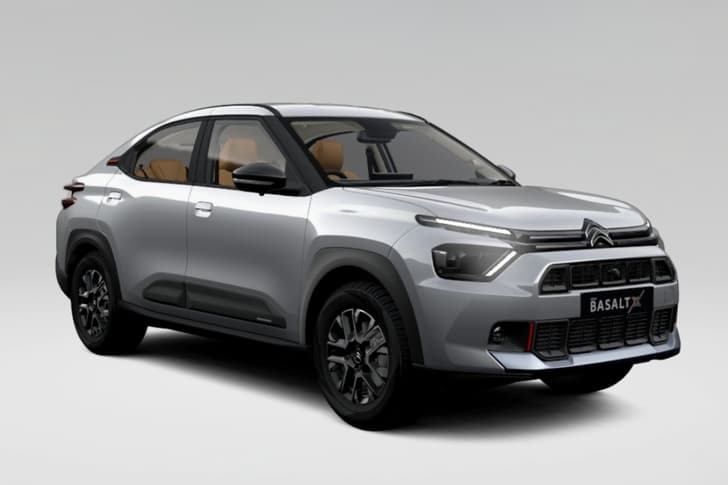
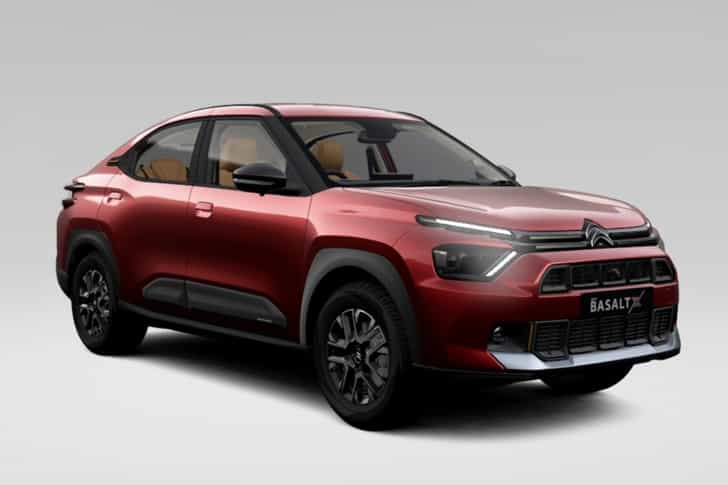
Citroen Basalt

Citroen Basalt

Explore cars mentioned
More questions on similar cars

AK

Akhil

2d

I am planning to buy the Toyota Innova Crysta and intend to keep it for at least 10 years. Could you please advise whether it is a safe and sensible choice in terms of service support and parts availability, resale value, and future regulatory norms?

Autocar India team

Autocar India

Verified
5h

Planning to keep it for 10 years and want hassle‑free ownership for that use, the Innova Crysta 2.4 diesel manual in the mid VX trim is a safe pick. It fits long family trips and daily duty, and Toyota’s track record on this model over many years is strong.On service and parts, you are on solid ground. The Crysta is used by many families and also by taxis and company cars across India, so Toyota keeps parts well stocked, and most jobs are straightforward at their workshops. Even outside shops can source common parts easily, which helps if you plan to keep it for a long time.Resale value is among the best in this class. If you sell at 5 to 7 years, you will likely get more than you would for most rivals because buyers trust the Innova for long life. If you keep it for the full 10 years, the value will still be decent in most states, though it will drop faster as it ages.On rules, the current Crysta on sale meets the latest BS6 Phase 2 norms. One key point: in Delhi‑NCR, diesel cars must come off the road after 10 years. So your 10‑year plan is fine there, but resale near the end will be weak. In most other states, private cars can run 15 years before fitness tests start.Trade-offs to note: it is manual‑only, so heavy traffic can get tiring. Also, if most of your drives are very short, the diesel may need an occasional longer run to keep its diesel particulate filter happy.Overall, yes, for long, worry‑free use, the Crysta is a safe choice.

VehicleToyota Innova Crysta
KY

Krishna Yadav

1d

I am planning to sell my Mahindra XUV700 and switch to the Renault Duster. I would like your expert opinion on whether this would be a good decision.

Autocar India team

Autocar India

Verified
6h

On paper and in real-world ownership, these are very different cars, and the Mahindra XUV 7XO sits in a clear segment above. The XUV 700 is a bigger, more complete SUV. It offers more space, better road presence, stronger performance and a far richer overall experience, including the option of a third row and a more premium cabin. It is designed as a proper family SUV and feels more capable on highways and long drives.The Renault Duster, even in its new form, is a simpler, more driver-focused and lighter SUV. It will likely be easier to drive in the city and feel more rugged and straightforward, but it is still a step down in terms of overall size, features and cabin experience.So the decision really comes down to intent. If you are moving because you want something more compact, easier to use daily and less feature-heavy, then the Duster can make sense. But if you are expecting it to feel like an upgrade or even equal to the XUV700 in terms of space, comfort and overall experience, it will not.

VehicleRenault Duster
GZ

G Zacharia

2d

My new Kia Seltos DCT 2026 rolled down while I was taking a steep U-turn and had to apply the brake due to traffic. As I accelerated to move forward, the vehicle rolled back and hit a wall behind. Why did this happen, and how can I avoid it in the future?

Autocar India team

Autocar India

Verified
2d

What you experienced is typical of how a DCT behaves, and it can catch you out on steep inclines. In your Kia Seltos DCT, there is no traditional torque converter to “creep” forward like a regular automatic, so on a steep U-turn when you come off the brake, the car can momentarily roll back before the gearbox engages and builds drive. If you then accelerate quickly, there can be a slight delay before power comes in, which is likely why the car rolled back and tapped the wall.To avoid this, the key is to control the car on inclines rather than relying on the throttle alone. Use the brake firmly, then ease onto the accelerator smoothly instead of stabbing it, giving the gearbox a moment to engage. If your car has hill hold, make sure it is active, as it will hold the car briefly when you release the brake. In tighter situations, such as steep U-turns, it is also safer to use the handbrake method by holding the car with the handbrake, then releasing it as you start moving forward. Keeping a slightly larger gap behind you in such situations also helps.The only drawback with DCTs is exactly this behaviour in stop-go or incline conditions, as they are not as intuitive as torque converter automatics.

VehicleKia Seltos

Posted on: 19 Apr 2026