Last Updated on: 14 Apr 2026
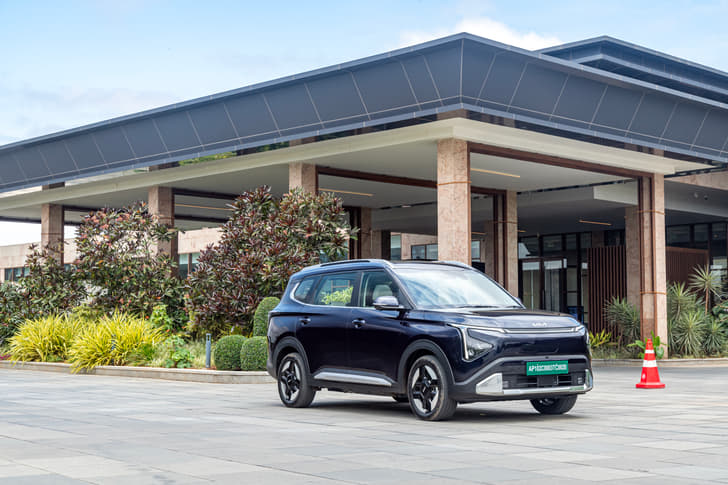
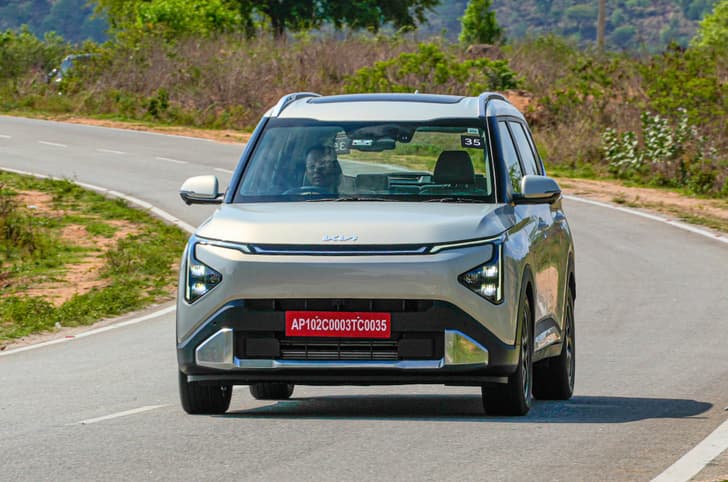
Kia Sonet price in Mumbai
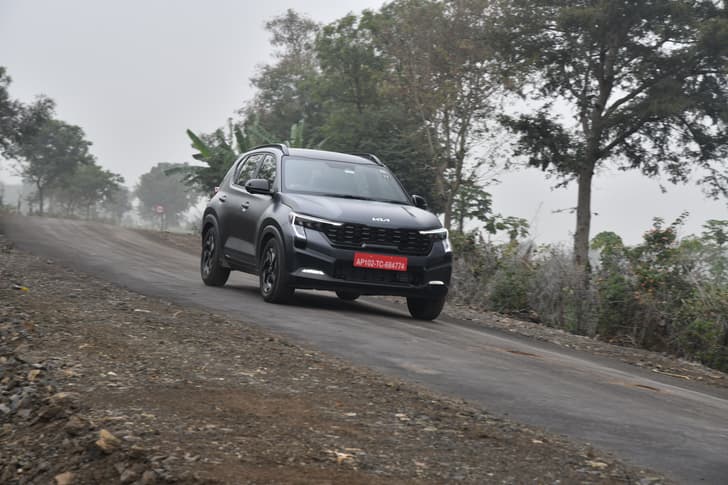
The on-road price of the Kia Sonet in Mumbai ranges from ₹8.59 lakh for the base model to about ₹16.82 lakh for the top variant (including all taxes, RTO fees, and insurance). In comparison, the ex-showroom prices in Mumbai are between ₹7.30 lakh and ₹14.00 lakh.
Kia Sonet price range in Mumbai 2026 (ex-showroom)
Kia Sonet petrol-manual price range: Rs 7.30 lakh to Rs 9.59 lakh
Kia Sonet turbo-petrol iMT price range: Rs 9.10 lakh to Rs 10.04 lakh
Kia Sonet turbo-petrol DCT price range: Rs 9.89 lakh to Rs 13.65 lakh
Kia Sonet diesel-manual price range: Rs 8.98 lakh to Rs 11.24 lakh
Kia Sonet diesel-AT price range: Rs 9.77 lakh to Rs 14.09 lakh
Kia Sonet on road price includes:
- RTO / registration charges (Delhi specific tax rates)
- Comprehensive insurance
- Handling and registration charges
- Fastag and statutory costs
Is the Kia Sonet worth the price in Mumbai?
The Kia Sonet price in Mumbai is justified if you are looking for,
- Multiple powertrain choices: petrol, turbo-petrol, diesel.
- Feature-packed top-end variants
Check the Kia Sonet on-road price of all variants in Mumbai in the table below:
Kia Sonet price & variants
Price of Kia Sonet alternatives
Kia Sonet news
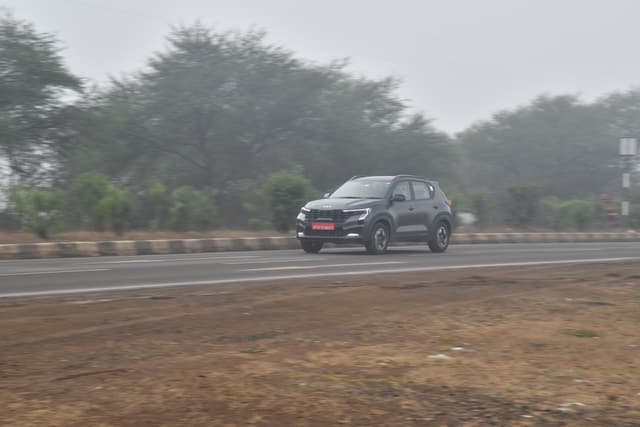
Kia Sonet Images
Kia Sonet videos

.jpeg?w=640&q=75)


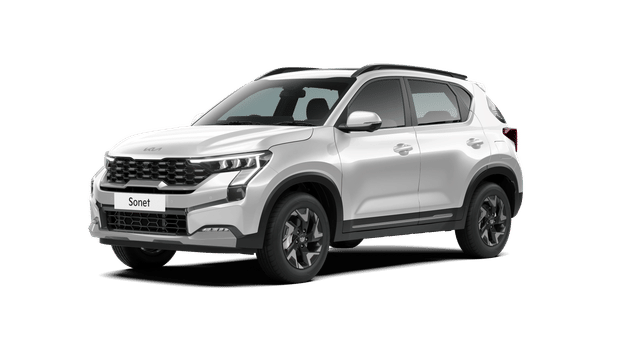
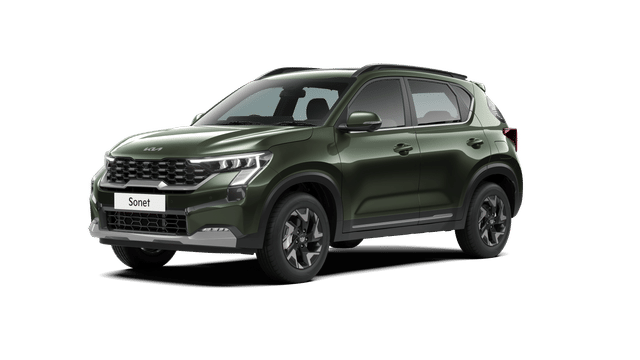
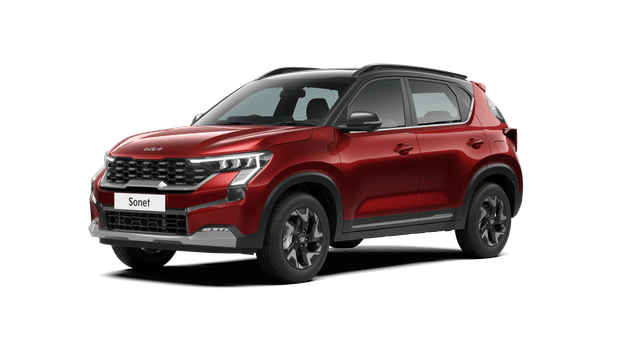
Kia Sonet Colours
Kia Sonet FAQs
The on road price of the Kia Sonet varies depending on the RTO, insurance, and various other factors. Generally, the on road price in Mumbai varies from Rs 8.59 lakh to Rs 16.82 lakh.
The base model of Kia Sonet is Petrol 1.2 HTE, and in Mumbai it is priced at Rs 7.30 lakh (ex-showroom).
The Kia Sonet top model is Diesel 1.5 GTX+ AT, and in Mumbai it is priced at Rs 14.00 lakh (ex-showroom).
The on-road price range of the Kia Sonet in Mumbai is between Rs 8.59 lakh and Rs 16.82 lakh
The Kia Sonet price range in Mumbai is Rs 7.30 lakh and Rs 14.00 lakh (both ex-showroom)
Questions you may find useful
Rajesh
•1dHi, I am currently using a 2017 Maruti Wagon R AMT, which has run around 84,000 km. I am planning to upgrade within a budget of ₹16 lakh and have shortlisted the Tata Nexon Creative Plus (1.2 DCA), Kia Sonet 1.0 GTX Plus, and Skoda Kylaq 1.0 TC. My usage will be approximately 70% highway and 30% city, mostly on weekends. My key priorities are driving comfort, safety, and real-world mileage. I would appreciate your expert advice on which option would be the best fit for my needs.

Autocar India
We would suggest going for the Skoda Kylaq. With your 70 percent highway use, it is the most comfortable and fun to drive compared to the Tata Nexon and Kia Sonet. Coming from a Wagon R AMT, you will notice a big step up in how stable and secure it feels at 80-100 km/h. Also, how well it absorbs bad patches, and how smoothly the 6-speed torque converter automatic shifts without the slight jerk you sometimes feel in an AMT. The 1.0 turbo petrol also has strong mid-range pull, so overtakes are easy even with family and luggage. Safety is another strong point, and its high-speed stability stands out on long drives.Do keep in mind that Skoda’s service network is smaller than Tata's and Kia's, and since all three are turbo petrols, fuel efficiency will not be very high. Also, the rear seat in all three cars is best suited for two adults rather than three, unlike your Wagon R.
Mohit
•1dI am looking to buy a new car within a budget of ₹10 lakh. My usage will be mostly city driving, with very minimal usage on weekends (around 50 km per month). My requirements are: Petrol engine only (naturally aspirated) Automatic or manual transmission High safety and strong build quality Good mileage and low maintenance Rear camera required No sunroof needed I am also confused between choosing a 1.2L vs 1.5L engine, and 3-cylinder vs 4-cylinder engines. I want to consider options only from Maruti Suzuki, Hyundai, and Kia. Please suggest the best suitable car.

Autocar India
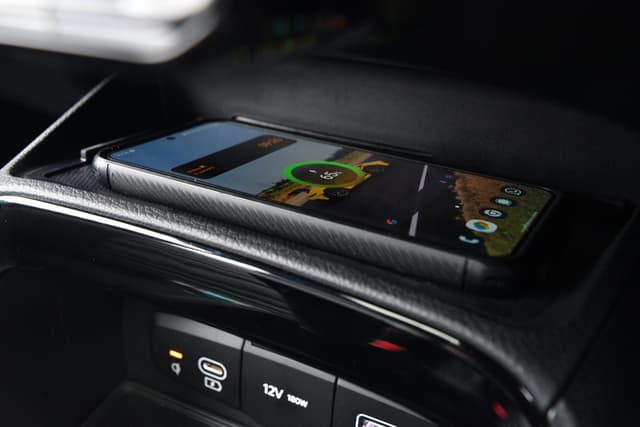
You should check out the Kia Sonet 1.2 HTK (O) manual, it fits your budget and needs best for safe, easy city driving. Your use is very low and only in the city, so the simple 1.2 petrol with no turbo is the right call. It is a 4-cylinder engine, so it feels smoother and quieter than most 3-cylinder engines. The HTK (O) trim includes a rear camera, though if you can increase your budget slightly, consider moving up to the Sonet HTK+, which will get you features like keyless entry and go, a wireless phone charger, a 60:40 split rear seat and alloy wheels.The 1.2 in the Sonet doesn't get an automatic option, so if you decide you must have one, you would need to look at a different model. Consider the Maruti Suzuki Fronx 1.2 Delta+ AMT, which also gets a rear-view camera and a four-cylinder engine. If you don't mind a hatchback, there's also the Hyundai i20 1.2 IVT Sportz, which gets a smoother CVT automatic gearbox.The only 1.5-litre engine in your price bracket can be found in the Maruti Suzuki Brezza. But as that very engine capacity disqualifies it from small car tax breaks, its price is higher than others, and you will only get a base model.
Suraj Nayak
•2dMy budget is around ₹15 lakh. We already own a 2017 Kwid top model AMT. My current running is around 100km per day. I want a reliable engine along with good mileage so that running costs remain low.

Autocar India
If you're open to diesel options, you could consider the Hyundai Venue or Kia Sonet. Both share their engine and gearbox options. Opt for the manual version of either for maximum efficiency.An excellent electric option is the Punch EV. If you can arrange for home charging, your running costs will be very low - something you will surely appreciate given your usage.The Maruti Suzuki Victoris CNG can also be considered. Its engine is reliable, and the CNG will keep per km costs in check.
Pankaj Makhija
•5dHello Autocar, My daily running is around 50-75 km, mostly in the city, with occasional intercity trips. I am confused between: Mahindra XUV 3XO Diesel Automatic, and An electric vehicle (EV) If I choose an EV, I am considering: Mahindra XUV 3XO EV Tata Nexon EV My top priority is the driving range,

Autocar India
Go for the Tata Nexon EV with the 45kWh battery. You can easily expect around 350km of real-world range, and with home charging, you can top up its battery overnight and run for a week without worry, keeping your 50-75km usage in mind. In daily traffic, it feels smooth and quiet.But if you can't arrange for home charging, then you could consider the Mahindra XUV 3XO diesel-AT option. Keep in mind, being an AMT, gearshifts aren't very smooth, and on account of its weight, the XUV 3XO won't be as efficient as a Kia Sonet or Hyundai Venue diesel-automatic, which will also be far smoother to drive.
Nitesh
•6dI recently purchased a Hyundai i20. Earlier, I owned a Hyundai i10 and received a good exchange value for it. Now, I am planning to buy a second car for my personal use, while the i20 will be used by my family. My budget is up to ₹14 lakh, and my monthly running will be around 1,500 km. Could you please suggest the best car for my needs and explain why it would be a suitable choice?

Autocar India
Go for the Maruti Victoris VXi manual as it fits your Rs 14 lakh budget and represents a step up from your i20. You will sit higher, see the road better, and it deals with bad roads and speed breakers better than the i20, yet it is still relatively easy to park and thread through traffic. The controls are light, the petrol engine feels smooth and calm in the city, and Maruti’s wide service network makes ownership simple almost anywhere. One thing to be aware of: the engine is more about smoothness than speed, so if you're on a highway with four people and luggage, you may need to plan your overtakes. While the Victoris VXi MT will be ideal, if you want to benefit from lower running costs, consider the Victoris LXi CNG. If a big part of your 1,500 km is highway and you want lower fuel bills and stronger pull at low speeds, look at the Kia Sonet diesel manual mid variant. It suits long runs well, though the ride can feel a bit firm on sharp bumps. If you want to stay with Hyundai, check the Venue diesel manual, which is mechanically identical to the Sonet.
Shorabh
•1wI am planning to buy a new car with a budget of around ₹15-17 lakh. My daily running is approximately 50-70 km, with 80% city driving and 20% highway usage. I will be upgrading from a Honda Amaze diesel manual, which has been delivering good mileage in both city and highway conditions.

Autocar India
Go for the Kia Sonet HTX diesel manual for your 50-70 km a day with mostly city use, as it keeps fuel bills low like your Honda Amaze diesel. But feels like a clear step up in terms of comfort, features and safety.In stop-go traffic, the Sonet diesel pulls cleanly from low speeds, so you do not need to shift gears as often, and the clutch is light, which makes daily driving fairly easy. The higher seating position gives a better view out, and getting in and out is also easy. It is still small enough to park without stress, but the cabin feels nicer and more solid, and highway runs are relaxed thanks to the strong mid-range of the diesel engine. Kia’s network is wide now in most cities, and upkeep has been reasonable for owners in this price range.A couple of things to be aware of. The back seat is not very wide, so three adults will feel tight on longer trips. Also, like all new diesels, it has a particulate filter, which requires you to run a regeneration cycle periodically.If you prefer Hyundai’s aftersales and a slightly softer ride, the Hyundai Venue diesel manual is a good alternative. If your priority is the lowest running cost, look at the Maruti Victoris CNG.
Venkata Ramana Murty Varanasi
•1wI need advice on choosing between the Mahindra XUV 3XO and the Kia Sonet. My key priorities are fuel efficiency, ease of driving in city traffic, and overall maintenance costs.

Autocar India
For your requirement of fuel efficiency, city driving and overall maintenance, both the Mahindra XUV 3XO and Kia Sonet are strong options, but they suit different priorities.The XUV 3XO petrol automatic is the easiest car to drive in city traffic. Its torque converter gearbox is smooth, creep-friendly and well-suited to stop-go conditions, which makes daily driving stress-free. It also has a comfortable ride and feels more robust over bad roads. Maintenance is reasonable, and Mahindra’s network is wide.The Sonet, especially in diesel automatic form, is the better choice if fuel efficiency is your top priority. The diesel engine delivers significantly better mileage in city conditions and is very easy to drive. However, if you look at the turbo petrol DCT, it is quick but not as smooth in heavy traffic and can feel slightly hesitant at low speeds.
Aravind
•1wI have a budget of around ₹15 lakh (on-road) and am looking for a petrol automatic car. My usage will be approximately 70% city driving and 30% highway, with an annual running of about 10,000 km. My key priorities are reliability, fuel efficiency, and overall value for money. I am currently considering the Hyundai Venue, Kia Sonet, and Maruti Suzuki Brezza. Which one should I prefer among these three? Additionally, the newly launched Kia Seltos and Maruti Suzuki Grand Vitara also seem appealing. Should I consider stretching my budget for these models?

Autocar India
The Maruti Suzuki Brezza VXi AT is the best fit among your options. It uses a smooth torque converter automatic, which is ideal for city traffic and more reliable in the long run. The engine is simple, proven and efficient, and Maruti’s service network and low maintenance costs make ownership very easy. It also offers good ride comfort and a spacious cabin, which adds to its family appeal.The Hyundai Venue and Kia Sonet are more feature-rich and feel more modern inside, but both use turbo petrol engines with DCT gearboxes in the automatic versions. These are quicker and more fun to drive, but in heavy city traffic, they are not as smooth and can feel slightly jerky at low speeds.On stretching your budget, the Kia Seltos is a segment above and a better all-round car, but the petrol automatic will go well beyond your budget. The Maruti Suzuki Grand Vitara is also appealing, especially in strong hybrid form, but again requires a significant stretch.For your usage and priorities, there is no strong reason to stretch. The Brezza already fits your needs very well.
Mobashir
•1wI am planning to buy my first car and, as a new driver, I am looking for an automatic car within a budget of ₹10-12 lakh. I have shortlisted the Hyundai i20 Sportz (O) IVT and the Kia Sonet HTK (O) DCT. Could you please suggest which one would be a better choice for me and why?

Autocar India
Go for the Hyundai i20 Sportz (O) IVT - for a first-time, new driver in your budget, it is the easiest and most stress-free automatic here. The IVT is a type of automatic transmission that keeps the engine in the right range and changes ratios smoothly, so in slow city traffic, it moves without jerks and feels calm. The i20 is a small car that is easy to see out of, the steering is light, and the gearbox creeps forward gently when you lift off the brake, which makes parking and tight turns simple. Hyundai’s service reach is wide across India, so ownership is straightforward.One thing to be aware of: the i20 IVT is not built for quick highway sprints, so fast overtakes need a firmer press on the accelerator. Also, if you often face tall speed breakers or very bad roads, the i20 sits lower than a taller car.Pick the Kia Sonet HTK (O) DCT only if you really want a higher driving position and better clearance for rough roads, or if you plan more highway runs. Its DCT is a different type of automatic that shifts very quickly, but in very slow, stop-and-go traffic, it can feel a bit jerky and needs a gentler right foot.
JV
•1wI am looking to buy a compact car for my family, with an annual running of 30,000–40,000 km. My father strongly prefers diesel vehicles, while I am also considering an electric vehicle within a ₹20 lakh budget. We currently own a 2017 Hyundai i20 (top model), which is nearing 3 lakh km and needs replacement. The new car will be used mostly for city driving, along with occasional long trips of 300-500 km. We also have a 2021 Jeep Compass 4x4 Model S, which has clocked 1.2 lakh km and will be retained, although its fuel efficiency is around 11 km/l. Given our usage and long-term ownership plans (up to 3 lakh km), should we opt for an electric vehicle, a diesel car, or a hybrid? We also have an 8 kW solar setup at home with surplus power generation. I am considering EVs like the Tata Punch EV, Tata Nexon EV, MG Astor EV (if launched), and the upcoming Kia Syros EV. For diesel options, I am looking at the Kia Sonet, Hyundai Creta, and Tata Curvv. However, while I like Tata cars, I have some concerns about after-sales service. Could you suggest the most suitable electric or diesel automatic options for my needs?

Autocar India
With your kind of usage of 30,000-40,000 km a year, mostly city driving, long-term ownership and an 8 kW solar setup, going electric makes a lot of sense. Running costs will be significantly lower, especially since you can charge at home using surplus solar, and the smooth, silent nature of an EV suits city driving perfectly.The Tata Nexon EV Long Range is still one of the most well-rounded options here. It offers a good balance of range, practicality and ease of use, and can handle your occasional 300-500 km trips with one planned charging stop. It is also a proven product with a wide user base.However, since you have concerns about Tata’s service, it is worth considering alternatives. The MG Windsor EV with the larger battery pack is a strong option. It offers more space, a more premium feel and a bigger battery, which helps with range and reduces charging stops. The Maruti Suzuki e-Vitara is another promising option, especially from a long-term ownership perspective, thanks to Maruti’s strong service network and reliability.Diesel is still a valid fallback. If you prefer complete flexibility and do not want to depend on charging infrastructure at all, options like the Hyundai Creta diesel automatic or Kia Sonet diesel automatic make sense, offering strong mileage and effortless highway performance.So, the decision comes down to priorities. Given your high running and solar setup, an EV is clearly the smarter long-term choice. Among EVs, the Nexon EV is the proven option, the Windsor EV offers more space and range, and the e Vitara is the safest bet for long-term ownership. Diesel should only be considered if you want maximum convenience without planning charging stops.