Last Updated on: 02 Feb 2026
Mahindra Thar Roxx price in Hardoi
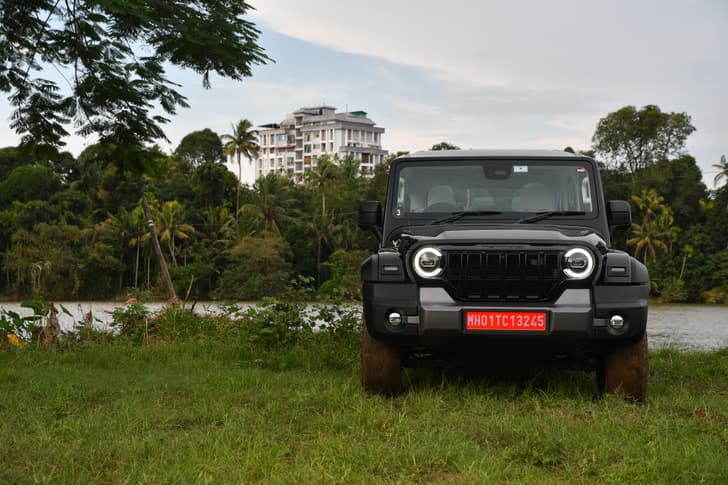
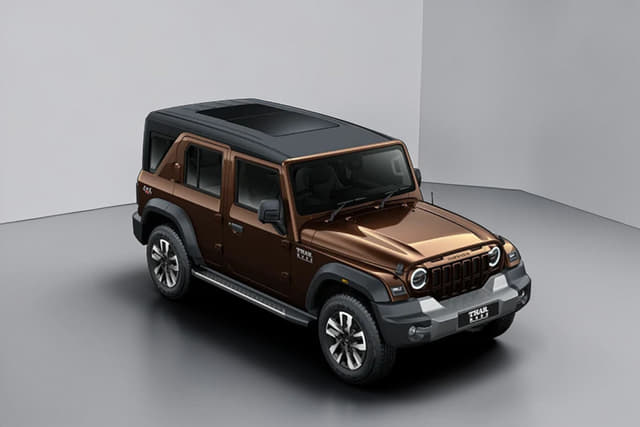
The Mahindra Thar Roxx price in Hardoi starts at Rs 14.16 lakh for the MX1 2.0 Petrol MT 4x2 to Rs 22.25 lakh for the AX7L 2.2 Diesel AT 4x4. In comparison, the Thar Roxx on road price in Hardoi starts from Rs 14.16 lakh and goes up to Rs 25.63 lakh (including all taxes, RTO fees, and insurance). The Thar Roxx is offered in 21 variants, including MX1 2.0 Petrol MT 4x2 and AX7L 2.2 Diesel AT 4x4.
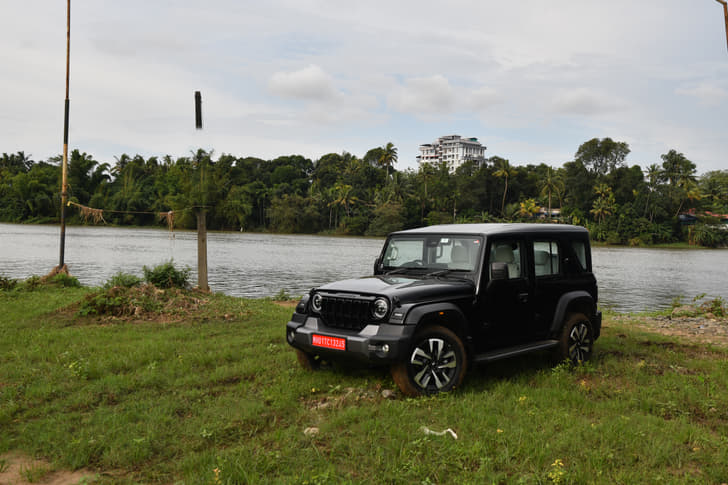
Mahindra Thar Roxx price & variants
Price of Mahindra Thar Roxx alternatives
Mahindra Thar Roxx news
Mahindra Thar Roxx Images
Mahindra Thar Roxx videos


.jpg?w=640&q=75)


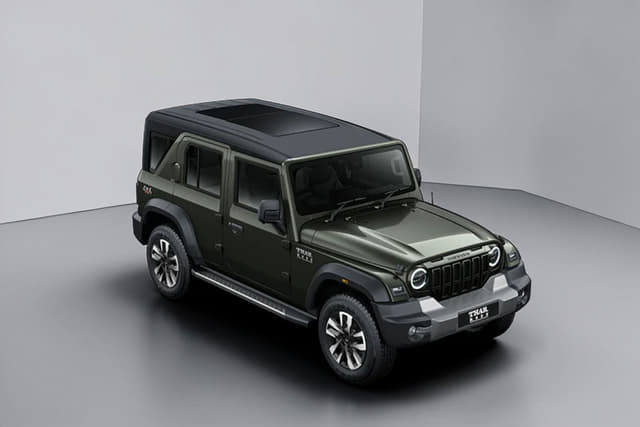
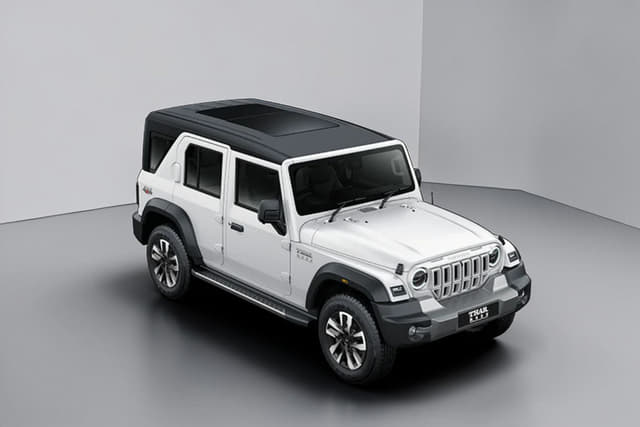
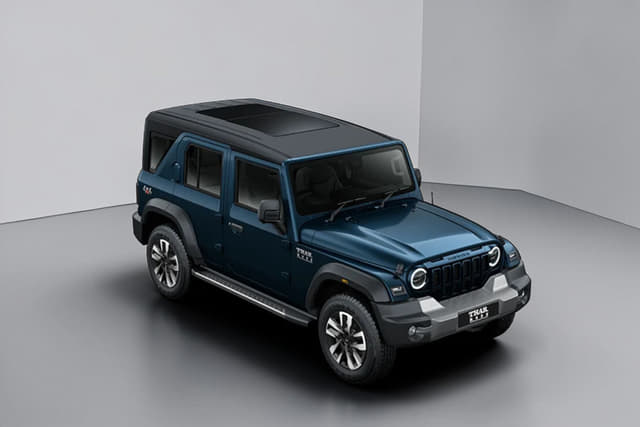
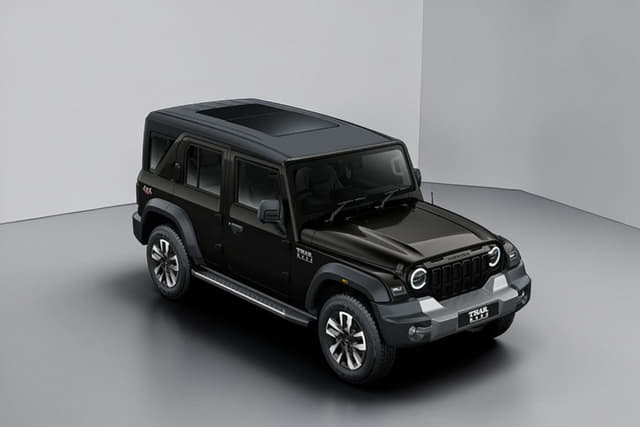
Mahindra Thar Roxx Colours
Mahindra Thar Roxx FAQs
The Thar Roxx price in India starts from Rs 12.39 lakh, and rises to Rs 22.25 lakh (ex-showroom).
The base-spec MX1 2.0 Petrol MT 4x2 Mahindra Thar Roxx price in Hardoi starts at Rs 12.39 lakh, ex-showroom.
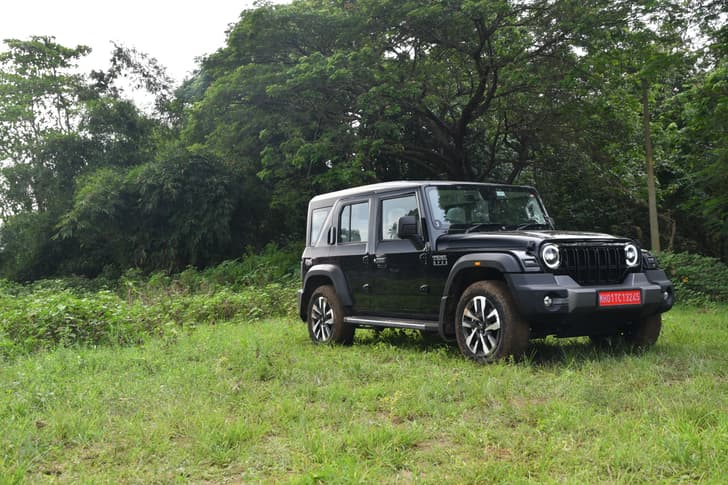
The base-spec MX1 2.0 Petrol MT 4x2 Mahindra Thar Roxx on road price in Hardoi starts at Rs 14.16 lakh.
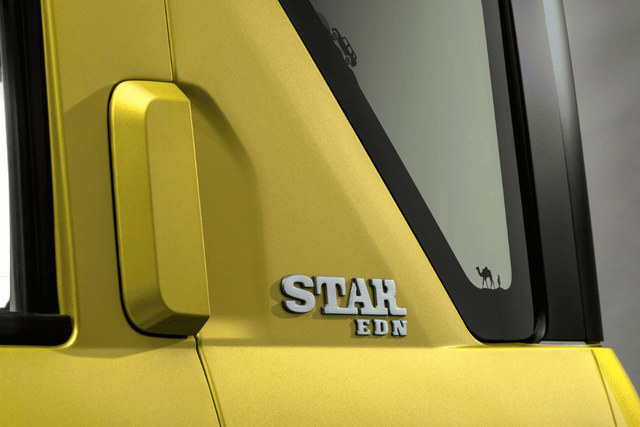
The Star Edition 2.0 Petrol AT 4x2 Mahindra Thar Roxx price in Hardoi is from Rs 17.85 lakh, ex-showroom.
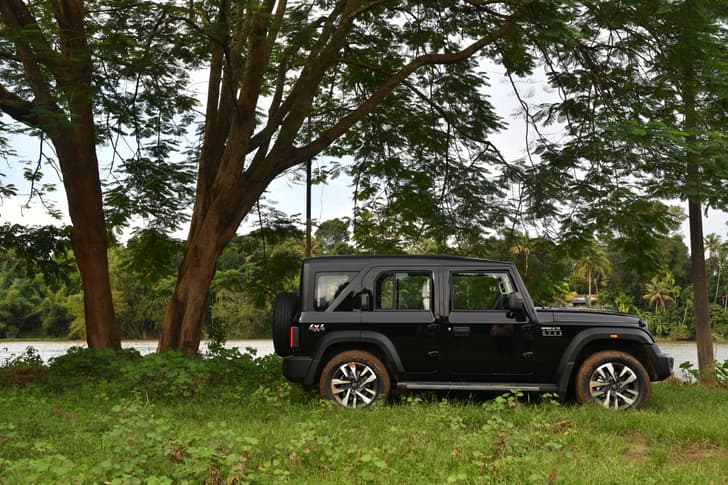
The Star Edition 2.0 Petrol AT 4x2 Mahindra Thar Roxx on road price in Hardoi is from Rs 20.33 lakh.
The top-spec AX7L 2.2 Diesel AT 4x4 Mahindra Thar Roxx price in Hardoi is Rs 22.25 lakh, ex-showroom.

The top-spec AX7L 2.2 Diesel AT 4x4 Mahindra Thar Roxx on road price in Hardoi is Rs 25.63 lakh.
Trending Questions on Mahindra Thar Roxx - Answered by Autocar Experts
Hello, I have booked the Mahindra Thar Roxx Star Edition Diesel, but I am concerned about the way Mahindra is portrayed on social media. Many videos are complaining about service quality, lack of responsiveness, and product issues, which is making me apprehensive. I currently own a Volkswagen Vento, which I have driven for the past 11 years. It has had its own issues with suspension, steering rack, slow service, and expensive spare parts. However, when you love a car, you tend to live with some shortcomings. I understand that no brand is perfect, and I am prepared for a reasonable margin of error in both product and service. However, the sheer number of negative videos about Mahindra is making me uneasy. While some online content may be exaggerated, there must be underlying reasons behind such strong reactions. Could you please provide an informed and balanced perspective on whether these concerns are valid or amplified by social media? Thank you.
Indeed, Mahindra & Mahindra doesn’t have the best reputation for service and reliability like Toyota has. But quite honestly, the Mahindra Thar and Mahindra Thar Roxx are sturdy and fairly reliable vehicles underpinned by proven mechanicals.
There are isolated cases of Thars facing problems and service issues that haven’t been resolved to the owners' satisfaction, and that often forces them to highlight them on social media, making it sound like the norm. Social media tends to amplify negative experiences far more than positive ones. Also, there are influencers in the north of the country actively working to tarnish Mahindra’s reputation.
As you said, if you are prepared for some service issues, you can go right ahead and buy the Thar Roxx.
I tried looking for the Mahindra Thar Roxx MX3 Petrol AT, but my parents refused because it hurts their backs, as both are 60+, and the Thar has noticeable body roll. I am now considering the Volkswagen Virtus 1.0L engine as an alternative. My core requirements are strong safety, a reliable vehicle, fun to drive, and good performance on a mix of highways, mountain roads, and bad roads, with very good power. My budget is below ₹18 lakh on road. Please suggest how I should go about this.
For your aged parents, the Mahindra Thar Roxx can indeed be uncomfortable. Getting in and out requires effort because of the high step-in height, and since it’s based on a body-on-frame chassis, the ride tends to be bumpy. There is noticeable body roll as well, which can make senior passengers uneasy, especially on rough roads.
The Volkswagen Virtus 1.0 TSI is a sensible alternative within your ₹18 lakh on-road budget. It offers strong safety credentials, solid build quality and is genuinely fun to drive. The 1.0 turbo-petrol has good low- and mid-range punch, making it enjoyable both on highways and mountain roads. It’s stable at high speeds and feels planted in corners.
On bad roads, you will need to be a bit careful, as it’s still a sedan, but the ground clearance is decent enough for most situations if driven sensibly. If your usage is a mix of highways, hills and occasional rough patches, and you want a safer, more comfortable and still engaging option, the Virtus is a well-balanced way to go.
Is there any possibility that Mahindra launch the ROXX 7-seater with front-facing third row seats?
We are 5 people who goes on trips frequently, our journey will be on both highways and unpaved roads with potholes. We are looking to buy a car which meets below requirements 1. Having ADAS L2 2. 360 camera with blind spot detection 3. Torque min 260, higher the best 4. Min 120hp, higher the best 5. Boot space min 400 6. Good leg space in the back seat 7. Fog light and high beam detection mandatory We are ok with either manual or automatic gear, sunroof is not required. Looking for mid suv so suggest the best car which offers above under 17L. If we can get 7seater is also great.
For your budget of Rs 17 lakh, there isn’t a single SUV that ticks all your boxes. You’ll have to compromise somewhere. At this price, you can either get a spacious, powerful SUV that’s well-suited to rough-road trips but misses out on some premium features like ADAS and a 360-degree camera, or you can get a feature-loaded smaller SUV that won’t be as spacious or as strong mechanically. The third option, of course, is to stretch the budget, which honestly would make things much easier.
Given that you are five people travelling frequently on highways and broken roads, the Mahindra Thar Roxx 4x2 diesel makes the most sense from a core SUV perspective. It’s spacious enough for five, has a strong 2.2-litre diesel with 152hp and solid torque, and its ladder-frame chassis and suspension are built to take a beating on bad roads. Boot space is decent, and rear legroom is usable for long trips.
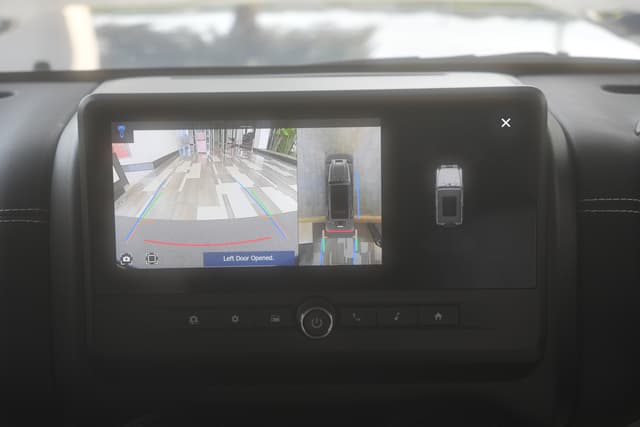
However, within Rs 17 lakh, you’ll only get the MX1 variant, which does not offer ADAS. To get Level 2 ADAS, you’ll need to stretch to the AX3 L variant at around Rs 20 lakh. Even then, it still won’t give you a 360-degree camera that’s reserved for the top AX7 L variant, which is closer to Rs 23 lakh.
If you are absolutely firm on ADAS Level 2, 360-degree camera and high-beam assist within Rs 17 lakh, you’ll have to step down to a smaller SUV like the Kia Syros HTX Plus (O). It offers the tech you want, but you’ll compromise on outright space and performance. The 1.0-litre turbo petrol makes 118hp and 172Nm, which is well short of your torque requirement, and while it’s among the roomier compact SUVs, it’s not in the same league as the Thar Roxx for five-adult road trips or rough-road durability.
Our advice? Stretch to the Thar Roxx AX3 L. You’ll get the space, toughness and performance that actually matter for the kind of usage you describe. A 360-degree camera can be added through a good aftermarket solution.
Clarification on Mahindra Thar Roxx Fuel Efficiency & Recommendation Between Manual vs Automatic Dear Autocar India Team, This email is in reference to the insights you shared regarding the expected real‑world fuel efficiency of the Mahindra Thar Roxx. Thank you for the detailed analysis based on your experience with the three‑door Thar. However, many YouTube reviews and user-reported tests indicate a fuel efficiency of around 11 km/l for both the manual and automatic variants under mixed driving conditions. This has created some confusion for me as a prospective buyer. I request your clarification on the following points: Why is there a noticeable difference in fuel efficiency between the automatic and manual transmissions, especially when some real‑world tests appear to show similar figures? Between the manual and automatic variants, which would you recommend in terms of: Maintenance cost Long-term reliability and robustness Overall ownership convenience Considering that I reside in Delhi, where diesel regulations and long-term compliance remain uncertain, which powertrain and transmission combination would be the most practical choice? Your expert guidance will be extremely helpful in making an informed decision. Thank you for your time and support.
Our detailed real-world fuel efficiency test of the three-door Mahindra Thar was conducted in Mumbai, a city known for heavy stop-start traffic. Compared to this, driving conditions in Delhi NCR generally involve more flowing traffic, which can result in slightly better efficiency figures.
As an additional reference point, we can look at the Mahindra Scorpio N, which uses the same engines as the Thar Roxx, albeit in a higher state of tune. In our real-world tests, the petrol automatic Scorpio N returned 7.9 kpl in the city and 9.4 kpl on the highway. The diesel automatic managed 8.6 kpl in the city and 11.7 kpl on the highway.
As these figures show, the difference in fuel efficiency between petrol and diesel automatics is not significant enough to justify choosing the diesel variant, especially given your limited running and predominantly city-based usage.
As for manual versus automatic efficiency, especially in the case of the Thar Roxx, it is highly unlikely that the torque converter automatic will match the efficiency of the manual. This is due to the basic nature of the transmission. Torque converters use a fluid coupling instead of a direct mechanical link, which leads to energy losses during acceleration and low-speed driving. In contrast, a manual gearbox offers a direct mechanical connection once the clutch is engaged, resulting in lower losses.
Other automatic transmissions, such as dual clutch units and CVTs, are inherently more efficient than torque converters. DCTs use mechanical clutches for faster and more direct power transfer. CVTs are able to keep the engine operating in its most efficient rev range for most driving conditions. As a result, these transmissions can deliver fuel efficiency figures closer to manuals, something that is unlikely with a torque converter automatic.
Finally, considering you are based in Delhi, where diesel regulations remain uncertain, the petrol variant of the Thar Roxx would be the more sensible and stress-free choice.
I am considering purchasing the Mahindra Thar Roxx and am evaluating the automatic transmission option. I have come across information stating that while the ARAI‑certified mileage for both manual and automatic variants is the same, the real‑world mileage of the automatic variant tends to be slightly lower. Since my daily usage is around 30 km with occasional long trips, I want to understand the practical difference in fuel efficiency before making a final decision. Could you please share the approximate real‑world mileage figures for both the petrol and diesel automatic variants? This will help me make an informed choice.
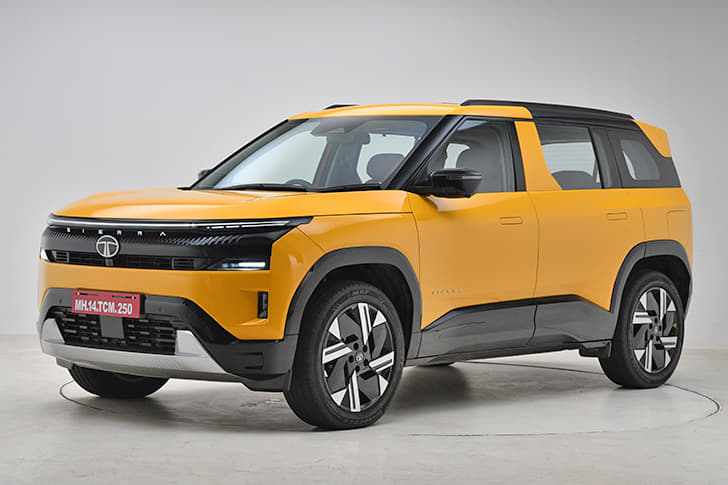
I’m confused between the Tata Sierra turbo petrol and the Thar Roxx diesel automatic. This will be my first car. It should be a comfortable five-seater. Majority usage would be in Bangalore city.
Hi AutocarIndia, love your entire team. It rocks! {You’ll get the reference :)} I'm looking at buying the Thar Roxx Star Edition, diesel, manual, 4x2, for touring across India. The Roxx stands out for: 1) its ability to go almost anywhere irrespective of road conditions; 2) the 2L diesel engine felt fabulous during the test drive with respect to power and NVH; 3) apart from the body roll due to its body-on-frame construction, the suspension setup impressed me; 4) I have always loved the way the Thars look (found it better than the Jeep Compass in points 2, 3 and 4). Mahindra’s much larger service network compared to Jeep’s also works in favour of the Roxx. I would appreciate your help with two concerns: 1. I couldn’t find an empty stretch of road to test the Roxx at 100-120kmph. Are NVH levels, wind buffeting noise and stability at 100–120 kph a concern? 2. Should I opt for the ADAS version instead? How useful is ADAS with a manual transmission? Is adaptive cruise control actually useful in reducing driver fatigue? Does autonomous emergency braking work in a manual? All questions pertain to real-life traffic conditions on our highways like the Pune-Bangalore highway, which would form a majority of my travel. I’d like your take on anything else I might have missed and need to consider. Thank you, Nikhil.
I am a first-time car buyer, confused between the Sierra, Seltos and Thar Roxx. Most of my driving will be from town to town and on highways, with long tours and less city usage. I am also looking for comfort for my aged parents. Budget is Rs 10-15 lakh. Please suggest which to buy.
I am planning to buy the new Thar Roxx and really liked it after the test drive. My average monthly running is around 1000 km, and the car will mostly be used for weekend drives while remaining idle on weekdays. Should I choose the diesel or petrol variant?
In terms of fuel economy gains, there honestly isn't too much benefit in choosing the diesel version of the Mahindra Thar Roxx over the petrol.
Both engines are tuned for power and instantaneous responses, and suffer from terrible fuel economy. Perhaps if your driving is primarily on highways, you can extract a few extra kilometres out of the diesel version.
Both engines are about equal on refinement, too, so there are no gains made there either. As such, it might be worth going for the petrol version, if only to save some money on the cost price.
Mahindra Thar Roxx price in India
Mahindra Cars