Manual cars in India (71)
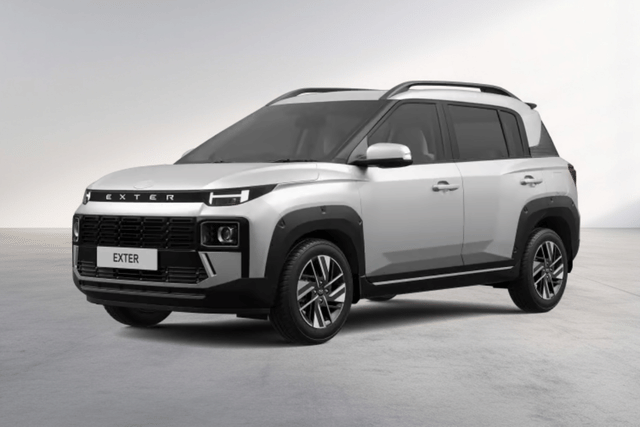
Some of the biggest advantages of a manual transmission (MT) in mass-market cars is its lower upfront and long-term maintenance costs when compared to comparable automatic transmissions. A manual gearbox is typically operated along with a foot-operated pedal, which engages or disengages the clutch. Manual transmissions have multiple forward gears for optimal performance and efficiency, plus a single ratio dedicated for reversing the car.



Manual Cars - FAQs
If the gearbox and clutch are well-designed, driving a manual car can be a rewarding experience. Being able to manually select the right gear for the right occasion offers a sense of freedom and controllability that automatic transmission types can't match. Factors that can dampen this include a springy clutch, long pedal travel, unpredictable clutch engagement (also called the 'bite point'), notchy gear shifts, or long gear throws.
The answer to this question depends on several factors, least of which includes the tuning of the gearbox, plus the number of forward gears, gearing setup, and your driving style. For example, all other factors being identical, a 6-speed gearbox will offer better fuel economy and even a higher top speed when compared to a 5-speed unit. This is because higher gears have taller ratios that allow the engine to spin at a more leisurely speed, improving efficiency. If the manufacturer tunes the transmission with shorter ratios throughout, this will improve performance at the cost of poor mileage. Understandably, redlining the engine in lower gears will not help fuel efficiency either.
Clutchless manual transmissions are found in quite a few mass-market cars. As the name suggests, this setup does not come with a foot-operated clutch pedal but retains the gear lever. While there still is a clutch, it's now operated by hydraulic servos that take their signal to engage or disengage the clutch from electronic control modules and sensors, based on factors such as movement of the gear lever, plus the speed of the vehicle and engine RPM to ensure a smooth operation.
Trending Questions on Cars - Answered by Autocar Experts
I am 6.1 ft tall, weigh 101 kg, and live in Pune (PCMC). My maximum budget is Rs 13 lakh on-road. My weekly city driving is limited to around 50 km, and I undertake a 250 km long drive once every three months. I also take an annual family trip of around 1,500 to 2,000 km from Pune to Delhi or Kerala. My main priorities are comfort, generous legroom and good under-thigh support, as my parents are tall too. Good mileage would be an added advantage. I prefer an automatic transmission, but I am open to a manual if there are no suitable automatic options. I am open to any fuel type, including petrol, diesel, CNG or electric. I am also willing to consider a used car manufactured in 2021 or later, provided it is in good condition. Could you please suggest the most suitable options for my requirements? Should I buy a car now or wait for any promising upcoming models in the market?
Go for the Mahindra XUV 3XO petrol automatic. At 6 ft 1 in and 101kg, comfort, legroom and thigh support are your top priorities, and the 3XO delivers on all three. The front seats are wide and supportive, the driving position is comfortable for taller drivers, and the rear seat offers genuinely good legroom and a flat floor, which will make a big difference for your parents on longer journeys. Your usage pattern is predominantly city driving with occasional long highway trips, so a petrol automatic is the right choice. The 3XO’s torque converter automatic is smooth and reliable in traffic, and the car feels stable and comfortable on the highway. It is also one of the safest cars in the segment, which is important given your family trips. The only drawback is the boot, which is on the smaller side, but for your usage, that is a manageable compromise.
I am looking for a good B2-segment car. My requirements are that the mid variant should cost less than Rs. 10 lakh on-road in Bangalore, with a 70:30 city-to-highway driving ratio. I am looking for decent fuel economy of around 13-15 kmpl in the city and 18-20 kmpl on the highway, along with a manual transmission and a 4-cylinder, naturally aspirated engine. Currently, I’m confused between the Hyundai i20 Sportz and the third-generation Honda Amaze.
Between your two picks, the Honda Amaze is the better fit. Your requirements are very clear: a naturally aspirated 4-cylinder engine, manual transmission, good fuel efficiency and a budget of under Rs 10 lakh on-road in Bangalore. The Amaze's 1.2-litre i-VTEC engine is smooth, refined and reliable, and Honda’s long-term ownership reputation is excellent. The Amaze also offers a comfortable ride, a spacious cabin and a large boot, making it a practical choice for both city and highway use. Your 70:30 city-to-highway split means comfort and efficiency matter more than outright performance, and the Amaze delivers well on both fronts.The Hyundai i20 is a good car, but the 1.2-litre engine is not as efficient or refined as the Honda’s, and the i20’s higher variants can push the budget. Overall, the Amaze is the more sensible and satisfying long-term choice for your requirements.
Hi, I'm planning to buy a Thar but I'm in a dilemma choosing between the newly launched Thar OG and Thar Roxx, both diesel 4x4 MT. The car will be mainly used for long trips. I'm the kind of a person who prefers less congested village roads over a neat highway with heavy traffic. My monthly running is approximately 1,500-1,800 km. The value-for-money factor pushes me towards the Thar Roxx MX5 over the ZXT variant of the Thar OG but one major factor holding me back from choosing the Roxx is the colour of interior. I don't like white in cars and the Mocha interior didn't impress me either. So which car should I choose? And if you suggest the Roxx, is Mahindra planning to introduce a full black/Ebony edition?
For your 1,500 to 1,800km monthly running and preference for long trips on village roads, the Roxx is the better choice. Compared with the Thar OG, it is considerably more comfortable and stable at highway speeds, has a much more usable cabin and rear seat, and offers better ride comfort without giving up the 4x4 capability you want. The 2.2 litre diesel 4x4 manual is also well suited to your usage, particularly when you are likely to encounter rough or poorly surfaced roads.The MX5 makes more sense than stretching to the ZXT if the additional features are not essential. The Roxx is already the more complete vehicle, so spending more for equipment you may not use does not add much value. The OG's biggest advantage is its compact size and more traditional Thar character, which can be appealing on narrow village roads, but that advantage is outweighed by the Roxx's superior touring ability for your usage.The interior colour is the one reason to hold off. The Roxx Star Edition does have a darker interior, but, it is not available with 4x4. There is currently no confirmed announcement of an all black or Ebony interior being introduced on a 4x4 Roxx.
Regarding the Crysta option, I have found a 2024 Innova Crysta ZX manual with only 10,000 km on the odometer, available for sale at an authorised showroom. Is it wise to prefer this sparingly used Crysta over a brand-new GX or GX Plus variant? I find the deal quite attractive.
If the 2024 Crysta ZX manual is genuinely a 10,000 km car from an authorised showroom with a clean service history, it is a very attractive proposition. The ZX is the top-spec variant, so you are getting a far richer feature set than the GX or GX Plus, and the Crysta’s diesel engine and manual gearbox are both known for their long-term durability. The key here is that the Crysta is a proven workhorse with a reputation for running well past 2-3 lakh km with proper maintenance, so 10,000 km is barely run-in.The only caveat is price. If the asking price is close to a new GX or GX Plus, it is still worth considering because you are getting the top variant with all the additional features and a car that is essentially still new. Just make sure the price premium over a new GX is not excessive, and that the car comes with a full service record and any remaining warranty transferred to you.
Hello, this is Dilip. I’m planning to buy my first car for myself and my parents. I’m 30 years old and am looking for a car under Rs. 20 lakh, preferably with a manual transmission, that offers excellent long-term reliability, low maintenance and ownership costs as well as good safety and build quality. I need a car comfortable for my parents and family with a good driving experience in both city traffic and highways. It should offer good mileage and overall practicality. Suggest me a car that I can confidently keep for 8-10 years. Please suggest the best options based on these requirements and explain both pros and cons of each car.
Go for the Honda Elevate manual. It is the most sensible choice for your requirements. Honda’s naturally aspirated petrol engine is proven, reliable and efficient, and the manual gearbox is smooth and easy to use in both city traffic and on highways. The Elevate is also comfortable for family use, with a spacious cabin and a well-balanced ride, and Honda’s ownership experience is among the best in the segment. It is a car you can confidently keep for 8-10 years without worrying about major reliability or maintenance issues.If you want a slightly more premium feel and a bit more space, the Kia Seltos petrol manual is a good alternative. It offers a more feature-rich cabin and a more premium overall experience, but it is also more expensive and does not offer a significant reliability advantage over the Elevate. Alternatively, consider the Maruti Suzuki Victoris petrol manual. Its powertrain is smooth and efficient and Maruti’s service network is unmatched. Overall, the Honda Elevate manual strikes the best balance between reliability, comfort, safety, driving experience and long-term ownership confidence.
Last Updated on: 13 Oct 2026