











Last Updated on: 06 Jan 2026
Hyundai Venue price in Chhatarpur
The Hyundai Venue price in Chhatarpur starts at Rs ₹8.00 lakh (ex-showroom). New Venue on road price in Chhatarpur for the HX2 1.2 Petrol MT variant begins at Rs ₹9.15 lakh.
Hyundai Venue price & variants
Price of Hyundai Venue alternatives
Hyundai Venue news
Hyundai Venue Images
Hyundai Venue videos


.jpg?w=640&q=75)


Hyundai Venue Colours
Hyundai Venue FAQs
The Hyundai Venue price in India starts at ₹8.00 lakh and goes up to ₹15.51 lakh, ex-showroom.
The base-spec HX2 1.2 Petrol MT Hyundai Venue price is ₹8.00 lakh, ex-showroom.
The base-spec HX2 1.2 Petrol MT Hyundai Venue on road price in Chhatarpur is ₹9.15 lakh.
The HX5 1.0 Turbo Petrol DCT Hyundai Venue price is ₹10.67 lakh, ex-showroom.
The HX5 1.0 Turbo Petrol DCT Hyundai Venue on road price in Chhatarpur is ₹12.21 lakh.
The top-spec HX10 1.5 Diesel AT Hyundai Venue price is ₹15.51 lakh, ex-showroom.
The top-spec HX10 1.5 Diesel AT Hyundai Venue on road price in Chhatarpur is ₹17.84 lakh.
Trending Questions on Hyundai Venue - Answered by Autocar Experts
Hi Autocar Team, I am planning to buy the Hyundai Venue facelift model, but am unsure whether I should go with the petrol or diesel automatic. I prefer an automatic only, and my monthly usage is around 1,000 km, mostly city driving with occasional highway trips.
I drive around 178 km daily (approximately 46,000 km per year), mostly on highways and expressways. I am trying to decide between CNG and diesel for my next car. My main concern with CNG is long-term engine wear, as I have heard that some CNG engines may require major repairs after 1-1.3 lakh km. Since I plan to keep the car for at least 5+ years, durability is very important to me. My priorities are low NVH (noise, vibration, and harshness), smooth highway cruising, comfort, durability, and reliable long-term ownership. Considering my usage pattern and high annual mileage, which engine option would be better - CNG or diesel? Also, which car would you recommend?
For the kind of usage you describe, around 178km a day and roughly 46,000km a year - a diesel car makes far more sense than a CNG one.
Firstly, diesel is much more widely available on highways and expressways, which is where you’ll be spending most of your time. With such high daily mileage, convenience matters, and diesel fuel stations are easy to find almost anywhere in the country.
Secondly, diesel engines are better suited to long-distance cruising. Their strong low-end and mid-range torque make overtaking easier and allow the car to cruise at highway speeds with less effort. This also typically results in lower engine stress and more relaxed driving. It should suit your priorities of smooth cruising, good NVH and long-term durability.
CNG cars, on the other hand, do have a few compromises. Performance is noticeably weaker than petrol versions, because CNG produces less energy. When the car is fully loaded or when you need quick overtakes on the highway, the lack of power becomes quite evident.
Another practical issue is that the CNG cylinder takes up a large portion of the boot, which can be inconvenient if you are frequently travelling with luggage. From a mechanical perspective, modern factory-fitted CNG engines are much better engineered than earlier conversions.
However, CNG is a dry gaseous fuel and doesn’t have the lubricating properties of liquid fuels, so over very high mileages, there can be slightly higher wear on valves and valve seats. For someone covering well over 40,000km a year, a diesel powertrain is generally the more robust long-term solution.
Since you haven’t mentioned your exact budget, here are a few strong diesel options across segments. In the compact SUV class, the Hyundai Venue diesel is a good choice with a refined and proven 1.5-litre engine. If you want something larger and more comfortable for long highway drives, the Hyundai Creta diesel remains one of the best all-rounders with excellent refinement and efficiency.
And if you are looking for something bigger and more premium, the Mahindra XUV7XO diesel offers strong performance, good highway manners and a very robust engine.
Both Hyundai Motor India and Mahindra & Mahindra have well-proven diesel engines that are known to handle high mileage well when properly maintained. Given your driving pattern and ownership horizon of 5 years or more, diesel is clearly the more suitable and practical choice.
Hi, I need advice to buy a new car which suits my needs, My requirements are: 1. Car under 13 lakh 2. My running is around 2800 km per month between Dehradun and haridwar, so needs best fuel efficient car, occasional long distance max. 300 kms. 3. Car possession will be almost for 10 yrs.
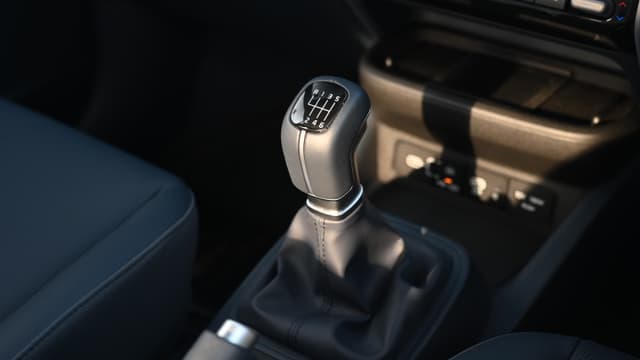
Since your running is on the higher side and you prioritise fuel efficiency, a diesel compact SUV would be a suitable pick. Our recommendation would be the new Hyundai Venue in HX5 trim with the 1.5-litre diesel and 6-speed manual combination, which sits within your budget. The engine is refined for a diesel, has adequate performance for your highway journeys and delivers good fuel efficiency too, with an ARAI rating of 20.99kpl. In the real world, you can expect efficiency in the mid- to high-teens on the highway.
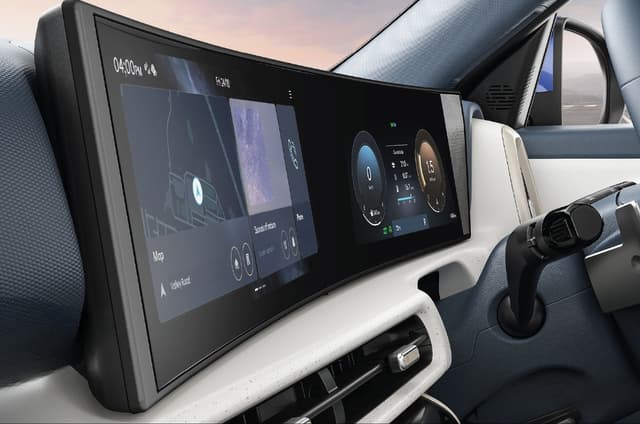
The HX5 trim is well equipped with features like dual displays with a 10.25-inch infotainment system, a sunroof and cruise control, which will be useful on your drives from Dehradun to Haridwar. Finally, as you want to keep the car for almost 10 years, reliability and service are important, and Hyundai is well known for both. Do take a test drive before you decide.
I currently drive a 2015 Hyundai Grand i10 petrol and am planning to replace it with a compact SUV. My daily driving is around 25 km with a mix of city and highway use, and I usually go on a long trip once a month. My budget is around Rs 10-15 lakh. Should I choose a petrol or diesel car for this usage, and which compact SUV would you recommend?
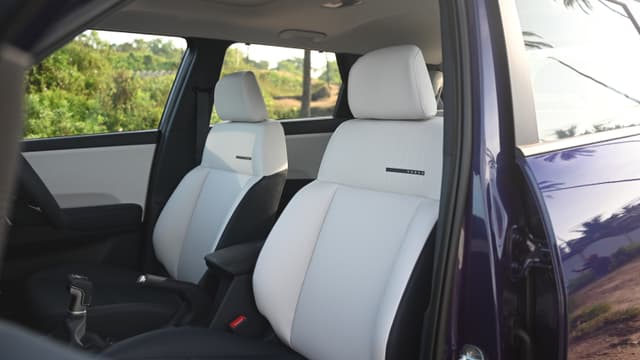
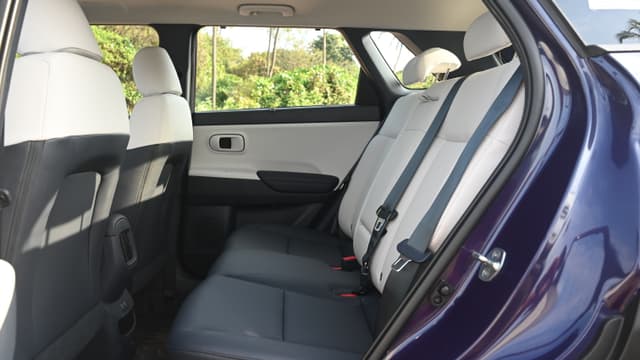
Your limited usage doesn’t justify a diesel, so we recommend sticking to a petrol engine. If you’re happy with the Hyundai experience, the new Venue fits your needs well. The latest generation has grown in size, and the interior is roomier than before.
Within your budget, you could opt for the HX6 variant with the turbo-petrol and DCT combination. It comes well equipped with features like a sunroof, automatic climate control and cruise control. The engine is powerful enough for your long highway tours, and the DCT works well in the city. Do take a test drive before you commit to a purchase.
Hi, I am confused between buying the Hyundai Venue HX6 DCT and the Mahindra REVX A AT. My monthly usage is around 500 km, and I prefer a petrol variant. Please advise which would be a better choice.
Both the Hyundai Venue and Mahindra XUV 3XO, in their HX 6 DCT and RevX AT guise, are extremely close when it comes to price and what they offer. The Venue is the newer, more modern-looking car on the inside and out, but the 3XO is more powerful with a 131hp engine.
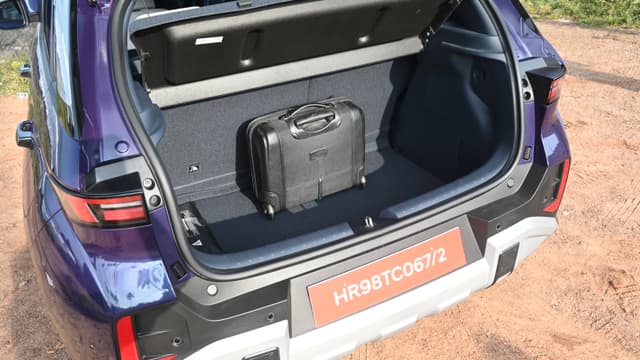
The 3XO is also more spacious in the rear seat, while the Venue gets a slightly bigger boot. Features on the 3XO are better, boasting a panoramic sunroof, leatherette upholstery and dual-zone climate control, to name a few.
When it comes to ride and handling, too, it is the 3XO that pips ahead of the Venue. We would recommend the 3XO in this case as it offers a lot more for the money and is the better value proposition.
Hi, I am planning to buy a new car and need help choosing between the Skoda Kylaq Signature+ and the Hyundai Venue N6 N Line. I drive to work every day in Delhi. Luckily, my timings are non-office hours, so that should be factored in, plus a few road trips we take during the year. Please suggest.
My budget is around ₹12-14 lakh. I want to buy a sub-4-meter SUV. My weekly driving is around 100-120 km. I am considering the Kia Syros HTK Plus Turbo Petrol Manual variant and the Hyundai Venue HX5 Turbo Automatic Petrol variant. Which will be the better option?
In this comparison, we would recommend the Kia Syros as you get more car for your money. The Syros gets the same powertrain as the Hyundai Venue but gets the DCT gearbox, as it makes driving in city traffic a lot easier.
The Syros is also a bigger car overall with more space in the cabin, rear seat and also a bigger boot. You also get premium features like a panoramic sunroof and alloy wheels in the Syros.
The one area where the Venue is ahead of the Syros is the ride comfort, but apart from that, in every aspect, the Syros is a better choice. The HTK+ with the DCT will fit in your budget and is our recommendation.
I have a budget of ₹14 lakh and wanted to buy the Kia Seltos Petrol HT e-Ornate variant. I went for a test drive but felt the car was underpowered, and I got disappointed. The features and finish are top-class, but the power is lacking. What are my options?
For a budget of Rs 14 lakh, it is admittedly difficult to find a mid-size SUV automatic that offers genuinely strong performance. The 1.5 petrol in the Kia Seltos HTE is smooth and refined, but it isn’t particularly punchy, which explains why it felt underpowered on your test drive.
If you are primarily driving yourself and rear seat space isn’t a top priority, it would make sense to look at the compact SUV segment instead. This is where you’ll find turbo-petrol engines that feel noticeably more energetic.
Since you liked the Seltos’ fit, finish and feature list, the Kia Sonet HTX is worth considering. It comes with the 1.0-litre turbo-petrol (118hp), which feels much more responsive in everyday driving. The Hyundai Venue (particularly the higher variants with the same 1.0 turbo engine) offers similar performance with a slightly different interior feel and feature mix.
Another very strong option is the Mahindra XUV 3XO. Its 1.2 TGDi engine (up to 131hp) is the most powerful in this class, and it combines strong performance with a spacious cabin and generous features for the money.
In short, if power is high on your priority list, moving to a turbo-petrol compact SUV will give you a much more satisfying driving experience within your budget.
During my test drive, the torque-converter gearbox felt smoother, and both the gear shifts and overall ride quality were noticeably better in the Mahindra XUV 3XO. In the Hyundai Venue, I could clearly feel turbo lag at lower speeds, and the DCT did not feel as smooth as the 3XO’s gearbox. However, from a long-term ownership perspective, Hyundai’s service network is more reliable and hassle-free, and the resale value is generally stronger compared to Mahindra. I’m also slightly concerned that the 3XO might develop rattles or increased engine noise over time, whereas the Venue, if maintained well, may remain more refined. I also doubt fuel efficiency: will the Venue’s DCT deliver better mileage compared to the 3XO’s torque-converter? I would appreciate guidance from the community based on real-world usage and long-term ownership experience.
You’ve summed up the driving difference quite accurately.
A torque-converter automatic, like the six-speed Aisin unit in the Mahindra XUV 3XO, uses hydraulic fluid between the engine and gearbox. That fluid coupling cushions the initial take-off and smoothens out power delivery, which is why it feels more progressive and less jerky in traffic. There’s a slight build-up of torque before full engagement, and that’s what gives it that fluid and easy feel.
A DCT, like the dry-clutch unit in the Hyundai Venue, uses two clutches to pre-select gears. Shifts are quicker and more direct. But at low speeds, especially with a small turbo engine, you can feel turbo lag followed by a slightly sharper clutch engagement. That’s the “snappier” sensation you experienced. In crawling traffic, a torque converter generally feels more natural.
On long-term ownership, Hyundai does have a very strong service network and typically excellent resale value. Mahindra has improved significantly in recent years, and the 3XO’s platform (derived from the globally developed SsangYong Tivoli architecture) is fundamentally robust, so we wouldn’t be overly concerned about structural quality. Minor rattles over time depend more on usage and maintenance than brand alone.
On fuel efficiency, the Venue’s DCT may be marginally more efficient in ideal conditions. But in real-world city driving, the difference is unlikely to be dramatic. It shouldn’t be the deciding factor.
Where the Venue clearly scores is in overall polish, its user interface, feature integration and ergonomics feel more mature. The 3XO, on the other hand, gives you stronger performance and a smoother automatic experience.
Namaskar, sir. I wish to upgrade from my current Baleno to a proper automatic vehicle. My overall running is around 8 to 10k per year (25% city & 75% highway). My budget is ₹15 to ₹18 lakh. Which car will you suggest? Your response & expertise will help me reach a conclusion.
Hyundai Venue price in India
Hyundai Cars