Last Updated on: 03 Sep 2026
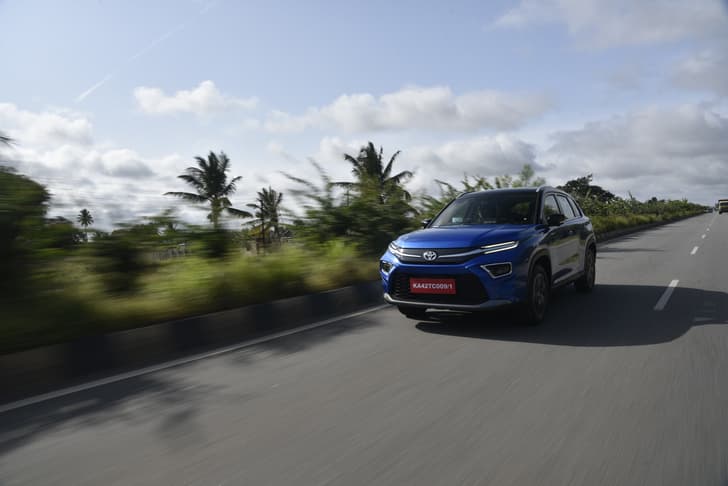
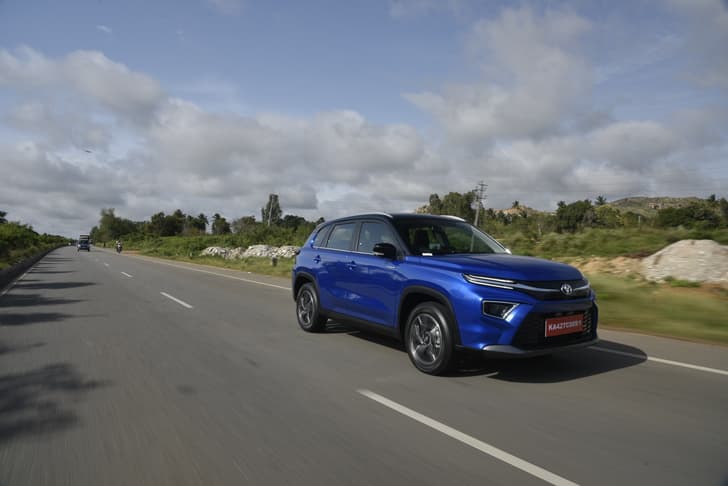
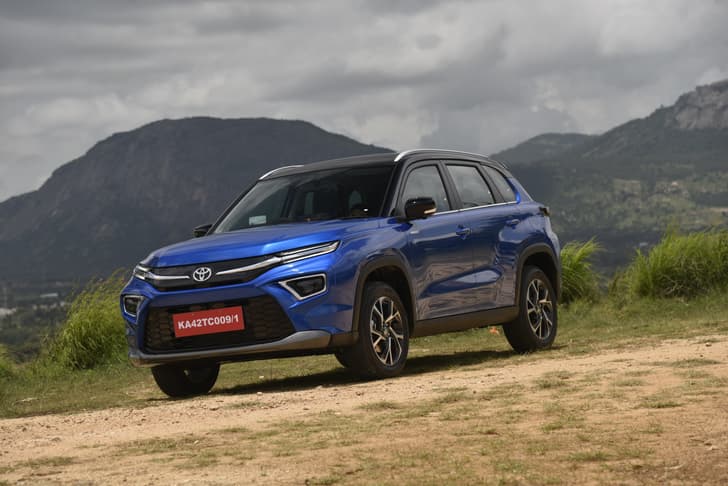
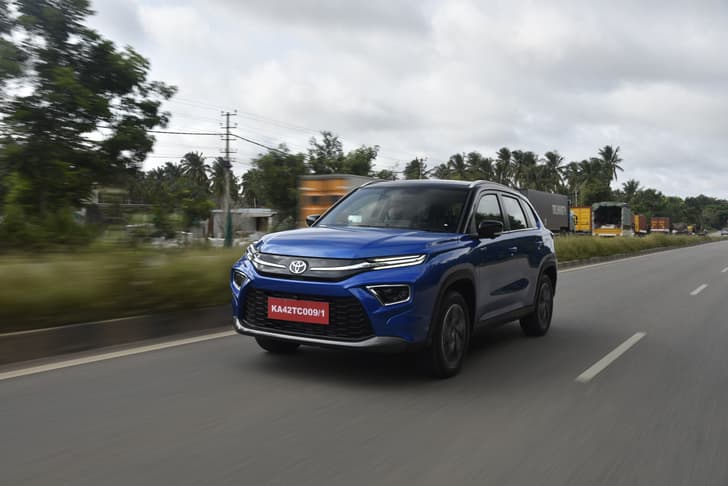
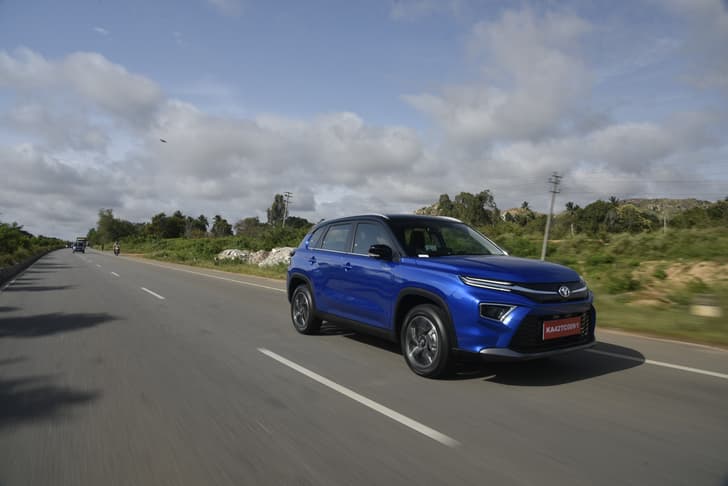
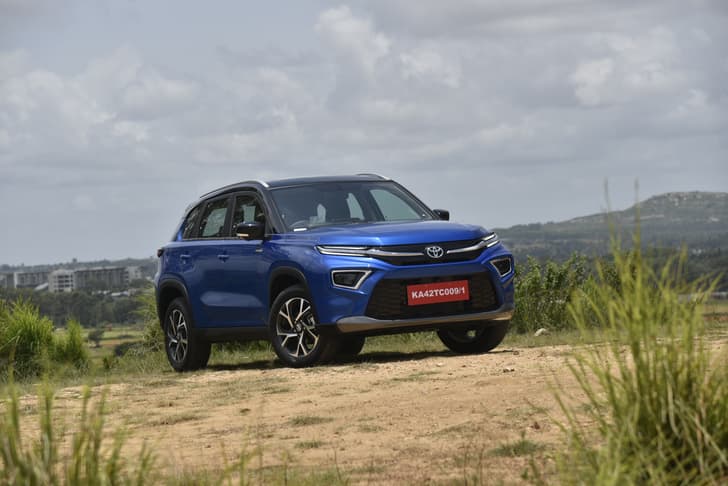
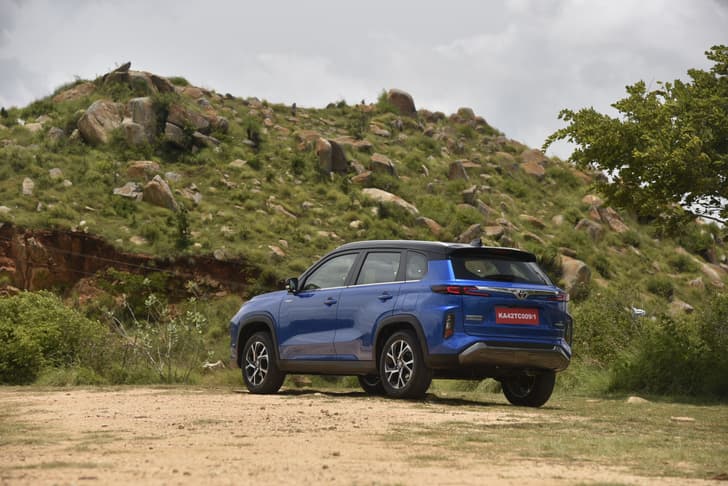
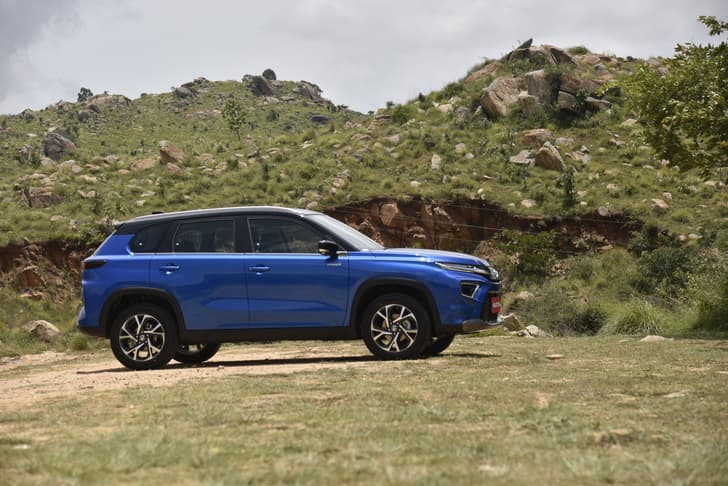
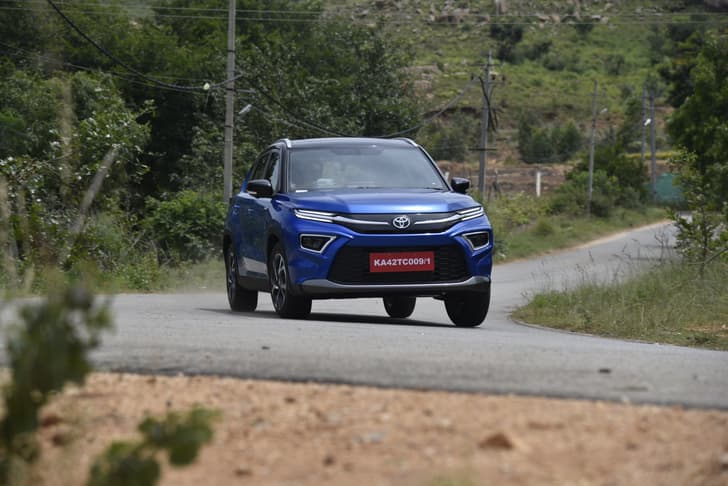
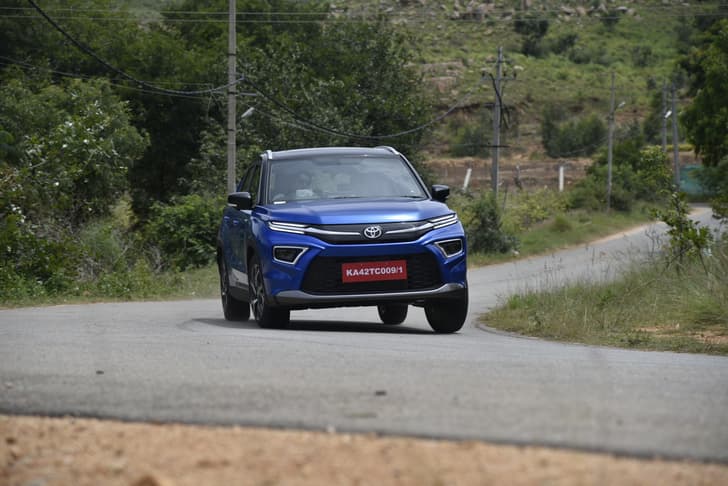
Toyota Urban Cruiser Hyryder Petrol S Hybrid AT
Toyota Urban Cruiser Hyryder Petrol S Hybrid AT Key Features
- Rear Parking Camera
- Manual Day Night Interior Mirror
- Driving Modes
- Halogen Headlight Type
Toyota Urban Cruiser Hyryder Petrol S Hybrid AT specifications
Engine & Transmission
Engine Type | Strong Hybrid |
Engine Displacement | 1490 cc |
Number of Cylinders | 3 |
Engine Installation | Front |
Fuel Type/ Propulsion | Petrol-Electric Hybrid |
Motor Type | AC Synchronous Motor |
Number of Motors | 1 |
Gearbox Type | e-CVT |
Manual Shifts via Gear Lever on Automatic Gearbox | No |
Paddle Shifters for Automatic Gearbox | Yes |
Sport Mode for Automatic Gearbox | No |
Drive Layout | Front Wheel Drive |
Lockable Differential/s | No |
Max Engine Power | 92.45 hp at 5500 rpm |
Max Engine Torque | 122 Nm at 4400 - 4800 rpm |
Combined Max Power | 115.56hp |
Max Motor Power | 80.2hp |
Max Motor Torque | 141Nm |
Fuel & Performance
E20 Compatibility | Yes |
Emission Standard | Bharat Stage VI |
Auto Start/Stop | Yes |
Battery Capacity | 85 kWh |
Official Fuel Economy | 27.97 kmpl |
City Fuel Economy as Tested | 20.28 kmpl |
Highway Fuel Economy as Tested | 22.85 kmpl |
Fuel Tank Capacity | 45 litres |
0-100kph | 11.99 s |
20-80kph (in third gear/ kickdown) | 7.14 s |
40-100kph (in fourth gear/ kickdown) | 9.5 s |
Suspension & Steering
Front Suspension Type | Independent, MacPherson Strut |
Front Springs | Coil Springs |
Rear Suspension Type | Non-independent, Torsion Beam |
Rear Springs | Coil Springs |
Damper Control | No |
Ride Height Adjust | No |
Type of Power Assist | Electric |
Steering Adjust type | Manual |
Steering Adjust | Tilt and Telescopic |
Turning Radius | 5.4 m |
Front Brakes | Discs |
Rear Brakes | Discs |
Wheel Size | 17 inches |
Front Tyre Size | 215/60 R17 |
Rear Tyre Size | 215/60 R17 |
Wheels | Steel rims with wheel covers |
Spare Wheel | Full Size |
Dimensions
Length | 4365 mm |
Width | 1795 mm |
Height | 1645 mm |
Wheelbase | 2600 mm |
Kerb Weight | 1265-1295 kg |
Chassis Type | Monocoque |
Doors | 5 |
Toyota Urban Cruiser Hyryder Petrol S Hybrid AT features
Comfort
| Power Windows | Front and Rear |
| Powered Backseat Recline Adjustment | |
| Bottle Holder in Doors | |
| Roof Grab Handles | |
| Cooled Cup Holders | |
| Cooled Glovebox |
Safety
| Airbags | 6 |
| Door Ajar Warning | |
| Rear Cross Traffic Alert | |
| Rear Cross Traffic Collision Avoidance | |
| Day Night Interior Mirror | Manual |
| Rear Seatbelt Reminder |
Exterior
| Body Coloured Bumpers | |
| Door Handle Finish | Body Coloured |
| Wheel Arch Cladding | |
| Spoiler | |
| Follow Me Home Headlamps | |
| Stop Lamp |
Interior
| Speedometer | Digital |
| Tachometer | Digital |
| Trip Meter | |
| Average Fuel Consumption | |
| Average Speed | |
| Distance to Empty |
Entertainment
| Audio System | |
| Front Passenger Screen | |
| Speakers | 4 |
| CD Player | |
| USB Input | |
| AUX Input |
Toyota Urban Cruiser Hyryder variants
 Electronic Stability ControlFully Digital Digital Instrument Cluster2 SpeakersFabric Seat MaterialProjector HeadlampsElectronic Parking Brake with AutoholdDriving ModesPhone-based Satellite NavigationRemote Engine Start/StopWireless Android AutoAutomatic Day Night Interior MirrorPanoramic SunroofWireless Phone ChargingLED headlampsRemote Engine Start/StopAutomatic Day Night Interior MirrorAmbient LightingWireless Phone ChargingLED headlampsPhone-based Satellite NavigationElectronic Parking Brake with AutoholdPanoramic SunroofRemote Engine Start/StopFront Only Ventilated SeatsRoof Rails
Toyota Urban Cruiser Hyryder comparison

Questions you may find useful
Dear Autocar Team, I drive around 45,000 km annually across highways and city roads. I previously owned a pre-owned Toyota Glanza Petrol (October 2020 to April 2024), which covered 90,000 km, and I currently drive a Maruti Suzuki Brezza CNG (April 2024-present), which has now clocked 96,000 km. While the running costs are low, driving a manual car daily has become physically tiring. Additionally, frequent CNG queues and the limited boot space are major inconveniences. Around 85% of my driving is on highways. My questions are: Is 1.5 lakh km the right financial milestone to sell my Brezza CNG before major maintenance or overhaul costs start increasing? I am looking for an automatic strong hybrid car that can comfortably run up to 1.5 lakh km with low maintenance, fatigue-free driving, and a dedicated spare wheel (stepney). Between the Toyota Urban Cruiser Hyryder Hybrid, Hyryder CNG, and Honda City e:HEV, which would be the better choice for my requirements? Looking forward to your guidance.

 Toyota Urban Cruiser HyryderHonda City
Hi, I need your expert advice on buying an SUV. I am a seafarer, so I will be away for around 6 months at a time. During this period, the car will mostly remain parked, although a family member may occasionally start it or drive it. My budget is around Rs. 20-22 lakh (on-road). I am currently considering the Kia Seltos, Hyundai Creta, Toyota Urban Cruiser Hyryder, but I'm open to other suggestions as well. Considering my usage pattern, which SUV would you recommend? I'm mainly looking for long-term reliability, minimal issues after being parked for months, low maintenance, and comfortable for family use. Would you recommend a petrol, strong hybrid, or any other powertrain for my situation? I'd really appreciate your suggestions.
Toyota Urban Cruiser HyryderKia SeltosHyundai CretaI am confused between the Hyundai Creta Knight Edition and the Toyota Urban Cruiser Hyryder for mostly city usage. My long-distance driving is quite limited, with only around 5–7 trips a year, usually covering about 200 km per trip. I also live in a hilly region where road conditions are not very good, so ride comfort, suspension, and ability to handle rough roads comfortably are important factors for me. Could you please suggest which would be the better option, considering comfort, reliability, fuel efficiency, long-term ownership, and suitability for bad road conditions? Also, in your opinion, is there any possibility of the Toyota RAV4 Hybrid being launched in India in the future?
Toyota Urban Cruiser HyryderHyundai CretaI am based in Andheri, Mumbai, and currently driving a Honda City sedan. Now, I am looking to upgrade to a mid-size compact SUV, specifically an automatic transmission variant, for daily intracity driving in heavy Mumbai traffic conditions. My priority features include ride refinement, ground clearance for Mumbai roads, front and rear parking assistance, ventilated seats, rain-sensing wipers, and a reliable, low-maintenance engine. I am currently comparing four models - Honda Elevate, Hyundai Creta, Kia Seltos, and Toyota Urban Cruiser Hyryder - across parameters including engine quality, safety features, comfort, fuel efficiency, and long-term ownership cost, to arrive at the best fit for my everyday Andheri commute.
Toyota Urban Cruiser HyryderKia SeltosI have a daily work commute of around 50 km, of which nearly 40 km is on the highway. I am currently driving a Maruti Baleno and am planning to upgrade to an SUV. I have shortlisted three petrol automatic options: the Tata Harrier Adventure X Plus Dark 1.5L Petrol, Kia Seltos GTX(A) 1.5L CVT, and Toyota Urban Cruiser Hyryder V AWD 1.5L Automatic. I personally prefer the larger and more substantial Harrier, while my wife is inclined towards the Hyryder. I have also used my Baleno for nearly 10 years, so long-term reliability and longevity are very important factors for me in this purchase.
Toyota Urban Cruiser HyryderMaruti Suzuki BalenoKia SeltosToyota Urban Cruiser Hyryder price in India
Upcoming Cars
Toyota Cars
Trending Cars



Latest Cars