Last Updated on: 28 Apr 2026
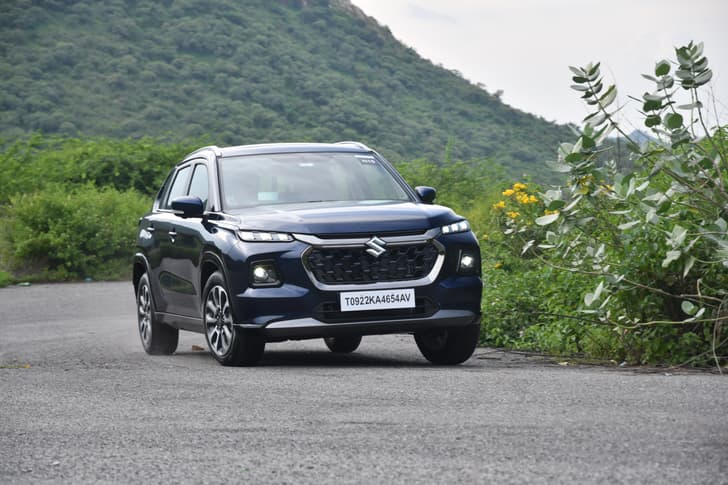
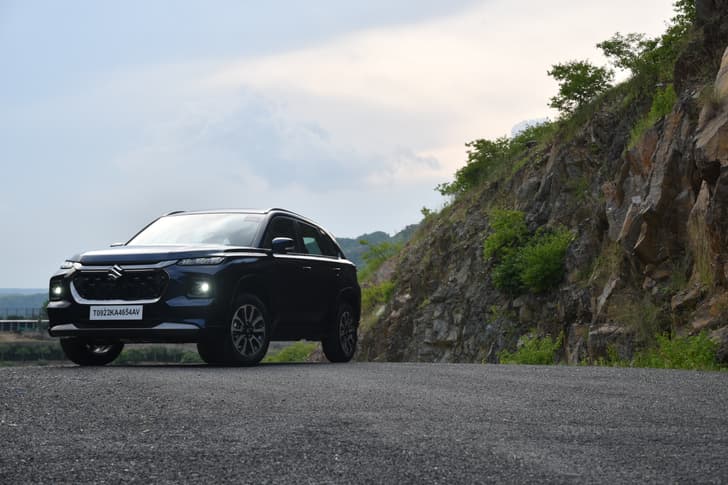
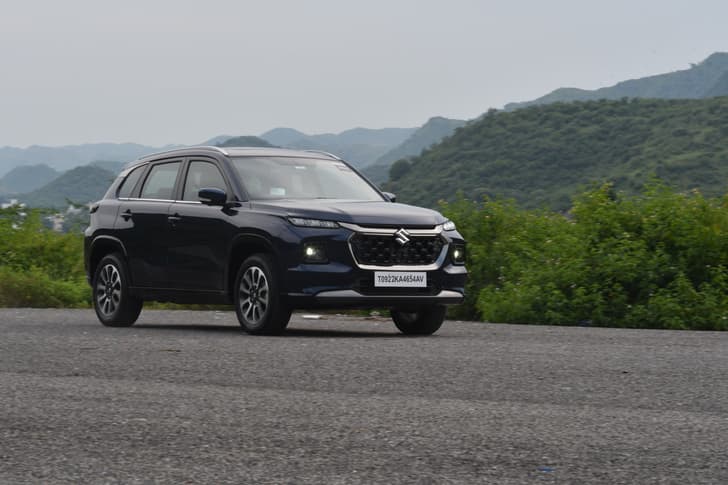
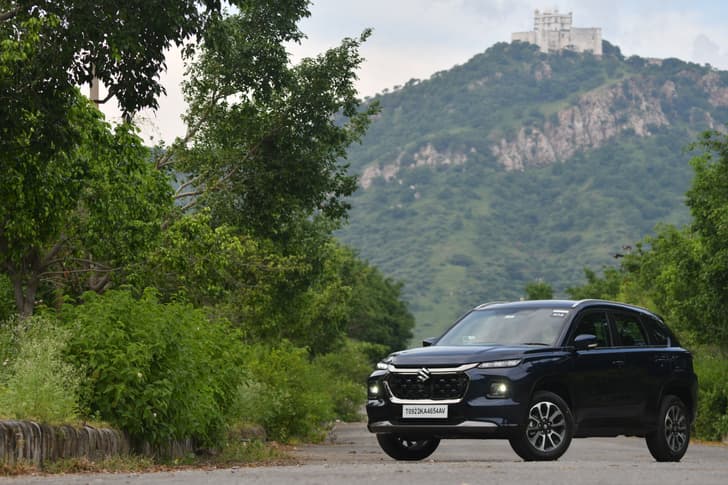
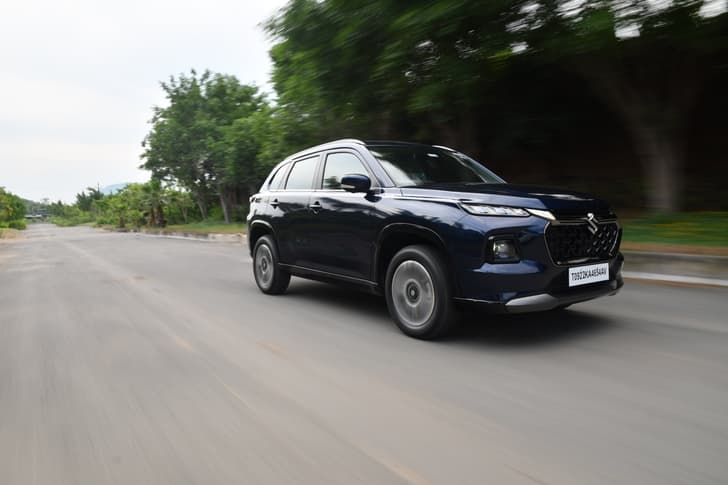
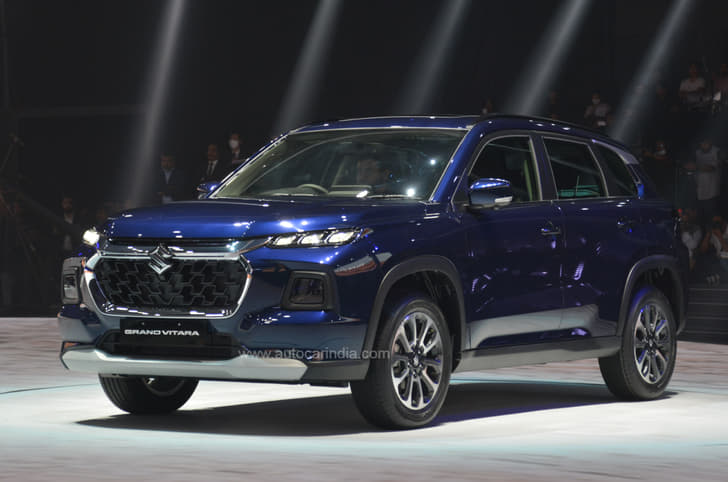
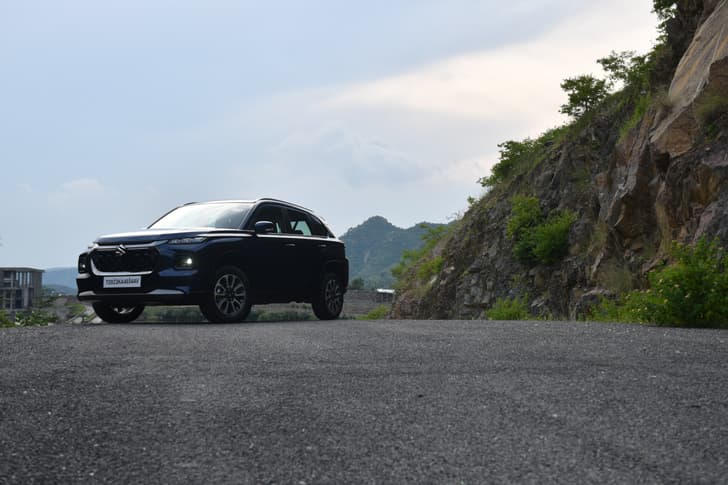
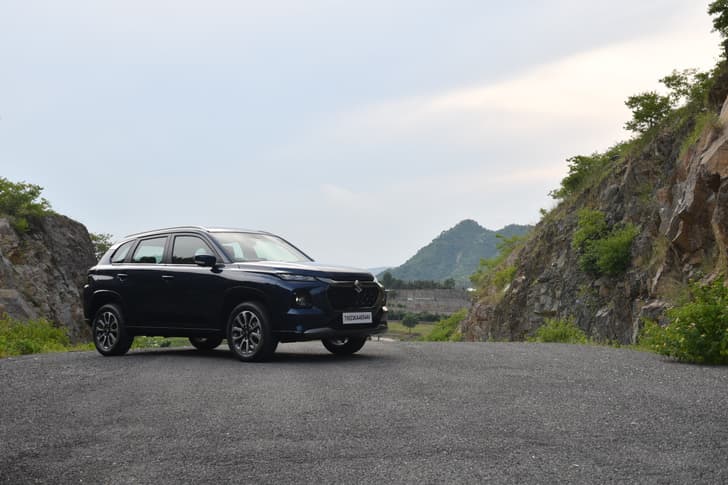
Maruti Suzuki Grand Vitara Petrol Sigma MT
The Maruti Suzuki Grand Vitara Petrol Sigma MT variant is priced at ₹10.77 lakh. The Petrol Sigma MT variant offers key features like Keyless start, Airbags, Rear defogger, Driver height adjustable seat, Parking sensors. Explore complete specifications, and features below.
Maruti Suzuki Grand Vitara Petrol Sigma MT specifications
Engine & Transmission
Fuel Type/ Propulsion | Petrol |
Pure Electric Driving Mode | No |
Number of Cylinders | 4 |
Engine Installation | Front |
Engine Displacement | 1462 cc |
Max Engine Power | 103.06hp |
Max Engine Torque | 139Nm |
Drive Layout | Front-Wheel Drive |
Gearbox Type | Manual |
Number of Gears | 5 |
Lockable Differential/s | No |
Sport Mode for Automatic Gearbox | No |
Paddle Shifters for Automatic Gearbox | No |
Fuel & Performance
Fuel Tank Capacity | 45 litres |
Emission Standard | Bharat Stage VI |
Terrain Modes | No |
Official Fuel Economy | 21.11 kmpl |
E20 Compatibility | Yes |
Auto Start/Stop | Yes |
Suspension & Steering
Front Brakes | Discs |
Rear Brakes | Discs |
Type of Power Assist | Electric |
4 Wheel Steer | No |
Steering Adjust | Tilt and Telescopic |
Steering Adjust type | Manual |
Turning Radius | 5.4 m |
Front Suspension Type | Independent, MacPherson Strut |
Front Springs | Coil Springs |
Rear Suspension Type | Torsion Beam |
Rear Springs | Coil Springs |
Damper Control | No |
Ride Height Adjust | No |
Wheels | Steel rims |
Wheel Size | 17 inches |
Front Tyre Size | 215/60 R17 |
Rear Tyre Size | 215/60 R17 |
Spare Wheel | Full Size |
Dimensions
Length | 4345 mm |
Width | 1795 mm |
Chassis Type | Monocoque |
Height | 1645 mm |
Wheelbase | 2600 mm |
Doors | 5 |
Kerb Weight | 1140-1185 kg |
Maruti Suzuki Grand Vitara Petrol Sigma MT features
Comfort
| Power Windows | Front and Rear |
| Rear Reading Lamp | |
| Driver Armrest Storage | |
| Utility Recess On Dashboard | |
| Bluetooth Connectivity | |
| Headlight and Ignition on Reminder |
Safety
| Airbags | 6 |
| Side Airbag | |
| Blind Spot Collision Avoidance Assist | |
| Heads Up Display | |
| Boot Open Warning | |
| Front Collision Avoidance |
Exterior
| Body Coloured Bumpers | |
| Headlight Height Adjuster | |
| Projector Headlamps | |
| Antenna | Shark Fin |
| LED DRLs | |
| Puddle Lamps |
Interior
| Speedometer | Analog |
| Tachometer | Analog |
| Trip Meter | |
| Average Fuel Consumption | |
| Average Speed | |
| Distance to Empty |
Entertainment
| Audio System | |
| Speakers | 4 |
| Branded Music System | |
| CD Player | |
| USB Input | |
| AUX Input |
Connected Car Features
| Over the air (OTA) updates | |
| Driving Analytics | |
| Phone App | |
| Low Battery Warning | |
| Emergency Call Button | |
| Smart Drive Information |
Maruti Suzuki Grand Vitara variants
Maruti Suzuki Grand Vitara comparison


Questions you may find useful
Eric
•12hI am interested in purchasing either the Toyota Hyryder or the Maruti Suzuki Grand Vitara because of their fuel efficiency. However, my question is: while these cars may be E20 fuel compliant, given that the government is pushing towards higher ethanol blends like E85 and E100, should I wait for the upcoming CAFE III norms and the launch of vehicles that are compatible with these fuels?

Autocar India
Go ahead and buy the Maruti Suzuki Grand Vitara or Hyryder now. Waiting for E85 or E100-ready cars does not make practical sense.The current reality is that E20 is the standard fuel in India, and cars like the Toyota Urban Cruiser Hyryder and Maruti Suzuki Grand Vitara are already engineered to run on it without any issues. That means from a fuel compatibility and regulatory standpoint, you are already covered for the foreseeable future.While there has been talk about E85 and even E100, that is more of a long-term direction than an immediate shift. These fuels require flex-fuel engines, changes in fuel infrastructure and wider manufacturer support. Even if policies are announced, it will take time before such cars are widely available, tested and practical for everyday use.More importantly, the market direction is also moving strongly towards hybrids and electrification, not just higher ethanol blends. In that sense, cars like the Hyryder and Grand Vitara hybrid are already aligned with where things are headed.
Venkat
•1dHi Autocar, I own a Hyundai Creta Diesel Knight Edition, which has been driven for around 40,000 km. Over the past six months, I have been facing recurring DPF issues, even though the car is regularly driven on highways. Additionally, the turbocharger has been replaced twice due to reported leakage issues. Now, the service centre claims that this may be a design fault from Hyundai. As a result, my car has spent a significant amount of time at the service centre, which has been extremely frustrating. Given this situation, I am unsure whether I should continue with the car or consider selling it and moving to another vehicle. I would appreciate your guidance on this.

Autocar India
You have already been using the car in the right way. Regular highway driving should prevent DPF problems, so repeated issues along with multiple turbo replacements point to something beyond normal wear and tear. While it may get resolved with further intervention, the frequency of visits and downtime understandably affects ownership confidence.A practical approach is to give the service centre one final, structured attempt to fix the issue properly, ideally with escalation to the manufacturer. If the problem repeats after that, it is sensible to move on rather than continue with uncertainty.If you do decide to change, a petrol automatic SUV like the Kia Seltos IVT or Hyundai Creta petrol CVT will feel familiar but far easier to live with, especially in mixed usage. They are smoother in daily driving and avoid diesel-related complications. If your running remains high and fuel cost is a concern, a strong hybrid is worth considering. Options like the Maruti Suzuki Grand Vitara or Toyota Urban Cruiser Hyryder offer excellent efficiency with petrol-like smoothness, making them a good middle ground between petrol and diesel.
Raj
•1dI have shortlisted Elevate, Grand Vitara, and Seltos, all with automatic transmission. My budget range is between 15 and 19 lakh. Based on features and in-cabin interiors, the new Seltos stands out, though Elevate’s boot space can't be ignored. The interiors don't look premium. Is there any other SUV in the same segment? My running will be mostly in the city.

Autocar India
Your observations are correct, and for your budget, the Kia Seltos HTK(O) Petrol CVT is the best fit for you. The IVT or CVT is among the smoother automatic gearboxes that work best at low speeds, so it feels best in traffic. You already like the Seltos for features and the rich cabin, and this trim gives you that premium feel without jumping past your budget. The boot is not the biggest here, but it is shaped well and will take daily bags and a couple of suitcases without fuss, so for city life it works.Keep in mind, a few high-end features sit on pricier trims, so if you chase every extra, you could stretch your budget. From your list, the other strong city choice is the Maruti Suzuki Grand Vitara. Though the strong hybrid variant would have been ideal, it won't fit in your budget, so you'll have to settle for the mild-hybrid petrol Alpha variant. It's not bad, and uses a torque-converter automatic, which is just as smooth as the Kia's CVT, but it feels down on power, and its rear seat isn't as spacious. And yes, while the Honda Elevate is a good all-rounder, it feels a bit too ordinary in this company.
Anuj
•1dI am seeking to acquire a premium and luxurious SUV with an automatic transmission and a petrol engine. Additionally, I require a vehicle that offers respectable fuel efficiency. My budget for this acquisition is between ₹15-20 lakhs. Could you please provide suitable recommendations?

Autocar India
Go for the Maruti Suzuki Grand Vitara CNG. It is still the most sensible choice for your priorities, especially safety, low maintenance and running cost.Your thinking is already on the right track. The Grand Vitara CNG keeps running costs very low and, more importantly, Maruti’s ownership experience is its biggest strength. Service reach is wide, parts are affordable and long-term reliability is proven, which makes it a stress-free first car. It is also comfortable, practical for family use and covers all the essential features well. The CNG tank is neatly integrated under the boot floor, so boot space remains usable.If you want to look at alternatives, you can also consider the Maruti Suzuki Brezza. It is more affordable, uses the same engine and is more compact and easier to drive. However, the Grand Vitara feels like the more modern and complete package, and a Brezza update is also due soon.
Marivel Murugan
•4dI currently drive a 2014 Honda City diesel and am planning an upgrade. I am 60, so ease of driving and parking is important. We are considering the Grand Vitara / e-Vitara and the new Seltos, but I am concerned that the Seltos may feel too large for city use (wider body and larger ORVMs). Would it be difficult to manoeuvre and park? Alternatively, would you suggest waiting for the Sierra EV or BYD Atto 2, or are they also likely to be similarly large? I find the Creta and Hyryder well balanced for narrow roads and easy driving (due to their relatively smaller ORVMs). I would appreciate your recommendation.

Autocar India
Given your mostly city use and the need for easy driving and parking, the Maruti Suzuki Grand Vitara or Toyota Urban Cruiser Hyryder Strong Hybrid fits you best from your list. They offer a slightly higher seating position than your 2014 City, so getting in and out is easier, and in traffic the hybrid often moves on electric power first, which makes it very smooth and calm to drive. The size feels friendly in narrow lanes, the mirrors are not bulky, and the steering is light, so slotting into tight spots is simple. If you pick a trim with a 360-degree camera and front sensors, it takes the stress out of parking.On your Seltos worry: in real life it is not meaningfully wider than Creta or Hyryder, and its steering is easy too. The mirrors do look larger, but once you set them and use auto-fold, they don’t get in the way. That said, since you already find the Hyryder comfortable on narrow roads, it (or the Grand Vitara) will feel more comfortable, as it is a bit smaller.Two things to note about these SUVs: the boot is smaller than the petrol-only versions, and when you press hard the engine gets a bit loud and quick highway passes need some planning. As for the Sierra EV, it is larger than all these, while the launch timeline of the BYD Atto 2 is still uncertain.
Subhashish Banerjee
•1wMy average running is 500 km per month. This will be my last car, as I am 56 years old. I have looked at the second base variants of the Sierra, Vitara, Victoris, and Brezza. In terms of looks, I like the Sierra, but I am confused about the naturally aspirated petrol engine. Please suggest.

Autocar India
Go for one of the Maruti cars, ideally the Victoris, as it is the most future-proof choice for your needs. The Victoris and Grand Vitara are essentially similar under the skin, but the Victoris feels a bit more modern inside, with a more premium cabin and better features at a similar price. It is also the newer product, which makes it a safer long-term bet. The only trade-off is slightly lower rear headroom due to the sloping roofline.Now, coming to the Tata Sierra. There is no doubt it is the bigger and more spacious car, with a strong road presence and a very practical cabin. In fact, it is one of the largest in the segment, offering more space and boot capacity than most rivals. However, the concern lies with the naturally aspirated petrol engine. It is smooth and fine for city use, but in a large and heavy SUV like the Sierra, it can feel underpowered and not very effortless, especially when fully loaded or on highways .Given your usage of around 500 km per month and your intention to keep the car for many years, what matters more is reliability, efficiency and ease of ownership, and this is where Maruti clearly has the edge.
Narayan
•1wHi Autocar team, I am planning to upgrade my vehicle. I currently own a Nissan Terrano, which has done over 3.5 lakh km and still runs very well. However, due to its age, its parts are wearing out, and Nissan service takes a long time (often 15 days to a month) to replace parts, sometimes even suggesting unnecessary replacements. I am confused between the Victor's Strong Hybrid and the GV Strong Hybrid. I am getting a good discount on the GV. My main concern is that the GV does not have a crash test rating, whereas the Victor's has a 5-star rating. Plus, can you tell me how much I'll pay in tolls for ride quality? Since Terrano has excellent suspension, is that acceptable, or should I avoid Maruti Duo & Toyota? After-sales service is very important to me, so if you suggest any other vehicles, please recommend from well-established brands.

Autocar India
The Maruti Suzuki Grand Vitara and Maruti Suzuki Victoris share the same Global C platform and are structurally as well as mechanically identical, so the crash structure and safety levels should be very similar. However, since you're concerned about having a certified 5-star rating, the Victoris is the safer bet as it has been officially crash-tested by Bharat NCAP and awarded a 5-star rating for both adult and child occupant protection. The rating applies to all Victoris variants, including the strong hybrid models. The Victoris is also the newer model with additional features like a larger 10.1-inch infotainment system, ADAS, and improved tech over the Grand Vitara.Regarding everyday use, the strong hybrid powertrain is exceptionally well-suited for city driving with long daily commutes. The system operates in near-silent EV mode for extended periods in city traffic, switches seamlessly between electric and petrol modes, and delivers excellent fuel efficiency. This Toyota-based strong hybrid technology is both smooth and refined in operation.As for ride quality, you will need to adjust your expectations coming from the Terrano. This Nissan car suspension setup was indeed exceptional on broken roads and offered a plush ride. The Grand Vitara and Victoris, while comfortable, have a slightly firmer setup that may not quite match the Terrano's ability to absorb bad road surfaces. However, the ride is still acceptable for most conditions.
Sandeep
•1wWhich diesel automatic should I go for? My daily driving is around 80 km, including city, highway, and rural roads. My budget is Rs 15-20 lakh.

Autocar India
Go for a strong hybrid like the Toyota Urban Cruiser Hyryder or Maruti Suzuki Grand Vitara. For your 80 km daily mixed driving, this is now the smartest and most efficient choice.The reason is simple. With newer emission norms, diesel cars are no longer as efficient as they used to be, especially in mixed city conditions. Strong hybrids, on the other hand, deliver consistently high real-world efficiency not just in the city but even on highways, while also being extremely smooth and effortless to drive. In daily traffic, they feel almost like electric cars, and on highways, they cruise comfortably without feeling strained.This makes a big difference for your usage. Covering long distances every day means fuel costs add up quickly, and a hybrid will significantly reduce that over time. At the same time, the driving experience is very relaxed, with no gear shifts and seamless power delivery, which reduces fatigue in both city and highway driving.Diesel automatics like the Mahindra XUV 3XO still have their strengths. They feel stronger when pushed hard and are well-suited to highway-heavy use, but in your kind of mixed usage, they no longer offer the same efficiency advantage they once did.
Abhi
•1wI currently own a 2017 Maruti Ciaz diesel, which has been very reliable and has covered around 99,000 km, including several long trips across states. I am now planning to upgrade to a new car within a budget of ₹20-25 lakh. However, I am concerned about switching to petrol, as my previous experience with a petrol car (Chevrolet Beat) resulted in higher fuel consumption. That said, I value good mileage, reliability, and easy availability of spare parts. I like options such as Volkswagen and the new Renault Duster, but both are petrol-only. Given my priorities, which car would you recommend?

Autocar India
Go for a diesel SUV in your case, but also consider a strong hybrid as a serious alternative. With your history of long-distance driving and ownership of a diesel like the Maruti Suzuki Ciaz, you are clearly used to the strengths of a diesel: strong low-end torque, relaxed highway cruising and good real-world efficiency. At a Rs 20-25 lakh budget, options like the Mahindra XUV 7XO, Hyundai Creta and Kia Seltos diesel will feel like natural upgrades, offering more power, space and features while retaining that effortless long-distance ability.However, it is worth noting that new-age diesels are not as dramatically efficient as older ones used to be, mainly due to stricter emission norms and heavier vehicles. While they are still more efficient than petrols, the gap has reduced compared to what you may have experienced with your Ciaz.This is where strong hybrids like the Toyota Innova Hycross and Maruti Grand Vitara come into the picture. They offer a very different ownership experience - smooth, quiet, petrol-like driving with excellent real-world efficiency, where you can expect to get in excess of 20 kpl not only on the highway but in the city as well, and without diesel-related concerns like DPF.
Ram
•1wI am using the Honda Amaze diesel CVT. I plan to change my car. My average driving in a month is 1750km. I am going for a mid-size SUV. Kindly guide. Should I go for the Honda Elevate?

Autocar India
Budget permitting, you should go for the Honda Elevate ZX CVT. It is the easiest, most hassle-free upgrade from your Amaze for a mid-size SUV. You are used to a diesel CVT, and the Elevate’s CVT keeps that smooth, calm feel in traffic. The higher seat and good all-around view make city driving and parking simple, and the suspension handles bad roads well. Size-wise, it is not too big, so it is easy to live with, but it still gives you more space and ground clearance than your Amaze. Honda’s engines are reliable, and service quality is generally consistent in most cities.One thing to be aware of is that, coming from a diesel, the Elevate's naturally aspirated petrol engine will not feel as strong at low speeds with a full load or on steep hills, and you will need to press the accelerator more. Also, your monthly use is high, so petrol running costs will be higher than your Amaze diesel.If fuel cost is your top worry at 1,750 km a month, look at the Maruti Suzuki Grand Vitara Strong Hybrid, again, budget permitting. It is very smooth and uses a lot less fuel in the city. If you do frequent highway runs with family and luggage and want that strong pull you had in your diesel, the Kia Seltos diesel automatic is the better fit.Do a back-to-back drive. Take four people, climb a flyover and try a quick overtake. If the Elevate’s pull and refinement feel fine to you there, you’ll be happy with it.
Maruti Suzuki Cars