Last Updated on: 06 Apr 2026
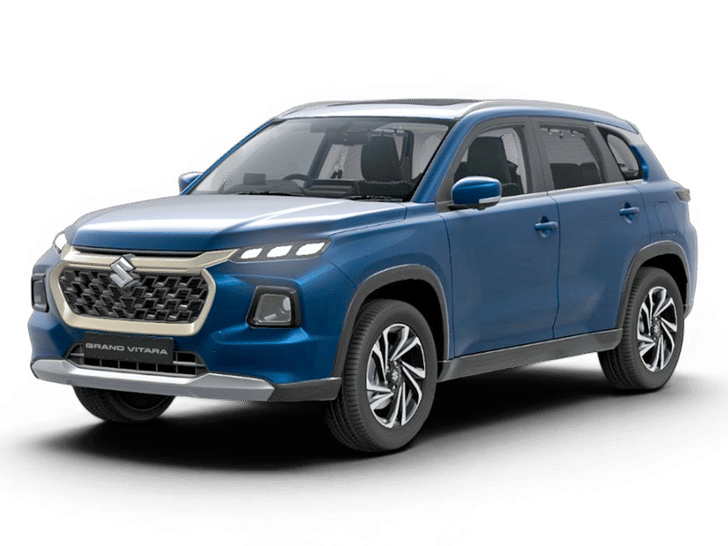
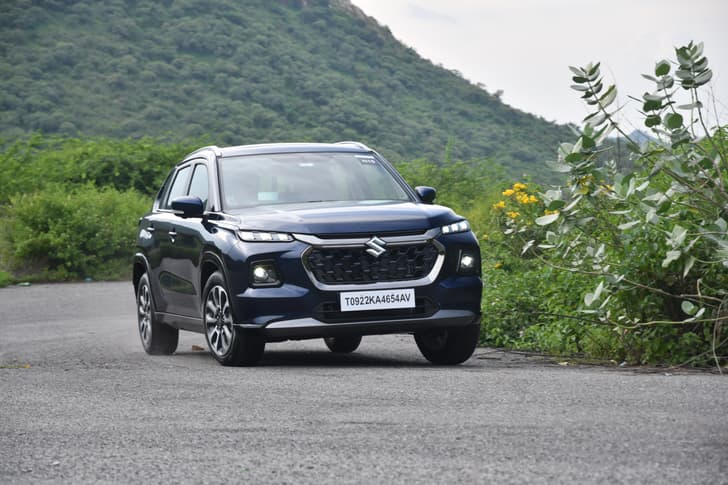
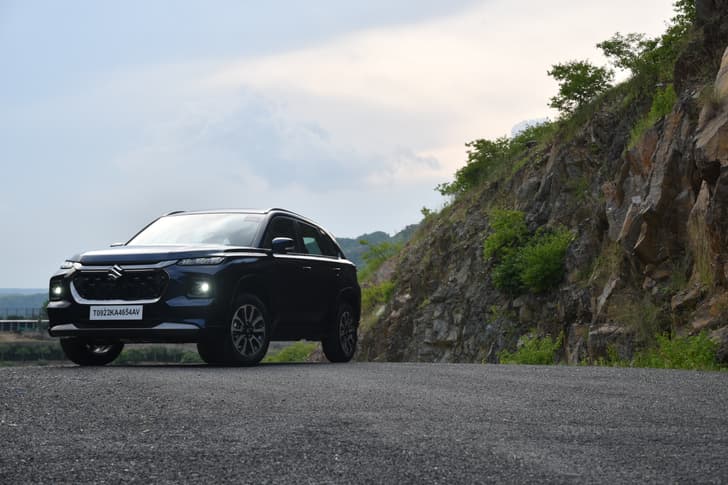
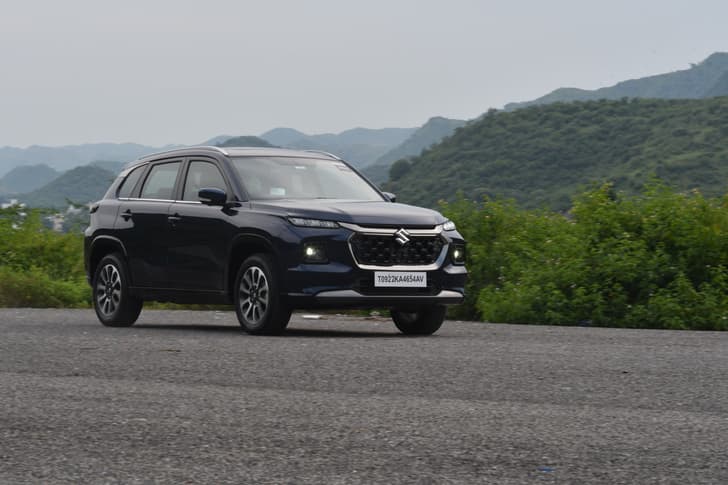
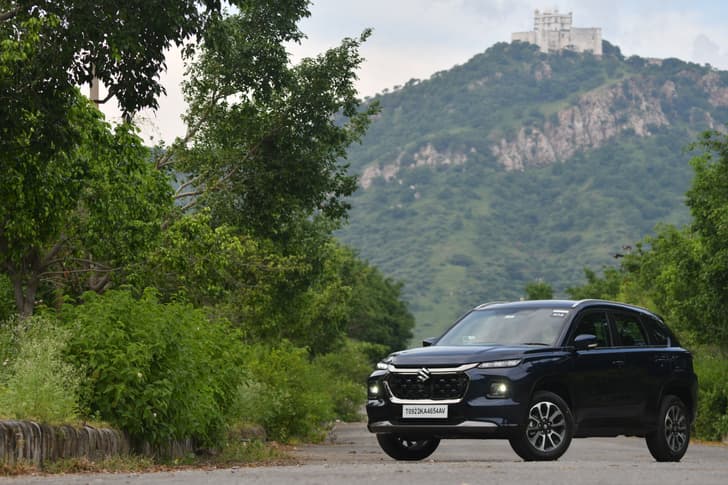
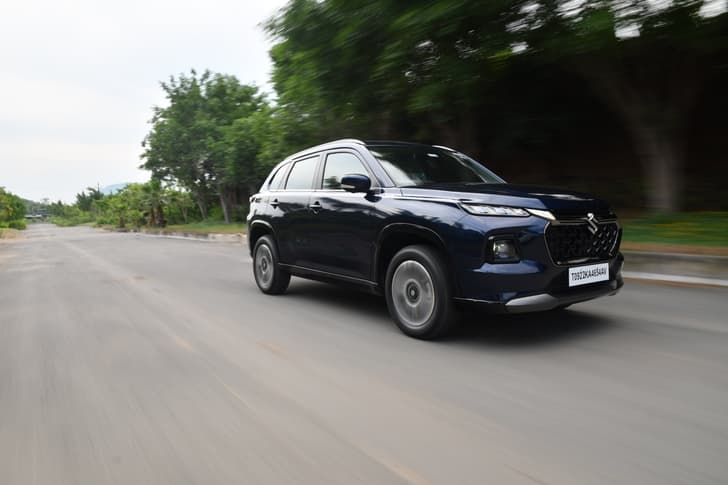
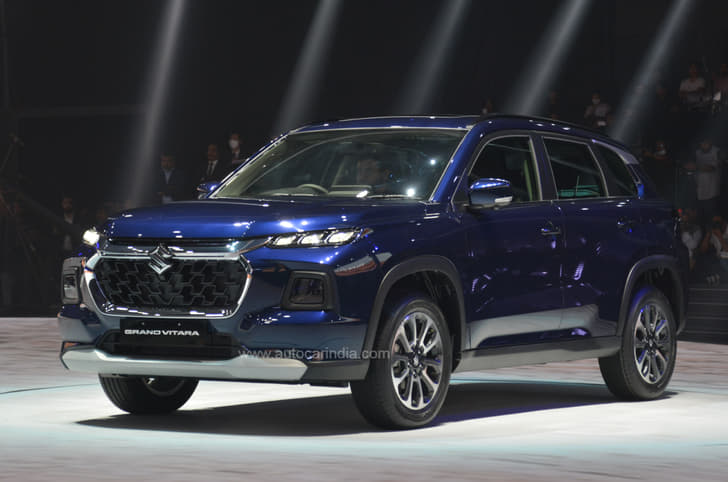
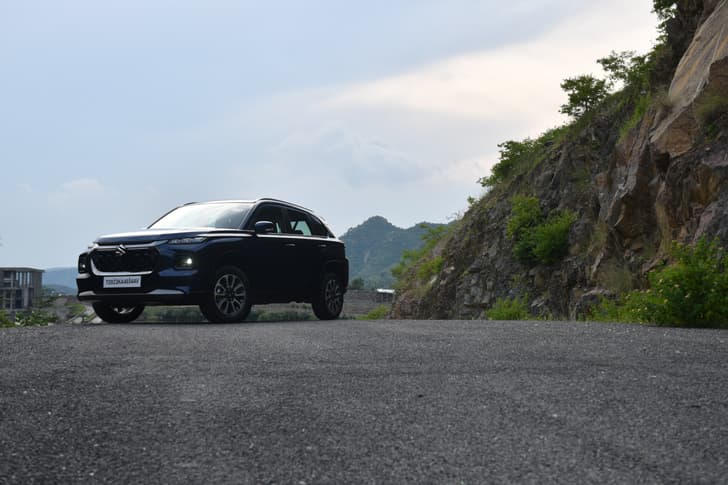
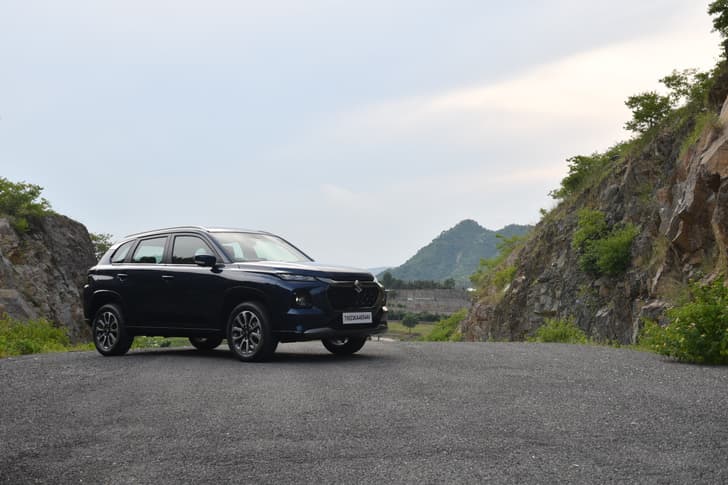
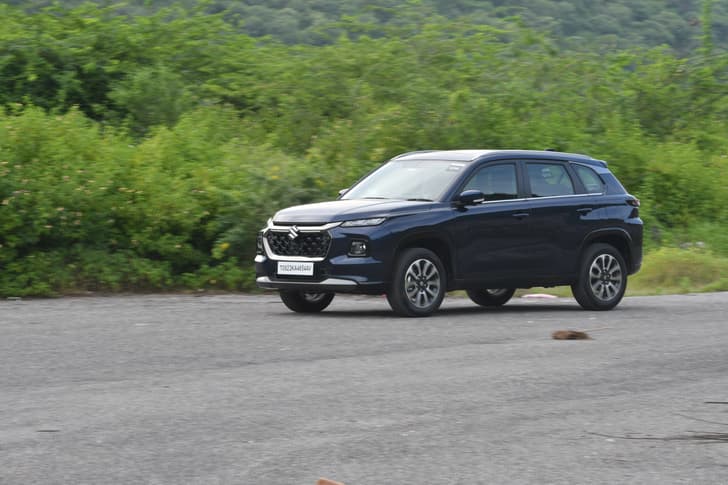
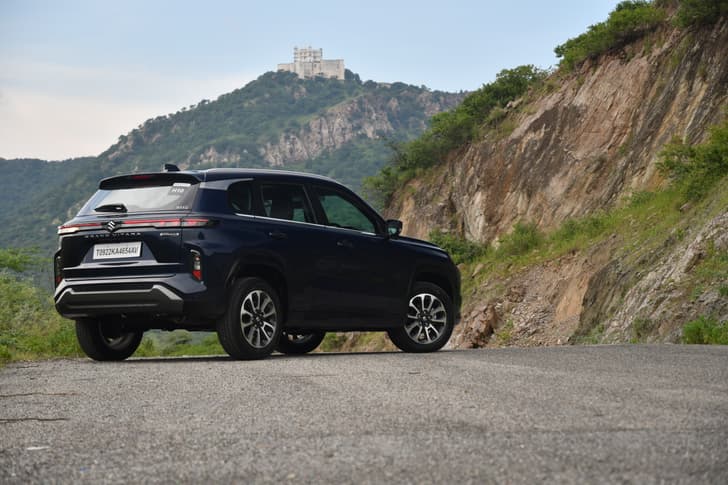
Maruti Suzuki Grand Vitara CNG Zeta MT
Maruti Suzuki Grand Vitara CNG Zeta MT specifications
Engine & Transmission
Number of Cylinders | 4 |
Engine Displacement | 1462 cc |
Engine Installation | Front |
Max Engine Torque on CNG | 121.5 Nm at 4200 |
Max Engine Torque | 137.1 Nm at 4300 rpm |
Max Engine Power on CNG | 87.83 hp at 5500 |
Max Engine Power | 100.61 hp at 6000 rpm |
Fuel Type/ Propulsion | CNG |
Drive Layout | Front Wheel Drive |
Number of Gears | 5 |
Lockable Differential/s | No |
Gearbox Type | Manual |
Fuel & Performance
Official Fuel Economy | 26.6 kmpl |
Terrain Modes | No |
Auto Start/Stop | Yes |
Fuel Tank Capacity | 45 litres |
CNG/LPG Tank Capacity | 55 Kg |
Fuel Supply System | MPFI |
Emission Standard | Bharat Stage VI |
E20 Compatibility | Yes |
Suspension & Steering
Front Brakes | Disc |
Rear Brakes | Disc |
4 Wheel Steer | No |
Type of Power Assist | Electric |
Turning Radius | 5.4 |
Steering Adjust type | Manual |
Steering Adjust | Tilt and Telescopic |
Rear Springs | Coil Springs |
Rear Suspension Type | Torsion Beam |
Ride Height Adjust | No |
Front Springs | Coil Springs |
Damper Control | No |
Front Suspension Type | MacPherson Sturt |
Rear Tyre Size | 215/60 R17 |
Spare Wheel | No |
Front Tyre Size | 215/60 R17 |
Wheel Size | 17 inches |
Wheels | Alloys |
Dimensions
Width | 1795 mm |
Height | 1645 mm |
Kerb Weight | 1235 kg |
Length | 4345 mm |
Doors | 5 |
Wheelbase | 2600 mm |
Chassis Type | Monocoque |
Maruti Suzuki Grand Vitara CNG Zeta MT features
Comfort
| Remote Locking | |
| Rear Parcel Tray | |
| Rear Power Outlet | |
| Rear Reading Lamp | |
| Driving Modes | |
| Rear Window Sun Shades |
Safety
| Speed Assist System | |
| Central Locking | |
| Speed-Sensing Auto Door Locks | |
| Side Airbag | |
| ISOFIX Child Seat Mounts | |
| Child Safety Lock |
Exterior
| Wheel Arch Cladding | |
| ORVM turn indicators | |
| Spoiler | |
| Outside rear view mirror (ORVM) | |
| Cornering Headlights | |
| Cornering Foglamps |
Interior
| Low Fuel Level Warning | |
| Trip Meter | |
| Head-up Display | |
| Shift Indicator | |
| Instantaneous Consumption | |
| Gear Indicator |
Entertainment
| Touchpad | |
| Second Row USB port | 2 Type C |
| Rear Seat Infotainment Controls | |
| Rear Entertainment Screens | |
| USB Input | |
| Steering Phone Controls |
Connected Car Features
| Low Battery Warning | |
| Tow Away Alert | |
| In Car Payment | |
| Auto Crash Alert | |
| Live Location Sharing | |
| Location Based Services |
Maruti Suzuki Grand Vitara variants
Maruti Suzuki Grand Vitara comparison


Questions you may find useful
Aravind
•3dI have a budget of around ₹15 lakh (on-road) and am looking for a petrol automatic car. My usage will be approximately 70% city driving and 30% highway, with an annual running of about 10,000 km. My key priorities are reliability, fuel efficiency, and overall value for money. I am currently considering the Hyundai Venue, Kia Sonet, and Maruti Suzuki Brezza. Which one should I prefer among these three? Additionally, the newly launched Kia Seltos and Maruti Suzuki Grand Vitara also seem appealing. Should I consider stretching my budget for these models?
Autocar India
The Maruti Suzuki Brezza VXi AT is the best fit among your options. It uses a smooth torque converter automatic, which is ideal for city traffic and more reliable in the long run. The engine is simple, proven and efficient, and Maruti’s service network and low maintenance costs make ownership very easy. It also offers good ride comfort and a spacious cabin, which adds to its family appeal.The Hyundai Venue and Kia Sonet are more feature-rich and feel more modern inside, but both use turbo petrol engines with DCT gearboxes in the automatic versions. These are quicker and more fun to drive, but in heavy city traffic, they are not as smooth and can feel slightly jerky at low speeds.On stretching your budget, the Kia Seltos is a segment above and a better all-round car, but the petrol automatic will go well beyond your budget. The Maruti Suzuki Grand Vitara is also appealing, especially in strong hybrid form, but again requires a significant stretch.For your usage and priorities, there is no strong reason to stretch. The Brezza already fits your needs very well.
Gopalaseshan S
•4dI currently use a Maruti Ciaz petrol from 2019 and am planning to replace it with another 1500 cc SUV priced around ₹18 lakhs. My monthly city running is less than 1,000 km. Please suggest a comfortable car.

Autocar India
The key point here is what you are upgrading from. The Ciaz has one of the best rear seats, and at this price point, no SUV really matches that level of rear-seat space and comfort.We would have recommended the Maruti Suzuki Grand Vitara or the Hyryder, especially since you already own a car from the same brand. However, both are on the weaker side when it comes to rear-seat space and overall comfort, so they will feel like a step down compared to your current car.For a proper upgrade, you are better off looking at the Seltos, Creta or even the Elevate.The Kia Seltos would be the first recommendation. The new generation is a larger car than before, and that reflects in its cabin. It feels more spacious and the rear seat is comfortable enough for family use, making it the closest you will get to a proper upgrade in this segment.The Hyundai Creta is also a very good option. It offers a similar level of comfort and uses the same 1.5-litre naturally aspirated petrol engine, which is refined, smooth and easy to drive. It is slightly smaller on the inside compared to the Seltos, but still comfortable for most family needs.The Honda Elevate is the more sensible and slightly more affordable option. It offers good space and a comfortable ride, and in fact has very good rear seat legroom, but the engine is not as refined as the Kia and Hyundai cars, which you will notice in everyday driving.
Ketan
•1wI am currently driving a Renault Captur diesel and am planning to upgrade my car with a budget of ₹20–22 lakh. I am confused between the Tata Harrier, Tata Sierra, Hyundai Creta, and Mahindra XUV 3XO. My yearly running is around 10,000–12,000 km, and my usage includes city driving, highways, and occasional off-roading. Could you suggest the best car and suitable variant for my needs? Also, are there any better alternatives I should consider?

Autocar India
For your requirement, the Tata Harrier does make a strong case, especially coming from a diesel like the Captur. Its diesel engine offers strong torque, which makes highway cruising and overtaking effortless, and the overall ride and stability are very reassuring on long drives as well as broken roads. The spacious cabin and solid build further add to its appeal as a proper upgrade.The Hyundai Creta is easier to drive in the city, offers more features and a smoother overall ownership experience, but it does not feel as robust or as planted as the Harrier at highway speeds. The Mahindra XUV 3XO sits in a segment below, so while it is more compact and easier to manage in the city, it won’t give you the same sense of upgrade in space or road presence. The Tata Sierra has a smaller 1.5-litre diesel engine, which, just like the Creta, won't feel like an upgrade over your Captur.A very important alternative you should consider is the Maruti Suzuki Grand Vitara or its sibling, the Toyota Urban Cruiser Hyryder in AWD form. These are very good all-around road cars, and the AWD system adds genuine capability for mild off-roading and slippery conditions by sending power to all four wheels when needed. This makes them more versatile than the Harrier or Creta for rough trails, even if they are not hardcore off-roaders.The trade-off, however, is performance. The petrol engines in these AWD versions are not very torquey, especially compared to the Harrier’s diesel, which means they don’t feel as effortless on highways or when fully loaded.
laxman Singh
•1wMy budget is ₹16-18 lakh, and I am looking for a car mainly for highway driving (around 12,000 km per year) with good mileage. I am considering the Toyota Urban Cruiser Hyryder and Honda Elevate. Which one would be more suitable for long-term ownership, better resale value, and fuel efficiency? Also, which variant of both cars should I consider, and is it worth waiting for a facelift?

Autocar India
Since you are comparing the Honda Elevate with the Toyota Urban Cruiser Hyryder, we assume you are looking at the naturally aspirated engine of the latter and not the hybrid. Between the two, go with the Toyota Urban Cruiser Hyryder; it should offer better efficiency and resale value than the Honda Elevate.In our real-world testing, the Maruti Suzuki Grand Vitara 1.5 petrol AT (essentially a badge-engineered Hyryder) delivered 15.3kpl on the highway and 11.6kpl in the city. This was slightly higher than the 13.10kpl highway and 10.85kpl city figures we recorded in the Elevate CVT. Resale value in India for Toyotas is also typically better than for Hondas.The one thing you give up is boot space; the Hyryder offers around 355 litres, while the Elevate has a more generous 458-litre boot. If you often travel with a lot of luggage, then the Elevate may be the better choice.On the test drive, reset the trip computer and check fuel efficiency with your driving style, and ensure the boot is large enough for your needs.
Harshvardhan Gupta
•1wMy daily running is 170km on busy highways and around 4000km per month. Right now, I have an Elite i20 petrol with an aftermarket CNG kit, and I spend ₹600 daily. Now I want to upgrade my car to something over 4 metres. Kindly suggest a car with high mileage, good safety, and features. I have looked at the CNG variants of Grand Vitara, Hyryder, Victoris, and Brezza.

Autocar India
The Maruti Suzuki Victoris CNG is a solid choice for your needs. It is economical and suitable for longer trips, has underbody-mounted CNG tanks that do not hamper boot space, and the higher variants are very well equipped.While the Grand Vitara, Hyryder, Brezza and Victoris all use the same 1.5-litre naturally aspirated engine with factory-fitted CNG, the Victoris is the only one with dual underbody-mounted tanks, which means it offers better boot space than the others. One drawback is that it does not come with a spare wheel as standard, which is instead offered as an accessory. The Victoris is also more feature-rich than other Maruti models. Compared to the Grand Vitara, it gets a larger touchscreen, a fully digital instrument cluster and Level 2 ADAS. It has also scored five stars in the Bharat NCAP crash tests.If you are on a budget, then consider the Tata Punch CNG, which uses dual tanks and has a more usable boot than the Brezza.On the test drive, drive at steady highway speeds and attempt an overtake to see if you are satisfied with the performance.
Kunal Sen
•1wHi, I am Kunal from Kolkata and am planning to buy my first car. I have recently started learning to drive. My usage will be around 45% city and 55% highway. I am confused between the Maruti Suzuki Brezza, Hyundai Venue, Skoda Kylaq, and Maruti Suzuki Grand Vitara. My priorities are a solid build quality (as a first-time car owner), good mileage, LED lamps, a quality music system, and low maintenance. Please advise.

Autocar India
From the options you've listed, we'd recommend you shortlist the Hyundai Venue and Skoda Kylaq, both of which are turbo-petrol sub-4-metre SUVs. On account of their turbo-petrol engines, these will feel a bit more effortless to drive on the highway compared to the Maruti Suzuki Brezza and Grand Vitara that are powered by a 1.5 naturally aspirated petrol engine. Additionally, both cars get LED headlamps, have good audio systems (the Venue has an edge with its branded Bose speakers), and both are generously equipped with similar safety kits. The Venue's turbo-petrol will be a touch more efficient, and its maintenance costs will be a bit lower than the Kylaq's as well. Also, its cabin is comparatively more spacious too. The Kylaq, on the other hand, has an excellent ride-handling balance, which gives you tremendous confidence while driving. We'd suggest you drive both of these, and pick the one that appeals to you more.
Parv Gupta
•1wI am planning to buy a car with a budget of 15-17 lakh. My average monthly running is 1500 km. I have short-listed the Grand Vitara Zeta mild hybrid variant. I am a car enthusiast, and I love driving. I am looking for a car with low maintenance costs and high comfort on long drives. Have I made a good choice, or can you suggest a better option? Thanks.

Autocar India
The Maruti Suzuki Grand Vitara Zeta (O) MT is a good choice that meets most of your needs. It comes in under Rs 17 lakh, and its excellent fuel economy should be good for your relatively high running of 1,500km per month. This is a Maruti car, so maintenance will be easy on the pocket too, estimated at Rs 4,000-6,000 per service, which happens at 10,000km intervals. It's reasonably comfortable too, with a well-sorted suspension.The only downside is the driving dynamics, which aren't geared to enthusiastic driving. While the chassis is well-engineered, the steering feels light and slow. Most of all, though, the 105hp petrol engine isn't particularly exciting, tuned as it is for fuel economy.For a more engaging drive, consider the Skoda Kushaq, though bear in mind you'll only get a low-spec Signature 1.0 TSI MT variant at your budget, and it won't be as good as the Maruti on running costs.
R
•2wI want to buy an SUV that will mostly be used for city commuting and occasional long drives once a month. Can you suggest which is the best among the new Seltos, Grand Vitara, Toyota Hyryder, Victoris, and Creta?

Autocar India
If you are looking for an all-rounder, the new Kia Seltos is the pick of the models on your shortlist. It's the most spacious, offers the best ride comfort and feels most upmarket too. The Kia Seltos 1.5 petrol NA with the IVT automatic gearbox is well-suited to your city-centric driving.If fuel economy is your top priority, the strong hybrid versions of the Maruti Suzuki Grand Vitara and Victoris, and Toyota Urban Cruiser Hyryder fit the bill. The hybrid powertrain switches to EV mode, often allowing exceptional fuel economy numbers. The Victoris is the newest, best-equipped and most appealing of the three strong hybrid models.
Deva
•2wHi Autocar team, I am going to purchase my first new car. My daily driving is around 160 to 170km, mainly in the city. I need comfortable seating for my family of four, including one 5-year-old child. I am also looking for a highly safe car that can comfortably handle bad roads and is suitable for the rainy season. Which car should I consider? Please recommend 4 to 5 cars and the best among them. I am not looking for an electric car due to the unavailability of charging space in my society.

Autocar India
160-170km daily is a rather high usage, and as an EV is off the cards, your next best bet is a strong hybrid if you want to keep running costs in check. You should check out the Maruti Suzuki Victoris strong hybrid. In real-world usage, it gives upwards of 20kpl easily and in city usage, that could go up to 25kpl. This is because it will largely run on the electric motor at lower speeds, and the best part is you don't have to plug it in to recharge it. It has achieved a 5-star crash test rating from both Bharat NCAP and Global NCAP, since safety is also a concern of yours.Alternatives come from the same family of SUVs - the Maruti Suzuki Grand Vitara or the Toyota Urban Cruiser Hyryder, and later this year, Renault will also be launching a strong hybrid variant of the new Duster.
Ks
•3wI am planning to buy a car in the ₹20-21 lakh range. My priorities are safety, performance, and decent mileage. My daily driving varies a lot, ranging from around 10 km to 100 km per day. I was considering waiting for MG Motor to launch a plug-in hybrid. How long do you think it might take for MG to launch such a car, and would it be worth waiting for it? Or should I go ahead and buy an ICE vehicle instead? I do not need the car immediately and can wait for around 6-8 months. What do you think would be the best option for me?

Autocar India
If you are keen on a hybrid and can wait for 6 to 8 months, then we would recommend you do so. MG, JSW Motor and Renault will all be launching either strong and/or plug-in hybrids this year. As for the driving pattern, it doesn't make much of a difference if your daily runs vary, as you have indicated, from 10 to 100 km. An important factor when considering a hybrid is simply how many kilometres you would drive in its time with you. If you are going to keep the car for a long time, like 4 years and would on average have a running of about 1800km per month. In the case of something like a Maruti Suzuki Grand Vitara, a strong hybrid over the regular engine makes sense. As for plug-in hybrids, you'll have to wait to see the pricing difference and figure out if it works for you.
Maruti Suzuki Cars