Last Updated on: 26 Apr 2026
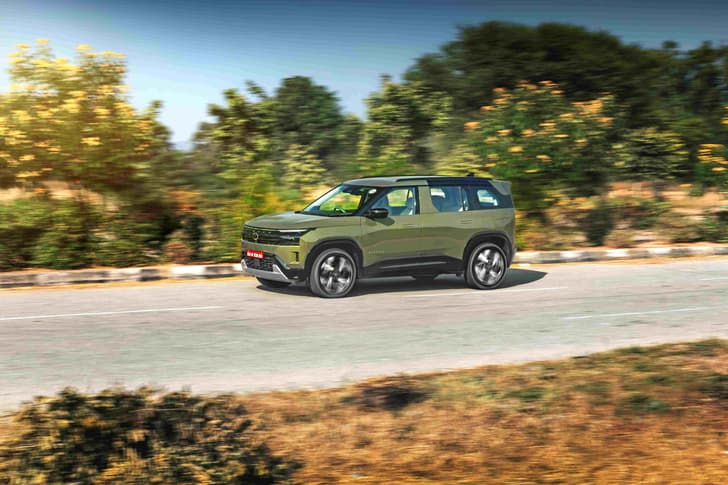
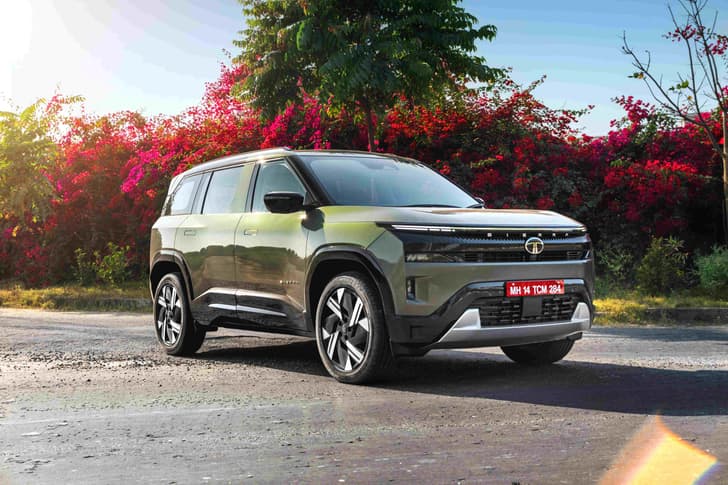
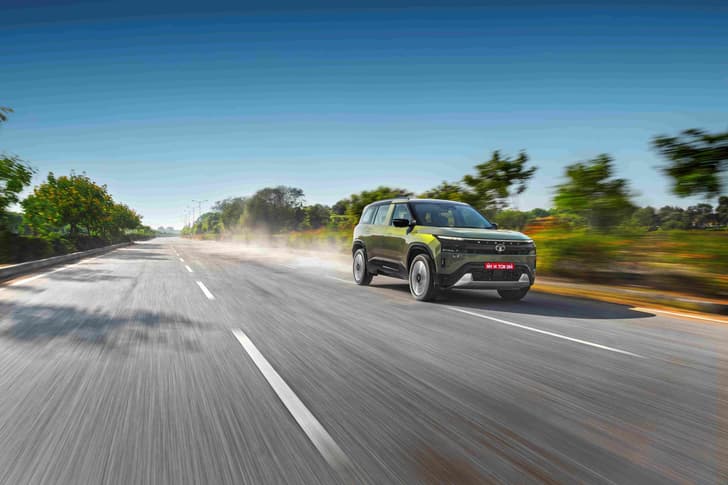
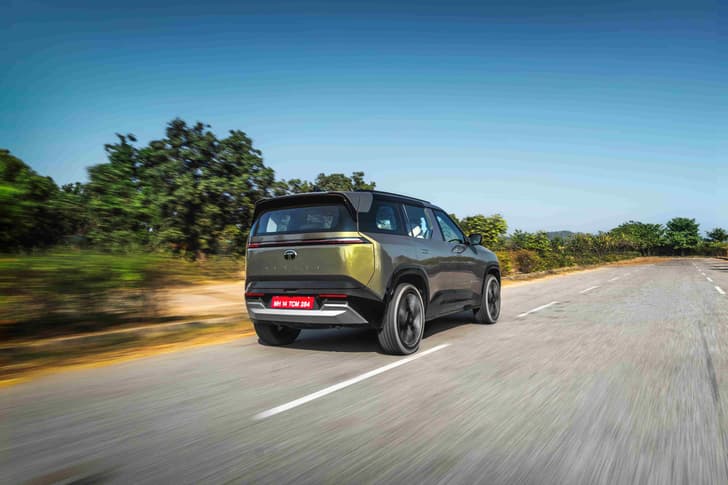
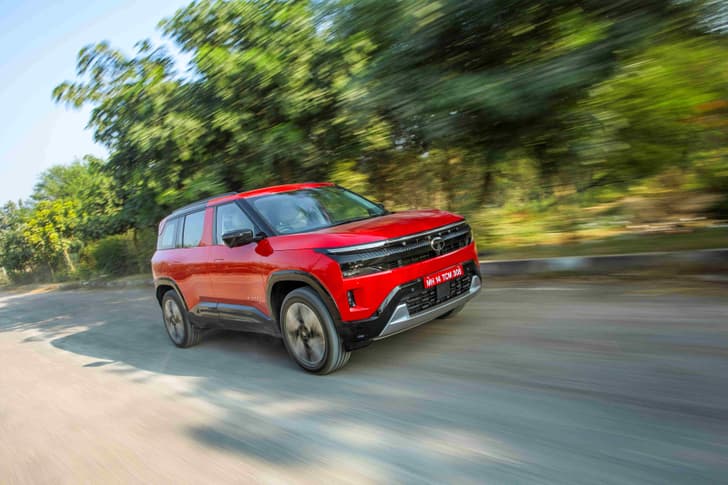
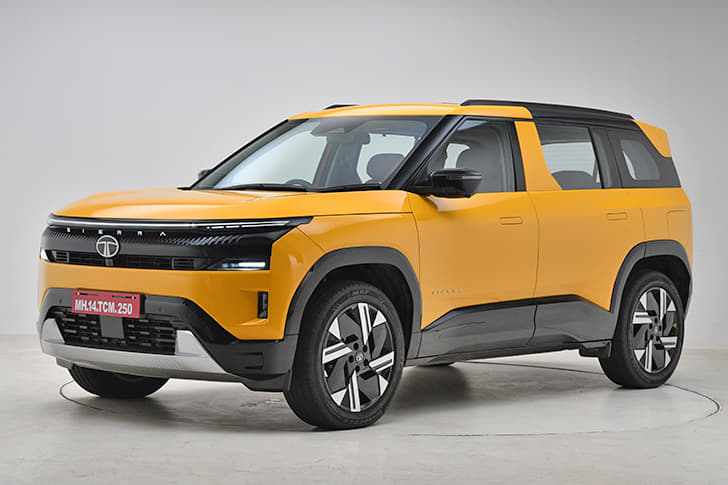
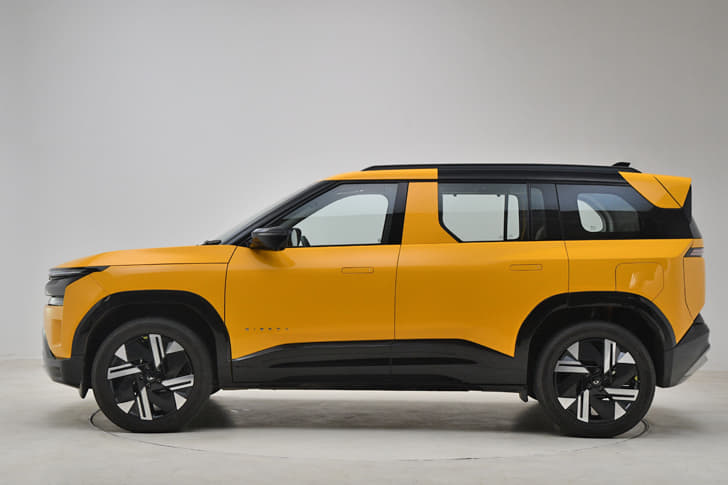
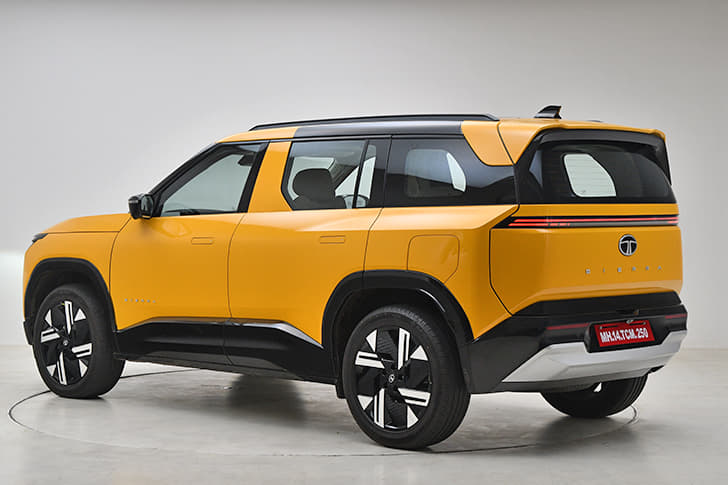
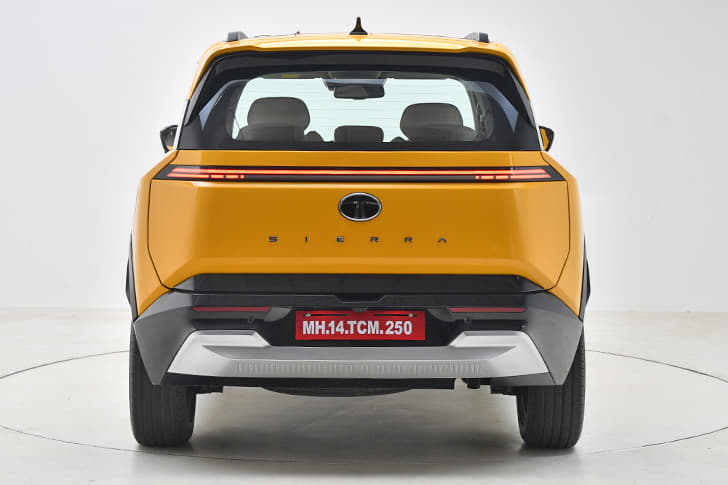
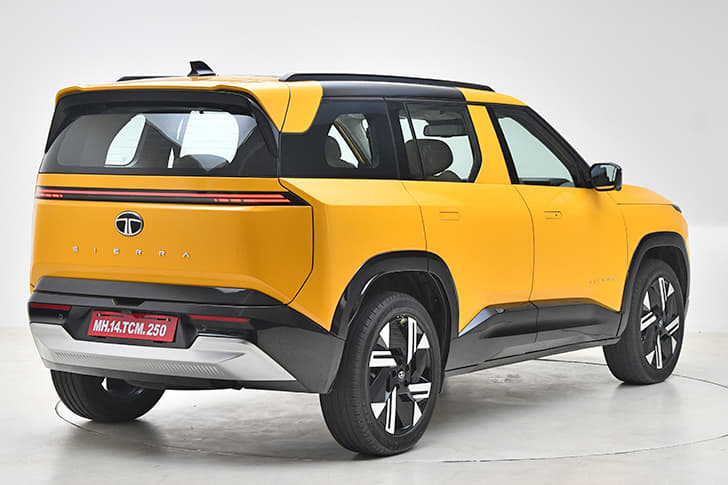
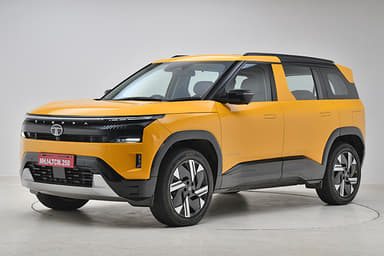
Tata Sierra Adventure+ Turbo Petrol AT
The Tata Sierra Adventure+ Turbo Petrol AT variant is priced at ₹17.99 lakh. The Adventure+ Turbo Petrol AT variant offers key features like Electronic parking brake, 360 view camera, Ambient interior lighting, Cruise control, Sunroof. Explore complete specifications, and features below.
Tata Sierra Adventure+ Turbo Petrol AT specifications
Engine & Transmission
Pure Electric Driving Mode | No |
Engine Displacement | 1498 cc |
Engine Installation | Front |
Engine Type | Turbocharged |
Number of Cylinders | 4 |
Max Engine Torque | 255 Nm at 1750 - 4000 rpm |
Max Engine Power | 160 hp at 5000 rpm |
Fuel Type/ Propulsion | Petrol |
Lockable Differential/s | No |
Manual Shifts via Gear Lever on Automatic Gearbox | No |
Sport Mode for Automatic Gearbox | Yes |
Paddle Shifters for Automatic Gearbox | Yes |
Drive Layout | Front Wheel Drive |
Number of Gears | 6 |
Gearbox Type | Torque Converter |
Fuel & Performance
Terrain Modes | Yes |
Official Fuel Economy | 15.3 kmpl |
Auto Start/Stop | No |
Fuel Tank Capacity | 50 litres |
E20 Compatibility | Yes |
Emission Standard | Bharat Stage VI |
Fuel Supply System | Direct Injection |
0-100kph | 10.09 |
Suspension & Steering
Front Brakes | Disc |
Rear Brakes | Disc |
Type of Power Assist | Electric |
Steering Adjust type | Manual |
Steering Adjust | Tilt and Telescopic |
Front Suspension Type | Independent, MacPherson Strut |
Damper Control | Yes |
Ride Height Adjust | No |
Rear Suspension Type | Non-independent, Torsion Beam |
Rear Springs | Coil Springs |
Front Springs | Coil Springs |
Rear Tyre Size | 225/60 R18 |
Spare Wheel | Space Saver |
Wheel Size | 18 inches |
Front Tyre Size | 225/60 R18 |
Wheels | Machine finished alloys |
Dimensions
Width | 1841 mm |
Ground Clearance | 205 mm |
Height | 1715 mm |
Length | 4340 mm |
Doors | 5 |
Wheelbase | 2730 mm |
Chassis Type | Monocoque |
Boot Capacity | 622-1257 litres |
Tata Sierra Adventure+ Turbo Petrol AT features
Comfort
| Digital Instrument Cluster | Fully Digital |
| Rear Parcel Tray | |
| Driving Modes | |
| Rear Power Outlet | |
| Rear Window Sun Shades | |
| Driver rear view monitor (DRVM) |
Safety
| Dashcam | |
| Speed-Sensing Auto Door Locks | |
| Speed Assist System | |
| Brake Fade Support | |
| Day/Night Interior Mirror | Manual |
| Curtain Airbag |
Exterior
| Puddle Lamps | |
| Pop-Out Door Handle | Manual |
| Welcome and Goodbye Animation | |
| LED DRLs | |
| Headlight Height Adjuster | |
| Integrated Washer Jets with Wiper |
Interior
| Average Speed | |
| Tachometer | Digital |
| Average Fuel Consumption | |
| Shift Indicator | |
| Gear Indicator | |
| Speedometer | Digital |
Entertainment
| Wireless Phone Charging | |
| Satellite Navigation | Onboard |
| Web Browser | |
| Speakers | 4 |
| Steering Audio Controls | |
| MirrorLink |
Connected Car Features
| Tow Away Alert | |
| Summon Mode | |
| Phone App | |
| Vehicle Tracking Via App | |
| Driving Analytics | |
| Alexa Compatibility |
Tata Sierra variants
Tata Sierra comparison


Questions you may find useful
Govind
•2dI have been driving diesel cars for the last 15 years, and my current car is a 2019 Skoda Rapid diesel. Now, I am planning to buy an SUV and am inclined towards the Tata Sierra Adventure petrol model. However, I am not sure whether to choose a manual or an automatic. My daily running is almost zero, and the car will be used only on weekends and for long-distance once every three months, covering around 1,200 km. I have also tried the Kia Seltos, but I felt the Sierra was better in terms of space and comfort.

Autocar India
Given your limited usage, it's really a matter of choice. An automatic takes away the effort in city traffic and reduces fatigue, whereas a manual gives you more control. You are moving up from a Skoda Rapid diesel manual to a bigger, taller SUV; the automatic will make parking, slow-speed moves and hill starts simpler, and the petrol will feel smoother and quieter at low speeds than your diesel. With almost zero daily running, the usual fuel and clutch-wear savings of a manual do not matter much, so it makes sense to buy the one that is easiest to live with.A couple of trade-offs to note: the automatic will cost more upfront and can use a bit more fuel than the manual. If you enjoy shifting gears yourself, the manual will give you more control on quick overtakes. With the Sierra, it also depends greatly on which petrol engine you choose. If you choose the more powerful 1.5-litre turbo petrol engine, we'd be more inclined to recommend the automatic, as the 6-speed torque converter is smooth and complements the engine well. However, this will be expensive. Instead, if you choose the 1.5-litre naturally aspirated engine, you're better off with the manual. The engine is not very powerful, and the 7-speed dual-clutch auto it comes with only amplifies this sensation, and thus with this engine, the manual gearbox is recommended.
Amit
•2dI am planning to purchase a mid-segment SUV. The options I have tested include the Tata Harrier, Tata Sierra, and Kia Seltos. My budget is around ₹20 lakh. My driving will be primarily in the city, with occasional highway use. I am looking for the best option that offers steady performance along with good power. Additionally, I would like guidance on whether a diesel or petrol variant would be more suitable for my usage.

Autocar India
Pick the Kia Seltos petrol IVT if you are considering the naturally aspirated options. It is the best fit for your usage.The Seltos’ petrol engine feels more usable and refined, and the IVT gearbox is very smooth in city driving. It is easy to live with, consistent in traffic and suits your primarily urban usage perfectly. The power delivery is linear and predictable, which gives you the steady performance you are looking for without feeling stressed or jerky.Coming to the Tata Sierra, the naturally aspirated petrol is not a great match. It is a larger and heavier SUV, and the engine feels flat and underpowered for its size, especially in city conditions. However, if you are open to the turbo petrol version, the Sierra becomes a better option. The turbo engine feels stronger and more responsive, and the torque converter automatic is smoother and more robust for everyday use compared to a DCT.Between the Sierra and the Harrier, we would suggest going for the Sierra. It is the newer car, feels nicer to drive and offers the same turbo petrol engine with a smoother torque converter automatic option.
Subhashish Banerjee
•5dMy average running is 500 km per month. This will be my last car, as I am 56 years old. I have looked at the second base variants of the Sierra, Vitara, Victoris, and Brezza. In terms of looks, I like the Sierra, but I am confused about the naturally aspirated petrol engine. Please suggest.

Autocar India
Go for one of the Maruti cars, ideally the Victoris, as it is the most future-proof choice for your needs. The Victoris and Grand Vitara are essentially similar under the skin, but the Victoris feels a bit more modern inside, with a more premium cabin and better features at a similar price. It is also the newer product, which makes it a safer long-term bet. The only trade-off is slightly lower rear headroom due to the sloping roofline.Now, coming to the Tata Sierra. There is no doubt it is the bigger and more spacious car, with a strong road presence and a very practical cabin. In fact, it is one of the largest in the segment, offering more space and boot capacity than most rivals. However, the concern lies with the naturally aspirated petrol engine. It is smooth and fine for city use, but in a large and heavy SUV like the Sierra, it can feel underpowered and not very effortless, especially when fully loaded or on highways .Given your usage of around 500 km per month and your intention to keep the car for many years, what matters more is reliability, efficiency and ease of ownership, and this is where Maruti clearly has the edge.
sudip
•6dI am planning to buy either the Tata Sierra or the Kia Seltos turbo-petrol automatic. My usage will be 90% in Bengaluru city traffic, with occasional highway drives. Hence, I am not sure if the Seltos DCT gearbox would become problematic after a few years due to heavy traffic. Would the Sierra’s torque converter be more reliable and a better choice in these conditions?

Autocar India
Go for the Tata Sierra torque converter. The key difference lies in how these gearboxes behave in the real-world conditions. The Seltos turbo-petrol DCT is quick and exciting, but in slow, crawling traffic, it can feel hesitant and slightly jerky, as it constantly works the clutch. This is not ideal for long-term ease in heavy city conditions. The Sierra’s torque converter is the opposite. This Tata car is smoother at low speeds, more forgiving in stop-go traffic, and generally better suited to this kind of usage, making daily driving far less tiring.There is a trade-off, though. Torque converter automatics are typically less fuel efficient than DCTs, and in a large, heavy car like the Sierra, you will notice this in real-world mileage. So, you are essentially choosing smoothness and durability over outright efficiency.
Devakumar
•1wI have booked the Tata Sierra Adventure Plus petrol manual, but I am now confused between the petrol and diesel manual variants, particularly in terms of mileage and performance. I am not interested in an automatic transmission. My annual running is less than 6,000 km. Could you please advise which engine option would be more suitable for my usage? Additionally, I would appreciate any alternative suggestions for a spacious car with good mileage that fits my needs.

Autocar India
The Tata Sierra is a big, heavy car, and the petrol engine, being a naturally aspirated unit, feels just about adequate, especially once you load it up or hit the highway. The diesel, on the other hand, suits the car far better with its stronger low-end pull, making overtakes easier and long-distance driving far more relaxed.That said, with your low annual running of under 6000 km, the petrol still makes sense if your usage is mostly in the city. It will feel smoother, easier to live with and perfectly adequate for everyday driving, even if it lacks that effortless punch on highways.If you are open to alternatives for a better petrol manual experience, the Renault Duster with its turbo petrol engine is a strong option. It feels far more effortless to drive, while naturally aspirated options like the Kia Seltos or Hyundai Creta offer a more refined and effortless experience than the Sierra petrol.
Avinash
•1wI have decided to buy the Sierra Adventure Plus variant. But should I go for a diesel automatic or a petrol automatic? Please advise. My running is less than 6000km per year.

Autocar India
With under 6,000 km a year and the Adventure Plus in mind, I’d pick the Sierra Adventure Plus petrol automatic for you. At this running, petrol makes more sense day to day. It is smoother and quieter in the city, usually costs less to buy, and you avoid the diesel exhaust filter worries that can crop up if most of your trips are short and at low speeds. For your likely mix of city use and the odd trip, the petrol automatic will feel easy and relaxed, with enough power for family runs.The trade-offs to note are that on long highway drives with a full load, the diesel automatic will feel stronger when pulling from low speeds and will use less fuel, so it suits heavy touring better.If your plan changes to frequent highway trips or 15,000 km-plus a year, then the diesel automatic becomes the smarter pick. Otherwise, for your current use, the Tata Sierra Adventure Plus petrol automatic lines up best.
Sahil Kannangar
•1wI am confused between the top-end turbo-petrol variants of the Tata Sierra and the Kia Seltos (2026). My usage will be primarily city driving in traffic, with occasional highway trips. I am looking for a feature-loaded car with a premium feel, good reliability, and strong after-sales service for long-term ownership.

Autocar India
Mostly city driving with the odd highway run and a strong focus on features, in that case, from your two, I would pick the Tata Sierra 1.5 turbo-petrol automatic in the top trim. It is feature-packed, with a refined and powerful engine, and its torque-converter automatic is smoother in city traffic than the Kia Seltos’ DCT.That said, Kia has a more consistent reputation for service in most cities, which is one of your main requirements. Tata’s service has improved, but dealer experience can vary by city, so check reviews in your area. If that is a concern, then the Seltos is a good alternative, packed with the feel-good features you asked for, like a 360-degree camera, ventilated front seats, and a panoramic sunroof. A trade-off to note for your city use: the DCT can hesitate a bit at slow speeds.Overall, for mostly city use and a feature-rich cabin, the Sierra turbo-petrol automatic in the top trim fits your brief.
K
•1wI am confused between the Tata Sierra and the new Kia Seltos petrol automatic with ADAS. Which one would be the better choice? If your recommendation is the Kia Seltos, please explain why it would be preferable over the Tata Sierra, especially considering that the Sierra offers similar advanced features at a comparable price point. While I understand that the Seltos has better mileage, I would also like to know how significant the real-world mileage difference is between the two.

Autocar India
If it’s features that you want, then the Tata Sierra is the one to go for. The Accomplished+ will get you the full suite of ADAS features you’re looking for and also comes with goodies like a triple-screen setup, ventilated front seats with memory and power adjustment for the driver, and an electric tailgate. It is also roomier than the Kia Seltos, and its torque-converter automatic is smoother in the city. Ride and handling are well sorted too, and refinement is on par with the Seltos.One thing to note, however, is that Kia generally has a better reputation when it comes to aftersales service, whereas Tata’s can be a bit hit or miss. That said, Tata has made improvements in that area, and the Sierra has a lot going for it.Test drive both extensively before making a decision. Take them on busy city streets and on the highway to see how the ADAS works, check which transmission feels smoother, and dig into the infotainment systems to see which is more intuitive to use.
Girish
•1wHi Autocar Team, I am confused between the Tata Sierra automatic and the Renault Duster automatic. My primary usage will be occasional road trips (once every two months) along with limited city driving. I found both cars comfortable during my test drives. The Sierra feels more premium and feature-loaded, while the Duster seems simpler but adequately equipped. I also prefer a higher seating position and strong road presence. Could you please advise?

Autocar India
It’s genuinely a tough choice because both cars do different things well.The Tata Sierra, as you’ve noticed, feels more sophisticated and upmarket. It’s also significantly larger, which makes a difference on longer trips, especially with family. Rear-seat comfort, space, and overall refinement are clear strengths, and it feels very stable and planted on the highway. If your usage leans toward relaxed road trips, this plays strongly in its favour.The Renault Duster, on the other hand, is still the more engaging driver’s car. The 1.3-litre turbo-petrol is punchy and enjoyable, though there is some turbo lag, so it doesn’t feel as strong low down in the rev range, and this is something you’ll notice when powering out of corners or when driving in the hills. That said, its lighter, more compact nature gives it a nimbleness the Sierra can’t match, and the ride-handling balance is excellent. It just feels more fun to drive.Where it does fall short is space, especially in the rear seat, which is noticeably tighter than the Sierra.Given your priorities of occasional road trips, a preference for a higher driving position, and road presence, the Sierra edges ahead as the more rounded and comfortable choice. But if driving feels matters more to you, the Duster still has that classic appeal.
Sunil Arya
•2wI am planning to buy a new SUV with a budget of around ₹20 lakh. I am confused between the Renault Duster (new generation) and the Tata Sierra. My usage will primarily be within Delhi for city driving, along with occasional long drives (around once a month). My main priorities are mileage and comfort. Could you please advise which of these would be the better choice? Also, feel free to suggest any other suitable options within my budget that offer better mileage and comfort.

Autocar India
Since comfort is a priority for you, we would recommend the Tata Sierra. The car has a very spacious cabin, and the seats are very comfy too. Against the Renault Duster, the rear seating space in the Sierra is significantly more. As for mileage, we have yet to put the Renault Duster through our instrumented test cycle. But in any case, if mileage is your top priority ahead of comfort, then you would consider waiting for the hybrid Duster. It is likely to launch this festive season or the diesel Sierra, though with a diesel, it's best for every two to three weeks, you have a long drive of around 20 mins with speeds above 50kph to keep the diesel particulate filter in good health. As an alternative, you can consider the strong hybrid versions of the Toyota Urban Cruiser Hyryder or the Maruti Suzuki Grand Vitara, where the mileage would be significantly more. In our real-world tests, the Grand Vitara strong hybrid returned an impressive 23.77kpl in the city and 20.39kpl on the highway. In city traffic, the hybrid system mostly runs on the electric motor. One thing to be aware of: the hybrid’s boot is smaller than some rivals because of the battery, so check your luggage fit.