Last Updated on: 12 May 2026
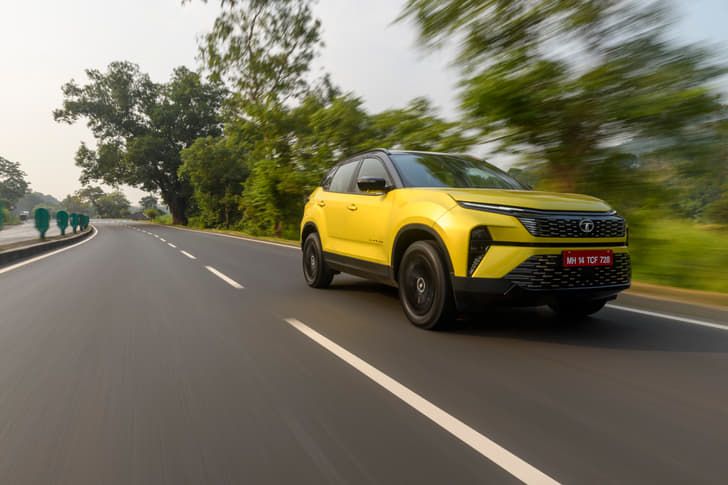
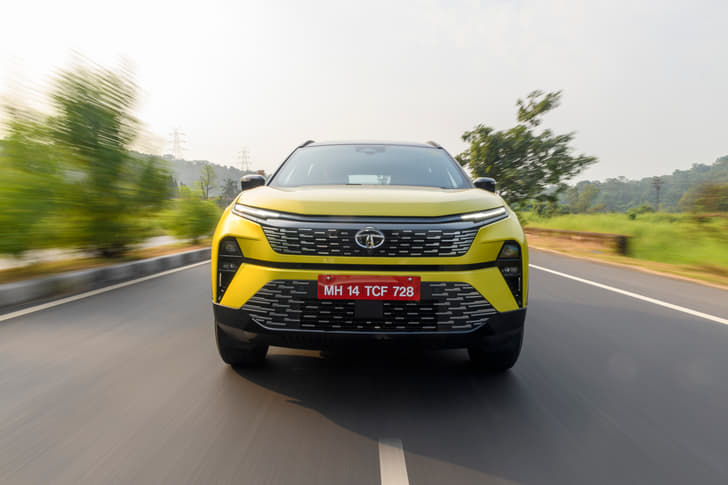
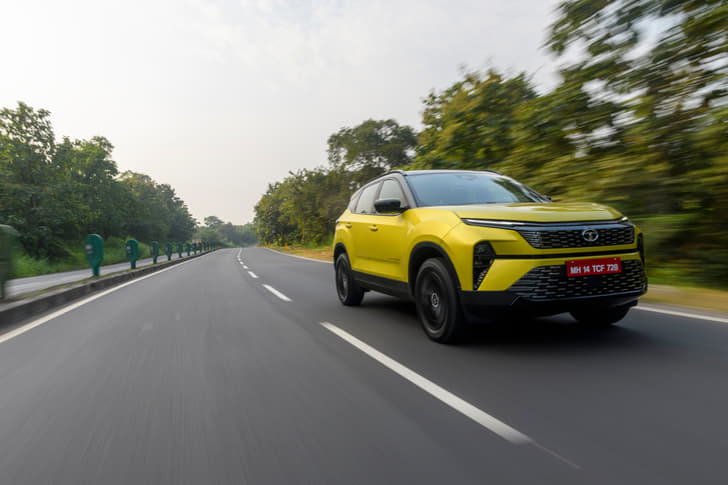
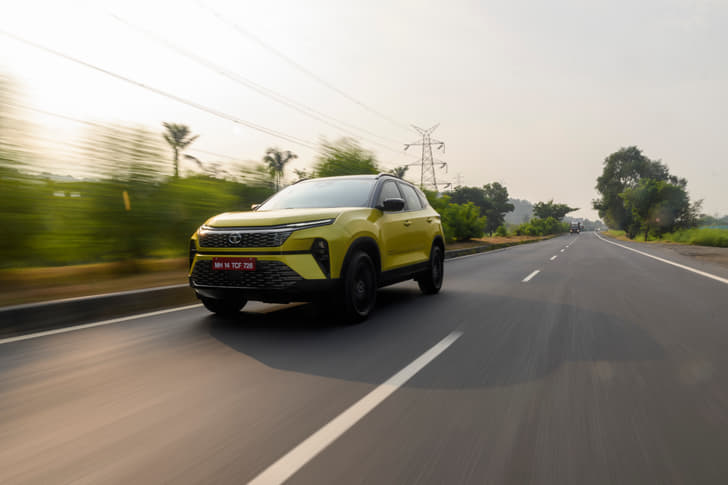
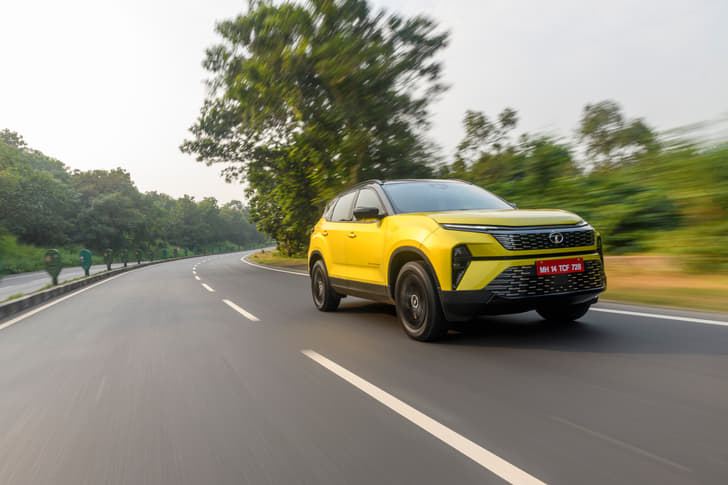
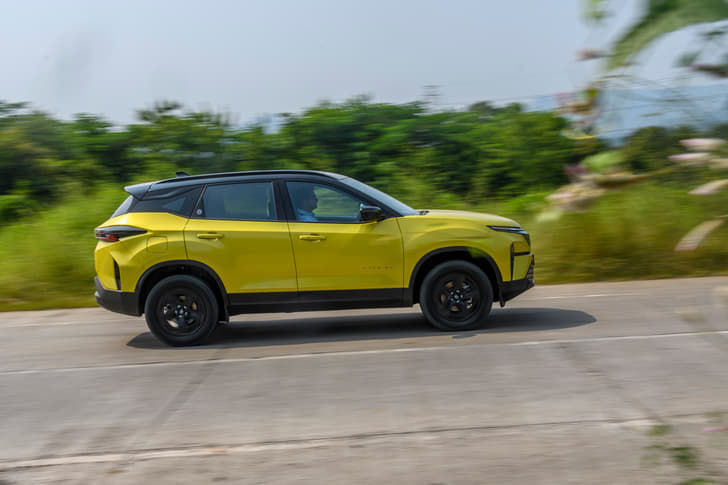
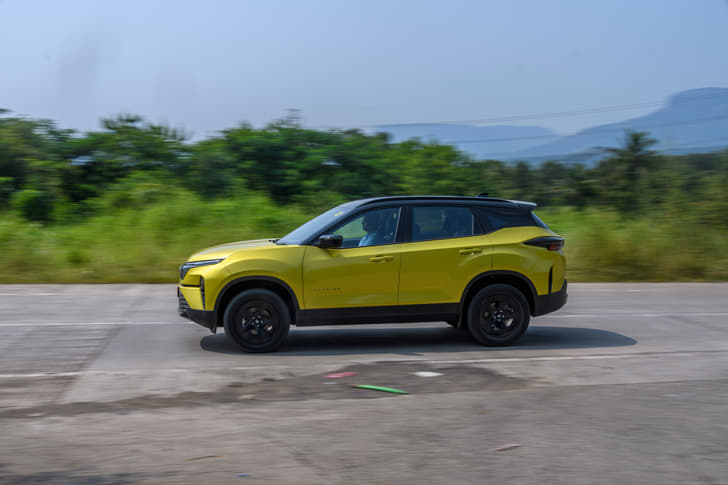
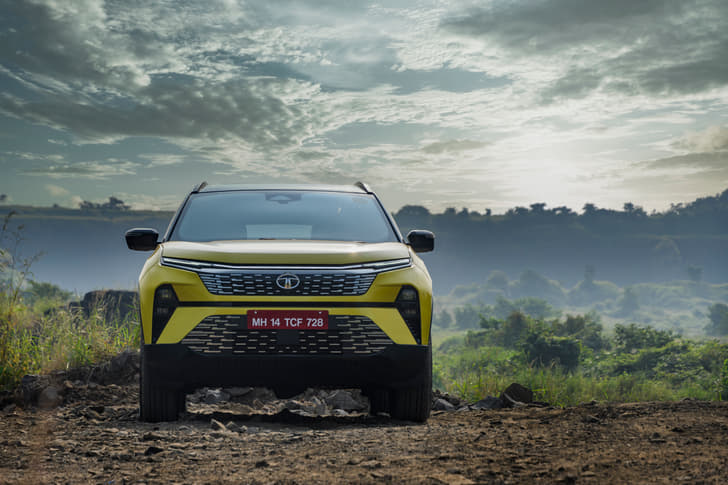
Tata Harrier Adventure X + Dark 1.5 Turbo-GDI MT
The Tata Harrier Adventure X + Dark 1.5 Turbo-GDI MT variant is priced at ₹17.66 lakh. The Adventure X + Dark 1.5 Turbo-GDI MT variant offers key features like Electronic parking brake, 360 view camera, Cruise control, Sunroof, Blind spot monitor. Explore complete specifications, and features below.
Tata Harrier Adventure X + Dark 1.5 Turbo-GDI MT specifications
Engine & Transmission
Engine Type | Turbocharged |
Engine Displacement | 1498 cc |
Engine Installation | Front |
Pure Electric Driving Mode | No |
Fuel Type/ Propulsion | Petrol |
Number of Cylinders | 4 |
Max Engine Torque | 280 Nm at 1750 - 3500 rpm |
Max Engine Power | 170 hp at 5000 rpm |
Lockable Differential/s | No |
Number of Gears | 6 |
Gearbox Type | Manual |
Drive Layout | Front Wheel Drive |
Fuel & Performance
Auto Start/Stop | No |
Terrain Modes | Yes |
E20 Compatibility | Yes |
Emission Standard | Bharat Stage VI |
Fuel Supply System | Direct Injection |
Suspension & Steering
Rear Brakes | Disc |
Front Brakes | Disc |
Type of Power Assist | Electric |
Steering Adjust type | Manual |
Steering Adjust | Tilt and Telescopic |
Front Springs | Coil Springs |
Front Suspension Type | Independent, MacPherson Strut |
Rear Springs | Coil Springs |
Rear Suspension Type | Non-independent, Torsion Beam |
Ride Height Adjust | No |
Rear Tyre Size | 235/60 R18 |
Front Tyre Size | 235/60 R18 |
Wheel Size | 18 inches |
Wheels | Alloys |
Dimensions
Boot Capacity | 445-815 litres |
Width | 1922 mm |
Wheelbase | 2741 mm |
Length | 4605 mm |
Height | 1718 mm |
Ground Clearance | 205 mm |
Doors | 5 |
Tata Harrier Adventure X + Dark 1.5 Turbo-GDI MT features
Comfort
| Driver rear view monitor (DRVM) | |
| Rear Windscreen Sun Shade | |
| Electric Tailgate Release | |
| Bottle Holder in Doors | |
| Roof Grab Handles | |
| Trunk Light |
Safety
| Video Recording | |
| Traffic Sign Recognition | |
| Adaptive Cruise Control | |
| Rear Washer/Wiper | |
| Tyre Pressure Monitoring System | With Display |
| Traction Control |
Exterior
| Headlight Height Adjuster | |
| Headlight Type | LED |
| Integrated Washer Jets with Wiper | |
| Illuminated Logo | |
| Roof Rails | |
| Sequential Turn Indicators |
Interior
| Tachometer | Digital |
| Average Speed | |
| Average Fuel Consumption | |
| Trip Meter | |
| Low Fuel Level Warning | |
| Distance to Empty |
Entertainment
| MirrorLink | |
| Rear Entertainment Screens | |
| Voice Commands | |
| CD Player | |
| Satellite Navigation | Phone-based |
| Branded Music System | Harman/Kardon |
Connected Car Features
| Geo Fence | |
| Remote Car Lock/Unlock via App | |
| Live Location Sharing | |
| Driving Analytics | |
| Smart Drive Information | |
| Remote Sunroof Open / Close via App |
Tata Harrier variants
Tata Harrier comparison

Questions you may find useful
Chatan Pawar
•1dHi, I currently own a second-generation Maruti Suzuki Swift Petrol Manual, which I have driven for around 80,000 km over the last 10 years. I am now planning to upgrade to a new car. I work in the private sector, and my primary usage will be daily office commuting during weekdays, along with occasional long drives on weekends with family. We are a family of five - my parents, wife, 4-year-old child, and myself. At the moment, I am confused between the Kia Seltos 2026, Tata Harrier Petrol, and Tata Sierra Petrol. My average monthly running is quite low, at around 500 km. My budget is around ₹16-18 lakh on-road with BH registration.

Autocar India
The Kia Seltos 1.5 NA petrol seems to be the right fit as a family car. It suits your low monthly use, is easy to drive every day, and it'll feel like a huge step up from your Swift in space, comfort and modernity. The Tata Harrier and Tata Sierra are larger and heavier cars, and their 1.5-litre turbo-petrol engine isn't likely to be as fuel-efficient as the Kia either. Also, while they're wider, which makes them more suited to ferry three adults abreast in the back, for everyday use, these could feel relatively more cumbersome to drive and park in the city. For your use and budget, the Seltos NA petrol seems ideal. You could also consider the CVT automatic version for a smoother, more effortless drive.
GIRISH CHOUDHRY
•6dDear Autocar, I am looking for a comfortable 5-seater SUV primarily for metro city driving (around 25-30 km per day) with very little highway usage. My current car is a Honda City. Please help me choose between the Tata Sierra and Tata Harrier, and also suggest any other models that would suit my requirements. Additionally, kindly recommend the most suitable variant based on fuel economy, safety, and comfort.

Autocar India
Between the two Tata cars that you've shortlisted, go for the Sierra. Considering you will be using the SUV in the city, it's relatively more compact and easier to drive, with lighter controls, yet doesn't give up too much in terms of space. It also has more features than the Harrier, including a three-screen setup on the dashboard in top trims. Both cars have 5-star crash test ratings from Bharat NCAP, since safety is a concern for you. The Sierra also has an edge on comfort, with the softer, more compliant suspension setup, while the Harrier feels firm, comparatively.However, being large and heavy SUVs, neither is particularly good on fuel economy, especially if you drive mostly in the city. Tata's new 1.5-litre petrol engine feels smooth and powerful in both SUVs, but in our real-world tests, returned poor figures in the Sierra. The diesel might be the better choice if fuel economy is a criterion, though beware of the additional maintenance required, such as DPF regeneration.With mostly metro-city use at 25-30 km a day and rare highway runs, a strong-hybrid like the Maruti Suzuki Victoris might make more sense. It uses far less fuel in stop-go traffic, it is very quiet and smooth at low speeds, and it is easier to park than bigger SUVs. Coming from a Honda City, you will like how calm and smooth it feels, and the ride is comfortable over broken roads. Moreover, it too has received a 5-star crash test rating from Bharat NCAP. The trade-off is space, which isn't as much as you'll find in the Harrier or Sierra, and performance, which compared to the turbo-petrol engine, isn't as strong. For your usage though, we would recommend the Victoris strong hybrid.
Milan Ghosh
•6dI am planning to buy the Tata Harrier Petrol by the end of 2026. Could you please advise how practical it would be to buy a petrol car at that time, considering possible future government regulations and restrictions? I am not someone who can afford to lose value on the car in the near future because of a potential ban or policy change.

Autocar India
You do not need to worry so much about buying a petrol car in 2026, especially something like the Tata Harrier petrol. There is currently no indication that the government is planning to suddenly ban existing petrol cars or make them unusable in the near future. What India is moving towards is higher ethanol blending and more flex-fuel compatible vehicles over time, but this will be a gradual transition rather than an overnight change.Even with the recent discussions around E85 fuel, these are still draft proposals and are mainly aimed at encouraging manufacturers to develop flex-fuel capable engines in the future. Existing petrol cars are expected to continue running normally on regular fuels for many years, just like older BS4 and non-E20 compatible cars still do today.
RAJA M S
•1wI would like to buy a bigger SUV and have shortlisted a few petrol models. My budget is a constraint, but performance is my top priority. The options I am considering are the MG Hector, Tata Harrier, Tata Safari, Hyundai Alcazar and Mahindra XUV 7XO and Mahindra Scorpio N. Which one would suit me better?

Autocar India
If performance is your biggest priority and you still want a large family SUV without stretching the budget too far, the Mahindra XUV 7XO petrol automatic is the one we would pick. Its 2.0 turbo petrol feels the strongest and most effortless in this group, whether you are overtaking on the highway or driving with a full load of passengers. The automatic gearbox also suits the engine well and makes daily driving much easier, while the cabin itself feels spacious, comfortable and well-equipped. Even in lower or mid variants, you still get the same strong engine, which helps keep costs under control.The Hyundai Alcazar 1.5 turbo petrol DCT is the more polished and city-friendly alternative. It feels lighter to drive, and refinement is excellent, but the DCT gearbox is not always the smoothest at crawling city speeds and can feel slightly jerky in stop-and-go traffic. It also does not have the same effortless punch or road presence as the Mahindra when fully loaded. The MG Hector petrol is spacious and comfortable, but performance is nowhere close to the Mahindra, and despite having a smaller engine, fuel efficiency is not one of its strengths either.The Tata Harrier and Tata Safari are now available with Tata’s newer 1.5 turbo petrol engine, but performance is adequate. It still does not feel as effortless or as strong as the Mahindra’s larger 2.0 turbo petrol, especially in a full-size SUV application. The Mahindra Scorpio-N petrol is also very powerful and rugged, but compared to the XUV 7XO, it feels less polished and more old school in everyday driving.
Humcha
•2wIt’s time to replace my beloved Tata Hexa XTA 2017 model. It is a car I truly loved, but since it is BS4, I am now forced to replace it. Which cars should I consider as replacements? I plan to buy in December 2026. Please suggest the exact variants and provide a detailed comparison of specifications. My budget is ₹15–25 lakh. Diesel is not a must, but I do prefer good torque. A 5-seater is more than enough. My usage is mostly (80%) highway driving. I am almost 55 years old and plan to keep the car for at least the next five years. I prefer an automatic transmission, but I am aware that not all automatics are the same. Safety is another key consideration.

Autocar India
After almost a decade with your Hexa, a good idea is to replace it with a tough and powerful diesel SUV, and we'd recommend the Tata Harrier Adventure X Diesel AT. It gives you the relaxed, solid, long‑distance feel that you liked in your Hexa, but in a newer and easier‑to‑drive package.It works for you because the diesel has strong pull at low and mid speeds, so overtakes on two‑lane roads need less effort. The 6-speed automatic is the torque-converter type that uses a fluid coupling, which is known for smoothness and long life, and it does not get hot and fussy in traffic. Safety is strong too, with a 5-star Bharat NCAP rating and must‑have features like 6 airbags and stability control. Ride comfort is good, and though not quite as tough-feeling as your ladder-frame Hexa, this Tata car feels softer and more comfortable overall.If you want the option of a third row of seats, there's also the Tata Safari at a slightly higher price point, which has all the same strengths of the Harrier. There's also the XUV 7XO, which is a better all-rounder and more fun to drive, but it doesn't feel quite as solid and commanding from behind the wheel as the Harrier or Safari.
Sandeep
•2wI have shortlisted Tata Harrier Petrol Adventure X plus. The reason for selection is the comfort, features, stability and fits by budget but somehow I' am worried on the after sales service from Tata. Please advise how the servicing problem can be dealt with or else alternative vehicle which covers the similar features as Adventure X plus and within the same budget.

Autocar India
I have shortlisted the Tata Harrier Petrol Adventure X Plus. The reason for selection is the comfort, features, stability and fits by budget, but somehow I' am worried about the after-sales service from Tata. Please advise how the servicing problem can be dealt with, or else an alternative vehicle which covers similar features as Adventure X plus and within the same budget.Tata’s aftersales service can indeed be inconsistent in some places, though the company is working to improve this and raise standards across its network. This doesn’t mean you will definitely face problems, but it does mean you should go in with your eyes open and be prepared to stay on top of the service experience.The new Harrier petrol itself is a well-rounded SUV, with very good comfort, features and stability, and it fits your brief and budget quite well. The 1.5-litre turbo-petrol is still relatively new, so long-term reliability data is limited. But there haven’t been any serious red flags so far, and you can consider it if you like the way it drives and the overall package.To minimise service-related hassles, be proactive with the dealer right from the booking stage. Clearly tell them you expect timely and high-quality service, and try to stick to one authorised workshop so you can build a rapport with a specific service advisor. Communicate all service issues and commitments via email or WhatsApp.So, there is a clear record, and don’t hesitate to escalate politely to the service manager, dealer principal or Tata customer care if problems are not resolved to your satisfaction.
Amit
•2wI am planning to purchase a mid-segment SUV. The options I have tested include the Tata Harrier, Tata Sierra, and Kia Seltos. My budget is around ₹20 lakh. My driving will be primarily in the city, with occasional highway use. I am looking for the best option that offers steady performance along with good power. Additionally, I would like guidance on whether a diesel or petrol variant would be more suitable for my usage.

Autocar India
Pick the Kia Seltos petrol IVT if you are considering the naturally aspirated options. It is the best fit for your usage.The Seltos’ petrol engine feels more usable and refined, and the IVT gearbox is very smooth in city driving. It is easy to live with, consistent in traffic and suits your primarily urban usage perfectly. The power delivery is linear and predictable, which gives you the steady performance you are looking for without feeling stressed or jerky.Coming to the Tata Sierra, the naturally aspirated petrol is not a great match. It is a larger and heavier SUV, and the engine feels flat and underpowered for its size, especially in city conditions. However, if you are open to the turbo petrol version, the Sierra becomes a better option. The turbo engine feels stronger and more responsive, and the torque converter automatic is smoother and more robust for everyday use compared to a DCT.Between the Sierra and the Harrier, we would suggest going for the Sierra. It is the newer car, feels nicer to drive and offers the same turbo petrol engine with a smoother torque converter automatic option.
Ravi
•3wAny update regarding the Tata Harrier diesel facelift? When will they launch? What's the current stage of development?

Autocar India
There is no immediate plan for an update to the Tata Harrier diesel, so don’t wait.The Harrier already received its big facelift in 2023, and with the petrol and EV versions now launched, Tata has clearly completed this product cycle. In practical terms, this means the diesel will continue largely unchanged for now. You can expect minor tweaks like variant reshuffles or feature additions over time, but a major update or another facelift is still some distance away, rather than something imminent.The only drawback is that you may miss out on small updates later. Overall, what you see today is the final, sorted version for the foreseeable future, so it is safe to go ahead.
Kunal Singh
•3wI am confused between buying the Tata Harrier Fearless Plus Dark Edition and the Kia Seltos GTX (A) diesel. My daily commute is around 60–70 km within Delhi NCR, and the car will be predominantly used in city conditions.

Autocar India
For 60-70km a day inside Delhi NCR and mostly city use, the Kia Seltos GTX(A) diesel fits your brief better. It is easier to live with in traffic and tight parking than the Harrier Fearless Plus Dark; it will use less fuel in the city, and Kia’s service network is usually more consistent. It's diesel and automatic work smoothly at low speeds, and while it doesn’t have the grunt of the Harrier’s diesel, it is adequate for city use. Fuel efficiency is also a tad better on the Seltos. On service and reliability, Kia’s 1.5 diesel and this automatic have been around for years, and owner reports are generally good, while Tata has improved, but feedback on service quality still varies across workshops.There are trade-offs. The Seltos does not feel as big or have the same road presence as the Harrier, and you will feel sharp bumps a bit more at low speeds. If you often carry five adults or do long highway trips, the Harrier’s extra space and heavier, more solid feel are a plus.Overall, for your daily city grind and focus on service, reliability and fuel efficiency, the Seltos GTX(A) diesel is the better fit.
Yash
•4wI am planning to buy a new car but am confused between the Mahindra XUV 7XO and the Tata Harrier. Seating capacity is not a concern for me. Please suggest which one I should consider in terms of reliability, maintenance, and safety.

Autocar India
Go for the Mahindra XUV 7XO AX7 L automatic - for your focus on reliability, easy upkeep and safety, it is the safer pick over the Tata Harrier. In daily use, the 7XO feels smoother and lighter to drive, especially in the city, and the automatic makes traffic stress-free. Mahindra’s network is wide, and parts are easy to get, which helps keep maintenance simple. The 7XO comes from the proven XUV700 line, and in the AX7 L, you get strong safety tech. It includes multiple airbags and driver aids that warn and even act if you’re distracted, which adds real peace of mind.
Tata Cars
Latest Cars