Last Updated on: 20 Feb 2026
Tata Punch EV price in Bathinda
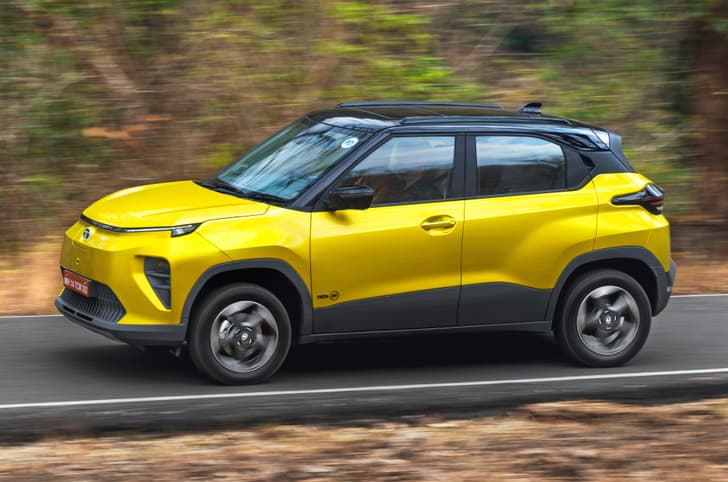
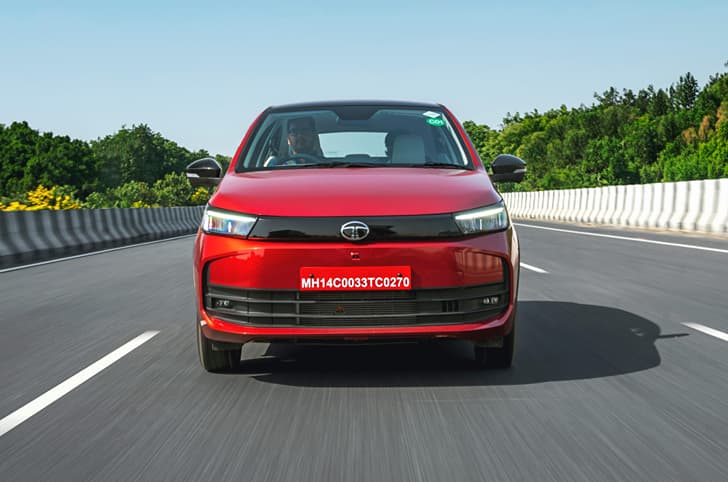
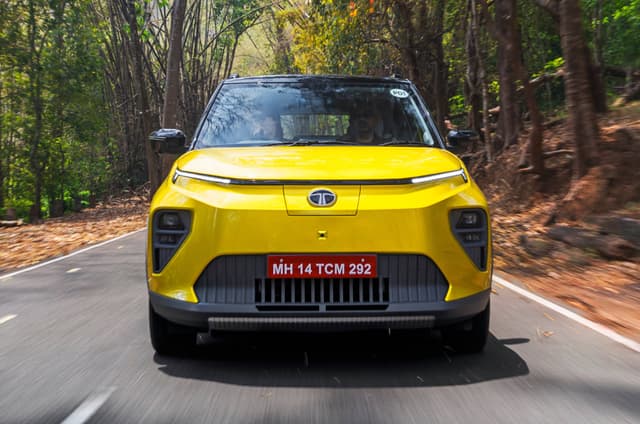
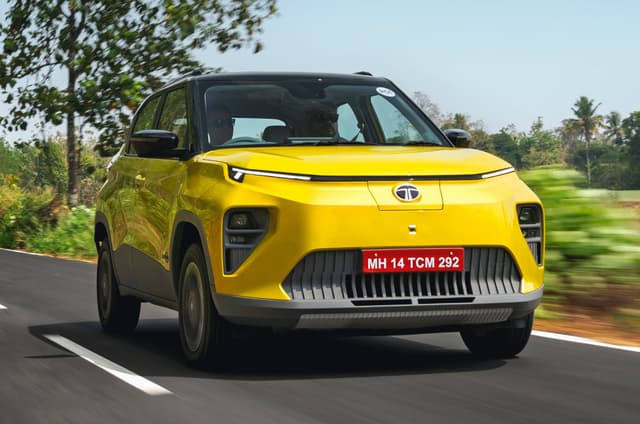
The Tata Punch EV price in Bathinda starts at ₹10.28 lakh for the Smart 30 base variant, including all taxes, RTO fees and insurance. In comparison, the Tata Punch EV Empowered + S 40 top model price in Bathinda is ₹13.38 lakh.
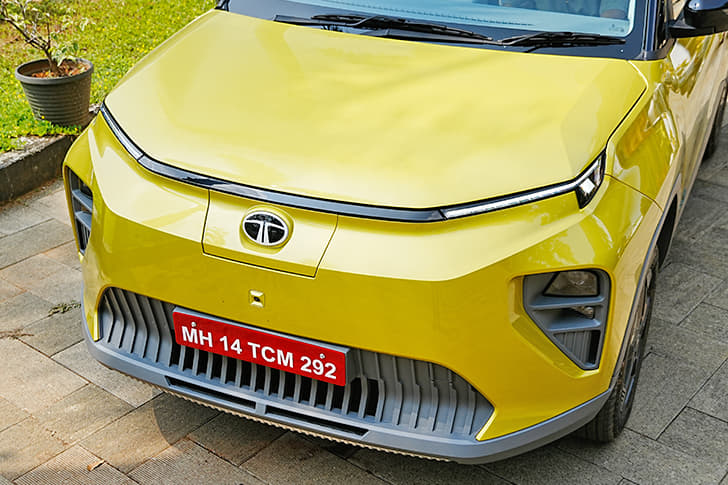
Tata Punch EV price & variants
Price of Tata Punch EV alternatives
Tata Punch EV news
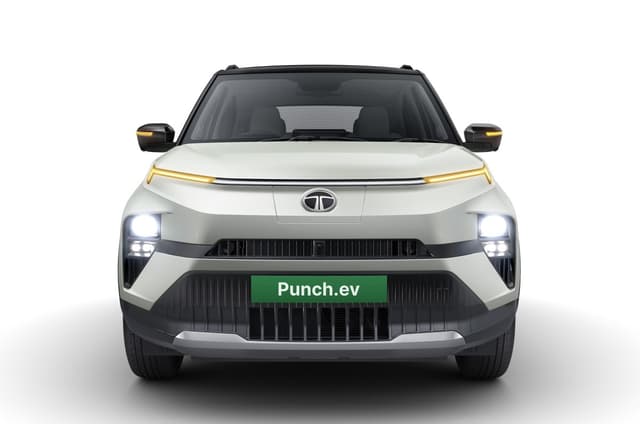
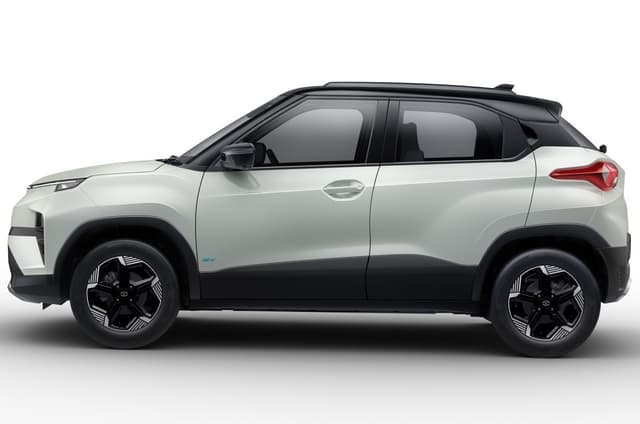
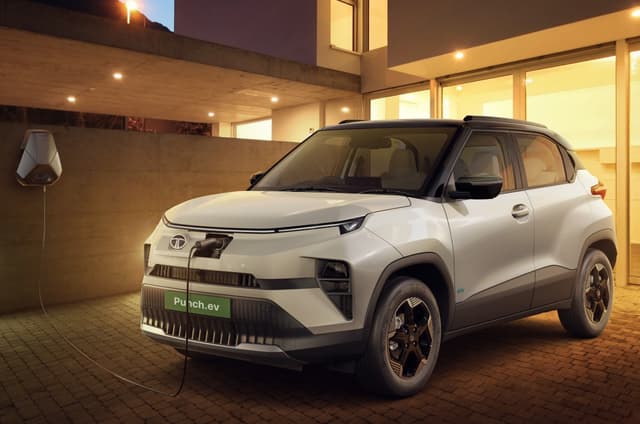
Tata Punch EV Images
Tata Punch EV videos


Tata Punch EV Colours
Tata Punch EV FAQs
The Tata Punch EV price in India starts at ₹9.69 lakh and goes up to ₹12.59 lakh, ex-showroom.
The base-spec Tata Punch EV Smart 30 price is ₹9.69 lakh, ex-showroom.
The base-spec Tata Punch EV Smart 30 on road price in Bathinda is ₹10.28 lakh.
The Tata Punch EV Adventure 40 price is ₹11.59 lakh, ex-showroom.
The Tata Punch EV Adventure 40 on road price in Bathinda is ₹12.33 lakh.
The top-spec Tata Punch EV Empowered + S 40 price is ₹12.59 lakh, ex-showroom.
The top-spec Tata Punch EV Empowered + S 40 on road price in Bathinda is ₹13.38 lakh.
Trending Questions on Tata Punch EV - Answered by Autocar Experts
I am confused between the Tata Punch EV, Toyota Ebella, and Hyundai Creta EV. I am not very sure about Ebella, as there is no clear timeline yet for its launch or delivery. Is the Creta EV a good option, or should I consider the Punch EV instead? Or would it be better to wait for the Ebella?
The Hyundai Creta Electric is the best model from your shortlist. It's got a very refined powertrain and delivers a good range (LR variant). It also feels the best-rounded thanks to its cabin being roomier than the Tata Punch EV's and Toyota Ebella's.
The Tata Punch EV is impressive, but it is essentially two sizes smaller than the Hyundai Creta Electric. Correspondingly, it won't be as well-suited to family use as the Creta.
Toyota's Ebella doesn't quite hit the spot. It's not particularly practical for its size, and the stiff ride quality also marks it down. The Toyota should be keenly priced when it goes on sale in the days to come.
I am looking for an EV as my daily travel is around 75 km. I have a 3.3kW charging facility free at my office, plus a fast DC charger nearby. My budget is flexible as I am exploring the new Tata Punch EV, Nexon EV and Curvv EV, considering the ₹3.5 lakh discount on the Curvv EV. What should be the logical choice, considering I don’t have much experience in driving, hardly, for 4-5 months as of now?
I am planning to buy an electric car for mixed usage, including city driving, highway trips, and occasional hill drives. I have shortlisted the Tata Punch EV, Tata Nexon EV, and MG Windsor EV, but I am confused about which one would be the best choice. My key considerations are real-world driving range, highway performance, hill driving capability, and overall value for money. Could you please suggest which EV among these would suit my needs best and which variant I should choose?
Since your usage is a mix of city and highway driving, with occasional trips to the hills, it would be advisable to opt for the largest battery pack available. Among your chosen options, the standard MG Windsor has the smallest battery at 38kWh, the updated Tata Punch EV can be had with a 40kWh battery, and the Tata Nexon EV gets a 45kWh unit. MG has also introduced the Windsor Pro with a 52.9kWh battery pack, but it comes at a premium of almost Rs 2 lakh over the standard Windsor.
If you are willing to stretch your budget, the Windsor Pro will offer the longest real-world range of the three. In our testing, the standard 38kWh Windsor managed a combined real-world range of 308km, with an efficiency of 8.1km/kWh. With a significantly larger battery, the Windsor Pro should be able to deliver around 400km in real-world conditions.
Naturally, the range will drop when climbing hills, but you will be able to recoup some energy on the way down using the regen modes. If you are on a tighter budget, then the Nexon EV with the 45kWh battery is a good choice too. In our testing, it delivered an efficiency of 7.79km/kWh and a real-world range of around 350km.
I want to buy a sub-4 meter compact SUV. My daily travel is 110km. Should I buy EV, CNG or diesel? Which car should I buy for a budget of ₹13 lakh?
I currently have 2017 Celerio AMT. I am looking for a small car with a smooth automatic transmission as an upgrade. My daily usage is just 20 kms and a monthly once long trip of around 200kms. Majority of the journey will be in city trafic. What are my best options under 10 Lakhs, and should I also consider the Punch ev.
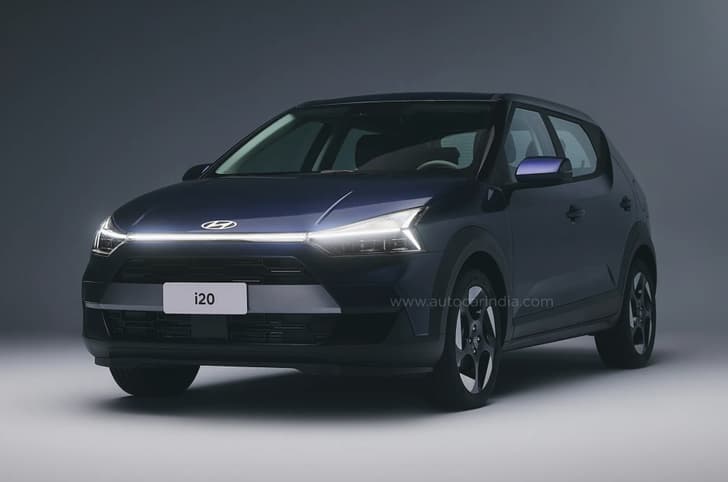
If you are looking for a smooth automatic experience, a CVT is your best option. While most cars in this price range use an AMT like your Celerio, there are two options with CVTs – the Hyundai i20 and the Honda Amaze. Both these cars get 1.2-litre four-cylinder engines mated to CVT transmissions that are smooth and easy to use. Both have reasonably roomy cabins, but the Amaze has the advantage of a larger boot. It is also the newer car and therefore gets our vote.
With regard to your query about the Punch EV, there is no denying that it is a phenomenal city car. However, your limited commute of just 20km does not really justify an EV. Also, in our real-world test of the previous Punch EV we managed 216km on a full charge on the highway. The new Punch EV will improve on that with its larger battery pack, but the range might still be a limiting factor on your monthly road trips.
Before you decide, do take a test drive of all these cars.
Would you guys recommend the new Punch EV? If so, what are the positives and negatives, and what are the alternatives to this car in a ₹13 to ₹15 lakh budget? It has to be an EV.
I travel approximately 85 km daily and am considering the Tata Punch EV 2026, specifically the Adventure 40 kWh variant. Given my daily usage, would it be better to purchase the vehicle with the battery included or opt for the BAAS (Battery as a Service) model? Which option would make more financial sense in the long run?
I am planning to buy my first car, and I have never owned one before. I own a house with a car parking area. My car usage will be very low, maybe twice a week or even less. I am confused about what to choose: Should I buy a petrol vehicle now (BS6 Phase 2 engine car)? Or should I wait for flex-fuel engines to come to market, as E27 is in the news? Should I buy an EV? Please advise.
First, let’s clear the confusion around flex-fuel and E27. There’s a lot of noise on social media, but flex-fuel cars (E27 and above) are still some time away in the mass market. Also, it’s not yet clear what real-world benefit they will offer to customers. Higher ethanol blends generally reduce fuel efficiency, so unless E27 fuel is significantly cheaper than today’s E20 petrol, the advantage may not be substantial.
Current BS6 Phase 2 petrol cars are fully compatible with E20 fuel, which is expected to remain the base fuel even if higher ethanol blends are introduced. So buying a petrol car now is absolutely safe and sensible. There’s no need to delay your purchase waiting for flex-fuel technology.
Now, since you have your own house with dedicated parking, installing a home charger is possible. That makes an EV a practical option. For a first-time buyer, an EV is actually very easy to drive. It has no clutch, no gear shifts, offers smooth acceleration, and has very low running costs. Something like the Tata Punch EV offers good value. Just keep in mind that long highway trips will require planning around charging stops.
If your usage is only twice a week or less, a regular petrol car may still be the simpler, more flexible choice. One of our go-to recommendations for first-time buyers is the Honda Amaze. It’s easy to drive, reliable, comfortable and offers hassle-free ownership.
I am an NRI based in Dubai, looking to purchase an automatic SUV for my home in Kasaragod, Kerala. I will be using when I visit couple of times in a year and the car will be primarily used by my sister for local shopping and local commutes, but will also remain idle sometimes. Between the Skoda Kylaq Prestige Plus (1.0 TSI with 6-speed Torque Converter) and the Hyundai Venue HX8 (1.0 Turbo with 7-speed DCT), which powertrain is more mechanically durable for a 10-year ownership cycle? Is buying new punch ev also makes sense? I’m open to other suggestions as well.
All modern cars today, if maintained well, are engineered to last 10 years or more. Over that period, you should budget for both scheduled services and some wear-and-tear replacements. Given your usage pattern with limited annual running and long idle periods, the way the powertrain behaves when used sparingly becomes more important. Since most of your trips are short and local in Kasaragod, outright performance is less critical than smooth and reliable operation.
Between the Skoda Kylaq Prestige Plus (1.0 TSI with 6-speed torque converter) and the Hyundai Venue HX8 (1.0 Turbo with 7-speed DCT), both should serve you well if maintained properly. However, purely from a mechanical durability standpoint, a conventional torque converter automatic, like the one in the Kylaq, is generally more tolerant of stop-go driving and long-term ownership than a dual-clutch transmission (DCT).
DCTs offer quicker shifts and better efficiency, but they are more complex and can be sensitive to heat and crawling traffic. This is something your sister is likely to encounter in town driving. Over a 10-year horizon, especially with intermittent usage and possible long idle periods, the simpler torque converter setup is typically the safer bet.
That said, both cars use small turbo-petrol engines. Modern turbo engines are reliable, but they are inherently more complex than naturally aspirated (NA) engines. It is due to additional components like the turbocharger and intercooler. If absolute long-term peace of mind is your priority, you could also consider the Maruti Suzuki Brezza, which comes with a 1.5-litre naturally aspirated petrol engine paired to a 6-speed torque converter. An NA engine is mechanically simpler and, in theory, better suited to low annual running and long ownership.
As for the Tata Punch EV, it is an excellent value for money as an EV. However, in your specific case, it may not make complete sense. Your annual usage appears limited, so you won’t significantly benefit from the lower running costs of an EV.
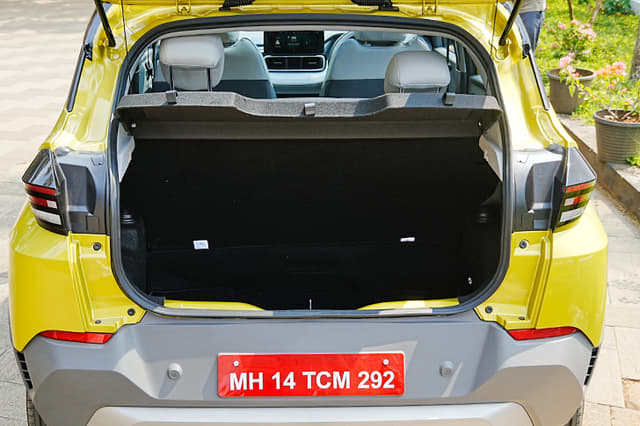
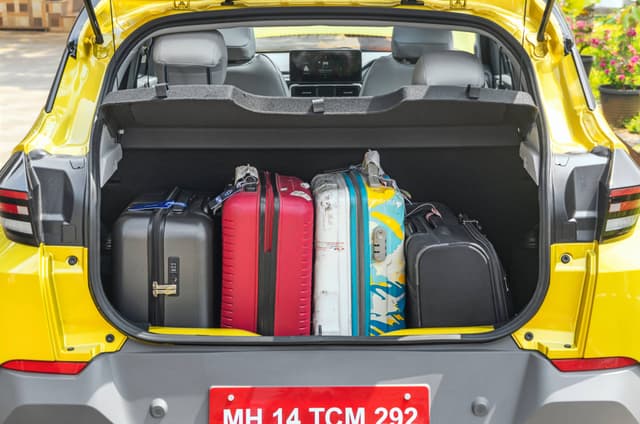
Additionally, the Punch EV is compact with a smaller boot, which may restrict practicality during family visits. Long idle periods are also not ideal for EVs unless the battery state of charge is managed carefully.