Last Updated on: 15 Aug 2026
Tata Punch EV highlights
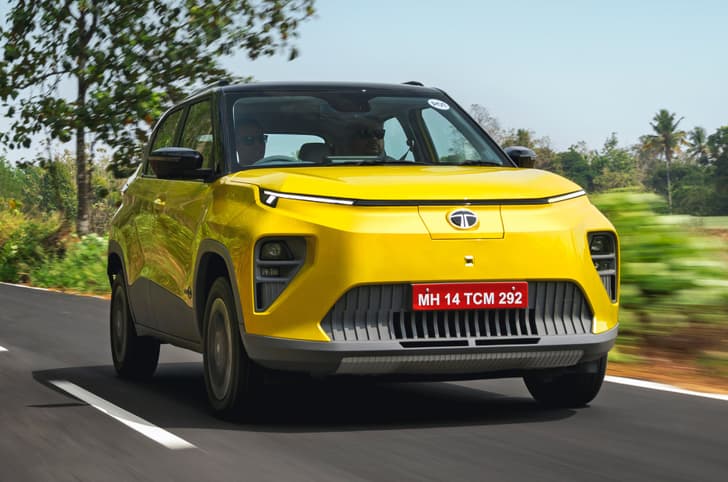
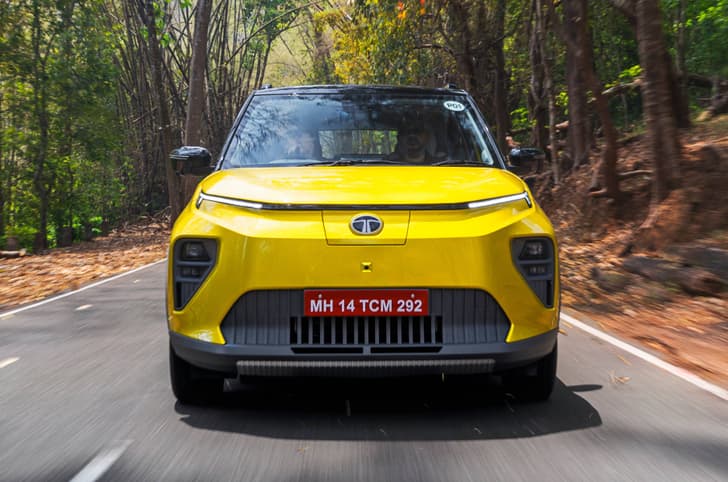
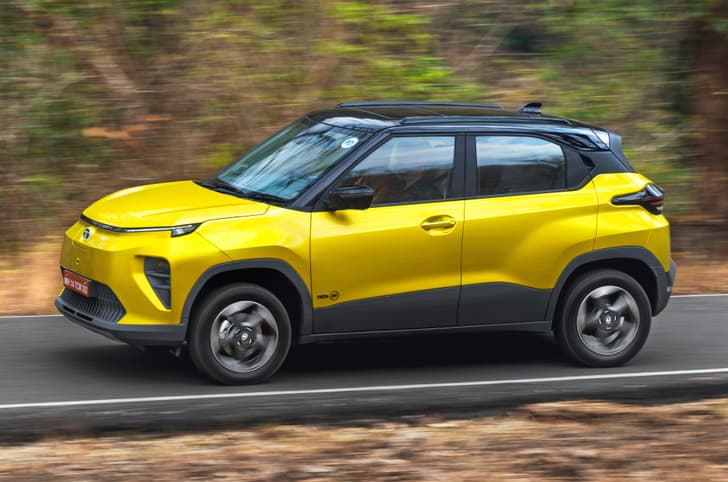
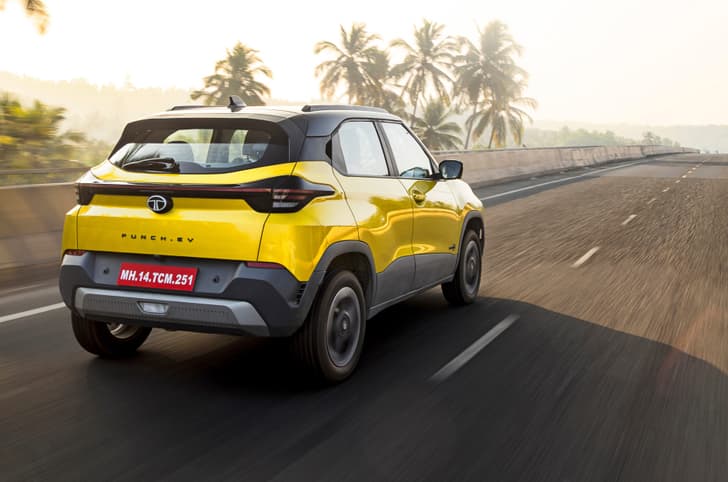
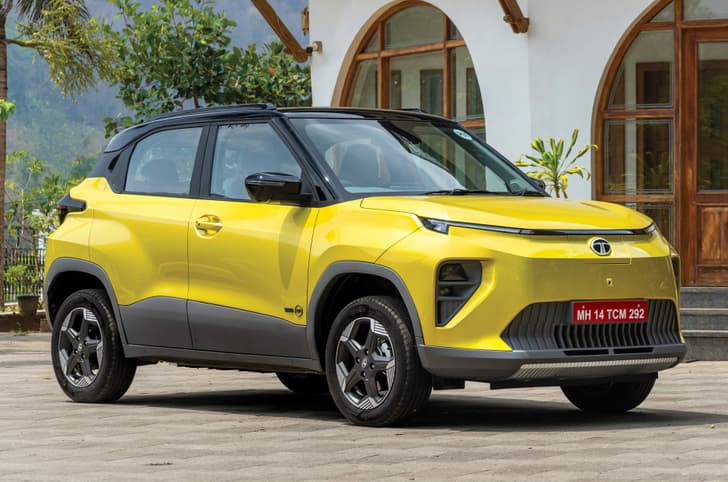
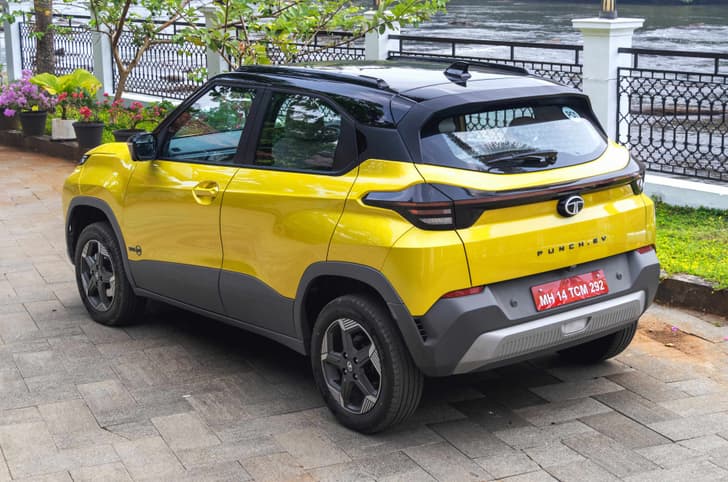
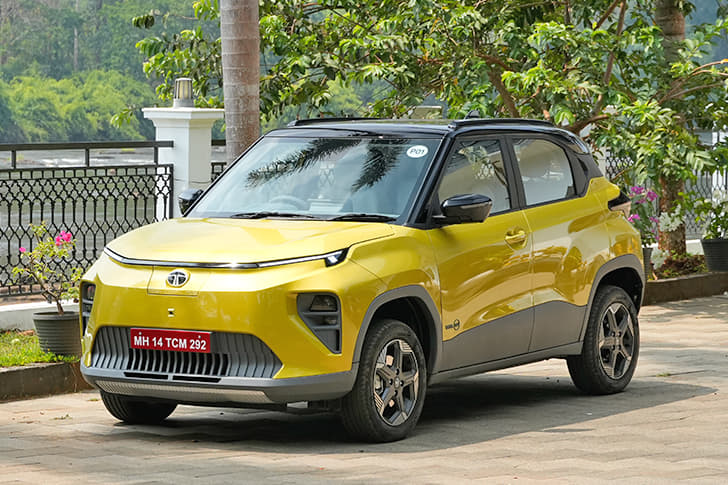
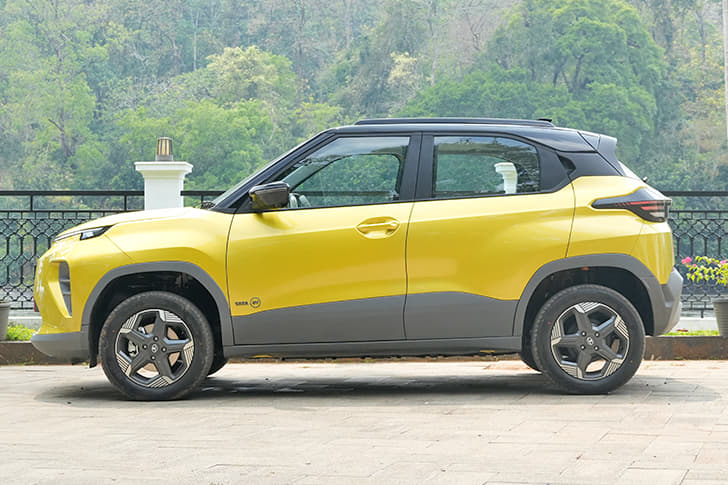
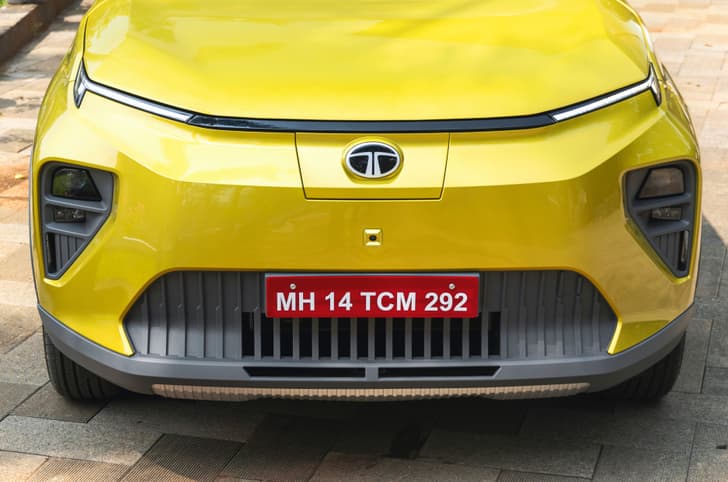
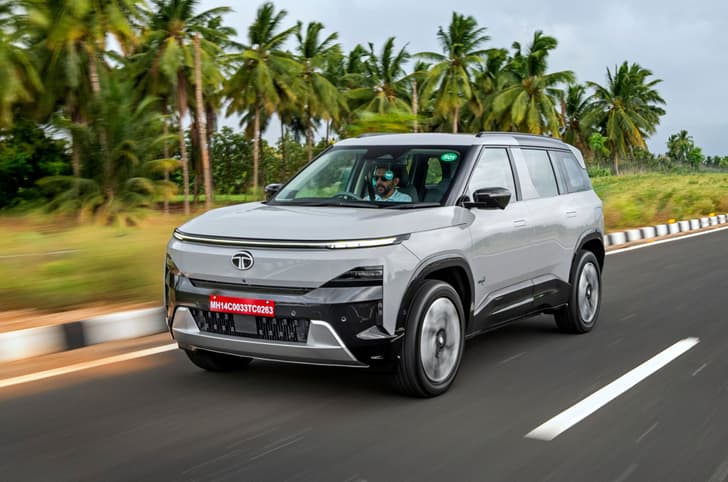
The Tata Punch EV is 3857mm long, 1742mm wide, and 1633mm high, with a wheelbase of 2445mm. All Punch EV non-LR variants get a 25kWh battery powering a single electric motor on the front axle developing 82hp and 114Nm, while the LR variants come with a larger 35kWh battery pack that outputs 122hp and 190Nm. Every Punch EV variant is equipped with a 1-speed automatic transmission and front-wheel drive.
Tata Punch EV key specifications
The Tata Punch EV is offered in 25kWh and 35 kWh battery packs across 5 trims. The Standard variant offers a range of 265 km, while the Long Range model delivers up to 365 km. Tata Punch Electric's ground clearance is 190mm, and its boot space is 366 litres.
Battery Range 468 km | Fuel Type Electric |
Transmission Auto | Body Style SUV |
Seats 5 |
Tata Punch EV specifications
The Tata Punch EV is a 5-seater SUV built on the advanced Acti.ev architecture. It comes equipped with an IP67-rated liquid-cooled battery pack. This Tata car measures 3,857 mm in length with a wheelbase of 2,445 mm. The Standard variant offers City and Sport drive modes, while the Long Range model adds an Eco mode for improved efficiency.
Engine & Transmission
Fuel Type/ Propulsion | Electric |
Motor Type | Permanent Magnet Synchronous Motor |
Number of Motors | 1 |
Pure Electric Driving Mode | Yes |
Gearbox Type | Auto |
Number of Gears | 1 |
Drive Layout | Front Wheel Drive |
Lockable Differential/s | No |
Max Motor Power | 129 hp |
Max Motor Torque | 154 Nm |
Fuel & Performance
Drive Mode Types | Multiple |
Terrain Modes | No |
Battery Capacity | 40 kWh |
Charging Time | 5.3hrs 10%-100%(7.2kW AC), 30min 10%-80%(65kW DC) |
Claimed Range | 468 km |
Suspension & Steering
Front Suspension Type | Independent, MacPherson Strut |
Front Springs | Coil Springs |
Rear Suspension Type | Non-independent, Torsion Beam |
Rear Springs | Coil Springs |
Damper Control | No |
Ride Height Adjust | No |
Type of Power Assist | Electric |
Steering Adjust type | Manual |
Steering Adjust | Tilt |
Turning Radius | 5 m |
Front Brakes | Disc |
Rear Brakes | Drum |
Wheel Size | 16 inches |
Front Tyre Size | 195/60 R16 |
Rear Tyre Size | 195/60 R16 |
Wheels | Alloys |
Spare Wheel | No |
Dimensions
Length | 3880 mm |
Width | 1742 mm |
Height | 1622 mm |
Wheelbase | 2445 mm |
Ground Clearance | 195 mm |
Kerb Weight | None kg |
Chassis Type | Monocoque |
Boot Capacity | 366 litres |
Doors | 5 |
Tata Punch EV features
Comfort
| Power Windows with One Touch-Down | |
| Cooled Glovebox | |
| Cooled Storage | |
| Rear Window Sun Shades | |
| Cruise Control | |
| Cup Holders |
Safety
| Side Airbag | |
| Curtain Airbag | |
| Brake Assist (BA) | |
| Central Locking | |
| Child Safety Lock | |
| BNCAP Rating | 5 |
Exterior
| Front Fog Lamps | |
| Illuminated Logo | |
| ORVM turn indicators | |
| Outside rear view mirror (ORVM) | |
| Integrated Washer Jets with Wiper | |
| Follow Me Home Headlamps |
Interior
| Speedometer | Digital |
| Gear Indicator | |
| Head-up Display | |
| Trip Meter | |
| Average Speed | |
| Low Fuel Level Warning |
Entertainment
| MirrorLink | |
| Steering Audio Controls | |
| Rear Entertainment Screens | |
| Satellite Navigation | Phone-based |
| Voice Commands | |
| Web Browser |
Tata Punch EV variants comparison
Tata Punch EV Specifications - User Reviews
Tell us about your experience
Specifications of Tata Punch EV alternatives

Questions you may find useful
I am a first-time car buyer and am planning to drive 700-800 km per month with a mix of 55% city driving. I have shortlisted Tata Punch EV, Honda Amaze ZX CVT, and Mahindra 3XO MX3 Pro AT. My budget is Rs. 13 lakh. Please suggest which one I should go with for long-term ownership with minimal issues. I am looking for comfort, safety, reliability, features, and cost efficiency.
Go for the Honda Amaze ZX CVT. At 700-800 km a month with 55% city driving, you are not running enough to justify an electric car, and the Amaze’s naturally aspirated petrol engine paired with the CVT is extremely smooth, reliable and efficient in city traffic. Honda’s long-term reliability and low maintenance costs make it a very safe first-car choice, and the Amaze is also one of the most comfortable compact sedans with a spacious rear seat and a well-sorted ride. The Punch EV is a good product, but at your running it will take too long to recover the higher upfront cost, and the 3XO MX3 Pro AT, while feature-rich, does not have the same long-term ownership confidence as the Honda car. The Honda Amaze price also fits comfortably within your Rs. 13 lakh budget, allowing you to get the top ZX CVT variant with ADAS as an added safety net. Overall, it is the most sensible and hassle-free choice for a first-time buyer looking for comfort, safety, reliability and low running costs.
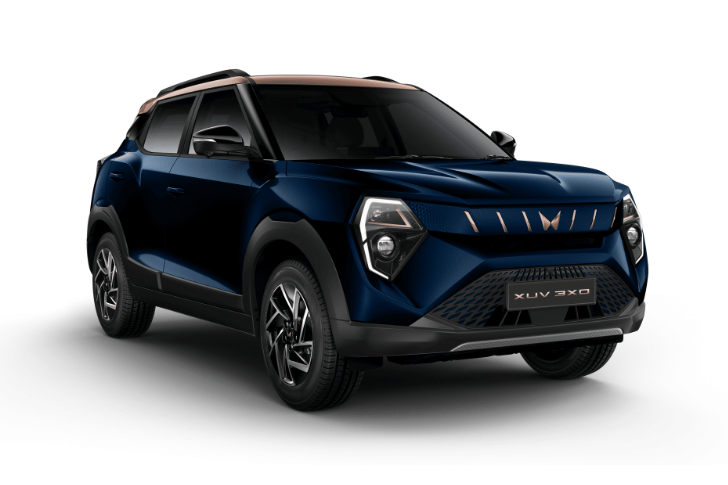
I am looking to upgrade my 19-year-old i10 Era and am seeking a vehicle that offers a great blend of comfort and longevity for the next 15 years. My budget is 12-16 lakh. While I am happy with my current car, I need something with more power for overtaking and lower maintenance requirements. Although my current annual usage is low (approximately 2,000-3,000km), I expect this to increase with a new car. My primary use will be city driving in Kochi with three passengers, but I need enough space and comfort for occasional long drives and airport runs. I am prioritising value for money. My current picks: Tata Punch EV (Empowered S+) - around 14 lakh Pros: The instant torque and overtaking performance are appealing. Shock absorbers are also nice. There are features (but not sure how much they will help me). Concerns: Tata’s quality control, long-term service consistency, and uncertainty around EV resale value and technology depreciation. Mahindra XUV 3XO (MX2 Pro TC Automatic) around ₹12 lakh Pros: Feels like a proper, spacious SUV. Cons: Lower fuel efficiency and higher RTO costs compared to an EV. Skoda Kylaq (Signature TC Automatic) - around 12.75 lakh Pros: Excellent reviews for handling and engine performance. Cons: Lower fuel efficiency and higher RTO costs compared to an EV. Citroen Aircross (X You Manual) - around 10 lakh Pros: Excellent reviews for ride comfort and handling. Cons: Manual transmission and concerns about the brand's service network. Overall, what should I choose between a manual, an automatic and an EV? Are automatics a no-brainer these days? Is the Punch EV a good option now?
Given your priorities of comfort, longevity, low maintenance and value for money, the Skoda Kylaq Signature AT would be the recommendation from your shortlist.The Tata Punch EV is actually one of Tata's more sorted products, and the instant torque will certainly make overtaking effortless. However, if you're planning to keep the car for the next 15 years, there are still some unknowns around long-term battery technology, resale values and how EVs will evolve over such a long ownership period. It makes sense as an EV, but perhaps not as the safest long-term bet.The Mahindra XUV 3XO offers more space and feels like a bigger vehicle, but its fuel efficiency is likely to be lower than the Kylaq's, and it doesn't feel quite as polished from behind the wheel.The Kylaq strikes a sweet spot. Its turbo-petrol engine provides the performance you're looking for, the torque-converter automatic is smooth and reliable, and the car feels well engineered. It is also likely to be easier to live with over the long term than an electric car if your goal is to keep it for 15 years. The Skoda Kylaq price range extends from Rs 7.59 lakh to Rs 12.99 lakh (ex-showroom, Delhi).As for manual versus automatic, for a predominantly city-driven car in 2026, an automatic is increasingly becoming the default choice. Modern torque-converter automatics such as the one in the Kylaq are smooth, reliable and remove much of the fatigue associated with urban driving.
I am currently driving a Polo 1.5 TDI, which has completed 10 years, and diesel vehicles older than 10 years are no longer allowed in Delhi-NCR. I am looking to buy a new car that is fun to drive and safe, and I am not keen on gimmicky features. Kindly suggest. I am also confused about ICE vehicles because of future fuel blending (ethanol/isobutanol). My on-road budget is capped at Rs 13 lakh.
The logical spiritual successor to the Volkswagen Polo for many owners has been the Skoda Kylaq, and we think it meets your needs as well. It retains that solidly built, fun-to-drive nature and also comes with a punchy 1.0-litre TSI turbo-petrol engine and has received a 5-star Bharat NCAP crash test rating. In your Rs 13 lakh budget, you'll get a mid-spec Signature+ variant, which gets you all the essentials and not too many gimmick features.Another often-overlooked option is the Citroen Basalt X, which offers a similarly punchy engine, fun chassis and European solidity as the Skoda and Volkswagen, but is a size up and much more spacious. However, it also costs more, and in your budget, you'll get a lower variant with fewer features than the Kylaq.If you want to skip fuel-blend questions entirely and your driving is mostly city, look at the Tata Punch EV. It’s quiet, quick off the line, and fits the budget. Just remember, highway trips need a bit of charging planning.
I have a Suzuki Ignis and want to replace it with a pure EV. I am looking for a small-sized car that feels easy to drive in the city. High range and top speed are not my requirements, but comfort and small size are my main priorities. Other than the Punch EV and Tiago EV, are there any more small EVs coming from Hyundai or Maruti? I do not want to go the MG route.
You’re moving from an Ignis and want a small, city‑friendly pure EV where comfort matters more than range or speed. Given that brief, we would pick the Tata Punch EV with the Standard battery in a mid trim, rather than the Long Range. It suits your use because the size is still easy to park, the higher seat makes it simple to get in and out, and the suspension feels more comfortable on broken city roads than most small cars. Compared to your Marutu Suzuki Ignis, the Tata Punch EV rides much better, and the cabin is far quieter, so your daily runs will feel calmer. Since you don’t need a big range, the Standard battery keeps price and weight down, which helps ride comfort too.Two things to keep in mind. The Punch EV is a touch larger than the Tata Tiago EV, so in very tight parking, the Tiago is still the easier tool. Also, Tata’s charging network is improving, but still uneven by area, so check chargers near your regular routes before you decide.On your question about more small EVs from Hyundai or Maruti, as of now, neither has a small, affordable city EV in showrooms. Maruti’s next EV is expected to be an MPV, and Hyundai too has nothing in the same bracket as the Punch EV. If you want the smallest footprint today, the Tiago EV remains the other good pick, but for comfort-first city use, the Punch EV fits your brief best.
My budget is around ₹15 lakh. We already own a 2017 Kwid top model AMT. My current running is around 100km per day. I want a reliable engine along with good mileage so that running costs remain low.
If you're open to diesel options, you could consider the Hyundai Venue or Kia Sonet. Both share their engine and gearbox options. Opt for the manual version of either for maximum efficiency.An excellent electric option is the Punch EV. If you can arrange for home charging, your running costs will be very low - something you will surely appreciate given your usage.The Maruti Suzuki Victoris CNG can also be considered. Its engine is reliable, and the CNG will keep per km costs in check.
Tata Punch EV FAQs
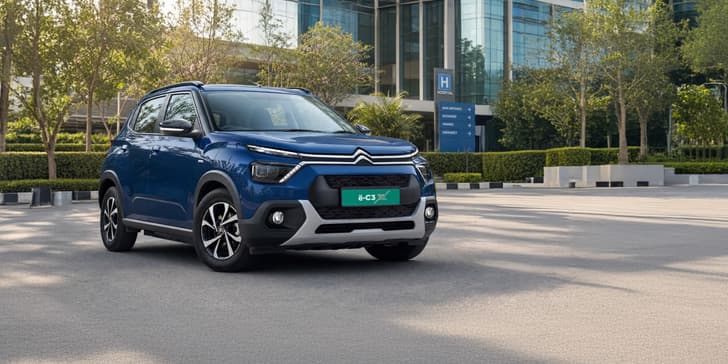
The Punch EV gets 40kWh and 30kWh battery options, which are larger than the sole 29.2kWh unit offered with the Citroen eC3.
Compared to its primary rival, the Citroen eC3, the Punch EV is wider and taller, but falls slightly behind in terms of length.

Tata Punch EV On Road Price in India
Upcoming Cars


Tata Cars

Trending Cars


Latest Cars