Last Updated on: 16 Jun 2026
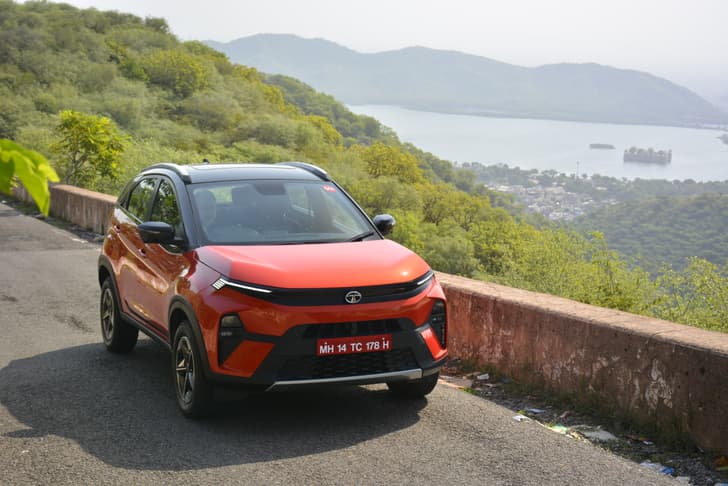
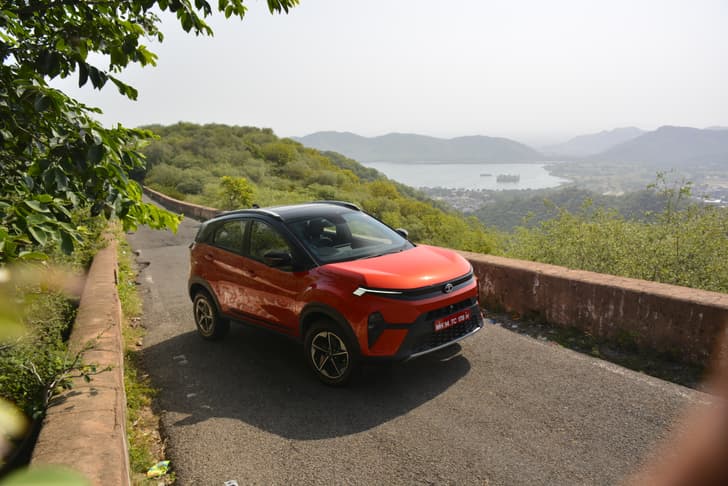
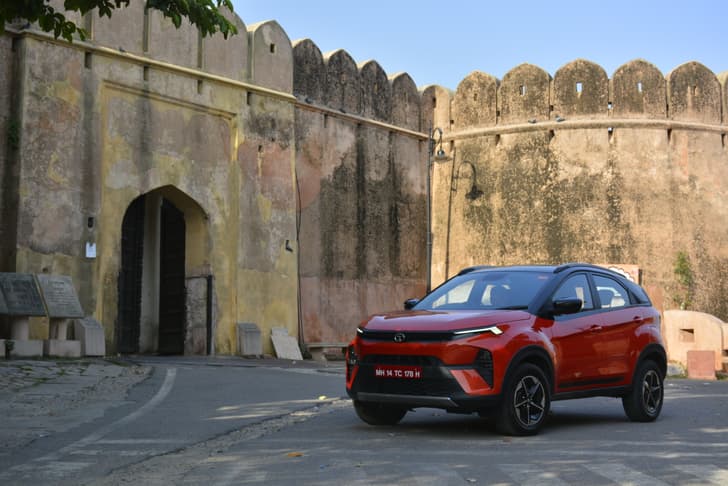
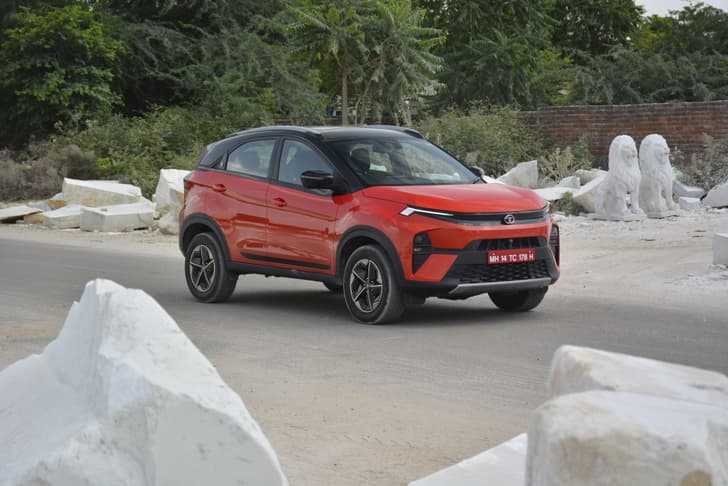
Tata Nexon Diesel Pure + S MT
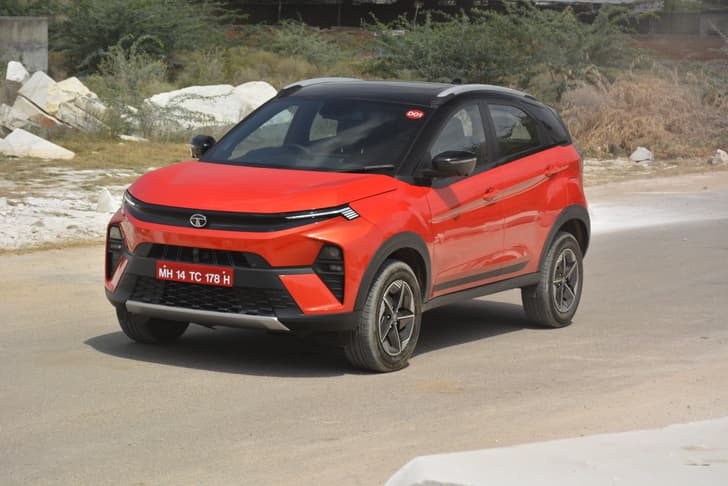
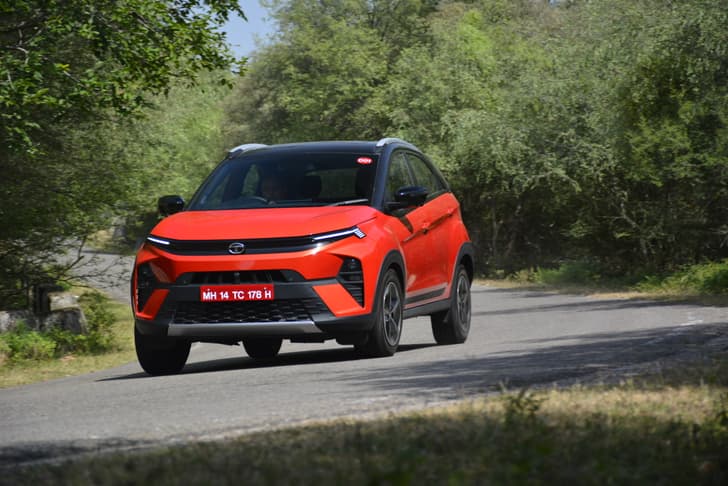
The Tata Nexon Diesel Pure + S MT variant is priced at ₹10.28 lakh. The Diesel Pure + S MT variant offers key features like Sunroof, Airbags, Integrated (in-dash) music system, Touch screen infotainment system, Rear camera. Explore complete specifications, and features below.
Tata Nexon Diesel Pure + S MT Key Features
- Yes Sunroof
- Wired Android Auto
- Wired Apple CarPlay
Tata Nexon Diesel Pure + S MT specifications
Engine & Transmission
Fuel Type/ Propulsion | Diesel |
Engine Installation | Front |
Pure Electric Driving Mode | No |
Number of Cylinders | 4 |
Engine Displacement | 1497 cc |
Engine Type | Turbocharged |
Max Engine Power | 115 hp at 3750 rpm |
Max Engine Torque | 260 Nm at 1500 - 2750 rpm |
Drive Layout | Front Wheel Drive |
Gearbox Type | Manual |
Number of Gears | 6 |
Lockable Differential/s | No |
Sport Mode for Automatic Gearbox | No |
Manual Shifts via Gear Lever on Automatic Gearbox | No |
Paddle Shifters for Automatic Gearbox | No |
Fuel & Performance
Fuel Tank Capacity | 44 litres |
Emission Standard | Bharat Stage VI |
Terrain Modes | No |
Fuel Supply System | Common Rail |
Auto Start/Stop | No |
Autocar Tested City Mileage | 16.5 kmpl |
Autocar Tested Highway Mileage | 19.4 kmpl |
Autocar Tested Mileage | 17.95 kmpl |
0-100kph | 12.22 s |
20-80kph (in third gear/ kickdown) | 9 s |
40-100kph (in fourth gear/ kickdown) | 10.3 s |
Suspension & Steering
Front Brakes | Discs |
Rear Brakes | Drums |
Type of Power Assist | Electric |
Steering Adjust | Tilt |
Steering Adjust type | Manual |
Turning Radius | 5.1 m |
Front Suspension Type | Independent, MacPherson Strut |
Front Springs | Coil Springs |
Rear Suspension Type | Non-independent, Torsion Beam |
Rear Springs | Coil Springs |
Ride Height Adjust | No |
Wheels | Steel rims |
Wheel Size | 16 inches |
Front Tyre Size | 195/60 R16 |
Rear Tyre Size | 195/60 R16 |
Dimensions
Length | 3995 mm |
Width | 1804 mm |
Chassis Type | Monocoque |
Height | 1620 mm |
Wheelbase | 2498 mm |
Ground Clearance | 208 mm |
Doors | 5 |
Kerb Weight | 1375 kg |
Boot Capacity | 382 litres |
Tata Nexon Diesel Pure + S MT features
Comfort
| Power Windows | Front and Rear |
| Vanity Mirror | Front Passenger Only |
| Cup Holders | |
| Powered Tailgate | |
| Cooled Glovebox | |
| Power Windows with One Touch-Down |
Safety
| Crash Test Rating | 5 |
| Height Adjustable Seat Belt | |
| Traffic Sign Recognition | |
| Boot Open Warning | |
| Airbags | 6 |
| Pretensioners & Force Limiter Seatbelts |
Exterior
| Body Coloured Bumpers | |
| Antenna | Shark Fin |
| Follow Me Home Headlamps | |
| Cornering Headlights | |
| Welcome and Goodbye Animation | |
| Stop Lamp |
Interior
| Speedometer | Digital |
| Tachometer | Digital |
| Trip Meter | |
| Average Fuel Consumption | |
| Average Speed | |
| Distance to Empty |
Entertainment
| Audio System | |
| Speakers | 4 |
| CD Player | |
| Branded Music System | |
| USB Input | |
| AUX Input |
Connected Car Features
| Remote Car Lock/Unlock via App | |
| Geo Fence | |
| Check Vehicle Status via App | |
| Car Light Flashing & Honking via App | |
| Anti Theft Immobilisation | |
| Emergency Call Button |
Tata Nexon variants
Tata Nexon comparison
Questions you may find useful
I want to purchase an SUV, and my budget is 15 lakhs maximum. My daily drive is around 10-15 kms in the city, and occasionally I go out of the city, like once in a quarter, and that too, maximum up to 300 kms. The vehicle should give decent mileage. It should be safe as well. Kindly suggest a few options.
Go for the Hyundai Venue. Given your limited usage, there's no need to spend extra for the diesel engine, and either of the petrol engines should be sufficient. The 1.2-litre engine is perfect for your largely city use, with sufficient power and a light clutch and gear shift. However, for your highway trips, it might feel underpowered, and in that case, the 1.0-litre turbo-petrol is a better bet, and even comes with a DCT automatic option. However, this engine isn't as fuel-efficient as the 1.2.Being one of the newest SUVs in the compact segment, the Venue comes with the latest tech, high-quality interiors, good space and good comfort too. With your budget of Rs 15 lakh, you can go up to the HX8 variant, which has a lot of features and tech. This includes safety features, and you'll be reassured by the fact that it has scored 5 stars in Bharat NCAP's crash tests. The only downside is that it's not particularly exciting to drive compared to some rivals.Speaking of which, alternatives include the Tata Nexon and Mahindra XUV 3XO, which have also scored 5-star NCAP ratings, but aren't as fuel-efficient as the Venue. Or conversely, the Maruti Suzuki Brezza and Fronx, which are more fuel efficient, but haven't yet been tested by Bharat NCAP or Global NCAP. Overall, we think the Venue is the best bet for you.
Which one do you think is better to purchase at this moment: the Hyundai Creta SX Premium Summer Edition 1.5 Petrol IVT or the Tata Nexon Fearless Plus A (PS) 1.2 DCA? I know they are not part of the same segment, but I think it is worth comparing them because Tata is offering almost all the features in the top-end version for around Rs 17 lakh, whereas the Creta costs over Rs 20 lakh with a similar feature list. Do you still think the Creta is a better value for money than the Nexon? As per my knowledge, both are doing well in terms of sales and resale value. I am a bit confused and looking for an opinion.
The Hyundai Creta SX Premium 1.5 Petrol IVT would be the recommendation here. On paper, the Tata Nexon Fearless Plus A DCA looks like the stronger value proposition because it offers a long list of features for significantly less money. However, the Hyundai Creta justifies much of its price premium through its larger cabin, superior rear-seat comfort, better refinement and a more polished overall driving experience. The naturally aspirated petrol engine paired with the IVT is also exceptionally smooth in city traffic.The Tata Nexon counters with stronger safety credentials and a richer feature-to-price ratio, but it still cannot quite match the Creta's sense of space, comfort and overall maturity. If you regularly travel with family, the difference is immediately noticeable.As for resale value, both cars perform well, but the Creta traditionally enjoys stronger demand in the used car market and tends to hold its value exceptionally well.
I want to upgrade to a new automatic car from my existing Tata Tiago. My preferences are a compact SUV, good build quality and decent mileage. I am considering either the Tata Nexon DCA Petrol or the Skoda Kylaq AT. My running is 90% city and 10% highway or long journeys. My monthly running is around 1,000km. Please advise which car and variant I should go for. My budget is below Rs 14 lakh, and I plan to buy the car by October 2026.
The Skoda Kylaq AT would be the pick here. For predominantly city driving, its turbo-petrol engine and torque-converter automatic gearbox offer a smoother and more natural driving experience than the Nexon's DCA. It is also likely to be more fuel efficient in real-world conditions and comes with a larger boot, making it the more practical choice for weekend trips.The Tata Nexon DCA remains a solid option with its strong build quality, comfortable ride and feature-rich cabin. However, the Kylaq feels more polished to drive and is better suited to your usage pattern.
I am confused about buying a new car. Should I buy Nexon CNG or Breeza CNG? Which is the best option to buy?
While both SUVs are strong contenders, the Maruti Suzuki Brezza offers a more polished and well-rounded ownership experience. The CNG integration feels very well sorted, fuel efficiency is excellent, and Maruti's service network and long-term reliability are major advantages. It is also one of the few CNG SUVs that does not feel significantly compromised in everyday driving.The Tata Nexon iCNG counters with a stronger safety package, a more modern cabin and a larger feature list. It also benefits from Tata's twin-cylinder CNG setup, which preserves a usable boot. The Brezza CNG, meanwhile, is available only with a manual gearbox.
I want to buy a car for my office commute and occasional short road trips around Bangalore. I am considering an EV and am confused between waiting for the Kia Syros EV or going ahead with the Tata Punch EV Facelift. Which option would you recommend?
If you're referring to the Kia Syros EV, it may be worth waiting if you're not in a hurry. Given what we've already seen with the Syros ICE, the Syros EV is expected to offer significantly more cabin space and practicality than the Punch EV. In fact, the Syros is closer to the Nexon in terms of overall size and interior room, so the EV version is likely to appeal to buyers looking for a more spacious family car.The trade-off is that the Syros EV will almost certainly be more expensive than the Punch EV and is expected to be positioned closer to the Nexon EV in terms of battery size, range and pricing.For your usage of office commutes and occasional road trips around Bangalore, the Punch EV facelift is already a very well-rounded product. It is well priced, easy to drive in the city and offers enough range for most use cases.
I am confused between the Nexon, XUV 3XO, and Venue as my first car. My running is expected to be 1,000-1,200 km per month. My priorities are: 1) Performance, 2) Mileage and ownership cost, 3) Features, and 4) Rear-seat and boot space. Please advise and suggest the best-value variant as well. I am inclined towards an automatic gearbox. Should I look for the sedan as well? Is the Diesel option feasible for me if I want to keep my car for the next 5 years?
Of your three shortlisted SUVs, the Hyundai Venue 1.0 T-GDi makes the most sense as it's the best all-rounder in the segment. It's got a good blend of performance and efficiency, maintenance is relatively cheap and hassle-free, and there are loads of features on offer, even in mid-level variants. It offers a good mix of rear-seat space and boot volume, which are both big improvements on the last-gen Venue. If there's a downside, it's that its DCT automatic can be jerky in low-speed traffic, and needs to be driven with this in mind. The manual, meanwhile, has a light and smooth clutch and gearshift action, so consider it as well.The Mahindra XUV 3XO scores high on performance, with the strongest engine in the class, and it has great space inside the cabin. Its downside, however, is that boot space is not so great, and neither is fuel economy. The Tata Nexon is also a decent all-rounder, but in most areas, it can't quite keep up with the newer and more polished Venue. Overall, the Venue is the one we think you should go for.Diesel is certainly a feasible option if you plan to keep the car for 5 years, and the mileage will certainly be better. But these engines are nowhere near as refined or punchy as their petrol counterparts, and thanks to newer emissions mitigation technology, they're far more expensive to buy, and require extra maintenance to run. Thus, for your usage, and for a first car, we would stick to petrol.
Hi, My budget is 20 lakh, and I need a SUV-type manual car with a 5-star NCAP safety rating, CNG driven and having good mileage to cover a daily distance of 40km in city traffic. Can you please suggest some good options?
Given your requirements, your best bet is the Maruti Suzuki Victoris VXI CNG. It falls well within your budget and has received 5-star crash test ratings from both Bharat NCAP and Global NCAP. It's one of the very few midsize SUVs to be available with CNG, and thanks to an under-floor dual-cylinder CNG tank layout, you don't sacrifice too much boot space and practicality as you do in most CNG cars. Being a Maruti, you can expect great mileage and low running costs as well, and its controls are light, making city driving quite effortless. The only downsides are that it is not available in a higher trim than the mid-range VXI, so you miss out on some features from the petrol car, and though power from the 1.5-litre engine is adequate when running on petrol, it will feel a bit underpowered running on CNG.If you don't mind a slightly smaller car, the Tata Nexon i-CNG is another great option within your budget. It also uses an under-floor dual-cylinder setup and has a 5-star crash test rating. However, its turbo-petrol engine is a lot punchier, whether running on petrol or CNG, and the CNG version is available in many more variants - all within your budget - going up to a well-loaded Fearless + PS Red Dark. It is, of course, not quite as spacious as the Victoris, but it comes quite close.
I am confused between the Nexon, XUV 3XO, and Venue as my first car. My running is expected to be 1,000-1,200 km per month. My priorities are: 1) Performance, 2) Mileage and ownership cost, 3) Features, and 4) Rear-seat and boot space. Please advise and suggest the best-value variant as well. I am inclined towards a manual.
Our first recommendation would be the new Venue Turbo Petrol Manual. It strikes the best balance for your priorities. The turbo petrol engine is punchy and enjoyable to drive, fuel efficiency is respectable, and Hyundai's ownership experience is generally hassle-free. The latest Hyundai Venue is also more spacious than before, particularly in the rear seat, and feels like a very well-rounded first car. For value, we would look at the SX Turbo Manual, which gets a good mix of features without stretching the budget too much.Our second choice would be the Mahindra XUV 3XO. If outright performance and rear seat space are your priorities, it is arguably the strongest car here. The turbo petrol engine is lively, the rear bench is among the widest in the segment, and it feels more substantial than the Venue. The downside is that fuel efficiency is not as strong, and the boot is one of the smallest in the class. The MX2 Pro or AX5 Manual would be the variants to consider, depending on your budget.The Tata Nexon would be our third choice. It remains a good all-round package with decent space, a strong feature list and good road presence. However, compared to the newer Venue and 3XO, it does not feel quite as polished, and neither the driving experience nor the ownership proposition is as compelling.
My budget is around Rs. 15 lakh, and my usage will be approximately 80% city driving and 20% highway driving. I expect to drive less than 1,000 km per month. Given this usage pattern, would choosing a DCT be a good or bad option in the long run? Alternatively, is Tata's wet-clutch DCA a better choice? Torque converter options seem quite limited within my budget. I have considered the following options, but each comes with certain concerns: Skoda Kylaq - I am unsure about its long-term reliability and maintenance. Maruti Suzuki Brezza - Feels somewhat outdated. Maruti Suzuki Fronx - Does not seem to offer enough value for the price. Mahindra XUV 3XO - Concerned about dealer and service support. Hyundai Venue and Tata Nexon - Both seem like good options, but I am concerned about long-term gearbox wear and tear. Based on my usage and priorities, which vehicle would you recommend?
Pick the Mahindra XUV 3XO MPFi petrol automatic. Its torque-converter automatic gearbox is the most robust for your mostly city use with smooth crawling and far lower risk of costly clutch wear than a dual-clutch. While efficiency will not be as high as others like the Nexon or Brezza, your low 1,000 km a month should not make this too much of a worry and on the whole it stays well within your budget. Mahindra service can vary from dealer to dealer, so do check your local dealer options.If your Mahindra dealer is really weak, between the others, you could wait a for just about two months when the new updated Maruti Brezza is due to arrive. It too has a torque convertor autobox and its low ride is very plush and really a boon to have over bad city roads.
Kindly suggest which would be the better option between the Tata Nexon Diesel Automatic and the Hyundai Venue Diesel Automatic. Also, thank you very much for answering my previous query so quickly.
The Hyundai Venue Diesel-Automatic is a far superior powertrain compared to the Tata Nexon's unit as far as smoothness and refinement go. Also, the Venue gets a 6-speed torque converter (automatic), which is much smoother-shifting and more comfortable, compared to the Nexon's automated manual transmission (AMT), which can feel relatively slow and a bit jerky in comparison. Between the two, it is the Venue diesel-automatic that gets our vote.
Tata Cars
Trending Cars