
Last Updated on: 05 Mar 2026
Skoda Kylaq price in Thoothukudi
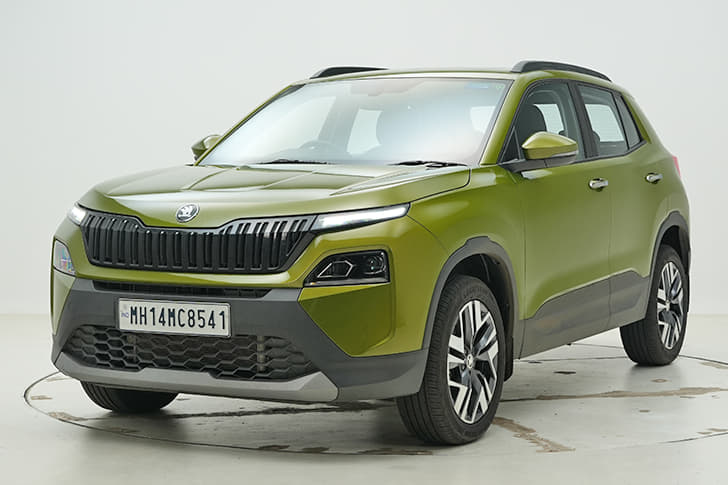
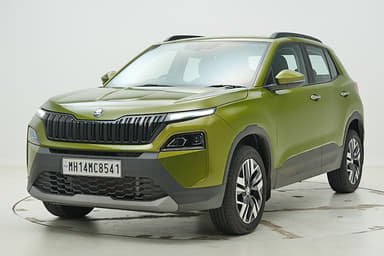
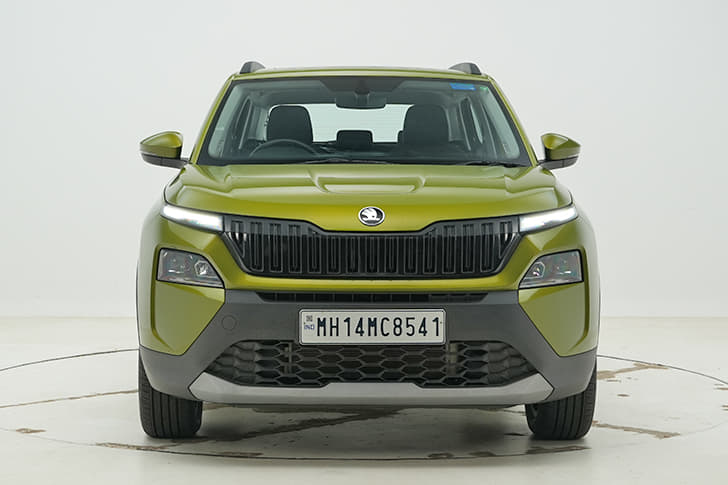
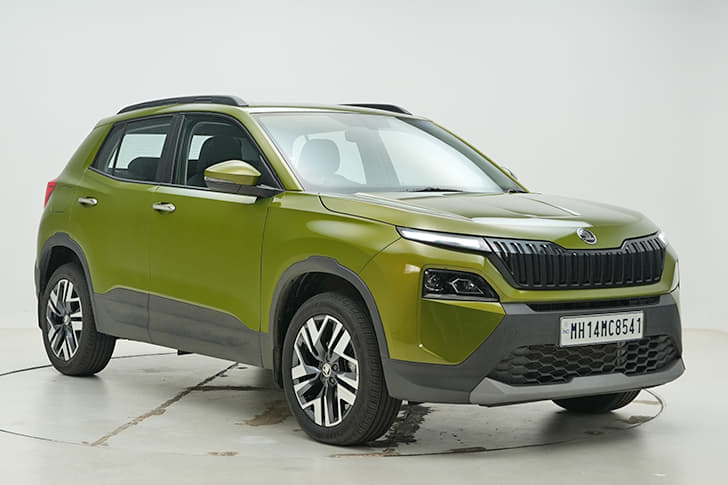
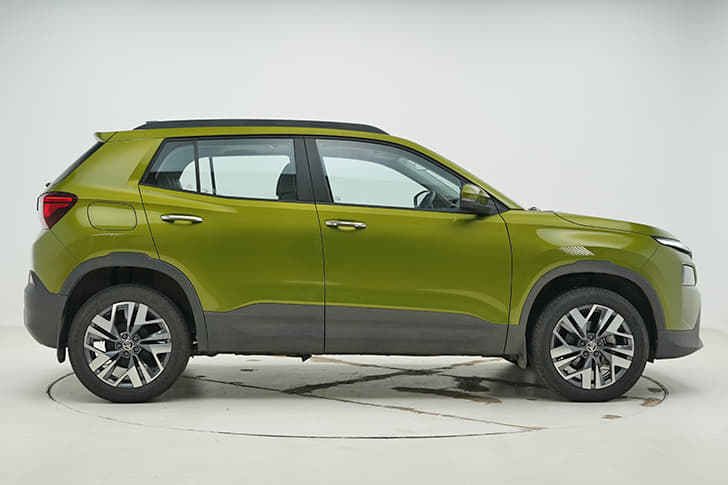
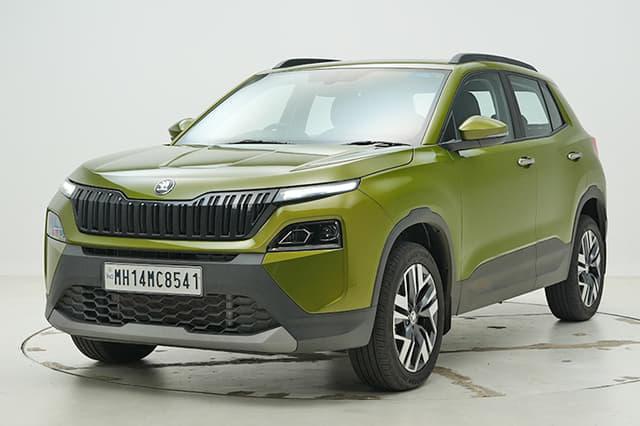
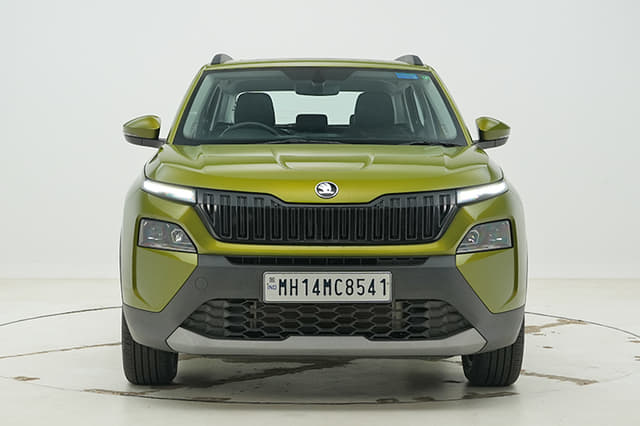
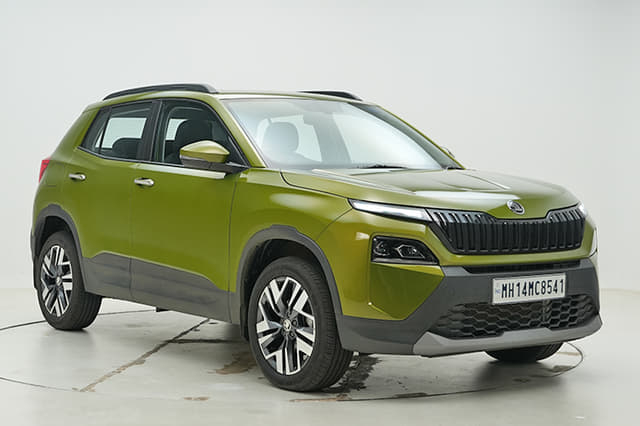
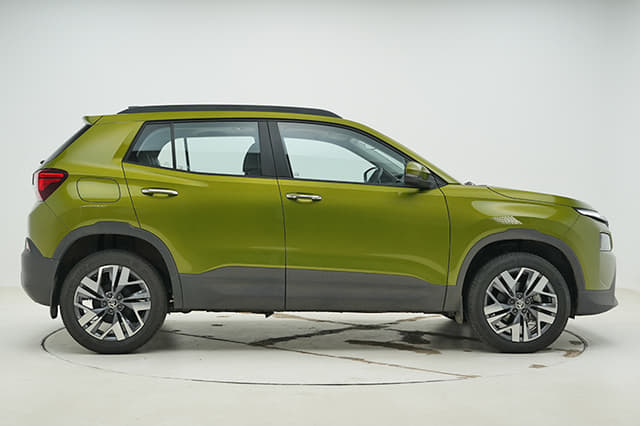
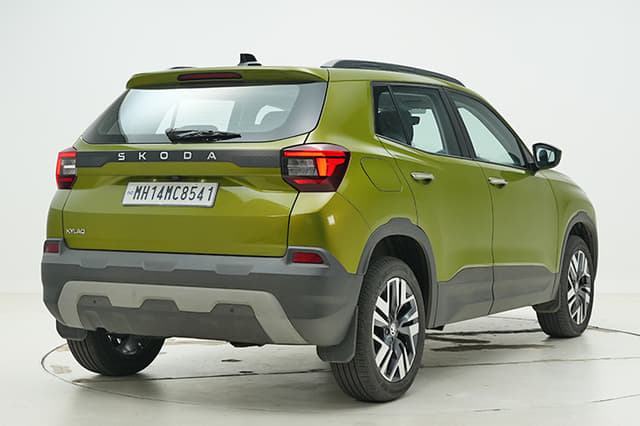
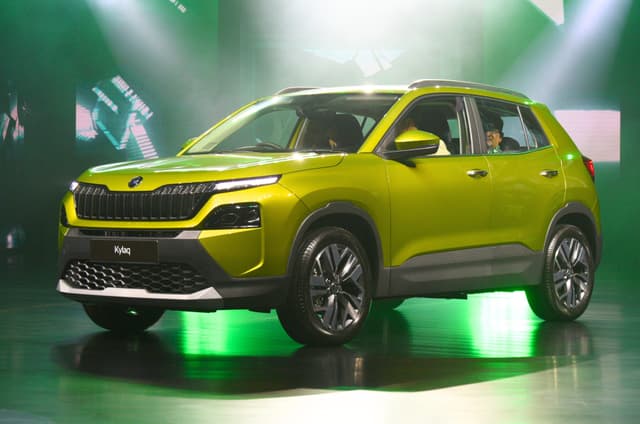
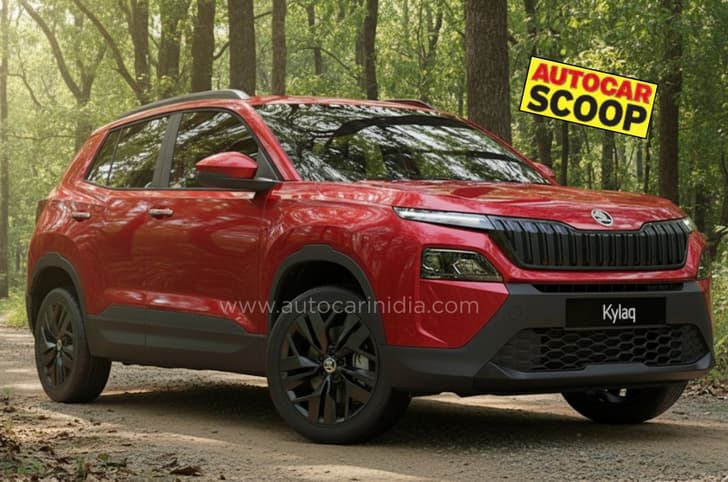
The Skoda Kylaq price in Thoothukudi starts at Rs 7.59 lakh for the Classic MT and goes upto Rs 12.99 lakh for the Prestige+ AT. In comparison, the Kylaq on road price in Thoothukudi starts from Rs 9.07 lakh to Rs 16.13 lakh (including all taxes, RTO fees, and insurance).
Skoda Kylaq price & variants
Price of Skoda Kylaq alternatives
Skoda Kylaq news
Skoda Kylaq Images
Skoda Kylaq videos


.jpg?w=640&q=75)
Skoda Kylaq Colours
Skoda Kylaq FAQs
The Skoda Kylaq car price in India starts from Rs 7.59 lakh, and rises to Rs 12.99 lakh (ex-showroom).
The base-spec Classic MT Skoda Kylaq price in Thoothukudi starts at Rs 7.59 lakh, ex-showroom.
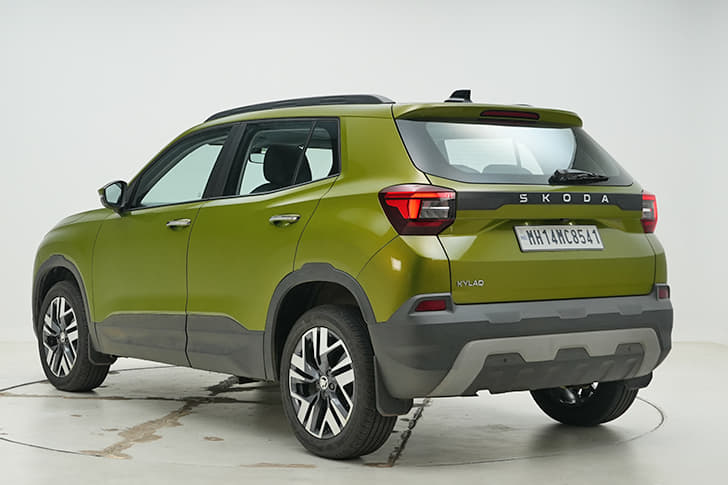
The base-spec Classic MT Skoda Kylaq on road price in Thoothukudi starts at Rs 9.07 lakh.
The Signature+ MT Skoda Kylaq price in Thoothukudi is from Rs 10.77 lakh, ex-showroom.
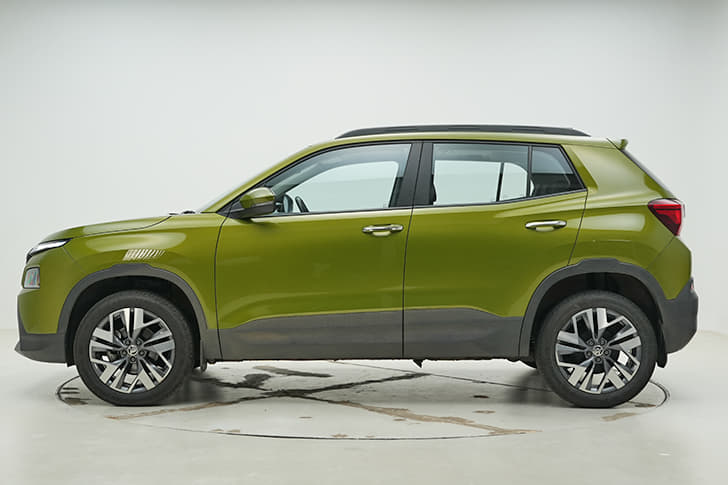
The Signature+ MT Skoda Kylaq on road price in Thoothukudi is from Rs 13.40 lakh.
The top-spec Prestige+ AT Skoda Kylaq price in Thoothukudi is Rs 12.99 lakh, ex-showroom.
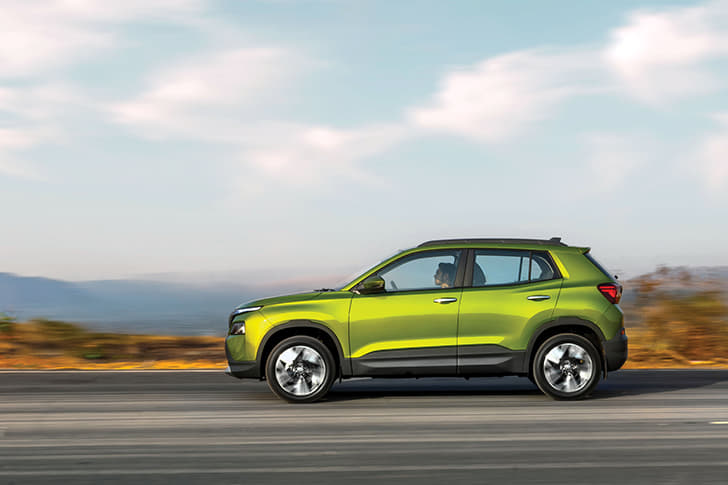
The top-spec Prestige+ AT Skoda Kylaq on road price in Thoothukudi is Rs 16.13 lakh.
Trending Questions on Skoda Kylaq - Answered by Autocar Experts
Namaste Team. I own a Wagon R VXI 2015 and now wish to upgrade. We are a family of five, and my monthly driving is not more than 600 km. I am a driving enthusiast, and my budget is ₹13 lakh on-road. I do not want to consider Tata. My family has been associated with Maruti Suzuki for the past 30 years, but I am open to other brands.
Hi, I am planning to buy a new car and need help choosing between the Skoda Kylaq Signature+ and the Hyundai Venue N6 N Line. I drive to work every day in Delhi. Luckily, my timings are non-office hours, so that should be factored in, plus a few road trips we take during the year. Please suggest.
I am an NRI based in Dubai, looking to purchase an automatic SUV for my home in Kasaragod, Kerala. I will be using when I visit couple of times in a year and the car will be primarily used by my sister for local shopping and local commutes, but will also remain idle sometimes. Between the Skoda Kylaq Prestige Plus (1.0 TSI with 6-speed Torque Converter) and the Hyundai Venue HX8 (1.0 Turbo with 7-speed DCT), which powertrain is more mechanically durable for a 10-year ownership cycle? Is buying new punch ev also makes sense? I’m open to other suggestions as well.
All modern cars today, if maintained well, are engineered to last 10 years or more. Over that period, you should budget for both scheduled services and some wear-and-tear replacements. Given your usage pattern with limited annual running and long idle periods, the way the powertrain behaves when used sparingly becomes more important. Since most of your trips are short and local in Kasaragod, outright performance is less critical than smooth and reliable operation.
Between the Skoda Kylaq Prestige Plus (1.0 TSI with 6-speed torque converter) and the Hyundai Venue HX8 (1.0 Turbo with 7-speed DCT), both should serve you well if maintained properly. However, purely from a mechanical durability standpoint, a conventional torque converter automatic, like the one in the Kylaq, is generally more tolerant of stop-go driving and long-term ownership than a dual-clutch transmission (DCT).
DCTs offer quicker shifts and better efficiency, but they are more complex and can be sensitive to heat and crawling traffic. This is something your sister is likely to encounter in town driving. Over a 10-year horizon, especially with intermittent usage and possible long idle periods, the simpler torque converter setup is typically the safer bet.
That said, both cars use small turbo-petrol engines. Modern turbo engines are reliable, but they are inherently more complex than naturally aspirated (NA) engines. It is due to additional components like the turbocharger and intercooler. If absolute long-term peace of mind is your priority, you could also consider the Maruti Suzuki Brezza, which comes with a 1.5-litre naturally aspirated petrol engine paired to a 6-speed torque converter. An NA engine is mechanically simpler and, in theory, better suited to low annual running and long ownership.
As for the Tata Punch EV, it is an excellent value for money as an EV. However, in your specific case, it may not make complete sense. Your annual usage appears limited, so you won’t significantly benefit from the lower running costs of an EV.
Additionally, the Punch EV is compact with a smaller boot, which may restrict practicality during family visits. Long idle periods are also not ideal for EVs unless the battery state of charge is managed carefully.
I am considering an automatic, and the choice is between the Kylaq AT, Elevate CVT, and Grand Vitara (GV). I would like to consider the Kylaq, but since my monthly driving is less than 500 km and mostly in the city, would a naturally aspirated engine be better? I plan to keep the car for at least 10 years and want it to be reliable, low-maintenance, with a minimum 4-star safety rating and NVH quality comparable to my 2010 Honda Jazz. I am also willing to consider other SUVs or raised hatchbacks that meet these criteria. Please advise.
If you like the Skoda Kylaq AT, go ahead. It’s a very good car to drive, feels solid, and is the most engaging of the three. Low running will naturally minimise wear and tear, and modern turbo-petrol engines are perfectly fine for city use as long as they’re maintained properly. Don’t overthink the naturally aspirated vs turbo debate purely from a reliability standpoint - upkeep matters more.
The Honda Elevate CVT and Maruti Suzuki Grand Vitara are bigger and more spacious, and both are sensible, comfortable choices. The Elevate’s naturally aspirated engine is smooth and predictable, and the Grand Vitara scores well on efficiency. However, neither feels as enjoyable or as tight to drive as the Kylaq.
Given your priorities - long-term ownership, decent safety, good NVH and low running - the Kylaq fits well if driving feel matters to you. If space and a more relaxed nature matter more, then the Elevate would be the calmer choice. But purely from the heart-and-head balance, the Kylaq is the one we would pick.
Want to buy Kylaq, but I am a newly learned driver. Should I buy it? Please answer.
I will be driving a car for the first time. My main usage will be in Bangalore city for office commute and occasional family outings, with plans for short weekend road trips. I am a calm driver and don’t need the fastest engine - I want an automatic petrol 5-seater SUV. My priorities are: Safety features Easy to drive and maintain Good mileage Modern looks (interior & exterior) Sunroof Spacious, especially boot space Value for money with good utility No frequent niggles after purchase My budget is around ₹12 lakh and can stretch a bit. I can wait 3-4 months to buy the car. I see the Tata Sierra as one contender, but please suggest what would be the best option.
You will have to stretch your budget significantly to purchase the Tata Sierra automatic. For around Rs 12 lakhs on-road, what you can shortlist instead are the Mahindra XUV 3XO MX3 Turbo-AT and Skoda Kylaq Signature AT, both of which are safe, spacious, comfortable, and also get a sunroof.
The Maruti Brezza is likely to get an update in the coming weeks. Since you are not in a hurry, you could wait and see what it has to offer wait for, before going ahead with the purchase.
Kia Sonet HTX Diesel AT vs Skoda Kyalq AT - which one should I go for? We are a family of 4-5 people and often go on outings with luggage. Also, for an enthusiast, which one would be better for long drives when comparing both at the same price point?
Between the Kia Sonet and the Skoda Kylaq, the Kylaq is the better choice for you, especially if driving enjoyment and long-distance comfort matter. It is the nicer car to drive, has a more comfortable ride on highways and feels excellent value for money.
The Sonet is still a good all-round compact SUV, but it is not as engaging to drive as the Skoda Kylaq, particularly in terms of handling. Another factor to keep in mind is that the Sonet is expected to be replaced in about a year. It means there is a chance it could start feeling dated sooner than you would like. The rear seat on the Sonet is also on the tighter side.
Since you have mentioned that there will be occasions when five people travel together with luggage. It is important to note that both the Kylaq and the Kia Sonet are relatively narrow cars and are most comfortable as four-seaters on long trips. If proper five-seat comfort is a priority, the Mahindra XUV 3XO is a strong alternative. Its wider body allows it to accommodate five adults in better comfort. It is also a fun car to drive thanks to its punchy 1.2 turbo petrol engine and well-sorted suspension.
Hello sir, I currently own a 2019 Ford EcoSport Thunder Edition diesel (BS4). I want to ask whether I should keep it until the next decade or replace it sooner. My daily running is very low and it will mainly be used for long road trips. If I should replace it, what cars should I consider in the compact SUV segment? Please help. I like its quirks and performance.
Given your low daily running and usage largely limited to long road trips, it makes a lot of sense to keep your Ford EcoSport diesel if it is running fine. It is a car you clearly enjoy, its performance still holds up well, and for highway use, the diesel remains efficient and relaxed. There is also no urgency to replace it purely due to age, so holding on till the next decade is perfectly sensible.
If you decided to replace it, and are specifically looking at compact SUVs, two strong options to consider are the Skoda Kylaq and the Mahindra XUV 3XO. The Kylaq is great to drive, feels comfortable on long journeys and is spacious enough for four adults. It is also being very well priced for what it offers. Its main limitation is the narrow body, which makes it more of a strict four-seater rather than a true five-seater.
The XUV 3XO, on the other hand, offers a wide cabin and a genuinely spacious interior, making it a better option if you often travel with five people. Its punchy 1.2-litre turbo petrol engine makes it enjoyable to drive, though fuel efficiency will be on the lower side. The boot is the smallest in the segment in terms of usable space.
How good is the Kia Syros AT petrol? My travel is around 1500-1800 km per month, with 80% city usage. Please suggest which to choose between Kylaq, Syros and 3XO.
I am 42 years old and a car enthusiast who loves driving and values performance, comfort, and handling. I previously owned a Renault Duster and now have a Citroën Basalt X Turbo AT. I want to buy a city car for daily Pune commuting within ₹15 lakh. It should have good power, decent safety with essential safety features, and no gimmicks - just pure driving joy. I want only automatic, so my wife can learn to drive it as well. The Basalt X will stay, and this new car will accompany it. My monthly running is around 700 km, and my city commute is mostly on smooth roads rather than stop-and-go traffic.
The Skoda Kylaq is a good fit for your requirements. It is an enjoyable car to drive, thanks to its punchy 1.0-litre turbo petrol engine that delivers strong performance. The suspension setup strikes a fine balance, offering a comfortable ride for everyday use while still feeling sporty and engaging on a ghat road.
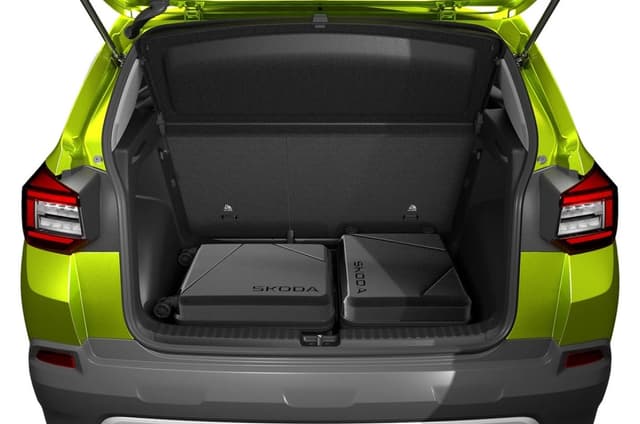
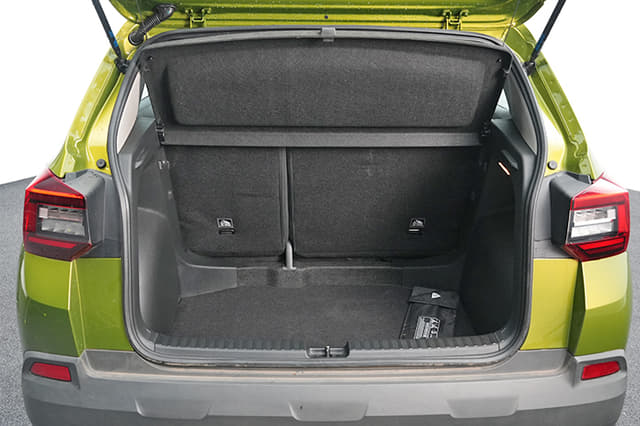
Its compact dimensions make it easy to drive and park in the city, yet it offers enough space to comfortably seat four adults. The boot is also large and usable, adding to its everyday practicality.
Within your budget, you can opt for the top-spec Prestige variant, which is very well equipped. Importantly, even the lower variants of the Kylaq come with all the essential features most buyers would want. This makes the range a good value across the board.
Skoda Kylaq price in India
Skoda Cars
Latest Cars