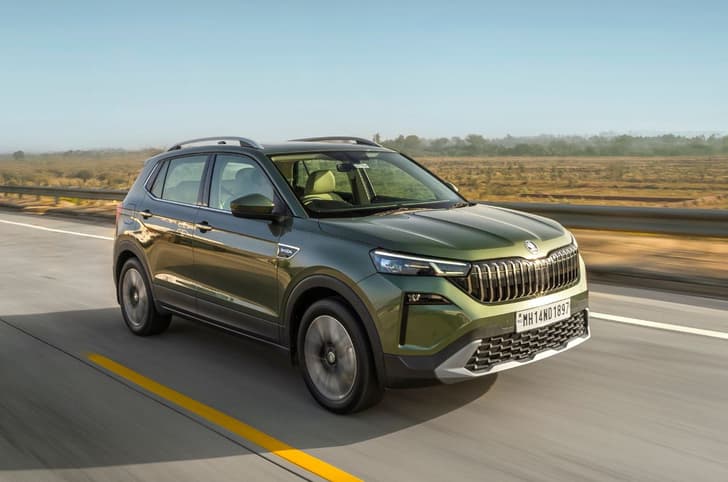
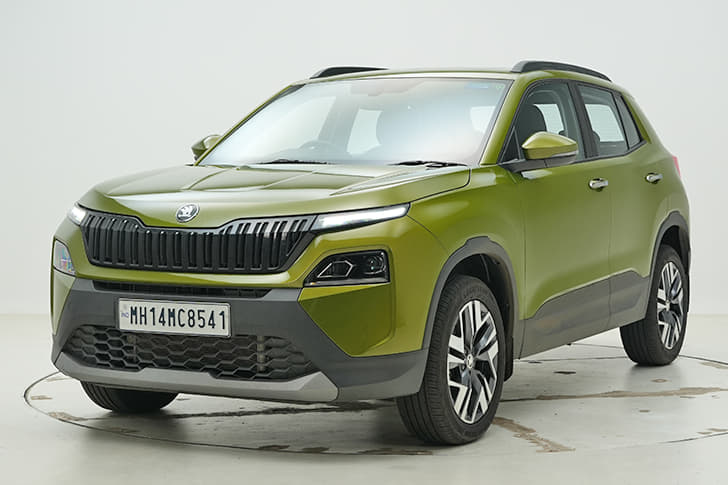
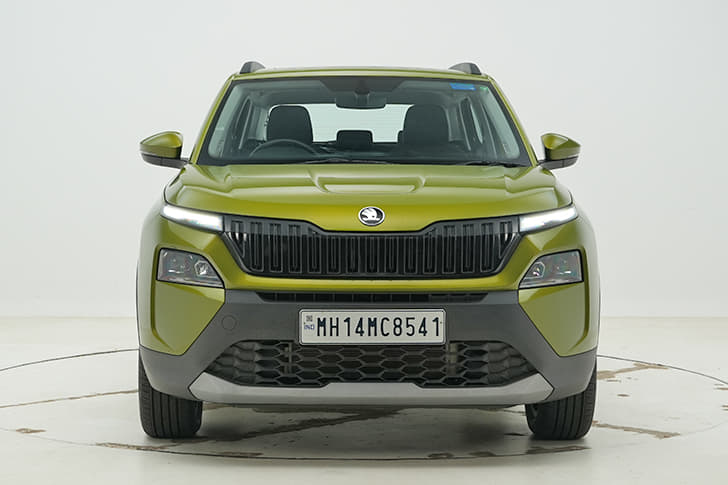
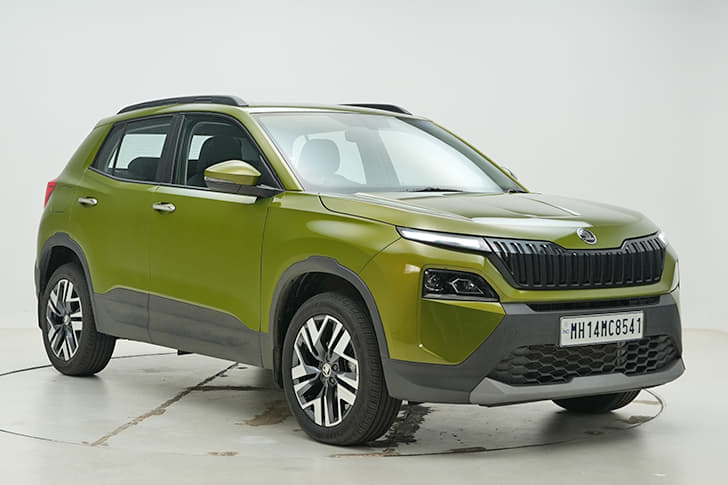
Kylaq Automatic: Service Costs


Last Updated on: 17 Oct 2026


Engine Type | Turbocharged |
Engine Displacement | 999 cc |
Number of Cylinders | 3 |
Engine Installation | Front |
Fuel Type/ Propulsion | Petrol |
Pure Electric Driving Mode | No |
Gearbox Type | Manual |
Number of Gears | 6 |
Manual Shifts via Gear Lever on Automatic Gearbox | No |
Paddle Shifters for Automatic Gearbox | No |
Sport Mode for Automatic Gearbox | No |
Drive Layout | Front Wheel Drive |
Lockable Differential/s | No |
Max Engine Power | 115hp at 5000-5500 rpm |
Max Engine Torque | 178Nm at 1750-4000 rpm |
Fuel Supply System | Direct Injection |
E20 Compatibility | Yes |
Emission Standard | Bharat Stage VI |
Auto Start/Stop | Yes |
Official Fuel Economy | 19.68 kmpl |
Autocar Tested City Mileage | 10.6 kmpl |
Autocar Tested Highway Mileage | 15.12 kmpl |
Fuel Tank Capacity | 45 litres |
Autocar Tested Mileage | 12.86 kmpl |
User Reported Mileage | 17.16 kmpl |
Front Suspension Type | Independent, MacPherson Strut |
Front Springs | Coil Springs |
Rear Suspension Type | Non-independent, Torsion Beam |
Rear Springs | Coil Springs |
Ride Height Adjust | No |
Type of Power Assist | Electric |
Steering Adjust type | Manual |
Steering Adjust | Tilt and Telescopic |
Front Brakes | Discs |
Rear Brakes | Drums |
Wheel Size | 16 inches |
Front Tyre Size | 205/60 R16 |
Rear Tyre Size | 205/60 R16 |
Wheels | Steel rims |
Spare Wheel | Space-saver |
Length | 3995 mm |
Width | 1783 mm |
Height | 1619 mm |
Wheelbase | 2566 mm |
Ground Clearance | 189 mm |
Kerb Weight | 1619-1219 kg |
Chassis Type | Monocoque |
Boot Capacity | 446 - 1265 litres |
Doors | 5 |
| Power Windows | Front and Rear |
| Bluetooth Connectivity | |
| Roof Grab Handles | |
| Bottle Holder in Doors | |
| Rear Parcel Tray | |
| Cabin Boot Access |
| Crash Test Rating | 5 |
| Speed Sensing Door Lock | |
| Pretensioners & Force Limiter Seatbelts | |
| Rear Seatbelt Reminder | |
| High Beam Assist | |
| Seat Belt Warning |
| Body Coloured Bumpers | |
| Roof Rails | |
| Follow Me Home Headlamps | |
| LED DRLs | |
| LED fog lamps | |
| Rub Strips |
| Speedometer | Analog |
| Tachometer | Analog |
| Trip Meter | |
| Average Fuel Consumption | |
| Average Speed | |
| Distance to Empty |
| Audio System | |
| Speakers | 2 |
| Branded Music System | |
| CD Player | |
| USB Input | |
| Bluetooth Audio Streaming |
| Find My Car | |
| Anti Theft Immobilisation | |
| Emergency Call Button | |
| SOS Button | |
| Check Vehicle Status via App |
 Electronic Stability ControlPart Digital / Part Analogue Digital Instrument Cluster2 SpeakersFabric Seat MaterialLED headlampsAutomatic Day Night Interior MirrorSingle Pane Sunroof4 SpeakersFront Seat ArmrestOutside rear view mirror (ORVM)Warning Only Tyre Pressure Monitoring SystemRear AC VentsWired Android AutoFront Seat Armrest with StorageFollow Me Home HeadlampsElectronic Parking Brake with AutoholdFully Digital Digital Instrument ClusterWireless Android AutoEmergency Call Button60:40 Rear Seat Backrest SplitHill Descent ControlAmbient LightingLeather-wrapped Gear KnobOutside rear view mirror (ORVM)Cruise ControlElectronic Parking Brake with AutoholdSingle Pane SunroofWireless Android AutoEmergency Call ButtonFront Only Ventilated SeatsDriver's Window Only Anti-Pinch Power WindowsExterior Mirrors Electric Fold with Power Folding2 Type C Front USB portElectric Adjust for Driver's SeatOutside rear view mirror (ORVM)
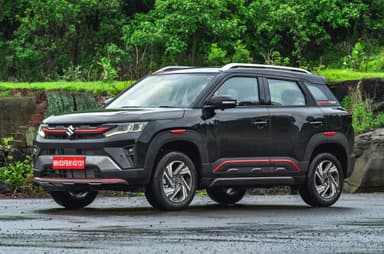
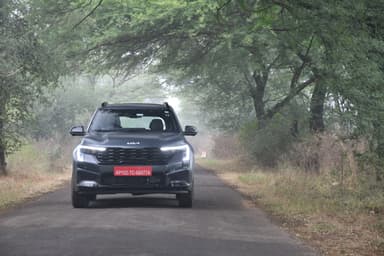
I’ve almost finalised the Skoda Kylaq Signature Automatic, and I really like the car. However, I’m a little worried about Skoda’s long-term service and maintenance costs, especially after the warranty period. I’m planning to keep the car for around 7–8 years. Would you recommend taking the Service Maintenance Package (SMP) along with the car? Is it worth the additional cost considering regular servicing and potential maintenance expenses? Also, compared with the Brezza and Nexon, how is the Kylaq Signature Automatic in terms of long-term reliability, service costs and parts replacement? Would really appreciate your advice before I make the final purchase decision.

 Skoda KylaqMaruti Suzuki BrezzaTata Nexon
Why would anyone pay Rs 3-5 lakh more for a 1.5-litre naturally aspirated petrol SUV like the Honda Elevate over a 1.0-litre turbo-petrol car like the Skoda Kylaq, especially when the Kylaq offers more torque and a torque-converter automatic? The turbo produces around 178Nm from 1,800rpm, while the naturally aspirated engine makes about 145Nm at around 4,300rpm. The turbo should also lose less power at altitude, and the torque-converter automatic avoids the concerns associated with a dry-clutch DCT. Is the Elevate really worth the premium for long-term reliability and refinement?
Skoda KylaqHonda ElevateHi, I recently asked you guys between Kia Sonet HTK Plus (O) Turbo DCT & Hyundai Venue HX 5 Turbo DCT for a 2-member family with 70% city and 30% highway running. You suggested Sonet HTK Plus (O) since it is cheaper and has more good to have features. I am also considering Skoda Kylaq Signature AT with their DHC infotainment upgrade. Do you still suggest the Sonet or will you prefer Kylaq over this? I am a new driver and will be driving in Bangalore traffic occasionally.
Skoda KylaqKia SonetI am looking for an automatic SUV under Rs 14 lakh, preferably with a torque-converter or CVT gearbox. The car will primarily be used for city driving, with occasional highway trips and long-distance journeys. I am leaning towards a petrol model rather than an EV, as I feel EV charging infrastructure is still not widely available. My main priorities are mileage and long-term reliability. I have shortlisted the Maruti Suzuki Brezza, Skoda Kylaq, Hyundai Venue and Mahindra XUV 3XO.
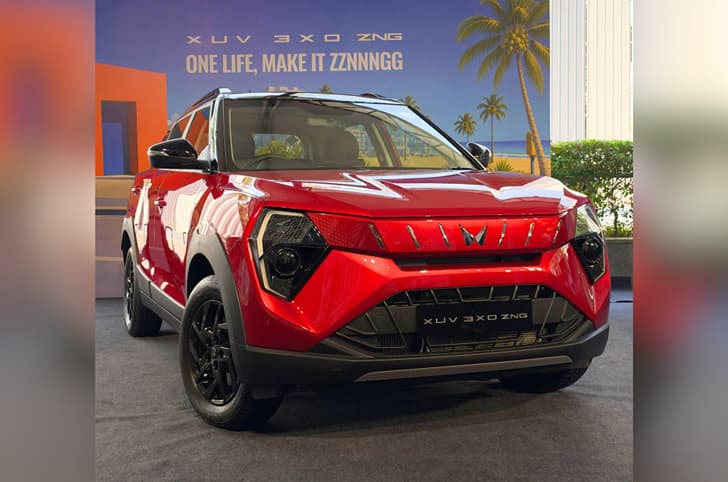
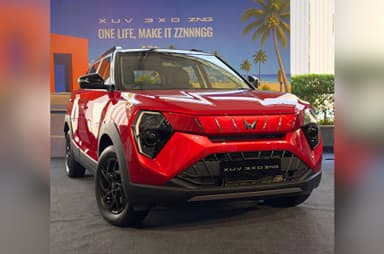
Maruti Suzuki BrezzaSkoda KylaqMahindra XUV 3XOHyundai VenueHi Autocar Team, I’m looking to replace my current Tata Punch Accomplished Dazzle Sunroof AMT. I’m not very happy with the AMT gearbox and specifically want to move to a smoother automatic for Hyderabad traffic. My hard on-road budget is Rs 15 lakh. The car will mainly be used by my wife and me, along with our kid, so I’m looking for something that offers good safety, comfort, an automatic transmission, and a sunroof. My biggest priority is long-term ownership and reliability. I plan to keep the car for at least 6-8 years, so it should be reasonably easy and affordable to maintain, with good parts availability and decent resale value. Could you please suggest which car and variant you would personally recommend within a Rs 15 lakh on-road budget in Hyderabad? I’m currently considering cars such as the Maruti Brezza, Kia Sonet, Škoda Kylaq, and other compact/mid-size SUVs, but I’m open to better options. If you had Rs 15 lakh as a hard maximum budget and were replacing a Punch AMT, which car would you shortlist and why?
Maruti Suzuki BrezzaTata PunchSkoda KylaqKia Sonet