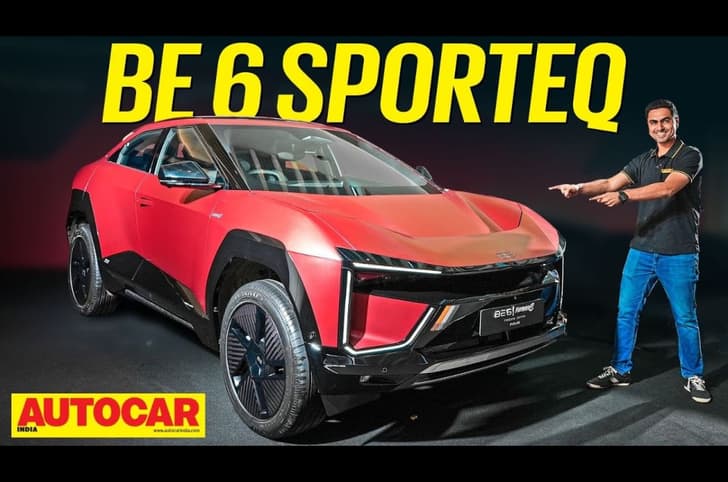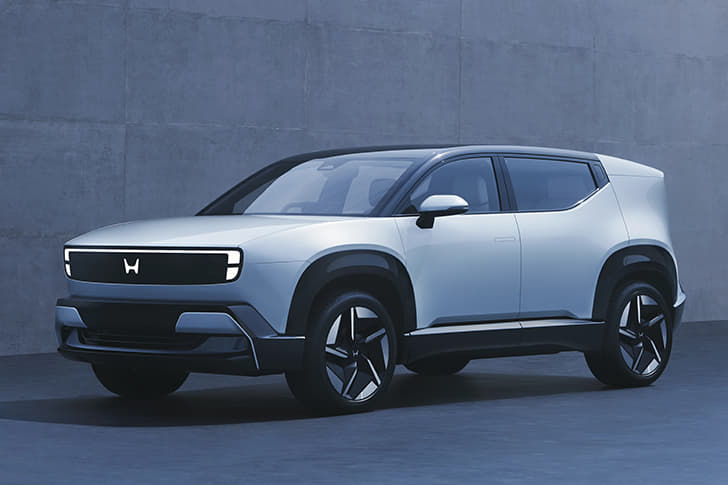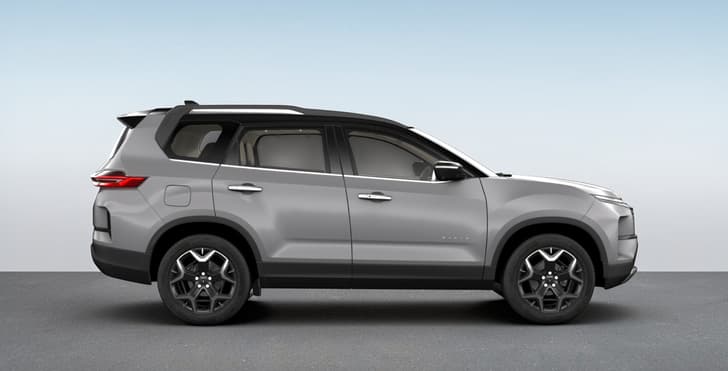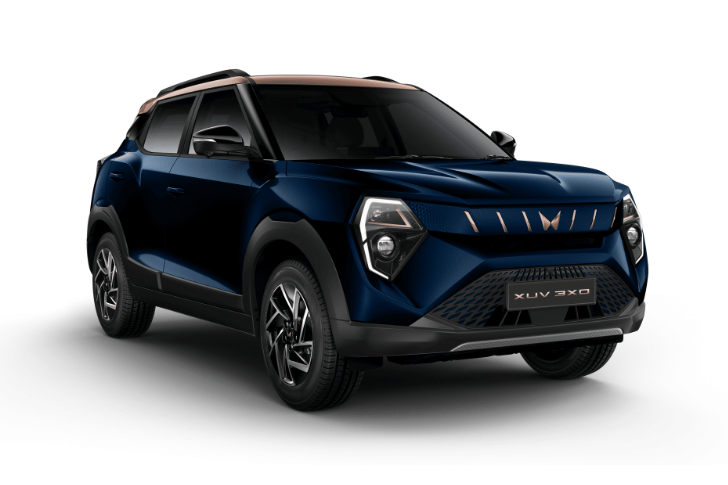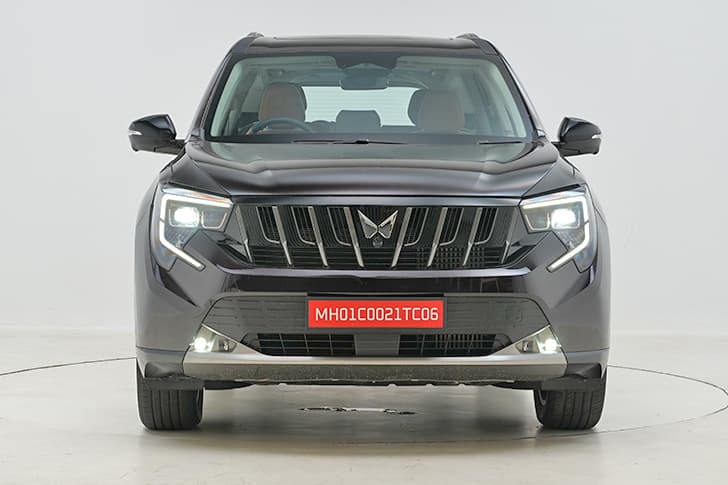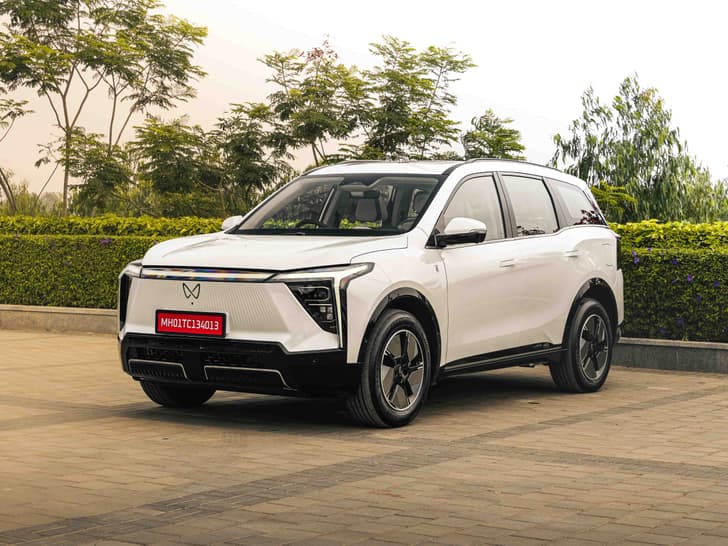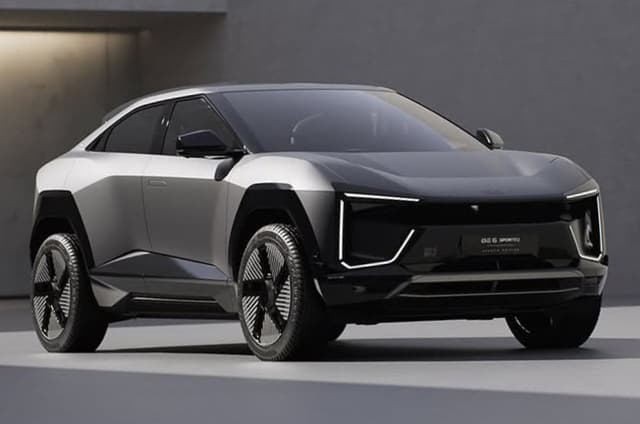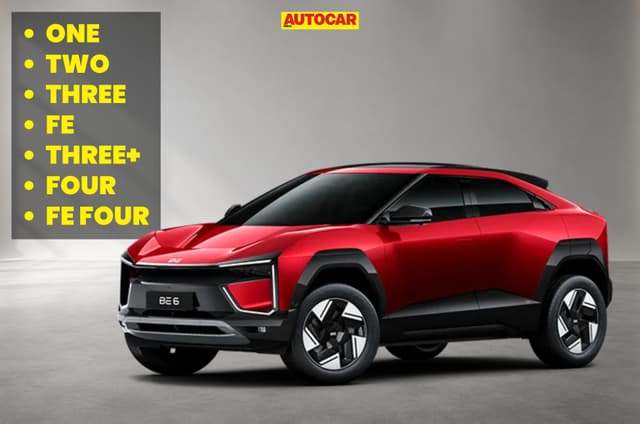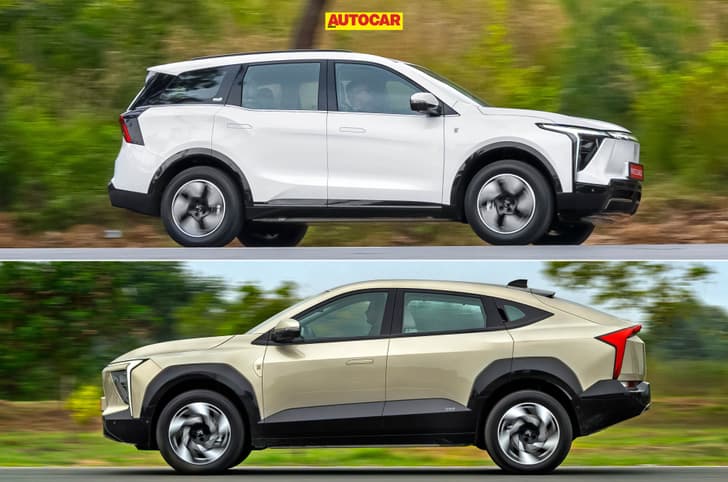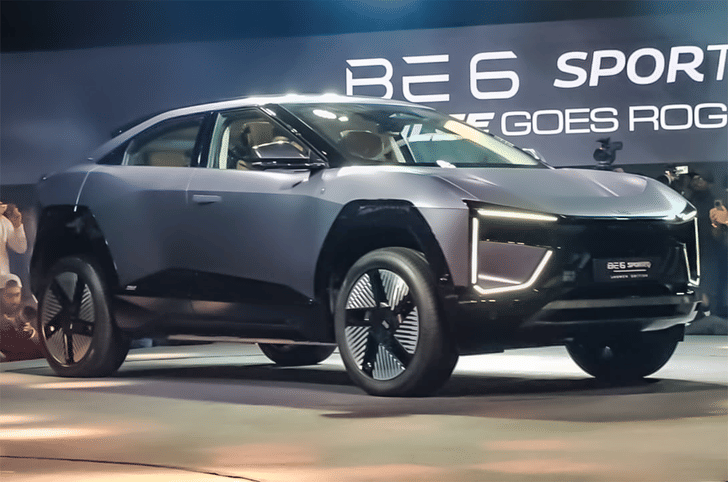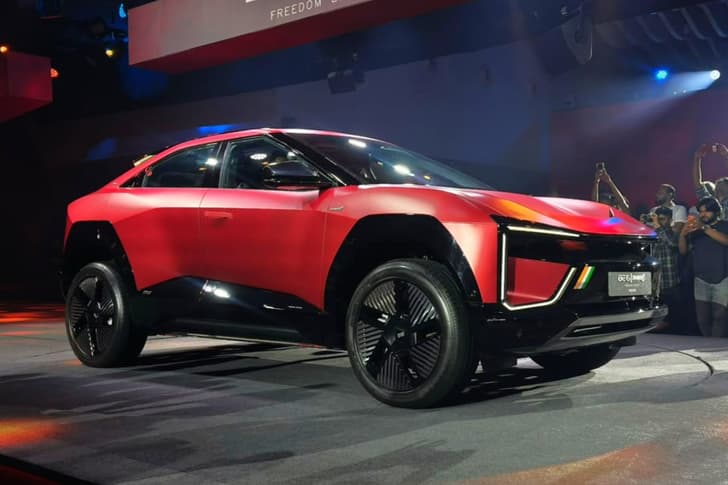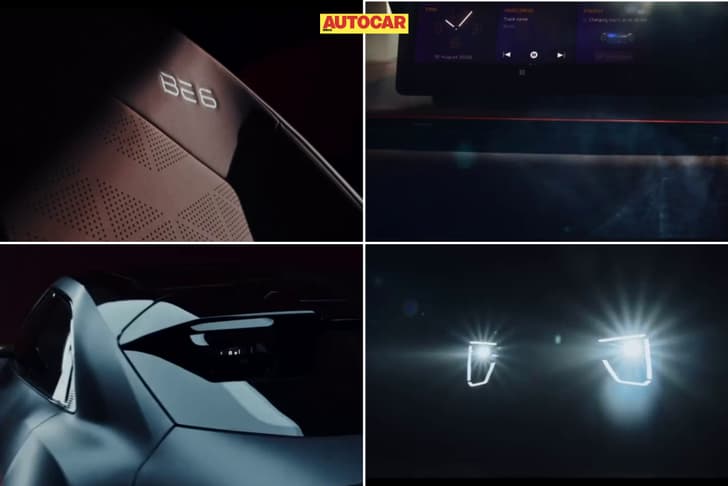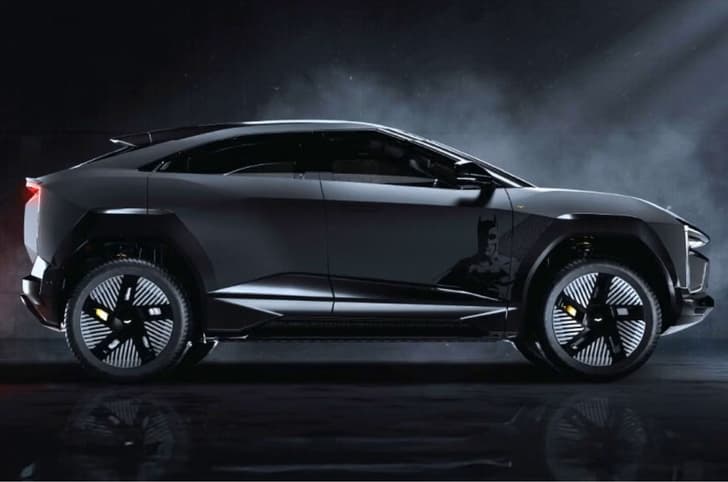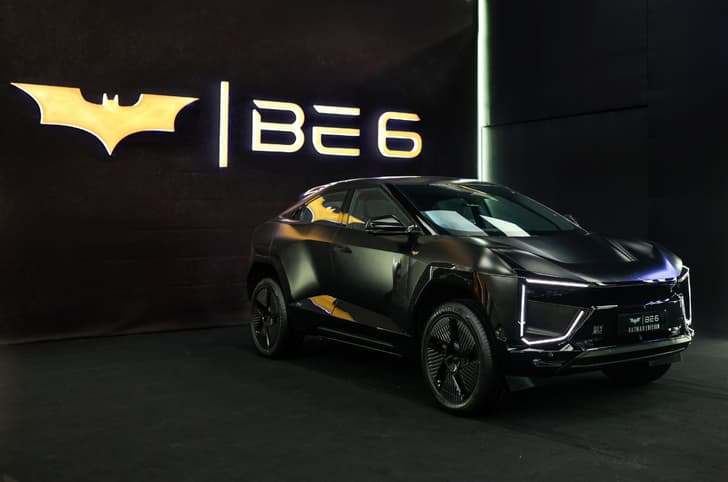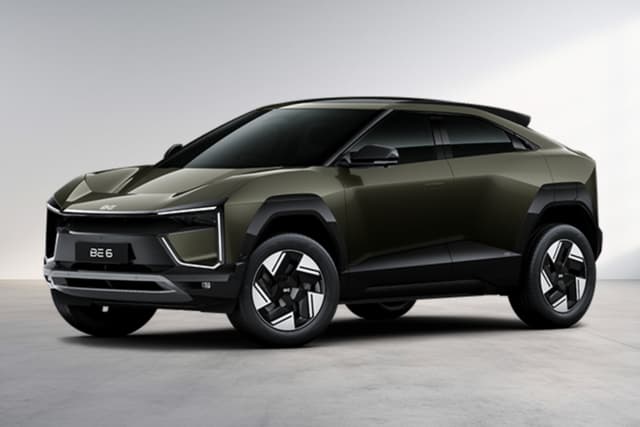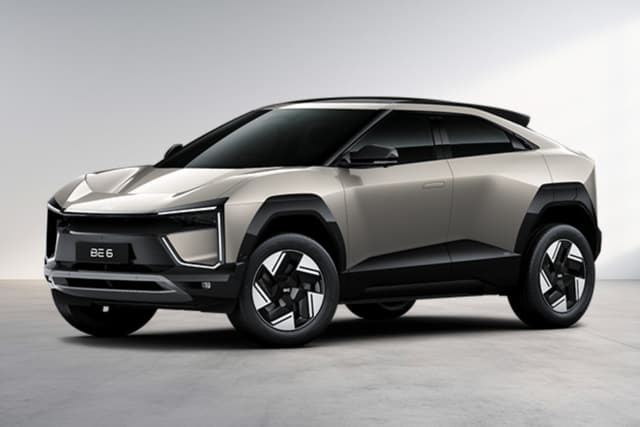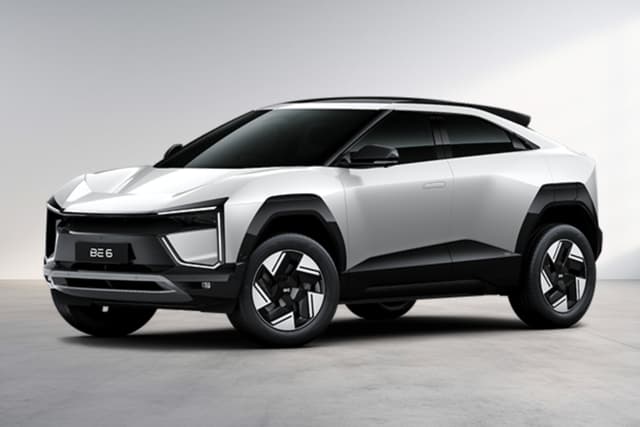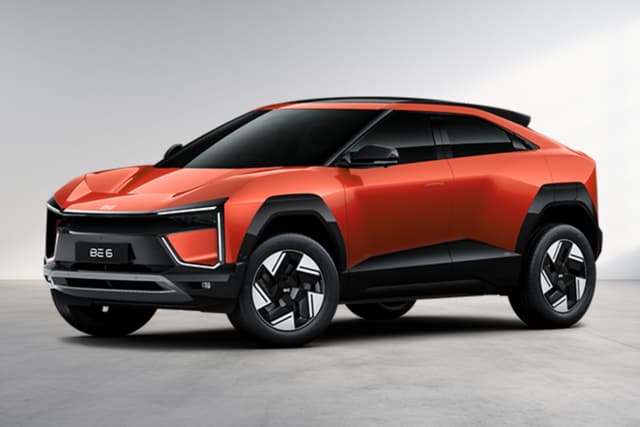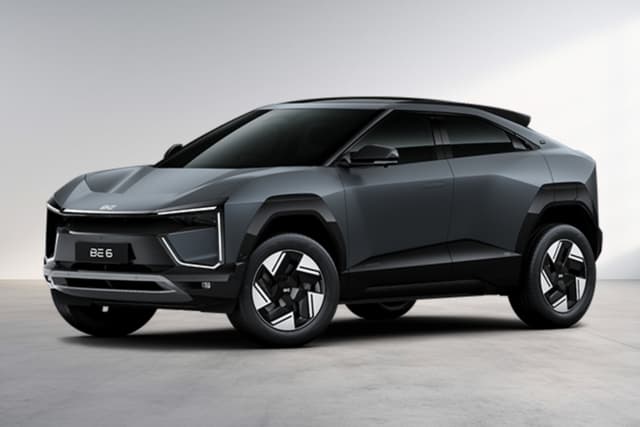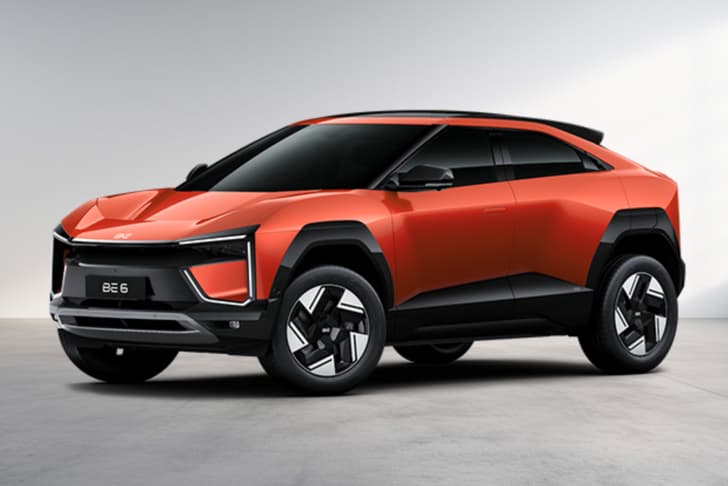
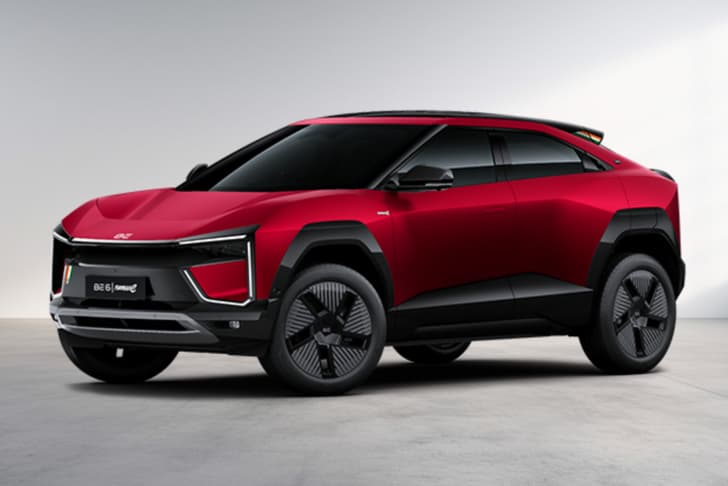
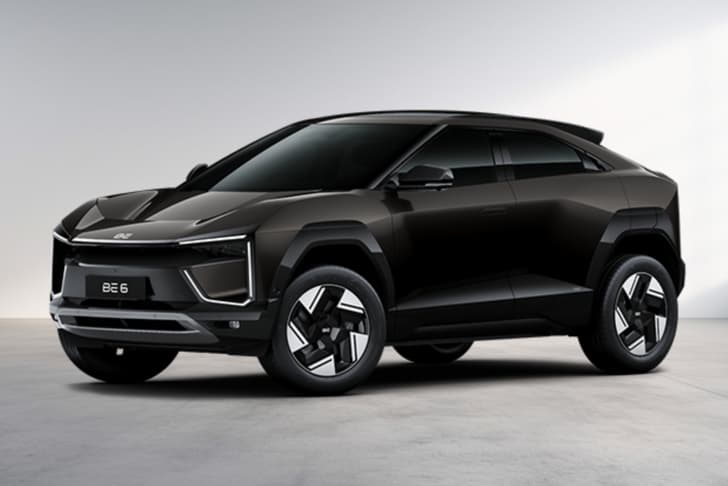
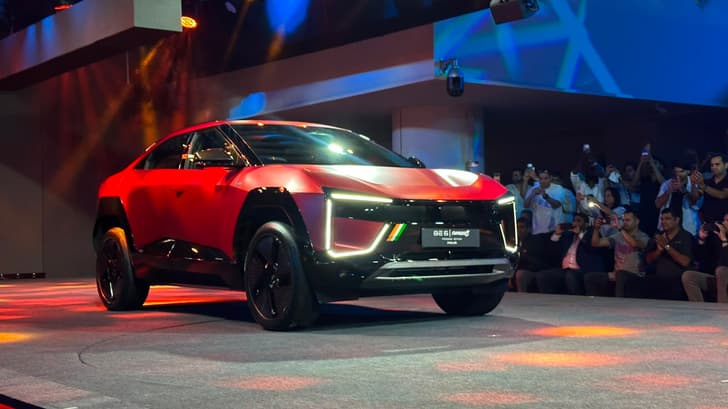
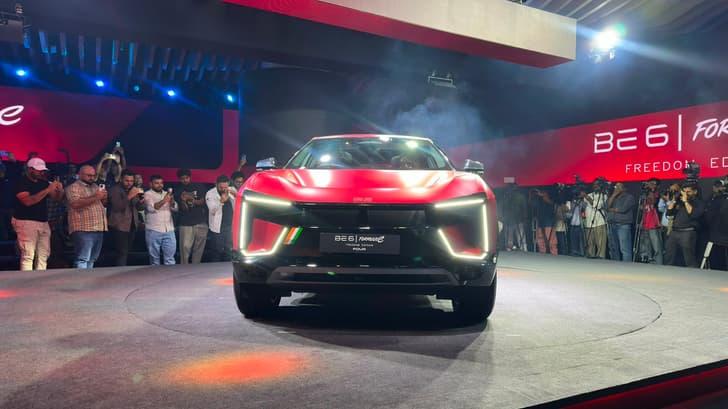
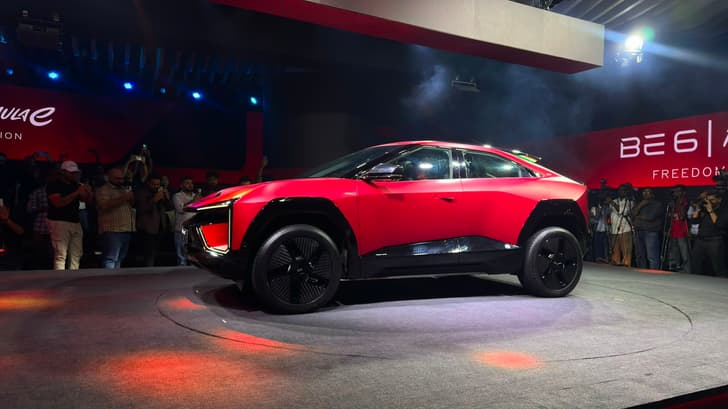
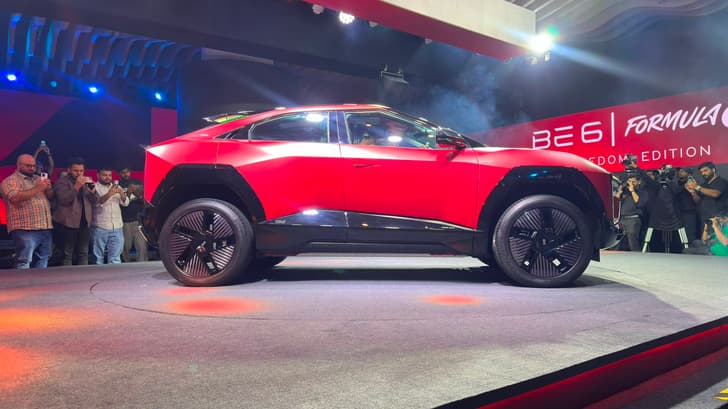
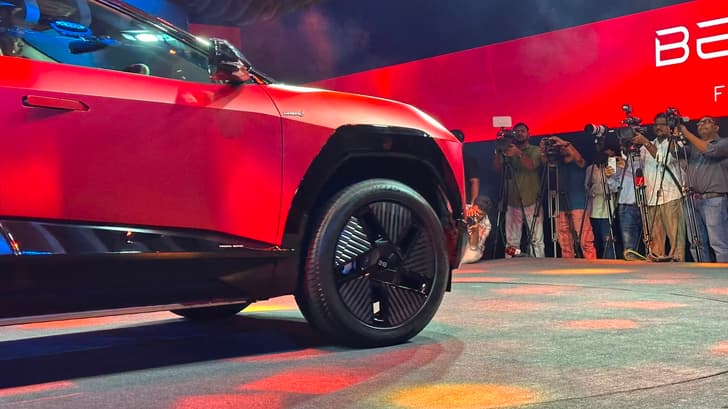
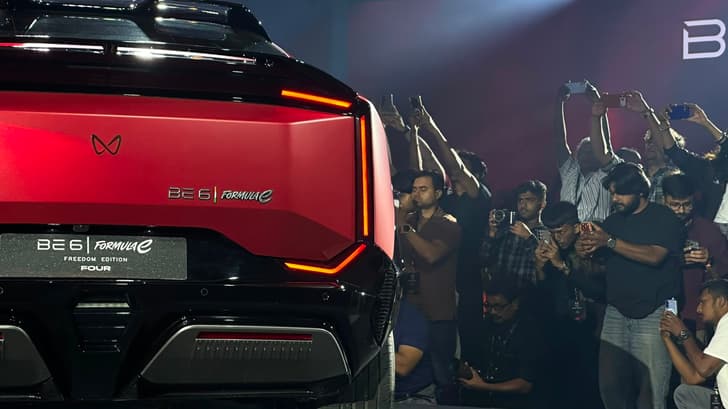
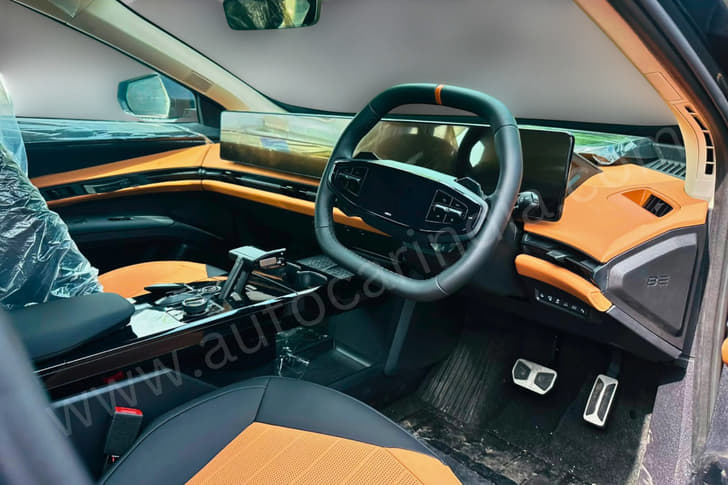

Mahindra BE 6 Pack Two 79kWh
Mahindra BE 6 Pack Two 79kWh specifications
Engine & Transmission
Fuel Type/ Propulsion | Electric |
Motor Type | Permanent Magnet Synchronous Motor |
Max Motor Power | 286hp |
Max Motor Torque | 380Nm |
Drive Layout | Rear-Wheel Drive |
Gearbox Type | Auto |
Number of Gears | 1 |
Lockable Differential/s | No |
Sport Mode for Automatic Gearbox | Yes |
Manual Shifts via Gear Lever on Automatic Gearbox | No |
Paddle Shifters for Automatic Gearbox | No |
Fuel & Performance
Battery Capacity | 79 kWh |
Claimed Range | 683 km |
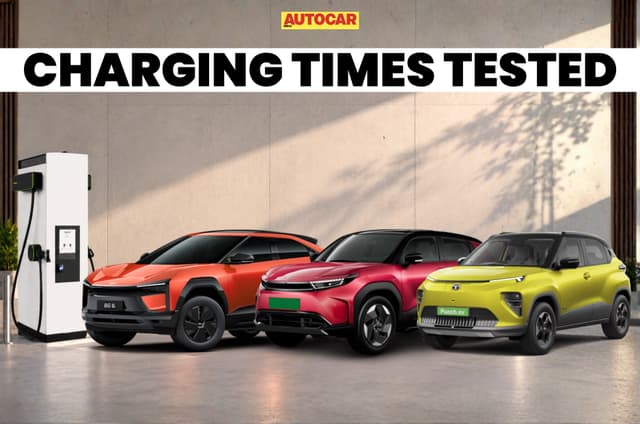
Charging Time | 20 min 20% to 80% (180kW DC) 6 hrs 0% to 100% (11.2kW AC)8.7 hrs 0% to 100% (7.2kW AC) hrs |
Auto Start/Stop | No |
Suspension & Steering
Front Brakes | Discs |
Rear Brakes | Discs |
Type of Power Assist | Electric |
Steering Adjust | Tilt and Telescopic |
Steering Adjust type | Manual |
Turning Radius | 5 m |
Front Suspension Type | Independent, MacPherson Strut |
Front Springs | Coil Springs |
Rear Suspension Type | Independent, Multi-link |
Rear Springs | Coil Springs |
Damper Control | No |
Ride Height Adjust | No |
Wheels | Steel Rims with Wheel Covers |
Wheel Size | 19-inches |
Front Tyre Size | 245/55 R19 |
Rear Tyre Size | 245/55 R19 |
Spare Wheel | Space-saver |
Dimensions
Length | 4371 mm |
Width | 1907 mm |
Height | 1627 mm |
Wheelbase | 2775 mm |
Doors | 5 |
Ground Clearance | 207 mm |
Boot Capacity | 455 litres |
Mahindra BE 6 Pack Two 79kWh features
Comfort
| Power Windows | Front and Rear |
| Power Windows with One Touch-Down | |
| Power Windows with One Touch-Up | |
| Exterior Mirrors Electric Adjust | |
| Exterior Mirrors Electric Fold | |
| Remote Locking |
Safety
| Crash Test Rating | 5 |
| Airbags | 6 |
| Anti-Lock Brakes (ABS) | |
| Electronic Brakeforce Distribution (EBD) | |
| Brake Assist (BA) | |
| Electronic Parking Brake |
Exterior
| Body Coloured Bumpers | |
| Projector Headlamps | |
| Headlight Type | LED |
| Daytime Running Lights | LED |
| Front Fog Lamps |
Interior
| Speedometer | Digital |
| Tachometer | Digital |
| Trip Meter | |
| Average Fuel Consumption | |
| Average Speed | |
| Distance to Empty |
Entertainment
| Audio System | |
| CD Player | |
| USB Input | |
| AUX Input | |
| Bluetooth Audio Streaming | |
| Bluetooth Telephone Function |
Mahindra BE 6 variants
Mahindra BE 6 comparison

Trending Questions on Mahindra BE 6 - Answered by Autocar Experts
Hello, I currently drive a VW Virtus GT and absolutely love it. Lately my office commute has changed, and I now have to travel about 50 km a day in Hyderabad traffic, so my fuel bills are increasing. I want to know if switching to an EV is suitable and advisable, as I’m worried about EV after-sales maturity in India and charging infrastructure on highways (like queues at charging stations). Please advise if switching to an EV is a good idea, and if so, which model within the same budget would give me a similar feel to the Virtus.
If your commute is no more than 50km a day, then yes, an EV could be a good solution for you. It will certainly bring down your running costs compared to a petrol car. After-sales service is not an issue; in fact, EVs require far less maintenance and upkeep than ICE cars. It's mostly consumables - like brake pads - that get changed with subsequent services.
However, what takes a hit is resale value, which for an EV is nowhere as strong as for an ICE car. As for charging infrastructure, it's always advised to have a charger installed at home or at work (or both) to reduce reliance on the public charging network. As it is still developing, and in some regions it is unreliable.
In and around a big city like Hyderabad, however, you shouldn't have too much of a problem. You should, however, plot at least 2-3 charging options on any highway journey you make, as functionality and queues are potential hurdles.
As for which EV to buy, none will give you quite the same thrill as a Volkswagen Virtus GT, especially in the same budget. But you can try out the Mahindra BE6 or the Vinfast VF6, both of which are fast and fun to drive, with a solid build.
Want to buy a 5-seater car between 25-30 lakh. My daily driving is around 40 km. My priorities are having a fun-to-drive and comfortable car. I am open to electric options as well.
I already have a 2019 Seltos petrol manual. Recently, I got a job, and my workplace is 45km away from my home, so it is a 90km daily drive. This long commute is taking a toll on my pocket, as I hardly get decent mileage. Moreover, pressing the clutch and brake in traffic during my return journey is frustrating and tiresome. Should I install CNG in my car, or should I sell it and buy a new one? If so, which one?
I am confused between the Mahindra BE 6 electric and the Tata Sierra diesel. I drive around 50 km daily. Which one should I buy?
I am planning to buy an EV car. I have shortlisted the Creta Electric LR (Executive (O)), Nexon EV 45 (Empowered), and Mahindra BE 6. I live in Kolkata and my driving is mainly in the city with occasional highway trips, totaling around 400 km per week. Please suggest which car I should go for, as I plan to keep this car for around 10 years. Also, will it be a wise decision to buy an EV car in 2026 from a resale value perspective?
The Hyundai Creta Electric is the most practical, sensible, and most sorted EV out of the options listed. It is practical, spacious, and it drives well too. Moreover, it is very efficient, hence you can expect over 400km of range without trying too hard. Since you are looking at a long-term buy, it is the Hyundai's ownership experience that's likely to be fuss-free.
The Tata Nexon EV 45's real-world range isn't likely to be as good as the Creta Electric's. The Mahindra BE 6 is the most radical option with excellent performance, battery and range. However, its user-experience is simply too complicated, its ergonomics are flawed, and backseat space isn't as good as the others.
Short-term resale values of EVs are not as good as those of ICE cars. However, since you are likely to hold on to your car for 10 years, resale should be the least of your concerns.
Hi, I want to select an EV for around 1,500 km of city driving per month, with a budget of ₹20 L - ₹23 L. I am confused between the Creta EV, BE6, and Harrier EV. Can you suggest the best EV based on performance and visual appeal?
Since you are looking for an EV for city use, the Hyundai Creta Electric is a good choice. While it isn't as powerful as the Mahindra BE 6 or Tata Harrier EV, performance is brisk and more than adequate for city conditions.
The same holds true for its battery as well, which is the smallest (LR versions get a 51.4kWh battery pack) but delivers a comfortable 400km of real-world range in city driving.
What makes the Creta Electric likeable and ideal for city use is its size. A Harrier EV is a full-size vehicle, while the BE6 is significantly wider. It means both can feel a bit cumbersome in congested confines. What also goes in favour of the Creta is that the tech onboard works as it's supposed to - free of glitches and errors.
I own a 2022 S-Cross, though it is not listed in your dropdown. I am looking to transition to an EV with a budget of around ₹20 lakh, extendable to ₹22 lakh. I need a real-world highway range of at least 400 km and prefer a spacious car similar to the S-Cross, rather than a compact SUV-based EV like the Nexon. The BE 6 is currently my choice, but my wife is not a fan of its design.
I own a 2023 MG ZS EV and am very happy with the performance, service and overall reliability. It has done 90,000kms and I'm looking to upgrade it to something around 30 lakhs on road. I really like the BE6, should I wait for Sierra ev. I can wait for a few months. Please help me i'm open to other options too
It’s good to know you have had a good experience with EVs and are ready to buy your next one.
The Tata Sierra EV is unlikely to arrive before August next year, so you will have a long wait. If you like the Mahindra BE6, go for it. It has a striking design, drives really well and comes with a lot of features.
The big negative is that the rear seat isn’t very comfortable, and you may want to wait for a new variant due in late January or early Feb 2026. It will get a three-screen infotainment system similar to the one in the XEV range
We own two cars: a 2024 top-line manual Taigun and a 2025 GT Line VW. My daily city run is about 70 km and my wife’s is about 40 km. Should we buy an EV given our usage, and should we consider selling one of the cars? We are doctors and both cars are great to drive, so we are unsure what makes the most sense.
Yes, the Volkswagen Taigun is a lot of fun to drive, however if you are open to going electric, you could sell one and get an EV. That way, you will still have an internal combustion car for any occasional highway trips.
Since both you and your wife's daily drive is within the city, either of you could use the EV, and range would not be an issue. Also, besides the lower running costs, you could also benefit from things like toll and parking fee waivers for EVs in certain cities.
Consider the Hyundai Creta EV, which is a no-nonsense and practical car. However, if you do want a fun-to-drive electric, check out the Mahindra XEV 9S, or even the Mahindra BE6, which is very exciting to drive but has quite a few ergonomic issues.
Hello. I currently drive a 13-year-old Honda Brio and am planning to buy a new mini-SUV or SUV with a ₹20 lakh on-road budget. My monthly running will be about 1,000-1,500 km. Which fuel type is better for long-term ownership - petrol, hybrid, or electric - and which models should I consider?
Opting for an electric SUV could be save you from a lot of uncertainties in the future around fuel mix, registration validity, etc., which might concern ICE vehicle owners.
With a budget of Rs 20 lakh, the most sensible and trouble-free EV option is an entry-level Hyundai Creta Electric. If you want space, features and a fully-loaded car, the MG Windsor EV is also a good option to consider.
The entry-level Mahindra BE 6 is a stand-out EV that also falls within your Rs 20 lakh budget.