
Last Updated on: 12 Jun 2026
Hyundai Alcazar
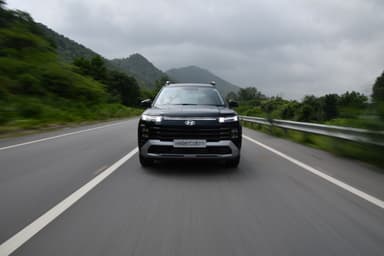
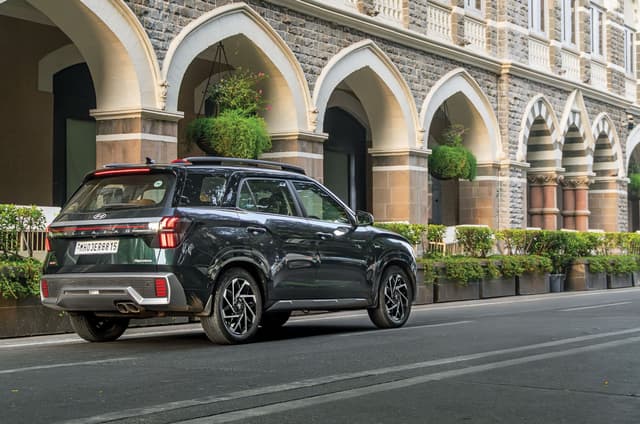
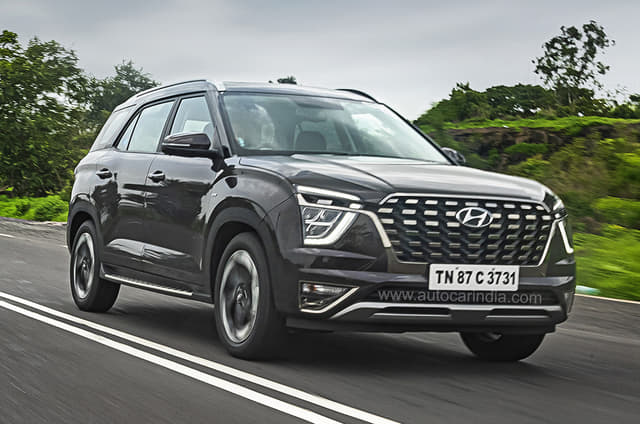
Hyundai Alcazar is a 3-row SUV positioned above the Creta in Hyundai’s lineup. The Hyundai Alcazar price ranges between ₹14.51 lakh and ₹21.10 lakh (ex-showroom). The Alcazar on-road price starts from ₹17.13 lakh for its base Executive 1.5 Petrol MT 7 seat, while the top variant Signature 1.5 Diesel AT 6 seat costs ₹25.58 lakh (on-road).
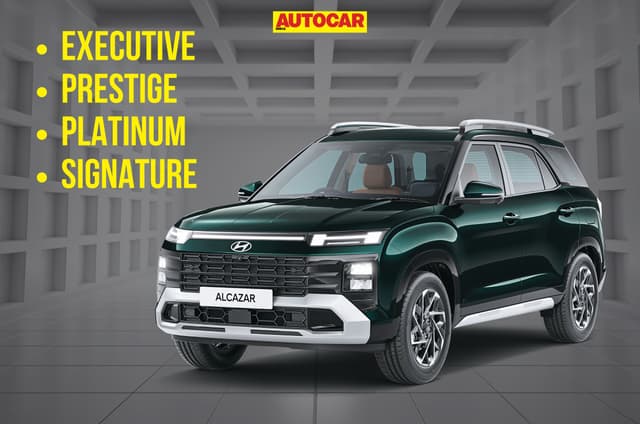
The Hyundai Alcazar variants include 14 options spread across Executive, Corporate, Prestige, Platinum, Signature trims and the special Knight Edition, available in both 6-seater (captain seats) and 7-seater layouts. The Hyundai Alcazar comes with two engine options - a160 hp 1.5-litre turbo-petrol engine paired with a 6-speed manual or 7-speed DCT, and a 1.5-litre diesel engine that produces 116 hp with 6-speed manual or automatic transmission.
Hyundai Alcazar mileage ranges between 17.5 kmpl - 20.4 kmpl, depending on the selected variant.
Key Highlights of Hyundai Alcazar
- The Hyundai Alcazar is Hyundai’s premium 3-row SUV in India, positioned above the Creta, with prices ranging between ₹14.51 lakh and ₹21.10 lakh (ex-showroom).
- It is available in both 6-seater (captain seats) and 7-seater configurations, catering to family and urban buyers alike.
- The Hyundai Alcazar engine options include a 160hp 1.5-litre turbo-petrol (7DCT/6MT) and a 116hp 1.5-litre diesel (6AT/6MT).
- The Alcazar mileage ranges between 17.5 kmpl - 20.4 kmpl.
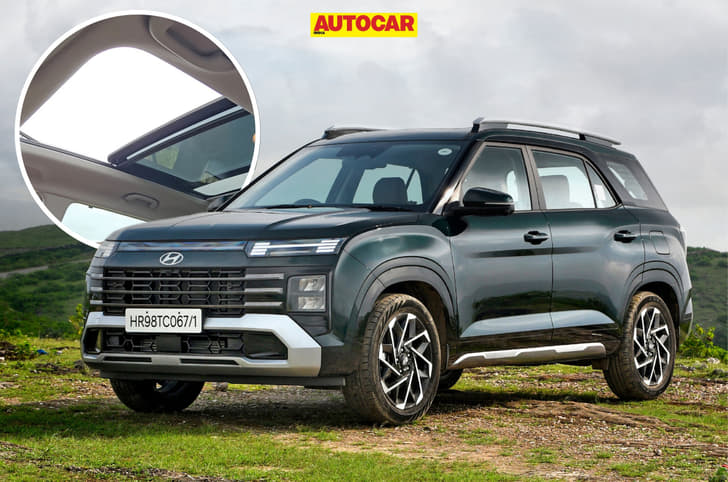
- Features onboard include a panoramic sunroof, 10.25-inch touchscreen infotainment system, digital driver display, ventilated front seats, Bose sound system, and wireless charging.
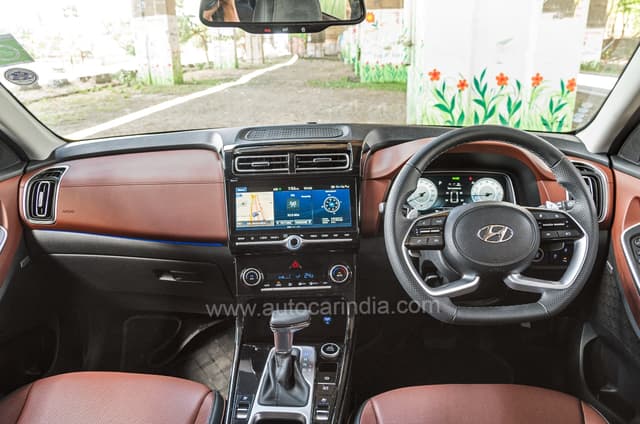
- The interior features a dual-tone black and brown theme, soft-touch dashboard materials, and ambient lighting for a premium feel.
- The Alcazar offers Hyundai’s Bluelink connected car suite with remote engine start/stop, geo-fencing, and live location tracking.
- Safety features include Level 2 ADAS, six airbags, 360-degree camera, front and rear parking sensors, electronic stability control (ESC), hill assist control, and vehicle stability management (VSM).
- The Hyundai Alcazar dimensions stand at 4,560 mm in length, 1,800 mm in width, and 1,710 mm in height, with a 2,760 mm wheelbase.
- The Alcazar colour options include Starry Night, Titan Grey, Shadow Grey, Ranger Khaki, Abyss Black, and Creamy White Pearl.
- It is offered in Executive, Corporate, Prestige, Platinum, and Signature trims, with both petrol and diesel engine options.
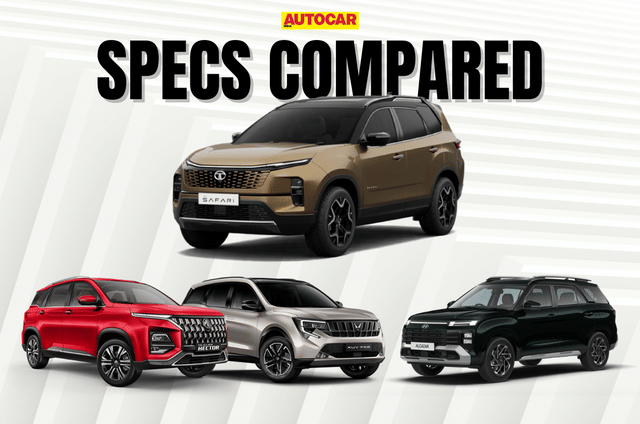
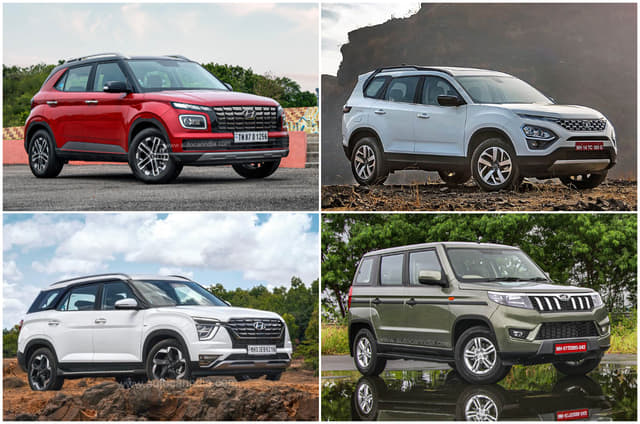
- The Hyundai Alcazar rivals include the Tata Safari, Mahindra XUV700, MG Hector, Toyota Innova Hycross, and Kia Carens Clavis.
- The Alcazar has a-rich cabin, flexible 3-row layout, and refined powertrains.
Hyundai Alcazar Latest Updates
- March 3, 2026: Up to Rs 70,000 benefits on Hyundai Alcazar in March; these comprise a Rs 30,000 cash discount, a Rs 10,000 Navratri booking bonus and a Rs 30,000 scrappage bonus.
Hyundai Alcazar Features and specifications
Our Rating | 8 |
Mileage | 17.5 kmpl - 20.4 kmpl |
Engine | 1482 cc - 1493 cc |
Fuel Type | Diesel, Petrol |
Transmission | Torque Converter, Manual, DCT |
Seats | 6 - 7 |
Body Style | SUV |
Doors | 5 |
Max Power | 116 hp at 4000 rpm |
Max Torque | 250 Nm at 1500 - 2750 rpm |
Warranty Distance | Unlimited km |
Warranty Duration | 3 Years |
| Fuel Type/ Propulsion | Diesel |
| Number of Cylinders | 4 |
| Engine Installation | Front |
| Engine Displacement | 1493 cc |
| Fuel Tank Capacity | 50 litres |
| Emission Standard | Bharat Stage VI |
| Official Fuel Economy | 18.1 kmpl |
| Fuel Supply System | Common Rail |
| Front Brakes | Discs |
| Rear Brakes | Discs |
| Type of Power Assist | Electric |
| 4 Wheel Steer | No |
| Length | 4560 mm |
| Width | 1800 mm |
| Chassis Type | Monocoque |
| Height | 1710 mm |
| Power Windows | Front and Rear |
| Rear Window Sun Shades | |
| Power Windows with One Touch-Down | Driver Window Only |
| Powered Tailgate |
| Airbags | 6 |
| Day Night Interior Mirror | Automatic |
| Overspeed Warning | |
| Passenger Airbag |
| Body Coloured Bumpers | |
| Cornering Headlights | |
| Follow Me Home Headlamps | |
| Antenna | Shark Fin |
| Speedometer | Digital |
| Tachometer | Digital |
| Trip Meter | |
| Average Fuel Consumption |
| Audio System | |
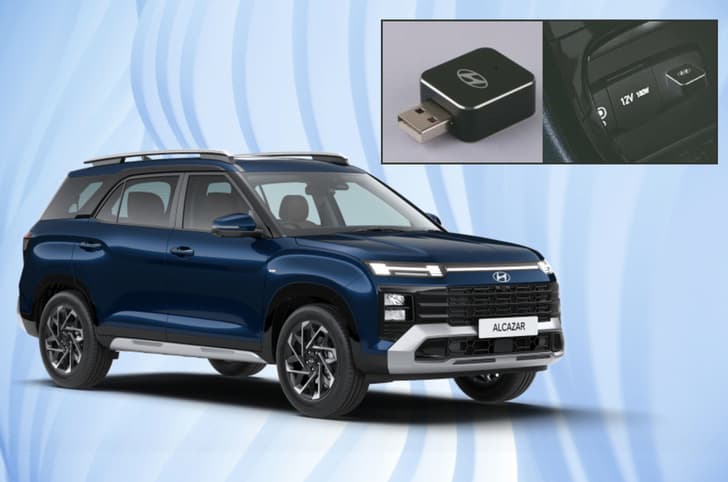
| Front USB port | Type C |
| Second Row USB port | Type C |
| Speakers | 8 |
| Geo Fence | |
| Remote Sunroof Open / Close via App | |
| Remote Car Lock/Unlock via App | |
| Remote AC On / Off via App |
Hyundai Alcazar price & variants
The Hyundai Alcazar price starts from ₹14.51 lakh and goes up to ₹21.10 lakh (ex-showroom).
The Alcazar variants include 14 trims, with the Executive 1.5 Petrol MT 7 seat as the entry-level and Signature 1.5 Diesel AT 6 seat as the top model. Its on-road price in Mumbai ranges between 17.13 lakh and 25.58 lakh.
The Hyundai Alcazar Executive 1.5 Petrol MT 7 seat is priced at 14.51 lakh and comes with keyless start, ambient lighting and dual zone climate control.
Hyundai Alcazar Official Brochure
Download the complete brochure with specs, features, and variants.
Hyundai Alcazar expert review
We like
Long equipment list
Easy to drive, Comfy ride
We don't like
Seating 6/7 is a compromise
Diesel engine could do with more punch
8.0
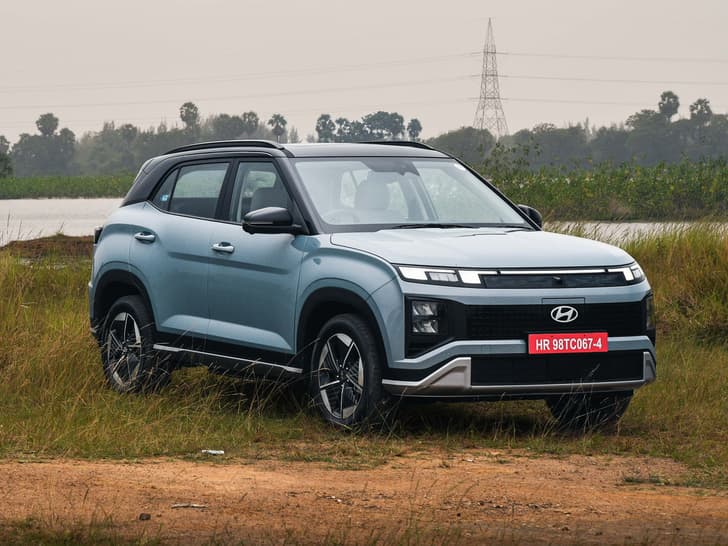
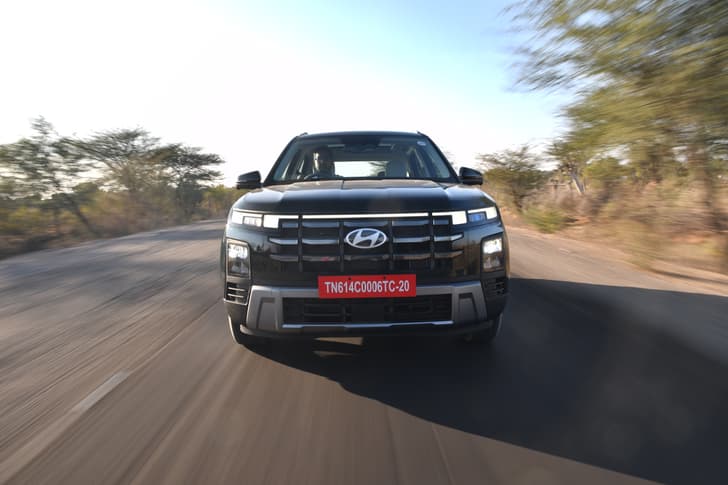
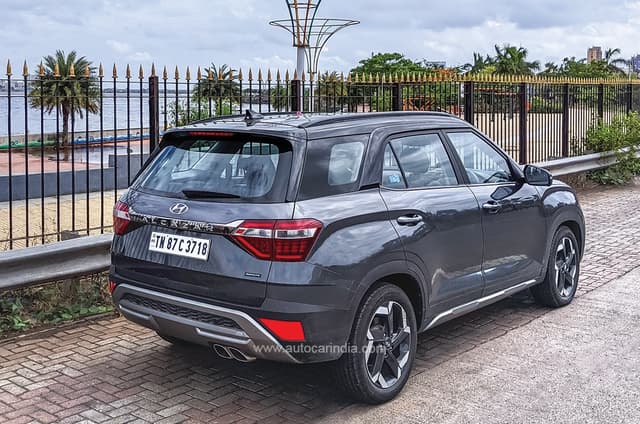
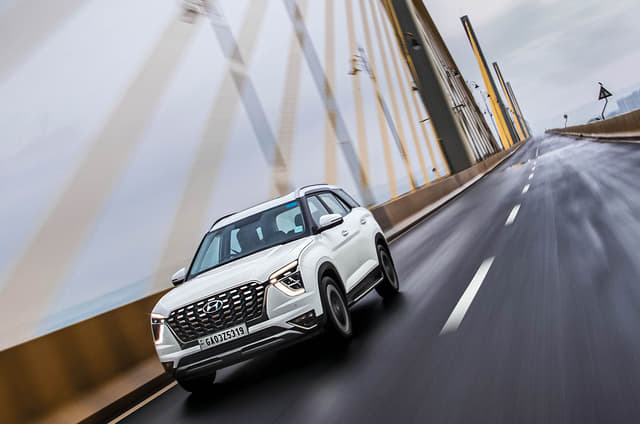
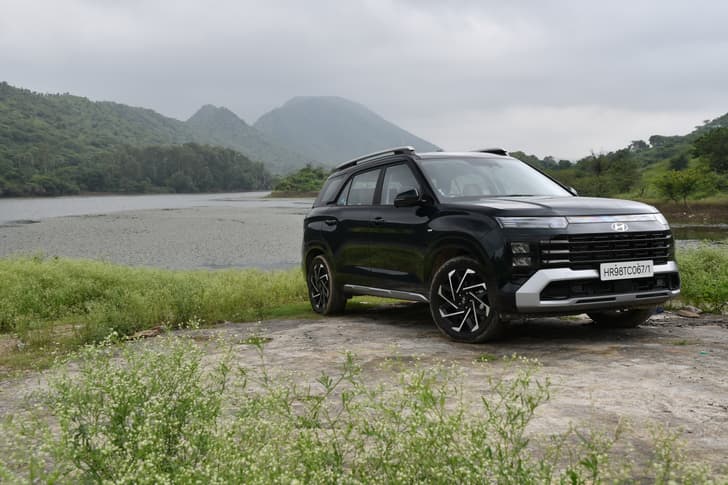
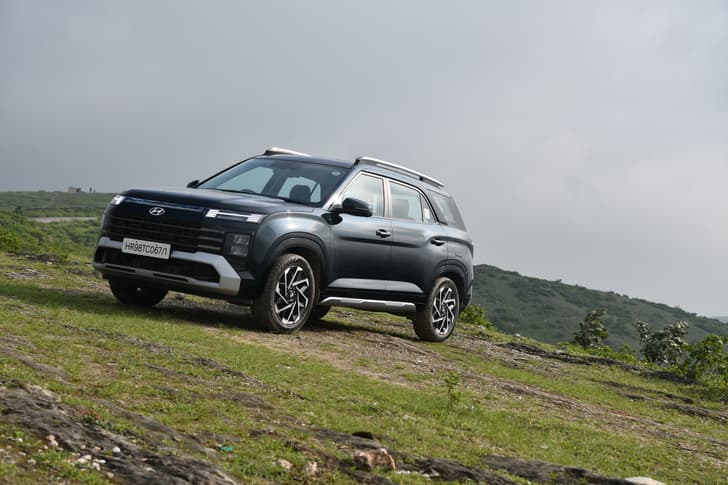
The Hyundai Alcazar facelift updates the three-row SUV’s design with refinement rather than reinvention. Upfront, a larger grille flanked by wider headlamps and reshaped bumpers gives it a more premium, planted presence. Subtle new elements — sharper rear lamps, revised tailgate garnish and fresh alloy designs — sharpen the overall look without being ostentatious.
Engineering fundamentals remain unchanged: a body-on-frame platform tuned for comfort and stability over outright sportiness. Niceties like new Satin Chrome trim on dark wheels and cleaner surfaces enhance perceived quality, but the Alcazar’s proportions remain familiar.
8.0
Inside, the Alcazar facelift impresses with a grown-up cabin feel. Soft-touch materials on dash and doors, redesigned centre console and sculpted seats lift ambience. The dual-tone theme and generous use of padded surfaces help it feel more upmarket than before.
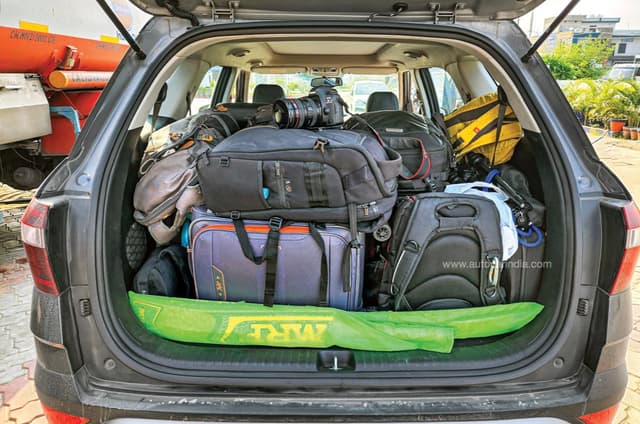
Space remains a strength of the three-row layout. Front and middle rows are comfortable with ample legroom and good under-thigh support. The third row, while typically tight for adults, suits children or short hops and reclines slightly for added comfort. Boot space with all seats up is limited but increases rapidly once the third row folds.
7.0
Both petrol and diesel engines continue in the facelift. The 1.5-litre turbo-petrol is smooth and refined in city use but gets busy when pushed hard. The 1.5-litre diesel — particularly in the Diesel Review context — emerges as the more compelling choice thanks to stronger mid-range torque and confident acceleration.
The diesel’s refinement is high for its class, with noise, vibration and harshness well managed. In both engines, Hyundai’s 6-speed manual and 6-speed torque converter automatic options remain, with the automatic particularly effective in urban stop-go traffic.
6.0
Fuel economy is a notable strength of the diesel Alcazar. On real-world runs, the diesel returns strong economy figures — a boon for long-distance and frequent highway use — without compromising performance. The petrol variants, while respectable in consumption for urban use, lag behind the diesel in overall fuel efficiency.
7.0
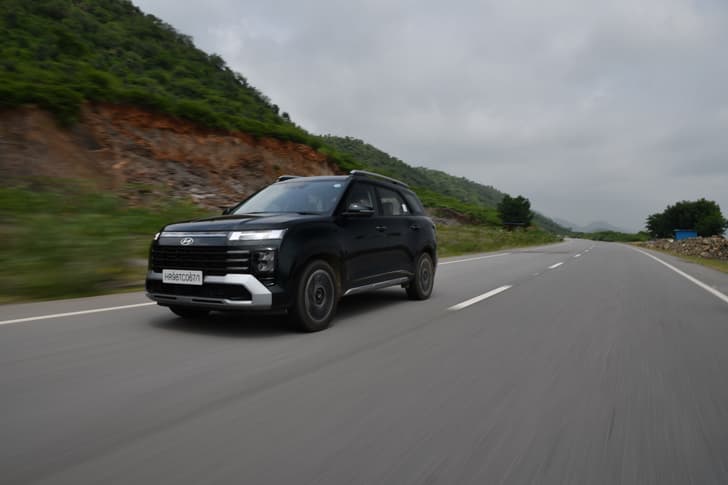
Ride quality is one of the Alcazar facelift’s defining traits. Suspension settling and compliance are tuned firmly towards comfort; it absorbs urban undulations, broken surfaces and highway ruts with poise. Body control is confident rather than sporty, making long journeys less tiring for occupants.
Steering weight is balanced for everyday driving, with adequate feedback that builds confidence. The diesel, with its richer mid-range, feels especially composed on open roads, and the torque converter automatic adds to the ease of cruising.
9.0
The Alcazar facelift brings a good tech list. A large touchscreen with wireless Android Auto and Apple CarPlay anchors the dash, and features like panoramic sunroof, ambient lighting, wireless charging and connected car tech underline modernity. Rear AC vents for the second and third rows, plus multiple USB ports and blower controls, enhance practicality.
Safety kit remains competitive: multiple airbags, ABS with EBD, ESC, hill-start assist and ISOFIX child seats are standard. Parking sensors with a rear camera aid manoeuvrability in urban settings.
8.0
The facelifted Alcazar continues to present strong value in the three-row SUV segment. Pricing moves it above compact SUVs but firmly within range of premium three-row alternatives. The diesel variant, with its satisfying blend of performance, refinement and strong economy, is especially appealing for buyers covering regular long distances.
While not the most dynamic handler, its comfort-first approach, generous kit and practical space make it a compelling purchase for families seeking a refined, feature-rich three-row SUV that doesn’t demand frequent highway cruising compromises.
Reviewed by: Jay Patil
Hyundai Alcazar reviews

Hyundai Alcazar comparison
Hyundai Alcazar mileage
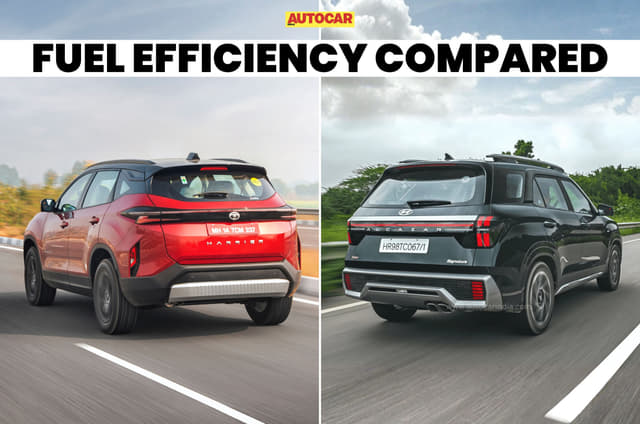
The Hyundai Alcazar gets a a fuel tank capacity of 50 litres, and its mileage ranges between 17.5 kmpl - 20.4 kmpl, delivering a strong balance of power and efficiency.
| PowertrainThe combination of engine type, fuel, and transmission that powers your vehicle and determines how it drives and what it runs on. | ARAI MileageMileage certified by the government, tested under controlled lab conditions. Real-world mileage will vary. | Autocar Tested MileageAutocar's experts test each vehicle on fixed city and highway routes under standardised conditions - single occupant, AC running, manufacturer-recommended tyre pressures. Tanks are filled to the brim before and after each run to calculate efficiency. Results reflect realistic real-world usage. |
|---|---|---|
Diesel-Manual 1493 cc | 20.4 kmpl | - |
Petrol-Manual 1482 cc | 17.5 kmpl | - |
Petrol-Automatic (DCT) 1482 cc | 18 kmpl | 10.24 kmpl |
Diesel-Automatic (Torque Converter) 1493 cc | 18.1 kmpl | - |

Hyundai Alcazar news
Hyundai Alcazar Images
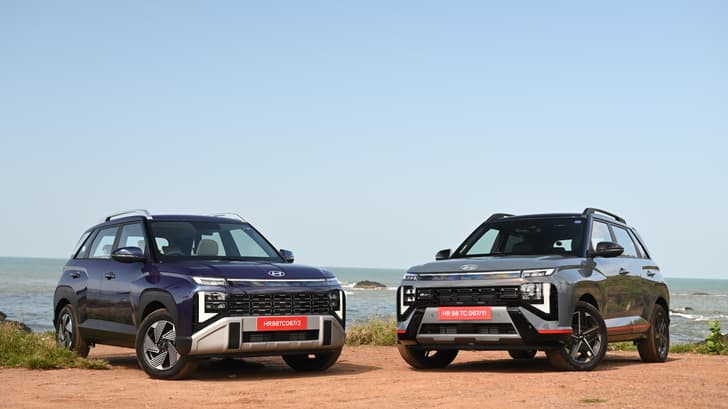
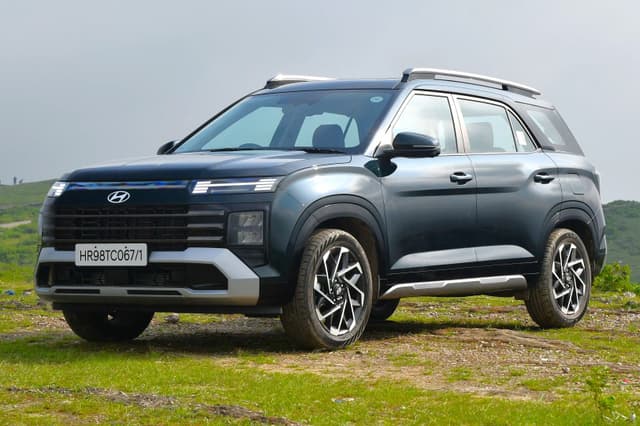
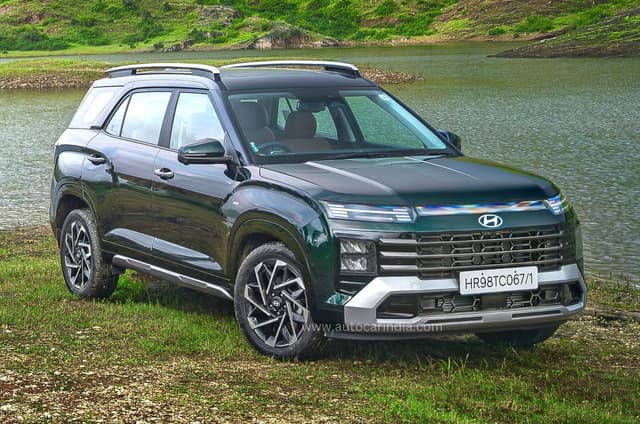
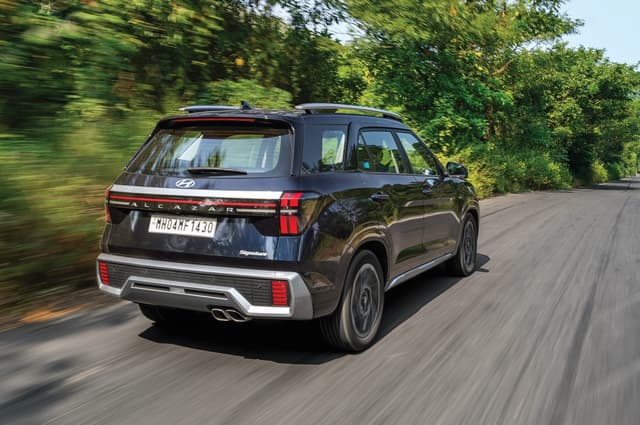
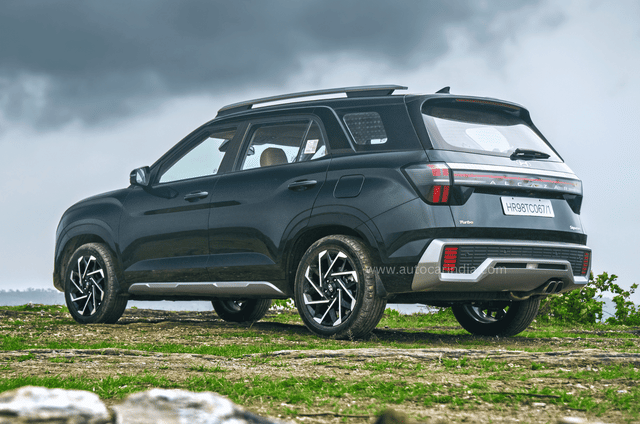
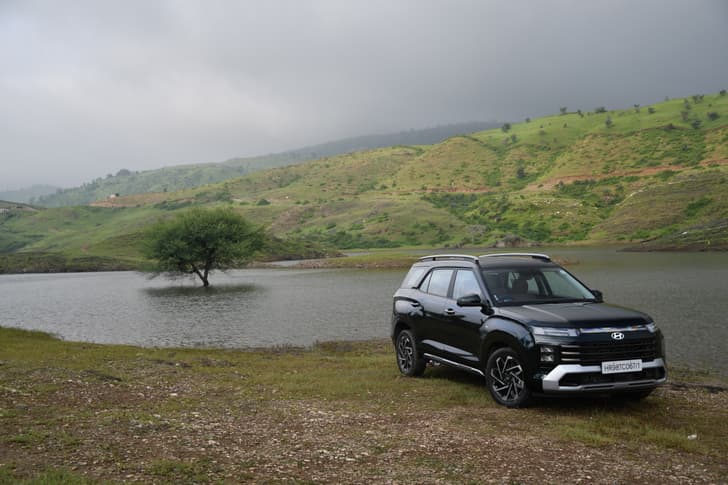
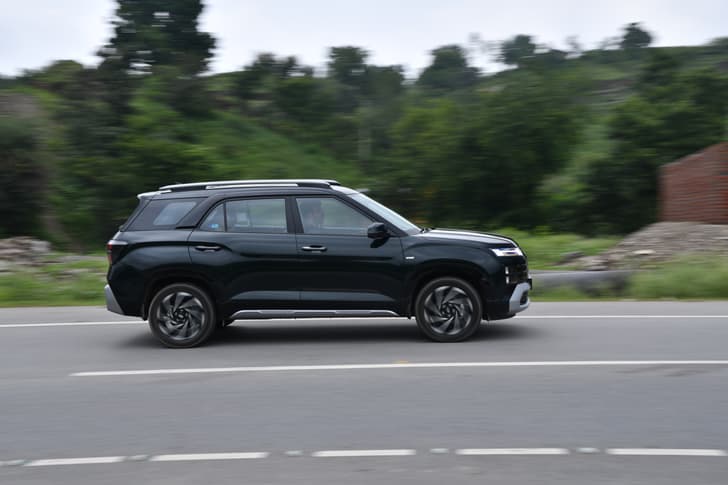
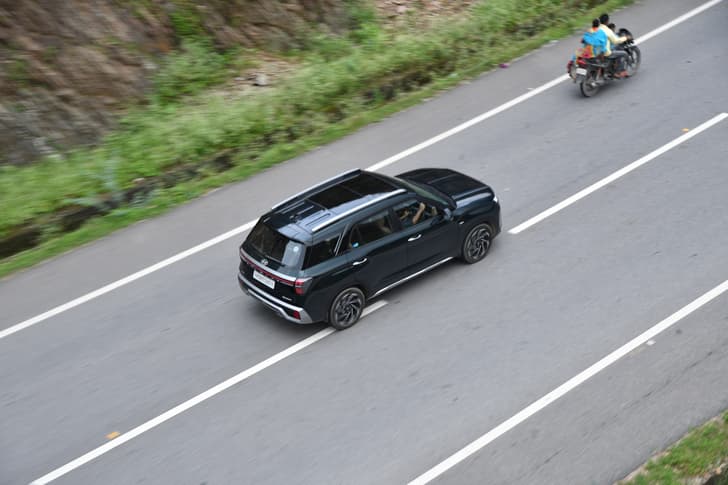
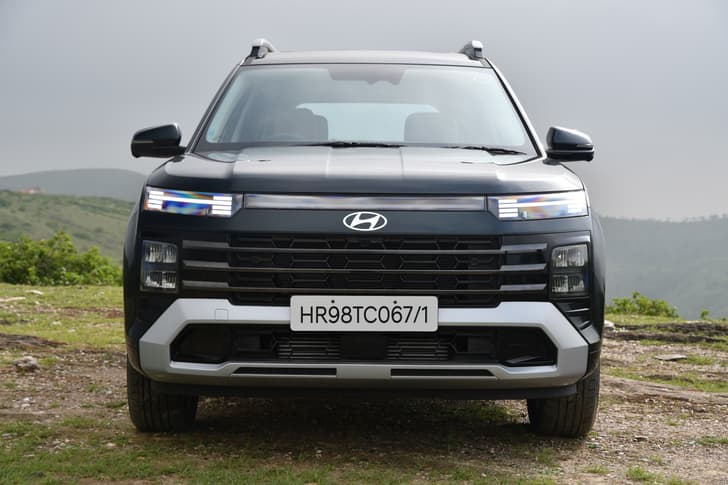
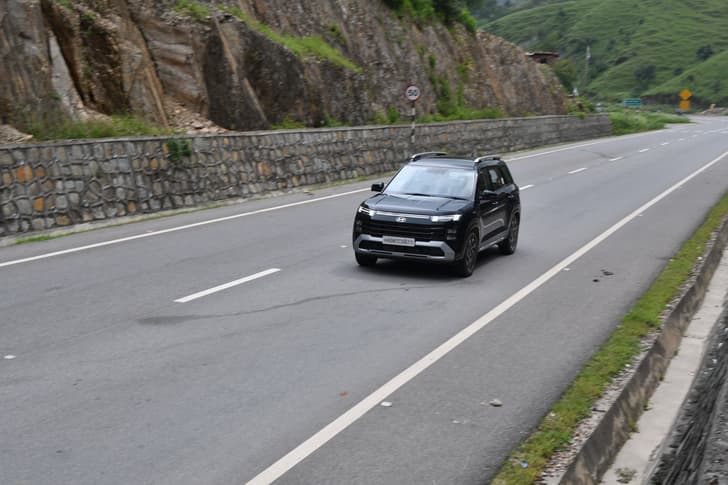
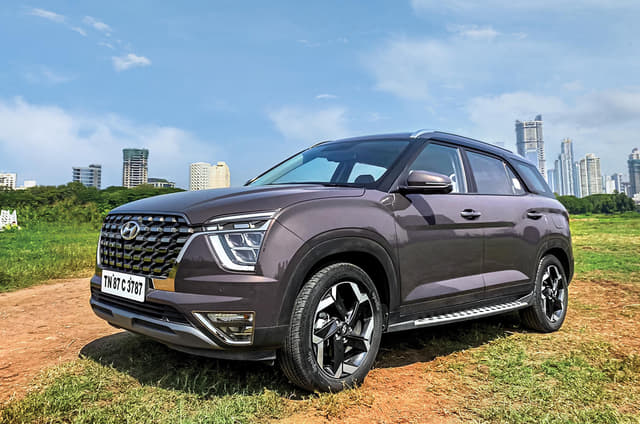
Check out Hyundai Alcazar images in the gallery showcasing its bold exterior, premium interiors, and versatile 3-row seating layout.
The Hyundai Alcazar brings together style, comfort, and modern technology.
Hyundai Alcazar videos
Watch the Hyundai Alcazar videos to explore its design updates, interior layout, and key features, including the 10.25-inch digital cluster and connected car technology.

.jpg?w=640&q=75)
Hyundai Alcazar Colours
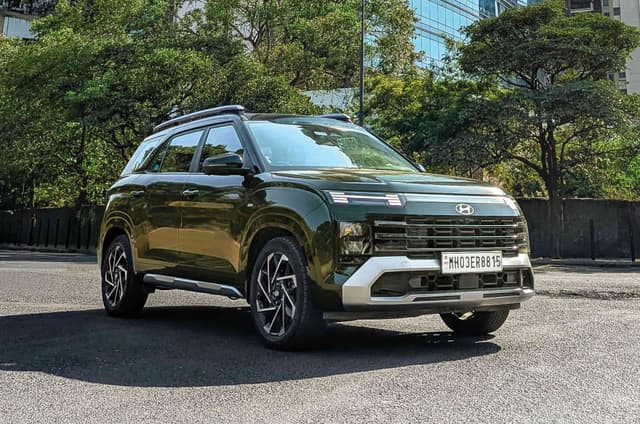
The Hyundai Alcazar is available in various colour options like Starry Night, Titan Grey, Emerald Pearl, Shadow Grey, Ranger Khaki, Abyss Black and Creamy White Pearl.
Alcazar is also offered with a dual-tone color combination of Abyss Black and Atlas White.
The Hyundai Alcazar also gets Matte color options like Robust Emerald Matte, Abyss Black Matte and Robust Emerald Matte.
Inside the Hyundai Alcazar features a premium dual-tone black and brown cabin, soft-touch surfaces, and a clean, modern dashboard design. Features like a panoramic sunroof, wireless charging, air purifier, and rear window shades enhance comfort and convenience for long journeys.
Hyundai Alcazar FAQs
The Alcazar is meant for someone who wants a bit more practicality, wants to occasionally ferry a few more passengers, and do so without compromising on tech and features.
Seat comfort is one of Alcazar's strengths. The seats are comfy and there are winglets on the headrests to stop your head from bobbing about on a drive.
No, as space in the last row is very limited. If you are over 5’10", there will be barely any kneeroom and headroom. So, the space is best for kids or shorter adults.
The Alcazar can comfortable cruise at triple-digit speeds on the highways. Even the suspension setup feels comfy on open roads.
With a claimed mileage of 18.1kpl, the Hyundai Alcazar diesel automatic is the one to go for.
Questions you may find useful
Aditya Gaur
•1dI have a VW Taigun 1.5 GT Plus (automatic) and a Skoda Rapid. I'm planning to go for a new, bigger car in 6-9 months. My budget is 26-28 lakhs. It has to be automatic (petrol or EV), have 3 rows, and have excellent after-sales. The primary use would be as a family car that can seat 5 comfortably. I like the 7XO, but somehow the fit and finish felt worse than my Taigun. Great after sales is a key consideration. For this, I can stretch my budget by 10-15% if no good options exist.

Autocar India
Buy the Toyota Innova HyCross hybrid automatic. It is the only other bigger 3-row with space that will feel like a real step up from your Taigun. For a family of five, it is superb - wide, airy, comfy second row, and the hybrid makes city driving smooth and quiet while keeping running costs low. Toyota service, parts availability, and resale are about the best you can get at this price, and the cabin fit and panel consistency are better than those of the 7XO you sampled.The catch is the price and waiting period. The sweet-spot VX (O) and ZX trims push beyond Rs 30 lakh on road, and waiting periods can be long, so keep that in mind. Also, it will not feel as sharp to drive as your Taigun 1.5 TSI.If that's too far out of budget, two other options you can consider are the Hyundai Alcazar petrol or the Kia Carens Clavis EV. The Hyundai gets you the SUV body style, a punchy petrol-DCT combo, and comfy seating for 5 with the option of two smaller seats in the third row. The Clavis EV, meanwhile, may have a less desirable MPV shape, but it actually has more interior space and an equally well put-together cabin. Both Hyundai and Kia offer an excellent after-sales experience.
Sanjay B
•1wI am planning to upgrade from a Baleno (2019) and have been very happy with this car. I have a company lease policy wherein I can buy a car with ex-showroom price up to 18 lakhs. I'm looking to get a nice and safe 5 or 7 seater vehicle. I don't mind about fuel efficiency as fuel cost is covered by my company. However, I do need the panoramic sunroof and ventilated seats. I'm really confused with the options available, so can you please help me? My driving would be mostly within Hyderabad city with occasional highway trips maybe once in 3 months (~1200km). We are a family of 4 (2 boys aged 6 and 3 years) and once in a while, my parents / parents-in-laws come down which is why I am also considering a 7 seater.

Autocar India
None of the 6 or 7-seater cars under Rs. 18 lakh ex-showroom, have both, panoramic sunroof and ventilated seats. If you're willing to sacrifice ventilated seats, you can get both, Kia Carens Clavis HTK+ O and Hyundai Alcazar Prestige DCT, both in their turbo-petrol DCT avatars, in your budget. However, since both these features are a must-have, you will have to settle for 5-seater instead. You could consider a Kia Seltos HTX Turbo-Petrol DCT (ex-showroom price is Rs 17.7 lakh), which gets the two features that you're looking for, along with a lot more modern niceties. The car is spacious, comfortable, and its cabin feels upmarket too. Also, opt for the turbo-petrol, as it will deliver effortless performance, especially during your occasional highway trips.
Darshan
•1wHi experts, I have a query regarding our next family car purchase. We currently own a 2008 Hyundai Santro that has covered around 77,000 km so far. My parents are now planning to upgrade to a more spacious 7-seater. A few points about our usage: • We are a family of four, so the third row will remain folded most of the time and will primarily be used as additional luggage space. • Our annual running is quite low. • Around 70% of our driving is on highways. • We intend to keep the new vehicle for the next 10-12 years. The shortlisted models are: * Mahindra XUV 7XO AX7 Petrol Manual * Mahindra Scorpio N Z8 Select Petrol Manual * Hyundai Alcazar Prestige * Tata Safari Adventure X Plus Petrol Manual One concern that is making the decision difficult is the possibility of higher ethanol blending in petrol in the future. We are not considering a diesel vehicle because our low running could lead to DPF-related issues. Considering our usage pattern, long-term ownership plans, and concerns about future fuel standards, which option would you recommend and why? Thank you in advance for your guidance.
Autocar India
Pick the Mahindra XUV 7XO AX7 petrol manual. Your driving is mostly highway and you plan to keep it 10-12 years, and this one feels the most relaxed and secure at speed, with a comfy second row and a big, usable boot when the third row is folded. The performance, refinement and reliability of the engine is also very good but the only downside is a low fuel economy, single digits or low double digit figures if you are careful. But since your driving is low this should not be a big issue. The XUV 7XO is E20-ready, as are the others, so your ethanol worry for the next decade is largely covered. If blends rise beyond E20 later, expect a small drop in economy across all petrol rather than a single clear loser. Between the rest, the Tata Safari would be an option, as it too offers a very good ride quality and stability at speed is good. The third row is also more comfortable but this would not be an advantage for you given that it would remain a luggage area only. As for the Scorpio N, it is tough but heavy and bouncy on long highway runs and noticeably thirstier; it suits rough roads more than long fast cruises. The Alcazar is easier to drive in the city and will use less fuel, but it is narrower, and it does not feel as planted or as reassuring as the Mahindra or the Tata on long highways.
Mohit Kakde
•1wI currently own a first-generation Toyota Innova diesel (7-seater) that I bought in 2008. It has covered 2.75 lakh km. Even today, I am inclined towards the Innova HyCross because of Toyota's reliability and long-term ownership experience. I am looking for a spacious family vehicle that offers comfort, good ride and handling, reliability, and is enjoyable to drive. My annual running is approximately 9,500 km, with 70% city use in Mumbai and 30% highway use, mainly on the Mumbai-Satara route. My budget is Rs 26 lakh, and the Hycross Hybrid is beyond that. I have considered the HyCross GX(O) petrol, but I am concerned about its fuel efficiency in city conditions. Should I still consider it? If not, what other options would suit my requirements? I am open to both SUVs and MPVs, although I am not inclined towards the Ertiga, XL6, or Kia Carens, as they do not feel like significant upgrades.
Autocar India
Yes, buy the Innova HyCross GXO non-hybrid. Your 70% Mumbai use and only 9,500 km a year means the hybrid’s big price jump will take ages to recover, while the GXO still gives you the Innova space, comfort and Toyota’s easy long-term ownership. In real Mumbai traffic, expect roughly 8-10 kpl and about 12-14 kpl on the Mumbai-Satara run. The automatic is smooth in the city, the ride is calm, and the third row is far better than any SUV at this price.One honest catch: the 2.0 petrol is relaxed, not exciting, and the GXO trim is light on features. If you want sharper performance and more kit, you will need to stretch, which you said you do not want to.If you still want options, look at the Hyundai Alcazar 1.5 turbo petrol. It is nicer to drive in the city and decently efficient, but it is a size smaller, and the third row is tight.The Mahindra XUV 7XO petrol is quick and feature-rich, yet its third row and boot cannot match the Innova, and long-term peace of mind still tilts toward Toyota. Diesel versions of these two could also be an option, but with your city-heavy running, you will need to make extra trips on the highway to keep the DPF healthy.
Nain
•2wHi, I am planing to buy either creta or alcazar, but want to know which fuel will be good. My total running is around 1300-1500Km monthly, out of this 5-7 times in a month travel to noida to gurgaon and two times in a month to out of city, approx 500Km per trip. Please advice suitable fue variant for me.

Autocar India
Go for the diesel engine in the Hyundai Creta or the Alcazar. With 1,300-1,500km a month and two 500km highway trips, the diesel will save you a good amount of money on fuel and feel more relaxed at highway speeds, especially with family and bags. Your regular long runs will also keep the DPF clean, so the time you spend in Noida-Gurgaon traffic should not be an issue.The only catch is Delhi-NCR’s 10-year cap on diesel cars and the odd winter clampdown on diesel models. If you plan to keep the car beyond 8-10 years or want zero risk of restrictions, petrol is the safer bet.Between the two SUVs, pick the Alcazar diesel only if you actually need the third row; otherwise, the Creta diesel is lighter, a bit more efficient, and cheaper to buy. If you must go petrol, the Creta 1.5 petrol suits calm city use and will drink less than the turbo; the turbo petrols are quicker but thirstier in traffic.
Harshit
•2wHi, I am planning to buy either the Hyundai Creta or the Hyundai Alcazar. My monthly running is around 1,200-1,500 km. This includes around 5–7 trips per month between Noida and Gurgaon, along with two highway trips every month of approximately 500 km each. Could you please suggest which fuel type would be the better option for my usage pattern - petrol or diesel?

Autocar India
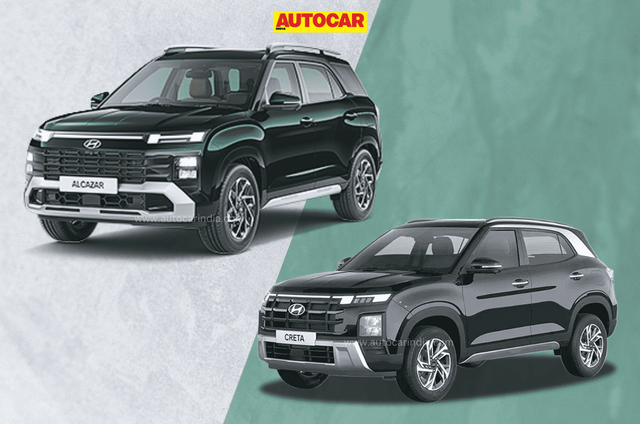
Since your usage isn’t particularly high, and considering the 10-year diesel vehicle restriction in the Delhi-NCR region, we’d recommend opting for a petrol-powered model.The Hyundai Creta’s 1.5-litre naturally aspirated petrol engine is smooth, refined and feels adequate for city driving, but it lacks the effortless performance of the turbo-petrol on highways. In fact, out on the open road, the turbo-petrol is also likely to be more fuel efficient.Hyundai has limited the Creta turbo-DCT to a single variant priced at Rs 20.05 lakh, or you have to opt for the Creta N Line, which is priced between Rs 17.83 lakh and Rs 21.21 lakh. Interestingly, the Hyundai Alcazar turbo-petrol engine with either a 6-speed manual or 7-speed dual-clutch automatic is available across a broad price range of Rs 14.50 lakh-21.20 lakh (ex-showroom). Overall, the Hyundai Alcazar scores over the Creta not just because of its three-row seating, but also due to its added practicality. When not in use, the third row can be folded down to free up a large luggage area, giving the Alcazar a clear versatility advantage. As a family car, it is therefore the more sensible choice.
Jai Datta
•3wI have a budget of Rs. 25-30 lakh. I currently own a 2025 MG Windsor EV and a 2022 Kia Seltos GTX+ Diesel AT. Since getting the EV, my running with the Seltos has reduced significantly. Its extended warranty will expire in August 2027. I am now planning to replace the Seltos with either the new Kia Seltos Turbo Petrol or the Hyundai Alcazar Turbo Petrol. We are a family of four, and whichever car I buy will be the top-end variant only.

Autocar India
The biggest advantage of Hyundai Alcazar in your use case is the captain seat configuration. Since you are a family of four, it can actually work beautifully as a comfortable four seater, with the second row offering noticeably better individual comfort than the Seltos. With the third row folded down, you also get a genuinely large boot, which makes it a very practical long distance family car.That said, the new Seltos feels like the more premium and more contemporary product overall. It is larger and more spacious than the Seltos you currently own, the cabin feels richer, the ride is comfortable and because it is the newer product, it will naturally feel fresher for longer. Importantly, both the Alcazar and the Seltos use the same 1.5 turbo petrol engine paired to a DCT, so outright performance and drivetrain character are broadly similar.The real question is what role this second ICE car will play. If it is primarily a comfortable family tourer and rear seat comfort matters most, the Alcazar makes a very strong case. But if you want something that feels like more premium, modern without stepping into a larger three row SUV format, the new Seltos is the better fit.
Harshit
•4wHello, I am planning to buy a new car and am confused between the Hyundai Alcazar and the Hyundai Creta. I would also like guidance on whether petrol or diesel would be the better fuel option for my usage. My monthly driving is around 1,200-1,500 km. This includes 5-6 trips between Noida and Gurgaon every month, along with two highway trips to my hometown of around 500 km each. My budget is approximately ₹16-17 lakh. Considering my usage pattern, please advise which model and fuel type would be the better choice

Autocar India
You will have to stretch your budget slightly for the base Hyundai Alcazar. Unless you need the extra row of seats or a large boot (with the third row folded), the Creta fits the bill. You could opt for the petrol manual version instead of diesel, which will be much more affordable than a similar-spec diesel. The 1.5 NA petrol is a smooth and relaxed performer, and paired with a six-speed manual, its fuel efficiency is likely to be quite respectable, especially when driven in a leisurely manner. Another reason to opt for the petrol version is its relatively longer life of 15 years in Delhi-NCR, where diesels are limited to 10 years.
Saurabh
•4wHi Autocar, I am 29 years old, married, and currently working from home. My regular travel mainly includes weekly trips to town of around 50–60 km, along with occasional long drives twice a month of over 100 km. My total monthly driving averages around 500 km. I currently own a 2013 Maruti Suzuki Dzire and am now looking to upgrade to a more suitable family car for both my family and parents. I specifically want a diesel vehicle, as I prefer diesel engines and am also slightly concerned about increasing ethanol blending in petrol. The cars I am currently considering are: Kia Sonet HTX Diesel Automatic Tata Nexon Creative Plus Diesel AMT Hyundai Alcazar Executive Diesel Manual My budget is around ₹15 lakh, with slight flexibility if required. The basic features I am looking for are: Height-adjustable driver’s seat Cruise control Alloy wheels Reverse parking camera Good seating comfort Optional but desirable features include: Ventilated seats Paddle shifters Rear window sunshades Basic sunroof Could you please suggest which option would best suit my requirements and usage pattern?

Autocar India
The Kia Sonet HTX diesel automatic is the smoothest and most refined option from the cars listed. With a Rs 15 lakh budget, it packs all the features that you want, both basic and good-to-have ones. Its backseat isn't as spacious as the Tata Nexon, but unless you have six-footers regularly travelling at the back, the Sonet should be fine.The entry-level Hyundai Alcazar belongs to a higher segment, and not only is it the most spacious, but it also gets you the flexibility of a third row. However, it will not fall within your Rs 15 lakh budget, and even after extending your budget by a few lakhs, you'll only be able to get a manual - the diesel-automatic is much more expensive.You could also consider the Kia Syros, which is compact yet more comfortable and more spacious than the Sonet.
Harshit
•5wHi, I need advice on choosing between the Kia Seltos and Hyundai Alcazar, and also whether I should opt for a petrol or diesel engine. My monthly running is around 1,200 to 1,500 km. Out of this, approximately 1,000 km is on highways, while 200 to 500 km is in the city, including Gurgaon traffic. I travel from Noida to Gurgaon around 5 to 7 times every month. Which model and fuel type would be the better choice for my usage?

Autocar India
Given 1,200-1,500km a month with most of it on the Noida-Gurgaon run, the Kia Seltos 1.5 petrol IVT is the better fit. The naturally aspirated petrol automatic is smooth in slow Gurgaon traffic and relaxed at highway speeds. If budget allows, the turbo-petrol makes fast overtakes even easier, but bear in mind, its DCT automatic isn't as smooth in traffic.In Delhi-NCR, petrol also avoids the 10-year limit on diesel cars and the chance of diesel filter trouble in slow, stop-start use. That means less worry over long-term ownership. If you don't mind these inconveniences, the diesel is more efficient and comes with a smooth 6-speed automatic.Trade-offs: the petrol will use more fuel than a diesel on long highway runs, and while the Seltos has good rear space and a big boot, it cannot match the extra room of a larger three-row car.If you truly need six or seven seats often, the Hyundai Alcazar serves that role well and cruises comfortably. But compared to the new Seltos, it does feel a little dated and doesn't get as many features. Plus, you don't get the naturally aspirated petrol and IVT option - just the turbo-petrol and DCT. For your mix of highway and NCR traffic, the Seltos 1.5 petrol IVT lines up best.