
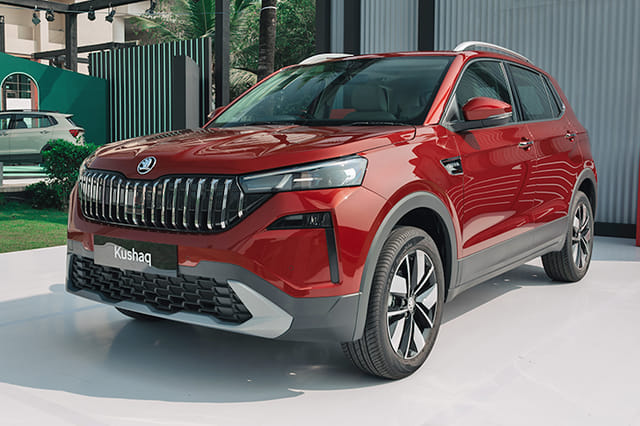
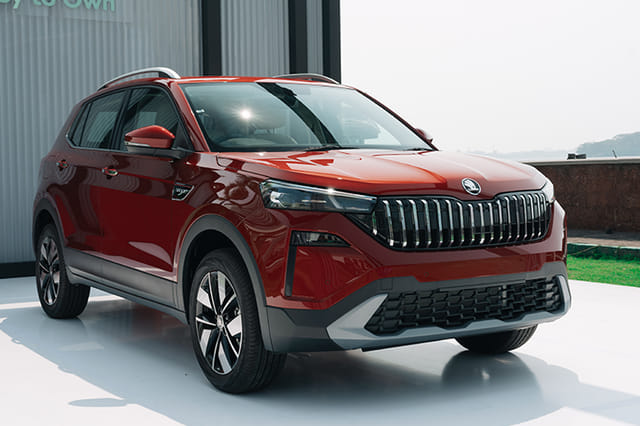
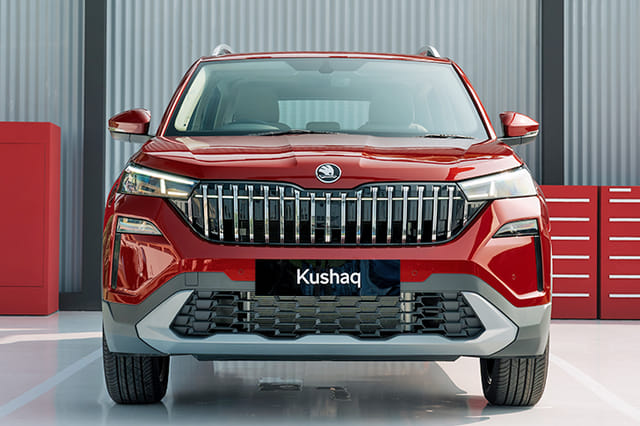
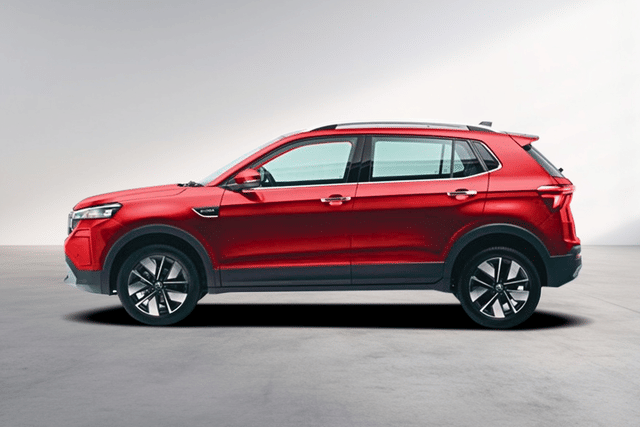
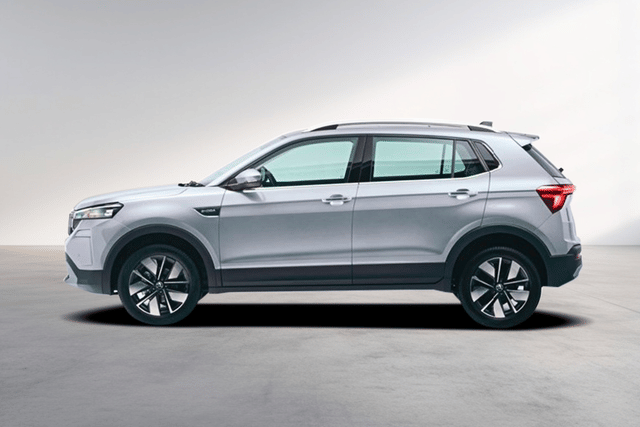
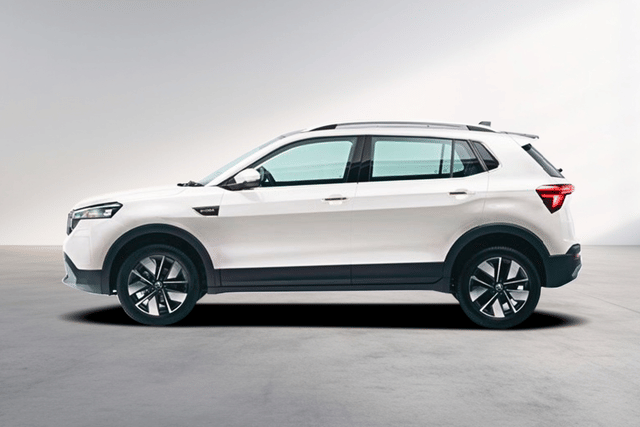
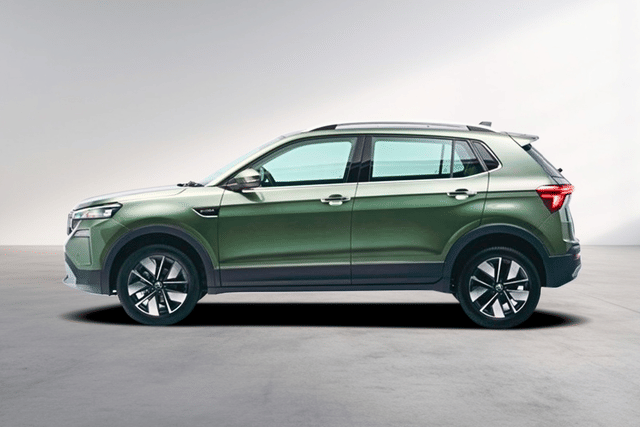
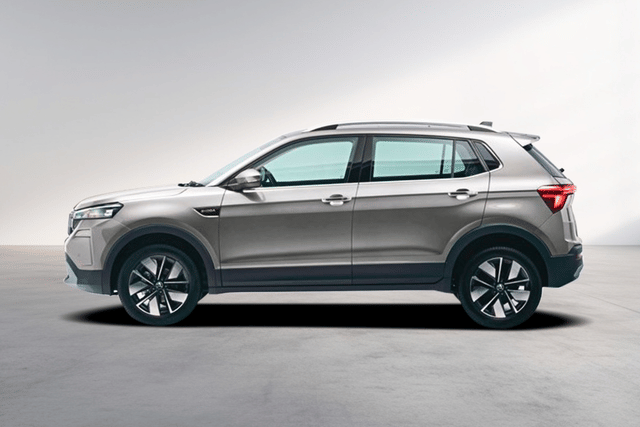
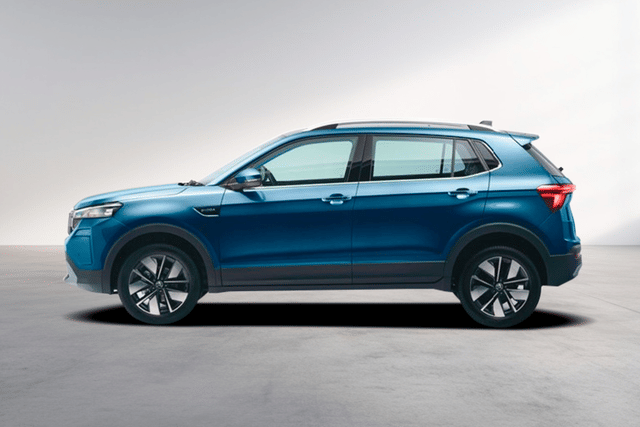
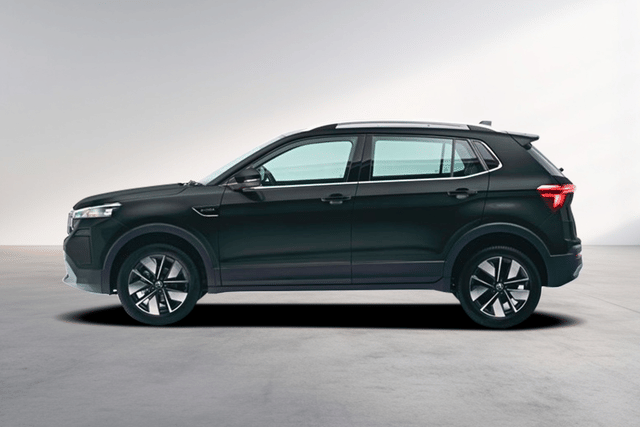
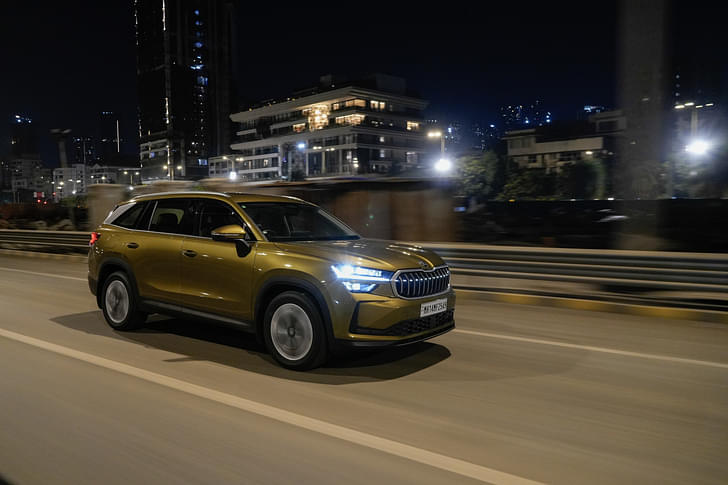
Skoda Kushaq facelift Classic+ 1.0 TSI MT
Skoda Kushaq facelift Classic+ 1.0 TSI MT specifications
Engine & Transmission
Engine Type | 3 cyls, Turbocharged |
Max Engine Torque | 178 Nm at 1750 - 4500 rpm |
Max Engine Power | 115.56 hp at 5000 - 5500 rpm |
Fuel Type/ Propulsion | Petrol |
Engine Displacement | 999 cc |
Engine Installation | Front |
Gearbox Type | Manual |
Drive Layout | Front Wheel Drive |
Lockable Differential/s | No |
Number of Gears | 6 |
Suspension & Steering
Rear Brakes | Disc |
Front Brakes | Disc |
Type of Power Assist | Electric |
Front Suspension Type | McPherson suspension |
Front Springs | Coil Springs |
Rear Springs | Coil Springs |
Rear Suspension Type | Non-independent, Torsion Beam |
Ride Height Adjust | No |
Wheel Size | 16-inches |
Wheels | Alloys |
Dimensions
Doors | 5 |
Ground Clearance | 188 mm |
Boot Capacity | 491 - 1405 litres |
Skoda Kushaq facelift Classic+ 1.0 TSI MT features
Comfort
| Climate Control | |
| Exterior Mirrors Electric Adjust | |
| Power Windows | |
| Sunroof |
Safety
| Airbags | 6 |
| Anti-Lock Brakes (ABS) | |
| Automatic Wipers | |
| Day/Night Interior Mirror | Auto-dimming |
| ISOFIX Child Seat Mounts | |
| NCAP Rating | 5 |
Exterior
| Headlight Type | LED |
Interior
| Seat Count | 5 |
Entertainment
| Display | 7-inch Touchscreen |
Skoda Kushaq facelift variants
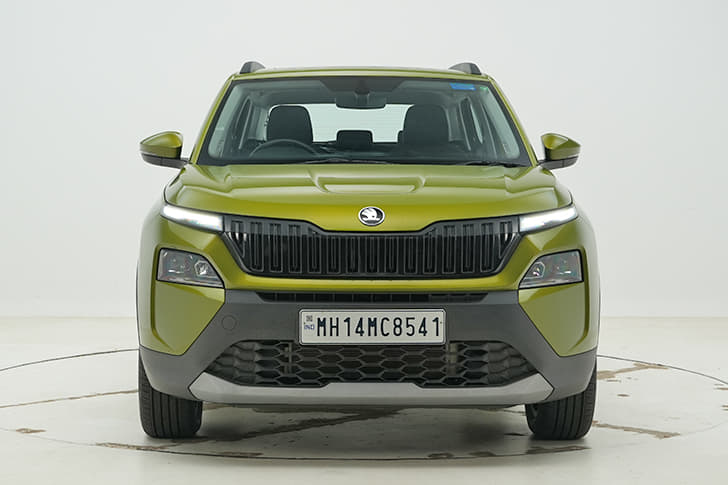
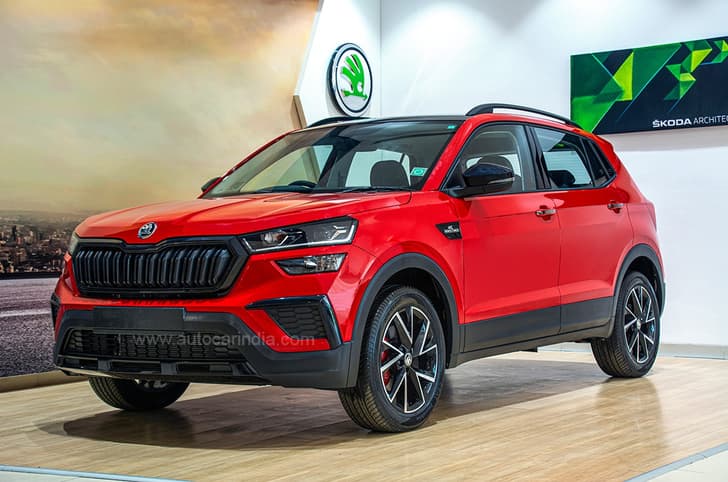
Trending Questions on Skoda Kushaq facelift - Answered by Autocar Experts
I am looking to replace my Volkswagen polo with a SUV for term usage. My running is occasional few times in city and twice a year long journey. I am looking at Honda Elevate and Renault Duster. Do you have any other suggestions?
Why don't you consider the Skoda Kushaq facelift instead? Being part of the VW group, the Kushaq will be a natural upgrade from your Polo - it is well-built, well-equipped and it drives well too. Both its engines (1.0L and 1.5L) deliver good performance. This should be high up on your shortlist.
The Honda Elevate is a no nonsense option with excellent ride comfort, and a strong naturally aspirated petrol engine. The seating position is good, and it is nice to drive too. Refinement however isn't its strong suit.
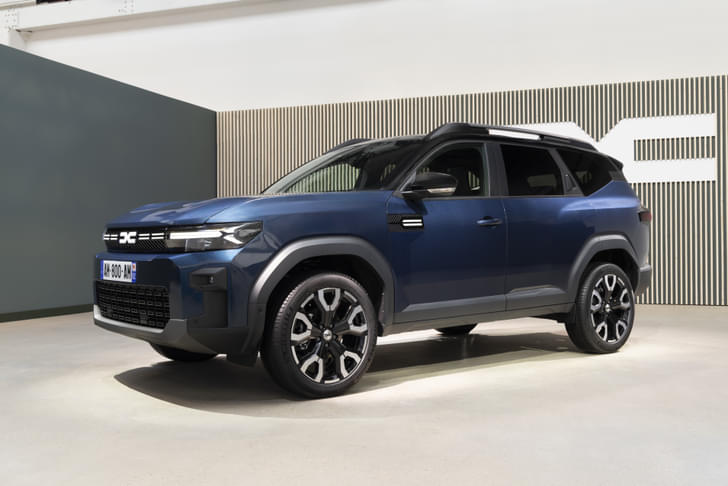
The Renault Duster also looks like a good option but we'll reserve our judgements till we actually drive it extensively.
I am planning to buy a compact SUV under ₹15 lakh and seek your expert advice. My usage includes daily city driving (10–15 km), monthly highway runs (~150 km), and occasional hill drives, like once‑a‑year trip to Ladakh. Key expectations are reliable power and torque for hills, good mileage, low maintenance, and long‑term reliability. I am currently considering: Kia Seltos HTK Turbo (iMT) – concerned about iMT reliability VW Taigun 1.0 TSI MT – adequacy of power/torque Skoda Kushaq 1.0 TSI MT – same concern, pricing clarity awaited Renault Duster TCe 160 MT – should I wait? Safety? Honda Elevate VX MT – NA engine performance in hills Request your recommendation on the best-suited option or any better alternatives within this budget.
We'd recommend waiting for the Renault Duster that will be launched on March 17. On paper, it could be the best suited to your requirements. The engine promises enough power for highway drives, and if the build is anything like the old Duster's, it will be ideal for your hill drives too, especially in testing environs like Ladakh.
Of the other options on the list, the Skoda Kushaq/ Volkswagen Taigun 1.0 MT could fit the bill for you. They have a robust build, punchy engines and deliver good economy when driven in a relaxed manner.
I am planning to buy a sedan. My annual driving is less than 10,000 km, with around 80% highway usage consisting of short trips of about 30-50 km. Would it be a good decision to buy the 1.0-litre Volkswagen Virtus or Skoda Slavia? I am especially concerned about after-sales service and long-term maintenance costs.
For your needs, the Volkswagen Virtus and Skoda Slavia are good options. Both cars are mechanically identical, so it ultimately comes down to which one you prefer in terms of styling and interiors, and which brand has a service centre closer to you. Performance from the 1.0-litre TSI engine is more than adequate for your highway trips, and fuel efficiency is respectable on the highway as well. The six-speed torque converter is excellent; however, in your case, since most of your driving is on the highway, the slick 6-speed manual is a fine choice.
Volkswagen and Skoda have had a reputation for higher maintenance costs in the past. But both brands have improved things significantly with their INDIA 2.0 cars, which include the Virtus and Slavia.
One thing to note, however, is that facelifts for both models are expected shortly. While these are likely to be relatively minor updates, similar to the one the Skoda Kushaq recently received. The 6-speed automatic is expected to be phased out and replaced by a new 8-speed unit, as seen on the Kushaq. Do consider this in your purchase decision.
I have been driving a Ford EcoSport Trend+ since 2018 and have done over 1,00,000 km on it. I am fully satisfied with its performance. Now I want to buy a mid-size petrol SUV. I am a driving enthusiast and prefer a car with good driving dynamics, strong road grip, and handling. My budget is up to ₹15 lakh. Which car would you suggest is best for me?
Since you are a driving enthusiast and are looking for a mid-size SUV with good driving dynamics, we would recommend the new Skoda Kushaq. Skoda recently unveiled the facelift and will also be announcing prices this month. The Kushaq is one of the more driver-focused mid-size SUVs with very good handling manners. It will feature two engines as before, a 1.0-litre TSI and a 1.5-litre TSI.
If the bigger engine is out of budget, the 1.0-litre is also quite peppy and fun to drive, with good grip and cornering. Another SUV worth waiting for would be the Renault Duster, which is launching on the 17th of this month.
It gets a powerful turbo-petrol engine, and Renault has developed a good chunk of it at MMRT (Madras Motor Race Track) in Chennai and assures us that the handling would be exciting. If you aren't in a hurry, we advise you to wait till we get our hands on the Duster and even the updated Kushaq for a definitive verdict.
My maximum budget is ₹23 lakh, and I will be driving mainly in the city for about 1800-2000 km per month. I am comparing the Tata Harrier (petrol automatic) with the Skoda Kushaq (petrol automatic with DSG). Which variant should I choose for my usage?
Since your running is quite high and that too in the city, a strong hybrid powertrain would be a good option to consider. The Maruti Suzuki Grand Vitara or the Toyota Urban Cruiser Hyryder are mid-size SUVs with a strong hybrid powertrain and are excellent in the city. The battery and motor provide enough power for everyday driving, and they offer good ride comfort too.
That said, if you do not prefer a strong-hybrid SUV, the new updated Skoda Kushaq will be launching soon. It gets the same engine as before, but the 1.0-litre TSI motor will not get an 8-speed automatic instead. If you are a keen driver and enjoy getting behind the wheel, the Kushaq would be a better choice.
We would recommend that you wait for the launch. The Tata Harrier just got a new petrol engine, which is refined, but it's a bit too big for the city and isn't as polished as the Kushaq.
I am looking for a strong car that performs well on both city and highway driving, including bad roads, so I need good ground clearance. I also want lowest possible cabin noise and a smooth ride. My budget is around ₹15–17 lakh. Please suggest suitable options.
For your budget of Rs 15-17 lakh, and considering you want a strong, stable car with good ground clearance, low cabin noise and a smooth ride over bad roads, the recently facelifted Skoda Kushaq 1.0 TSI automatic is a good option
It’s easy to drive in the city, feels secure and planted at highway speeds, and its suspension has a solid, European feel that handles broken roads confidently without feeling unsettled. The only downside is that the width of the rear seat is limited
It’s also worth waiting for the new-generation Renault Duster, which is set to launch soon. The earlier Duster was known for its excellent suspension and ability to handle rough roads with ease, and the new model is expected to carry that strength forward.
Hello Autocar Team, Good day to you. I am planning to purchase the Skoda Kylaq Automatic (Signature Plus variant) within a maximum budget of ₹15 lakh (through a bank loan). However, a friend has suggested that I wait for the upcoming 2026 Kushaq model, which is expected to be available in March 2026. I am concerned about service costs, real-world mileage, and the new 8-speed automatic system that may be introduced in the 2026 model. Given my budget and concerns, should I proceed with the current Kylaq, or is it worth waiting for the Kushaq 2026 model?
The Skoda Kylaq is enjoyable to drive, and performance is strong too. Moreover, it's compact, solidly built, and its suspension strikes a good balance between ride comfort and handling.
The Skoda Kushaq is relatively more spacious, particularly at the rear, so if you travel with four passengers regularly, the Kushaq is the better pick. We are yet to get behind the wheel of the Skoda Kushaq with the new 8-speed automatic transmission, so we recommend you wait for our review if you are keen on the Kushaq.
Alternatively, you could avail some mouth-watering discounts on the pre-facelift Kushaq, because of which you could get a higher variant in your budget. If resale value isn't something you're concerned with, this is an option you could explore for the considerable savings upfront.
I need your help defining what a true “upgrade” is. I have owned a Skoda Kushaq 1.0 L Style MT for 4.5 years and 60,000 km, and I’ve largely loved the car. Now I’m looking for something new in the ₹25-30 lakh bracket. My confusion lies in the definition of an upgrade: is it a mechanical upgrade if I stay in the same segment but move to a 1.5 L turbo engine (like the Kia Seltos facelift or Skoda Kushaq 1.5)? Or is it a dimensional/segment upgrade? I’ve shortlisted the Mahindra XUV700 AX7T Diesel Manual. I’m a family of three and don’t strictly need a 7-seater, but it feels like a “bigger” car with a “bigger” engine. I loved the XUV700 in my short test drive, but I want to know: should an upgrade feel like a better version of what I have (1.5 L TSI), or should it be a move to a completely different class of vehicle (XUV700)? Looking forward to your perspective on how a long-term owner should weigh “more power” versus “more car.”
The definition and scope of an upgrade vary from person to person, and also on the need of the hour, the budget and various other factors. Generally speaking, the greater the scope of the upgrade in size, segment, power and even price, the greater the satisfaction it brings to the owner.
In your case, you've had a Skoda Kushaq 1.0 TSI for almost five years, and have been happy with its performance over 60,000km, and now your budget extends all the way up to Rs 30 lakh. The facelifted Skoda Kushaq will be on sale soon, and while the 1.5 TSI will certainly feel like an upgrade from the 1.0 TSI. We feel the rest of the car will feel all too similar to a car you've had for so long.
Moving up to a larger car with a larger engine - and more importantly, a different look and feel inside and out. It will not just feel like an upgrade, but also a refreshing change after 4.5 years. The Mahindra XUV 7XO is an excellent choice in that regard, and even if you don't use the third row of seats, the extra space will no doubt be welcome.
The Mahindra also mirrors that tough, robust feel that the Skoda also gave you, and with your increased budget, you could even get a fully loaded version with all the bells and whistles.
I’m planning to purchase a petrol automatic SUV in the ₹15 – 20 lakh (on-road) price range and would really appreciate your guidance. Here’s what I’m looking for: Best possible real-world fuel mileage in bumper-to-bumper city traffic — this is very important since I drive mostly in the city. And on good weekend of a month for highway or outtoors Automatic transmission that feels smooth and stress-free in traffic jams (not jerky). Long-term ownership focus — I plan to keep this car for several years, so I want: High safety (good crash ratings and safety features) Strong reliability and durability Low maintenance costs Good after-sales support and service network in Karnataka SUV models I’m considering: Hyundai Creta (automatic petrol) Kia Seltos (automatic petrol) Tata Nexon (automatic petrol) Hyundai Venue / Venue N Line (automatic petrol) Skoda Kushaq (automatic petrol) Mahindra XUV700 (automatic petrol — if it fits the budget) If you’ve driven these in city conditions, or own one, please let me know: How is the actual mileage in city traffic? How comfortable and smooth is the automatic transmission in stop-and-go traffic? Any issues with maintenance, reliability, or service costs you experienced? Which variant (mid / top) offers the best value for long-term ownership? Also which transmission to go for TC, DCT, AMT, IVT, AT
You have a wide choice of cars, but based on your requirements, we would suggest going for the new Kia Seltos.
Within the Seltos range, the 1.5 litre IVT automatic in the HTX variant fits within your budget and offers a very good mix of premium and essential features. It meets almost all your requirements. The 1.5 litre naturally aspirated engine is refined, and the IVT gearbox is silky smooth, especially at low speeds, which makes it extremely easy to drive in stop go city traffic. It also has enough performance for weekend highway use and, while fuel efficiency is not phenomenal, it should consistently return better figures than the turbo petrol options you have shortlisted. The newer generation Seltos has also grown in size, interior space and overall cabin quality, which is now among the best in the segment. Ride quality has improved significantly too, and it feels comfortable both in the city and on the highway.
The Tata Nexon and the new Hyundai Venue are good options, but their turbo petrol engines paired with DCT gearboxes are not as smooth as the Seltos’ IVT. The Seltos is also a size larger, more comfortable and feels more premium overall. The same applies to the turbo petrol powered Skoda Kushaq, which again will not feel as smooth as the Seltos in daily use. The Mahindra XUV 7XO is another size up and, while its 2.0 litre turbo petrol engine is powerful and smooth, the larger size makes it less easy to drive in the city and fuel efficiency will be much lower. Within your budget, the AX3 variant just about fits, but it misses out on several features that the Seltos offers.
The Hyundai Creta is also a good option and uses the same engine and gearbox as the Seltos. However, it is expected to be replaced early next year and, compared to the Seltos, it is smaller, less spacious, offers fewer features and is similarly priced. Because it is nearing replacement, the current model will also age quicker. That said, if you are getting a strong deal on the Creta, it is still worth considering.
Another car you should look at is the Maruti Suzuki Victoris Strong Hybrid. It meets most of your requirements and will be even smoother to drive at low speeds, as it runs on electric power for a large part of city driving. Being a Maruti Suzuki, reliability and after sales support are strong points. It has also scored a 5 star BNCAP rating, and as a hybrid, fuel efficiency is exceptional. In fact, you can expect close to double the mileage of most of the cars you have shortlisted.
A few things to note, however: the Victoris is not as spacious as the Seltos, especially in the rear seat, and boot space is compromised due to the hybrid battery pack under the boot floor.
I am looking for a safer car I have rolled up to 2 options like Skoda kushaq facelift and Volkswagen Taigun facelift but few things are missing in kushaq facelift like 360 degree camera and Adas Does it really need or we have better options than these kushaq and taigun has 5 star rating also am not looking for tata cars because of their service centers issue
The Skoda Kushaq and Volkswagen Taigun are indeed good options, and the fact that they have a 5-star safety rating from Global NCAP is a big plus. The absence of a 360-degree camera and ADAS is not a deal-breaker, and they're still worth considering for their strong engines, smooth gearboxes and excellent driving dynamics.
Do note, however, that both cars are still a few months away, with the Kushaq facelift expected to launch in March, and the Taigun facelift a few months after that. If not those, you could also consider the new Kia Seltos. It hasn't been given an NCAP rating yet, but its smaller sibling the Syros has received a 5-star Bharat NCAP rating, and as the Seltos is built on a new-gen platform, we expect it to get one too. The Seltos impresses with its features list, which includes a 360-degree camera as well as ADAS with Level 2 Autonomous driving.