
Last Updated on: 26 Mar 2026
Volkswagen Tayron price in Amravati
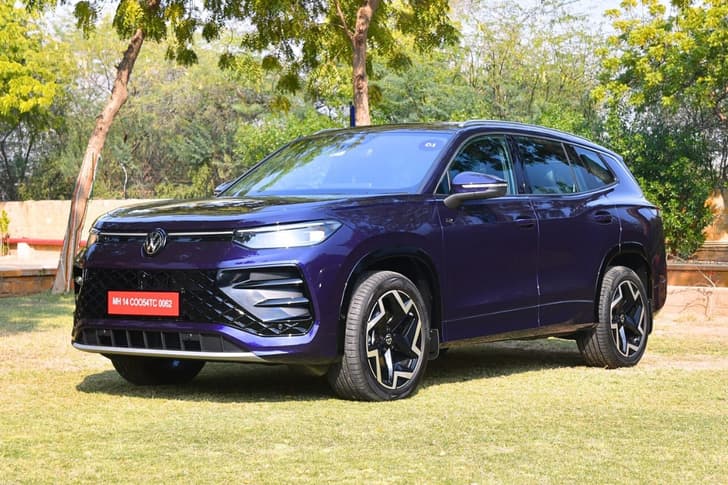
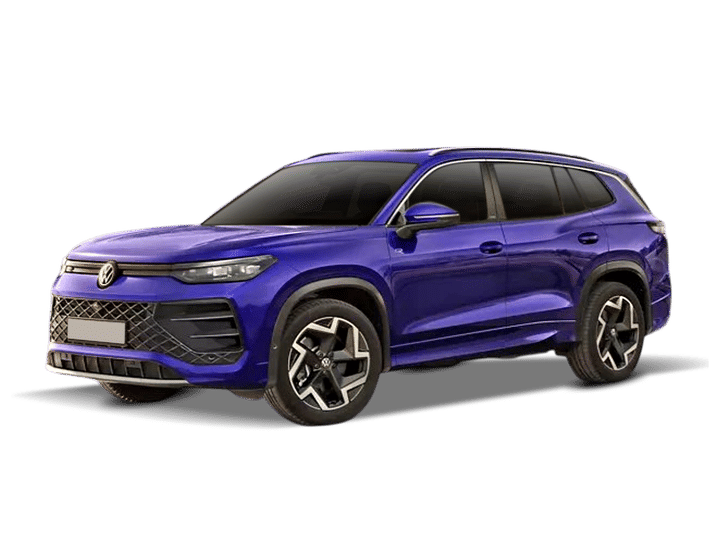
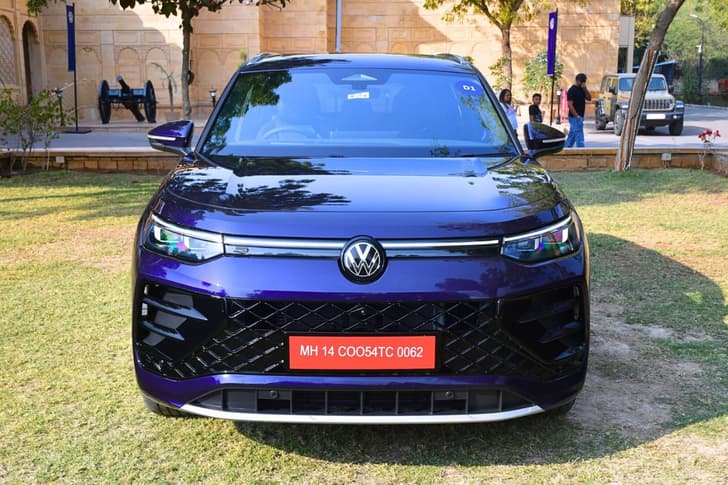
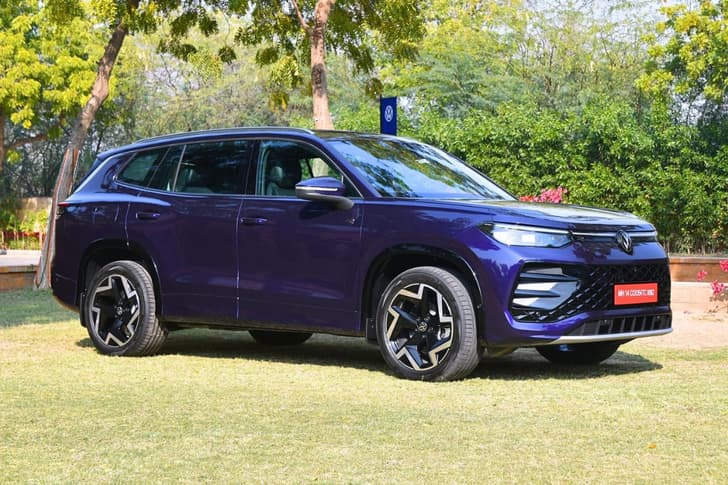
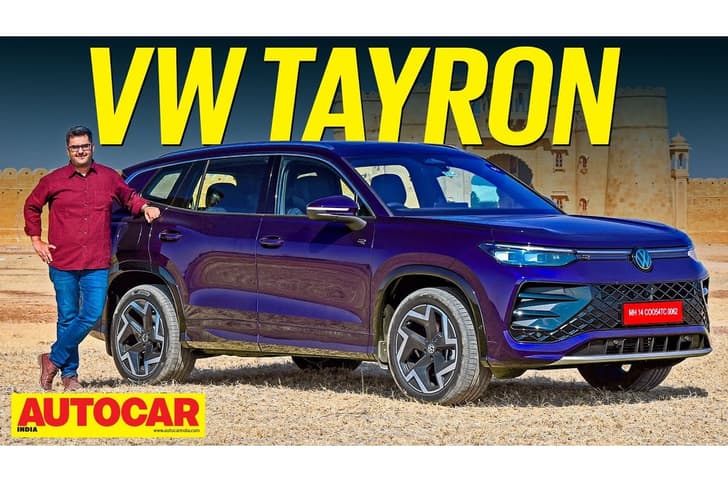
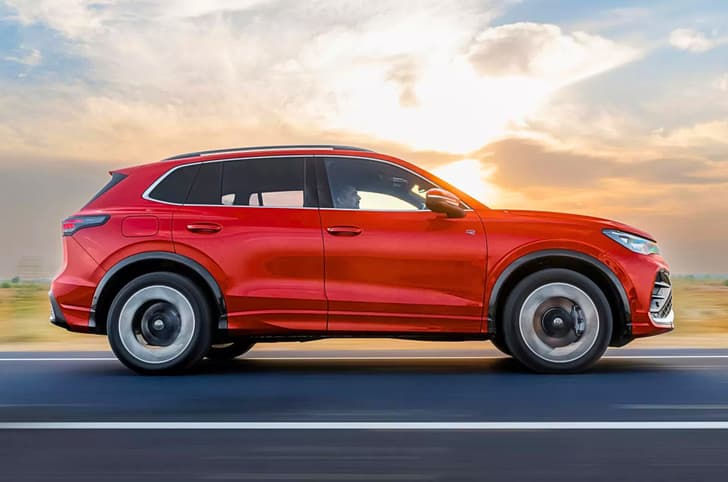
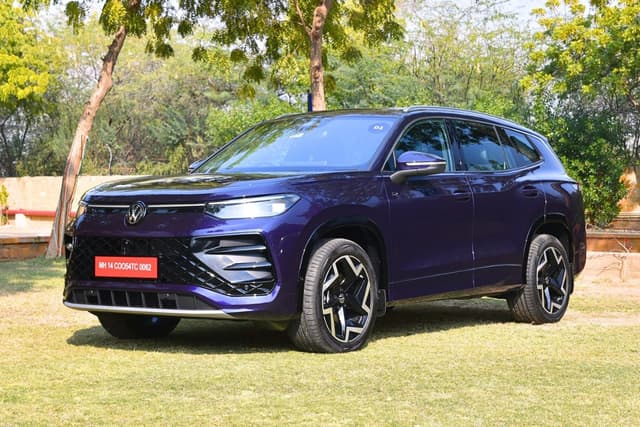
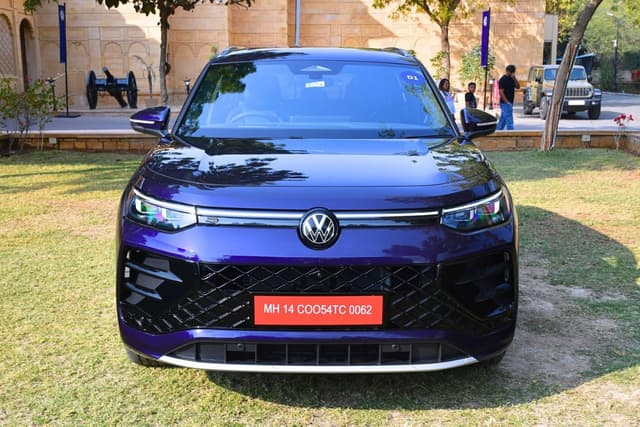
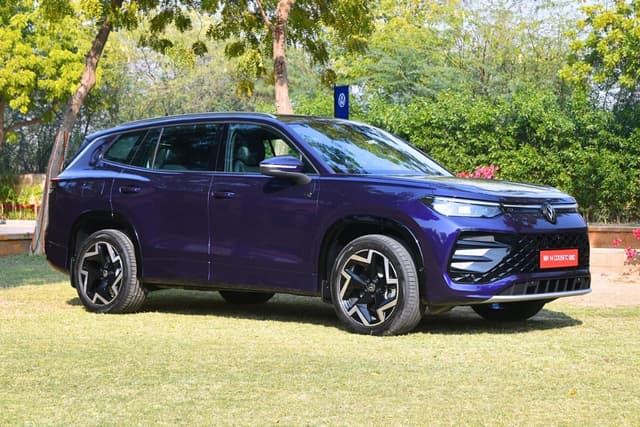
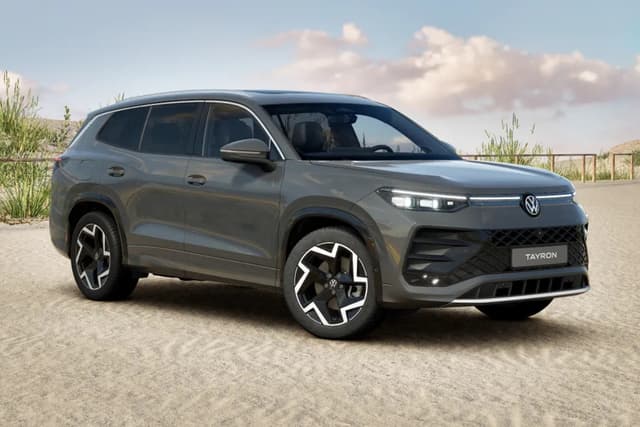
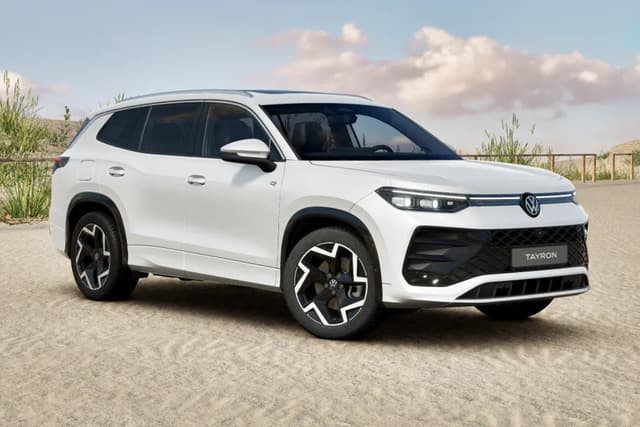
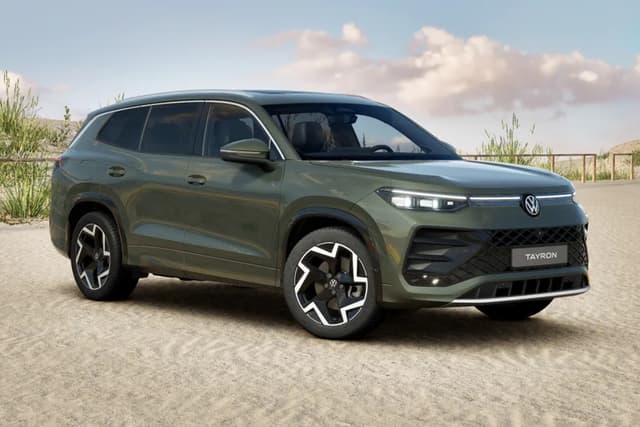
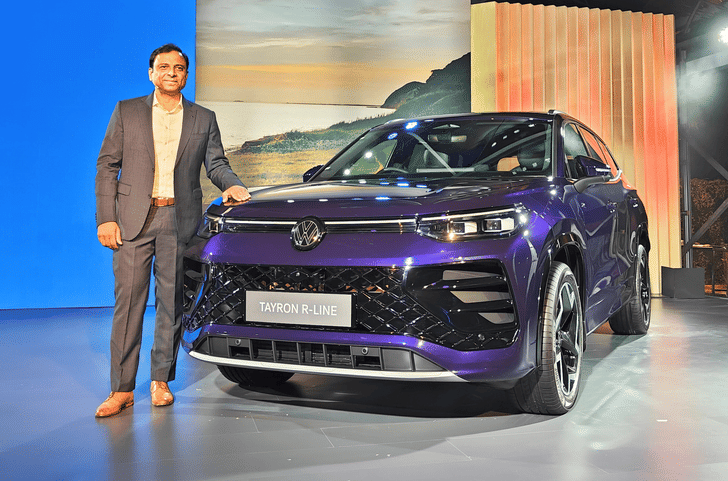
The Volkswagen Tayron starting price is ₹46.99 lakh (ex showroom, India). Meanwhile, the Volkswagen Tayron on road price in Amravati is ₹55.84 lakh for the R Line variant, which will understandably vary from city to city. The Tayron on road price of about ₹55.84 lakh includes taxes and RTO fees, among other miscellaneous charges.
Volkswagen Tayron price & variants
Price of Volkswagen Tayron alternatives
Volkswagen Tayron news
Volkswagen Tayron Images
Volkswagen Tayron videos

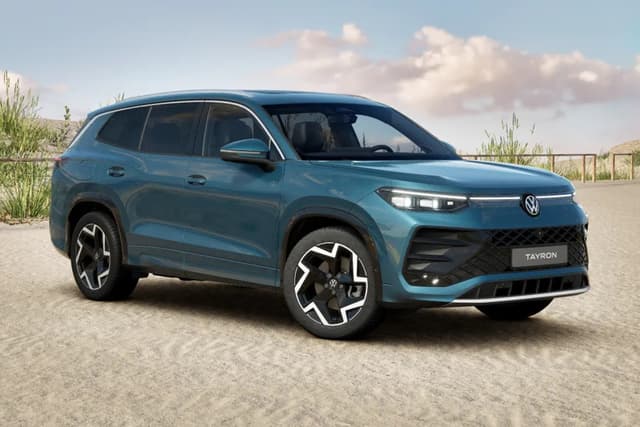
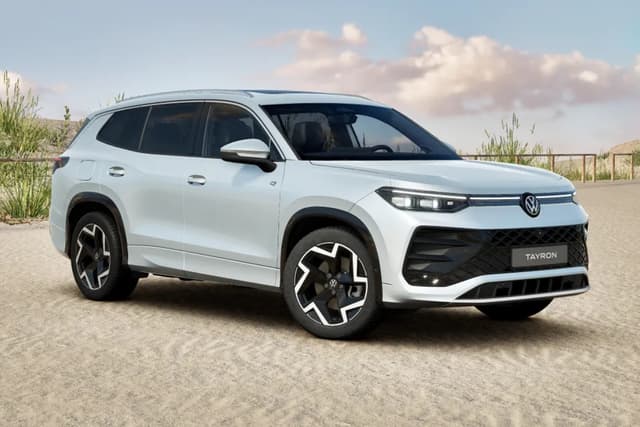
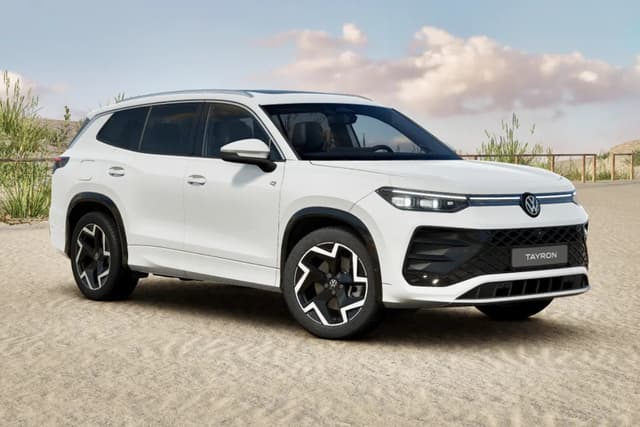
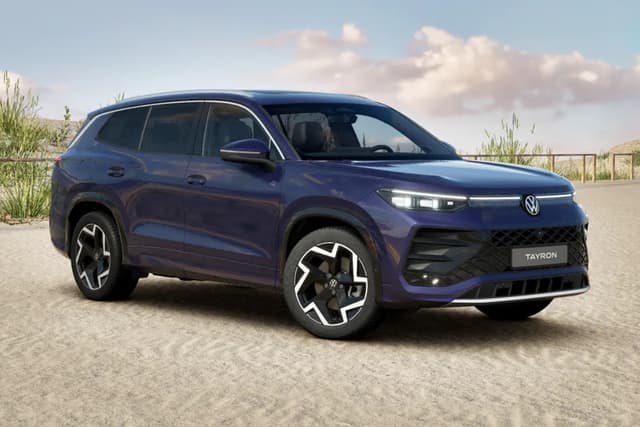
Volkswagen Tayron Colours
Volkswagen Tayron FAQs
The Volkswagen Tayron R-Line’s ex-showroom price in Amravati starts at ₹46.99 lakh.
The on-road price of the Volkswagen Tayron in Amravati starts at ₹55.84 lakh.
The R-Line is the most affordable variant of the Volkswagen Tayron in Amravati.
The most expensive variant of the Volkswagen Tayron in Amravati is the R Line.
The starting price of the Volkswagen Tayron R-Line in Amravati is ₹46.99 lakh (ex-showroom, India).
More questions you may find useful
Chetan Gupta
•5dHi, I have to travel to my hometown, which is around 700 km away, 2-3 times a year with my family of three. Currently, I own a Toyota Innova Crysta 2.7V 2022 manual. I am planning to buy a luxury automatic car within a budget of ₹55 lakh. Could you please suggest some suitable options? Should I consider a demo or a new car?

Autocar India
In this price range, you always have to choose badge versus value, as there are some exceptional executive sedans and SUVs available for the same price as entry-level cars with luxury badges on them. If you're after a luxury badge specifically, we recommend the Mercedes-Benz A-Class Limousine, which is excellent value for money, or if you want an SUV, the Audi Q3, which is a little dated now. But offers the best overall package of performance, practicality and comfort. However, for the same money, the Toyota Camry offers far more space comfort and mileage thanks to its strong hybrid powertrain, for similar money. And similarly, the Skoda Kodiaq or Volkswagen Tayron offer far greater space, practicality and power than a similarly priced luxury-branded SUV. However, these big, seven-seat SUVs with 2.0-litre turbo-petrol engines are quite thirsty and could burn a hole in your pocket at the fuel pumps. However, if you're accustomed to the running costs of an Innova Crysta 2.7 petrol, then these won't be too far off. Of all these, we recommend the Toyota Camry hybrid for its all-encompassing offering of comfort, luxury, space and mileage at this price.
Varun Singh
•3wI am confused between the Tiguan R-Line and Tayron. I am getting a new feature version of the Tiguan R-Line (with keyless entry, automatic tailgate, and space-saver spare wheel) for ₹42L on-road (2025 import), and the Tayron I am getting at ₹52.5L on-road. While the Tiguan R-Line misses out on ventilated seats, a 360-degree camera and ADAS (although I have heard it is available in the Euro-spec), it gets DCC Pro, which is great for ride comfort. Tayron gets all the other features but misses out on DCC Pro. Should I go with the Tiguan R-Line for ₹42L or the Tayron for ₹52L? I am an existing Polo owner for the past 9 years.

Autocar India
The Rs 42 lakh on-road price for the Volkswagen Tiguan R-Line is a very good deal, as it is heavily discounted from the original on-road price, which was in the high 50s across cities. But, as you pointed out, it misses some key features and is not as well-equipped as the VW Tayron.The Volkswagen Tayron is a larger SUV and is positioned as the more premium, family-oriented option, with more space and a richer features list. The Tiguan, in contrast, is more driver-focused and more compact, making it easier to drive and park in the city and more satisfying from behind the wheel.If you are looking for a more premium and spacious SUV, with extra features and a greater sense of luxury and tech, the Tayron naturally appeals more. It works better if you regularly use the back seat with adults, need more luggage space, or value features like ventilated seats, 360-degree camera and ADAS above all else.However, if you enjoy driving yourself and want something that feels agile, solid and engaging, the Tiguan R-Line plays more to those strengths. Its size, stance, and setup make it feel more alert and connected, which will resonate with you as an existing Polo owner for 9 years who is used to a sharp, driver-centric hatchback.
Vinayak Sanjeev
•3wI’ve recently booked a Volkswagen Tiguan because I’m getting a very aggressive deal of around ₹45 lakh on-road. However, I’ve started liking the Skoda Kodiaq as well, which would cost me about ₹53 lakh on-road. My usage is mostly city traffic driving with occasional highway trips. Usually there are 4 people in the car and sometimes 5. The complication is that I’ve already confirmed the Tiguan booking via email and if I cancel it now I might lose around ₹2.5 lakh. Given the effective price difference (around ₹10.5 lakh when considering the cancellation loss), would the Kodiaq still be worth considering over the Tiguan? Or is it more sensible to stick with the Tiguan? My priorities are comfort in traffic, good rear seat comfort for family use, and long-term ownership satisfaction.

Autocar India
The Volkswagen Tiguan and Skoda Kodiaq are essentially the same SUV underneath, with the same engine, gearbox and chassis. It's just that the 5-seat Tiguan R-Line is a little smaller; something that's addressed by the recently launched Volkswagen Tayron. As such, given your requirements and usage, you should stick with the Tiguan as it is too good a deal to pass up. And for what it's worth, the Tiguan is a full CBU import, while the Kodiaq is locally assembled, but moreover, there are some feature differences between the two - the Volkswagen gets ADAS, adaptive dampers and a larger 15-inch screen, while the Skoda gets powered and ventilated front seats, rear window blinds and a 360-degree camera. The biggest difference is that the Kodiaq offers third row of seats, but they're not very spacious, and since you mostly travel with four passengers, it's better to use that space for luggage anyway - the VW loses about 130 litres to the Skoda (in 5-seat mode) but they're both very spacious. With regards to your priorities of comfort in traffic, good rear seat comfort for family use, and long-term ownership satisfaction, the two are virtually the same.
Kunal Garg
•4wHi Autocar Team, I am planning to buy a new SUV in 2026 within a budget of ₹30-40 lakh. I want a proper off-road capable vehicle that also works well as a family car. Can we expect the Toyota RAV4 to launch in India in 2026? Please advise.

Autocar India
As of now, Toyota has no concrete plans to bring the Toyota RAV4 to India in 2026 or anytime soon. The challenge is cost. The RAV4 would have to be imported or assembled in small numbers, which would push its price well beyond what most buyers in the Rs 30-40 lakh bracket expect. Also, by Indian standards, it’s not a particularly large SUV, and at that price, buyers here tend to want more size and presence.Sadly, there’s a bit of a vacuum in the Rs 30-40 lakh space, and in this range, your more practical choices are SUVs like the Mahindra XUV7XO and the Tata Harrier. Both are spacious, comfortable for family use, and capable on bad roads. If you can stretch closer to Rs 50 lakh, options like the Skoda Kodiaq and the upcoming Volkswagen Tayron (a more affordable version below the R-Line is expected) are very strong all-rounders with a more premium feel.Another SUV worth waiting for is the Kia Sorento, which we understand could arrive around the festive season at roughly Rs 40 lakh. That might come closest to what you’re looking for, a proper global SUV with family practicality and some genuine all-road ability.
Abhi
•4wHi Autocar Team, I am planning to upgrade from my Hyundai Venue to a 6-seater SUV with captain seats for long-term ownership. My top priorities are low maintenance, reliability and a good ownership experience. My budget allows me to consider options like the MG Gloster, MG Majestor or the Volkswagen Tayron, although I do not want the Toyota Fortuner as it is very common on the road. I have also driven the Tata Safari and Mahindra XUV700, which would cost significantly less. Since I plan to keep the car for 8-10 years, which option would offer the best reliability, lowest maintenance and overall peace of mind among these SUVs? Additionally, with a monthly running of about 1,200-1,500 km, mostly in the city, should I choose a petrol or diesel SUV for better long-term ownership costs?

Autocar India
For your limited running, a petrol-engined vehicle makes the most sense in terms of long-term reliability and running costs. Among your premium picks, the Volkswagen Tayron stands out as a solid choice thanks to its German build quality and premium interior. Its 2.0-litre engine delivers strong performance, and it is well equipped. It doesn’t offer captain’s chairs, which you mentioned you would like. But the second row is spacious and comfortable, and it can slide forward to free up some additional room for third-row occupants. That said, the third row is best suited to shorter journeys. While service costs will be on the higher side, the Tayron should be fairly reliable on paper, and the overall ownership experience is likely to be very satisfying.As you mentioned, you are open to considering the Tata Safari and Mahindra XUV 7XO. We would also suggest looking at the Toyota Innova Hycross. Since you are prioritising low ownership costs and peace of mind over the next 8 to 10 years, the Hycross is a better choice than the Safari and XUV 7XO. Additionally, it can be optioned with captain’s chairs in the middle row and has a genuinely usable third row. It does share the same drawback that put you off the Fortuner. It is quite common, but the reason for its popularity is simply that it is such a well-rounded product.Do take a test drive of all these options, and spend some time in the middle and third rows as well, before making your final decision.
Jitender
•5wHi, I am currently driving a Toyota Fortuner 4x2 AT, and my daily driving is approximately 100km in the city. I want to upgrade to a new car, with a maximum net budget of ₹50 lakh after exchanging my existing car. I am open to both sedan and SUV options. Kindly suggest a suitable option.

Autocar India
A 100km daily city run is quite substantial, and the big, heavy Toyota Fortuner 4x2 AT isn’t really the most convenient or efficient car for that kind of usage. However, since you are used to the toughness and reliability of the Fortuner, a logical upgrade would be to stay within the Toyota family.The Toyota Innova HyCross in its strong-hybrid guise is a very sensible option. It offers excellent fuel efficiency, which will really help, given your high daily running. At the same time, it retains typical Toyota traits, like a tough build and strong long-term reliability. Compared to the Fortuner, the HyCross has a more practical and spacious cabin, and the top-spec version, which comfortably fits within your Rs 50 lakh net budget, even gets Ottoman recliners in the middle row, adding a real touch of comfort.If you’d like to explore an SUV outside Toyota, the Skoda Kodiaq is worth considering. It’s a full-size seven-seater with a stronger focus on comfort and luxury, offering a more urbane and premium feel compared to the hardy Toyotas. The Volkswagen Tayron is essentially the same car underneath, with a slightly different interior treatment and character. Both the Kodiaq and Tayron are better suited to urban driving in terms of refinement and comfort, but the Toyota would still edge ahead in terms of efficiency and long-term peace of mind.You could also consider the Toyota Camry, which would actually be our pick. Sedans inherently offer better ride comfort and handling balance for city use, and the Camry is spacious, extremely comfortable and easy to get in and out of. For your kind of daily driving, it would feel far more relaxed and effortless while still giving you the Toyota reliability you’re accustomed to.
Krish Mehta
•7wWant to buy an SUV for around Rs 50 to 60 lakh. Five-seater preferred. Driving dynamics and comfort are priorities. Daily driving of around 40 km.

Autocar India
The Skoda Kodiaq would be your best option given the requirements. It is comfortable and spacious, with plush seats and a well-set-up suspension, and it has all the premium tech and features expected of a premium SUV.Additionally, the 2.0-litre, 200hp TSI engine offers good power and performance is genuinely impressive given its luxury character. What's also impressive is that despite being a full-size SUV, the dynamics and chassis are impressive. High-speed handling is neat and tidy, while at lower speeds, the light steering makes the large Kodiaq feel quite manoeuvrable and easy to live with. This Skoda car is all-wheel drive, and that means grip in corners is very good.The other alternative would be the Volkswagen Tayron R-Line, which has similar underpinnings to the Kodiaq. Prices for the Tayron are not out yet, but it is likely to be close to the Kodiaq since they both share a lot in common.
Rajadurai S
•7wHi Autocar, I am looking to upgrade from my Kia Seltos to a bigger and more spacious car, preferably a 6 or 7 seater. I have shortlisted a few cars: Mahindra XUV 7XO, Skoda Kodiaq and Volkswagen Tayron. Is it worth paying the premium for the Kodiaq or Tayron over the 7XO? I liked the XUV 7XO in a short test drive. I still need to test drive the Kodiaq. Please give me your opinion on the same. Thank you.

Autocar India
The Mahindra XUV 7XO is a good option for a 6/7-seater SUV. It is spacious, comfortable and has a good feature list. The 2.0-litre turbo-petrol engine is also quite strong and refined.The Skoda Kodiaq is a more premium and upmarket SUV that is also very spacious and comfortable, and the 2.0-litre turbo-petrol engine is quite strong, and it also gets all-wheel drive.The Volkswagen Tayron is similar to the Kodiaq with an upmarket cabin and the same TSI engine. However, the XUV 7XO is extremely well-equipped and has a better ride quality than both the Kodiaq and Tayron. That said, the third row is not as spacious, so if you need the extra seats frequently, the Kodiaq or Tayron will be better.The XUV's strength lies in its value proposition as it is also a lot more inexpensive in comparison with the top-spec variant, priced almost Rs 25 lakh less than the Kodiaq.
Abinash
•7wI have recently purchased a Tata Punch and am very satisfied with the car. Previously, I owned a Dzire and a Honda Civic. Now, I am planning to buy a German car, and my budget will be around ₹50 lakh (on EMI). I am confused about which one to go for. Since this budget puts me close to the premium car market in India, I have shortlisted brands like the Jeep Meridian, VW Tayron, Fortuner, etc. My priorities are good mileage (expecting at least 15 kmpl), top-notch performance, luxury seating and comfort, and decent looks. The powertrain would be petrol manual only. Please suggest a suitable choice.

Autocar India
Unfortunately, none of the cars here meet your requirement of a minimum mileage of 15 kpl, and none of them offer a manual transmission with their petrol engines. In fact, the Jeep Meridian is a diesel-only SUV and does not come with a petrol engine option.If you are flexible on mileage and don’t mind going for an automatic, we would recommend the newly launched Volkswagen Tayron. It is the best of the lot: the most engaging to drive, with a fantastic cabin, and powered by a strong and smooth 2.0 litre turbo petrol engine.The R-Line variant of the Tayron will be well above your budget, but the standard trim, expected to arrive in April, should be closer to your ₹50 lakh budget.
Rajadurai S
•7wHello Autocar Team, I currently own a Kia Seltos Petrol and am planning to upgrade to a bigger car by the end of this year. At the moment, I am considering the Volkswagen Tayron R-Line. However, I am also wondering whether it would be better to wait for the upcoming Škoda Kodiaq vRS, which is expected to launch later this year. Do you have any idea about the expected pricing of the Kodiaq vRS, especially considering the possible price reductions due to the India-EU Free Trade Agreement (FTA)?

Autocar India
The Skoda Kodiaq RS is an enticing proposition, which combines the practicality of the 7-seat Kodiaq with the performance of the Octavia RS sharper handling. Thanks to specially tuned suspension and adaptive dampers. The best part is, in our review of the SUV, we found that it doesn't make too many compromises to comfort in the process. However, since the India-EU FTA is not coming into effect anytime soon - certainly not this year. Its benefits are unlikely to affect the Kodiaq RS's price. As a full CBU import positioned above the locally assembled Kodiaq L&K, we expect it to be priced close to Rs 60 lakh, on road. Hence, if you're not 100% in need of the extra 60hp that you get from the Kodiaq RS, the Volkswagen Tayron R Line, with a 205hp version of the same engine, should offer more than enough performance at a much more reasonable price.