Last Updated on: 25 Apr 2026
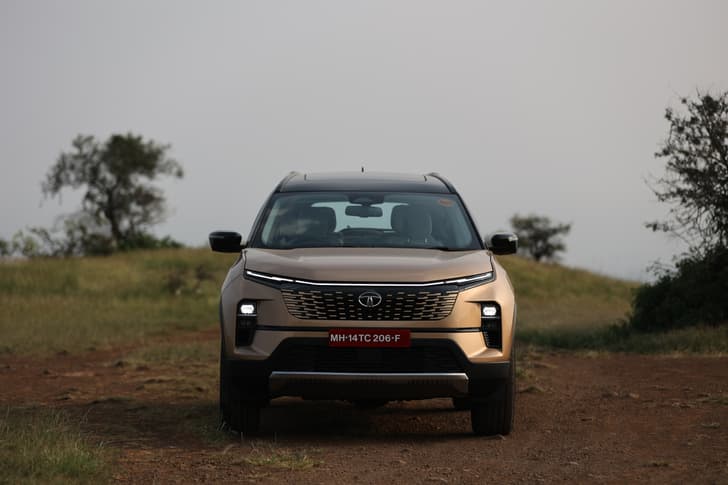
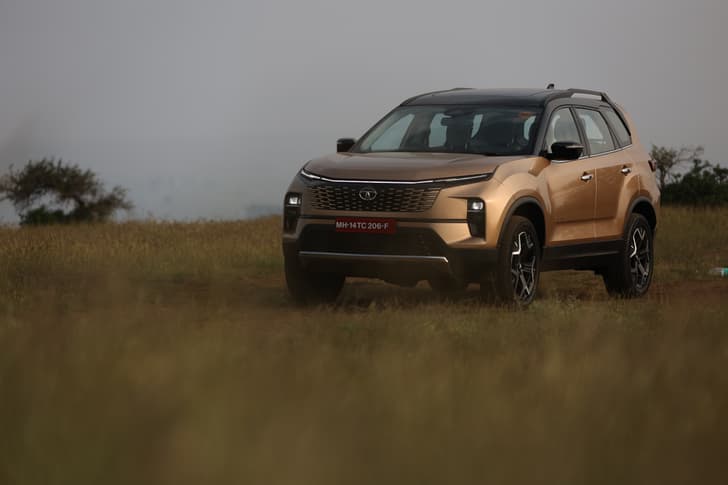
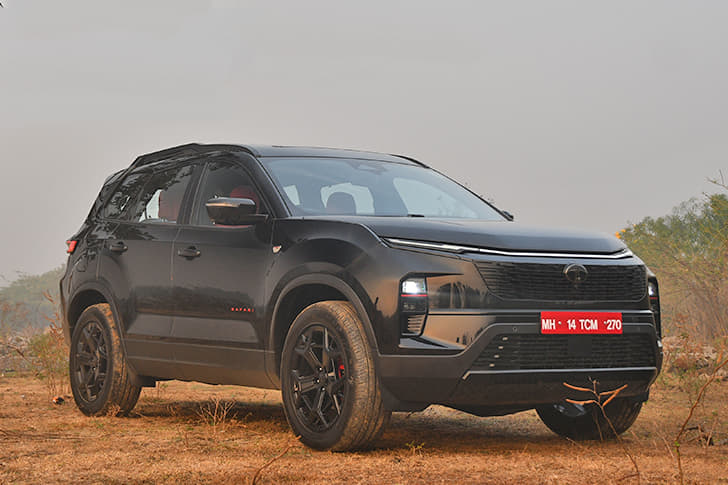
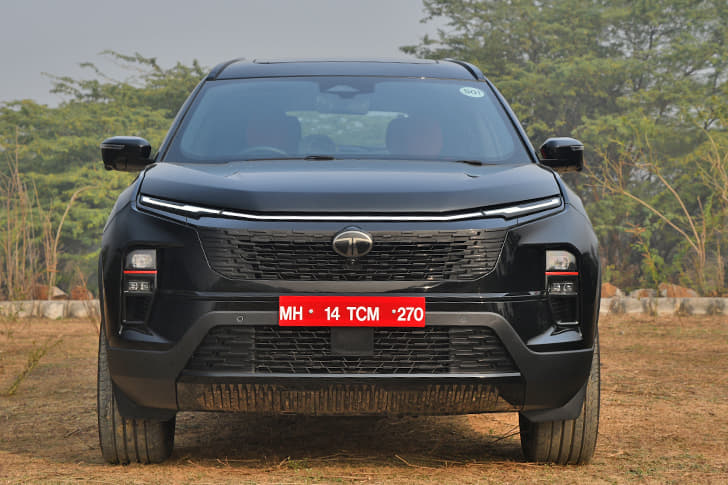
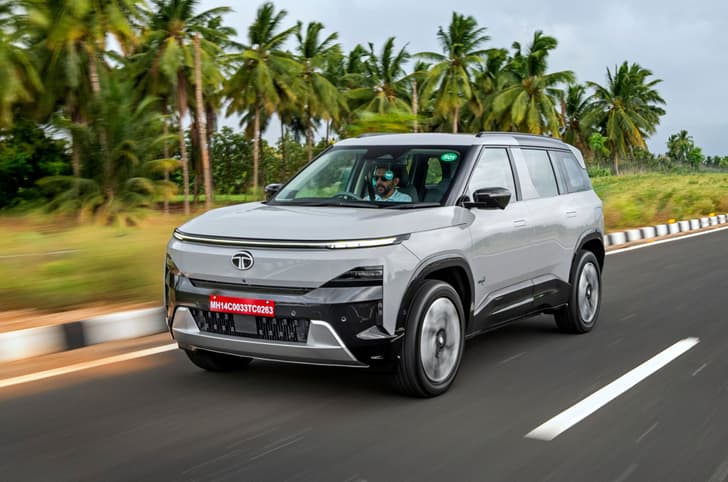
Tata Safari Smart 7 seat 2.0 Diesel
The Tata Safari Smart 7 seat 2.0 Diesel variant is priced at ₹14.75 lakh. The Smart 7 seat 2.0 Diesel variant offers key features like Airbags, Parking sensors, Rear passenger adjustable seats, Automatic climate control, Adjustable ORVM. Explore complete specifications, and features below.
Tata Safari Smart 7 seat 2.0 Diesel specifications
Engine & Transmission
Fuel Type/ Propulsion | Diesel |
Engine Installation | Front |
Pure Electric Driving Mode | No |
Number of Cylinders | 4 |
Engine Displacement | 1956 cc |
Engine Type | Turbocharged |
Max Engine Power | 170 hp at 3750 rpm |
Max Engine Torque | 350 Nm at 1750 - 2500 rpm |
Drive Layout | Front-Wheel |
Gearbox Type | Manual |
Number of Gears | 6 |
Lockable Differential/s | No |
Fuel & Performance
Fuel Tank Capacity | 50 litres |
Terrain Modes | No |
Fuel Supply System | Common Rail |
Emission Standard | Bharat Stage VI |
Official Fuel Economy | 16.3 kmpl |
Auto Start/Stop | No |
Suspension & Steering
Front Brakes | Discs |
Rear Brakes | Discs |
Type of Power Assist | Electric |
Steering Adjust | Tilt and Telescopic |
Steering Adjust type | Manual |
Front Suspension Type | Independent, MacPherson Strut |
Front Springs | Coil Springs |
Rear Suspension Type | Semi-independent, Torsion Beam |
Rear Springs | Coil Springs |
Damper Control | No |
Ride Height Adjust | No |
Wheels | Alloys |
Wheel Size | 17 inches |
Front Tyre Size | 235/65 R17 |
Rear Tyre Size | 235/65 R17 |
Spare Wheel | Space Saver |
Dimensions
Length | 4668 mm |
Width | 1922 mm |
Height | 1795 mm |
Wheelbase | 2741 mm |
Boot Capacity | 73-1550 litres |
Doors | 5 |
Tata Safari Smart 7 seat 2.0 Diesel features
Comfort
| Power Windows | Front and Rear |
| Interior Lamps | |
| Cooled Glovebox | |
| Cup Holders | |
| Comfort Headrest | |
| Roof Grab Handles |
Safety
| Crash Test Rating | 5 |
| Seat Belt Warning | |
| Speed Assist System | |
| Door Ajar Warning | |
| Blind Spot Collision Avoidance Assist | |
| Rear Cross Traffic Alert |
Exterior
| Body Coloured Bumpers | |
| ORVM turn indicators | |
| Outside rear view mirror (ORVM) | |
| LED taillights | |
| LED headlamps | |
| Headlight Height Adjuster |
Interior
| Speedometer | Analog |
| Tachometer | Digital |
| Trip Meter | |
| Average Fuel Consumption | |
| Average Speed | |
| Distance to Empty |
Entertainment
| Audio System | |
| Branded Music System | |
| CD Player | |
| Speakers | |
| USB Input | |
| AUX Input |
Connected Car Features
| Remote AC On / Off via App | |
| Remote Car Lock/Unlock via App | |
| Emergency Call Button | |
| Phone App | |
| Over the air (OTA) updates | |
| Remote Sunroof Open / Close via App |
Tata Safari variants
Tata Safari comparison
Questions you may find useful
Partha
•5dHi, I want to buy a large SUV (XUV, Scorpio, Safari) under ₹20 lakh, but I am concerned about petrol mileage. My driving is 40–50 km per day (city + highway), and every 3–4 months I take a 500 km trip. Should I buy a diesel car, and if yes, will it have any impact on the DPF?

Autocar India
Your 40–50 km daily running, plus periodic 500 km trips, is ideal for a diesel. These engines need consistent use and occasional highway driving to stay healthy, and you are already doing both. Issues with BS6 diesels usually arise only when the car is used for very short city runs or constant crawling traffic without ever getting a proper stretch.The DPF needs heat to clean itself, which happens during steady driving at moderate speeds or higher RPM. Short trips and low speed driving lead to soot build-up, but your usage naturally allows the system to regenerate. It also makes sense to choose diesel in cars like the Mahindra Scorpio N, XUV700 or Tata Safari, as the petrol versions are not very fuel-efficient.
Akash Gowda L
•5dI have Tata Hexa XT2 4x2 model that I bought in 2019, and it has done almost 1 lakh km. It is still performing well with no issues, but it has a manual gearbox. I also own smaller automatics like the K10 AGS (2023) and XUV 3XO AMT, but I do not have a 7-seater. Which among Safari AT or XUV 7XO (diesel AT only) is worth buying?

Autocar India
You want a hassle-free 7-seater automatic for family trips and lots of highway use, moving on from your Hexa manual. For that, we would pick the Tata Safari diesel automatic, because it will feel most natural after your Hexa and is the more comfortable family car day to day.Coming from the Hexa, you will like the Safari’s high seating, cushy second row, and the way it takes bad roads without tossing the family around. Its automatic shifts smoothly, so traffic and hills are easy. While the third row and the boot with all seats up are not huge, they are a touch more usable than in the XUV 7XO. Safety is strong too, with a 5-star crash test rating.A couple of trade-offs to note: the Safari’s diesel sounds a bit louder than the Mahindra car at idle and when pushed. If you care more about stronger highway pull and high-tech features, the XUV 7XO diesel automatic makes sense.Given the fact that you like your Hexa, the Safari AT will slot in as the smooth, comfortable family mover you want.
Bhupender
•5dI live in Faridabad and drive around 1,500 km per month, with 70% city and 30% highway usage. Which petrol car would be better, the Tata Safari or the XUV 7XO?

Autocar India
With 70% city use in Faridabad and about 1,500 km a month, and since you want a petrol car, the Mahindra XUV 7XO petrol automatic (a mid-variant like AX5) is the better fit for you. Its petrol engine is smooth and quiet at low speeds, and more powerful than the Safari’s 1.5-litre engine. The automatic is well-tuned for stop-and-go driving, so it moves off smartly and does not fumble when you need a quick gap. On your highway runs, the strong petrol pulls cleanly for quick passes, and it feels stable with a well-sorted ride.A trade-off to note is that this Mahindra car can be thirsty in city traffic, so if you press it hard, fuel consumption can be higher than expected. Overall, the XUV 7XO is a good fit for your needs.
Sunil Naths
•1wI have a Scorpio, a diesel Dzire, and a Tata Zest, all Euro 4, and all running fine without any problems. I want to buy a family car as I have to travel to New Delhi with my family two or three times a month. Which SUV would you suggest?

Autocar India
Trips to New Delhi with family two or three times a month call for a roomy, safe, easy long-distance car that stays steady at highway speeds. For that use, we would pick the Toyota Innova HyCross VX Hybrid. It suits this job best because it rides comfortably over bad patches, has a very spacious second row, and with the third row folded, it swallows all the luggage a family carries. The hybrid runs on petrol with help from an electric motor, so it feels very smooth and quiet in traffic and uses less fuel on those long runs. The automatic gearbox makes the Delhi traffic parts far less tiring, and Toyota’s good service network is another plus.Two things to keep in mind. The Toyota Innova HyCross is priced on the higher side, and there can be a waiting period in some cities. Also, it is not as rough-road tough as your old Scorpio, so if you do a lot of broken village roads, drive it and see if the ground clearance and comfort work for you.If you prefer a diesel with strong pull and a higher driving view, look at the Mahindra XUV 7XO diesel automatic. It is more comfortable and modern than your older Scorpio and feels steady at highway speeds. Another good diesel family SUV is the Tata Safari automatic, which has a big cabin, a more spacious third row than the 7XO and a comfy ride.Overall, for frequent Delhi runs with family, the Innova Hycross VX Hybrid lines up best. If you want a diesel feel, the XUV 7XO or Safari will suit you better.
Yash
•1wI am confused between the 7XO and Safari. I took the test drive of both and loved the rugged suspension setup of the Safari, but I also liked the easy driving nature and dynamics of the 7XO.

Autocar India
Between the two, the Tata Safari does a great job of projecting toughness. It feels solid, has that reassuring heft, and its suspension setup really shines on broken roads and you can carry speed with confidence and it just shrugs off rough patches.That said, the Mahindra XUV 7XO is the more rounded package overall. Its 2.2-litre diesel is not just more modern, but also noticeably smoother and stronger than the older Fiat-sourced 2.0-litre unit in the Safari. It delivers better drivability in everyday conditions, which makes a difference in city use as well as on the highway.Mahindra car has also worked well on the suspension, and the improvements show. The 7XO feels more composed, offers better ride comfort over a wider range of surfaces, and is simply easier to drive. It has lighter controls, better balance, and a more user-friendly nature overall.Where the Safari still holds an edge is in the third row. It’s more usable and accommodating, whereas the 7XO’s last row is quite tight and best reserved for occasional use.So unless third-row space is a priority, the 7XO stands out as the better all-rounder. It’s more refined, easier to live with, and ultimately the more modern SUV.
Darpan Shah
•1wHello, I am looking for a family car that is also good for highway use. The car will be used for approximately 1,000 km per month, mainly for long drives over the weekends. My budget is around 25-30 lakh, and I would prefer a car with captain seats in the second row and ample boot space, as I have a young child and we usually carry a lot of luggage. Highway safety is a priority.

Autocar India
We would recommend opting for the Kia Carens Clavis based on your requirements. The Carens is designed with family use in mind, offering comfortable captain seats and a usable third row when needed. With the third row folded, it provides a large luggage bay, which is one of your key requirements. It is easy to drive, comfortable over long distances and works very well for weekend highway trips with a young child.If you want a more rugged SUV feel with stronger highway performance, the Mahindra XUV 7XO is worth considering. It comes with a more powerful diesel engine and feels stronger and more effortless at highway speeds, especially when fully loaded. However, the third row is best suited for occasional use, and overall practicality is not as good as the Carens for a family setup.Similarly, the Tata Safari diesel automatic is a strong alternative if safety and ride comfort are top priorities. It feels robust, handles bad roads very well and has a more accommodating third row than the Mahindra. But like the XUV 7XO, it is not as flexible as the Clavis for carrying passengers and luggage together.The Toyota Innova HyCross remains the most comfortable and refined option overall, but the captain seat variants typically stretch beyond your budget once on-road costs are considered.
Ashu
•1wHi team, I am planning to buy a new car and am confused between the petrol versions of the XUV 7XO and the Safari. My usage will mostly be in the city for office commuting (around 20 km daily), and once every three months, we may go on a long trip of more than 1,000–1,500km round trip. I like the Safari in terms of looks, but my main concern is its sales numbers. Overall, in most aspects, the 7XO seems better except for mileage. My key concern is understanding the reliability, long-term running costs, maintenance, and drive quality of both. Please help me decide, as I am quite confused.

Autocar India
Pick the Mahindra XUV 7XO petrol. The biggest advantage here is the engine and overall driving feel. It is more powerful and feels effortless in both city traffic and on highways, so even with a full load on long trips, it remains relaxed. It is also the newer car, with a recent update, and overall feels more polished in terms of features and execution.The Tata Safari petrol appeals with its looks, space and comfort, and the interiors feel more premium. This Tata car is also the better choice if you prioritize third row comfort, as it offers more usable space and flexibility with an adjustable middle row.The trade-off is that the Safari petrol is less powerful and not as engaging to drive, and the XUV 7XO has a stronger track record when it comes to service and long-term peace of mind.
Hardik Desai
•2wI am planning to buy a new SUV. My daily commute is around 50km in Mumbai city with occasional intercity trips on the highway. Should I go with a diesel or a petrol engine? I have shortlisted the Mahindra XUV 7XO 7L Automatic Diesel. Which is the other option in a similar range?

Autocar India
Go for the Mahindra XUV 7XO diesel automatic. With your 50 km daily running and occasional highway trips, diesel makes good sense, as you will benefit from better efficiency over time and strong low-speed torque, which helps in city traffic. The automatic is smooth enough for everyday use, and the car feels stable and comfortable on the highway, with ample space for family and luggage. Mahindra’s service network in Mumbai is also well established, which adds to peace of mind.Do keep in mind that modern diesels use a DPF system, which can require occasional cleaning runs if the car is driven only in slow traffic. Your highway trips should naturally take care of this, but if a regeneration message appears, a steady 15-20 minute drive will clear it. Also, the third row is best suited for occasional use, so it is worth checking comfort if you plan to use all seven seats regularly.If you want a close alternative, the Tata Safari diesel automatic offers a more comfortable and spacious third row, making it more suitable for frequent family use. If you prefer to avoid diesel altogether and want the smoothest city experience, a strong hybrid like the Toyota Innova HyCross is worth considering, though it comes at a higher price.
Ashutosh Ingole
•2wI have a budget of 30 lakhs strictly, I already own a Hyundai Alcazar 2022 Diesel, I want to upgrade. I need a 7 seater, good performance and decent to good mileage car. Can you please suggest which one to buy? From 2022 to 2026, I drove my alcazar 90k km. My drive is basically mixed of 30% city and 60% highway and 10% off road(not serious off roading).

Autocar India
Go for the Mahindra XUV 7XO AX7 Luxury AWD diesel automatic (7-seater) - for your mix of highway, city and a bit of rough road, it feels like a decent step up from your Alcazar while staying in the Rs 30 lakh range. The diesel has strong pull, so overtakes on the highway feel easy even with a full family, and the automatic gearbox, makes long drives and traffic much less tiring. Thanks to its thoroughly re-engineered suspension, ride comfort is good over broken patches and the cabin feels wider and more solid than your Hyundai. One thing to be aware of: the last row is fine for kids or short trips, but not very roomy for tall adults, and with all three rows up the boot is small. Also, it is a big car, so tight city parking needs some care. Moreover, while the diesel's mileage is better than the petrol's, it's not great and warrants a light foot for good numbers.Another alternative that gets you more spacious and comfortable seats and a better highway ride, the Tata Safari Accomplished X+ diesel automatic is worth a look, but it does not get 4WD.
Rohit P
•2wI am planning to upgrade from my 2017 Honda City diesel, which is now over nine years old. I am looking for a 7-seater, although it will mostly be used as a 5-seater, with occasional requirements to carry 6-7 passengers. The car will primarily be used in Gurgaon for city driving, along with highway trips on the Delhi-Mumbai Expressway for going to Kota, Rajasthan. My key requirements include good comfort for five passengers, a usable third row when needed, and a preference for an automatic transmission. My budget is around ₹26 lakh. At present, I am inclined towards the Tata Safari Petrol AT (Accomplished X). However, my main concern is the drop in mileage and the resulting increase in running costs. My current Honda City delivers around 23 kpl on highways and about 15 kpl in the city, whereas I expect the Safari petrol automatic to return roughly 12 kpl on highways and about 9 kpl in city conditions. This translates to a significant 40-50% drop in fuel efficiency, leading to noticeably higher fuel expenses. My monthly usage is approximately 800 km, split evenly between city and highway driving. While fuel efficiency is an important factor, it is not the only deciding criterion. I have considered diesel options but ruled them out due to my usage pattern, as the car may remain unused for weeks at a time and may not see highway runs for two to three months, which could lead to DPF-related issues. I have also evaluated the Mahindra XUV700 AX7 AT in both petrol and diesel forms. The petrol variant still has relatively low mileage, while the diesel brings back the same DPF concerns. Additionally, the third row in the XUV700 is not very practical due to tight headroom and limited knee room. The second row does not slide, which makes access more difficult. I briefly considered the Carens Clavis as well, but it appears to offer lower safety compared to the other options.

Autocar India
Pick the Tata Safari petrol. It meets most of your requirements, though fuel consumption will be high, particularly in the city. As a daily car, it is easy to drive, has light steering and a smooth automatic transmission, and runs well on bad roads. The second row slides, so you can share space with the third row when you have 6 or 7 on board, and getting in and out is easier than in the Mahindra XUV 7XO. On the highway, it feels steady and quiet.If fuel efficiency is a big concern, consider the Kia Carens Clavis with turbo petrol DCT combo. It will be slightly more efficient than Safari, and the third row is even more comfortable. In terms of safety, it has a comprehensive safety suite but it hasn't yet been tested by BNCAP.On the test drive, take the Safari on the highway and check the stability and overtaking performance.