
Last Updated on: 29 Apr 2026
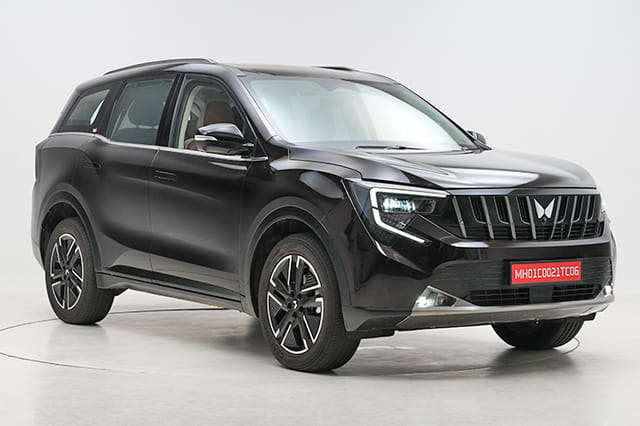
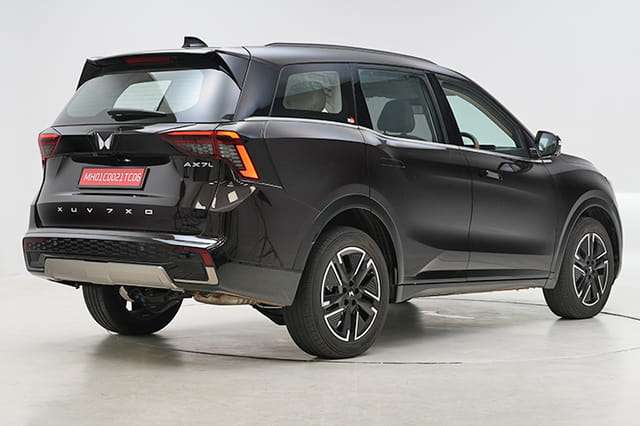
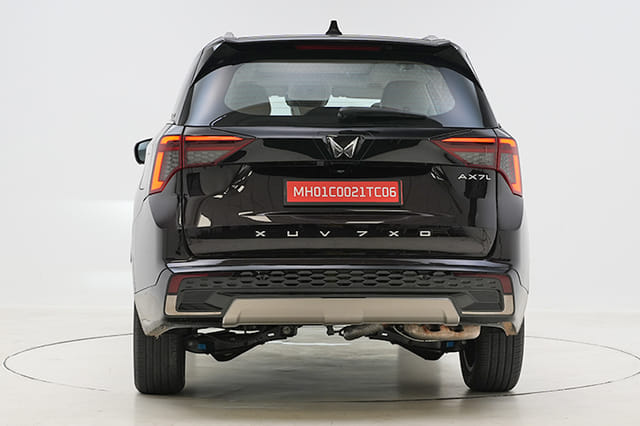
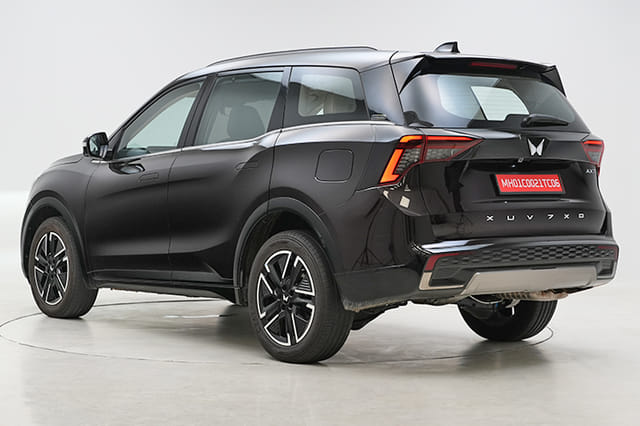
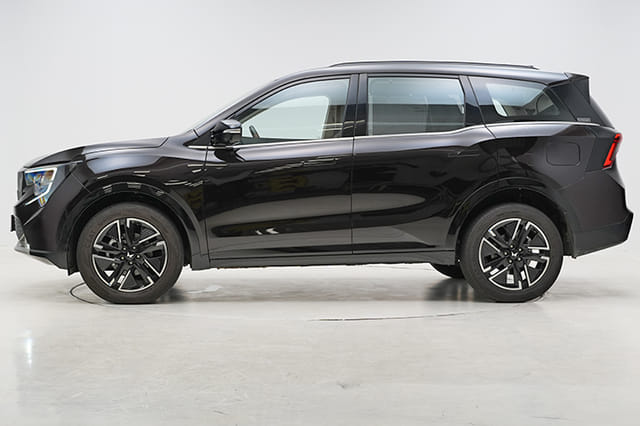
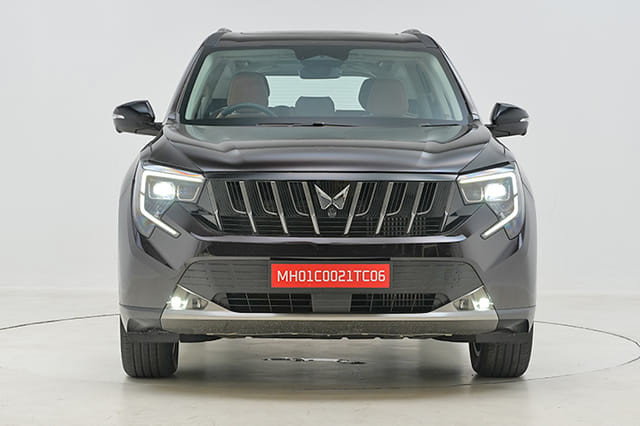
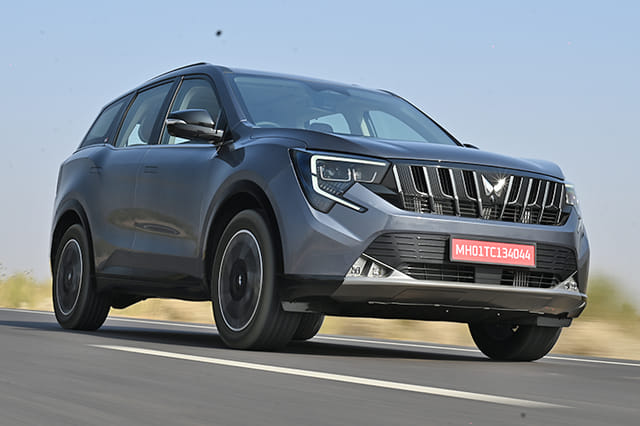
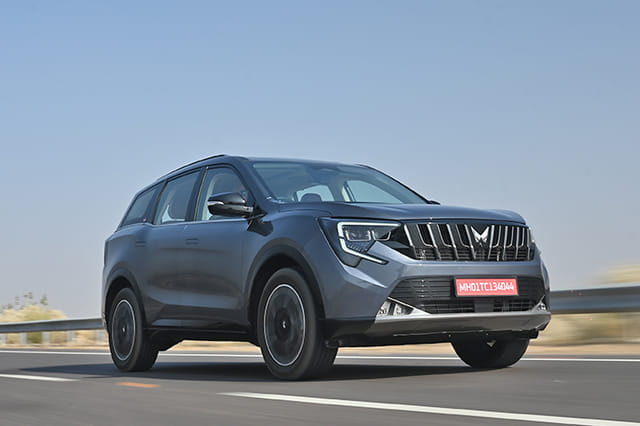
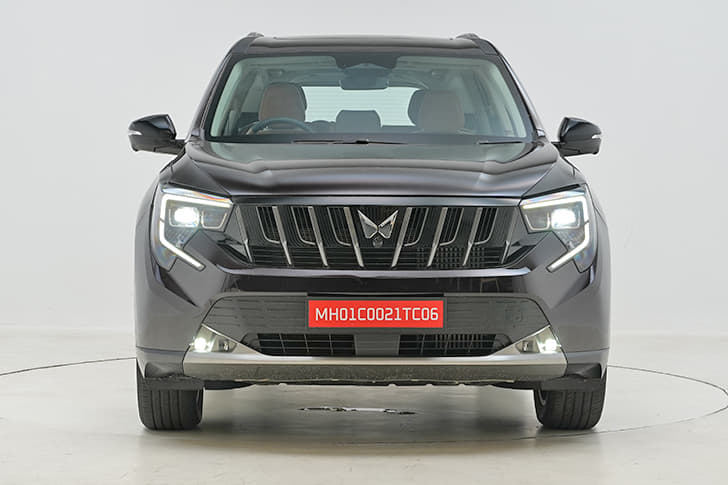
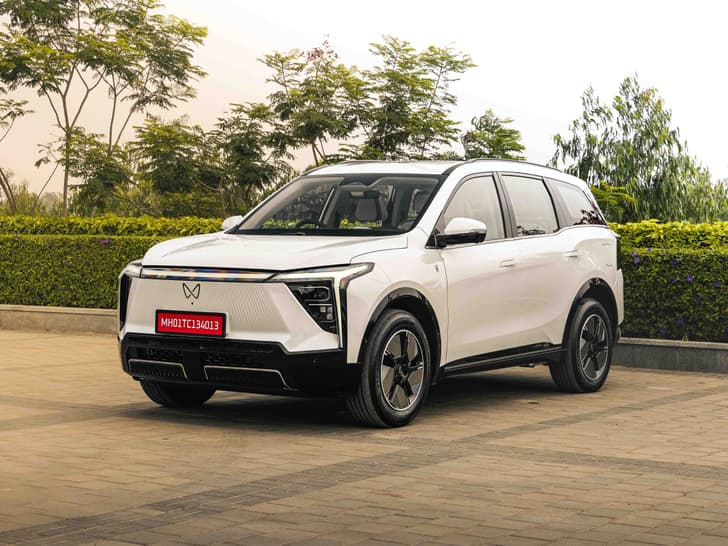
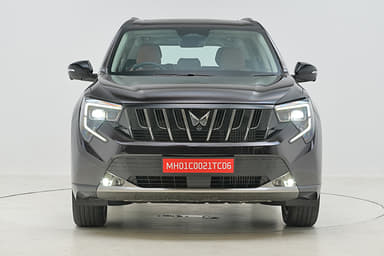
Mahindra XUV 7XO AX7 2.0 Petrol MT
The Mahindra XUV 7XO AX7 2.0 Petrol MT variant is priced at ₹18.48 lakh. The AX7 2.0 Petrol MT variant offers key features like 360 view camera, Cruise control, Sunroof, Blind spot monitor, Keyless start. Explore complete specifications, and features below.
Mahindra XUV 7XO AX7 2.0 Petrol MT specifications
Engine & Transmission
Engine Displacement | 1997 cc |
Engine Installation | Front |
Engine Type | Turbocharged |
Number of Cylinders | 4 |
Max Engine Torque | 380 Nm at 1750 - 3000 rpm |
Max Engine Power | 202 hp at 5000 rpm |
Fuel Type/ Propulsion | Petrol |
Gearbox Type | Manual |
Lockable Differential/s | No |
Drive Layout | Front Wheel Drive |
Number of Gears | 6 |
Fuel & Performance
Auto Start/Stop | Yes |
E20 Compatibility | Yes |
Terrain Modes | No |
Fuel Tank Capacity | 60 litres |
Emission Standard | Bharat Stage VI |
Fuel Supply System | Direct Injection |
Suspension & Steering
Rear Brakes | Disc |
Front Brakes | Ventilated Disc |
4 Wheel Steer | No |
Type of Power Assist | Electric |
Steering Adjust type | Manual |
Steering Adjust | Tilt and Telescopic |
Front Suspension Type | Independent, MacPherson Strut |
Damper Control | No |
Rear Springs | Coil Springs |
Rear Suspension Type | Independent, Multi-link |
Front Springs | Coil Springs |
Ride Height Adjust | No |
Spare Wheel | Space Saver |
Rear Tyre Size | 235/60 R18 |
Wheel Size | 18 inches |
Front Tyre Size | 235/60 R18 |
Wheels | Alloys |
Dimensions
Length | 4695 mm |
Width | 1890 mm |
Wheelbase | 2750 mm |
Height | 1755 mm |
Chassis Type | Monocoque |
Doors | 5 |
Mahindra XUV 7XO AX7 2.0 Petrol MT features
Comfort
| Door Pockets | |
| Rear Window Sun Shades | |
| Rear Reading Lamp | |
| Rear Power Outlet | |
| Climate Control | 2-zone |
| Rear Parcel Tray |
Safety
| Airbags | 6 |
| Blind Spot Monitor | |
| Adaptive Cruise Control | |
| Driver Attention Warning | |
| Front Collision Avoidance | |
| Impact Sensing Auto Door Unlock |
Exterior
| ORVM turn indicators | |
| Sequential Turn Indicators | |
| Wheel Arch Cladding | |
| Welcome and Goodbye Animation | |
| Headlight Height Adjuster | |
| Headlight Type | LED |
Interior
| Tachometer | Digital |
| Instantaneous Consumption | |
| Average Speed | |
| Average Fuel Consumption | |
| Shift Indicator | |
| Speedometer | Digital |
Entertainment
| Rear Entertainment Screens | |
| Bluetooth Audio Streaming | |
| Bluetooth Telephone Function | |
| Branded Music System | |
| CD Player | |
| Rear Seat Infotainment Controls |
Connected Car Features
| Remote Sunroof Open / Close via App | |
| Breakdown Assistance Call Button | |
| Remote AC On / Off via App | |
| In Car Payment | |
| Vehicle Tracking Via App | |
| Alexa Compatibility |
Mahindra XUV 7XO variants
Mahindra XUV 7XO comparison
Questions you may find useful
Humcha
•2dIt’s time to replace my beloved Tata Hexa XTA 2017 model. It is a car I truly loved, but since it is BS4, I am now forced to replace it. Which cars should I consider as replacements? I plan to buy in December 2026. Please suggest the exact variants and provide a detailed comparison of specifications. My budget is ₹15–25 lakh. Diesel is not a must, but I do prefer good torque. A 5-seater is more than enough. My usage is mostly (80%) highway driving. I am almost 55 years old and plan to keep the car for at least the next five years. I prefer an automatic transmission, but I am aware that not all automatics are the same. Safety is another key consideration.

Autocar India
After almost a decade with your Hexa, a good idea is to replace it with a tough and powerful diesel SUV, and we'd recommend the Tata Harrier Adventure X Diesel AT. It gives you the relaxed, solid, long‑distance feel that you liked in your Hexa, but in a newer and easier‑to‑drive package.It works for you because the diesel has strong pull at low and mid speeds, so overtakes on two‑lane roads need less effort. The 6-speed automatic is the torque-converter type that uses a fluid coupling, which is known for smoothness and long life, and it does not get hot and fussy in traffic. Safety is strong too, with a 5-star Bharat NCAP rating and must‑have features like 6 airbags and stability control. Ride comfort is good, and though not quite as tough-feeling as your ladder-frame Hexa, this Tata car feels softer and more comfortable overall.If you want the option of a third row of seats, there's also the Tata Safari at a slightly higher price point, which has all the same strengths of the Harrier. There's also the XUV 7XO, which is a better all-rounder and more fun to drive, but it doesn't feel quite as solid and commanding from behind the wheel as the Harrier or Safari.
Abhishek
•3dI am planning to buy either a 7-seater MUV (Mahindra XUV7XO or Scorpio N, diesel variants), but my usage pattern is quite low. I do not drive daily - typically just a couple of short trips per week (5-20 km) and one long drive of 200-300 km once a month or every two months. Given this usage, would a diesel engine make sense, or should I go with petrol? I also plan to use the car for long trips of 1,000–2,000+ km per year, including drives in the mountains and on rough roads.

Autocar India
With mostly short weekly trips, a 200-300 km run once a month, and a few long mountain drives each year, I would still pick diesel for you, and within your two, the Mahindra Scorpio N diesel 4x4 automatic fits this use best. It pulls strongly at low speed, so steep climbs with a full family and luggage feel easy, and its tougher build and 4x4 give you extra grip and confidence on broken roads or wet, uneven patches. On long highway and hill runs, the diesel will also use less fuel than the petrol in a big 7-seater like this.The one thing to watch with any new diesel is the exhaust filter. Lots of very short, stop-start trips can clog it over time. Your monthly highway run should help, but try to give the car a 20-30 minute continuous drive at a steady speed every couple of weeks to keep it happy. Also expect a bit more engine noise at idle than a petrol.If you want a softer, more family-friendly feel and mostly stick to good roads, the Mahindra XUV 7XO diesel automatic is the other strong choice from your list. If your weeks turn into only short city hops and you do not want to think about a diesel filter at all, the XUV 7XO petrol automatic will be smoother in town, but it will drink more fuel on hills and with seven on board.Overall, for your mountain plans and rough patches, the Scorpio N diesel 4x4 suits you best if you can give it those regular, longer runs.
Christopher
•3dI am planning to buy a 7-seater with a panoramic sunroof, which is a must-have for my kids. I drive around 2,200 km per month, mostly solo, with 95% of my usage on highways. The 7-seater will be used only occasionally, about 5-6 times a year. Given my usage, is it worth going for a 7-seater, or would a spacious 5-seater like the Maruti Suzuki Grand Vitara be a better choice? I also need good driver seat comfort, as I drive long distances frequently.

Autocar India
The Mahindra XUV 7XO diesel suits your usage perfectly. With high monthly running and mostly highway driving, you need a car that is stable, comfortable and effortless to drive, and the 7XO delivers on all three. It has a strong engine, a comfortable ride and feels planted at highway speeds. Driver seat comfort is also very good, which matters given how much you drive. The third row is not the most spacious or practical, but for occasional short trips, it works well and meets your requirements.If you specifically want a 7-seater with a better third row, then the Tata Safari is worth considering. It offers a more comfortable and spacious rear section. However, on most other aspects, the XUV 7XO remains the better overall product.On the question of choosing a 5-seater instead, it is strongly recommended to go for a 7-seater. It is not safe to carry more than five people in a 5-seater, even occasionally, and a proper 7-seater gives you that flexibility without compromise.Now, coming to the sunroof, since it is a key requirement for your children. Both the XUV 7XO and the Safari offer a panoramic sunroof, and it genuinely enhances the cabin experience. That said, it is important to treat it as a feature to enhance ambience, not as something to be used while standing or sticking out. It may seem fun, but even at low speeds, it can be unsafe in case of sudden braking or an impact.
Huzaifa mulla
•4dHi Team Autocar, currently I am driving a Volkswagen Vento diesel 2014 model and have driven 2.2 lakh km. I am now planning to buy a 7-seater because we are a family of six (3 adults and 3 children, all under 8 years). My driving is 50% city and 50% highway, as I live in a rural area. I am considering the XUV 7XO diesel automatic AX7L. Please let me know if I should go for it or consider any other big-size, proper SUV. My budget is ₹30 lakh but I can stretch it slightly beyond this if needed.

Autocar India
With a family of six, a 50:50 mix of city and highway use, and some rural roads in the mix, the Mahindra XUV 7XO diesel automatic is a good choice. It rides well on rough roads, has good cabin space, and fits your budget well.The diesel has strong pull at low speeds, so it moves easily with a full load and makes safe passes on two-lane highways. The layout works for your family since the second row is roomy, and the third row is fine for your young kids.There are trade-offs as well. With all three rows up, the boot is small, so you will need to plan luggage. The third row is also more cramped than the Tata Safari, which is worth considering if you plan to seat adults there.If you regularly deal with very rough rural roads, then the ladder-frame Scorpio N is an alternative, but you will be compromising on-road dynamics, interior space, and features. Overall, for your use, the Mahindra car is a great choice.
Rahul Bansode
•4dI am currently using a 2014 Maruti Wagon R CNG, which has completed 1,05,000 km in Maharashtra. The car is still in very good condition, and about 4 years are still left before it completes 15 years. I would now like to buy an automatic car. My family consists of 6 members (including 2 children). I use the car mainly for outstation travel once every 1–2 months, with around 80% highway usage and 20% city driving. My key requirements are good power, safety, and spaciousness. I am not interested in features like a sunroof or ADAS. My budget is ₹15 lakh and can be stretched up to ₹22 lakh.

Autocar India
Highway trips with the whole family of six and an automatic in the Rs 15-22 lakh range point us to the Kia Carens Clavis, specifically the 1.5 turbo-petrol DCT. Pick the HTK+ that comes without a sunroof. It fits your use because it has true three-row space, the third row is easier to get into than most taller cars, and even your older parents will find the ride comfortable on long runs. Coming from a Maruti Suzuki Wagon R CNG, you will feel a big jump in power and highway ease; the turbo-petrol has strong pull for quick overtakes, even with all six on board. Safety basics are well covered with six airbags and stability control across the range, and it feels steady at 100 kph, which matters for your 80 percent highway use.A couple of things to note. With all three rows up, the boot is small, so you may need to use soft bags or fold one seat for luggage on longer trips. Also, the DCT can feel a bit jerky in very slow, stop-and-go traffic, though your driving is mostly highway, so it should not bother you. If you often travel fully loaded and want an even calmer drive with better fuel efficiency on long trips, the Kia Carens Clavis diesel with the smoother 6-speed torque-converter automatic is also worth a look.If you want an even tougher-feeling highway cruiser, the Mahindra XUV 7XO diesel automatic is larger and feels very solid, but it will cost more and is harder to park. Overall, for your use and feature preference, the Carens Clavis automatically lines up best.
David
•1wI am planning to buy a new car by the end of the year, and my current top choice is the Mahindra XUV7X0 (AX7 petrol automatic variant). Earlier, I was considering the Kia Seltos and Hyundai Creta, but I no longer like their current exterior designs, so I have shifted my focus. For context, I currently own a Maruti Suzuki Ertiga (petrol + CNG), which is almost 10 years old and has been driven only around 50,000 km. My usage is quite low. The office is about 13 km away (around 30 km round trip), but I often use public transport. I mainly use the car on weekends, roughly 2-3 times a week, and my monthly running is around 400-450km. My priorities for the new car are: strong road presence and mass appeal, comfortable and premium interior, good reliability, reasonable service and maintenance costs (I am used to Maruti-level affordability), suitable for family trips. Given my low usage and requirements, would the XUV7X0 petrol automatic be a good choice, or should I consider other options?

Autocar India
Low monthly use, mostly weekend family trips, and you want strong road presence with a premium feel, in that brief, the Mahindra XUV 7XO petrol automatic is the right fit, and it’s the one we would pick for you. It lines up with your goals for three clear reasons. First, presence and space: it looks big, sits high, and feels like a big step up from your Maruti Ertiga. Five adults ride in real comfort, and with the third row folded, you get a huge boot for family trips. Second, the petrol motor feels smooth and strong at low speeds and on the highway, so city gaps and quick passes are easy without effort. Third, the cabin feels premium for the price, with a clean screen layout and a quiet ride that your family will like.A few trade-offs to note, given your context: service will not be Maruti-affordable, and the car will use more fuel than your Ertiga CNG. It’s also a large car, so tight parking will need care, and Mahindra’s software still throws the odd small glitch.If the budget allows, the Toyota Innova HyCross hybrid brings top comfort and very low city fuel use, but it is pricier. Overall, for your low running and desire for presence and a premium feel, the XUV 7XO petrol automatic fits best.
Anil Gupta
•1wHi Autocar team, I own a 2015 Hyundai i20 Elite petrol manual. My average running is around 500 km per month. I am looking for a practical SUV that can accommodate a family of 5–7 members occasionally. This will be my last car, as I am 58 years old, and it will mostly be driven alone or with a co-passenger. I have looked at the Tata Sierra and Mahindra XUV 7XO. I am confused between electric and petrol, and also between manual and automatic. Please suggest.

Autocar India
With 500 km a month with at most you and one passenger (but sometimes 5-7 members), the Mahindra XUV 7XO petrol automatic in the 7-seat version is the better fit for you. It gives you a proper third row for those rare family trips, yet the rest of the time it works well as a calm, easy daily car.For your low running, petrol makes more sense than electric. Try to avoid the higher upfront price of an EV as you will not drive enough each month to recover that extra cost. The XUV’s petrol with the automatic gearbox that changes gears on its own will feel far easier than your i20 manual in stop-go traffic.A couple of trade-offs to note. The Mahindra car that you are considering, is big, so parking in tight spots needs some care. Also, the third row is best for kids or short adults on short trips but not during long highway stretches.Overall, for your usage and this being your last car, the XUV 7XO petrol automatic 7-seater lines up best.
Manish Kulkarni
•1wWhich car should I buy if I plan to do road trips across India, including Ladakh, the Spiti circuit, followed by the 7 sisters & South India, with my family? I am looking for a five-seater, preferably diesel or hybrid. I can wait up to six months, until around Diwali. My yearly running will be around 10,000-12,000 km, which consists of 65% highway, 15% ghat roads, and 30% city driving. I live in the Thane suburbs (Dombivli). Good service, support and reliability are very important to me. The options I am considering are: XUV 7XO, Scorpio, Vision S, Thar Roxx, Duster (Hybrid), and Honda Elevate (Hybrid). Should I consider an AWD or 4x4 model, or are there any other options you would recommend?

Autocar India
From your list, the Mahindra Scorpio N 4x4 diesel is the safest fit for this use. As a five-seater with the last row folded, it offers a large boot, a tough body and proper 4x4 with low range for slush, snow or rocky terrain. It also has strong pulling power on steep hill roads when fully loaded. Mahindra’s wide service network on these routes is an added advantage when you are far from cities.Be aware that the Scorpio N is not as quiet or as comfortable on long highways as softer monocoque SUVs, and in the city, the ride can feel a bit bouncy. The Mahindra XUV 7XO is the better road car. It is more comfortable and refined, but for your intended usage, it is not as robust or as versatile as the Scorpio N, especially for tougher terrain in the Himalayas where the Scorpio N’s higher ground clearance and proper 4x4 make a real difference. The same limitation applies to options like the Renault Duster Hybrid and Honda Elevate.As for the Mahindra Thar Roxx, it is less comfortable than the Scorpio N, especially in terms of seating and long-distance usability.
PC
•1wI was using a Hyundai i20 N-Line iMT 2023 model, which I purchased in 2023. I have now sold it due to low mileage and heating issues. I am currently confused between the XUV 7XO AX7T petrol automatic (₹27.32 lakh), MG Hector petrol CVT (₹23.5 lakh), and Kia Seltos IVT GTX+ (₹24 lakh). I will be using the car with my wife and 3-year-old child, driving twice a week to office in the city and taking a road trip once every 3 months.

Autocar India
Do keep in mind that none of the models that you've shortlisted are particularly fuel efficient. Among these, the Kia Seltos IVT is likely to be the most fuel efficient, delivering approximately 10.3kpl in the city and 14.22kpl on the highway, while the petrol-automatic versions of XUV 7XO and MG Hector are likely to return fuel efficiency in single digits.Additionally, the interior of Seltos feels upmarket. This Kia car is spacious and for a family of three, it feels the right size. Sure, performance isn't as strong as the XUV 7XO, however for leisurely drives with the family its 1.5-petrol IVT combination works well.
Akash Gowda L
•1wI have Tata Hexa XT2 4x2 model that I bought in 2019, and it has done almost 1 lakh km. It is still performing well with no issues, but it has a manual gearbox. I also own smaller automatics like the K10 AGS (2023) and XUV 3XO AMT, but I do not have a 7-seater. Which among Safari AT or XUV 7XO (diesel AT only) is worth buying?

Autocar India
You want a hassle-free 7-seater automatic for family trips and lots of highway use, moving on from your Hexa manual. For that, we would pick the Tata Safari diesel automatic, because it will feel most natural after your Hexa and is the more comfortable family car day to day.Coming from the Hexa, you will like the Safari’s high seating, cushy second row, and the way it takes bad roads without tossing the family around. Its automatic shifts smoothly, so traffic and hills are easy. While the third row and the boot with all seats up are not huge, they are a touch more usable than in the XUV 7XO. Safety is strong too, with a 5-star crash test rating.A couple of trade-offs to note: the Safari’s diesel sounds a bit louder than the Mahindra car at idle and when pushed. If you care more about stronger highway pull and high-tech features, the XUV 7XO diesel automatic makes sense.Given the fact that you like your Hexa, the Safari AT will slot in as the smooth, comfortable family mover you want.