
Last Updated on: 04 May 2026
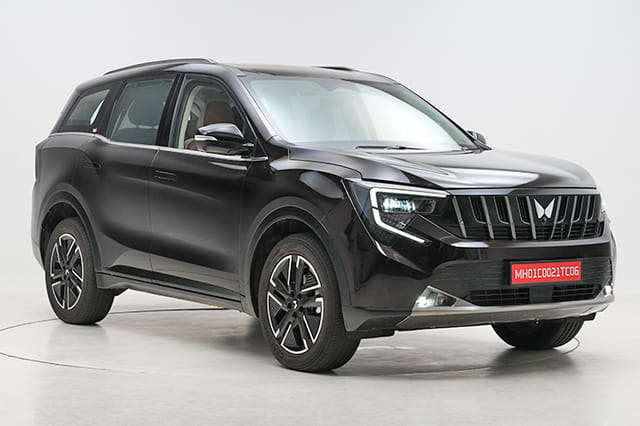

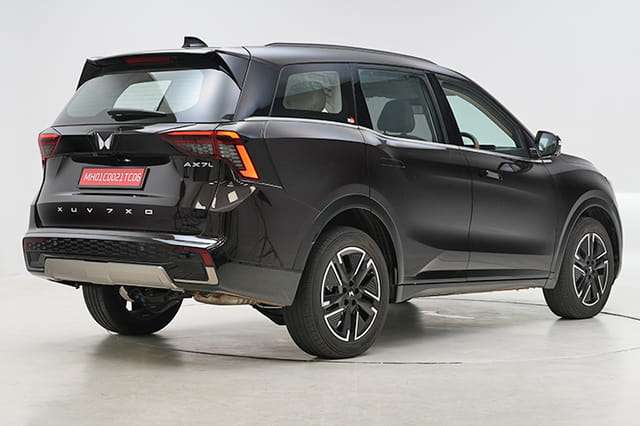
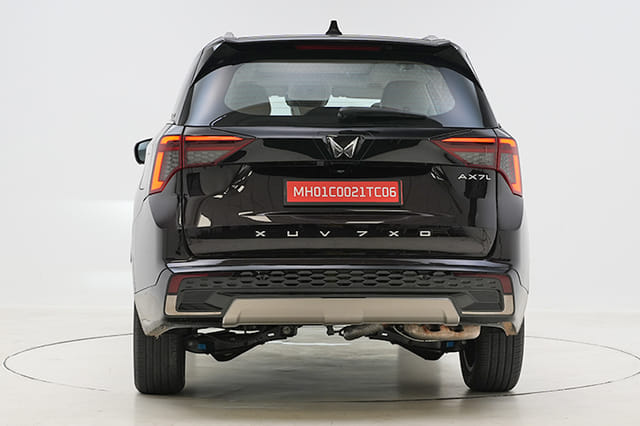
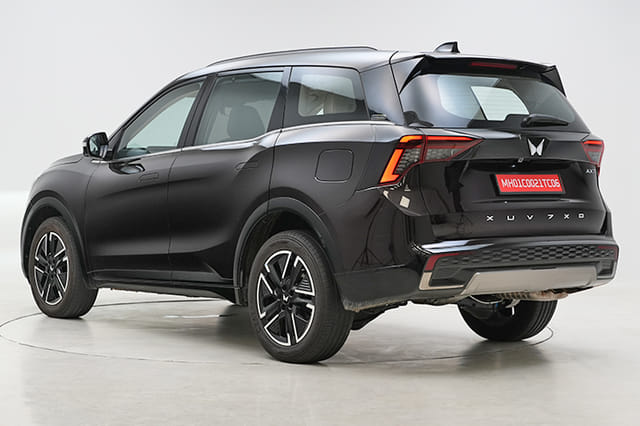
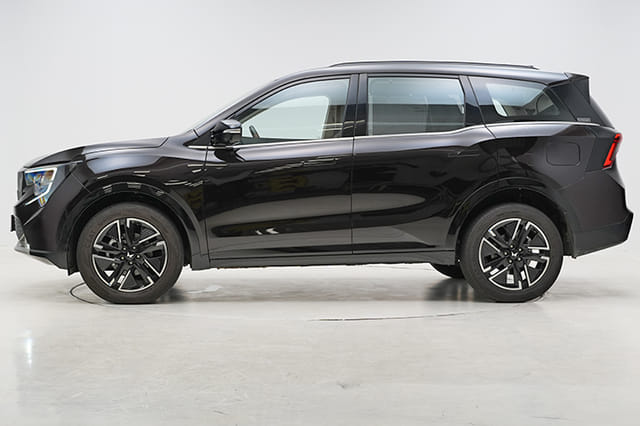

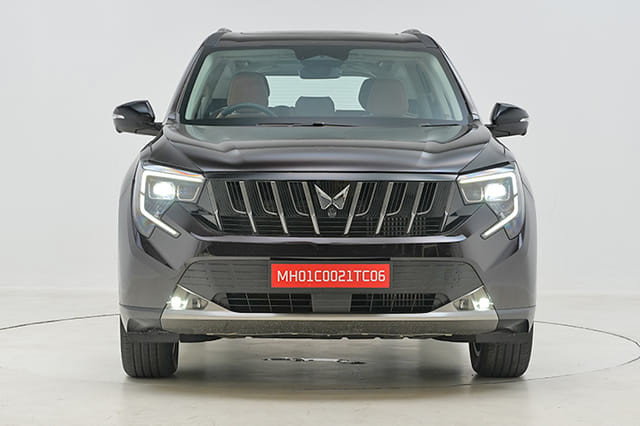
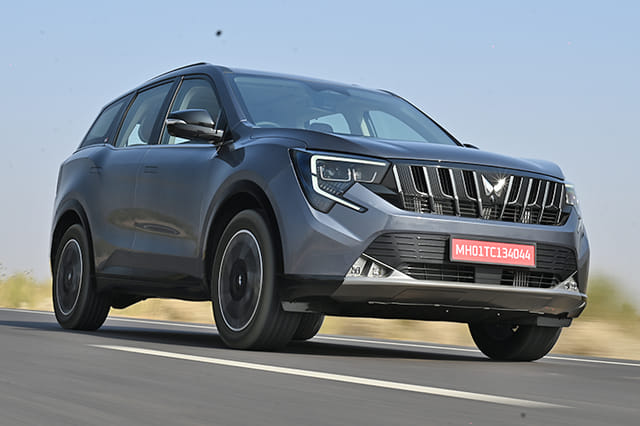
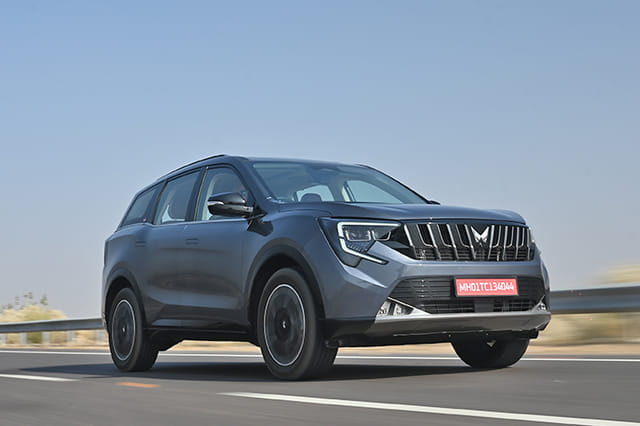
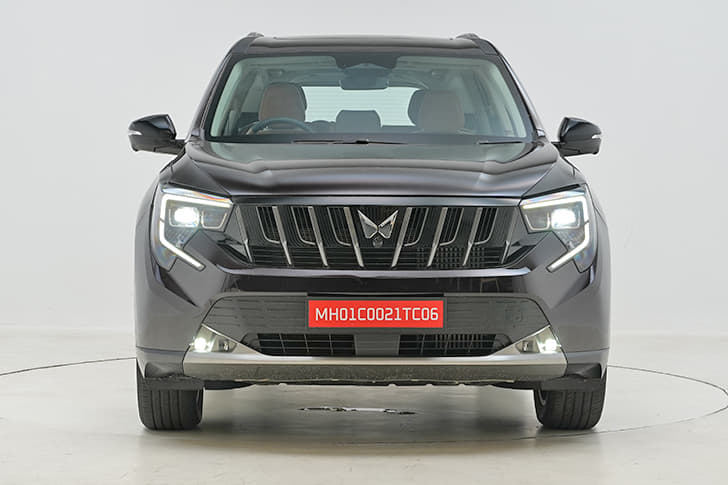
Mahindra XUV 7XO AX7 Luxury 2.2 Diesel 6 Seat AT
Mahindra XUV 7XO AX7 Luxury 2.2 Diesel 6 Seat AT specifications
Engine & Transmission
Fuel Type/ Propulsion | Diesel |
Max Engine Power | 185 hp at 3500 rpm |
Max Engine Torque | 450 Nm at 1750 - 2800 rpm |
Engine Type | Turbocharged |
Engine Installation | Front |
Engine Displacement | 2184 cc |
Number of Cylinders | 4 |
Paddle Shifters for Automatic Gearbox | No |
Number of Gears | 6 |
Sport Mode for Automatic Gearbox | Yes |
Manual Shifts via Gear Lever on Automatic Gearbox | Yes |
Drive Layout | Front Wheel Drive |
Lockable Differential/s | No |
Gearbox Type | Torque Converter |
Fuel & Performance
Terrain Modes | No |
Auto Start/Stop | Yes |
Fuel Supply System | Common Rail |
Emission Standard | Bharat Stage VI |
Fuel Tank Capacity | 60 litres |
Drive Mode Types | Multiple |
Suspension & Steering
Rear Brakes | Disc |
Front Brakes | Ventilated Disc |
4 Wheel Steer | No |
Type of Power Assist | Electric |
Steering Adjust type | Manual |
Steering Adjust | Tilt and Telescopic |
Rear Suspension Type | Independent, Multi-link |
Damper Control | No |
Ride Height Adjust | No |
Rear Springs | Coil Springs |
Front Springs | Coil Springs |
Front Suspension Type | Independent, MacPherson Strut |
Rear Tyre Size | 235/55 R19 |
Spare Wheel | Space Saver |
Wheel Size | 19 inches |
Front Tyre Size | 235/55 R19 |
Wheels | Alloys |
Dimensions
Width | 1890 mm |
Chassis Type | Monocoque |
Wheelbase | 2750 mm |
Doors | 5 |
Height | 1755 mm |
Length | 4695 mm |
Mahindra XUV 7XO AX7 Luxury 2.2 Diesel 6 Seat AT features
Comfort
| Flat Bottom Steering Wheel | |
| Power Windows with One Touch-Down | Driver Window Only |
| Power Windows | Front and Rear |
| Launch Control | |
| Keyless Entry | Yes with proximity sensors |
| Interior Lamps |
Safety
| Parking Sensors | Rear |
| Traction Control | |
| Rear Seatbelt Reminder | |
| Rear Washer/Wiper | |
| Side Airbag | |
| Speed-Sensing Auto Door Locks |
Exterior
| Outside rear view mirror (ORVM) | |
| Integrated Washer Jets with Wiper | |
| Follow Me Home Headlamps | |
| Body Coloured Bumpers | |
| LED taillights | |
| LED headlamps |
Interior
| Trip Meter | |
| Average Fuel Consumption | |
| Average Speed | |
| Distance to Empty | |
| Instantaneous Consumption | |
| Tachometer | Digital |
Entertainment
| Rear Entertainment Screens | |
| Rear Seat Infotainment Controls | |
| Bluetooth Audio Streaming | |
| Apple CarPlay | Wireless |
| Second Row USB port | Type C |
| Audio System |
Connected Car Features
| In Car Payment | |
| Find My Car | |
| Phone App | |
| Breakdown Assistance Call Button | |
| Remote Sunroof Open / Close via App | |
| Live Location Sharing |
Mahindra XUV 7XO variants
Mahindra XUV 7XO comparison
Questions you may find useful
Tauseef siddique
•2dI am planning to buy the Kia Seltos diesel HTK model, but I am worried about DPF issues. I have also heard about some mechanical issues in the car. Please suggest if I should go ahead or consider the XUV 7XO instead. My usage is 70% highway.
Autocar India

 Kia SeltosMahindra XUV 7XO
Kathiravan Anandan
•2dI’m Kathir from Chennai. I have been following Autocar for many years, and it has always been interesting and useful, with clear explanations. I often recommend Autocar to others for reliable information, so thanks to the entire team! I currently drive a 2008 i10 1.2 Magna, and my wife drives a 2016 Grand i10 Asta automatic, which has now covered 92,000 km. We are planning to sell this car and buy a new automatic petrol car within a ₹20 lakh on-road budget. Earlier, choosing a car was easier, but now it feels more confusing. We like Hyundai cars but now, we are open to trying other brands. We have test-driven the Ertiga AT, Victoris AT, Creta AT, and Carens AT, and are also planning to test Volkswagen and Skoda models. I like the Sierra, Duster, and XUV 7XO, but I am not fully confident about buying them. I am also unsure whether to buy a new car or consider a used one. Please suggest both a new car option and advice on buying a used car.
Autocar India
Maruti Suzuki Grand VitaraMahindra XUV 7XORenault DusterTata SierraAkshay Shah
•3dHi Autocar Team, I am planning to buy the Kia Seltos GTX+ (Automatic) and am confused about which engine to choose: 1.5L naturally aspirated petrol, 1.5L turbo petrol, or diesel. I have heard that the NA petrol is not very powerful. My monthly running is around 500-600 km in Ahmedabad city, with highway trips of 500-600 km once every 4-5 months. Could you please suggest which engine would be best suited for my usage? Also, should I consider the Mahindra XUV7XO, and if yes, which variant? My budget is not a constraint.
Autocar India
Kia SeltosMahindra XUV 7XOSanath kumar shetty
•3dHi AutoCar team, I am from Bangalore. I found a second-hand deal of a Jeep Compass 2024 Model S(O) 4x4 for 25 lakh with 25,000 km on the odometer and a 5-year extended warranty. Is it better to buy this over a new XUV 7XO AX7L AWD? I don’t need a 7-seater but want a good AWD SUV. My heart says Jeep, but I will be the second owner.
Autocar India
Jeep CompassMahindra XUV 7XOSwapnil Mayuresh
•3dWill Mahindra add a powered tailgate to the Mahindra XUV 7XO through a mid-cycle update or any upcoming revision? Also, what are Mahindra’s plans for the next-generation XUV 7XO?
Autocar India
Mahindra XUV 7XORahul
•6dHi, I am planning to purchase an SUV. My family has seven members (six adults aged 25+ and 53+, and one child). Currently, I own a 2025 Maruti Baleno (petrol), a 2018 Maruti Swift Dzire (petrol), and a 2010 Maruti Swift (diesel). I am planning to exchange my 2018 Swift Dzire for an upgrade. I am considering the Toyota Innova Crysta, Mahindra Scorpio N and Mahindra XUV 7XO. However, the base variant of the Innova Crysta (GX) is not available for booking at the dealership. My budget is around 25 lakh. Please suggest the best option for my family with low maintenance. Thanks in advance.
Autocar India
Mahindra XUV 7XOMahindra Scorpio NToyota Innova CrystaKia Carens ClavisShiv Sagar Mathpati
•6dI am planning to buy the Mahindra XUV 7XO AX7T diesel manual, but I am concerned about DPF issues. Some of my friends say that modern engines are more advanced now, and there is no need to worry. What is your view?
Autocar India
Mahindra XUV 7XOHumcha
•6dIt’s time to replace my beloved Tata Hexa XTA 2017 model. It is a car I truly loved, but since it is BS4, I am now forced to replace it. Which cars should I consider as replacements? I plan to buy in December 2026. Please suggest the exact variants and provide a detailed comparison of specifications. My budget is ₹15–25 lakh. Diesel is not a must, but I do prefer good torque. A 5-seater is more than enough. My usage is mostly (80%) highway driving. I am almost 55 years old and plan to keep the car for at least the next five years. I prefer an automatic transmission, but I am aware that not all automatics are the same. Safety is another key consideration.
Autocar India
Tata HarrierTata SafariMahindra XUV 7XOAbhishek
•1wI am planning to buy either a 7-seater MUV (Mahindra XUV7XO or Scorpio N, diesel variants), but my usage pattern is quite low. I do not drive daily - typically just a couple of short trips per week (5-20 km) and one long drive of 200-300 km once a month or every two months. Given this usage, would a diesel engine make sense, or should I go with petrol? I also plan to use the car for long trips of 1,000–2,000+ km per year, including drives in the mountains and on rough roads.
Autocar India
Mahindra Scorpio NMahindra XUV 7XOChristopher
•1wI am planning to buy a 7-seater with a panoramic sunroof, which is a must-have for my kids. I drive around 2,200 km per month, mostly solo, with 95% of my usage on highways. The 7-seater will be used only occasionally, about 5-6 times a year. Given my usage, is it worth going for a 7-seater, or would a spacious 5-seater like the Maruti Suzuki Grand Vitara be a better choice? I also need good driver seat comfort, as I drive long distances frequently.
Autocar India
Mahindra XUV 7XOTata Safari