Last Updated on: 04 May 2026
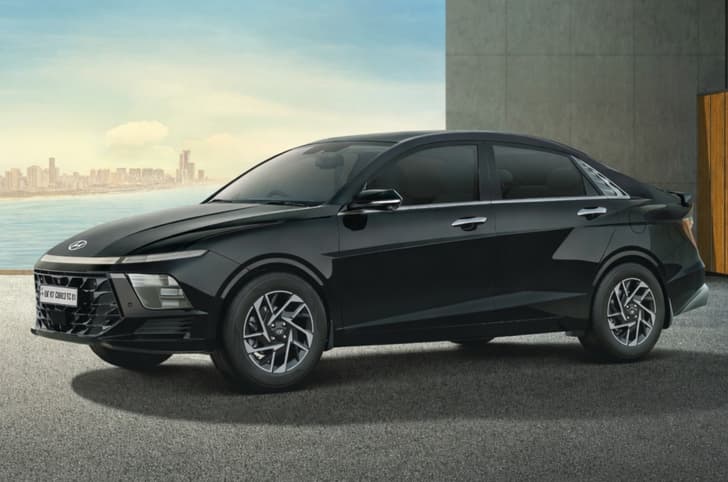
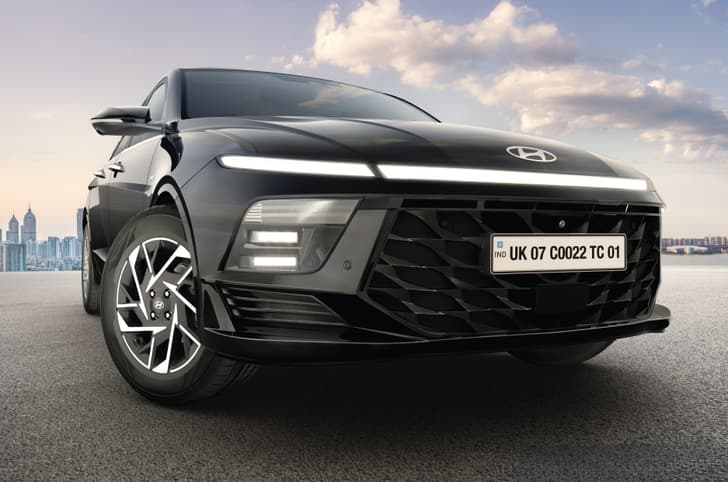
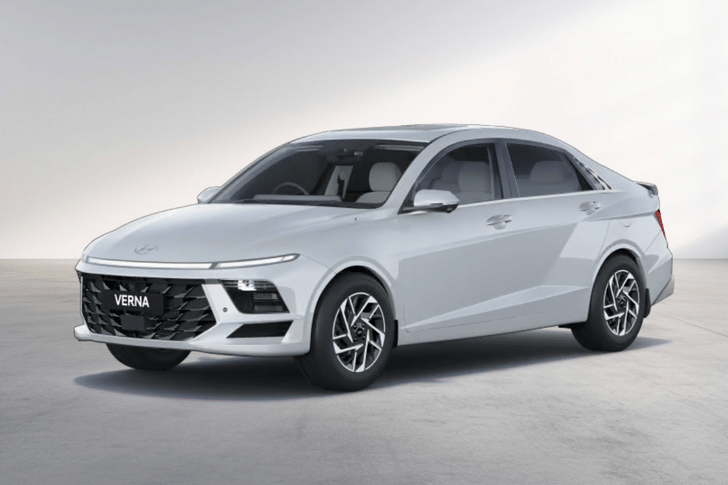
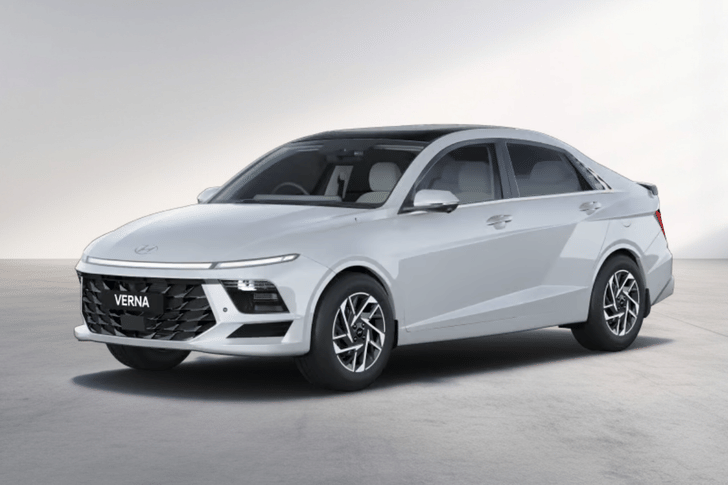
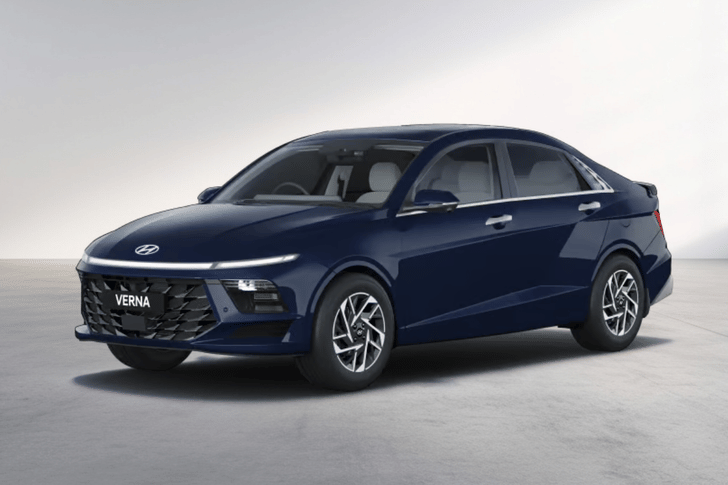
Hyundai Verna HX8 Petrol CVT
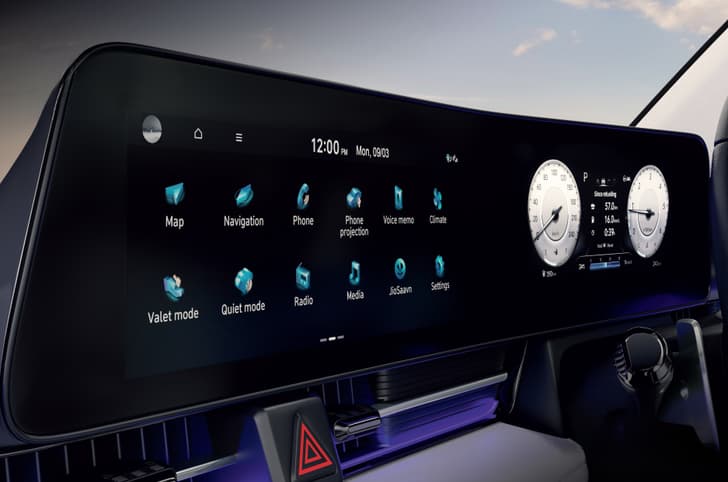
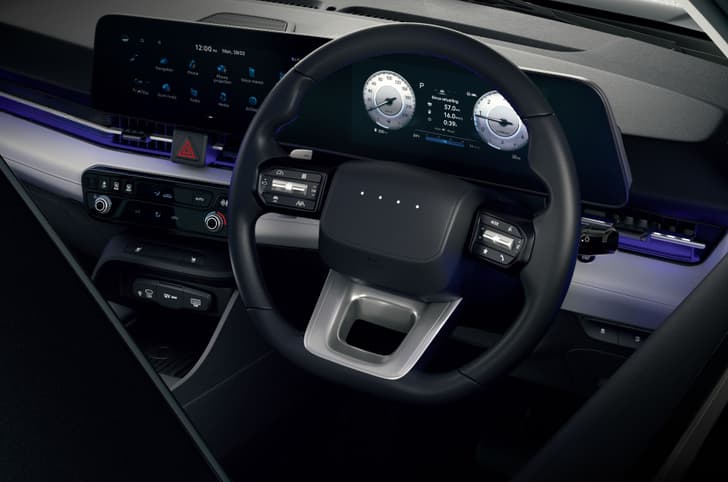
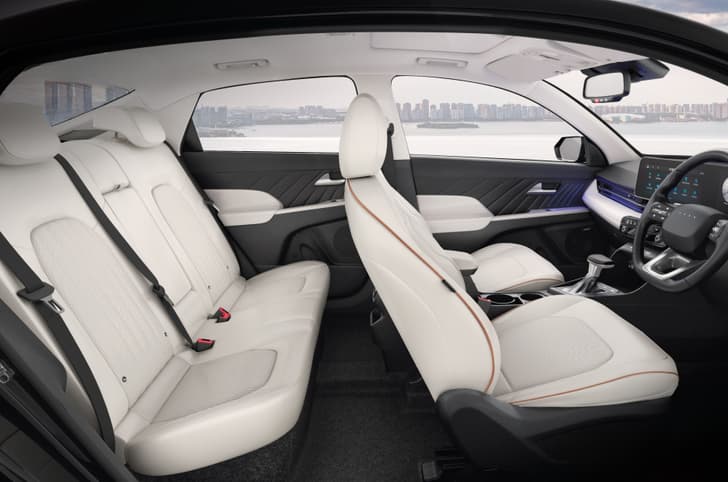
The Hyundai Verna HX8 Petrol CVT variant is priced at ₹16.09 lakh. The HX8 Petrol CVT variant offers key features like Ambient interior lighting, Ventilated seats, Sunroof, Keyless start, Airbags. Explore complete specifications, and features below.
Hyundai Verna HX8 Petrol CVT specifications
Engine & Transmission
Fuel Type/ Propulsion | Petrol |
Max Engine Power | 115 hp at 6300 rpm |
Max Engine Torque | 143.8 Nm at 4500 rpm |
Number of Cylinders | 4 |
Engine Installation | Front |
Engine Displacement | 1497 cc |
Gearbox Type | CVT |
Number of Gears | 6 |
Lockable Differential/s | No |
Drive Layout | Front Wheel Drive |
Manual Shifts via Gear Lever on Automatic Gearbox | Yes |
Sport Mode for Automatic Gearbox | Yes |
Paddle Shifters for Automatic Gearbox | Yes |
Fuel & Performance
Terrain Modes | No |
Auto Start/Stop | Yes |
Fuel Tank Capacity | 45 litres |
Fuel Supply System | MPFI |
E20 Compatibility | Yes |
Emission Standard | Bharat Stage VI |
Suspension & Steering
Rear Brakes | Drum |
Front Brakes | Disc |
4 Wheel Steer | No |
Type of Power Assist | Electric |
Steering Adjust type | Manual |
Steering Adjust | Tilt and Telescopic |
Front Springs | Coil Springs |
Front Suspension Type | McPherson strut |
Rear Springs | Coil Springs |
Rear Suspension Type | Coupled torsion beam axle |
Damper Control | No |
Ride Height Adjust | No |
Front Tyre Size | 205/55 R16 |
Spare Wheel | Space Saver |
Wheel Size | 16 inches |
Rear Tyre Size | 205/55 R16 |
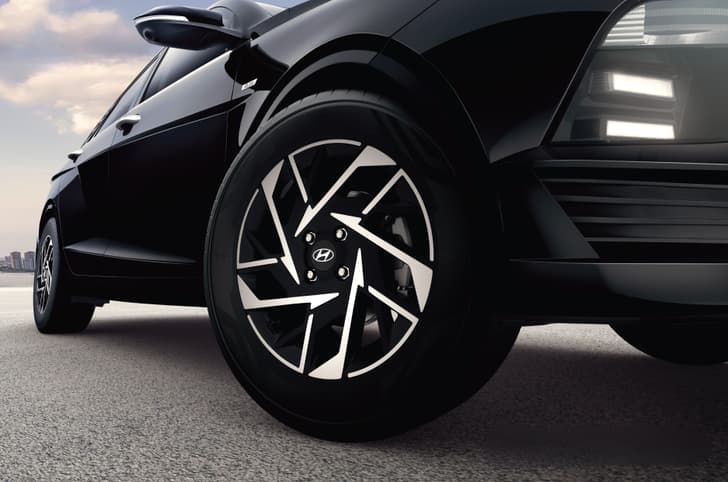
Wheels | Machine finished alloys |
Dimensions
Width | 1765 mm |
Chassis Type | Monocoque |
Wheelbase | 2670 mm |
Doors | 5 |
Height | 1475 mm |
Length | 4565 mm |
Hyundai Verna HX8 Petrol CVT features
Comfort
| Electric Tailgate Release | |
| Bottle Holder in Doors | |
| Power Windows | Front and Rear |
| Foldable Seatback Table | |
| Flat Bottom Steering Wheel | |
| Cabin Boot Access |
Safety
| Central Locking | |
| Seat Belt Warning | |
| Child Safety Lock | |
| Curtain Airbag | |
| Road Departure Mitigation System | |
| Dashcam |
Exterior
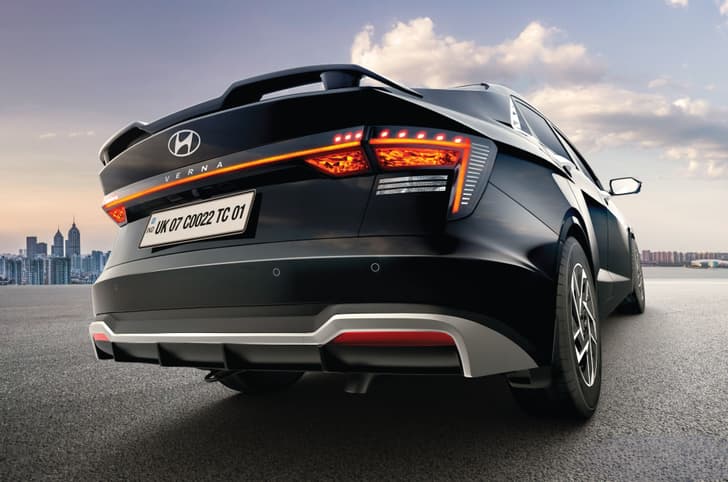
| LED taillights | |
| LED headlamps | |
| LED fog lamps | |
| Headlight Type | LED |
| Headlight Height Adjuster | |
| LED DRLs |
Interior
| Shift Indicator | |
| Average Speed | |
| Average Fuel Consumption | |
| Tachometer | Digital |
| Speedometer | Digital |
| Instantaneous Consumption |
Entertainment
| Satellite Navigation | On-board |
| Voice Commands | |
| Web Browser | |
| Rear Entertainment Screens | |
| Rear Seat Infotainment Controls | |
| Wireless Phone Charging |
Connected Car Features
| Google/Alexa connectivity | |
| Home to Car Connectivity | |
| In Car Payment | |
| Driving Analytics | |
| Remote Engine Start/Stop | |
| Live Location Sharing |
Hyundai Verna variants
Hyundai Verna comparison


Questions you may find useful
Akshay Nayak
•1hI am planning to buy a new car and have narrowed my choice down to the Skoda Slavia/VW Virtus with the 1.5 DSG. I really love how both cars drive, and the DSG feels like magic. However, 90% of my driving is in the city, and I live in one of the most traffic-congested areas of Mumbai (Malad). Would it be a wise decision to go for the DSG gearbox? Which other cars would you recommend in this segment (no SUVs)?

Autocar India
Go for the Volkswagen Virtus 1.0 TSI automatic rather than the 1.5 DSG, given your 90 percent city use in Malad’s heavy stop start traffic. You get the same cabin, driving position and overall feel you liked, but the 1.0’s torque converter automatic is far better suited to daily Mumbai conditions as it is smoother at low speeds, easier to modulate in bumper to bumper traffic and less stressful to live with over time. The 1.5 DSG, while genuinely quick and engaging with its fast shifts, can feel jerky at crawling speeds, tends to heat up in prolonged traffic and can be expensive to repair once out of warranty, which makes it less ideal for your usage. The 1.0 still feels adequately quick in the city with light controls and easy drivability, so you are not really giving up much unless you drive hard on open roads. If you are considering alternatives, the Honda City CVT and Hyundai Verna IVT are even smoother in traffic and very easy to live with, while the City e:HEV is the best for city efficiency if you are willing to stretch. The only drawback with the 1.0 is that it lacks the punch and sharp shift feel of the 1.5 DSG on highways, but overall it is the far more practical and stress free choice for your driving conditions.
Peasant Sampan
•3dHello Autocar, I am planning to buy a sedan, with almost 90% city usage. Please suggest a suitable option. Also, is it true that for my usage, naturally aspirated (NA) engines are better suited than turbo-petrol engines?

Autocar India
For your usage, a naturally aspirated petrol with a CVT or IVT is the best fit. These setups are smoother, easier to drive in traffic and more predictable, which matters far more in city conditions than outright performance. So yes, in your case, NA engines are better suited than turbo petrol.The Hyundai Verna IVT stands out as the most well-rounded option for city driving. The engine is smooth, the IVT gearbox is very intuitive in stop-and-go traffic, and the overall driving experience is effortless. It feels refined and easy to live with daily.The Honda City Hybrid is worth considering if your running is high. It offers excellent fuel efficiency, strong performance and is very easy to drive in the city thanks to its hybrid system. However, it comes with a higher upfront cost, and the battery placement results in a higher boot floor, which slightly affects practicality.Compared to the Verna, the standard Honda City CVT is also an option, but the engine feels a bit noisier, and the gearbox is not as intuitive as the Verna’s IVT in everyday use.
Annesha Chakraborty
•1wI am looking to buy an automatic petrol car within a budget of ₹18 lakh. My requirements are: 5-star safety, comfort for family use, mostly city driving, and occasional trips outside the city. I have explored the Skoda Kushaq, Slavia, and Tata Nexon, but I do not want to go with Tata as I already own a Tiago. I am open to options from Toyota, Hyundai, and Kia, provided they meet my safety requirements. Please advise.

Autocar India
On a Rs 18 lakh budget, for your requirements, the Hyundai Verna HX6+ IVT automatic is a good pick because it meets your 5-star safety needs and feels the most relaxed in traffic. The IVT, a CVT by another name, is a type of automatic that does not shift in steps, so it feels very smooth at low speeds, which makes stop-and-go driving easy. The back seat is roomy, the ride is comfortable over rough patches, and Hyundai’s wide service network adds peace of mind on those occasional trips out of town. The latest Verna has a 5-star Global NCAP crash test rating in India, so you are not compromising on your main ask. You could stretch to the HX8 variant if you want more features and your budget is flexible.Two things to keep in mind with the Verna: it sits lower than a taller car like the Skoda Kushaq, so you need a bit more care on big speed breakers, and the rear seat is set a little low, so elderly family members who prefer a higher seat may not love it. If you want a higher seating position and more ground clearance without giving up 5-star safety, go for the Kia Seltos HTK(O) Petrol CVT, which recently got a 5-star Bharat NCAP rating. Though you might sacrifice some features in this variant on your budget.
TIRUMALA SAIPAVAN
•4wI am looking out for an Sedan. But confused in between Verna & Virtus. Can u plz suggest me which one should I prefer my budget is around 22L

Autocar India
We would suggest the Hyundai Verna HX 10 1.5 petrol IVT. For under Rs 22 lakh, it gives you one of the smoothest drives and the most features for daily use. The IVT is essentially a CVT automatic that works very well in city traffic. The cabin is quiet, the ride is comfortable on bad roads, and Hyundai’s wide service network makes ownership easier wherever you are. For a self-driven sedan that you’ll also use with family, the Verna feels modern inside, has a large boot, and packs in plenty of safety and convenience kit for the money.Just keep in mind the CVT is tuned for smoothness, not outright performance, so if you drive hard it won’t feel as quick or sporty as a turbo engine with a dual-clutch gearbox. Also, very tall passengers might find rear headroom a bit tight because of the sloping roofline.If you’re someone who really enjoys fast highway driving, then the Volkswagen Virtus GT Plus 1.5 TSI DSG (or the Skoda Slavia 1.5 TSI DSG) is the better driver’s car. The 1.5 turbo feels stronger and the DSG shifts very quickly, but it can be a bit jerky at crawling speeds and may be more expensive to maintain once it’s out of warranty.
Shiv
•5wI am planning to buy a car with a budget of around ₹15 lakh. I am a 30-year-old buyer and am confused between the Hyundai Verna SX+ (which is my favourite) and the new Kia Seltos HTE(O) automatic. I am concerned about the mileage of the Verna, while the Seltos offers fewer features like no sunroof or alloy wheels, and I am also unsure about its service experience. My usage will be mostly city driving in the Delhi NCR region, primarily on weekends.

Autocar India
The Hyundai Verna and Kia Seltos share a smooth, refined 1.5-litre petrol engine and an IVT (automatic). So in terms of performance, smoothness and maintenance, they're likely to be very similar. For its sheer driving pleasure, pick the Verna (sedan) if you're usually self-driven. Being lower and having a lower centre of gravity, this one will feel better to drive than an SUV. Its boot is much larger, too, which you will appreciate during your weekend trips or airport runs. However, if you are going to be driving with five adults regularly, only then pick the Seltos, which has a more spacious cabin, especially at the rear.
Anil Goyal
•5wI am confused about choosing between the Kia Sonet and the Hyundai Verna. Please suggest which car/SUV and model I should choose. My driving is mostly in the city, around 900-1,000 km per month. My budget is ₹10-12 lakh. A.K. Dinodia Patiala.

Autocar India
The choice between the Kia Sonet and the Hyundai Verna depends more on your specific requirements and the conditions in which you drive, rather than your total monthly mileage.The Kia Sonet, with its SUV body style, offers a higher seating position, which improves visibility. Entry and exit are also easier compared to the Verna, which is a lower sedan and requires you to step down into the cabin. If you have elderly occupants, they will find the Sonet easier to get in and out of.Road conditions in your area also play a role. If there are many broken roads, potholes, or waterlogging during the rains, the Sonet will be better suited due to its higher ground clearance. Its smaller size also makes it easier to manage in heavy traffic. Where the Hyundai Verna would be better is with more interior space, as well as a bigger boot.
srikanth p
•7wWe are expecting the HX10 turbo manual Verna. Is it possible?

Autocar India
Hyundai has only introduced the HX8 variant of the Verna with the turbo-petrol-manual combination, and if the company sees substantial demand for the top-end, it could possibly be introduced down the line, but not in the near future.The good news is that even the HX8 variant is well-equipped, with a vast list of features including Level 2 ADAS. The only additional features the HX10 variant gets are 7-airbags, 360-degree camera, blind-view monitor, 4-way powered front passenger seat, powered boss mode for the front passenger seat and a 10.25-inch digital driver's display. If you can live without these features, the HX8 is a great option to consider.
Sudesh
•8wHi, I am planning to buy my first car. Previously, I used my family car, a Maruti Ciaz, for 10 years. I am looking for an automatic, fuel-efficient car with low maintenance. My driving is 70% in the city and 30% on the highway. My budget is around ₹15 lakh. For family comfort, could you please help me with this?

Autocar India
Since you have been using a Maruti Suzuki Ciaz for the past 10 years, it is important to note that at a Rs 15 lakh budget, nothing will really feel like an upgrade in terms of space, especially for the rear seat.Ideally, we would have recommended the Hyundai Verna, the HX6 IVT automatic variant, which has just been updated. It is a comfortable and spacious sedan and even the mid-spec variant comes with good features. The 1.5-litre naturally aspirated petrol engine is refined, and the IVT transmission is silky smooth, making it ideal for your city commutes. However, it is about Rs 1.5 lakh above your stated budget, so you would need to stretch slightly.If you want to stay strictly within your Rs 15 lakh budget, the Maruti Suzuki Brezza 1.5 naturally aspirated petrol automatic is a good option. The engine and transmission combination work well for city driving, and the car is spacious enough for four adults, making it comfortable for family use.
Arnav Kalbhor
•9wHi, I am looking to buy a used automatic car in Delhi NCR that is fun to drive. I am okay with it being relatively easy to maintain. Should I buy an automatic EcoSport, a Verna, or a Honda City? I am really confused. I plan to own the car for five years.

Autocar India
Without knowing your budget, it's hard to guide you to the best option for your needs. However, among the shortlisted models, we'd avoid the Ford EcoSport. It is a solid product, and Ford does have a functioning service network, but spare parts may not be as easily available in the future.The Honda City and Hyundai Verna are good options, but we're leaning towards the City for a few reasons. Hondas typically run trouble-free over a long period, provided you take care with routine service and maintenance. The 1.5 i-VTEC engine is also bulletproof and delivers more exciting performance than a Verna petrol.
Bijinbhai
•9wI currently own a Honda Brio and plan to upgrade to a C‑segment mid‑size sedan in April 2026. I’m considering the Honda City e:HEV and the Hyundai Verna, both of which are expected to receive facelifts this year. Do you know if the facelifted models will be available for booking in April 2026?

Autocar India
The Honda City eHEV is the strong-hybrid version of the City. It is expensive, but if your running is on the higher side, you can take advantage of its high economy. However, the City is showing its age now, and the interior, although spacious, does not feel up-to-date.The other option would be the Skoda Slavia, which will also get a facelift soon and will feature an updated equipment list. We would recommend holding on until the Slavia facelift is unveiled so you can make a more informed decision.The Hyundai Verna facelift is expected a little later, around June 2026, and is also rumoured to feature a strong-hybrid powertrain. That could be worth waiting for if you are thinking of buying a strong-hybrid sedan.