
Last Updated on: 29 Apr 2026
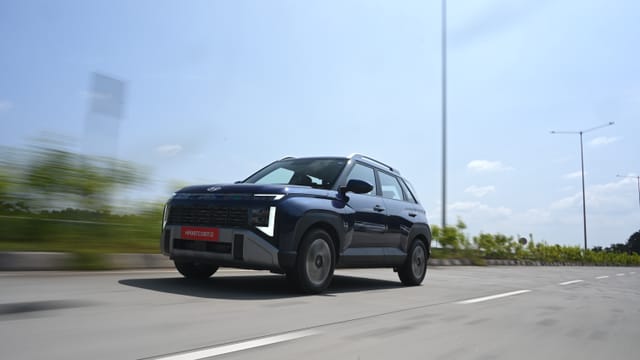
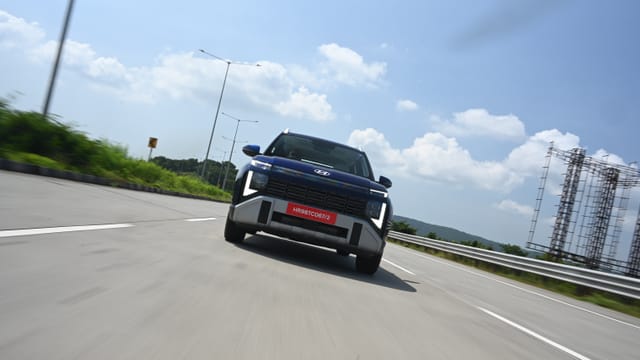
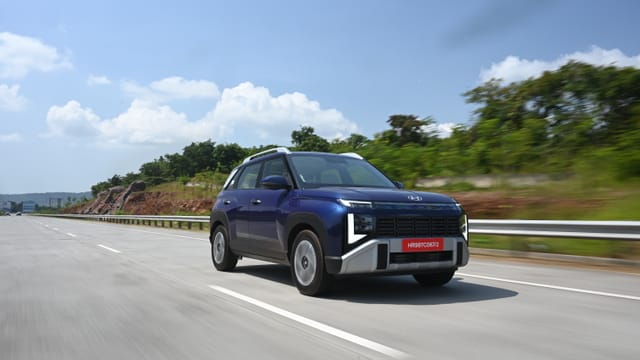
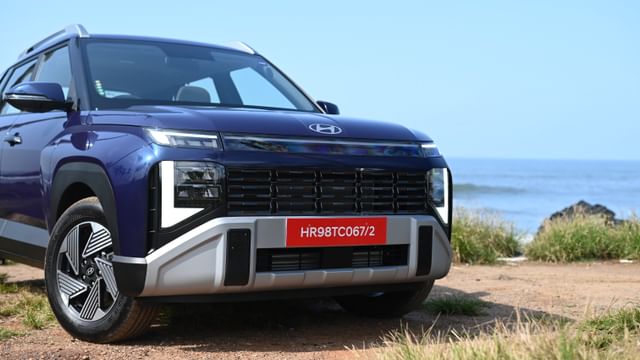
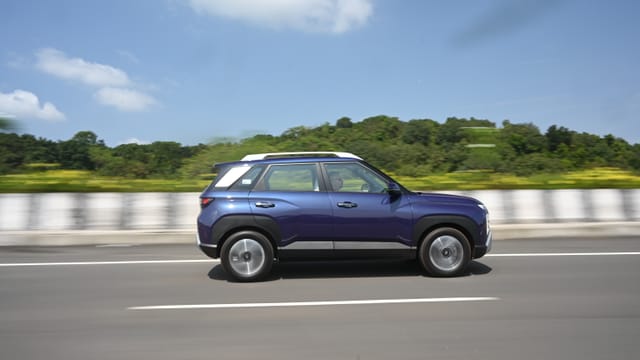
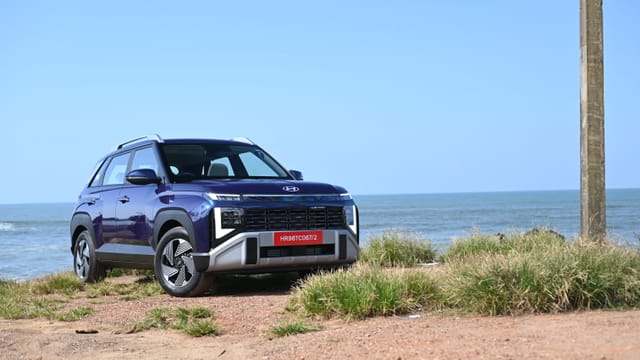
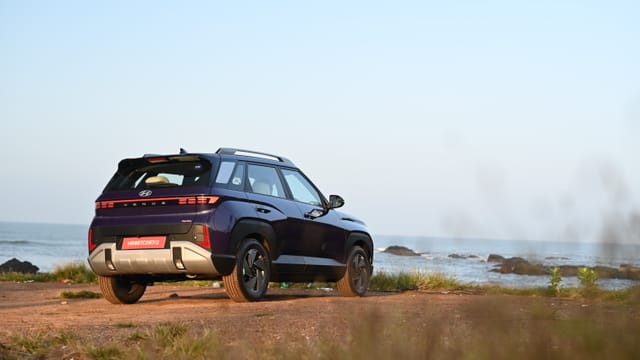
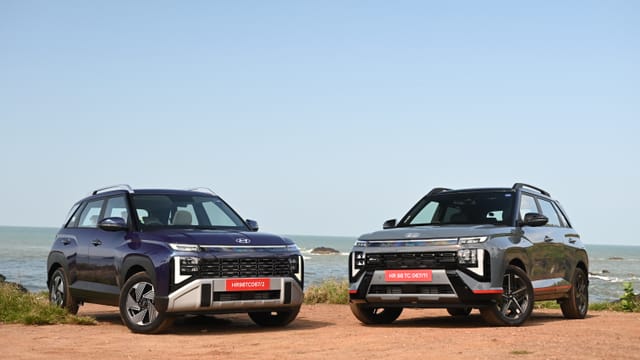
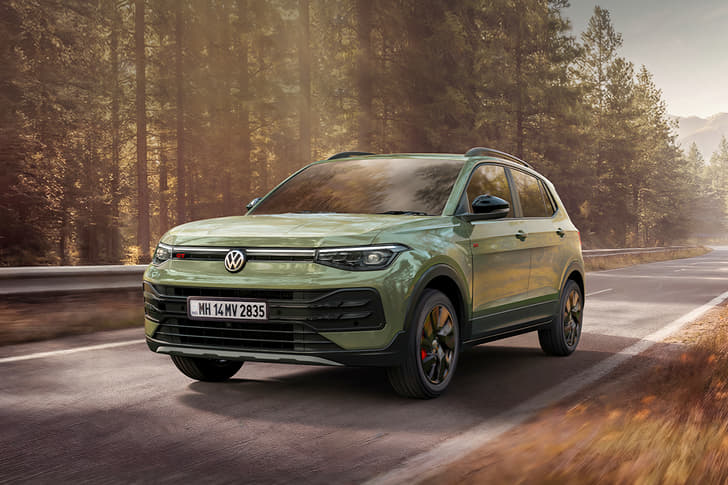
Hyundai Venue HX10 Knight Edition 1.0 Turbo Petrol DCT
Hyundai Venue HX10 Knight Edition 1.0 Turbo Petrol DCT specifications
Engine & Transmission
Engine Displacement | 998 cc |
Engine Installation | Front |
Engine Type | Turbocharged |
Number of Cylinders | 3 |
Max Engine Torque | 172 Nm at 1500 - 4000 rpm |
Max Engine Power | 120 hp at 6000 rpm |
Fuel Type/ Propulsion | Petrol |
Gearbox Type | DCT |
Paddle Shifters for Automatic Gearbox | Yes |
Number of Gears | 7 |
Manual Shifts via Gear Lever on Automatic Gearbox | Yes |
Lockable Differential/s | No |
Drive Layout | Front Wheel Drive |
Fuel & Performance
Emission Standard | Bharat Stage VI |
Terrain Modes | Yes |
Official Fuel Economy | 20 kmpl |
Fuel Tank Capacity | 45 litres |
E20 Compatibility | Yes |
Fuel Supply System | Direct Injection |
Drive Mode Types | Multiple |
Suspension & Steering
Rear Brakes | Disc |
Front Brakes | Disc |
4 Wheel Steer | No |
Type of Power Assist | Electric |
Steering Adjust type | Manual |
Steering Adjust | Tilt |
Rear Springs | Coil Springs |
Ride Height Adjust | No |
Rear Suspension Type | Coupled Torsion Beam Axle |
Damper Control | No |
Front Springs | Coil Springs |
Front Suspension Type | McPherson Strut |
Rear Tyre Size | 215/60 R16 |
Spare Wheel | Space Saver |
Front Tyre Size | 215/60 R16 |
Wheel Size | 16 inches |
Wheels | Alloys |
Dimensions
Boot Capacity | 375 litres |
Width | 1800 mm |
Wheelbase | 2520 mm |
Length | 3995 mm |
Height | 1665 mm |
Chassis Type | Monocoque |
Doors | 5 |
Hyundai Venue HX10 Knight Edition 1.0 Turbo Petrol DCT features
Comfort
| Remote Locking | |
| Rear Parcel Tray | |
| Rear Power Outlet | |
| Electric Tailgate Release | |
| Rear Reading Lamp | |
| Rear Window Sun Shades |
Safety
| Speed Assist System | |
| Central Locking | |
| Door Ajar Warning | |
| Side Airbag | |
| Child Safety Lock | |
| Curtain Airbag |
Exterior
| Outside rear view mirror (ORVM) | |
| LED fog lamps | |
| Wheel Arch Cladding | |
| Integrated Washer Jets with Wiper | |
| Antenna | Shark Fin |
| LED headlamps |
Interior
| Trip Meter | |
| Average Speed | |
| Head-up Display | |
| Average Fuel Consumption | |
| Gear Indicator | |
| Tachometer | Digital |
Entertainment
| Touchpad | |
| Wireless Phone Charging | |
| Video Player | |
| USB Input | |
| Second Row USB port | 2 Type C |
| Satellite Navigation | On-board |
Connected Car Features
| Summon Mode | |
| Anti Theft Immobilisation | |
| App Details | |
| Service Reminder Via App | |
| Vehicle Tracking Via App | |
| Geo Fence |
Hyundai Venue variants
Hyundai Venue comparison
Questions you may find useful
San
•2dHi Autocar India Team, I am planning to buy the Hyundai Venue HX5 Turbo (manual), and my usage will be almost entirely within Hyderabad city, mostly in heavy traffic (around 98%). However, I have come across several online reviews claiming that the turbo variant returns only around 5–7 km/l in city conditions, which is quite concerning for me. I test-drove the 1.2 NA Kappa engine (HX5) and felt it was underpowered, especially in traffic, as I had to shift gears frequently. I also test-drove the Tata Nexon, but I found the clutch to be quite hard even during a short drive, and I am also a bit worried about after-sales service. I briefly considered the Mahindra 3XO, but I did not like the design. The Kia Sonet also felt slightly underpowered to me. I am only interested in a manual transmission, and my budget is around ₹12 lakh. Given my requirements and usage, could you please suggest which car would be the most suitable option? I am quite confused with the available choices. Thank you in advance for your guidance. Best regards, San

Autocar India
The Hyundai Venue turbo still fits your requirements well. You already felt that the 1.2 NA is underpowered, and in heavy traffic, that will only get more tiring over time. The turbo engine solves that with better low-end response and fewer gear changes, making daily driving easier. The trade-off is clear, though. In dense city traffic, fuel efficiency will be on the lower side, especially if you are not very light on the throttle.Now, this is where the Maruti Brezza manual becomes a very strong alternative for your usage. It may come across as a bit boring on paper, but it fits your real-world needs better than most options here. The larger naturally aspirated engine does not feel underpowered like the smaller NA units in the Venue or Kia Sonet. It has good low-end torque, which makes it easy to drive in traffic without constant gear changes. The clutch is light, and the gearbox is slick, so daily usability is excellent.Fuel efficiency is another advantage. Because it is naturally aspirated, it is not as sensitive to throttle inputs as turbo petrol engines, so in real city conditions it tends to deliver more consistent mileage. That matters for your 98% city usage. On top of that, ownership experience, service reach and long-term reliability are among the best in the segment, which adds peace of mind.Compared to the Tata Nexon, you avoid the heavy clutch issue you already noticed. Compared to the Venue turbo, you give up some punch, but gain consistency, ease and efficiency.
Anil Ak
•2dI live in a small town called Jhunjhunu, Rajasthan. My monthly driving mileage is approximately 1,400 km. I have a preference for modern and good-looking cars. I have shortlisted the Venue HX5 Diesel and the Victoris CNG. Please share your suggestions.

Autocar India
From your requirements, we feel the Hyundai Venue HX5 diesel will suit you better than the Maruti Suzuki Victoris CNG. It fits because diesel pulls stronger at low speeds and on open roads, so overtakes are easier even with family and luggage, and you will not have to plan trips around CNG pumps, which can be fewer and have queues in smaller towns. The new Venue is also compact and easy to park on narrow streets. This Hyundai car feels steady on rough patches common around small towns in Rajasthan, and Hyundai’s service network is wide.It also looks modern inside and out, which is what you are after. Even in the HX5 trim, the quality levels are high and there are modern design flourishes inside and out that keep the Venue from looking too basic or cheap. For instance, you still get a dual screen layout which looks crisp and high tech, as well as projector headlamps and LED DRLs on the outside. The Victoris, in comparison, looks a lot more conservative in its design, even though it is a larger vehicle. What's more, even though the Victoris has a larger boot than the Venue, its rear seat space is quite similar.
John Abraham
•3dI want to exchange my old 2016 Maruti Brezza diesel for a better SUV within a 15 lakh budget. I am 64 years old, and my driving is a mix of city and highway. Fuel efficiency is important. Please suggest.

Autocar India
City and highway use with low running costs within a Rs 15 lakh cap points us to the Hyundai Venue diesel HX5 automatic. Coming from your 2016 Brezza diesel, you will like the strong pull from low speeds, and the automatic will make life a lot easier in traffic. The steering is light, the seat is high, and the view out is clear, which helps on busy roads. Hyundai’s service reach is on par with what you are used to with Maruti, so ownership should be simple.One thing to keep in mind is that the back seat is fine for two adults, but fitting three across is tight. If you need more space, consider the Kia Syros diesel HTK+, which is easily the roomiest among the compact SUVs.Overall, for your mix of city and highway use and a focus on fuel efficiency, the Venue diesel fits your brief best. Also, with new diesels, try to do a good highway run every few weeks to help keep the exhaust filter clear.
Rajan Khurana
•4dI have booked the Hyundai Venue HX10 DCT, but I am confused about the transmission. At lower speeds, it feels like there is a noticeable gear shift, which can feel jerky. On the other hand, I really like the interior. I am unsure whether I should go ahead with the Venue or consider the 3XO. My only concern with the 3XO is that the interior feels very traditional and not as premium. I am quite confused. Please advise, as the car delivery is planned within the next 15 days and I want to make the right decision.

Autocar India
From what you’ve said, most of your worry is low-speed city use and how smooth the automatic feels, with cabin look a close second. For that use, I would lean to the XUV 3XO petrol automatic, because its regular automatic gearbox is smoother when you are moving slowly in traffic. The Venue DCT (a dual-clutch automatic that changes gears very quickly) can feel like a small pause or a light jerk at 10-20 kph as it shifts, which is exactly what you noticed. The 3XO’s automatic does not do that, and it also handles long, crawling jams without any worry about clutch heat.The catch is what you already feel: the 3XO’s cabin design looks more simple and not as flashy as the Venue. If the cabin look matters to you every single day, the Venue still makes sense. You can also drive the DCT more gently in the first two gears and let the car roll on its own to smoothen that low-speed feel. Once above 20-25 kph, the Venue DCT feels quick and easy.So the call is this: pick the XUV 3XO petrol automatic if your priority is a smooth, calm drive in heavy city traffic. Stick with your Venue DCT booking if the premium cabin is what you love and you can live with a little shift feel at very low speeds. For your brief, I’d pick the 3XO for the smoother city drive.
Nitesh
•4dI’m planning to buy a new car, and I’m currently confused between the Mahindra XUV 3XO AX5 (Petrol Manual), Hyundai Venue HX5 Turbo Petrol, and Kia Seltos 2026 base petrol variant. My usage: 60% city, 25% highway, 15% mountains (3 trips every year). Other requirements: annual running: ~8,000–10,000 km, primary use: family car, but I do enjoy driving occasionally, good ground clearance is important (roads in my hometown in the mountains are quite bad). I am planning to keep the car for 10+ years. Budget: ₹12 lakh (can stretch to ₹13 lakh if it’s truly worth it). My question is: Which of these would be the best fit for my usage? Is it worth stretching for the Seltos base model over the other two? Are there better alternatives in this budget that I should consider? Would really appreciate your suggestions. Thanks in advance!

Autocar India
With mostly city use, a few highway runs, and some mountain trips on broken roads, the Mahindra XUV 3XO AX5 petrol manual fits your brief best. It rides tough over bad patches, has good ground clearance, and its turbo petrol pulls well at low speeds, which helps on steep hill sections and in slow city traffic. It is also one of the nicer cars to drive in this price range, so when you want to enjoy a winding road, it will put a smile on your face, and the AX5 gives you a good mix of safety and comfort features without blowing the budget.Two trade-offs to note. If you often carry a full load of luggage, the boot is not very large, and at low speeds, the steering is not as light as most other SUVs in the class. Is it worth stretching to the base Seltos? Only if you really need the extra space. The base Kia Seltos skimps on features, and its non-turbo petrol will feel weaker on mountain climbs with a full family. Also check on-road pricing in your city, as it may push past Rs 13 lakh.The Hyundai Venue HX5 Turbo Petrol is also a good option and a great all-rounder, with a bigger boot, but given your needs, the better-riding, more enjoyable to drive XUV will suit you better. If you want another option to check out, look at the Maruti Suzuki Brezza, which is unexciting but offers hassle-free long-term ownership.
Shubhadeep Ghosh
•5dI am confused about choosing between the New Sonet and New Venue. The Sonet has proven itself for more than a year, while the Venue comes with exquisite features. Since both are based on the same platform and I am new to driving, please suggest the value-for-money option with a DCT.

Autocar India
The Kia Sonet is an excellent, polished compact SUV. It has got a great interior, and it makes you feel like you've spent your money well. This iteration of the Sonet is due for a generation change, that's slated for a 2027 launch in India. The next-gen Sonet will be based on the new Hyundai Venue's platform, and is likely to share a lot of similarities.Between the two cars you've listed, the Venue is the one to go for. As of today, this Hyundai car, feels more modern, has a brighter interior which adds to its cabin's sense of space, and it is also well-equipped. While both cars share their turbo-petrol engine and dual-clutch automatic transmission, the Venue has a lighter steering, a (relatively) softer suspension setup, which makes it a touch more user-friendly and comfortable.
Kumaravelu N
•6dI have been driving a Volkswagen Vento 1.2 TSI DSG for the past 7 years. It is a true driver’s car and feels very safe. However, my only concern is the high maintenance and spare parts cost. I am planning to move to a compact SUV. Please suggest a similar automatic car under ₹15 lakh with lower maintenance costs.

Autocar India
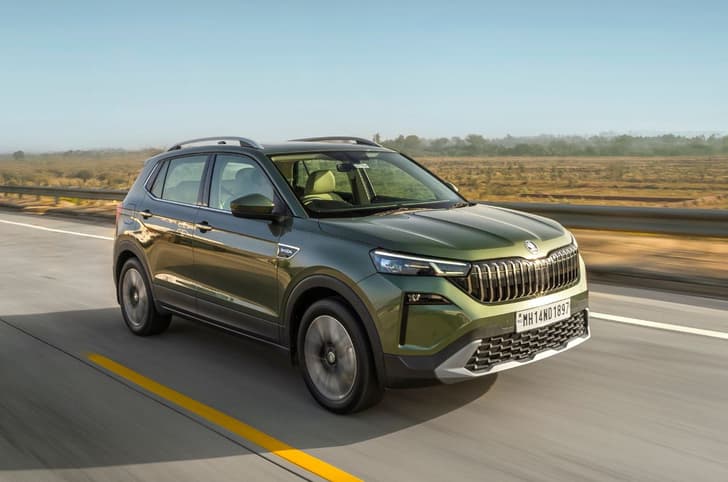
With a budget of ₹15 lakh, consider the Skoda Kushaq Classic+ 1.0-litre turbo-petrol mated to the new 8-speed automatic transmission. With this Skoda car, you'll get a similar solid and secure feel, as well as confident driving manners, similar to your outgoing Vento. The turbo-petrol is peppy, and the smooth 8-speed torque converter complements it nicely. Also, compared to the sub-4-meter cars you'll otherwise get at this price, the Kushaq Classic+ will give you more cabin and boot space, which as a Vento owner, you might appreciate. With heavier localisation, Skoda's maintenance costs have reduced over time, so ownership cost is likely to be lower.If you're keen on getting a sub-4-meter compact SUV, consider the Skoda Kylaq and Hyundai Venue, both of which are enjoyable to drive (although the Kylaq has an edge), and should be easy on your pocket too.
Peter
•6dWith the diesel automatic becoming more affordable, should I go for Kia Syros HTK+ or Hyundai Venue HX8?

Autocar India
Even though it shares its platform with the new Hyundai Venue, the packaging of Kia Syros puts it in a league of its own. Despite its sub-4-meter footprint, cabin space can easily match cars from higher segments. Its rear seats slide and recline to help free up more passenger space or boot space. Additionally, its interior quality and fit-finish is class-best, the full-sized panoramic sunroof elevates its appeal further, and its tall-design makes getting in and out very easy. This Kia car design isn't universally appealing, which is one of the reasons behind its low popularity, however if you can look beyond its looks, it is an excellent, well-rounded option in the market today.
Peter
•6dWith the diesel automatic becoming more affordable, which car should I go for between the Kia Syros HTK+ or the New Hyundai Venue HX 8?

Autocar India
The recent revision in Kia Syros variants has made the car a much more interesting proposition and put it back on many buyers' radar, which is evident in your query. The Syros and Hyundai Venue are closely related and share the same platform, powertrains, including the capable diesel automatic, and many of the same features. However, there is a distinct difference in their focus. Where the Venue is more of a rounded product that is a jack of all trades, the Syros has a clear focus on the rear seat. Thus, if you're chauffeur-driven, we would recommend the Syros for its more spacious and flexible rear seat.The HTK+ might miss out on the ventilation function, but the space and slide/recline ability are all there. However, the new Venue is not far behind on space and crucially has a softer ride quality, something that's been a Kia Syros sore point. Thus, if you don't need that excess rear-seat space the majority of the time, and you're satisfied with the features on offer for the price, the Venue HX8 has the edge over the Syros in most situations.
Palash
•1wHelp me choose a car within ₹14 lakh. I am looking for an automatic. My running will be around 1,000 km a month, with 60% city traffic and 40% highway usage.

Autocar India
The Hyundai i20 Asta (O) IVT fits you best. The IVT is Hyundai's CVT automatic that feels very smooth in traffic, and the i20 is easy to place in tight gaps on your city commutes. On the highway, it remains stable at speed and accelerates smoothly when you press the pedal, so overtaking doesn't take much effort. For 1,000 km a month, a petrol automatic like this Hyundai car makes sense as your running costs will not be too high. The cabin feels solid, the seats are comfortable for long stints, and the suspension handles rough patches without tossing you around. Two trade-offs to note: it is not a tall car, so you will need to slow down over large speed breakers or rough roads and the IVT is tuned for smoothness rather than sudden sprints or efficiency. If you want a taller car in the same budget, consider the Nissan Magnite Turbo CVT or the Hyundai Venue Turbo DCT.