
autocar-logo
Delhi
Hyundai Venue variants
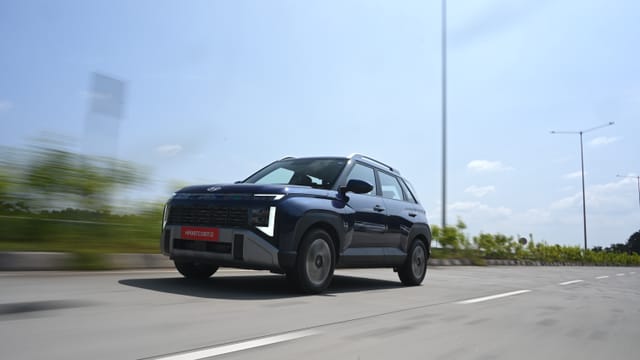
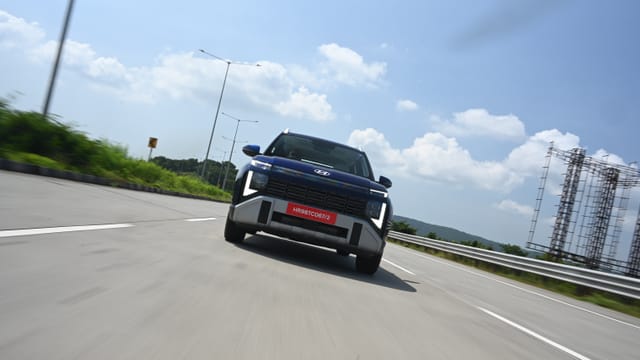
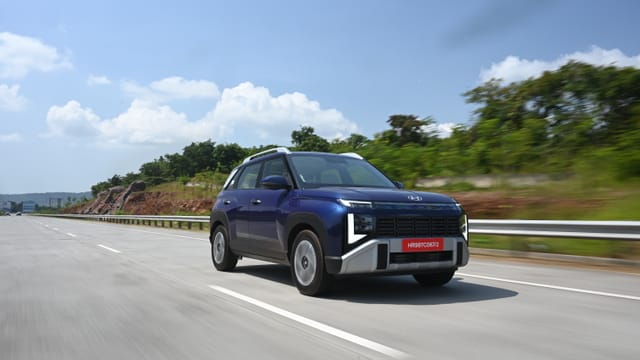
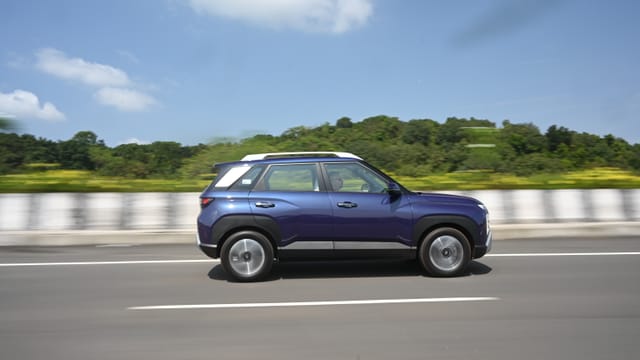
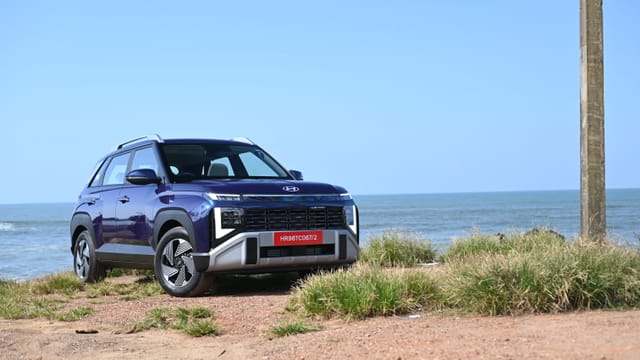
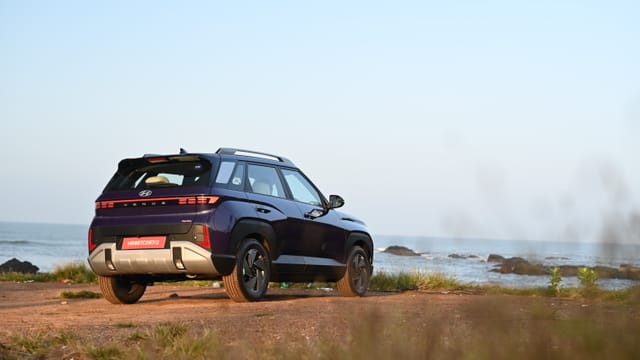
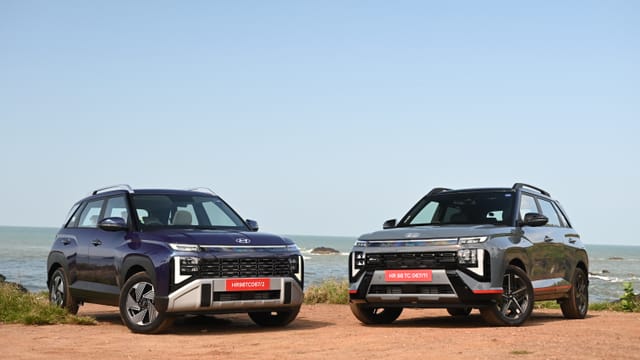
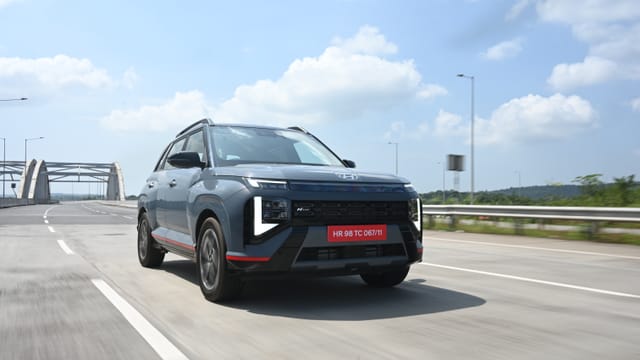
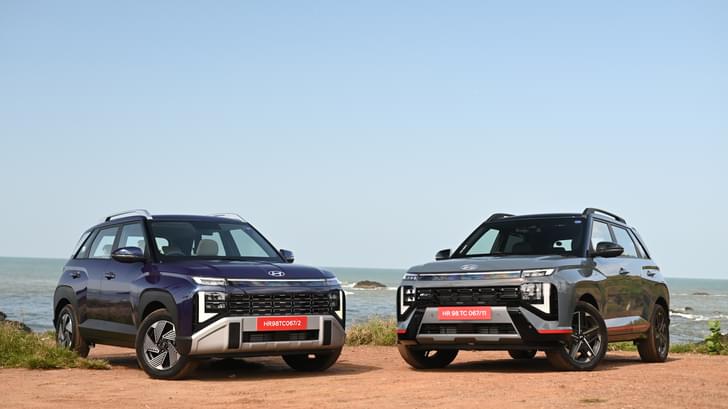
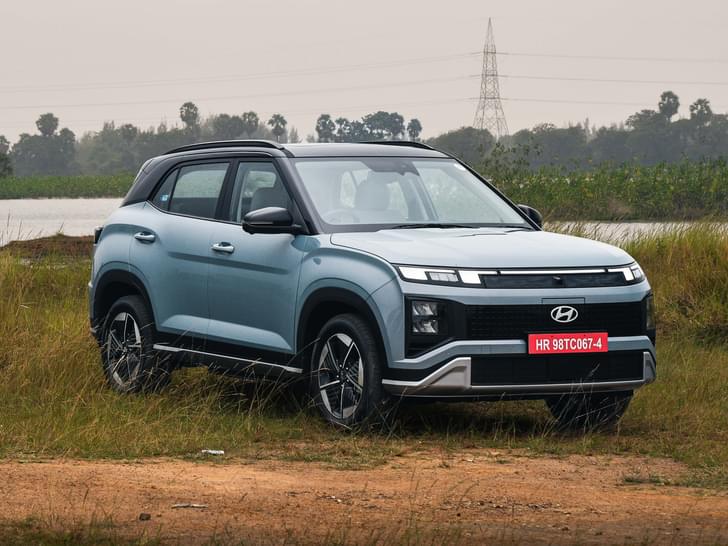
Front Right Three Quarter
Front Left Three Quarter
Front Right Three Quarter
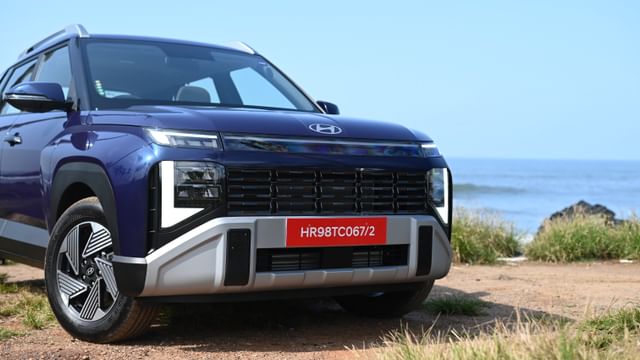
Alloy Wheels
Front Left Three Quarter
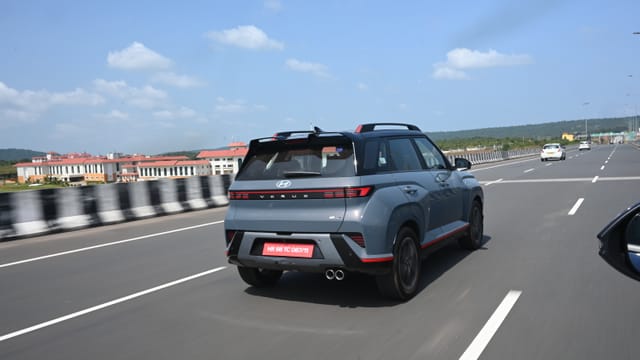
Rear View
Front Left Three Quarter
Rear View

Hyundai Venue N Line N6 1.0 Turbo Petrol DCT

VariantN Line N6 1.0 Turbo Petrol DCT
CityDelhi
₹13.33 Lakh
On road price, Delhi
View price breakup
Starting₹19,307 /month
EMI calculator

Hyundai Venue N Line N6 1.0 Turbo Petrol DCT specifications

Engine & Transmission

Engine Type
3 cyls, Turbocharged
Max Engine Torque
172Nm at 1500-4000
Max Engine Power
120hp at 6000
Engine Displacement
998 cc
Engine Installation
Front
Fuel Type/ Propulsion
Petrol
Paddle Shifters for Automatic Gearbox
Yes
Number of Gears
7
Sport Mode for Automatic Gearbox
Yes
Manual Shifts via Gear Lever on Automatic Gearbox
Yes
Lockable Differential/s
No
Drive Layout
Front Wheel Drive
Gearbox Type
Dual-Clutch Auto

Fuel & Performance

Fuel Tank Capacity
45 litres
Auto Start/Stop
No
Official Fuel Economy
20 kmpl

Suspension & Steering

Rear Brakes
Disc
Front Brakes
Disc
Type of Power Assist
Electric
Turning Radius
No
Steering Adjust type
Manual
Steering Adjust
Tilt
Damper Control
No
Ride Height Adjust
No
Rear Suspension Type
Non-independent, Torsion Beam
Front Springs
Coil Springs
Rear Springs
Coil Springs
Front Suspension Type
Independent, MacPherson Strut
Rear Tyre Size
215/55 R17
Spare Wheel
Yes
Wheel Size
17-inches
Front Tyre Size
215/55 R17
Wheels
Alloys

Dimensions

Boot Capacity
375 litres
Width
1800 mm
Wheelbase
2520 mm
Length
3995 mm
Height
1665 mm
Doors
5

Hyundai Venue N Line N6 1.0 Turbo Petrol DCT features

Comfort

Power Windows
Front and Rear
Driving Modes
Remote Locking
Exterior Mirrors Electric Adjust
Dead Pedal
Sunroof

Safety

Rear Defogger
Tyre Pressure Monitoring System
Hill Descent Control
Traction Control
Rear Washer/Wiper
Speed-Sensing Auto Door Locks

Exterior

Front Fog Lamps
Body Coloured Bumpers
Projector Headlamps
Daytime Running Lights
Headlight Type
LED

Interior

Head-up Display
Low Fuel Level Warning
Instantaneous Consumption
Trip Meter
Average Fuel Consumption
Average Speed

Entertainment

Rear Entertainment Screens
Gesture Controls
MirrorLink
Satellite Navigation
Phone-based
Steering Audio Controls
Touchpad

Hyundai Venue variants

VariantsOn road price
Hyundai Venue HX2 1.2 Petrol MT
1197 cc | Petrol | Manual
₹9.07 Lakh
Digital cockpit
Airbags
Integrated (in-dash) music system
Touch screen infotainment system
Steering mounted controls
Hyundai Venue HX2 1.0 Turbo Petrol MT
998 cc | Petrol | Manual
₹9.97 Lakh
Digital cockpit
Airbags
Integrated (in-dash) music system
Touch screen infotainment system
Steering mounted controls
Hyundai Venue HX4 1.2 Petrol MT
1197 cc | Petrol | Manual
₹9.97 Lakh
Digital cockpit
Airbags
Integrated (in-dash) music system
Touch screen infotainment system
Rear camera
Hyundai Venue HX5 1.2 Petrol MT
1197 cc | Petrol | Manual
₹10.36 Lakh
Sunroof
Digital cockpit
Keyless start
Airbags
Integrated (in-dash) music system
Hyundai Venue HX5 1.0 Turbo Petrol MT
998 cc | Petrol | Manual
₹11.02 Lakh
Cruise control
Sunroof
Digital cockpit
Keyless start
Airbags
Hyundai Venue HX2 1.5 Diesel MT
1493 cc | Diesel | Manual
₹11.14 Lakh
Digital cockpit
Airbags
Integrated (in-dash) music system
Touch screen infotainment system
Steering mounted controls
Hyundai Venue HX5+ 1.2 Petrol MT
1197 cc | Petrol | Manual
₹11.30 Lakh
Sunroof
Digital cockpit
Keyless start
Airbags
Wireless phone charging
Hyundai Venue HX6 1.2 Petrol MT
1197 cc | Petrol | Manual
₹12.15 Lakh
Sunroof
Digital cockpit
Keyless start
Airbags
Wireless phone charging
Hyundai Venue N Line N6 1.0 Turbo Petrol MT
998 cc | Petrol | Manual
₹12.29 Lakh
Electronic parking brake
Cruise control
Digital cockpit
Airbags
Integrated (in-dash) music system
Hyundai Venue HX5 1.0 Turbo Petrol DCT
998 cc | Petrol | Dual-Clutch Auto
₹12.43 Lakh
Cruise control
Sunroof
Digital cockpit
Keyless start
Airbags

Hyundai Venue comparison

Hyundai Venue
Hyundai Venue
₹8.00 - ₹15.51 Lakhs
8
Transmission
Dual-Clutch Auto, Torque Converter Auto, Manual
Engine
998 cc - 1493 cc
Fuel type
Petrol, Diesel
Mileage
17.9 kmpl - 20.99 kmpl
Kia Sonet
Kia Sonet
₹7.30 - ₹14.00 Lakhs
8
Transmission
Manual, Torque Converter Auto, IMT, Dual-Clutch Auto
Engine
998 cc - 1493 cc
Fuel type
Petrol, Diesel
Mileage
18.6 kmpl - 19.2 kmpl
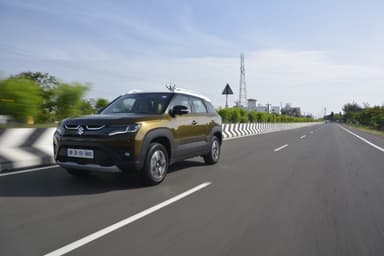
Maruti Suzuki Brezza
₹8.26 - ₹12.86 Lakhs
8
Transmission
Manual, Torque Converter Auto
Engine
1462 cc
Fuel type
CNG, Petrol
Mileage
17.80 kmpl - 25.51 km/kg
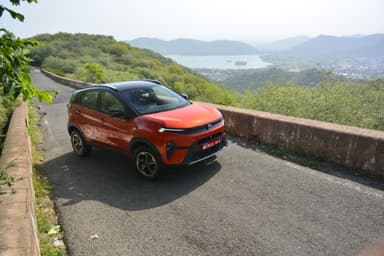
Tata Nexon
Tata Nexon
₹7.32 - ₹14.15 Lakhs
8
Transmission
Manual, AMT Auto, Dual-Clutch Auto
Engine
1199 cc - 1497 cc
Fuel type
CNG, Diesel, Petrol
Mileage
17.01 kmpl - 24 km/kg

Trending Questions on Hyundai Venue - Answered by Autocar Experts

S
Asked by: Sharathon Mar 1, 2026

Hi, I am confused between buying the Hyundai Venue HX6 DCT and the Mahindra REVX A AT. My monthly usage is around 500 km, and I prefer a petrol variant. Please advise which would be a better choice.

Both the Hyundai Venue and Mahindra XUV 3XO, in their HX 6 DCT and RevX AT guise, are extremely close when it comes to price and what they offer. The Venue is the newer, more modern-looking car on the inside and out, but the 3XO is more powerful with a 131hp engine. 

The 3XO is also more spacious in the rear seat, while the Venue gets a slightly bigger boot. Features on the 3XO are better, boasting a panoramic sunroof, leatherette upholstery and dual-zone climate control, to name a few. 

When it comes to ride and handling, too, it is the 3XO that pips ahead of the Venue. We would recommend the 3XO in this case as it offers a lot more for the money and is the better value proposition. 

M
Asked by: Mson Mar 1, 2026

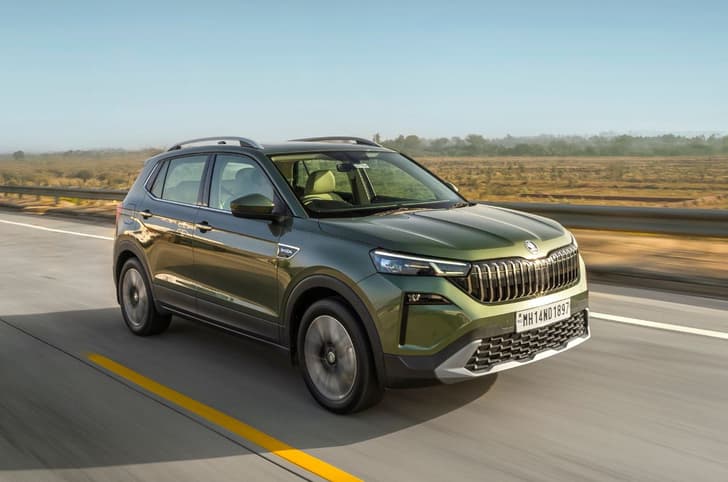
Hi, I am planning to buy a new car and need help choosing between the Skoda Kylaq Signature+ and the Hyundai Venue N6 N Line. I drive to work every day in Delhi. Luckily, my timings are non-office hours, so that should be factored in, plus a few road trips we take during the year. Please suggest.

The Skoda Kylaq is a fun-to-drive compact SUV. Its 1.0-turbo engine delivers strong performance, and the chassis feels well-balanced, resulting in tight body control and a compliant ride quality. If you enjoy driving, the Kylaq should be on top of your list.
The cosmetic enhancement certainly makes the Hyundai Venue N Line N6 look much sportier, and it is definitely going to stand out in a crowd. If you're considering their manual versions, then the Venue N Line N6 has a much smoother gearbox with a fantastic gear knob, and its clutch is a bit lighter than the Kylaq's, which adds to the driving experience. Both cars have light steering, but with drive modes, the N Line's steering gets a bit heavier to give you a sportier feel.
Engine performance and handling aren't too far behind the Kylaq's, whereas rear seat space is actually better than the Skoda's, which your passengers will appreciate on road trips. Lastly, the Venue N Line N6 is more affordable than a Kylaq Signature+, and overall, it is the Hyundai that makes you feel more special - and for that reason, we'd recommend you go for the Venue N Line N6 (MT).
G
Asked by: GIRISH SAHAREon Feb 28, 2026

My budget is around ₹12-14 lakh. I want to buy a sub-4-meter SUV. My weekly driving is around 100-120 km. I am considering the Kia Syros HTK Plus Turbo Petrol Manual variant and the Hyundai Venue HX5 Turbo Automatic Petrol variant. Which will be the better option?

In this comparison, we would recommend the Kia Syros as you get more car for your money. The Syros gets the same powertrain as the Hyundai Venue but gets the DCT gearbox, as it makes driving in city traffic a lot easier. 

The Syros is also a bigger car overall with more space in the cabin, rear seat and also a bigger boot. You also get premium features like a panoramic sunroof and alloy wheels in the Syros. 

The one area where the Venue is ahead of the Syros is the ride comfort, but apart from that, in every aspect, the Syros is a better choice. The HTK+ with the DCT will fit in your budget and is our recommendation. 
 

O
Asked by: Omar Moghalon Feb 28, 2026

I have a budget of ₹14 lakh and wanted to buy the Kia Seltos Petrol HT e-Ornate variant. I went for a test drive but felt the car was underpowered, and I got disappointed. The features and finish are top-class, but the power is lacking. What are my options?

For a budget of Rs 14 lakh, it is admittedly difficult to find a mid-size SUV automatic that offers genuinely strong performance. The 1.5 petrol in the Kia Seltos HTE is smooth and refined, but it isn’t particularly punchy, which explains why it felt underpowered on your test drive.

If you are primarily driving yourself and rear seat space isn’t a top priority, it would make sense to look at the compact SUV segment instead. This is where you’ll find turbo-petrol engines that feel noticeably more energetic.

Since you liked the Seltos’ fit, finish and feature list, the Kia Sonet HTX is worth considering. It comes with the 1.0-litre turbo-petrol (118hp), which feels much more responsive in everyday driving. The Hyundai Venue (particularly the higher variants with the same 1.0 turbo engine) offers similar performance with a slightly different interior feel and feature mix.

Another very strong option is the Mahindra XUV 3XO. Its 1.2 TGDi engine (up to 131hp) is the most powerful in this class, and it combines strong performance with a spacious cabin and generous features for the money.

In short, if power is high on your priority list, moving to a turbo-petrol compact SUV will give you a much more satisfying driving experience within your budget.

L
Asked by: Lokesh Aon Feb 27, 2026

During my test drive, the torque-converter gearbox felt smoother, and both the gear shifts and overall ride quality were noticeably better in the Mahindra XUV 3XO. In the Hyundai Venue, I could clearly feel turbo lag at lower speeds, and the DCT did not feel as smooth as the 3XO’s gearbox. However, from a long-term ownership perspective, Hyundai’s service network is more reliable and hassle-free, and the resale value is generally stronger compared to Mahindra. I’m also slightly concerned that the 3XO might develop rattles or increased engine noise over time, whereas the Venue, if maintained well, may remain more refined. I also doubt fuel efficiency: will the Venue’s DCT deliver better mileage compared to the 3XO’s torque-converter? I would appreciate guidance from the community based on real-world usage and long-term ownership experience.

You’ve summed up the driving difference quite accurately.

A torque-converter automatic, like the six-speed Aisin unit in the Mahindra XUV 3XO, uses hydraulic fluid between the engine and gearbox. That fluid coupling cushions the initial take-off and smoothens out power delivery, which is why it feels more progressive and less jerky in traffic. There’s a slight build-up of torque before full engagement, and that’s what gives it that fluid and easy feel. 

A DCT, like the dry-clutch unit in the Hyundai Venue, uses two clutches to pre-select gears. Shifts are quicker and more direct. But at low speeds, especially with a small turbo engine, you can feel turbo lag followed by a slightly sharper clutch engagement. That’s the “snappier” sensation you experienced. In crawling traffic, a torque converter generally feels more natural.

On long-term ownership, Hyundai does have a very strong service network and typically excellent resale value. Mahindra has improved significantly in recent years, and the 3XO’s platform (derived from the globally developed SsangYong Tivoli architecture) is fundamentally robust, so we wouldn’t be overly concerned about structural quality. Minor rattles over time depend more on usage and maintenance than brand alone.

On fuel efficiency, the Venue’s DCT may be marginally more efficient in ideal conditions. But in real-world city driving, the difference is unlikely to be dramatic. It shouldn’t be the deciding factor.

Where the Venue clearly scores is in overall polish, its user interface, feature integration and ergonomics feel more mature. The 3XO, on the other hand, gives you stronger performance and a smoother automatic experience.

S
Asked by: Sanjay Subhash Patnion Feb 27, 2026

Namaskar, sir. I wish to upgrade from my current Baleno to a proper automatic vehicle. My overall running is around 8 to 10k per year (25% city & 75% highway). My budget is ₹15 to ₹18 lakh. Which car will you suggest? Your response & expertise will help me reach a conclusion.

There are multiple options within your budget. You can either look at the top variants of compact SUVs or the mid variants of midsize SUVs.
In the compact SUV segment, considering your usage and requirements, the new Hyundai Venue with the turbo petrol DCT in the top HX10 variant is a good option. It gets a proven turbo petrol engine and DCT gearbox that offers good punch for highway driving while still being smooth enough for city use. The cabin feels premium and is loaded with features in comparison to your Baleno. Opting for this Hyundai car will feel like a definite step up in terms of driving position, refinement and overall quality.
If you prefer a bigger and more comfortable car and are okay with sacrificing a few feel-good features, the Kia Seltos HTK petrol IVT makes a lot of sense. The Seltos offers a more premium cabin, more space and better overall comfort. The IVT automatic is silky smooth, especially in traffic, and the 1.5-litre naturally aspirated engine has enough performance for relaxed highway cruising.
M
Asked by: Mohammed Sirajuddinon Feb 27, 2026

I am an NRI based in Dubai, looking to purchase an automatic SUV for my home in Kasaragod, Kerala. I will be using when I visit couple of times in a year and the car will be primarily used by my sister for local shopping and local commutes, but will also remain idle sometimes. Between the Skoda Kylaq Prestige Plus (1.0 TSI with 6-speed Torque Converter) and the Hyundai Venue HX8 (1.0 Turbo with 7-speed DCT), which powertrain is more mechanically durable for a 10-year ownership cycle? Is buying new punch ev also makes sense? I’m open to other suggestions as well.

All modern cars today, if maintained well, are engineered to last 10 years or more. Over that period, you should budget for both scheduled services and some wear-and-tear replacements. Given your usage pattern with limited annual running and long idle periods, the way the powertrain behaves when used sparingly becomes more important. Since most of your trips are short and local in Kasaragod, outright performance is less critical than smooth and reliable operation.

Between the Skoda Kylaq Prestige Plus (1.0 TSI with 6-speed torque converter) and the Hyundai Venue HX8 (1.0 Turbo with 7-speed DCT), both should serve you well if maintained properly. However, purely from a mechanical durability standpoint, a conventional torque converter automatic, like the one in the Kylaq, is generally more tolerant of stop-go driving and long-term ownership than a dual-clutch transmission (DCT).

DCTs offer quicker shifts and better efficiency, but they are more complex and can be sensitive to heat and crawling traffic. This is something your sister is likely to encounter in town driving. Over a 10-year horizon, especially with intermittent usage and possible long idle periods, the simpler torque converter setup is typically the safer bet.

That said, both cars use small turbo-petrol engines. Modern turbo engines are reliable, but they are inherently more complex than naturally aspirated (NA) engines. It is due to additional components like the turbocharger and intercooler. If absolute long-term peace of mind is your priority, you could also consider the Maruti Suzuki Brezza, which comes with a 1.5-litre naturally aspirated petrol engine paired to a 6-speed torque converter. An NA engine is mechanically simpler and, in theory, better suited to low annual running and long ownership.

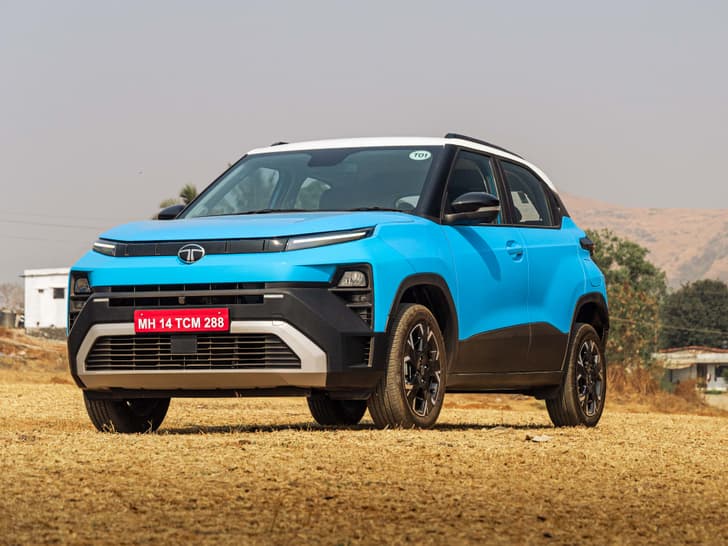
As for the Tata Punch EV, it is an excellent value for money as an EV. However, in your specific case, it may not make complete sense. Your annual usage appears limited, so you won’t significantly benefit from the lower running costs of an EV. 

Additionally, the Punch EV is compact with a smaller boot, which may restrict practicality during family visits. Long idle periods are also not ideal for EVs unless the battery state of charge is managed carefully.

P
Asked by: Pradeepon Feb 26, 2026

Hi, I’m using a Ford EcoSport AT petrol. I’m very happy with the car’s build quality, handling, and performance, but I’m concerned about the mileage. In Bangalore city, I get about 8 km/l, and on the highway it’s about 14 km/l. I want to upgrade to a similar SUV with greater mileage (over 20 km/l), good safety, and durability, costing between ₹10 L and ₹15 L on-road. Please suggest suitable options.

Unfortunately, there's no petrol automatic compact SUV today that will achieve anywhere near 20kpl in the real world, in the city or on the highway. The most efficient petrol compact SUVs are the Maruti Suzuki Fronx or Toyota Urban Cruiser Taisor

If you want something more spacious, consider the Maruti Suzuki Brezza, though it is slightly less efficient. If you want more efficiency still, though, consider a diesel compact SUV like the Hyundai Venue or Kia Sonet. They are the smoothest and most efficient in the segment, and are more likely to get close to or surpass 20kpl. 

T
Asked by: Thiyakeshon Feb 25, 2026

Hi, I am planning to buy a compact SUV in one or two months. I am a bit confused between two options: the new Venue HX5+ and the Sonet HTK Plus. Both have the same 1.2 NA engine. I am looking for long-term ownership with good mileage and stability. Can you suggest?

Between the Hyundai Venue and the Kia Sonet, for long-term ownership, we would recommend you go for the new Venue.
The Hyundai Venue was recently launched and is a much newer product, whereas the Sonet has been around for nearly six years and is expected to be replaced or significantly updated next year. Buying a car that is closer to the beginning of its lifecycle generally makes more sense if you plan to keep it for many years, because it will stay relevant.
Another advantage the Venue has is rear seat space. The Kia Sonet has always been a bit cramped in the back, whereas the Venue offers better accommodation for rear passengers. If you often travel with family or friends, the extra space and comfort at the back will be noticeable over time.
G
Asked by: Gokul Subramanianon Feb 25, 2026

I currently own two cars: a 2025 XUV700 and a 2012 Tata Vista. The Vista is now having AC issues and brake failures, so it’s time to replace it with a 5-seater. While searching for cars under ₹10 lakh, I found many petrol options, but both my dad and I are diesel engine lovers, so we decided to increase our budget to ₹12 lakh. In that range, we considered: Tata Nexon - high-end model (but we’ve had customer and service issues with Tata before) Mahindra XUV 3X0 - MX2 Pro variant or base variant Hyundai Venue - 1.5 MT diesel variant Kia Sonet - base diesel variant Finally, my dad and I had a dramatic idea to get a Mahindra Thar RWD. Is that okay for comfortable city use and short-range driving, or should I consider other diesel cars under ₹12 lakh? Please suggest.

Yes, you are correct, there are very few diesel options in the lower segment today. From your shortlist, we would recommend the Hyundai Venue. The diesel engine is refined and smooth, and is coupled to a torque convertor gearbox, which is the smoothest type of autobox to have, thus you will appreciate this in the city traffic. The powertrain also delivers a good balance of performance and efficiency. 

As for the Mahindra Thar, we would not recommend this for you, as you are primarily looking for a comfortable city car, and the Thar ride is far too bumpy over bad city streets, and refinement levels will also not be as good as the Venue.