Automatic cars in India (193)
Automatic cars from brands like Hyundai, Mercedes, and BMW offer something for every driver. From automatic cars under 10 lakhs to premium options, there’s a variety for all needs. City drivers can also consider automatic CNG cars in India, combining fuel efficiency with convenience. These automatic cars provide smooth handling, modern features, and a comfortable drive.
Automatic Cars - Key Highlights
Category | Car Model |
Most Expensive | Lamborghini Revuelto (₹8.89 Crore) |
Most Affordable | Kia Syros (₹8.67 lakh) |
Automatic Cars under ₹5 Lakh | Maruti Suzuki Alto K10 (₹3.70 - ₹5.45 lakh) |
Automatic Cars under ₹10 Lakh | Kia Syros (₹8.67 - ₹15.94 lakh) |
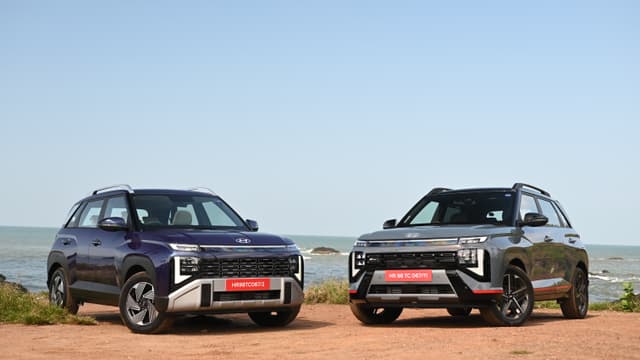
Automatic Cars under ₹15 Lakh | Hyundai Creta (₹10.73 - ₹20.19 lakh) |
Diesel Engine | Kia Seltos, Land Rover Defender 130, Jeep Compass |
CNG Engine | Maruti Suzuki Dzire, Toyota Rumion, Maruti Suzuki XL6 |
5 star safety rating
| Maruti Suzuki Victoris, Mahindra XEV 9e, Mahindra Scorpio N |


FAQs
Automatic gear car options include models such as the Land Rover Defender 130, Hyundai Creta, and Kia Syros.
Automatic cars under 7 lakhs include options like the Maruti Suzuki Wagon R, Renault Triber, and Hyundai Grand i10 Nios.
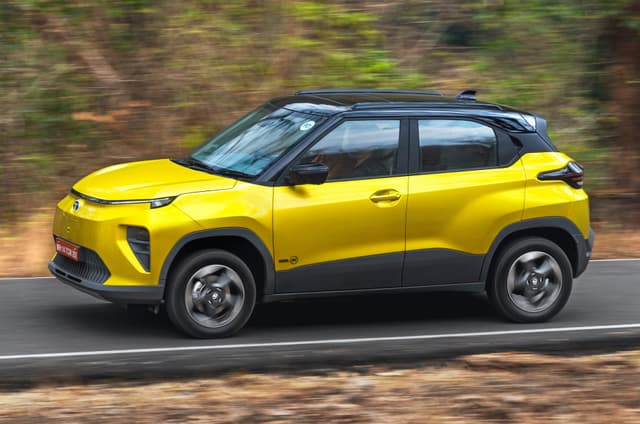
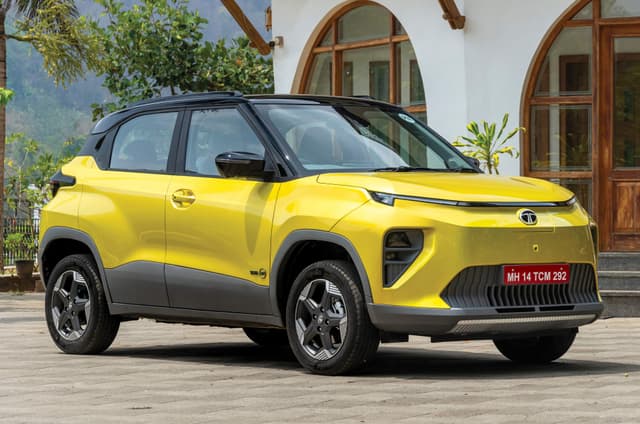
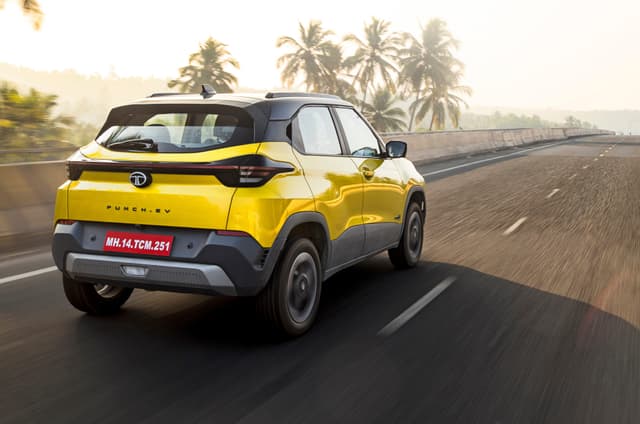
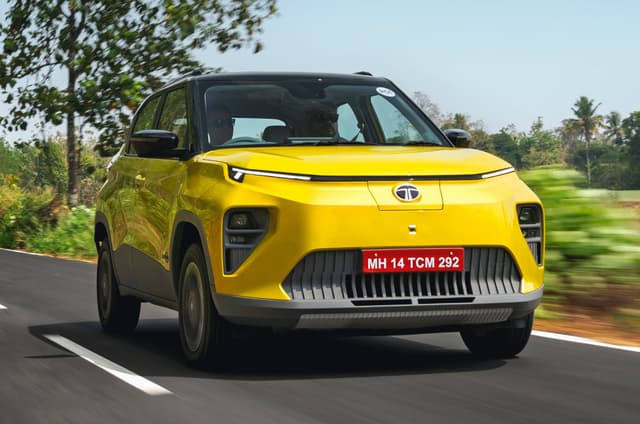
Some of the automatic cars under 15 lakhs include popular options like the Hyundai Creta, Kia Syros and Tata Punch EV.
Yes, the Maruti Suzuki S-Presso and Maruti Suzuki Alto K10 are options under automatic cars in India under 5 lakhs, starting at ₹3.50 lakh (ex-showroom).
The Maruti Suzuki S-Presso, Maruti Suzuki Alto K10, and Renault Kwid are some of the small automatic cars in India.
Maruti Suzuki S-Presso is the cheapest automatic car in India, priced between ₹3.50 - ₹5.25 lakh (ex-showroom).
Diesel automatic cars in India include options such as Kia Seltos, Land Rover Defender 130, and Mercedes-Benz E-Class.
Some of the best automatic cars under 10 lakh include Toyota Glanza (₹6.39 - ₹9.15 Lakh) and Maruti Suzuki Dzire (₹6.26 - ₹9.31 Lakh).
Maruti Suzuki XL6, Hyundai Grand i10 Nios, and Maruti Suzuki Ertiga are some CNG automatic cars currently available for sale.
Some low price automatic cars include the Maruti Suzuki S-Presso, Maruti Suzuki Alto K10, and Renault Kwid.
Trending Questions on Cars - Answered by Autocar Experts
I want to buy an automatic SUV. I have a budget of Rs. 13 lakh. My monthly running is less than 1,500 km.
With a budget of Rs. 13 lakh and running of less than 1,500 km a month, the Mahindra XUV 3XO MPFi petrol automatic is the best fit. It is one of the most spacious compact SUVs in the segment, with a wide rear seat that makes it a genuinely comfortable five-seater. The turbo petrol engine is punchy and the torque converter automatic is smooth and well suited to city driving. It is also a very well equipped car for the money, with a strong safety package and a good ownership proposition. The only real drawback is the boot, which is on the smaller side for the segment, but for most family use it is still adequate. If you want something with a larger boot, the Maruti Suzuki Brezza automatic is the alternative. It is not as powerful or as feature-rich as the 3XO, but it is a very reliable, low-maintenance car with a bigger boot and a strong ownership track record. If you want something that's more engaging to drive, consider the Skoda Kylaq automatic. Overall, the 3XO offers the best balance of space, performance, features and value at this price point.
I am a first-time car buyer looking for an automatic car with a budget of Rs. 12 lakh, which I can stretch to Rs. 14 lakh if needed. My usage will be mainly in the city, along with one weekend trip every month to nearby hill stations like Lonavala or Mahabaleshwar. My annual running will be under 8,000 km, and we are a family of five. The car will not be used daily. Which car would you recommend? Also, which type of automatic transmission (CVT, torque converter, DCT, or AMT) would be the best choice for my usage?
For your usage, the Maruti Suzuki Brezza automatic is the most sensible recommendation. Your annual running is low, so a petrol automatic makes the most financial sense, and the Brezza’s 6-speed torque converter automatic is one of the smoothest and most reliable gearboxes in this price range. It is well suited to city driving and will handle your occasional hill station trips without any fuss. This Maruti Suzuki car is also a genuinely comfortable 5-seater with a good ride quality, and Maruti’s service network and low maintenance costs make it an easy car to own long term.If you want something a bit more premium feeling, the Mahindra XUV 3XO automatic is worth considering. It is more feature-rich and feels more modern inside, but the Brezza is the more dependable choice for a first-time buyer. On automatic transmissions, torque converter automatics like those in the Brezza and 3XO are the best fit for your usage. They are smooth, reliable and well suited to city driving. CVTs are also smooth, but there aren't many offered in this price range, while dual-clutch automatics are better suited to performance-oriented driving and can be more expensive to maintain.Overall, the Brezza automatic is the car that will give you the least hassle and the most peace of mind over the next 5-10 years.
I want to buy a six-seater petrol automatic. Which should I choose between Alcazar and Carens Clavis? Please analyse and suggest.
While both the Alcazar and Carens Clavis share the same 160hp 1.5-litre turbo petrol engine and 7-speed dual-clutch automatic, the Kia car is simply the better family car. Its MPV design translates into easier access to the third row, more usable space for six adults and a more comfortable third row, making it the more practical choice if you'll regularly use all six seats.The Alcazar fights back with its SUV styling, slightly more premium ambience and higher ground clearance. If those are priorities and the third row will only be used occasionally, it's a compelling option. However, if your focus is on carrying the family in comfort, the Clavis has the edge thanks to its roomier cabin and more practical layout.Both offer a similar ownership experience, safety kit and powertrain, so the decision really comes down to practicality versus image
I'm 36 years old and currently own a Kia Seltos petrol automatic. My annual running is around 10,000-11,000 km, with about 20% city driving and 80% long highway trips, typically covering 600-1,000 km in a single journey. I'm now looking to buy a 7-seater SUV and am confused between the Mahindra XUV 7XO diesel automatic and petrol automatic. I'm also wondering if I should consider the Mahindra XEV 9S, given the push towards EVs However, I feel that doing 800km one-way trips in an EV could be difficult, especially since the charging infrastructure still doesn't seem adequate. What would you recommend?
Go for the Mahindra XUV 7XO diesel automatic. Your usage pattern is very clear: 80% highway, long 600-1000 km trips, and around 10,000-11,000 km a year. This is exactly the kind of usage where a diesel engine makes the most sense. Moreover, the diesel engine of this Mahindra car is the superior one in the line-up; it is a strong highway performer and will be significantly more efficient than the petrol on long runs.The XEV 9S is a very capable and practical electric car. It offers good value for money, but as you've pointed out, for your kind of 800 km one-way trips it is simply not practical yet. Charging infrastructure is improving, but it is still not at a point where you can do these kinds of distances without significant planning and downtime. The XUV 7XO diesel automatic is the right tool for the job and will give you the best ownership experience for your usage.
I am planning to buy a Mahindra XUV 7XO petrol automatic and intend to keep it for 10-15 years. My biggest concern is not E20 but the possibility that India may move to E25, E27 or E30 during my ownership. Would you still recommend buying the 7XO today, or would you advise waiting or considering another powertrain? What is your assessment of the long-term policy risk versus the technical risk?
We would still recommend the Mahindra XUV 7XO petrol automatic without hesitation. The technical risk is low, while the policy risk is manageable.The XUV 7XO's petrol engine is E20-compliant, which means it is engineered to handle a 20% ethanol blend without any issues. The main impact of a higher ethanol blend is a slight drop in fuel efficiency and, over a very long period, some additional wear on certain rubber components in the fuel system. These parts are generally inexpensive to replace.At present, there is no official roadmap for moving beyond E20. Even if India eventually adopts E25, E27, or E30, manufacturers would almost certainly issue clear guidance and support for existing vehicles. The greater uncertainty lies in government policy rather than in the vehicle's engineering.Waiting indefinitely for a hypothetical future policy change is not a practical ownership strategy, particularly when the XUV 7XO is otherwise a strong long-term choice. Overall, the recommendation would be to buy the XUV 7XO today rather than let ethanol policy uncertainty dictate a 10-15-year ownership decision.
Last Updated on: 22 Jul 2026