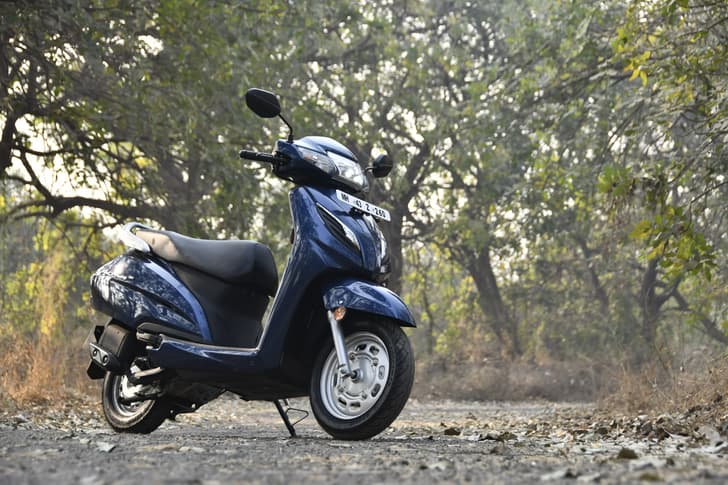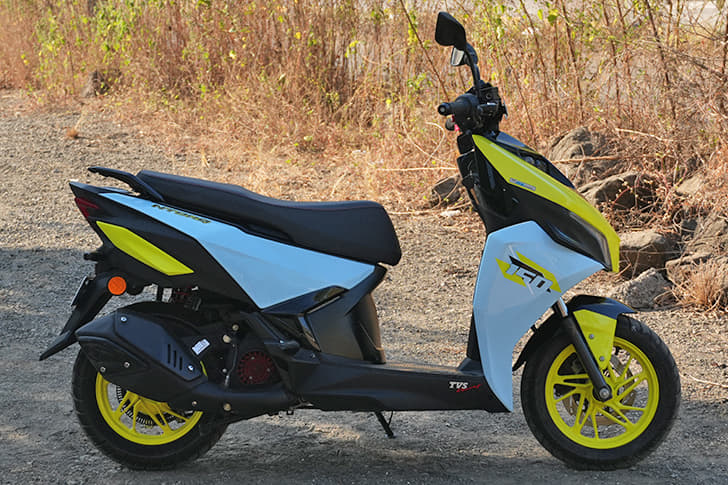

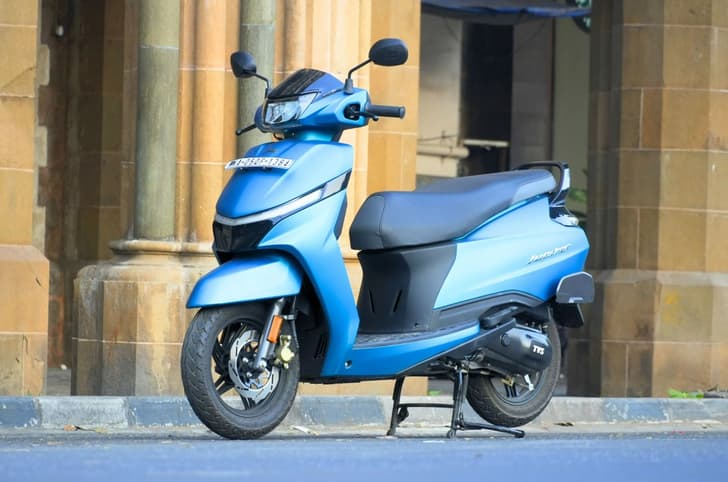
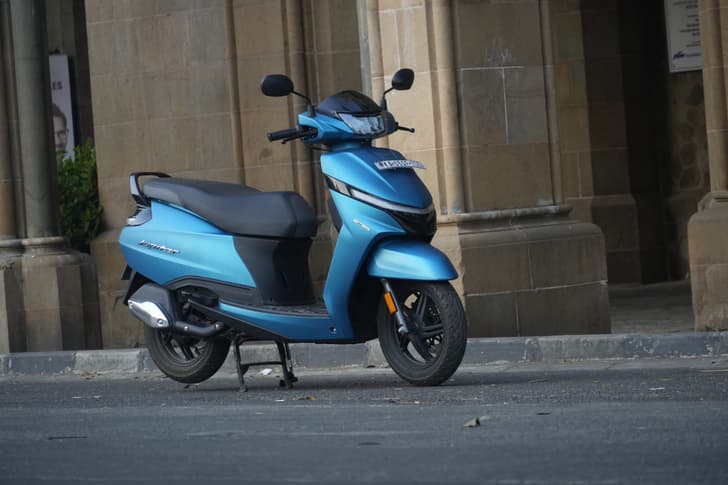
TVS brought out the Jupiter 110 twelve years ago, and in that time span, it has become the second-bestselling scooter in India after the Honda Activa. Since its launch, the Jupiter 110 has received one comprehensive update and now has many similarities with its elder sibling. Here, we’ve compiled some reasons to consider the Jupiter 110 if you’re in the market for a new scooter.
1 Peppy performance and frugal nature
The new 113cc engine is sprightly and has a fuel-sipping nature
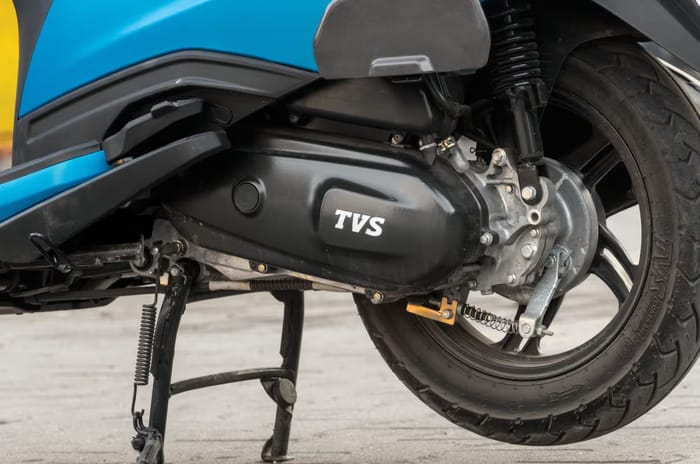
The Jupiter 110 is the country’s only 110cc scooter to come with an ISG (Integrated Starter Generator), and it works in tandem to augment the engine’s output as well as aid fuel efficiency. With the system working, the Jupiter 110 is rated for 8hp and 9.8Nm of torque – figures that are class-leading in the 110cc family scooter space. Out on the road, the Jupiter feels pleasantly zippy, and it is just 0.8 seconds slower than the Jupiter 125 in the 0-80kph sprint.
Happily, its zippy nature doesn’t impact fuel efficiency, and in our tests, the scooter manages 56.95kpl in the city and 57.30kpl out on the highway. What also helps the Jupiter’s frugality inside city confines is its start/stop system, which shuts off the motor after a few seconds of being idle.
2 Huge underseat storage area
Jupiter’s 33 litre boot is the largest among all petrol scooters in India
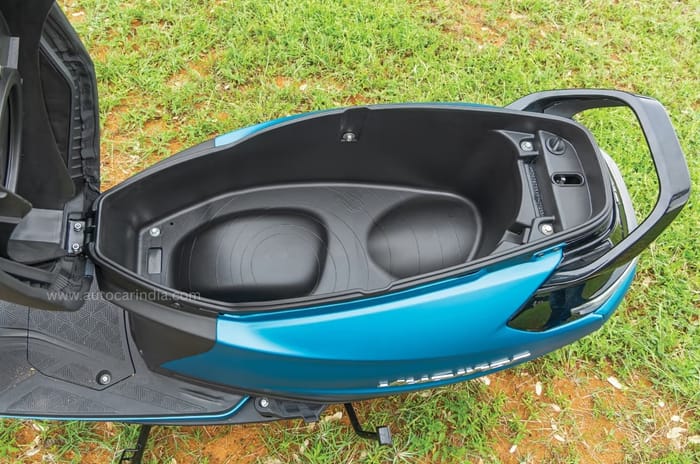
Scooters were born out of a need for practical and convenient urban runabouts, and their underseat storage areas are a big reason droves of people buy them today. And if you’re looking for the maximum amount of storage space on a petrol scooter today, your search ends with the Jupiter 110 (also the 125, because both have the same capacity).
As a result of TVS moving the fuel tank under the floorboard, the company has been able to liberate a big chunk of boot space, and there’s a full 33 litres of it available. Fun fact: the Jupiter 110 and 125 are the only petrol-powered scooters that have a larger boot than TVS’ own electric scooter – the iQube has a 30/32 litre boot, depending on the variant you choose.
3 Suspension and seat comfort
Plush suspension setup and spacious seat keep you comfortable
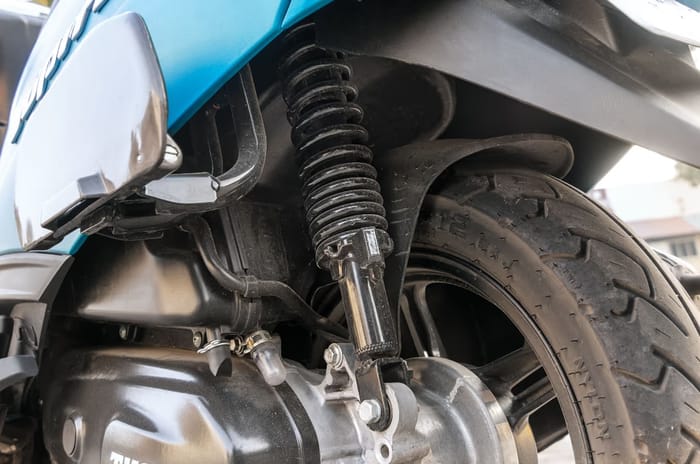
Many of the two-wheelers you’ll see zipping around town are scooters, and aside from the aforementioned practicality, another reason to opt for a scooter is its comfort. In that regard, too, the Jupiter scores well with its plush suspension setup ironing out the bumps and its generously sized seat keeping you and your pillion comfortable. It also gets a handy winged preload adjuster, allowing you to quickly and conveniently adjust the rear shock depending on whether you’re carrying luggage, riding with a pillion, or just riding solo.
That said, there are a couple of chinks in the Jupiter 110’s armour.
1 Start/stop tech doesn’t work smoothly
System aids fuel efficiency but implementation not straightforward
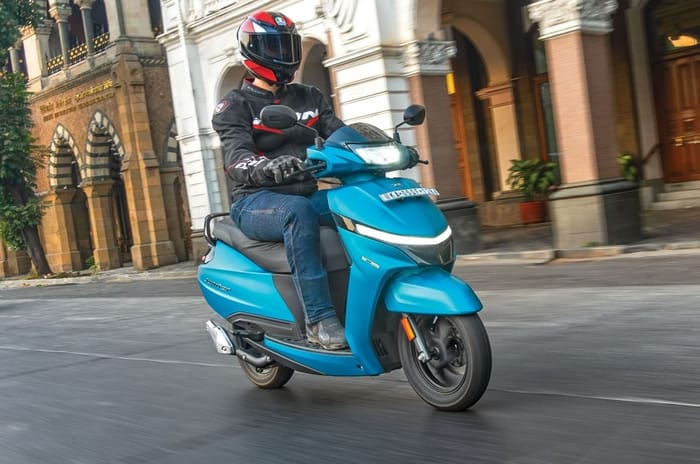
Remember the start/stop tech that helps you eke out better mileage in the city? In practice, it actually isn’t the smoothest system around. Once the engine shuts down, you need to twist the accelerator and hold either brake lever to restart the engine – a longer and more cumbersome process than it needs to be. Even so, the system doesn’t work every time, and you need to restart the scooter using the ignition button occasionally, which can get frustrating in impatient big-city traffic.
2 Only top variant gets front disc brake
Top variant with all the bells and whistles is quite pricey, in 125cc territory
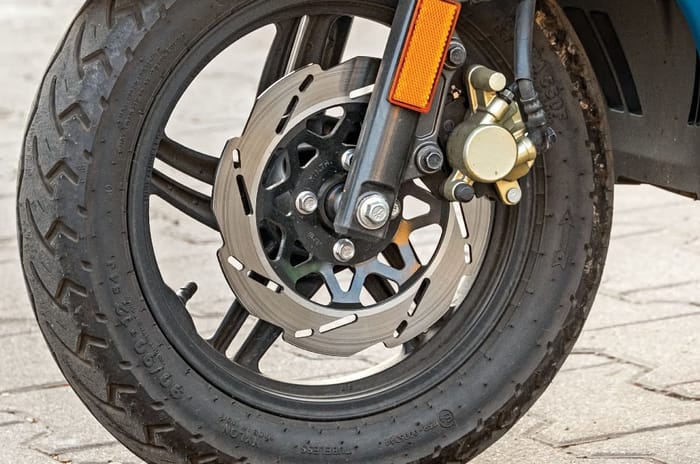
The TVS Jupiter 110 is available in four variants – Drum (Rs 77,291), Drum Alloy (Rs 83,091), Drum SmartXonnect (Rs 86,641) and Disc SmartXonnect (Rs 90,441). Of the four variants, only the most expensive one comes with a front disc, and this variant’s price puts it in the ballpark of established 125cc scooters. Had TVS offered a disc brake on one of the lower variants, it would’ve sweetened the Jupiter as a package further for two reasons. One, a disc brake is stronger and safer than a drum, and two, those who have no use for the LCD display and the myriad of features it brings would’ve also appreciated this move.
 Vishal Venugopal
 Ved Janve
 Stephen Raj Antony