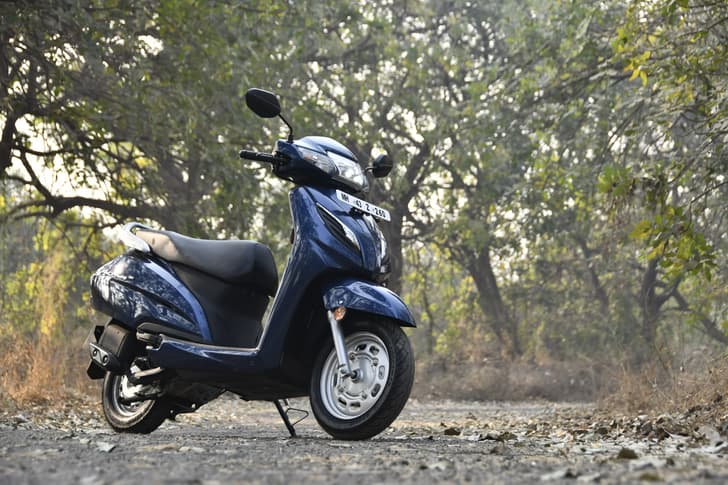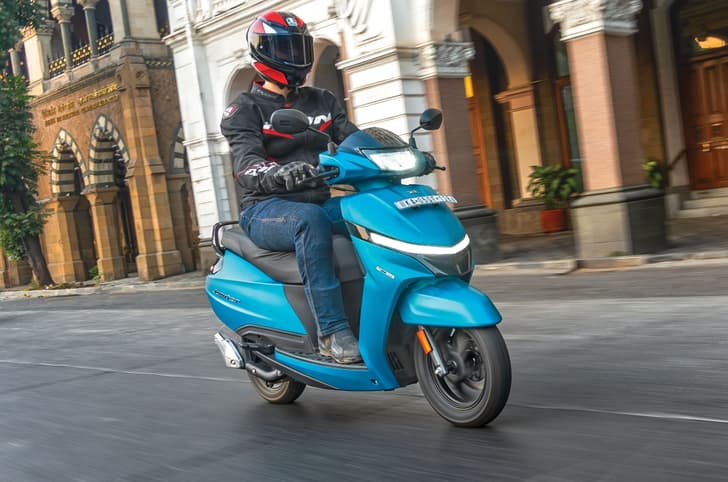
Ease of use. Practicality. Comfort. Fuel efficiency. These are some of the main driving forces that drive a scooterist’s purchase. The all-new Jupiter 110 made a strong case for itself when we sampled it for the first time at TVS’ test track a few months ago. While it undoubtedly left us impressed, the pertinent question is: how does it tackle the chaotic, staccato grind of a bustling city like Mumbai?
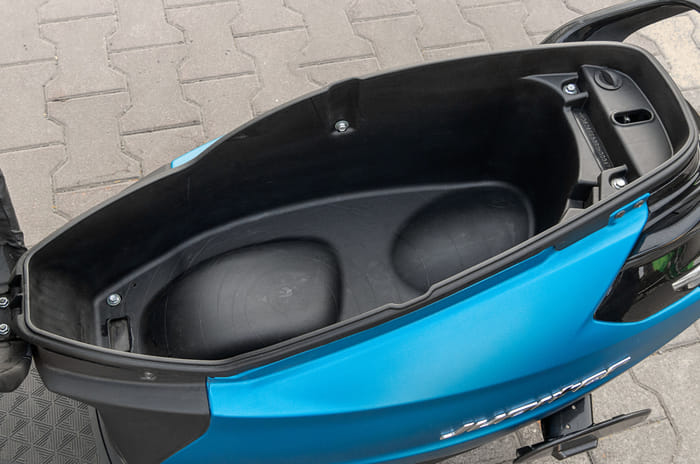
Since the Jupiter 110 now uses the same main frame as the 125, it inherits some of its bigger sibling’s inherent trump cards, like the 33-litre boot (the largest on any Indian ICE scooter) and the handy (pun intended) apron-mounted fuel filler.
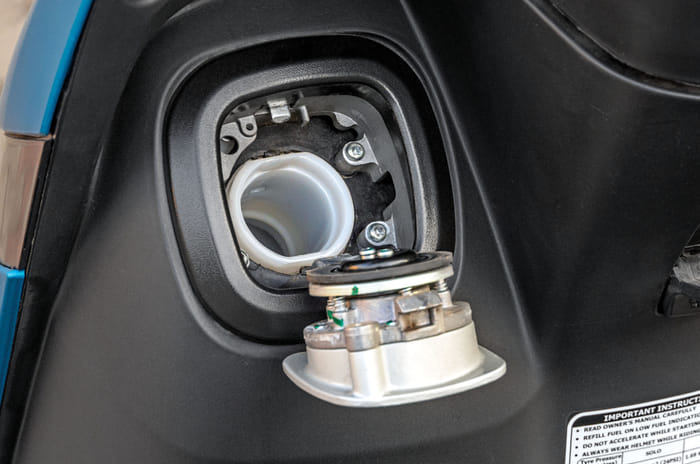
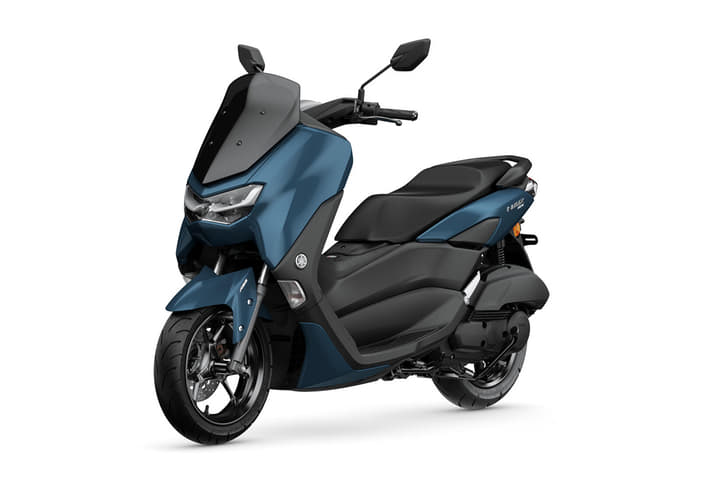
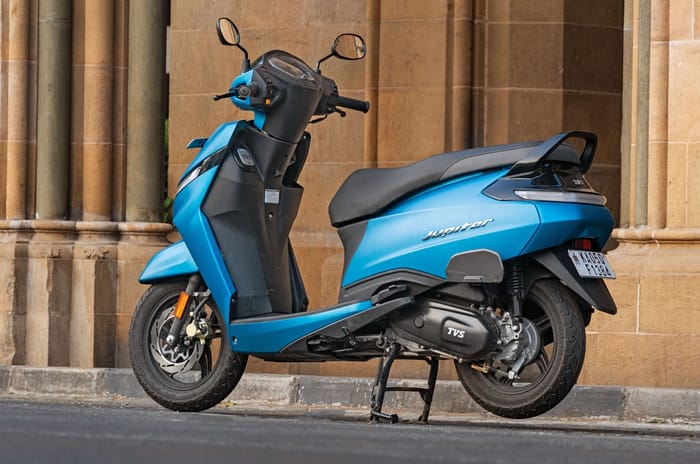
Both of these are highly appreciable features for a scooter – something no rival can match. As for the design, this is easily the most youthful 110cc family scooter out there, and the vibrant matte blue colour helps things further.
TVS has also given the Jupiter a first-in-class feature, an ISG (Integrated Starter Generator) that enables a very small performance boost (0.6Nm, to be precise) that can be used for a few seconds, about two times every minute before the system needs to recharge.
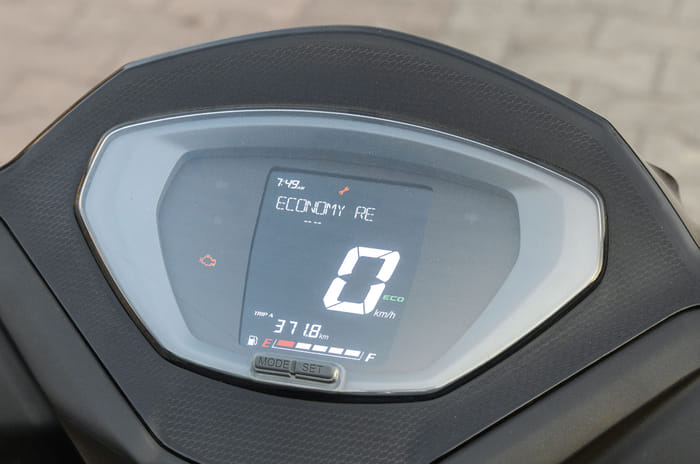
On this top Disc SmartXonnect variant, there’s also a new Bluetooth-compatible LCD display (available only on the top two variants) with turn-by-turn navigation and other standard-issue features, such as average FE, two trip meters, a clock, and the like.
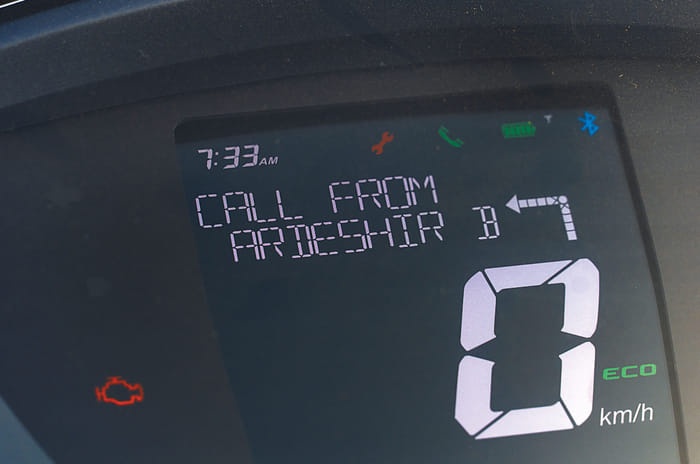
Our only gripe here is that this is a tightly packed vertical display housed inside a horizontal surround, leaving a lot of black plastic on the sides, which we think can be used to show more info.
That minor gripe fades into the background once you thumb the starter, and the Jupiter silently comes to life. To ride, we believe it is one of the most impressive all-rounders in the entire sub-150cc scooter game today. And we’ll explain why.
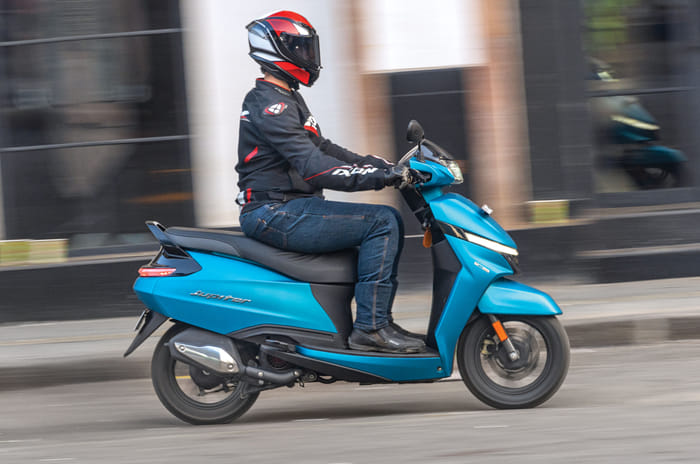
The lane that leads to our office is notorious for its cavalcade of potholes, uneven patchwork, and gutter covers, all waiting to wreak havoc on your back as well as the vehicle’s suspension. Happily, the Jupiter dealt with this stretch without much fuss, thanks to its well-judged suspension setup and contoured seat, both of which kept us comfortable.
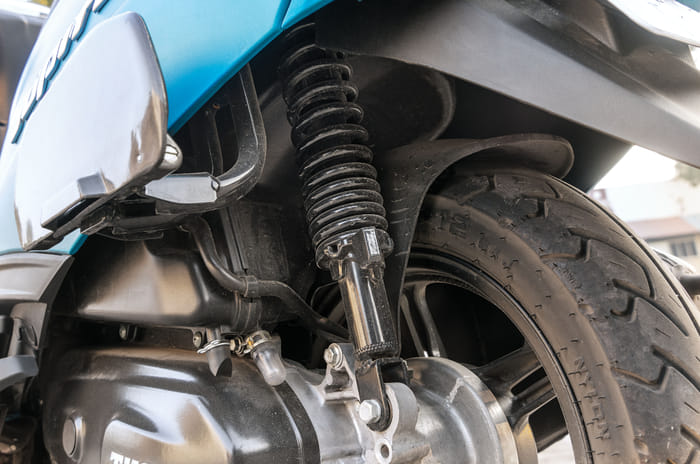
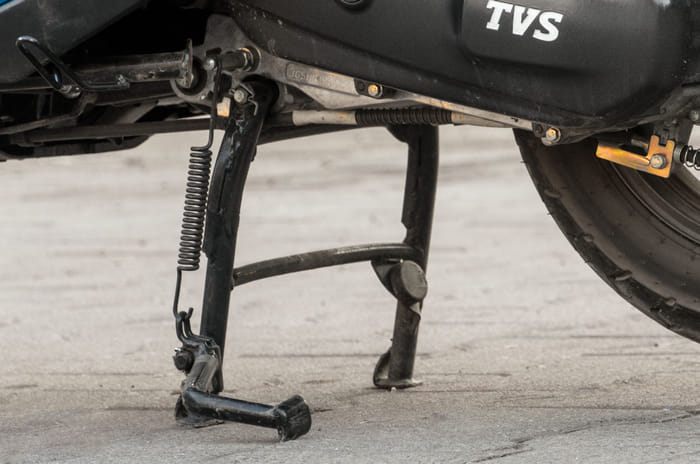
110cc scooters aren’t meant to be the last word in handling, but the Jupiter is reassuringly planted and nimble, attributes that lend nicely to its overarching role as a family’s urban runabout. At 106kg, the Jupiter’s weight is more than manageable for most riders, and it is one of the easiest scooters to prop up on the centre stand.
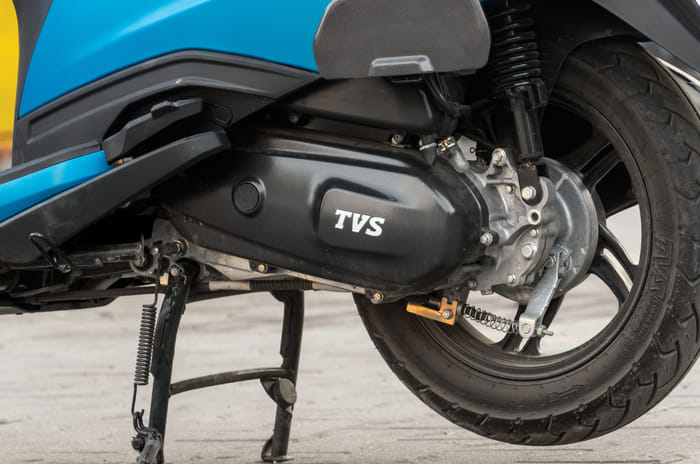
A sleeved-down version of the Jupiter 125’s motor is on duty here, and this 113cc mill is rated for 8hp and 9.8Nm (0.6Nm of that comes from the ISG). It is a surprisingly peppy motor and makes this the quickest 110 we’ve tested yet – only 0.8 seconds slower than the Jupiter 125 in the 0-80kph sprint.
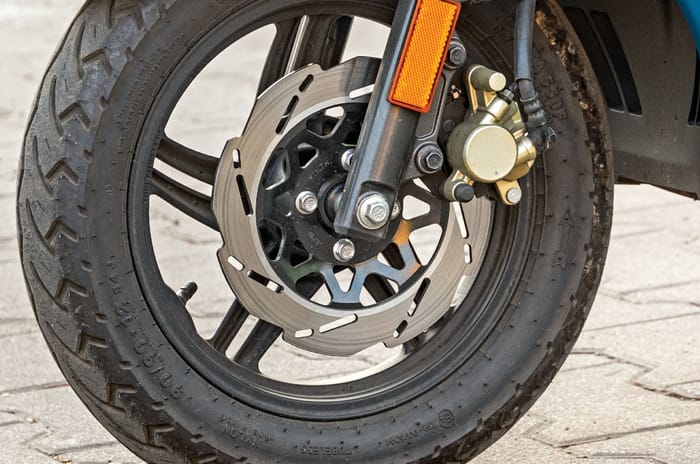
While the iGo assist is very subtle in its execution, it must be adding to the performance, and we’d like to ride a base Jupiter without the system back-to-back to see how much of a difference it really makes. Braking is reassuringly strong on this top variant with the front disc, and the CBS works well enough.
Despite the zippy performance, the Jupiter 110 is also pleasantly frugal, and we managed to get near-identical efficiency figures on both the highway (57.30kpl) and in the city (56.93kpl). Some of the credit goes to the start/stop system, which kills the engine after a few seconds of idling, thus saving fuel at long signals or in traffic jams. The iGo assist will probably be helping here, too.
While this engine is both fuel-efficient and refined, it doesn’t quite match the smoothness of Japanese scooters – although our scooter has barely done 700km, and this may smoothen out after a service.
What we didn’t like was TVS’ start/stop tech, which could be quicker on its feet, too. It requires you to hold either brake lever and twist the accelerator to bring the engine to life once you want to get going. However, if you twist the throttle wide open for a quick traffic light getaway, the engine sputters and dies, sometimes refusing to start without pressing the starter button. To combat this, you need to let go of the throttle once the motor is on for a brief moment, and then twist the accelerator. While it does help with fuel efficiency, some of us preferred keeping the system off.
The previous Jupiter 110 was already a sorted package and with this model, TVS has polished its bestseller further. With its combination of exceptional practicality, appealing style, great fuel efficiency and nifty tech, it’s hard not to see why this new one has already become a common sight on our roads.
While certain features could be more refined in their execution, the scooter itself is, without question, impressive. You could always buy the base variant if things like start-stop and a fancy display are not important. The one thing we’d like to see is the front disc brake being made available on the lower variants. However, given that no other 110cc rival offers this feature on a lower variant, it’s not something we can complain about too much.
The issue is that the top model is quite pricey – even more so than purchasing a mid-spec Jupiter 125 with a front disc. However, until the Jupiter 125 gets a similar update, we can see plenty of people going for the top-spec 110 just for the way it looks.

 Rishaad Mody